

A commercial-grade 10×10 pop-up canopy features sturdy steel or aluminum frames, with aluminum offering a lighter option and steel providing extra strength. The fabric tops are made from high-density polyethylene or polyester, with UV-resistant coatings to prevent fading and tearing. Wind ratings typically reach up to around 25 mph, but proper anchoring and tensioning are essential for stability. To guarantee long-lasting performance and safety, understanding setup tips and accessory options can make a big difference—more details await you.
Key Takeaways
- Commercial-grade 10×10 canopies typically feature steel or aluminum frames for durability and weight considerations.
- They are rated for wind resistance up to approximately 25 mph, depending on manufacturer specifications and anchoring.
- Proper setup involves following instructions, tensioning fabric tops, and securing legs with accessories like weights or stakes.
- Accessories such as sidewalls, weight bags, and guy lines significantly enhance stability in gusty conditions.
- Regular inspection and tightening of frame connections are essential for maintaining stability and preventing wobbling.
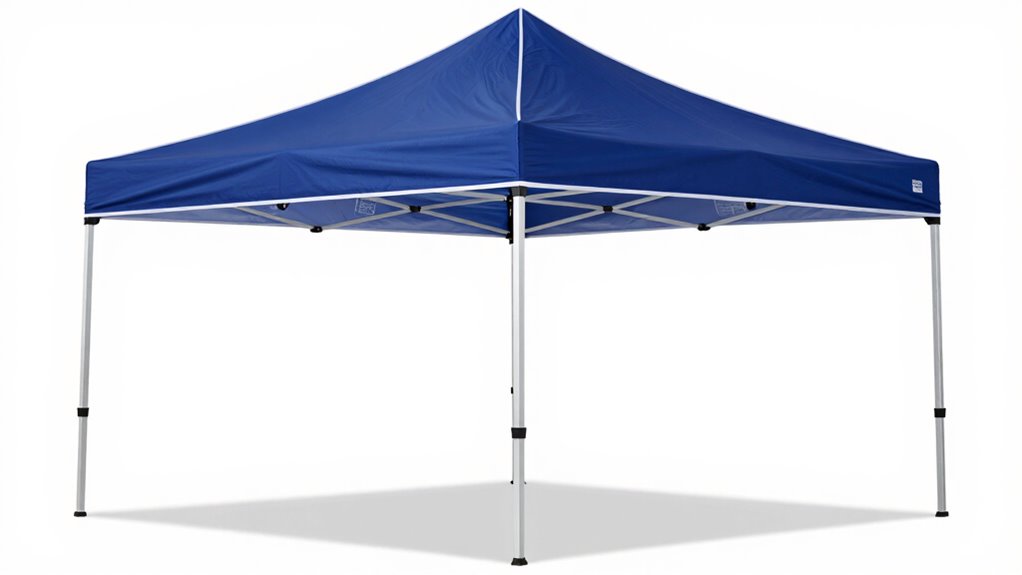
A commercial-grade 10×10 pop-up canopy is your go-to solution for quick and reliable shade at outdoor events. When choosing the right canopy, understanding the materials, wind ratings, and setup stability is essential. These factors directly influence how well your canopy performs and how long it lasts. To guarantee you get the most out of your investment, focus on installation tips and accessory options that enhance durability and ease of setup. Most commercial-grade canopies feature a sturdy steel or aluminum frame. Steel offers strength and durability but can be heavier, making transportation and setup slightly more challenging. Aluminum, on the other hand, is lightweight yet strong, providing a good balance for frequent use. The fabric tops are typically made from high-density polyethylene or polyester with UV-resistant coatings. These materials resist fading, tearing, and water penetration, keeping you protected from the elements. When setting up, always verify the canopy’s material specifications, especially if you’ll use it in harsh weather conditions. Material durability plays a crucial role in the longevity of your canopy. Wind ratings are another critical aspect. High wind conditions can compromise the stability of your canopy, so it’s smart to pay attention to the manufacturer’s wind resistance claims. Many commercial-grade models are rated for winds up to a certain speed, often around 25 mph. To maximize stability, use proper anchoring methods, such as stakes, weights, or sandbags, especially if you anticipate gusty conditions. During installation, regularly check and tighten all frame connections to prevent wobbling or collapse. If winds pick up unexpectedly, it’s best to take down the canopy rather than risking damage. Setup stability hinges on correct installation and accessory options. When erecting your canopy, follow the manufacturer’s instructions carefully—this includes aligning the frame, securing the legs, and ensuring the top fabric is properly tensioned. Accessory options like sidewalls, weight bags, and guy lines can markedly improve stability. For instance, weight bags filled with sand or water can anchor each leg securely to the ground. Sidewalls not only provide additional protection from wind but also create a more enclosed space, ideal for markets or outdoor gatherings. Using these accessories appropriately can extend the lifespan of your canopy and keep it stable even in less-than-ideal weather.
Frequently Asked Questions
How Long Does a Commercial-Grade Canopy Typically Last?
A commercial-grade canopy typically lasts around 3 to 5 years, depending on how often you use it and how well you care for it. Its durability lifespan is influenced by the quality of materials, like heavy-duty steel frames and durable fabrics, which enhance material longevity. To maximize its lifespan, you should avoid harsh weather, store it properly, and perform regular maintenance, ensuring you get the most out of your investment.
Are Replacement Parts Readily Available for This Canopy?
You’ll find replacement parts and accessory options for your canopy are usually easy to obtain, especially when you need to fix or upgrade it. Whether it’s a frame, canopy cover, or sidewalls, most suppliers keep these parts in stock. Keep an eye out for kits or bundles that include essential replacement parts, making maintenance simple. Staying proactive ensures your canopy stays sturdy and reliable, no matter how often you use it.
Can the Canopy Be Customized With Branding or Logos?
Yes, you can customize your canopy with branding options and logo customization. Most suppliers offer various printing methods, like dye sublimation or screen printing, allowing you to showcase your logo prominently. You can choose from different colors and placement options to match your branding. This makes your canopy stand out at events and helps promote your business effectively. Just check with your supplier for specific customization options available for your canopy model.
What Is the Best Way to Clean and Maintain the Canopy?
To clean and maintain your canopy, start with gentle cleaning tips like using mild soap and water to remove dirt and stains. Avoid harsh chemicals that could damage the fabric. After cleaning, make certain it’s completely dry before folding to prevent mold. Use proper storage solutions, like a sturdy carrying bag, to protect it from weather and UV rays. Regular maintenance keeps your canopy looking new and extends its lifespan.
Is There a Weight or Ballast Requirement for Stability?
Yes, there are ballast requirements for stability. You should follow weight guidelines typically recommending at least 40-50 pounds of ballast per leg for a 10×10 canopy. Using sandbags, water weights, or heavy-duty weights helps prevent tipping in windy conditions. Always check your canopy’s specific ballast requirements, as exceeding or not meeting these guidelines can compromise stability and safety during use.
Conclusion
Think of a commercial-grade 10×10 pop-up canopy as your trusty shield on busy days—built tough, designed to stand strong against the elements. With the right materials, solid wind ratings, and stable setup, it’s your dependable partner in creating a reliable space. When you choose quality, you’re not just buying a canopy; you’re investing in a sturdy foundation that keeps your events running smoothly, no matter what weather throws your way.