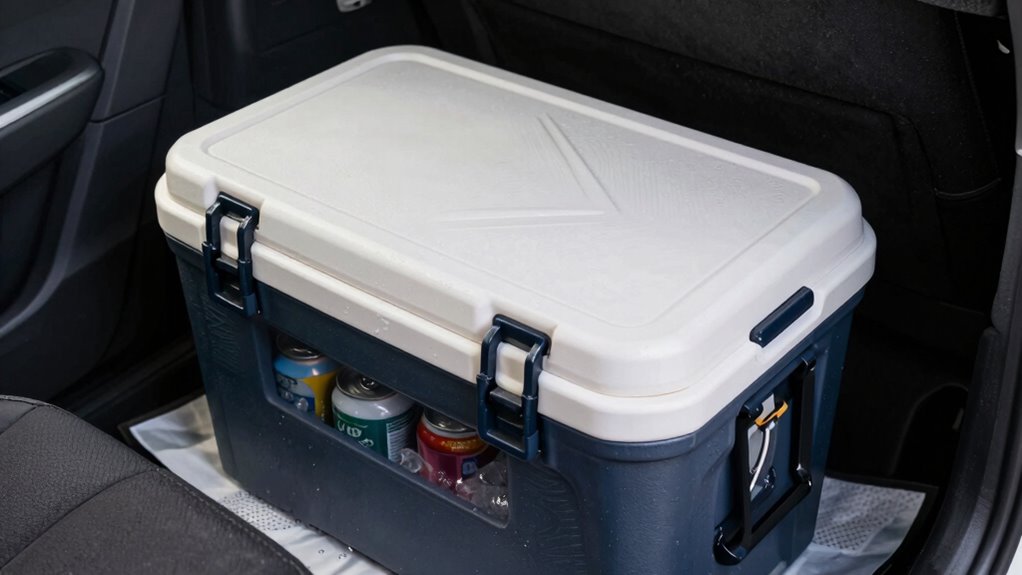
To prevent your cooler from leaking in your car, make certain you place it on a flat, stable surface like a trunk liner and use towels or dividers to stop it from sliding or tipping. Check that the drain plug is clean, tightly sealed, and functioning properly before your trip. Also, make sure the lid is fully closed and the seals are intact. For more tips on leak-proofing your cooler, stay tuned.
Key Takeaways
- Ensure ice packs are evenly distributed and snug to prevent water pooling and leaks.
- Regularly check and clean the drain plug to maintain proper water drainage.
- Confirm the cooler lid is securely closed and seals are intact to prevent leaks.
- Place the cooler on a stable, flat surface with a liner to avoid tipping and sliding.
- Perform routine maintenance and use eco-friendly cooling options for optimal leak prevention.
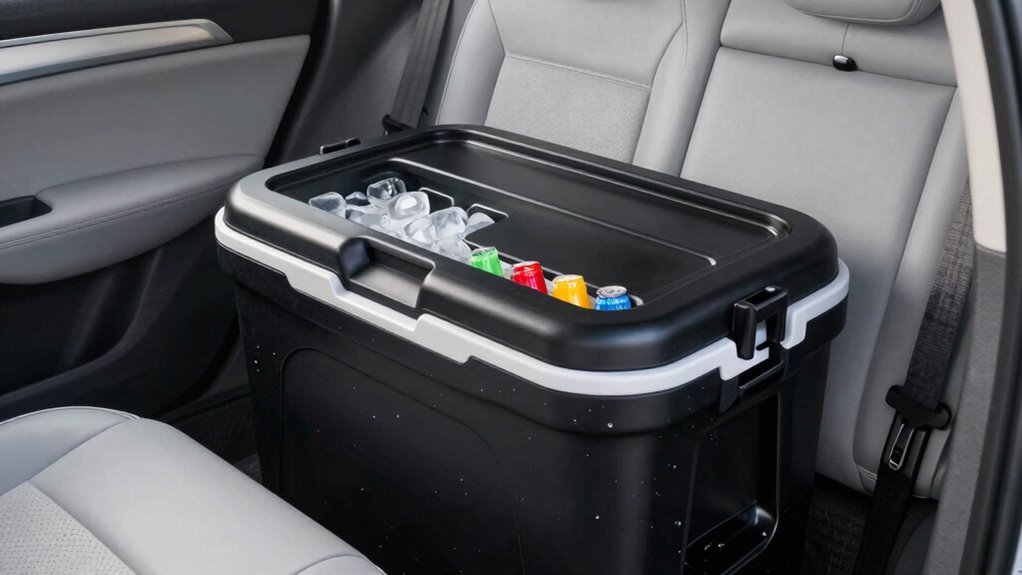
A leaking cooler can quickly turn a fun trip into a frustrating mess, but with a few simple steps, you can prevent spills and keep your car dry. One of the most effective ways to do this is by paying close attention to ice pack placement. When packing your cooler, make sure your ice packs are evenly distributed and placed snugly around your food and drinks. This helps maintain a consistent temperature and prevents the packs from shifting, which could crack the cooler or cause leaks. Avoid stacking ice directly on top of delicate items, and consider placing a towel or divider to keep everything stable. Proper ice pack placement minimizes the risk of water pooling inside the cooler, reducing chances of leaks seeping out during transport. Additionally, choosing energy-efficient, sustainable cooling options can help minimize environmental impact during your trips.
Another vital aspect is drain plug maintenance. Many coolers come with a drain plug to help release excess water as the ice melts. If you neglect this feature, the accumulated water can overflow and leak onto your car’s interior. Regularly check the drain plug for any debris, dirt, or buildup that might block water from escaping. Keep it clean and ensure it seals tightly when closed to prevent leaks. Before each trip, test the drain to confirm it’s functioning properly. If you notice any cracks or damage, replace the drain plug immediately. A well-maintained drain plug ensures excess water drains away efficiently, preventing water from building up and spilling out unexpectedly.
Regularly inspect and clean the drain plug to prevent leaks and ensure proper water drainage.
Additionally, always double-check your cooler’s lid before loading it into your vehicle. Make sure it’s fully closed and latched securely. A loose or improperly sealed lid can be a significant cause of leaks. If your cooler has a gasket or rubber seal, inspect it regularly for cracks or tears, and replace it if needed. This small step can dramatically improve the cooler’s ability to contain water and prevent leaks.
Transport your cooler on a flat, stable surface in your car, preferably in a trunk or cargo area with a liner or mat underneath. This prevents any accidental tipping or sliding that could compromise the seal or cause leaks. When you arrive at your destination, avoid opening the cooler multiple times, as each opening exposes it to warmer air and causes more melting, increasing the risk of leaks. Proper cooler maintenance and selecting eco-friendly cooling options can further enhance leak prevention and environmental responsibility.

Polk Audio Atrium 4 Outdoor Speakers with Powerful Bass (Pair, White), All-Weather Durability, Broad Sound Coverage, Speed-Lock Mounting System
ALL WEATHER CERTIFICATION - The speaker for all seasons. With rugged durability and premium build, these outdoor wired...
As an affiliate, we earn on qualifying purchases.
Frequently Asked Questions
Can Using Ice Packs Prevent Cooler Leaks?
Using ice packs can help prevent cooler leaks because they reduce the need for excess water, which often causes leaks. Ice pack benefits include keeping your items cold without melting into a mess. Additionally, they help maintain cooler seal integrity by minimizing water buildup that can weaken the seal. When you use ice packs, you’re less likely to experience leaks, keeping your car dry and your contents secure.
How Often Should I Check for Leaks?
Ever wondered how often you should check for leaks? You should perform an inspection schedule based on how frequently you use your cooler, ideally every few days or after each trip. Use leak detection methods like listening for hissing sounds or inspecting seams and drains for moisture. Regular checks help catch leaks early, preventing messes and keeping your cooler in top condition. Don’t wait until a leak causes a disaster—stay vigilant!
Are Waterproof Coolers Less Likely to Leak?
Waterproof coolers are generally less likely to leak because they feature superior seal maintenance and drainage system design. You should regularly check and maintain the cooler seal to guarantee it stays watertight. Proper drainage system design helps prevent water buildup and leaks. By choosing a waterproof cooler and keeping the seals in good condition, you reduce the chances of leaks, keeping your car dry and your items secure.
What Materials Are Best to Prevent Leaks?
You should choose coolers made from high-quality, durable plastics like polyethylene or polypropylene, which enhance insulation durability and resist cracks. Look for models with strong, airtight seals and effective sealant effectiveness around the lid and joints to prevent leaks. Additionally, consider coolers with reinforced edges and sturdy hinges, ensuring they stay sealed even with frequent use and rough handling, keeping your contents secure and your car dry.
Can Temperature Fluctuations Cause Cooler Leaks?
You might think temperature fluctuations won’t cause leaks, but they can weaken your cooler’s sealant effectiveness over time. Rapid changes in temperature can cause materials to expand and contract, leading to cracks or gaps. Proper cooler insulation helps stabilize internal temperatures, reducing stress on seals. So, yes, temperature shifts can lead to leaks if your cooler’s insulation isn’t sufficient or if the sealant isn’t durable enough to handle these fluctuations.

2026 Outdoor Speakers, Gift for Men, Bluetooth 5.3 Speakers Wireless IPX6 Waterproof, Auto-Pairing, Multi-Sync Up to 100-Speaker, Portable for Party Patio Deck Porch Backyard RV, Cool Gadget for Him
2026 Upgraded Flame Ambience LED Speakers: This cool outdoor bluetooth speakers boost outdoor vibes. It serves up 10W...
As an affiliate, we earn on qualifying purchases.
Conclusion
To keep your cooler from leaking and protect your car, always check for cracks and drain excess water regularly. Remember, a leaking cooler can cause costly interior damage—on average, water damage costs car owners over $3,000 in repairs. By taking simple precautions, you can avoid these expenses and keep your vehicle clean and dry. Stay vigilant, and enjoy hassle-free travels without the stress of unexpected leaks ruining your day.
Amazon Product B01954Q5BO
As an affiliate, we earn on qualifying purchases.
Amazon Product B0CSYHS6HD
As an affiliate, we earn on qualifying purchases.