When setting up your 400W foldable solar panel for off-grid trips, avoid common mistakes like improper placement, shading, or incorrect wiring connections, which can markedly reduce efficiency. Make sure to face the panel directly toward the sun, set it at an ideal angle, and keep it clean. Regularly check connections and monitor system performance to prevent safety issues and maximize energy output. Continue exploring to discover detailed tips that will help you set up and maintain your panel effectively.
Key Takeaways
- Ensure the panel faces directly toward the sun and is angled at 30-45° for optimal sunlight absorption.
- Regularly clean the surface to prevent dirt and debris from reducing efficiency.
- Inspect wiring and connections for corrosion or damage to prevent power loss and safety hazards.
- Monitor system capacity to avoid overloading and ensure energy needs align with the 400W panel’s output.
- Properly secure the panel to prevent shading from objects and stabilize it against wind during setup.
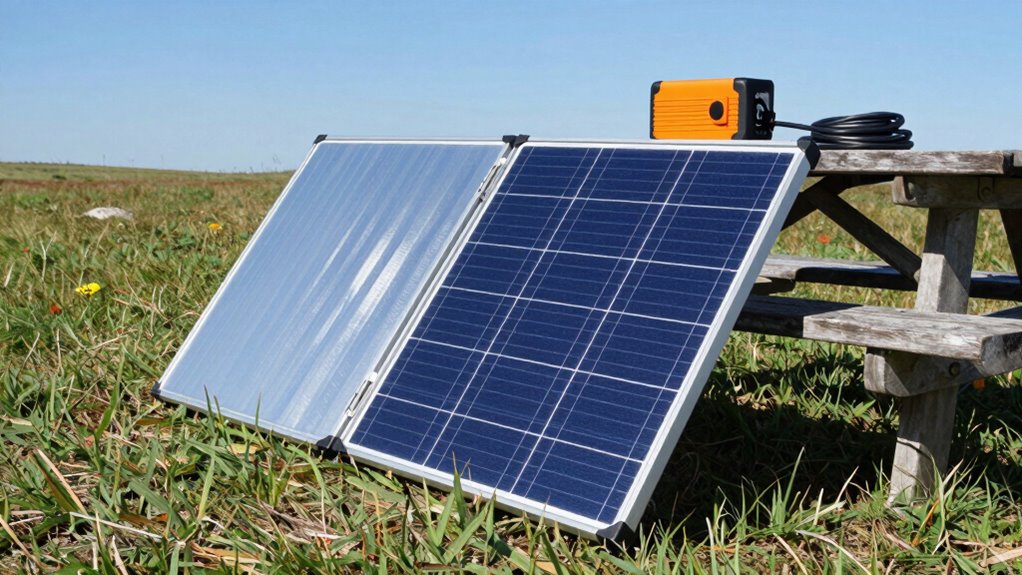
Setting up your 400W foldable solar panel is a straightforward process that guarantees you get the most efficient energy collection. However, to guarantee optimal performance, you need to pay attention to proper installation and ongoing maintenance. One of the most common mistakes is neglecting solar panel maintenance, which can considerably reduce your panel’s efficiency over time. Dirt, dust, bird droppings, and debris can block sunlight and diminish energy output. Regularly inspecting your panel, gently cleaning its surface with a soft cloth or sponge, and removing obstructions help keep your portable power solutions functioning at peak capacity. Remember, a clean panel is a productive panel, especially when you’re off-grid and relying solely on solar power.
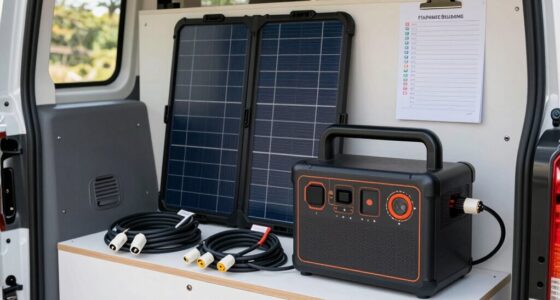
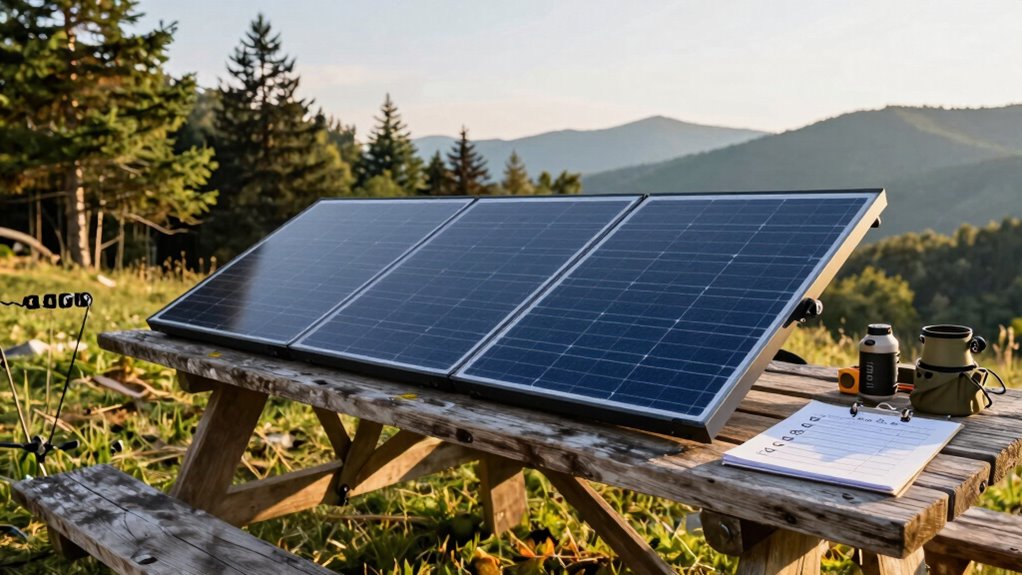
Another mistake to avoid is improper placement. Your solar panel should face the sun directly, ideally at a 30 to 45-degree angle, depending on your latitude. Many users tend to set up their panels in shaded areas or misjudge the ideal angle, which hampers energy collection. Be vigilant about shading from trees, tents, or nearby objects throughout the day, especially during peak sunlight hours. Adjusting your panel’s position as the sun moves can maximize exposure and boost your energy harvest. Also, ensure your panel is stable and securely set up to withstand wind or movement, which can cause misalignment or damage.
When setting up your portable power solutions, it’s vital to check your connections thoroughly. Loose or faulty wiring can cause power loss or even safety hazards. Use high-quality connectors and inspect them regularly for corrosion or damage. Keep an eye on your charge controller and battery connections, making sure they’re tight and free of corrosion. Proper wiring ensures your system works smoothly and prolongs the lifespan of your solar setup. Additionally, understanding your system’s power capacity helps you plan your energy usage effectively and prevents potential overloads.
Finally, many off-grid users overlook the importance of understanding their system’s capacity and limitations. Knowing how much power your 400W panel generates and how it aligns with your energy needs prevents overloading or underutilizing your system. Avoid the mistake of ignoring manufacturer instructions or skipping calibration checks, which can lead to inefficiencies. Regularly monitor your system’s performance and keep detailed records of energy production and consumption. This way, you can identify issues early and optimize your setup for consistent, reliable power on your adventures. Proper installation, regular maintenance, and awareness of your system’s capabilities are key to making your foldable solar panel an effective, long-lasting portable power solution.
Frequently Asked Questions
How Long Does It Take to Fully Charge a 400W Solar Panel?
Charging time for your 400W solar panel depends on panel efficiency and sunlight conditions. Typically, under ideal sunlight, it takes about 4-6 hours to fully charge a compatible battery system. Factors like shading, angle, and weather can extend this time. To optimize charging, confirm your panel is positioned correctly and kept clean. You’ll get the most efficient charging during peak sunlight hours, helping you stay powered on your off-grid trip.
Can Foldable Solar Panels Withstand Harsh Weather Conditions?
Yes, foldable solar panels can withstand harsh weather conditions, but their weather resilience depends on quality and construction. Look for panels with durability testing that guarantees they resist rain, snow, and wind. High-quality materials and robust design enhance their resilience, so choose panels tested for extreme conditions. Regularly check for any damage or wear, and store them properly when not in use to prolong their lifespan and maintain peak performance in tough weather.
What’s the Optimal Angle for Positioning the Solar Panel?
You should set your foldable solar panel at an ideal angle of about 30 to 45 degrees for maximum sun exposure. Adjust your panel tilt throughout the day to follow the sun, or use a sun tracking system if possible. Proper panel tilt ensures efficient energy capture, especially during different times of the year, so regularly repositioning your panel helps you get the most out of your 400W setup.
How Do I Maintain and Clean the Solar Panel Effectively?
You might think cleaning your solar panel is a hassle, but proper maintenance keeps it efficient. Use gentle cleaning techniques like a soft cloth or sponge with water and mild soap, avoiding abrasive materials. Follow a regular maintenance schedule, ideally every 1-3 months, especially after dusty or rainy days. Periodically check for dirt, debris, or corrosion, and guarantee connections stay secure for *maximum* performance.
Is a Portable Inverter Necessary for Off-Grid Use?
Yes, a portable inverter is necessary for off-grid use, especially if you need to power AC devices. It converts DC power from your solar panel into usable AC electricity. Look for an inverter with high inverter efficiency to minimize energy loss. Without it, you might struggle to run appliances smoothly or maximize your solar setup’s potential. A good portable inverter guarantees reliable power and better overall system performance during your off-grid adventures.
Conclusion
Think of your 400W foldable solar panel as a sturdy sail, catching the sun’s energy to power your off-grid adventures. When set up correctly, it’s like steering a reliable vessel through uncharted waters, avoiding common pitfalls. Keep your checklist close—just as a captain trusts their compass—so you can confidently harness the sun’s power and reach your destination safely. With proper care, your solar setup becomes the guiding star on your journey ahead.