
To guarantee a safe and durable setup for your pop-up canopy at festivals, you need to secure it with sturdy stakes, drive them at a 45-degree angle, and double-check all fasteners. Adjust the height gradually, especially in windy conditions, and keep the frame evenly tensioned. Avoid rushing the process and always verify everything is secure before use. Keep safety in mind, and you’ll be well on your way—continue to the next steps for even better results.

Get audio and creator gear delivered free with Prime
- Fast, free delivery on millions of items
- Prime Video, Amazon Music and more included
- Member-only deals all year
Key Takeaways
- Use appropriate, deep-penetrating stakes and drive them at a 45-degree angle for secure anchoring.
- Adjust canopy height gradually, ensuring stability after each change, especially in windy conditions.
- Distribute tension evenly on the fabric and keep the frame symmetrical for optimal stability.
- Avoid rushing; double-check all connections, stakes, and adjustments before finalizing the setup.
- Regularly inspect tension and anchoring during the event, adjusting for weather changes to ensure safety and durability.
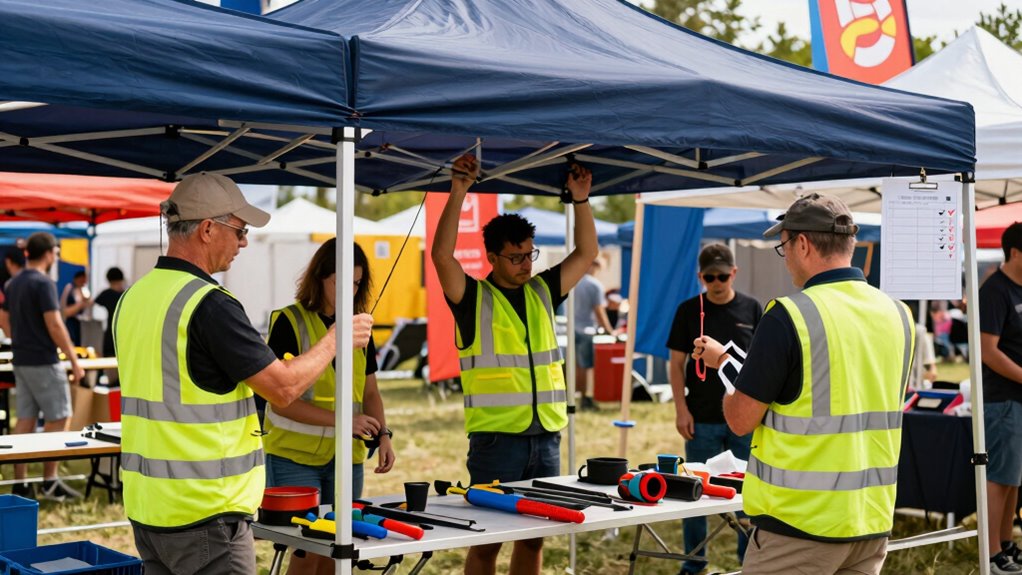
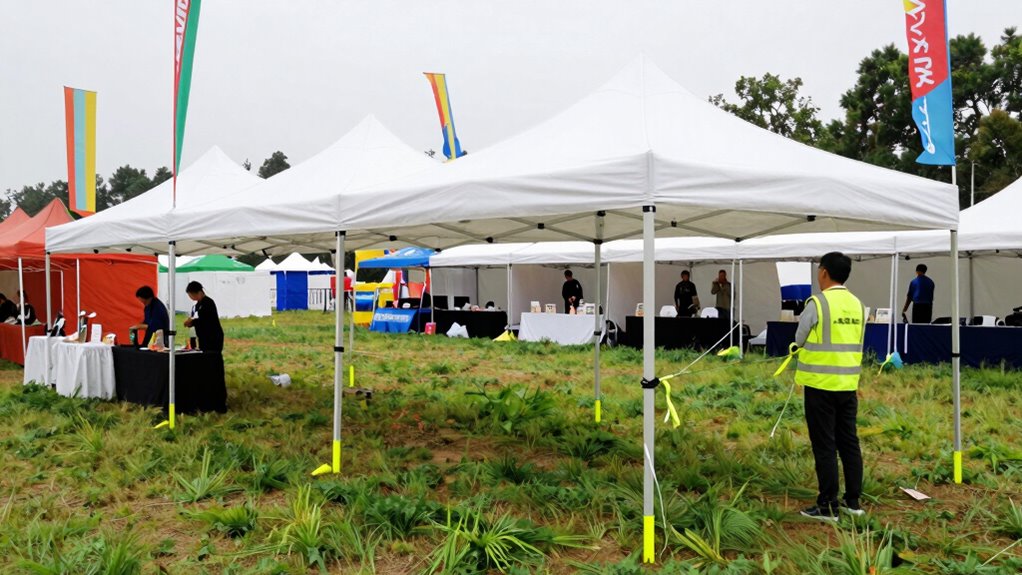
Setting up a heavy-duty pop-up canopy at a festival requires careful preparation to guarantee safety and efficiency. One of the most common mistakes is neglecting to secure the canopy properly. To prevent this, you need to use sturdy tent stakes designed for outdoor use. These stakes hold the canopy in place, especially in windy conditions, reducing the risk of it collapsing or flying away. Choose stakes that are long enough to penetrate deep into the ground, providing maximum stability. When installing, make sure each stake is driven in at a 45-degree angle away from the canopy to increase hold and prevent slipping. Don’t forget to check the soil type; sandy or rocky ground may require specialized stakes or additional anchoring methods.
Another essential aspect is adjusting the canopy height correctly. Many people overlook the importance of setting the canopy at an ideal height—not too high, not too low. A proper canopy height ensures enough clearance for people and equipment and prevents it from becoming a safety hazard. When raising the canopy, do so gradually, checking for stability after each adjustment. Keep in mind that a higher canopy can catch more wind, so if the weather turns bad, lowering it slightly might be wise. Conversely, if you need more visibility or space, raising it appropriately is helpful, but always verify the structure remains secure. Proper canopy tension is vital for overall stability and longevity of the setup.
It’s also easy to overlook the importance of evenly distributing tension across the canopy’s fabric. When you set up your canopy, make sure the fabric is taut and the frame is symmetrical. This prevents sagging, which can cause tears or make the structure unstable in wind. Proper tension also helps the canopy maintain its shape and prolongs its lifespan. Remember to double-check all connections and fasteners, tightening them as needed before fully staking the canopy down.
Finally, don’t rush the setup process. Take your time to double-check each step, especially when anchoring with tent stakes and adjusting the canopy height. Rushing can lead to missed steps, which might cause safety issues or damage the canopy. By paying attention to detail, using the right stakes, and setting the canopy at an appropriate height, you guarantee your festival setup is both safe and durable. This preparation minimizes the risk of accidents and allows you to focus on enjoying the event or providing excellent service to your guests.
heavy-duty outdoor canopy stakes
As an affiliate, we earn on qualifying purchases.
As an affiliate, we earn on qualifying purchases.
Frequently Asked Questions
How Long Does It Typically Take to Set up a Heavy-Duty Pop-Up Canopy?
You can typically expect a setup duration of about 10 to 20 minutes for your heavy-duty pop-up canopy. The assembly time depends on your experience and the canopy’s size, but with practice, it becomes quicker. To save time, make certain all components are ready beforehand and follow the manufacturer’s instructions carefully. Taking these steps helps you avoid common mistakes and guarantees a smooth, efficient setup process.
What Weather Conditions Should I Consider Before Setting up the Canopy?
Before setting up your canopy, check the weather for wind resistance and rain protection. If strong winds are forecasted, avoid setting it up or secure it firmly with weights. For rain, verify your canopy has a waterproof top and proper drainage. Don’t forget to monitor weather updates, as sudden changes can compromise stability and safety. Planning ahead will help your setup withstand adverse weather conditions effectively.
Are There Specific Safety Precautions for High Wind Situations?
Think of your canopy as a ship facing rough seas. In high wind situations, prioritize safety by checking wind resistance ratings and securing it with proper anchoring techniques. Use heavy-duty stakes, sandbags, or weights to stabilize the structure, and avoid setting up in extreme gusts. Always monitor weather updates and be ready to dismantle the canopy if winds intensify, preventing accidents and ensuring everyone’s safety.
How Often Should the Canopy Be Inspected for Wear and Tear?
You should inspect your canopy for wear and tear before every event and periodically during long festivals, ideally every few hours. Regular canopy maintenance helps catch issues early, preventing accidents. Inspection frequency depends on usage and weather conditions, but a thorough check after setup and before teardown is essential. Look for frayed fabric, loose joints, or damaged straps, and address any problems immediately to guarantee safety and longevity.
Can the Canopy Be Used on Uneven or Rocky Surfaces?
You can use a heavy-duty pop-up canopy on uneven or rocky surfaces, but you need to guarantee ground stability and surface suitability first. Use sturdy stakes or weights designed for rough terrain to secure your canopy properly. Avoid soft or loose ground that might compromise stability. Always check that the surface is suitable for anchoring, and consider using additional support if the terrain is particularly challenging to prevent accidents.
festival pop-up canopy tension straps
As an affiliate, we earn on qualifying purchases.
As an affiliate, we earn on qualifying purchases.
Conclusion
So, next time you’re rushing to set up your heavy-duty pop-up canopy, remember: the biggest mistake isn’t forgetting the stakes or skipping the instructions—it’s thinking you don’t need a checklist. After all, what could possibly go wrong? Ironically, taking a moment to double-check might be the one thing that keeps your festival experience from turning into a comedy of errors. Stay vigilant, follow the list, and enjoy the festival—preferably under a sturdy canopy.
As an affiliate, we earn on qualifying purchases.
heavy-duty tent stakes for rocky ground
As an affiliate, we earn on qualifying purchases.
As an affiliate, we earn on qualifying purchases.
Halloween Picks
halloween
As an affiliate, we earn on qualifying purchases.