
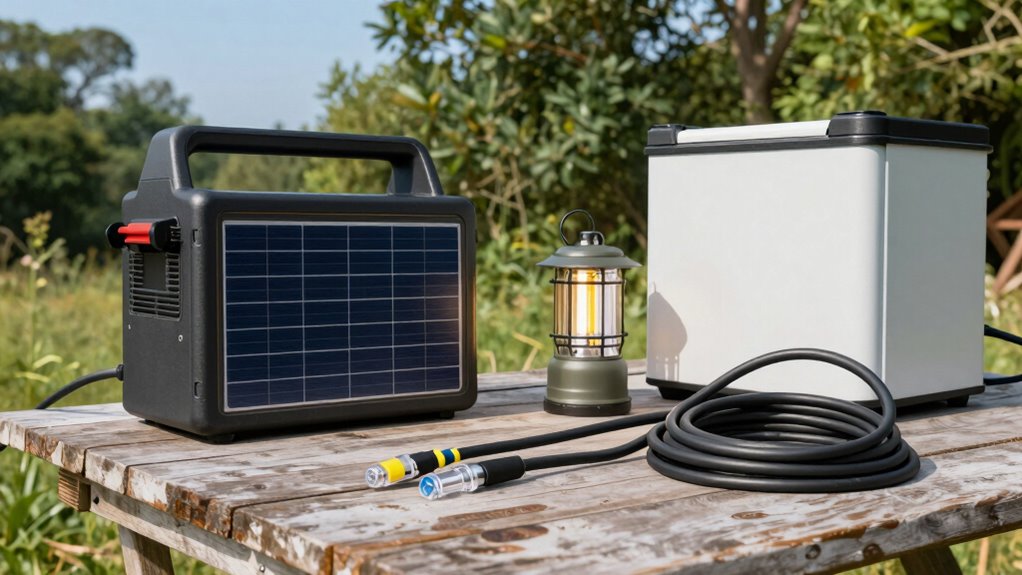

To build a safer camp power setup without overcomplicating it, keep it simple and follow essential safety tips. Place your generator outdoors at least 10-20 feet from tents, and avoid indoor use. Use outdoor-rated extension cords, regularly inspect cords and batteries for damage, and keep everything organized and off the ground. Proper ventilation, secure placement, and routine maintenance are key. Stay attentive to these basics, and you’ll create a safe, effective setup you can trust. Keep exploring to learn more.

Get audio and creator gear delivered free with Prime
- Fast, free delivery on millions of items
- Prime Video, Amazon Music and more included
- Member-only deals all year
Key Takeaways
- Position generators outdoors at least 10-20 feet from enclosed spaces and on stable, flat surfaces.
- Use heavy-duty, outdoor-rated extension cords and avoid overloading the generator.
- Store batteries securely in well-ventilated areas, away from heat and damage sources.
- Keep electrical cords organized, off the ground, and regularly inspect for damage.
- Ensure all users understand basic safety practices and keep fire extinguishers nearby.
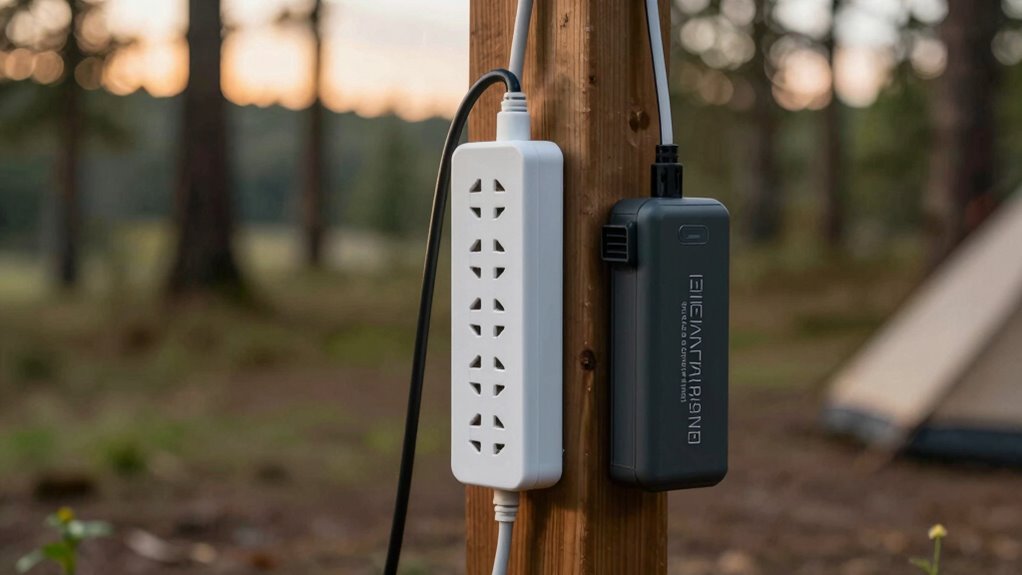
Are you prepared to set up a safe and reliable power system at your campsite? Guaranteeing safety is essential, especially when dealing with electrical equipment. Starting with battery safety, always handle batteries carefully, avoiding punctures or leaks that can release harmful chemicals. Use proper containers and keep batteries away from heat sources or open flames. Make certain your batteries are in good condition, with no corrosion or damage, to prevent accidents. When connecting batteries, follow manufacturer instructions precisely, and never overload the system. Using the right cables and connectors is crucial; thick enough wires prevent overheating and assure efficient power flow. Keep your batteries secured in a well-ventilated area, and avoid stacking them on uneven surfaces to prevent tipping or damage. Proper ventilation is vital for both batteries and generators to prevent buildup of dangerous gases. Adequate ventilation also helps disperse any potentially toxic fumes, ensuring a safer environment around your power setup. Maintaining a clean and organized workspace around your batteries can further reduce the risk of accidents, especially when handling electrical components. Regularly inspecting your equipment and practicing good safety protocols can significantly lower risks of mishaps. Additionally, understanding battery chemistry is important to handle different types safely and effectively.
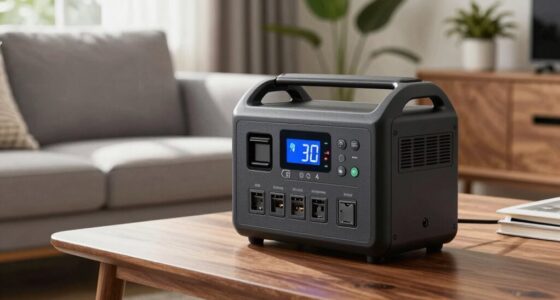
Generator placement is equally important for safety and efficiency. Position your generator outdoors, at least 10 to 20 feet away from your tent or any enclosed space, to prevent carbon monoxide buildup. Never operate a generator inside your tent, camper, or garage—this poses a serious risk of poisoning. Place it on a flat, stable surface, away from high-traffic areas, to avoid accidental contact or tripping hazards. Make certain the generator is protected from rain or moisture, but do not enclose it in a sealed space, as proper ventilation is necessary to prevent overheating. Keep cords organized and off the ground to reduce trip hazards, and regularly inspect them for damage before use. When connecting your generator to your campsite, use heavy-duty extension cords rated for outdoor use, and never overload the generator beyond its capacity.
Combining these safety steps creates a dependable power setup that keeps everyone safe. Always read and follow all safety guidelines provided by equipment manufacturers. Regularly check your batteries and generator for any signs of wear or damage, and perform maintenance as needed. Keep a fire extinguisher nearby, just in case, and ensure everyone in your group understands basic electrical safety practices. By managing battery safety and proper generator placement, you minimize risks like fires, poisoning, or electrical failures. Building a safer camp power setup doesn’t mean overcomplicating things; it means being deliberate and attentive to safety details. With the right precautions, you can enjoy your camping trip with peace of mind, knowing your power system is both reliable and safe. Proper system design is essential for integrating all safety measures effectively.
outdoor generator safety enclosure
As an affiliate, we earn on qualifying purchases.
As an affiliate, we earn on qualifying purchases.
Frequently Asked Questions
What Are the Best Portable Power Sources for Camping?
You should consider portable power sources like solar panels and portable generators for camping. Solar panels are eco-friendly, quiet, and recharge during the day, making them great for small devices. Portable generators offer more power for larger appliances and can run on gasoline or propane. Combining both gives you reliable, safe power without overcomplicating your setup, ensuring you stay connected and comfortable in the wilderness.
How Do I Prevent Power Surges in My Camp Setup?
Think of your camp setup like a well-trained guard dog—alert and ready. To prevent power surges, always use surge protectors to shield your devices, and guarantee proper grounding techniques are in place. Keep your power sources stable, avoid overloading outlets, and regularly check connections. These steps create a safe environment, making sure your camping adventure stays powered without surprises, just like a loyal guardian watching over your gear.
Can I Use Household Appliances Safely Outdoors?
You can use household appliances outdoors safely if you follow proper outdoor wiring and appliance safety practices. Make sure your appliances are rated for outdoor use, and keep all connections protected from moisture with waterproof covers. Use extension cords designed for outdoor use, and avoid overloading circuits. Always inspect cords and plugs for damage before use, and unplug appliances when not in use to prevent accidents or electrical hazards.
What Maintenance Is Required for Camp Power Equipment?
You should regularly perform battery maintenance by checking for corrosion, making sure connections are tight, and charging it properly. Additionally, conduct equipment inspection before each use to spot any damage or wear, like frayed cords or cracks. Keeping your camp power setup well-maintained ensures safety and reliability. Don’t forget to clean terminals and store equipment properly when not in use, so everything stays in good working condition.
How to Store Backup Power Supplies Securely?
You should store emergency backups in a secure, dry location away from extreme temperatures to prevent damage. Use lockable cabinets or safes, and consider security measures like surveillance or alarms to deter theft. Label backups clearly for quick access in emergencies, and regularly check their condition. This way, your backup power supplies stay protected and ready when you need them, ensuring safety without overcomplicating your camp power setup.
heavy-duty outdoor extension cords
As an affiliate, we earn on qualifying purchases.
As an affiliate, we earn on qualifying purchases.
Conclusion
Building a safer camp power setup doesn’t have to be complicated. Just follow simple safety tips, use proper equipment, and regularly check your connections. Did you know that electrical accidents are responsible for nearly 5,000 injuries annually in outdoor settings? Staying vigilant and prepared can drastically reduce your risk. Keep safety first, and enjoy your camping adventures worry-free. With these basics, you’ll power up confidently and safely every time.
As an affiliate, we earn on qualifying purchases.
As an affiliate, we earn on qualifying purchases.
Fall Picks
fall essentials
As an affiliate, we earn on qualifying purchases.




![Iron Maiden Legend Nicko McBrain Turned Down Trump Golf Invite: “[He] Should Be Put In Jail”](https://deadsetlive.com/wp-content/uploads/2026/10/iron-maiden-legend-nicko-mcbrain-turned-down-trump-golf-invite-he-should-be-put-featured-260x140.jpg)