
To choose a campsite like a veteran, look for flat, level ground free of roots and sharp objects, ensuring stability and comfort. Avoid low-lying areas prone to flooding, and find spots with natural windbreaks or shade for protection. Stay away from busy trails or animal trails to keep things quiet and private. Pay attention to natural features, drainage, and environmental safety, and make sure of easy access to water sources. If you’re curious to learn more, there’s plenty to consider before settling in.
Key Takeaways
- Prioritize flat, well-drained ground free of roots and rocks to ensure comfort and stability.
- Select a location away from water sources, animal trails, and high-traffic areas for safety and privacy.
- Use natural features like trees and rocks as windbreaks and for added protection from the elements.
- Check for signs of wildlife activity or insect nests to avoid disturbances and encounters.
- Ensure the site is clear of overhanging branches and dry debris, and assess safety before setting up camp.
What Are the Key Factors for a Safe and Comfortable Campsite?
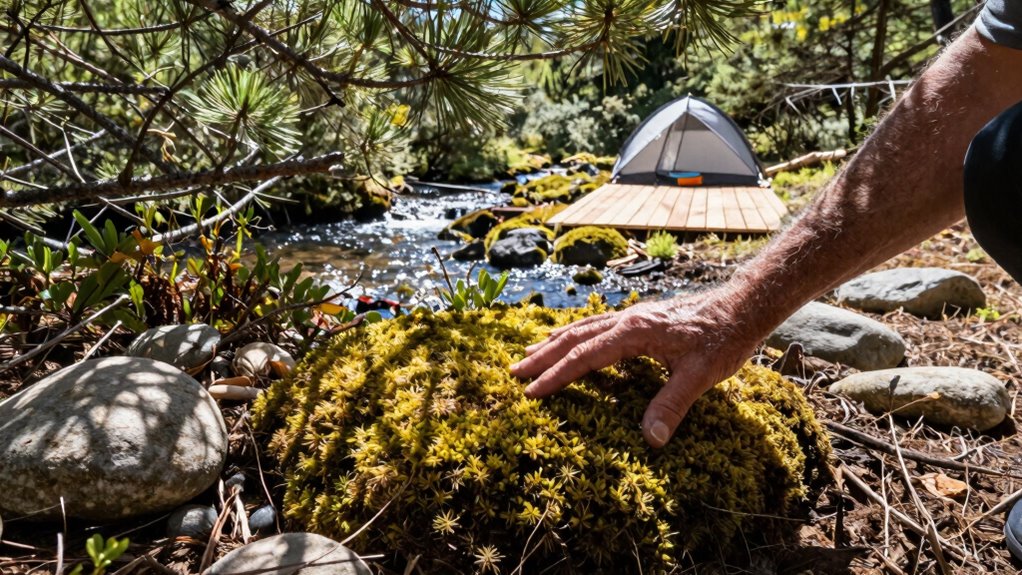
Choosing a safe and comfortable campsite begins with evaluating its location. You want to find a spot that’s away from low-lying areas prone to flooding and away from dead trees or branches that could fall. Pay attention to campfire safety by selecting a clear, open area for your fire, free of overhanging branches and dry leaves. This reduces the risk of wildfires and keeps your fire contained. Wildlife awareness is also vital; avoid spots near animal trails or food sources to prevent unwanted encounters. Look for established campsites or cleared areas that minimize environmental impact. Being mindful of location not only enhances safety but also ensures a more enjoyable, stress-free camping experience. Additionally, choosing a site with natural features can enhance your outdoor experience and provide added protection from the elements.
How to Find Flat, Root-Free Ground

Finding flat, root-free ground is essential for a comfortable night’s sleep and a stable tent setup. To guarantee good ground stability, look for an area with even terrain and minimal roots or rocks. Check the soil moisture; dry, compacted soil offers better support and reduces the risk of sinking or shifting. When scouting your site, keep these tips in mind:
Choose flat, firm ground free of roots and rocks for a stable, comfortable campsite.
- Clear away loose roots and sharp objects before pitching your tent
- Press down on the ground to test for softness or excessive moisture
- Avoid slopes or uneven patches that could cause shifting during sleep
- Seek out flat, compacted soil with good drainage for dryness and stability
- Consider sleep-friendly ground conditions that enhance comfort and safety throughout the night.
Choosing a Location Near Water, Shade, and Scenic Views
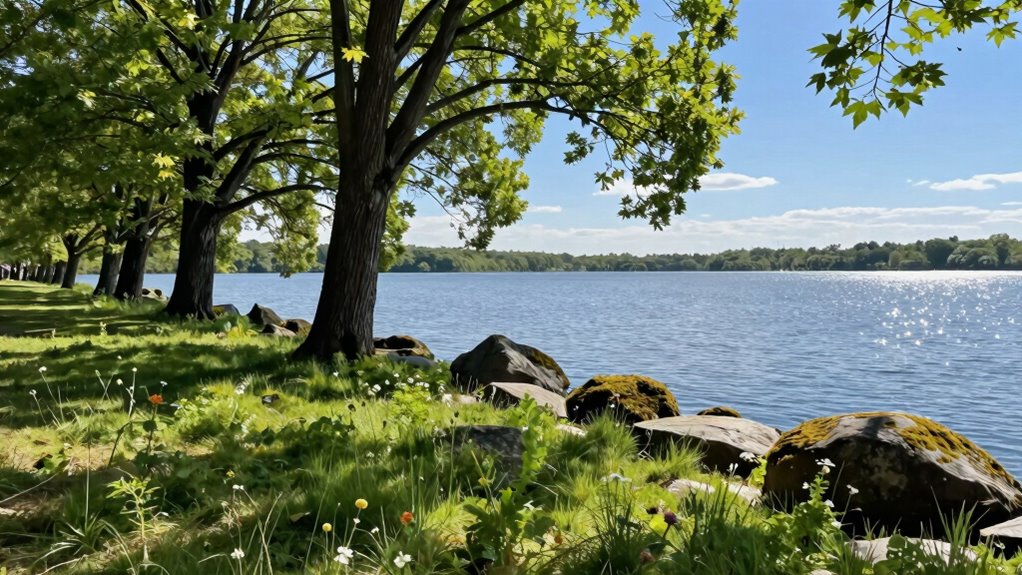
After selecting a flat, stable spot, consider how the location interacts with its surroundings. Choosing a site near water offers easy access for cooking and hydration, but stay mindful of wildlife awareness—avoid setting up too close to water to prevent attracting animals or creating environmental impact. Seek shaded areas to stay cool and comfortable, especially during hot days, but respect campsite etiquette by avoiding blocking natural shade for others. Scenic views enhance your experience, so pick a spot that offers pleasing surroundings without disturbing local wildlife or vegetation. Always remember to leave no trace, keeping the environment pristine for future visitors and wildlife alike. Balancing these factors ensures a respectful, enjoyable camping experience close to nature’s beauty.
How to Check for Good Drainage and Avoid Flooded Spots

Before setting up camp, look closely at the terrain slope to guarantee water won’t collect around you. Check for low spots where water might pool after rain, and avoid these areas. A little careful observation now can save you from a flooded campsite later. Additionally, understanding drainage principles can help you identify areas prone to poor water runoff before pitching your tent.
Observe Terrain Slope
To guarantee your campsite stays dry and comfortable, you need to check the terrain slope carefully. Good terrain assessment involves spotting slope indicators that show how water will drain. Look for signs like:
- Slanting ground away from where you plan to set up
- Natural drainage paths or small channels
- Areas that seem water-saturated or muddy
- Consistent incline without flat spots prone to pooling
Avoid flat or bowl-shaped areas that trap water. Instead, choose a spot on a gentle slope where water naturally runs off. Keep in mind that steep slopes can cause erosion, so aim for a moderate incline. Properly observing terrain slope helps prevent flooding and ensures a dry, comfortable campsite. Being familiar with repair fundamentals can help you address minor site issues, like fixing drainage problems or stabilizing the ground if needed.
Check for Low Spots
How can you tell if a spot drains well and isn’t prone to flooding? Look for low spots where water might collect after rain. Check the surrounding terrain—if water pools or flows toward the area, it’s a bad choice. Observe wildlife signs: animals tend to avoid flooded or muddy patches, so their absence suggests good drainage. Also, examine tree health; healthy trees with strong roots and no signs of water stress indicate proper drainage. Use this quick checklist:
| Feature | What to Look For | Why It Matters |
|---|---|---|
| Wildlife Signs | Few or no animals in low areas | Avoid flooded spots |
| Tree Health | Healthy, upright trees | Indicates good drainage |
| Terrain Slope | Slight incline away from the spot | Prevents water pooling |
Choosing high, well-drained ground keeps you dry and comfortable. Additionally, understanding the terrain’s drainage capacity can help you pick the best spot for camping.
What Environmental Factors Should You Consider: Wind, Sun, Wildlife?

Considering environmental factors is vital when choosing a campsite, as they can greatly impact your comfort and safety. Wind can cause discomfort or blow debris into your gear, so look for natural windbreaks like trees or rocks. Sun exposure affects your energy levels and hydration—seek shaded spots or plan for shade during the hottest parts of the day. Wildlife considerations are also essential; avoid areas with frequent animal activity or signs of nesting, which could lead to unexpected encounters. Additionally, think about proximity to water sources, but keep a safe distance from animal trails. Be mindful of the terrain’s slope and avoid low-lying areas prone to flooding. Proper site selection can help you avoid many common camping hazards. By paying attention to these factors, you guarantee a safer, more enjoyable camping experience.
How to Find a Privacy-Friendly Campsite Away From Crowds

To find a campsite with more privacy, start by scouting remote locations away from busy trails. Avoid popular spots that draw crowds, and make sure to use detailed maps to identify lesser-known areas. This approach helps you discover quiet, secluded sites where you can enjoy nature undisturbed. Additionally, cultivating a connection with your inner wisdom can guide you toward choosing sites that truly resonate with your personal preferences.
Scout Remote Locations
Finding a remote campsite that offers privacy and solitude requires some effort, but it’s well worth it for a peaceful outdoor experience. To locate these spots, explore less-traveled areas and use topographic maps or satellite imagery. Look for spots away from main trails, water sources, and developed areas. When scouting, keep these tips in mind:
- Check for signs of recent human activity
- Observe wildlife behavior and avoid disturbing habitats
- Identify flat, sheltered areas for camping
- Ensure the site allows safe campfire setup, prioritizing campfire safety
- Pay attention to contrast ratio to assess natural lighting conditions and ensure a comfortable camping environment.
Avoid Popular Trails
Avoiding popular trails is key to securing a quiet, private campsite. By choosing less-traveled paths, you minimize noise and avoid crowded spots that attract many campers. This not only enhances your privacy but also reduces the risk of disturbing wildlife. When setting up camp, prioritize campfire safety by keeping fires small, clear of overhanging branches, and completely extinguishing them before leaving. Staying off busy trails also helps you stay aware of local wildlife, making it easier to spot animals and avoid conflicts. Remember, a quieter, less-visited area means you’re more likely to enjoy solitude and a peaceful night’s sleep. Plus, it allows you to observe nature more closely without the constant buzz of other visitors. Additionally, exploring decentralized systems for navigation and information can help you find hidden spots away from crowded areas, ensuring a more authentic outdoor experience.
Use Maps Effectively
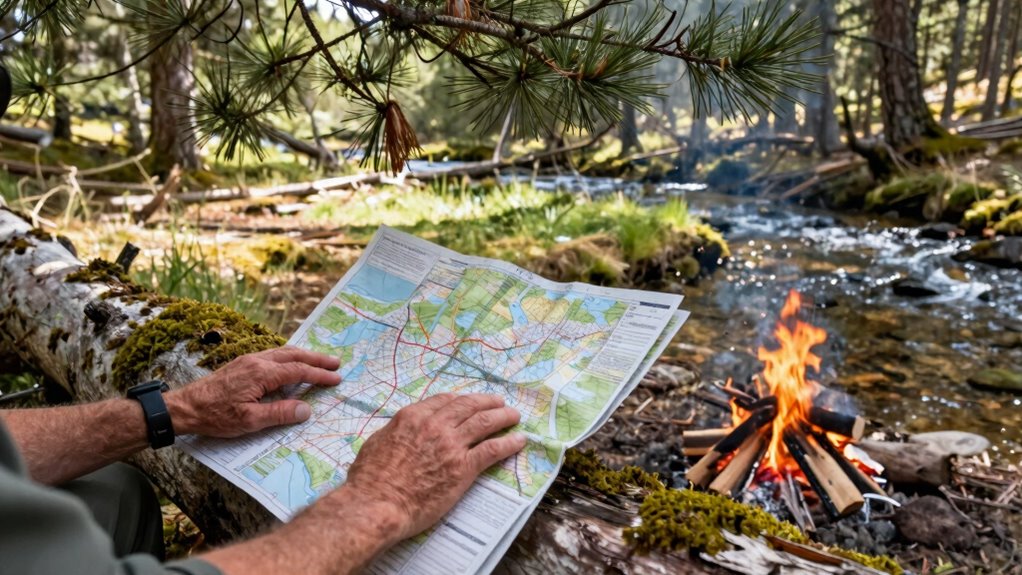
Using maps effectively is essential for locating campsites that offer privacy and solitude away from crowds. Sharpen your navigation skills by understanding map symbols, which reveal trail types, water sources, and terrain features. Look for less-traveled routes or smaller side trails that can lead to quiet, hidden spots. Pay attention to contour lines to avoid steep, exposed areas, and identify natural features like thick woods or rocky outcroppings that provide cover. Use topographic maps to find secluded clearings or flat areas away from main paths. Remember, a well-read map helps you plan a route that steers clear of popular sites, ensuring you find a peaceful campsite away from crowds. Understanding terrain features can greatly enhance your ability to select the perfect hidden spot.
Tips to Confirm Your Campsite Is Perfect Before Setting Up
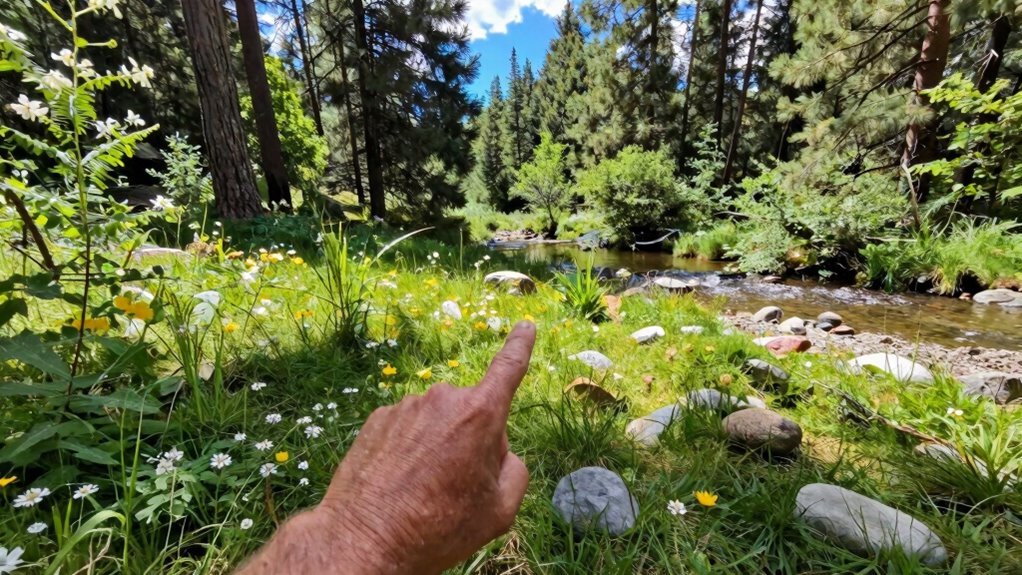
Before setting up your tent, take a few moments to thoroughly inspect your chosen spot. Look for flat, level ground free of rocks and roots to guarantee comfortable sleeping and stability. Check for signs of animal activity or insect nests, especially near tall grass or bushes. Confirm the area is safe for a campfire by ensuring it’s away from overhanging branches and dry debris, supporting good campfire safety. Test the ground’s firmness to determine if it’s suitable for tent setup tips. Also, verify easy access to water and an appropriate distance from water sources to prevent flooding. When you’re confident, proceed with your tent setup, keeping safety and comfort in mind. Proper preparation ensures a smooth, enjoyable camping experience.
Frequently Asked Questions
How Can I Identify Signs of Wildlife Activity Near My Campsite?
You can identify signs of wildlife activity near your campsite by tracking signs like footprints, droppings, and scratch marks on trees. Use scent detection by sniffing around for fresh or unusual odors, which indicate recent animal presence. Look for disturbed vegetation or nests, and listen for sounds like rustling or calls. Staying alert to these signs helps you stay aware of nearby wildlife, ensuring a safer and more enjoyable camping experience.
What Are the Best Ways to Minimize Environmental Impact While Camping?
Think of yourself as a gentle river flowing through nature, leaving only ripples. To minimize impact, follow Leave No Trace principles and eco-friendly practices, like packing out all trash and staying on established trails. Respect wildlife and fragile plants, avoiding disturbance. By acting thoughtfully, you preserve the landscape’s beauty for others and future adventures, ensuring your presence nurtures rather than harms the environment around you.
How Do Weather Changes Affect Campsite Safety and Comfort?
Weather changes can impact your campsite safety and comfort substantially. You need to stay weather prepared by checking forecasts before heading out and packing appropriate clothing choices for rain, cold, or heat. Sudden storms or temperature drops can make conditions risky or uncomfortable, so set up your tent in a well-drained area and have extra layers on hand. Being flexible and aware helps you adapt quickly and stay safe.
What Should I Do if I Encounter Insects or Pests at My Site?
If you encounter insects or pests at your site, stay calm and act quickly. Use insect repellent strategies like applying DEET-based sprays and wearing long sleeves. Pest-proofing tips include sealing food containers tightly and keeping your campsite clean to avoid attracting bugs. If pests persist, consider relocating slightly away from the infestation, and always keep your tent zipped shut. These simple steps help keep pests at bay and ensure a comfortable camping experience.
How Can I Tell if a Campsite Is Suitable for Extended Stays?
To determine if a campsite is suitable for extended stays, check the camping permit requirements and guarantee they allow longer visits. Look for good campsite accessibility, like nearby water sources and flat terrain for setting up a comfortable spot. Observe if amenities or facilities are available, and consider the area’s safety and noise levels. A well-maintained, permitted site with easy access makes your extended stay more enjoyable and worry-free.
Conclusion
By scouting flat, dry ground, considering water and shade, evaluating drainage and safety, and respecting the environment, you create a campsite that’s safe, comfortable, and memorable. Trust your instincts, double-check your surroundings, and stay flexible as you settle in. With these simple steps, you’ll camp like a veteran—prepared, confident, and ready to enjoy nature’s best. Remember, a great campsite isn’t just found; it’s made with care, awareness, and a keen eye.