
When comparing tents for weather, focus on features like fabric durability, ventilation, and waterproof coatings instead of marketing labels. Look for high-denier fabrics like ripstop nylon or polyester, reinforced seams, and weather-resistant coatings to handle harsh conditions. Check if the tent has adjustable vents, mesh panels, or windows for proper airflow. Evaluating these elements helps you choose a tent suited for your environment. If you keep exploring, you’ll find tips to make your choice even clearer.

Get audio and creator gear delivered free with Prime
- Fast, free delivery on millions of items
- Prime Video, Amazon Music and more included
- Member-only deals all year
Key Takeaways
- Assess fabric durability and waterproof coatings to determine the tent’s ability to withstand specific weather conditions.
- Evaluate ventilation features like adjustable vents and mesh panels to prevent condensation and ensure comfort in various climates.
- Examine weather resistance elements such as reinforced seams and storm flaps for protection against rain, wind, and hail.
- Consider overall design aspects that address climate-specific challenges, like snow load or high humidity.
- Match the tent’s features to your outdoor environment, focusing on climate-specific performance rather than marketing claims.
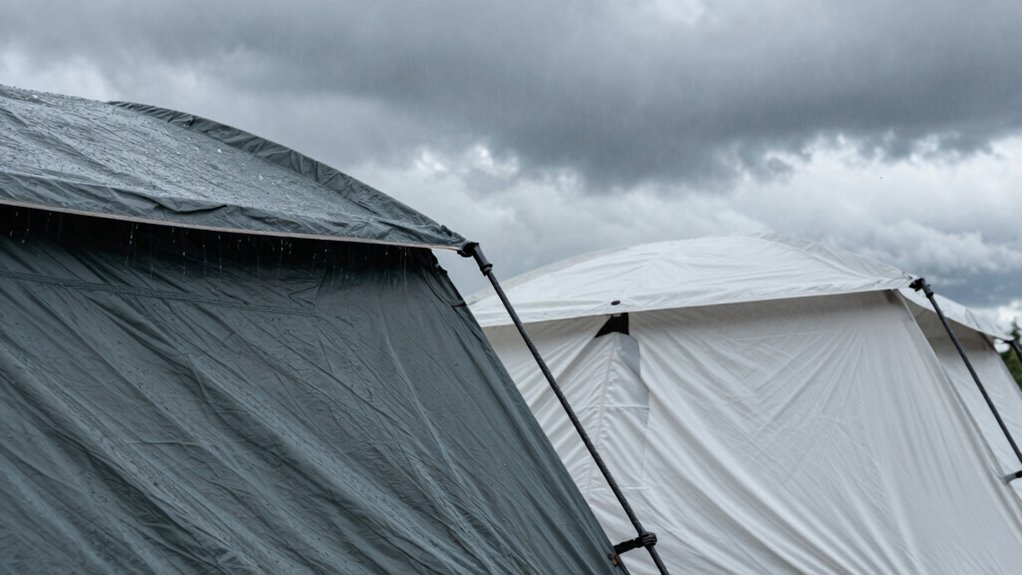
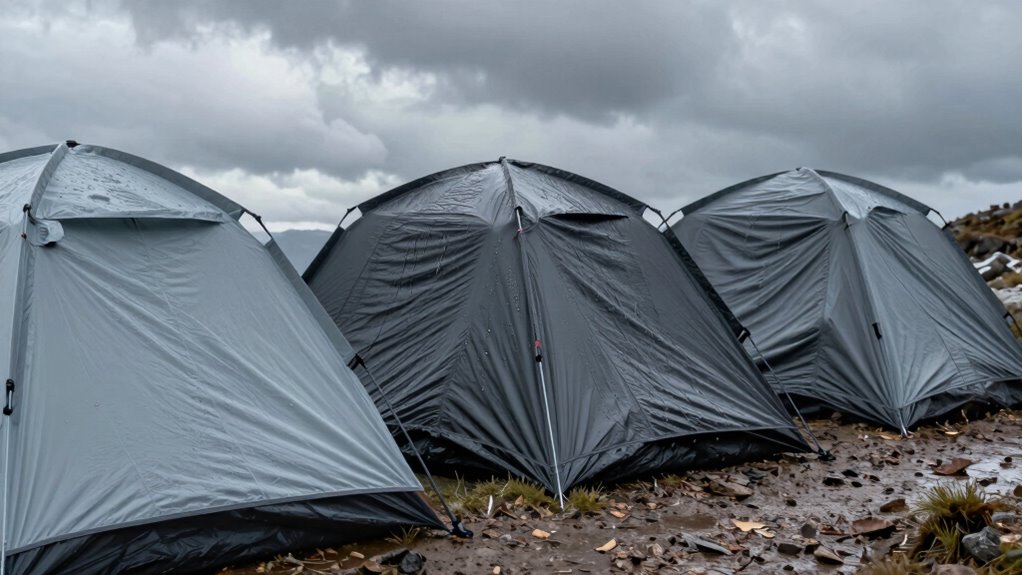
Choosing the right tent for your outdoor adventures depends heavily on the weather conditions you expect to face. Instead of relying solely on marketing labels like “all-weather” or “storm-proof,” you need to dig into the tent’s actual features, starting with fabric durability. High-quality tents use durable fabrics like ripstop nylon or polyester, which resist tears and abrasions, especially when you’re facing rough terrain or strong winds. Check the denier rating—higher numbers mean thicker, more resilient fabric. A tent with durable fabric will better withstand heavy rain, hail, or abrasion from branches, ensuring your shelter remains intact and dry. Also, look for tents with reinforced seams and waterproof coatings, such as polyurethane or silicone, which prevent leaks and extend the lifespan of the fabric under challenging conditions.
Next, pay close attention to ventilation features. Proper airflow is essential to prevent condensation from building up inside the tent, especially when you’re camping in humid or cold weather. Tents with well-designed ventilation systems, like adjustable vents, mesh panels, and windows, allow you to control airflow and reduce moisture buildup. This is *vital* because, even if the fabric is waterproof, poor ventilation can leave you damp and uncomfortable. When comparing tents, imagine how often you’ll need to open or close vents to regulate temperature and humidity. A tent with multiple, strategically placed ventilation options gives you flexibility, making it more suitable for a range of weather conditions. Mesh panels should be sizable enough to promote airflow but protected enough to keep bugs out. Additionally, understanding the fabric durability and how it withstands various weather stressors can help you make a more informed choice. Incorporating features designed for weather resistance can further improve your comfort and safety during unpredictable conditions. Considering the overall design and how it addresses specific weather challenges can further enhance your camping experience, especially when it includes thoughtful ventilation features that adapt to changing conditions. Being aware of climate-specific features can also ensure your tent performs well in different environments.
As an affiliate, we earn on qualifying purchases.
Frequently Asked Questions
How Do I Determine the Right Tent for Winter Conditions?
To choose the right tent for winter conditions, look for one with sturdy, insulated walls and a robust frame that can handle snow and wind. Check campground regulations to make certain your tent meets safety standards. Proper tent maintenance, like waterproofing and securing stakes, keeps you safe and comfortable. Prioritize features like a full-coverage rainfly and good ventilation to prevent condensation, guaranteeing your winter camping stays warm and dry.
What Features Are Essential for Rain-Resistant Tents?
To guarantee rain resistance, focus on fabric durability and seam sealing. Look for tents with waterproof, high-quality fabrics like polyester or nylon with a waterproof coating. Check if the seams are sealed or taped to prevent leaks. A rain-resistant tent should also have a rainfly that extends over the edges for extra protection. These features keep you dry and withstand heavy downpours, making your camping experience more comfortable.
How Does Tent Material Affect Weather Resistance?
Tent material is like a shield, directly impacting weather resistance. You’ll want durable fabrics that stand up to wind and rain, preventing leaks and tears. Breathability is equally important, as it helps moisture escape and keeps you comfortable inside. Opt for materials that balance durability with breathability, ensuring your tent withstands harsh weather while preventing condensation buildup, so you stay dry and comfortable during your adventures.
Can a Lightweight Tent Handle Heavy Snow?
A lightweight tent typically struggles with heavy snow because it lacks the necessary snow load capacity and insulation properties. Snow load refers to the weight the tent can support without collapsing, and lightweight designs usually don’t offer the durability needed for heavy snow. If you’re expecting significant snowfall, choose a tent specifically designed for snow, with sturdy frames and insulated materials to handle the weight and cold.
What Ventilation Features Improve Comfort in Humid Weather?
In humid weather, good ventilation features markedly improve comfort. Look for tents with enhanced ventilation design, such as mesh panels, adjustable vents, and windows that promote airflow. These features boost breathability benefits by reducing condensation and keeping the interior cool. When selecting a tent, prioritize models that maximize airflow, allowing fresh air to circulate and moisture to escape, ensuring a more comfortable, dry camping experience in humid conditions.
waterproof camping tent with reinforced seams
As an affiliate, we earn on qualifying purchases.
As an affiliate, we earn on qualifying purchases.
Conclusion
Now that you know how to compare tents based on weather suitability, you’re better equipped to make smart decisions for your outdoor adventures. Don’t just rely on flashy labels—dig into the specs and features that match the conditions you’ll face. Remember, the proof of the pudding is in the eating, so take your time to choose a tent that truly meets your needs. When you’re prepared, you can face any weather head-on and enjoy your trip to the fullest.
ventilated backpacking tent with adjustable vents
As an affiliate, we earn on qualifying purchases.
As an affiliate, we earn on qualifying purchases.
weather-resistant winter camping tent
As an affiliate, we earn on qualifying purchases.
As an affiliate, we earn on qualifying purchases.
Halloween Picks
halloween
As an affiliate, we earn on qualifying purchases.