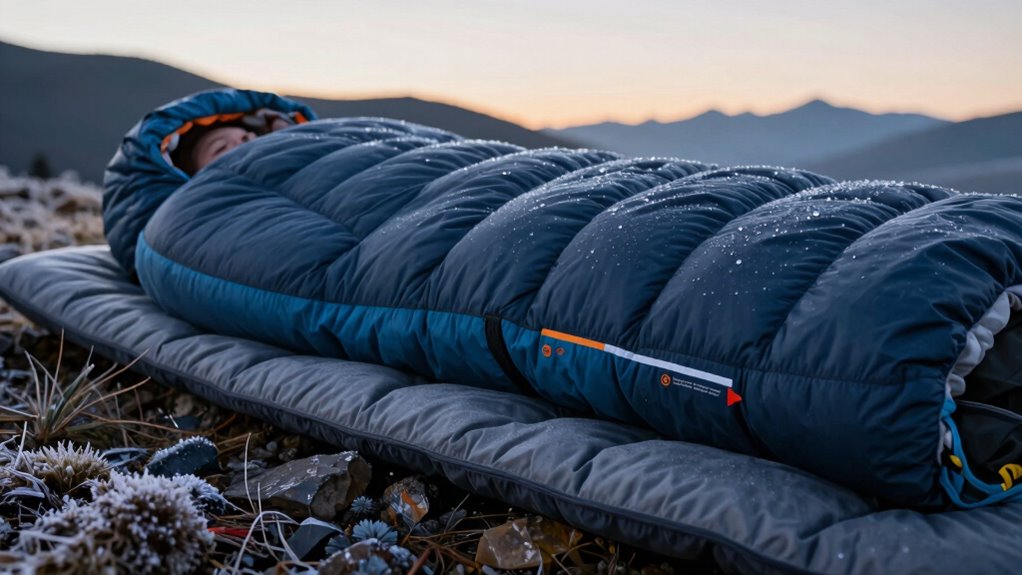

To size your sleeping system for temperature, focus on the actual forecasted conditions instead of seasonal labels. Check weather forecasts and historical climate data for your camping spot to understand expected temperature ranges. Choose sleeping bags with ratings that match or slightly exceed these temperatures, adding insulated pads for ground warmth. Layering or using accessories can also extend comfort. Keep testing gear in similar conditions, so you’re prepared—continue to explore more tips for a cozy night outdoors.

Get audio and creator gear delivered free with Prime
- Fast, free delivery on millions of items
- Prime Video, Amazon Music and more included
- Member-only deals all year
Key Takeaways
- Assess actual forecasted temperatures and historical climate data for accurate gear sizing.
- Choose sleeping bags with temperature ratings that match or slightly exceed expected night temperatures.
- Use insulated sleeping pads to add warmth, especially in colder conditions.
- Test your sleep system in similar conditions to confirm it maintains comfort and warmth.
- Adjust layers and gear combinations based on real-world testing rather than seasonal labels alone.

Choosing the right sleeping system for different temperatures can mean the difference between a restful night and a miserable one. When you’re out camping or backpacking, it’s essential to think beyond just the season names listed on your gear. Instead, focus on how your sleep insulation and camping gear work together to keep you warm and comfortable. Temperature variations can be unpredictable, so sizing your sleeping system correctly requires understanding how insulation layers, sleeping bag ratings, and your setup interact.
Start by evaluating the actual temperatures you expect to encounter. Don’t rely solely on seasonal labels like “summer” or “winter,” as they can be misleading. Check weather forecasts and historical data for your camping location. Once you know the range, consider your sleep insulation. Different sleeping bags and pads have specific R-values or temperature ratings, but these are just starting points. You need to match these ratings with your personal comfort level and the expected conditions. For colder temperatures, you’ll want more insulation, which means selecting a sleeping bag with a lower temperature rating and supplementing it with an insulated sleeping pad.
Evaluate actual expected temperatures and choose sleeping gear accordingly for optimal warmth and comfort.
Your camping gear plays a significant role in how well you retain heat. A good sleeping pad insulates you from the cold ground, which is often one of the biggest heat sinks during sleep. If you’re camping in cold weather, opt for a thicker, more insulated pad. Pair this with a sleeping bag designed for lower temperatures, and you’ll create a more effective barrier against the cold. Conversely, for warmer nights, a lighter sleeping bag and a less insulated pad might suffice, preventing you from overheating.
When sizing your sleeping system, think about layering. Sometimes, combining a sleeping bag with a liner or using a two-season bag can extend your comfort range. Understanding insulation ratings can help you make more informed choices for different conditions. Also, consider how your clothing choices and sleep system work together. If you’re layering up in your sleepwear, you might need a slightly higher temperature rating for your sleeping bag. Additionally, understanding the importance of insulation ratings can help you make more informed choices for different conditions. Properly assessing the thermal insulation of your gear ensures you select the right combination for your environment.
Finally, test your setup before heading into the wilderness. Use your camping gear in conditions similar to your planned trip to see if it keeps you warm enough. Making adjustments based on real-world experience ensures you’re not caught off guard by unexpected cold snaps or warm nights. Properly sizing your sleeping system based on actual conditions, not just season labels, guarantees better sleep and safer adventures.
As an affiliate, we earn on qualifying purchases.
Frequently Asked Questions
How Do Humidity Levels Affect Sleeping System Sizing?
Humidity impact plays a significant role in sizing your sleeping system. High humidity levels can cause moisture buildup, making your sleeping bag or sleeping pad less effective at insulation. You need better moisture management to stay dry and warm. Choose gear with breathable fabrics and moisture-wicking layers. If humidity is high, opt for a sleeping system designed for moisture control, ensuring you stay comfortable and dry throughout the night.
Can Layering Improve Temperature Regulation in Sleeping Systems?
Layering your sleep system is like building a cozy fortress against the cold, and yes, it definitely improves temperature regulation. By combining different insulation techniques, you can customize your warmth and adapt to changing conditions. Understanding sleep system basics helps you choose appropriate layers, from thermal liners to sleeping bags, ensuring you stay comfortable. Proper layering maximizes insulation, giving you better control over your temperature and a more restful night outdoors.
What Are the Best Materials for Extreme Cold Conditions?
For extreme cold conditions, you should prioritize down insulation and synthetic fabrics. Down insulation offers excellent warmth-to-weight ratio and compressibility, making it ideal for freezing temperatures. Synthetic fabrics, on the other hand, provide better insulation when wet and dry quickly, ensuring consistent warmth. Combining these materials in your sleeping system maximizes insulation and moisture resistance, keeping you warmer and more comfortable during harsh winter nights.
How Do Altitude Changes Impact Sleeping System Performance?
Imagine climbing higher and feeling the air thin out—altitude effects can make your sleeping system less effective. As you ascend, the cold intensifies, and performance adaptations become essential. You might need a warmer sleeping bag or additional insulation layers to combat lower oxygen and temperature. Altitude changes demand you adjust your gear, ensuring your sleep system keeps you warm, safe, and rested, no matter how high you go.
Is It Necessary to Upgrade Sleeping Systems for Variable Nighttime Temperatures?
Yes, upgrading your sleeping system for variable nighttime temperatures is necessary to guarantee better sleep. When temperatures fluctuate, your system’s insulation efficiency becomes vital, maintaining warmth without sacrificing comfort. A durable sleep system adapts to changing conditions, preventing cold spots and moisture buildup. By choosing versatile, high-quality gear, you enhance insulation efficiency and longevity, providing reliable warmth regardless of temperature shifts. This keeps you comfortable and well-rested on unpredictable nights.
insulated sleeping pad for cold weather
As an affiliate, we earn on qualifying purchases.
As an affiliate, we earn on qualifying purchases.
Conclusion
Sizing your sleeping system for the right temperature is like finding the perfect pair of shoes—you need a fit that keeps you comfortable without feeling cramped or too loose. By understanding your own warmth needs and choosing gear accordingly, you’ll stay cozy regardless of the weather outside. Don’t just rely on seasonal labels; measure your comfort level and select gear that truly matches. This approach guarantees restful nights, no matter the temperature, like a warm hug on a cold night.
As an affiliate, we earn on qualifying purchases.
camping gear for temperature control
As an affiliate, we earn on qualifying purchases.
As an affiliate, we earn on qualifying purchases.
Halloween Picks
halloween
As an affiliate, we earn on qualifying purchases.