

To plan a multi-show run without burning out, set clear, realistic goals and prioritize tasks based on urgency. Create a detailed schedule that includes buffer days and communicate it effectively with your team. Delegate responsibilities to trusted members, and use the right tools for smooth collaboration. Prioritize self-care, stay organized, and celebrate small wins to stay motivated. Keep your energy up, and you’ll find yourself more prepared to handle the demands ahead—learn more as you continue your journey.
Key Takeaways
- Define clear milestones and flexible schedules, prioritizing high-urgency tasks to prevent overwhelm.
- Delegate responsibilities effectively, trusting team members and maintaining open, consistent communication.
- Incorporate regular breaks, self-care routines, and mindfulness practices to sustain energy levels.
- Monitor progress through check-ins and celebrate small wins to boost morale and motivation.
- Adjust plans proactively for delays or unexpected changes, ensuring realistic goals and workload balance.

Project Planning for the Stage: Tools and Techniques for Managing Extraordinary Performances
As an affiliate, we earn on qualifying purchases.
As an affiliate, we earn on qualifying purchases.
What Are the Main Challenges of Managing Multiple Shows?
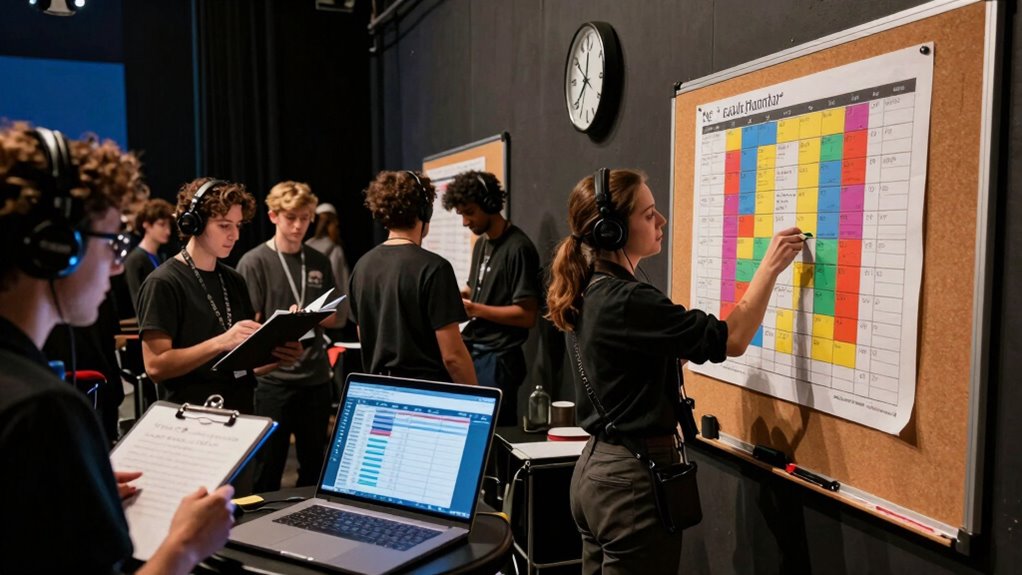
Managing multiple shows simultaneously can be challenging because each production has unique needs, schedules, and team members. One major hurdle is cast coordination—you need to guarantee actors are available for rehearsals and performances without conflicts. Juggling different schedules demands clear communication and flexibility. Venue logistics also pose difficulties; you must coordinate show times, setup, and breakdowns to avoid overlaps or delays. Limited space, equipment, and staff can complicate these logistics further. Staying organized is essential, but it’s easy to become overwhelmed by tracking multiple timelines, responsibilities, and personnel. Implementing effective project management tools can help streamline these tasks and reduce stress. Failing to effectively manage cast and venue logistics can lead to missed cues, delays, or unhappy performers and audiences. Recognizing these challenges upfront helps you develop strategies to keep everything running smoothly.

Beginner's Guide to Slack: Learn about Slack, the cloud-based team collaboration tool taking the business world by storm.
As an affiliate, we earn on qualifying purchases.
As an affiliate, we earn on qualifying purchases.
How Can You Set Realistic Goals and Prioritize Tasks?

After recognizing the common challenges of overseeing multiple shows, the next step is to establish clear, achievable goals and prioritize tasks effectively. Start with goal setting by defining specific milestones for each show, ensuring they’re realistic within your timeframe and resources. This helps you stay focused and measure progress. Next, practice task prioritization by listing daily responsibilities and categorizing them by urgency and importance. Tackle high-priority tasks first, such as rehearsals or technical setups, to prevent last-minute stress. Break larger projects into manageable steps to avoid overwhelm. Regularly reassess your goals and adjust priorities as needed, keeping everything aligned with your overall schedule. This approach keeps you organized, minimizes burnout, and ensures steady progress across all shows. Simplify Your Decisions by focusing on actionable steps and avoiding unnecessary complexity.

3M Coban Self-Adherent Wrap 1581 (Pack of 30)
Cohesive Bandage
As an affiliate, we earn on qualifying purchases.
As an affiliate, we earn on qualifying purchases.
Make a Clear Schedule for Rehearsals and Performances

Creating a clear schedule for rehearsals and performances is essential to keep your production on track. Start by establishing rehearsal timing that allows enough time for each scene, considering cast availability and venue access. Balance rehearsal intensity to prevent burnout and ensure steady progress. Use performance planning to map out key dates, including opening night and potential run extensions. Break down tasks into manageable blocks, and assign specific dates to each phase, from blocking to tech rehearsals. Communicate this schedule clearly with your team, and include buffer days for unexpected delays. A well-structured plan minimizes overlaps, reduces last-minute stress, and keeps everyone aligned. Staying disciplined with your schedule helps you maintain momentum without sacrificing your well-being. Incorporating energy-efficient scheduling practices can further optimize rehearsal times and enhance overall productivity.
schedule organizer for multi-show runs
As an affiliate, we earn on qualifying purchases.
As an affiliate, we earn on qualifying purchases.
Build a Support System to Share Responsibilities

Building a strong support system starts with delegating tasks effectively so everyone knows their responsibilities. Good communication keeps your team connected and prevents misunderstandings. Remember to recognize volunteers’ contributions, as it boosts morale and encourages ongoing support. Incorporating natural filtration systems can also reduce workload by maintaining water quality sustainably.
Delegating Tasks Effectively
Effective delegation begins with recognizing that you can’t do everything alone. To succeed, focus on team delegation and workload distribution. Identify tasks that others can handle and assign them to team members based on their strengths. Clearly communicate your expectations, deadlines, and the scope of each task to avoid confusion. Trust your team to execute their responsibilities and check in regularly to offer guidance or support. Remember, effective delegation frees you to focus on high-priority decisions and strategic planning. It also builds a sense of ownership among your team, encouraging accountability. By sharing responsibilities thoughtfully, you prevent burnout and keep the production running smoothly. Additionally, implementing clear communication strategies ensures everyone understands their roles and responsibilities. Ultimately, a well-structured delegation system ensures everyone contributes effectively, easing your workload and fostering a collaborative environment.
Fostering Team Communication
Once tasks are delegated, maintaining open and consistent communication becomes essential to ensuring everyone stays on the same page. Foster a team dialogue where members feel comfortable sharing updates, concerns, and ideas. Regular check-ins—whether through meetings, messaging apps, or shared documents—encourage open communication and prevent misunderstandings. By creating a space where everyone’s voice is heard, you build trust and strengthen collaboration. Encourage transparency and active listening, which helps identify potential issues early and keeps the workload balanced. A well-established support system relies on clear, ongoing communication that empowers your team to adapt, problem-solve, and share responsibilities seamlessly throughout the multi-show run. This approach keeps your team connected and resilient, much like authenticity in existential questioning fosters genuine self-awareness and resilience in individuals.
Recognizing Volunteer Contributions
How do you guarantee volunteers feel valued and motivated to continue supporting your multi-show run? The key is effective volunteer recognition. Implement appreciation strategies that highlight each person’s contributions, whether through public acknowledgment, personalized thank-yous, or small tokens of appreciation. Regularly expressing gratitude reinforces their importance and fosters loyalty. Keep volunteers engaged by celebrating milestones together and providing positive feedback. When volunteers see their efforts genuinely appreciated, they’re more likely to stay committed and enthusiastic. Remember, consistent volunteer recognition isn’t just about saying “thanks”—it’s about making volunteers feel seen, valued, and integral to your success. By building a culture of appreciation, you create a reliable support system that sustains your production through every show. Additionally, understanding the importance of client satisfaction in maintaining ongoing support can help you tailor your recognition efforts more effectively.
How Do You Keep Your Energy Up During a Busy Run?

To keep your energy high during a busy run, you need to focus on prioritizing rest and recovery, so your body stays strong. Eating healthy, nutrient-rich foods helps sustain your stamina and keeps fatigue at bay. By balancing rest and good nutrition, you’ll stay energized and ready for each performance. Additionally, practicing self-kindness through positive self-talk and gentle movement can boost your resilience and maintain your motivation throughout the run.
Prioritize Rest and Recovery
Maintaining your energy during a busy multi-show run requires intentional rest and recovery strategies. Prioritizing downtime helps rebuild your emotional resilience and keeps burnout at bay. To do this effectively:
- Schedule regular breaks, allowing your mind and body to reset and practice mindfulness techniques like deep breathing or meditation.
- Listen to your body’s signals; don’t push through fatigue. Rest when needed to maintain emotional resilience and prevent exhaustion.
- Create a calming routine before bed to improve sleep quality, ensuring you wake refreshed and ready to perform.
- Incorporate cultural practices such as savoring local foods or engaging in traditional relaxation methods to enhance overall well-being during your run.
Maintain Healthy Nutrition
Eating balanced, nutrient-rich meals is essential for sustaining your energy levels during a busy multi-show run. To keep your stamina up, focus on nutrient dense snacks like nuts, fruit, and yogurt. These provide quick energy and essential vitamins. Hydration strategies are equally important—sip water regularly and include electrolyte drinks to replace lost salts. Visualize your nutrition with this simple table:
| Nutrient Dense Snacks | Hydration Strategies |
|---|---|
| Nuts and seeds | Water bottles nearby |
| Fresh fruit | Electrolyte drinks |
| Yogurt | Regular sips |
Staying fueled and hydrated prevents fatigue, helping you perform at your best throughout the run. Incorporating sound vibrations into your routine can also help support relaxation and mental clarity during busy periods. Keep your nutrition plan simple, consistent, and tailored to your activity level.
Schedule Regular Breaks and Practice Self-Care

Scheduling regular breaks and practicing self-care are essential for staying energized and focused throughout a multi-show run. Taking moments to pause helps prevent burnout and keeps your mind sharp. During breaks, try mindfulness exercises to center yourself and reduce stress. Incorporate journaling routines to reflect on your feelings and set intentions for each day. Here are three ways to prioritize self-care:
Prioritize self-care with regular breaks, mindfulness, and journaling to stay energized and focused during a busy show run.
- Schedule short, frequent breaks between shows to recharge physically and mentally.
- Practice mindfulness exercises like deep breathing or meditation to stay present.
- Keep a journal to process emotions and track your mental well-being.
Communicate Effectively With Your Team Using the Right Tools

Effective communication is the key to a smooth multi-show run, and using the right tools makes this much easier. When your team collaborates effectively, everyone stays informed and aligned, reducing misunderstandings and delays. Choose communication tools that suit your team’s needs, like messaging apps, project management platforms, or email. These tools keep everyone connected, whether they’re in the same venue or working remotely. Establish clear channels for updates, questions, and feedback to ensure information flows smoothly. Encourage your team to use these tools consistently and promptly. This not only streamlines team collaboration but also helps you catch issues early, so you can address them before they escalate. Good communication sets the foundation for a successful, stress-free multi-show run.
Track Your Progress and Adjust Your Plans When Needed

To keep your show run on track, you need to set clear milestones and monitor daily progress regularly. When issues arise or plans shift, be ready to adjust schedules flexibly to stay aligned with your goals. Staying proactive guarantees your run stays smooth and successful from start to finish.
Set Clear Milestones
Setting clear milestones is essential for tracking your progress and knowing when to adjust your plans. By establishing specific targets, you can stay motivated and focused throughout your multi-show run. Use milestone tracking to measure how well you’re progressing against your goal setting.
Here are three ways to make milestones impactful:
- Celebrate small wins to boost morale and maintain momentum.
- Set deadlines that challenge but don’t overwhelm, encouraging steady progress.
- Regularly review your milestones to identify shifts needed, keeping your plan adaptable.
When you define these milestones clearly, you create a roadmap that guides your journey. This clarity helps prevent burnout and ensures you stay energized from start to finish.
Monitor Daily Progress
Tracking your daily progress keeps you aware of how well you’re staying on schedule and meeting your milestones. Use performance metrics to measure your team’s productivity and identify any areas needing attention. Daily check ins are essential for keeping everyone aligned and accountable. During these meetings, review completed tasks, discuss challenges, and adjust priorities if necessary. Staying vigilant with your progress allows you to catch potential delays early and make informed decisions to stay on track. Consistent monitoring helps prevent burnout by avoiding last-minute rushes and unnecessary stress. Keep your team engaged and motivated by celebrating small wins and providing guidance when progress stalls. Regularly evaluating your daily performance ensures your multi-show run remains efficient and sustainable.
Adjust Schedules Flexibly
As you monitor your progress, it’s important to stay flexible and ready to adjust your schedule when necessary. Flexible scheduling and adaptable planning help you stay resilient through unexpected changes. To keep your run on track:
- Recognize when a tweak is needed—don’t hesitate to shift rehearsals or breaks to avoid burnout.
- Prioritize tasks based on current progress, focusing on what’s most impactful.
- Communicate openly with your team so everyone stays aligned and can adapt quickly.
How Can You Spot and Prevent Burnout?
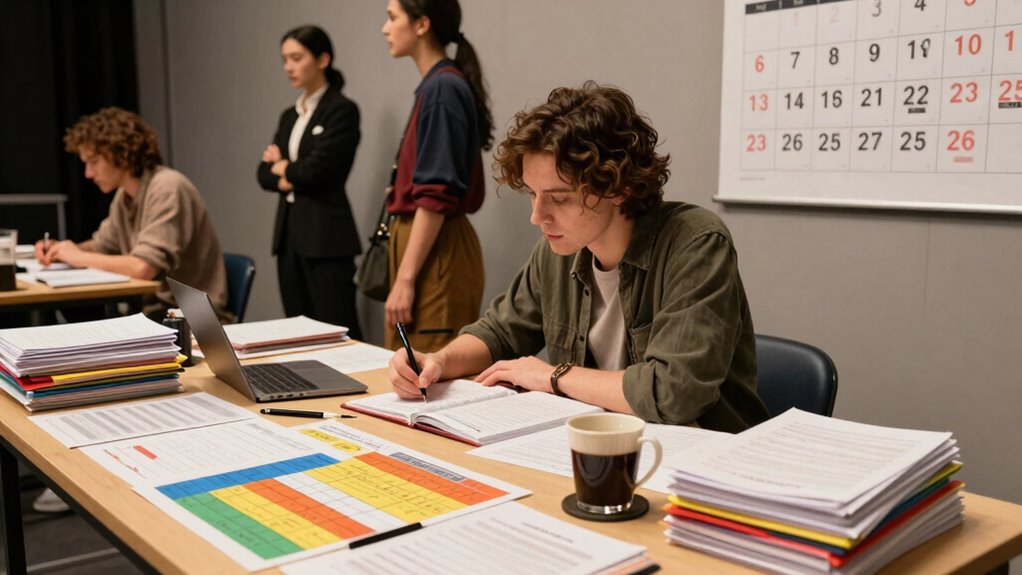
Burnout can sneak up on you when you least expect it, especially during a demanding multi-show run. To spot it early, pay attention to signs like persistent fatigue, irritability, or loss of passion. Practicing stress management techniques, such as deep breathing or brief breaks, helps maintain your energy and focus. Be mindful of creative burnout, which occurs when your enthusiasm wanes or ideas feel stale. Regularly check in with yourself and your team to assess workload and emotional health. Prevent burnout by setting boundaries—don’t overcommit—and ensuring you schedule time for rest and recovery. Recognizing early warning signs and taking proactive steps can keep you energized, motivated, and ready to deliver your best performance across all shows.
Celebrate Your Successes to Stay Motivated

After staying vigilant about signs of burnout and managing stress effectively, it’s important to recognize your hard work along the way. Celebrating milestones keeps you motivated and reinforces your progress. Recognize each achievement, big or small, to boost your confidence. Sharing successes with your team or supporters creates a sense of camaraderie and shared purpose. Here are three ways to celebrate your wins:
Celebrate every milestone to stay motivated, confident, and connected with your team.
- Mark milestones with a small reward or break to recharge.
- Share successes publicly—through social media or team meetings—to inspire others.
- Reflect on your journey and set new goals, fueling your passion for the next phase.
Celebrating your milestones ensures you stay energized and committed, making your multi-show run more rewarding and sustainable.
Frequently Asked Questions
How Do I Manage Unexpected Issues During a Multi-Show Run?
When unexpected issues arise during a multi-show run, you should stay calm and quickly assess the situation. Prioritize tasks using effective time management, addressing urgent problems first. Communicate openly with your team to reduce stress and find solutions faster. Keep a flexible mindset, and don’t hesitate to delegate. This approach helps you manage surprises efficiently, reducing stress and keeping the production running smoothly.
What Are Signs Indicating I Am Approaching Burnout?
You’ll notice signs of approaching burnout through persistent fatigue, irritability, and difficulty concentrating. If you’re skipping self-care routines or feeling overwhelmed despite workload management efforts, it’s a warning sign. You might also feel emotionally detached or lose enthusiasm for your work. Pay attention to these signals, prioritize rest, and adjust your workload to prevent burnout. Regular self-care routines help maintain your energy and passion throughout the multi-show run.
How Can I Delegate Tasks Effectively Without Losing Control?
To delegate tasks effectively, focus on team empowerment and trust building. Clearly communicate expectations and provide the necessary resources, so your team feels confident and supported. Assign responsibilities based on individual strengths, and check in regularly without micromanaging. By fostering trust and empowering your team, you maintain control while giving others room to grow. This approach keeps you engaged without feeling overwhelmed, ensuring a smooth multi-show run.
What Tools Can Help Streamline Communication Across Multiple Teams?
Think of communication tools as the control tower for your team collaboration. Platforms like Slack, Asana, or Microsoft Teams keep everyone connected, allowing instant updates and task tracking. I once managed a multi-show run where these tools prevented chaos, much like air traffic control keeps planes on course. Using these tools streamlines communication, reduces missteps, and guarantees your team stays coordinated across all shows, saving you time and stress.
How Do I Balance Creative Input With Logistical Responsibilities?
You balance creative input with logistical responsibilities by setting clear creative boundaries early on, so you safeguard your vision while managing practical needs. Prioritize ideas that boost audience engagement and align with your goals. Communicate openly with your team to ensure everyone understands these boundaries, preventing scope creep. This approach keeps your creative process focused and sustainable, allowing you to deliver engaging shows without feeling overwhelmed by logistics.
Conclusion
Managing multiple shows can be demanding, but with careful planning, you can avoid burnout. Did you know that 60% of theater professionals report feeling overwhelmed during busy seasons? By setting realistic goals, building support, and celebrating your wins, you keep your energy high and stress low. Remember, staying flexible and communicating openly are key. Keep these strategies in mind, and you’ll enjoy a successful, sustainable run without sacrificing your well-being.