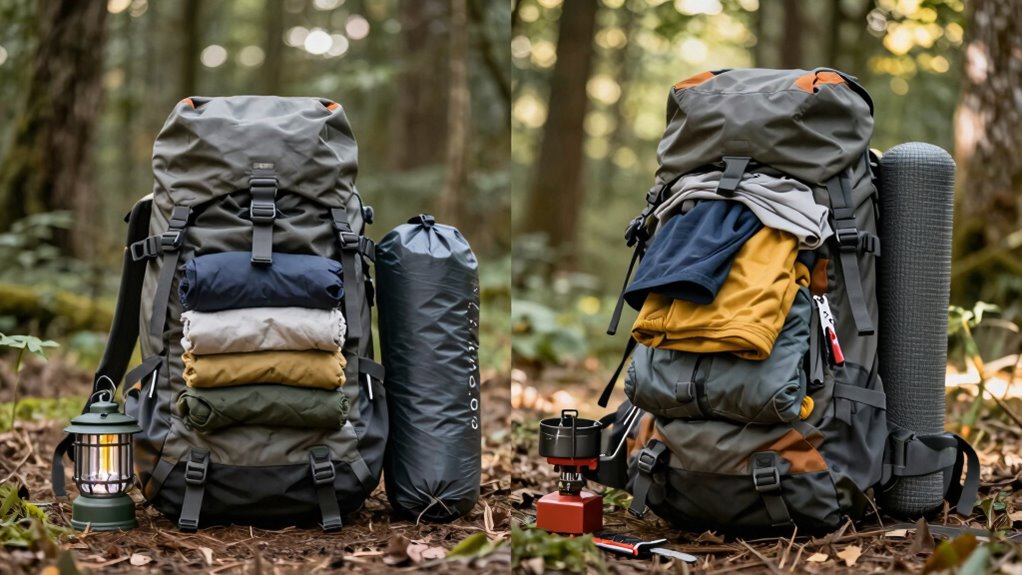

For a one-night camp, pack lightweight essentials like a sleeping bag, appropriate clothing, a headlamp, and minimal food and water. Keep gear simple, focusing on comfort and safety, with a weather-appropriate rain jacket and basic fire-starting tools. For a three-night trip, expand your packing to include extra clothing, more food and water supplies, safety gear, and potentially additional shelter options. Learning more guarantees you’re fully prepared for both short and extended outdoor adventures.
Key Takeaways
- Pack minimal, lightweight essentials for a one-night trip; expand clothing, food, and safety gear for three nights.
- Include versatile clothing layers and weather-appropriate items for both trips, with extra for longer stays.
- Carry a sleeping bag, shelter, and sleeping pad, ensuring safety and comfort on both trips.
- Bring fire-starting tools, follow safety procedures, and choose designated fire spots for proper campfire management.
- Prioritize safety, environmental responsibility, and efficient packing to ensure a safe, enjoyable outdoor experience.
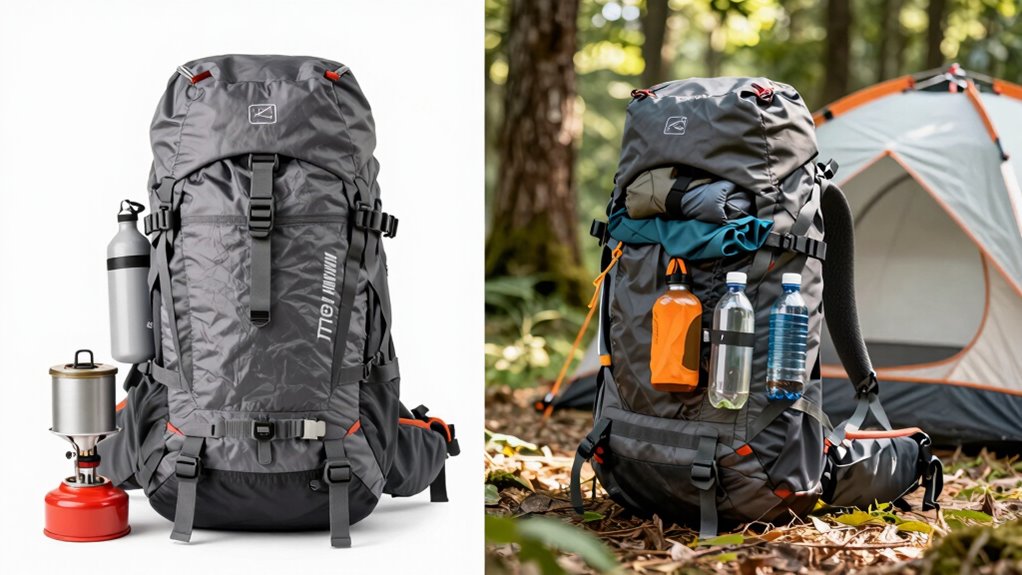
When packing for a camping trip, the length of your stay considerably influences what you need to bring. For a one-night adventure, your goal is to pack light, focusing on essentials that ensure comfort, safety, and enjoyment without overburdening yourself. Start with your backpacking essentials, which include a suitable sleeping bag, a compact tent or shelter, and a lightweight sleeping pad. Don’t forget to bring a headlamp or flashlight, extra batteries, and a multi-tool or knife. Clothing should be versatile and weather-appropriate—think layers that can handle temperature fluctuations, along with a rain jacket just in case. Since you’ll only be there for one night, prioritize packing a minimal amount of food and water, plus a portable stove or cooking gear if you plan to cook. Remember, packing efficiently means you won’t have to carry unnecessary items, making your trip more enjoyable. Additionally, understanding how to choose the right projector type can enhance your outdoor viewing experience if you plan to watch movies or sports during your trip.
For a three-night camp, your packing list expands because you’ll need more supplies to sustain yourself comfortably over multiple days. Besides the essentials, bring additional clothing options, including extra socks and underwear, to stay fresh and dry. You’ll want a more substantial sleeping setup, perhaps a warmer sleeping bag and an extra sleeping pad for added comfort. Food storage becomes more critical; pack enough meals, snacks, and water to last the entire trip, considering possible delays or emergencies. When it comes to campfire safety, you should carry a reliable lighter or waterproof matches, and if permitted, a small fire starter. Practice campfire safety by selecting a designated fire ring, keeping the fire manageable, and ensuring you have water or a fire extinguisher nearby to quickly put out any sparks. Remember to check local fire regulations and avoid making fires in dry or windy conditions.
Both trip lengths require thoughtful packing, but the main difference lies in the scope and quantity of supplies. For a one-night trip, simplicity is key—bring only what you need, and focus on lightweight, versatile gear. For a longer stay, you’ll need to plan ahead, packing extra clothing, food, and safety equipment, including items that support campfire safety. Regardless of the trip length, always prioritize safety, especially around campfires, and make sure you’re familiar with Leave No Trace principles to protect the environment. With the right preparation, your camping experience will be safe, comfortable, and memorable, whether you’re out for just a night or several days.
Frequently Asked Questions
How Do I Choose Between Lightweight and Heavy-Duty Gear?
You should choose lightweight gear if you prioritize ease of carrying and plan a shorter trip, as it alleviates weight considerations. Opt for heavy-duty gear when durability matters more, especially for longer trips or rough conditions. Consider gear durability versus weight considerations, and balance them based on your trip duration and terrain. Lightweight gear offers convenience, but heavy-duty gear ensures longevity and safety in challenging environments.
Should I Bring Extra Clothing for a Longer Stay?
You should definitely bring extra clothing for a longer stay. Packing extras guarantees you’re prepared for unexpected weather changes or activity needs. Consider the clothing quantity you’ll need for the entire trip, including layers, socks, and underwear. This way, you won’t run out of clean clothes or have to wash everything. It’s better to pack a little more than you think you’ll need, especially for extended camping trips.
What Safety Equipment Is Essential for Extended Camping Trips?
For extended camping safety, you should bring safety equipment essentials like a first aid kit, multi-tool, flashlight, and extra batteries. Consider emergency supplies such as a whistle, map, compass, and a portable charger. These items are vital for extended camping safety, helping you handle injuries, navigation, and communication if needed. Always check weather conditions beforehand and pack accordingly to guarantee a safe and enjoyable outdoor experience.
How Do Meal Planning and Cooking Differ for One Vs Three Nights?
For a one-night camp, focus on simple meal prep strategies like pre-made sandwiches or snacks, and choose lightweight, minimal cooking gear such as a compact stove. For three nights, plan diverse meals, incorporate fresh ingredients, and bring versatile cooking gear like pots, pans, and a larger stove. You’ll want to organize your meals to maximize efficiency, ensuring you have enough supplies and equipment to enjoy varied, satisfying meals over multiple days.
Are There Specific Items to Consider for Different Weather Conditions?
You should pack climate-specific gear and seasonal clothing considerations based on the weather forecast. For colder conditions, bring thermal layers, insulated jackets, and extra blankets. In warmer weather, opt for lightweight, breathable clothing and sun protection like hats and sunscreen. Rain gear like waterproof jackets and boots is essential if rain is expected. Always check local weather updates to tailor your gear, ensuring comfort and safety during your camping trip.
Conclusion
Whether you’re heading out for one night or three, packing smart makes all the difference. Did you know that over 60% of campers forget essentials when they rush? By planning ahead and adjusting your gear, you’ll stay comfortable and prepared. Remember, packing efficiently not only saves space but also guarantees you enjoy your adventure without stress. So, tailor your gear to your trip length, and get ready for a memorable outdoor experience!