
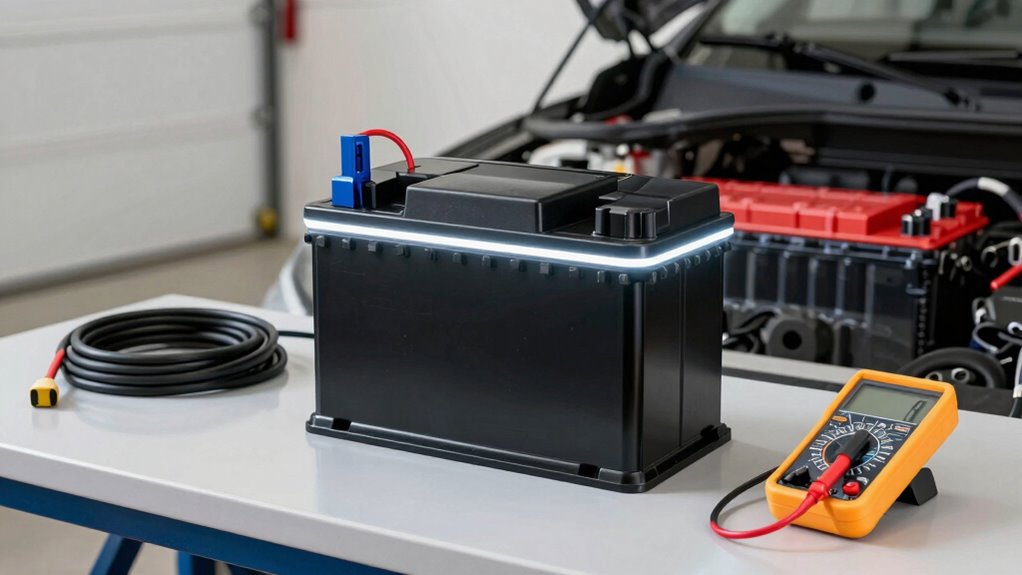

Before long event weekends, guarantee your car battery is in good shape by checking for corrosion, maintaining fluid levels, and keeping it securely mounted. Use a quality charger or jump starter if needed, and consider a battery monitor for real-time health updates. Park in shaded or well-ventilated areas to avoid extreme temperatures that can drain your battery. Taking these simple steps helps prevent surprises and keeps your vehicle reliable throughout your trip. Keep going to discover more helpful tips.

Get audio and creator gear delivered free with Prime
- Fast, free delivery on millions of items
- Prime Video, Amazon Music and more included
- Member-only deals all year
Key Takeaways
- Keep the battery fully charged before extended periods of inactivity to prevent drain and ensure reliability.
- Use a quality battery monitor to track health and detect deterioration early during long weekends.
- Disconnect the battery if the vehicle will remain unused for an extended period to prevent unnecessary drain.
- Store the vehicle in a shaded area or garage to protect the battery from extreme temperatures.
- Carry a portable jump starter or backup power source for emergencies during long trips.
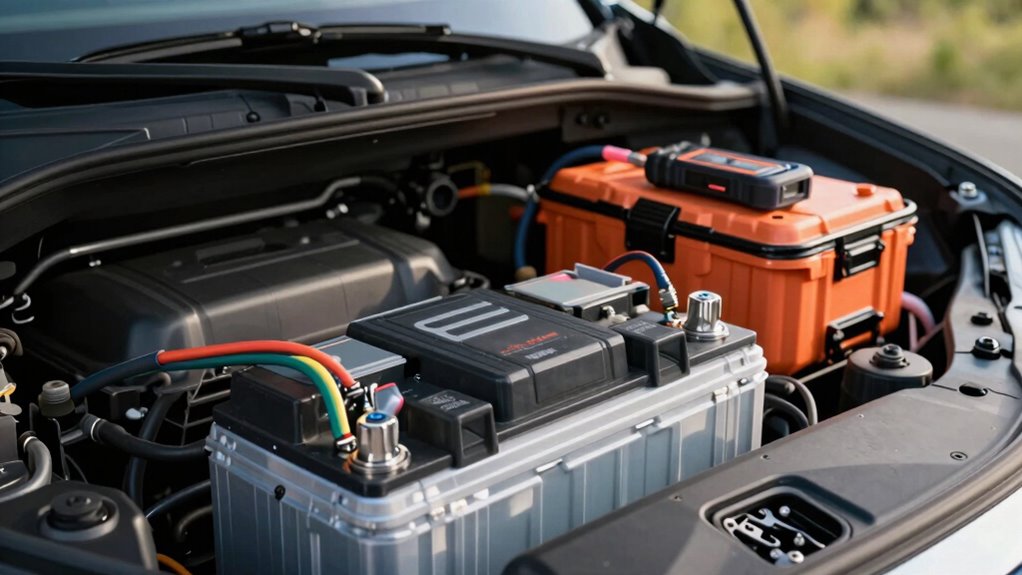
When your car battery unexpectedly dies, it can leave you stranded and frustrated. This situation is especially inconvenient during long event weekends when you rely heavily on your vehicle for transportation, camping, or sightseeing. To avoid such hassles, understanding the basics of car battery backup is essential. One key aspect is battery maintenance, which involves regularly checking your battery’s condition. Ensure the terminals are clean and free of corrosion, as buildup can interfere with proper electrical flow. Keep the battery securely mounted to prevent vibrations that could damage internal components. Additionally, inspect the battery’s fluid levels if it’s a traditional lead-acid type, and top it off with distilled water if necessary. Regular maintenance helps prolong battery life and ensures reliable starts, particularly when you need your vehicle most.
Another critical component of backup readiness is knowing effective charging techniques. If you notice your battery’s charge is waning, or if you’ve left your vehicle unused for a while, charging becomes a priority. Using a quality charger designed for your battery type is vital. Connect the charger correctly—positive to positive and negative to negative—and set it to the appropriate voltage and current. Avoid overcharging, which can damage the battery, so monitor the process closely. If you’re on the go and need a quick boost, a portable jump starter can be a lifesaver. Make sure you understand how to use it properly, following the manufacturer’s instructions for safe and effective use. Regularly charging your battery before long trips helps prevent unexpected failures, especially when you’re counting on your vehicle for extended periods. Additionally, understanding battery types and their specific needs can help you choose the best backup options for your situation. Being aware of battery health and the signs of deterioration can also save you from unexpected breakdowns. Maintaining proper battery temperature is equally important, as extreme heat or cold can significantly impact performance and lifespan. Ensuring your vehicle is parked in a well-ventilated area can help mitigate temperature-related issues. To further improve reliability, consider investing in a battery monitor that can give you real-time updates on its condition.
It’s also smart to consider the environment when maintaining and charging your battery. Extreme temperatures can impact battery performance and lifespan, so parking in shaded areas or garages when possible can help. During long weekends, avoid leaving your car unused for days without a charge; starting it occasionally or disconnecting the battery if you’re not driving can prevent it from draining completely. Keeping an eye on your battery’s health and employing proper charging techniques not only extends its life but also ensures your vehicle starts reliably when you need it most. These simple steps make a significant difference, giving you peace of mind and allowing you to enjoy your weekend activities without the worry of being stranded due to a dead battery.
As an affiliate, we earn on qualifying purchases.
Frequently Asked Questions
How Long Can a Car Battery Backup Power Essential Devices?
You can expect a car battery backup to power essential devices for about 2 to 8 hours, depending on the battery’s capacity and the devices’ power needs. The battery lifespan influences how long it can run devices, and proper charging methods, like maintaining a full charge and avoiding deep discharges, help prolong backup time. Keep in mind, lighter devices drain the battery more slowly, extending your backup power duration.
Is a Larger Battery Capacity Always Better for Backup?
Imagine your car battery as a reservoir of energy; a larger capacity means more water stored. While it might seem better, bigger isn’t always necessary. Battery capacity directly impacts power duration, but other factors like device power needs matter. If your devices draw little power, a smaller capacity can still last long enough. Choose the right size based on your power needs, balancing capacity with efficiency for maximum backup performance.
Can I Use a Car Battery Backup for Home Appliances?
You can use a car battery backup for home appliances, but you need to prioritize automotive safety and proper battery maintenance. Make certain the battery is in good condition, fully charged, and compatible with your appliances. Avoid risking safety by handling batteries improperly. Remember, using a car battery for home power isn’t ideal long-term; it’s meant for automotive use, so consider dedicated home backup systems for reliability and safety.
What Safety Precautions Should I Follow During Backup Use?
Think of your backup as a trusted friend crossing a busy street—safety comes first. Always handle the battery with care, avoiding sparks or sparks, and keep terminals insulated. Follow emergency procedures if something seems off, like smoke or strange smells. Prioritize battery safety by wearing gloves and eye protection. Regularly inspect connections, and never overload the system. Staying vigilant guarantees your backup remains a reliable, safe friend in any power outage.
How Often Should I Test My Car Battery Backup System?
You should test your car battery backup system at least once every three to six months. Regular battery maintenance helps guarantee your backup will perform when needed and extends the backup lifespan. During tests, check for signs of corrosion, make sure connections are tight, and monitor the battery’s voltage. Consistent testing keeps your system reliable, especially during long event weekends, so you’re prepared for any unexpected power needs.
As an affiliate, we earn on qualifying purchases.
Conclusion
As you prepare for long weekends, remember that your car battery backup isn’t just a convenience—it’s peace of mind in moments of uncertainty. While a fresh charge can keep your devices alive, it’s the quiet reassurance of reliability that truly matters. In a world filled with unpredictability, your backup isn’t just about power; it’s about feeling secure when everything else feels uncertain. Trust in your backup, and face every adventure with confidence.
As an affiliate, we earn on qualifying purchases.
As an affiliate, we earn on qualifying purchases.
Columbus Day / Indigenous Peoples' Day Picks
long weekend sales
As an affiliate, we earn on qualifying purchases.