
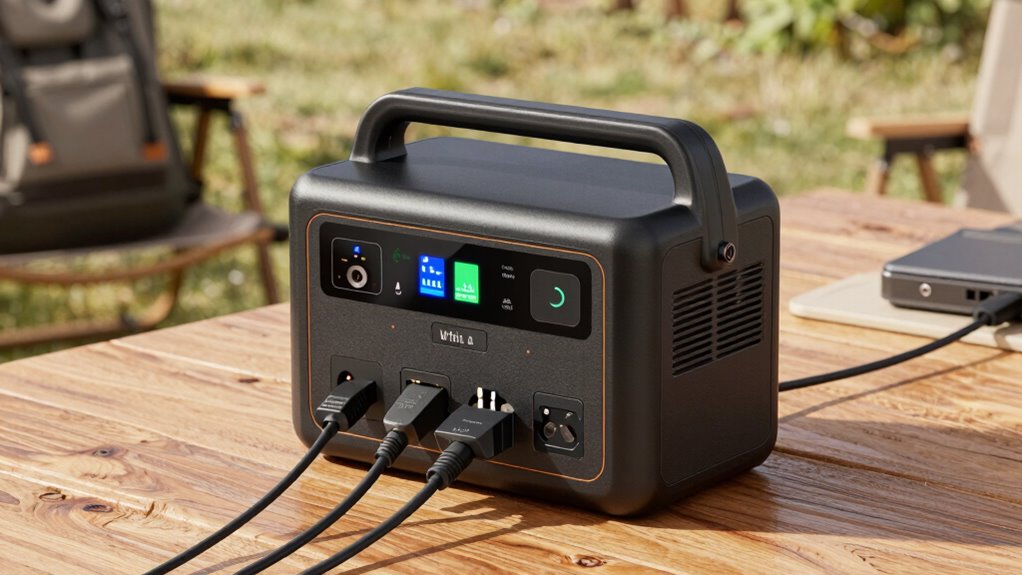
When choosing a portable power station, understand that watts show the rate of power flow at any moment, while watt-hours reveal total energy stored or used over time. Surge power indicates the highest instant power the station can deliver during spikes, essential for startup devices. Recharge times vary depending on charging methods, with fast chargers reducing downtime. To get the most from your station, consider the balance of these specs—keep exploring to master all these details.
Key Takeaways
- Watts measure the instant power output, while watt-hours indicate the total energy capacity over time.
- Surge power is the maximum spike the station can handle briefly, crucial for high-startup devices.
- Fast charging reduces recharge time, especially with multiple methods like AC, car, or solar inputs.
- Battery management systems protect the battery and enhance safety during rapid recharging cycles.
- Solar compatibility allows eco-friendly recharging, making stations suitable for outdoor and emergency use.
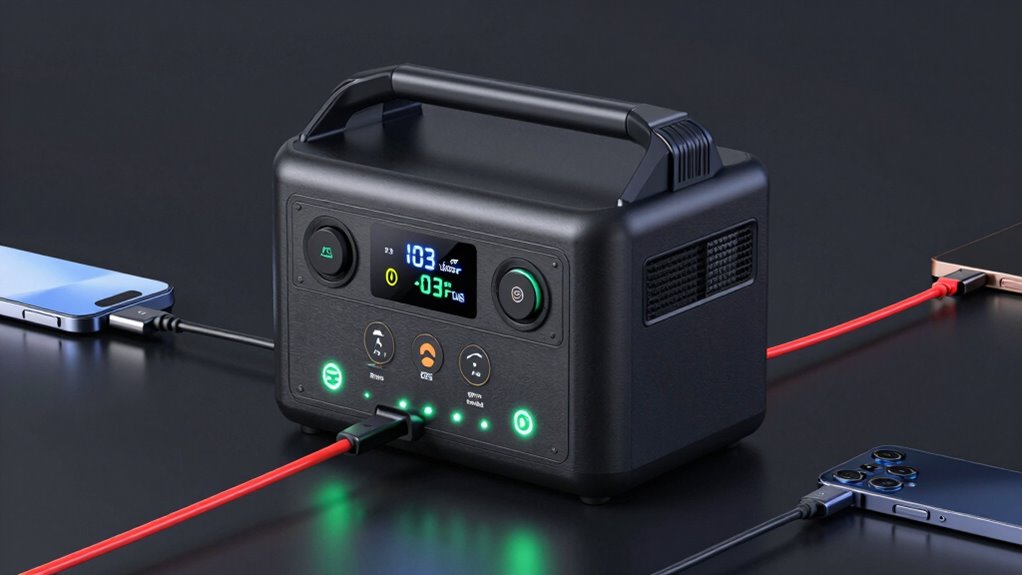
A portable power station is a versatile device that provides reliable electricity wherever you need it, whether you’re camping, outdoor working, or facing a power outage. One of its key features is fast charging, which ensures your devices are ready to go quickly. To understand how it works, you need to grasp the difference between watts and watt-hours. Watts measure the rate of power delivery at a given moment—think of it as the speed of electricity flow—while watt-hours indicate the total amount of energy stored or used over time. For example, a 200-watt device running for one hour consumes 200 watt-hours of energy. When choosing a power station, pay close attention to both ratings to match your power needs and expected usage duration.
Surge power is another critical factor to contemplate. It refers to the maximum amount of power the station can handle during momentary spikes, such as when starting a refrigerator or power tools. If your devices have high surge requirements, you need a station with a higher surge watt capacity to prevent shutdowns or damage. Fast charging isn’t just about getting your devices powered up quickly; it also involves how efficiently the station can recharge itself. Look for models with rapid recharge capabilities, so you spend less time waiting and more time using your devices.
Consider surge power capacity and rapid recharge features for reliable, efficient portable power station performance.
Recharge time plays a significant role in how convenient a portable power station is. The best units can often be recharged via multiple methods—AC outlets, car chargers, or even solar panels. Solar compatibility is increasingly common, allowing you to harness renewable energy. If you’re planning outdoor adventures or emergency preparedness, a station with reliable solar compatibility and intelligent battery management becomes essential. Battery management systems protect the internal battery from overcharging, overheating, or deep discharging, extending the lifespan of your device. They also optimize performance, ensuring safe and efficient operation during fast charging cycles. Additionally, understanding the importance of power output stability can help you select a unit that maintains consistent performance even under fluctuating load conditions.
When contemplating fast charging specs, understand that a station with advanced battery management and solar compatibility will give you a more sustainable and reliable power source. It allows for seamless integration with solar panels, reducing dependence on grid power and promoting eco-friendly recharging. As you evaluate options, think about your typical usage patterns, the devices you’ll power, and how quickly you need them recharged. Combining high wattage, ample watt-hours, and robust surge power with features like solar compatibility and intelligent battery management will help you select the perfect portable power station to meet your needs—whether for outdoor adventures, work projects, or emergency backup.
Frequently Asked Questions
How Do I Choose the Right Power Station for My Needs?
You should consider your battery capacity needs and portability considerations when choosing a power station. Think about how much power you require for your devices and how long you’ll need it. Smaller, lightweight stations are perfect for portability, while larger ones offer more capacity for extended use. Match the watt-hours to your device power demands, and verify the station’s size and weight fit your travel or outdoor plans.
What Safety Features Should I Look for in a Portable Power Station?
You should look for safety features like overcurrent protection, which prevents overloads, and verify the battery chemistry is safe, like lithium-ion or lithium-polymer. These protect against overheating, short circuits, and overcharging. A good portable power station also includes thermal management and surge protection to handle sudden power spikes. Prioritize models with multiple safety certifications to guarantee reliable operation and peace of mind during use.
Can I Use a Portable Power Station While It’s Charging?
Yes, you can use a portable power station while it’s charging, but don’t risk charging safety. It’s like juggling fire while riding a unicycle—exciting but risky! Check your power station’s compatibility first; some models are designed for simultaneous charging and usage, while others aren’t. Always follow manufacturer instructions to avoid overloads or damage, ensuring safe, reliable power at all times.
How Does Temperature Affect the Performance of a Power Station?
Temperature critically influences your power station’s performance. When it’s too hot or cold, battery cooling becomes essential to prevent overheating or freezing, which can reduce efficiency. Maintaining thermal stability guarantees the battery functions at its best, extending its lifespan. If you operate your station in extreme temperatures, expect decreased capacity and longer recharge times. Keep it in a cool, dry place, and avoid rapid temperature swings to maximize performance and durability.
Are Portable Power Stations Environmentally Friendly?
Imagine a cleaner future—portable power stations can be eco-friendly if they use renewable energy sources like solar power. While they help reduce your carbon footprint compared to traditional generators, their environmental impact depends on manufacturing and energy sources. You can choose models with sustainable features, making your outdoor adventures or emergency backup more green. Ultimately, they’re a step towards a healthier planet, especially when powered by renewable energy.
Conclusion
Understanding the specs of a portable power station helps you choose the right one for your needs, ensuring reliable power on the go. While higher watt-hours mean longer usage, don’t overlook surge power for short bursts of high demand. Remarkably, some experts suggest that the perceived importance of wattage may be overstated, as real-world performance depends on quality and efficiency. Ultimately, knowing these details empowers you to make smarter, more informed choices for your portable power needs.