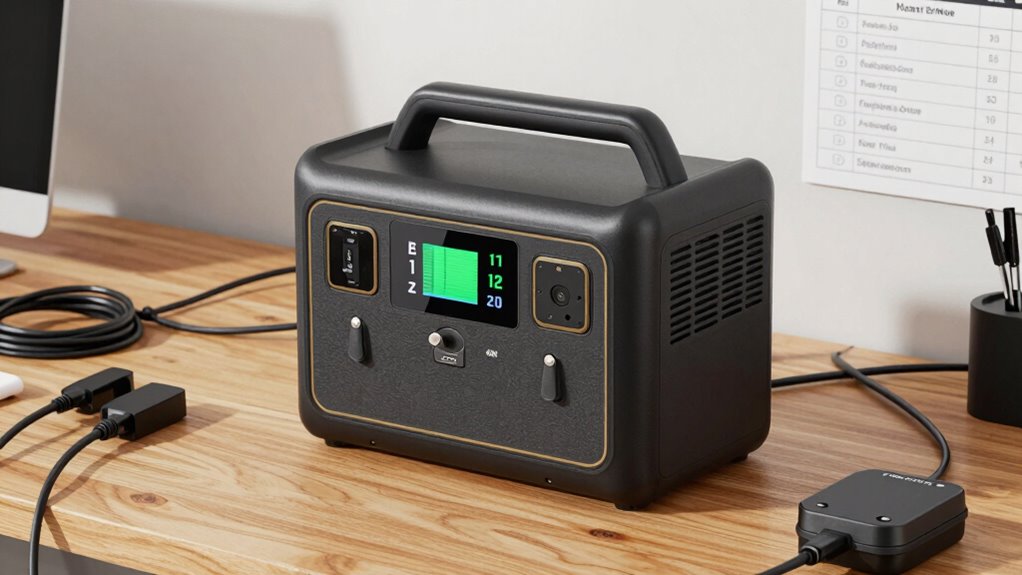
To guarantee a safe setup of your portable power station with LFP batteries, avoid common mistakes like using incompatible chargers, overcharging, or exposing batteries to extreme temperatures. Always inspect batteries for damage, follow manufacturer guidelines, and use proper handling procedures. Keep your system well-ventilated and monitor for irregularities during charging. Taking these precautions reduces risks and maximizes performance. If you keep exploring, you’ll discover more tips for a secure and effective setup.
Key Takeaways
- Always inspect the LFP battery for physical damage, leaks, or corrosion before setup.
- Use the recommended charger with proper voltage and current ratings to prevent overcharging.
- Avoid exposing the battery to extreme temperatures, humidity, or direct sunlight during installation.
- Follow manufacturer guidelines for connection and avoid bypassing safety features or making makeshift modifications.
- Regularly monitor the battery during initial use for signs of overheating or irregular behavior, and disconnect if issues arise.
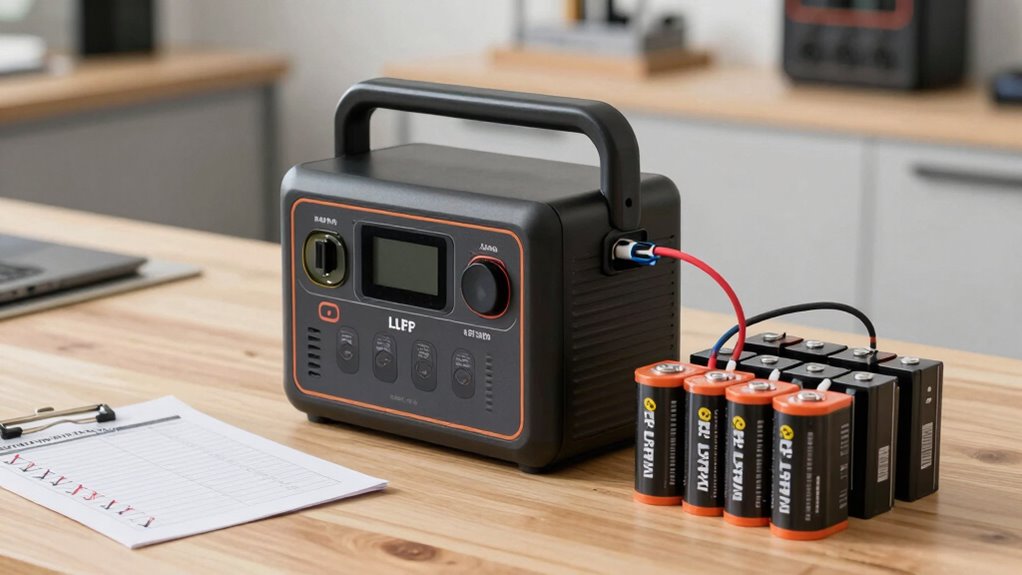
Setting up a portable power station with an LFP (Lithium Iron Phosphate) battery guarantees you have reliable, safe, and long-lasting power on the go. However, to maximize these benefits, you need to pay close attention to proper setup procedures, especially regarding battery safety and charging protocols. Many users overlook these critical factors, leading to potential issues such as reduced battery lifespan, safety hazards, or suboptimal performance. First, always prioritize battery safety by inspecting your power station thoroughly before use. Check for any physical damage, leaks, or corrosion, as these can compromise safety and efficiency. Avoid using damaged units or attempting to repair them yourself; instead, contact the manufacturer or a qualified technician. Proper handling and storage are essential, especially if you plan to store the power station for an extended period. Keep it in a cool, dry place away from direct sunlight, moisture, and extreme temperatures to prevent deterioration of the battery chemistry.
When it comes to charging protocols, adherence is key. LFP batteries have specific requirements that differ from traditional lithium-ion batteries. Always use the recommended charger provided by the manufacturer or one that matches the specified voltage and current ratings. Overcharging or using incompatible chargers can lead to overheating, capacity loss, or even fire risks. Set up your charging environment in a well-ventilated area, and avoid charging in excessively hot or humid conditions. It’s vital to follow the recommended charging cycles—avoid letting the battery fully discharge regularly, as this can harm its longevity. Instead, aim for partial charges when possible, maintaining a charge level between 20% and 80%. This approach minimizes stress on the battery and prolongs its lifespan.
Additionally, pay attention to your power station’s charging indicators and alerts. If the device signals abnormal behavior, such as overheating or irregular charging patterns, disconnect it immediately and consult the user manual or support channels. Never attempt to bypass safety features or modify the battery setup yourself; such actions can void warranties and pose safety risks. Regularly update your device’s firmware if updates are available, as manufacturers often improve safety features and charging algorithms through software enhancements. Being aware of battery chemistry and its unique characteristics helps ensure you handle and maintain your power station correctly. By following these protocols and prioritizing battery safety, you guarantee your portable power station remains dependable, safe, and efficient for all your on-the-go needs. Proper setup and maintenance are the foundation of a long-lasting and reliable power source, giving you peace of mind wherever you venture.
Frequently Asked Questions
How Long Do LFP Batteries Typically Last in Portable Power Stations?
LFP batteries in portable power stations typically last around 2,000 to 3,000 charging cycles, offering excellent battery longevity. You can expect these batteries to perform well for 5 to 10 years with proper care. To maximize their lifespan, avoid deep discharges and overcharging, and guarantee you follow correct charging practices. Regular maintenance and mindful use help extend the life of your LFP batteries, making them a reliable power source over time.
Are LFP Batteries Safer Than Other Lithium-Ion Types?
Yes, LFP batteries are safer than other lithium-ion types because their battery chemistry makes them more stable and less prone to overheating or thermal runaway. They adhere to strict safety standards, ensuring reliable performance even during extreme conditions. You’ll find that LFP batteries’ enhanced safety features make them a preferred choice for portable power stations, giving you peace of mind while powering your devices.
Can I Upgrade My Existing Power Station With an LFP Battery?
Yes, you can upgrade your existing power station with an LFP battery, but first, check battery compatibility carefully. Review the manufacturer’s guidelines to confirm the LFP battery fits your power station’s specifications. Follow proper upgrade procedures, such as disconnecting the device safely, installing the new battery correctly, and calibrating the system afterward. This ensures a safe, effective upgrade that maximizes your power station’s performance and lifespan.
What Is the Average Cost Difference Between LFP and Traditional Batteries?
You’ll find that LFP batteries typically cost 20-50% more than traditional batteries upfront, but their longer lifespan and better safety features often offset the initial expense. The cost comparison varies, and don’t forget to check warranty differences—LFP batteries usually come with extended warranties, giving you peace of mind. While the initial investment is higher, the durability and lower replacement costs make LFP batteries a smart long-term choice.
How Do Temperature Extremes Affect LFP Battery Performance?
Temperature extremes can substantially impact LFP battery performance. When ambient conditions are too hot or cold, you need proper thermal management to prevent damage and maintain efficiency. Cold temperatures slow chemical reactions, reducing capacity and charging speed, while excessive heat can cause overheating and degrade the battery over time. Always monitor the environment and guarantee adequate thermal management to keep your LFP batteries functioning at their best across varying ambient conditions.
Conclusion
To wrap it up, avoiding these common mistakes is like steering clear of rocky waters on your power journey. Keep your setup simple, double-check connections, and respect the battery’s limits. Think of your LFP battery as a reliable friend—treat it well, and it’ll be there when you need it most. With these tips, you’ll navigate your portable power station confidently, ensuring smooth sailing whenever you need energy on the go.