
A portable power station with an LFP battery provides reliable, safe, and long-lasting power. Watts measure the device’s power output, while watt-hours show how much energy it stores. Surge power indicates the maximum power it can handle briefly, and recharge time shows how quickly it can be ready again. With LFP batteries’ durability, these specs guarantee dependable performance over many cycles. Stay tuned to discover how these features work together to meet your power needs.
Key Takeaways
- Watts measure the power output rate at a specific moment, while watt-hours indicate total energy capacity over time.
- Surge power reflects the maximum instantaneous power the station can deliver during startup or heavy loads.
- LFP batteries offer stable performance with high cycle life, ensuring consistent watt-hour capacity over many recharge cycles.
- Recharge time depends on charger wattage and battery capacity, with LFP batteries typically charging faster and more safely.
- Understanding these specs helps optimize usage, ensuring reliable power delivery and efficient recharging for portable stations.
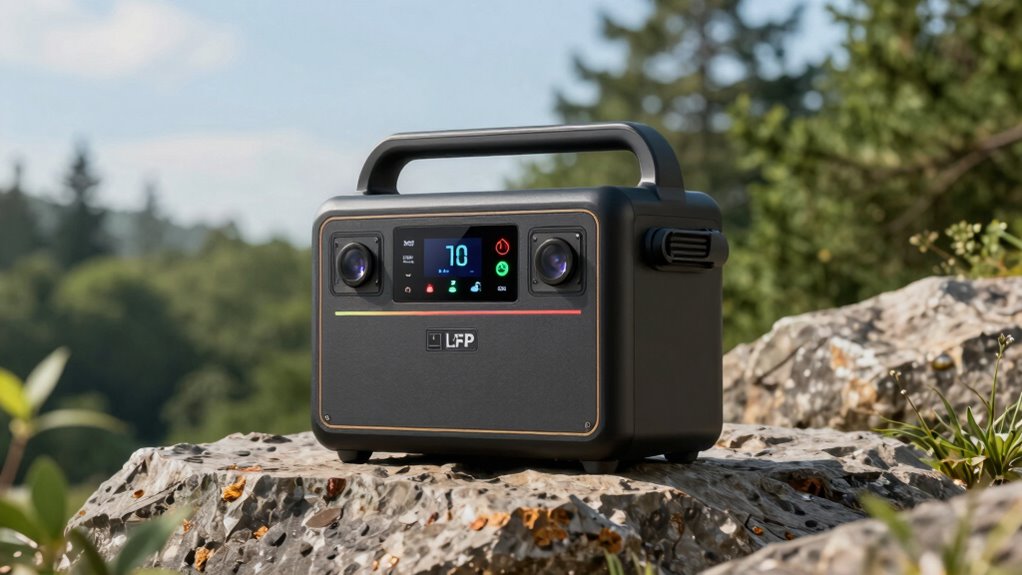
A portable power station with an LFP (Lithium Iron Phosphate) battery offers a reliable and safe solution for powering your devices on the go. When evaluating these units, understanding the battery chemistry is essential, especially since LFP batteries are known for their stability, safety, and longevity. Unlike other lithium-ion chemistries, LFP batteries can endure more charging cycles—often over 2,000—meaning they last longer and maintain capacity over time. The chemistry also provides thermal stability, reducing risks of overheating or fires, so you can feel confident using the power station in various environments. Battery longevity is a key benefit that ensures your investment remains dependable over many years of use.
Knowing how these batteries perform during charging cycles helps you gauge their lifespan and overall value. Each charge and discharge cycle slightly diminishes the battery’s capacity, but LFP batteries excel here, offering more cycles before noticeable degradation. As a result, your investment lasts longer, and you’ll need fewer replacements or repairs. This durability, combined with their safety profile, makes an LFP-powered station a smart choice for people who rely heavily on portable power. The more charging cycles a battery can handle, the better it is at maintaining its capacity over time, ensuring you get consistent power when you need it most.
Frequently Asked Questions
How Does Temperature Affect LFP Battery Performance?
Temperature critically impacts your LFP battery’s performance. When it’s too hot or cold, thermal stability suffers, reducing efficiency and lifespan. You need proper temperature management to keep the battery within ideal ranges, ensuring consistent power output and safety. High temperatures can cause overheating, while cold conditions slow chemical reactions. By maintaining a stable temperature, you maximize your battery’s lifespan, reliability, and overall performance.
Can LFP Batteries Be Recycled Safely?
Think of recycling LFP batteries like tending a garden—carefully and responsibly. Yes, they can be recycled safely through proper battery recycling processes, which minimizes environmental impact. By doing so, you help prevent harmful materials from polluting the environment and ensure valuable components are reused. Always choose certified recycling centers to handle battery disposal correctly, making a positive impact on the planet and supporting sustainable energy solutions.
What Are the Safety Features of LFP Battery-Powered Stations?
LFP battery-powered stations include safety features like battery management systems that monitor voltage, current, and temperature, preventing issues like overcharging or overheating. Thermal regulation guarantees the battery stays within safe temperature ranges, reducing fire risk. These features work together to enhance safety, making your portable power station reliable and secure during use and recharge. You can trust these stations to operate safely even under demanding conditions.
How Does Cycle Life Impact Long-Term Cost?
Cycle life considerably boosts your battery longevity and cost efficiency. When you choose a power station with a higher cycle life, it means fewer replacements, saving money over time. Longer-lasting batteries withstand more charge and discharge cycles, reducing overall costs and hassle. This durability ensures your investment remains reliable and resilient, making it easier to power your needs without constantly worrying about wear and tear or frequent replacements.
Are LFP Batteries Suitable for High-Drain Devices?
Yes, LFP batteries are suitable for high-drain devices because they offer excellent battery compatibility and can handle surge power demands. You’ll find that their stable chemistry and high power output make them ideal for powering high-drain equipment without rapid degradation. Just make certain the power station’s surge power capacity matches your device’s startup requirements, and you’ll enjoy reliable, long-lasting performance even during intense usage.
Conclusion
Understanding the specs of a portable power station with an LFP battery helps you choose the right one. For example, knowing that a 500Wh capacity can power a typical mini-fridge for about 8 hours makes it easier to plan. Surge power ensures your devices run smoothly during startup, while recharge time determines how quickly you’re back in action. With these insights, you can confidently pick a station that fits your needs and keeps your adventures powered up.