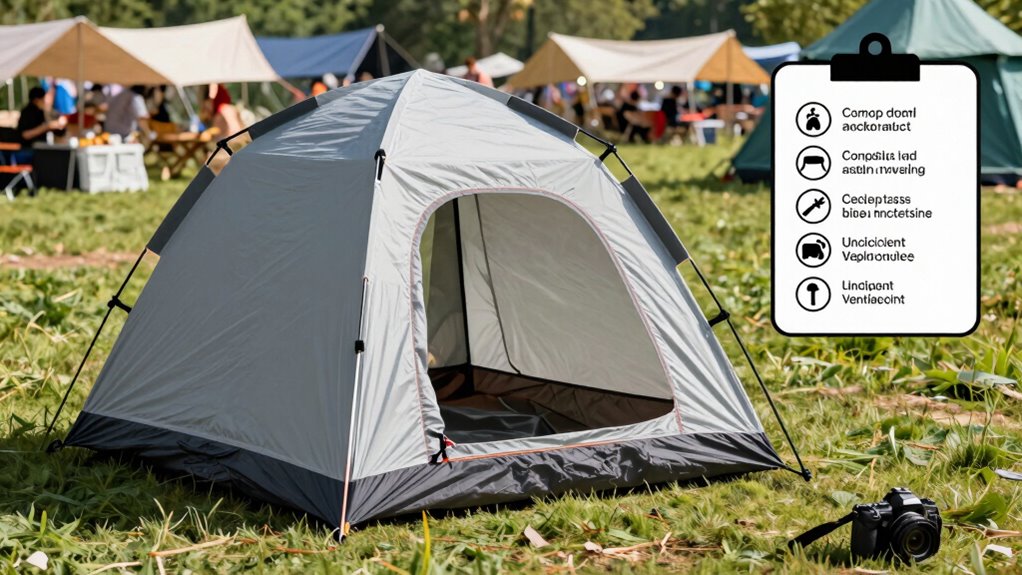

When setting up a portable privacy tent for festivals or camping, focus on proper anchoring, choosing the right size, and preparing the ground. Avoid rushing the process, which can compromise stability and privacy. Use the correct stakes, extra weights if needed, and make certain all points are tightly secured. Pay attention to terrain and tent dimensions to prevent discomfort. Keep these tips in mind to prevent common mistakes—and there’s more to discover if you keep going.
Key Takeaways
- Check and reinforce all anchoring points with appropriate stakes, weights, or guy lines before setup.
- Ensure tent size matches available space to prevent setup difficulties and privacy issues.
- Choose flat, firm ground and use suitable stakes for terrain to enhance stability.
- Take your time during setup to properly secure all points and prevent accidental openings or collapses.
- Use extra weights on soft or loose ground and verify stability to maintain privacy and safety.

Setting up a portable privacy tent quickly and correctly guarantees you have a secure, private space whenever you need it. One of the most common mistakes people make is neglecting proper tent anchoring. Without securing your privacy tent properly, it can become unstable or even blow away in windy conditions. To avoid this, always check your tent’s anchoring points and use appropriate stakes, weights, or guy lines. Make sure the stakes are driven deep enough into the ground, especially if you’re on loose soil or gravel. Using additional weights, like sandbags or water bottles, can provide extra stability. Proper tent anchoring isn’t just about preventing movement; it also ensures the tent maintains its shape and offers the privacy you need.
Another critical aspect to contemplate is understanding your privacy tent dimensions. Oversized tents may be tempting for extra space, but they can be cumbersome to set up and transport. On the other hand, tents that are too small might not provide enough privacy or comfort. Before you set up, measure out the space you need and compare it to the tent’s dimensions. Knowing the exact size helps you plan your setup location and avoid awkward fits or insufficient room for your gear. Also, check the height and width to ensure you can comfortably move inside and that it fits well within your camping or festival spot. Properly matching the tent dimensions to your needs prevents frustration and makes for a smoother setup.
Pay attention to the ground surface where you plan to pitch your tent. Flat, firm ground is ideal for anchoring, but if you’re on soft or uneven terrain, you’ll need additional precautions. Use appropriate stakes and consider extra anchoring methods to keep your privacy tent secure. When setting up, avoid rushing—take your time to align the tent correctly and secure all points, including zippers and doors, to prevent accidental openings. Remember to double-check your tent’s stability before relying on it for privacy, especially if you anticipate wind or movement. Additionally, understanding family photoshoot fails common mishaps can help you prepare for unexpected situations that might arise during outdoor setups.

Shower Tent, Outdoor Camping Privacy Shelter-Dressing Changing Room-Portable Toilet Tent for Hiking Sun Shelter Picnic Fishing
SPACIOUS SPACE: This heavy duty shower tent 4.6'L x 4.6' x 7.55'H. You can stretch your arms and...
As an affiliate, we earn on qualifying purchases.
Frequently Asked Questions
How Do I Choose the Best Location for My Privacy Tent?
You should pick a location that minimizes tent visibility and maximizes privacy protection. Look for spots behind natural barriers like trees or bushes, away from high-traffic areas. Avoid placing your tent near shared pathways or communal facilities. Make sure it’s level and well-drained to prevent flooding. By choosing a discreet spot, you’ll enjoy better privacy and less disturbance, making your festival or camping experience more comfortable and enjoyable.
What Are the Legal Restrictions for Privacy Tents at Festivals?
The legal restrictions for privacy tents are strict, like a fortress with no loopholes. You need to verify privacy laws and local regulations before setting up at a festival. Many festivals prohibit tents that block pathways or violate decency standards. Always obtain necessary permits, and respect designated areas. Ignoring these rules can lead to fines or eviction. Stay informed and follow festival guidelines to ensure a smooth, worry-free experience.
How Can I Ensure My Privacy Tent Withstands Bad Weather?
To guarantee your privacy tent withstands bad weather, focus on tent waterproofing and wind resistance. Use a waterproof spray on the fabric and check for leaks before setting up. Secure your tent with sturdy stakes and guy lines, especially in windy conditions. Position it in a sheltered spot if possible, and avoid setting up during storms. Regularly inspect your tent and reinforce seams to keep it durable against the elements.
What Security Measures Should I Take for My Privacy Tent?
You should prioritize security locks and privacy fabrics to protect your privacy tent. Many believe extra locks deter theft, and they often do. Secure your tent with sturdy locks on zippers or entry points, and choose privacy fabrics that are difficult to tear or cut. Additionally, position your tent in visible, well-lit areas to discourage intruders. These measures markedly reduce the risk of unwanted access and enhance your overall safety.
How Do I Pack and Transport My Privacy Tent Efficiently?
To pack and transport your privacy tent efficiently, start with proper folding techniques to reduce its size. Make sure you include packing essentials like stakes, poles, and a rain cover in your bag. Break down the tent carefully, fold it tightly, and use the designated storage bag or a durable backpack. This way, you’ll keep everything organized, protect your gear, and make transportation much easier, whether you’re hiking or driving to your campsite.

Pop Up Pod - Privacy Shower Tent, Dressing Room, or Portable Toilet Stall with Carry Bag for Camping, Beach, or Tailgate by Wakeman Outdoors (Black)
MULTIPURPOSE PRIVACY TENT - This versatile shelter with a removable bottom can be used as an outdoor shower...
As an affiliate, we earn on qualifying purchases.
Conclusion
Now that you’ve checked everything off your list, your privacy tent is ready to be your fortress in the chaos. Think of it as your personal island amid the storm—secure, private, and a place to breathe. Avoid common pitfalls, and you’ll turn a simple setup into a sanctuary. Remember, a well-placed tent isn’t just shelter; it’s your safe harbor in a sea of strangers. Protect it, and let your peace of mind flourish.

Wolfwise Pop Up Shower Tent, Portable Instant Changing Tent with Ventilation Window & Carry Bag, Privacy Bathroom Toilet for Beach, Camping & Outdoor, Width 47 ", Height 75 ", Green
More Room, More Comfort: Generous 74.8" tall frame creates a spacious interior for adults, ideal for standing showers,...
As an affiliate, we earn on qualifying purchases.
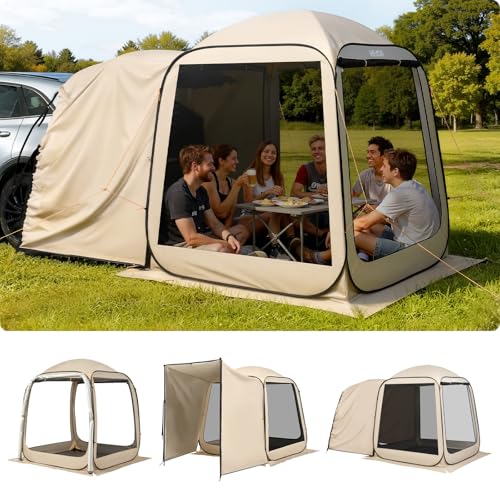
SUV Tailgate Tent VEVOR, 6 x 6 ft Pop-Up Screen House Canopy for 4–6 Person, Portable Screened Shelter with Carry Bag, for Car Camping, Backyard, Patio, Outdoor Activities
3-in-1 SUV Tailgate Tent for Car Camping: Designed to connect directly to your vehicle, this SUV tailgate tent...
As an affiliate, we earn on qualifying purchases.