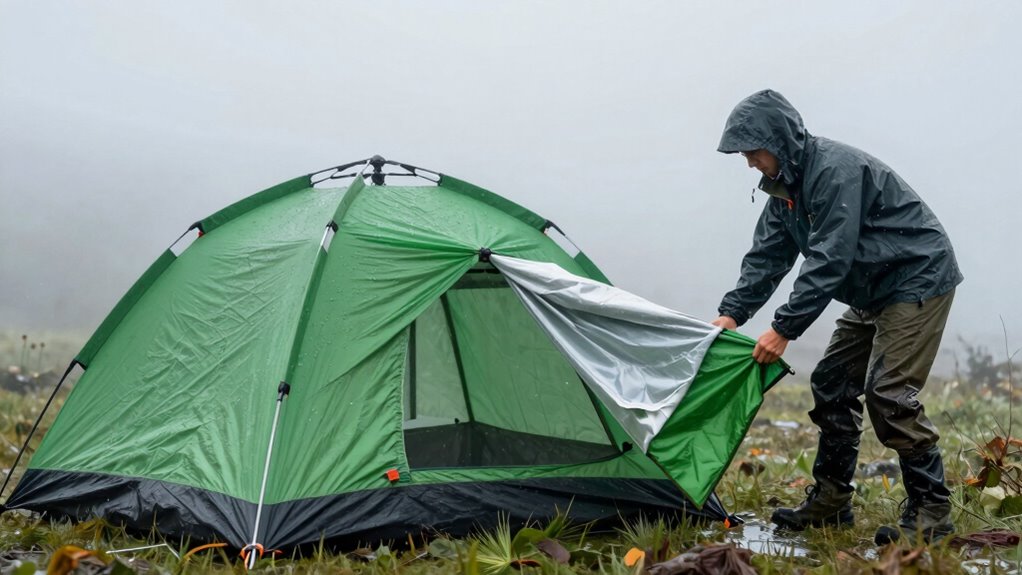

To quickly tear down your tent in rainy mornings, start by organizing your gear and waterproof supplies beforehand. Remove all wet equipment from the tent, then gently shake excess water off outside or inside if necessary. Detach the rainfly carefully, fold it neatly, and roll the tent body tightly to minimize moisture. Wipe down surfaces with a dry towel, pack everything into waterproof bags, and store your gear properly. mastering these steps will make your packing faster and more efficient—keep going to discover more tips.
Key Takeaways
- Remove all gear and shake tent walls outside or gently inside to minimize water retention.
- Detach and fold the rainfly carefully, then roll the tent body tightly to prevent water trapping.
- Wipe down surfaces with a dry towel to remove surface moisture and prevent mildew.
- Store the tent in waterproof bags or containers, keeping gear organized for quick packing.
- Practice a methodical, calm approach regularly to improve efficiency during rainy morning pack-up.

Teardown times can be frustrating, especially when you’re in a hurry to pack up. When rain has soaked your tent overnight, you need a quick and efficient method to pack up without risking mold or damage. Proper tent storage and weather preparedness are vital to streamline this process and prevent headaches later. The trick is to stay calm, organized, and follow a step-by-step approach that minimizes wet messes and saves time.
Start by gathering your supplies—zipper bags, a dry cloth or towel, and any waterproof gear you have on hand. As soon as you wake up, remove all your gear from the tent to prevent soaking it further. Shake off excess water from the tent’s walls and rainfly outside, if possible. If not, do this inside the tent carefully, aiming to limit water drips on the ground. Wrapping the wet tent in a large, moisture-resistant tarp or plastic sheet can help contain the mess as you begin packing. This also prevents water from dripping onto your gear or ground, making the process cleaner and faster.
Next, focus on tent storage. Detach the rainfly and carefully fold it to avoid unnecessary creases that might trap water. Roll up the tent body tightly, pressing out as much water as you can without ripping the fabric. A quick wipe-down with a dry towel can help remove surface moisture, ensuring it’s not damp when stored. If you have a waterproof bag or compression sack, use it to minimize the tent’s volume for easier packing. Being organized here speeds up the process and reduces the chance of forgetting any parts.
Weather preparedness plays a big role in this process. Having a plan for rainy mornings, like pre-packed dry bags or quick-drying gear, helps you move faster. Consider storing your tent in a designated waterproof container or bag that’s easily accessible. This way, you won’t waste time searching for the right gear when you’re trying to beat the rain. When packing, keep in mind that a damp tent needs to be stored properly to prevent mildew. Additionally, choosing high-quality waterproof materials can make a significant difference in protecting your gear during wet conditions. Once home, hang the tent to dry completely before storing it in a dry, ventilated place.
In the end, mastering a quick tent teardown method for rainy mornings hinges on good tent storage habits and weather preparedness. Keep your gear organized, always have waterproof supplies at hand, and stay calm. With practice, you’ll be able to pack up swiftly, even in the rain, without sacrificing your gear’s longevity or your sanity. This approach ensures you’re ready to move on quickly, no matter how wet or muddy the morning might be.
Frequently Asked Questions
How Can I Prevent My Tent From Getting Soaked During Teardown?
To prevent your tent from getting soaked during teardown, start by sealing the tent seams beforehand with good seam sealer. This keeps water from seeping through. During teardown, place a tarp underneath your tent to catch any drips. When packing up, fold the tent carefully to avoid exposing wet surfaces, and store it in a dry, ventilated area. These steps help keep your tent as dry as possible.
What Are the Best Materials for Quick-Drying Tent Fabric?
Think of your tent fabric as a sponge that’s eager to dry quickly. Look for tents made with polyester or nylon, as these materials are known for their quick-drying properties. Waterproof coatings like silicone or polyurethane enhance drying speed and water resistance. These quick drying materials help you pack up faster, keeping your gear dry and ready for your next adventure. Always choose fabrics designed for rapid moisture evaporation.
How Do I Store My Tent to Avoid Mold After Rain?
To avoid mold during tent storage, make sure your tent is completely dry before packing it away. Store it in a cool, well-ventilated area to prevent excess moisture buildup. Keep it off the ground and avoid sealed containers that trap humidity. Regularly inspect your tent for signs of mold, and clean it with mild soap and water if needed. Proper tent storage is key to mold prevention and extending your gear’s lifespan.
Can I Use a Regular Towel to Dry My Tent Quickly?
A regular towel can be your first step in tent fabric rescue, but it’s best to use a microfiber towel for faster, more effective towel drying. Gently pat or blot the tent fabric to absorb excess moisture, helping it dry quicker and prevent mold. Remember, vigorous rubbing might damage delicate fibers, so treat your tent with care. With patience and a soft towel, your tent will be ready for next adventures in no time.
What Are Common Mistakes to Avoid During Tent Teardown?
Avoid tent stake mishaps by double-checking all stakes are loosened before pulling them out. Don’t rush improper pole disassembly; follow the manufacturer’s instructions to prevent damage. Be careful not to yank on the tent fabric, which can cause tears. Keep track of all parts, especially small pieces. Taking your time guarantees a smooth teardown, prevents damage, and makes packing up easier.
Conclusion
Now that you’ve mastered this quick tent teardown method, you’ll be ready to face rainy mornings without missing a beat. Just keep your gear organized and stay calm under pressure, because rushing can cause more trouble than it’s worth. Remember, a well-timed move saves the day, and with practice, tearing down your tent in a downpour will become second nature. Stay dry and enjoy your adventures—there’s no need to sweat the small stuff!