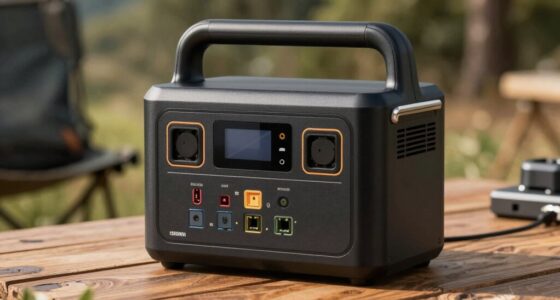
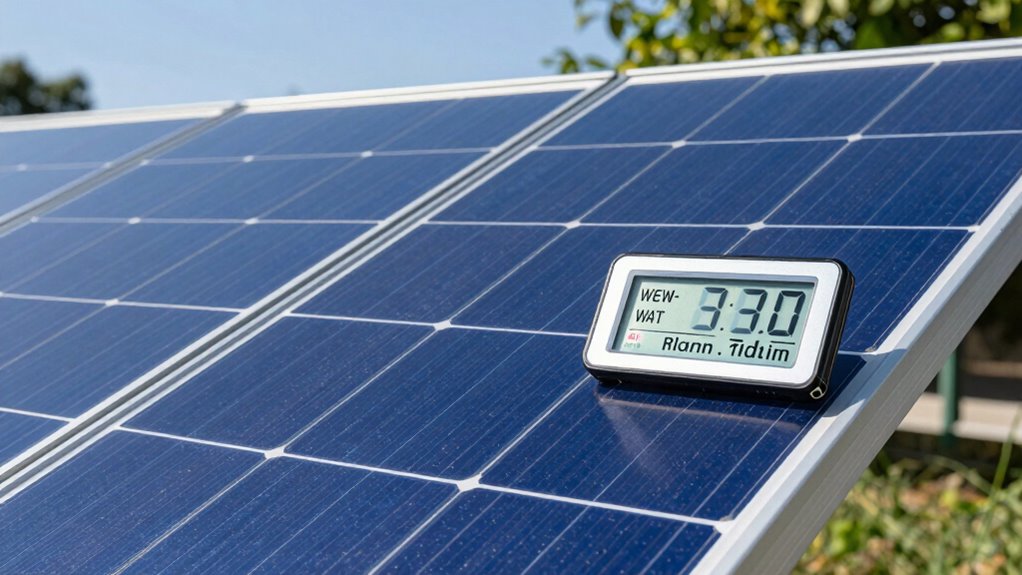
Understanding your rigid solar panel kit specs is key. Watts indicate the power your panels produce at any moment, while watt-hours show the total energy you’ll get over time. Surge power measures the peak load your system can handle temporarily, essential for starting appliances. Recharge time lets you know how quickly batteries recover after use. By grasping these details, you’ll better match a system to your energy needs and discover more about optimizing your setup.
Key Takeaways
- Watts measure immediate power output, while watt-hours indicate total energy produced over time.
- Surge power reflects maximum short-term capacity, crucial for handling appliances with high startup loads.
- Recharge time shows how quickly batteries recover, impacting system reliability during low sunlight or power use.
- Understanding both watts and watt-hours helps match solar kit capacity to your energy needs.
- Properly rated surge power and recharge times ensure system safety, durability, and consistent performance.
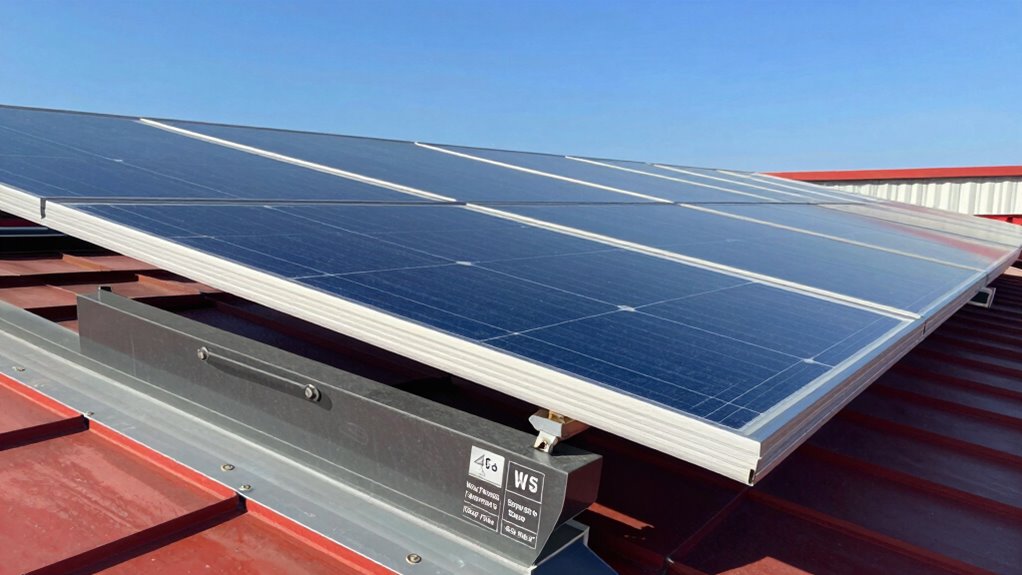
A rigid solar panel kit offers a reliable solution for harnessing solar energy with durability and efficiency. When choosing the right kit, understanding key specifications like watts versus watt-hours, surge power, and recharge time is essential to guarantee it meets your energy needs. The watt rating of a solar panel indicates its power output under standard test conditions, essentially telling you how much energy it can generate at any given moment. However, this doesn’t tell the whole story about how much energy you’ll actually get over time—that’s where watt-hours come into play. Watt-hours measure the total energy produced or consumed over a period, giving you a clearer picture of the system’s capacity to power devices or charge batteries. Recognizing the difference between these two helps you select a kit that matches your usage patterns, especially when planning for long-term energy needs.
When considering a rigid solar panel kit, pay close attention to solar panel efficiency. Higher efficiency panels convert more sunlight into usable electricity, which means you can generate more power from a smaller space. This is particularly important if your installation space is limited or if you’re aiming for a more compact setup. Installation considerations also influence overall performance. Proper mounting, tilt angle, and orientation optimize sunlight exposure, which maximizes solar panel efficiency. Guaranteeing your panels are installed in a location with minimal shading and at the ideal angle can considerably boost energy output. Besides, a durable, weather-resistant mounting system is essential for long-term performance, especially in areas prone to high winds, snow, or heavy rain. Additionally, considering the system’s energy storage capabilities can ensure continuous power supply during periods of low sunlight or at night.
Surge power is another pivotal specification, especially if you’re planning to run appliances with high startup loads like refrigerators or air conditioners. Surge power indicates the maximum power your system can handle temporarily without damage. Knowing this helps you avoid overloads and guarantees your system can support your peak energy demands without failure. The recharge time of your solar setup, particularly if you’re using batteries for energy storage, determines how quickly your system can recover after a period of low sunlight or high usage. A faster recharge time means you’ll have reliable power more consistently, which is fundamentally important for off-grid applications or backup systems.
Frequently Asked Questions
How Do I Choose the Right Solar Panel Kit for My Needs?
To select the right solar panel kit, consider your energy needs and available space. Look for panels with high solar panel durability to withstand weather conditions. Think about your energy storage options, such as batteries, to guarantee continuous power. Assess the wattage and surge power to meet your peak demands. By matching these factors, you’ll find a kit that’s efficient, reliable, and tailored to your specific requirements.
What Maintenance Is Required for a Rigid Solar Panel System?
Ever wondered how to keep your solar system running smoothly? You should regularly perform cleaning routines to remove dirt and debris that block sunlight. Additionally, inspect components like wiring, connectors, and mounting hardware for damage or corrosion. These simple steps guarantee the best performance and longevity of your rigid solar panel system. Do you have a maintenance schedule in place? Consistent upkeep saves you time and money while maximizing energy output.
Can I Expand My Solar Kit Later? if So, How?
Yes, you can expand your solar kit later with expandable systems and modular upgrades. To do so, make certain your current system supports additional panels or components. Check if your inverter and charge controller are compatible with future expansions. When you’re ready, simply connect the new panels or modules following manufacturer instructions. This flexibility allows you to increase your system’s capacity over time without needing a complete overhaul.
How Do Weather Conditions Affect Solar Panel Performance?
Think of your solar panels as brave explorers facing nature’s moods. Weather conditions, like rain, snow, or clouds, can dim their sunlight and reduce efficiency temporarily. However, with proper weatherproofing techniques and durable design, they resist harsh elements and keep performing. To maximize output, guarantee your panels are well-maintained and protected from extreme weather, so they continue shining bright no matter what Mother Nature throws their way.
What Safety Precautions Should I Follow During Installation?
You should prioritize electrical safety by turning off power sources and wearing insulated gloves during installation. Always verify proper grounding of your solar panels to prevent electrical shocks and damage. Use appropriate tools and follow manufacturer instructions carefully. Keep the installation area dry and clear of obstructions. Double-check connections and secure all components tightly to avoid hazards. Following these precautions helps ensure a safe, efficient solar panel setup.
Conclusion
Understanding your rigid solar panel kit specs isn’t just helpful—it’s your secret weapon against the dark! Mastering watts, watt-hours, surge power, and recharge time transforms you into a solar superhero, ready to conquer any blackout or power outage with unstoppable energy. Don’t just settle for basic; harness this knowledge and activate a solar power revolution in your life. Because when you get these specs right, you’re not just powering devices—you’re illuminating your future with unstoppable, limitless energy!