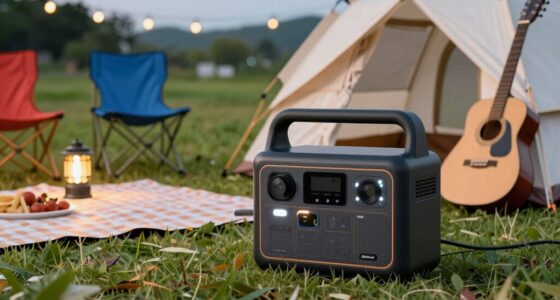
Understanding your solar generator kit starts with watts versus watt-hours: watts show how much power your device needs instantly, while watt-hours tell you how long it can run. Surge power is the extra burst needed to start high-energy appliances. Recharge time indicates how quickly your battery replenishes, especially with panels or other sources. Knowing these specs helps you pick the right setup for your needs—continue to explore for more detailed insights.
Key Takeaways
- Watts measure the immediate power output capacity, while watt-hours indicate total energy stored for prolonged use.
- Surge power reflects the temporary high wattage needed during device startup, critical for appliances with motors.
- Battery capacity in watt-hours determines how long devices can run before recharging is necessary.
- The inverter size must match or exceed the device’s wattage requirements, including surge power for safe operation.
- Recharge time varies based on the charging method (solar, AC) and capacity, affecting availability and usage flexibility.

A solar generator kit with panels offers a reliable and eco-friendly way to power your devices, whether you’re camping, facing a power outage, or working to reduce your carbon footprint. When choosing a kit, understanding key specs like battery capacity and inverter size helps guarantee it meets your needs. Battery capacity, measured in watt-hours (Wh), determines how much energy your generator can store and deliver over time. The larger the capacity, the longer you’ll be able to power devices before needing a recharge. For example, if you plan to run a refrigerator or multiple devices, you’ll want a higher capacity to handle extended use. The inverter size, usually expressed in watts (W), indicates the maximum power the generator can provide at any moment. It’s essential to match the inverter size with your device requirements; too small, and it won’t support high-wattage appliances, too large, and you might be paying for more capacity than necessary.
Understanding watts versus watt-hours is fundamental when evaluating your solar generator. Watts measure the rate of power flow—how much energy is being used at a given instant—while watt-hours account for total energy over time. For example, a 200W device running for one hour consumes 200Wh. If your generator has a battery capacity of 2,000Wh, it can theoretically power a 200W device for around 10 hours, assuming no energy loss. This distinction helps you plan your usage and select a generator that offers the right balance of power and endurance for your needs. Additionally, considering energy efficiency can help maximize your generator’s runtime and overall effectiveness.
Surge power, or surge wattage, refers to the temporary increase in power a generator can handle when starting appliances with motors or compressors, like refrigerators or power tools. Many devices require a surge power that exceeds their running wattage during startup. When evaluating your solar generator, check the surge power rating to guarantee it can handle these initial power surges without shutting down or risking damage. Most generators specify both continuous wattage and surge wattage, giving you a clear picture of their capabilities.
Recharge time is another essential aspect to consider. It indicates how long it takes to fully restore your battery after use, whether through solar panels, AC wall outlets, or other charging methods. Faster recharge times mean less downtime and more flexibility, especially if you’re relying on solar panels that depend on sunlight conditions. Many kits support multiple recharging options, allowing you to optimize your power availability based on your environment. Combining an appropriately sized battery capacity with a suitable inverter size and understanding wattage ratings will help you select a solar generator kit that best fits your power needs and lifestyle.
solar generator with high watt-hour capacity
As an affiliate, we earn on qualifying purchases.
As an affiliate, we earn on qualifying purchases.
Frequently Asked Questions
How Do Temperature Changes Affect Solar Generator Performance?
Temperature changes can impact your solar generator’s performance by affecting panel efficiency. When it’s too hot, panels may become less efficient, reducing power output. Conversely, colder temperatures can help maintain efficiency, but extreme cold might cause other issues like battery performance drops. To guarantee ideal performance, keep your panels clean and avoid prolonged exposure to extreme temperatures. Properly managing temperature effects helps your solar generator operate smoothly and reliably.
Can Solar Generator Kits Be Expanded With Additional Panels?
Yes, you can expand your solar generator kit with additional panels, but you need to check solar panel compatibility to guarantee they match your system’s voltage and connector types. Keep in mind expansion limitations, as some kits are designed for specific capacities, and adding too many panels might overload your inverter or battery capacity. Always verify compatibility and limitations before expanding to maximize efficiency and safety.
What Maintenance Is Required for Solar Generator Panels?
Did you know that properly maintained panels can last over 25 years? You should regularly clean your solar generator panels to remove dirt and debris, which can reduce efficiency by up to 25%. Additionally, inspect for corrosion and apply corrosion prevention measures to safeguard connections. Keeping panels clean and corrosion-free ensures maximum performance and longevity, saving you money and hassle over time.
Are Portable Solar Generators Suitable for All Weather Conditions?
Portable solar generators are generally designed for outdoor use, but their weather resilience varies. Heavy rain, snow, or extreme heat can affect their solar efficiency and overall performance. You should check if your model has weatherproof features or covers to safeguard against the elements. While some units handle adverse conditions well, others may need extra care or shelter to ensure consistent power generation and longevity in all weather conditions.
How Do I Safely Dispose of or Recycle a Solar Generator?
You should safely dispose of or recycle your solar generator by following local disposal regulations and seeking out battery recycling programs. Never throw it in the trash, as the batteries contain hazardous materials. Contact your community waste management or a specialized recycling center to guarantee proper handling. This helps prevent environmental damage and ensures that valuable materials are recovered and reused responsibly.
portable solar panel kit for generator
As an affiliate, we earn on qualifying purchases.
As an affiliate, we earn on qualifying purchases.
Conclusion
Understanding the specs of your solar generator kit is like having a map to a treasure. Knowing watts, watt-hours, surge power, and recharge time helps you navigate your energy needs confidently. Just as a compass guides a traveler, these details guarantee you’re prepared for sunny days and cloudy ones alike. With this knowledge, your solar setup becomes as reliable as the sunrise, keeping your devices powered and your adventures worry-free.
solar inverter for power backup
As an affiliate, we earn on qualifying purchases.
As an affiliate, we earn on qualifying purchases.
solar generator with surge power rating
As an affiliate, we earn on qualifying purchases.
As an affiliate, we earn on qualifying purchases.