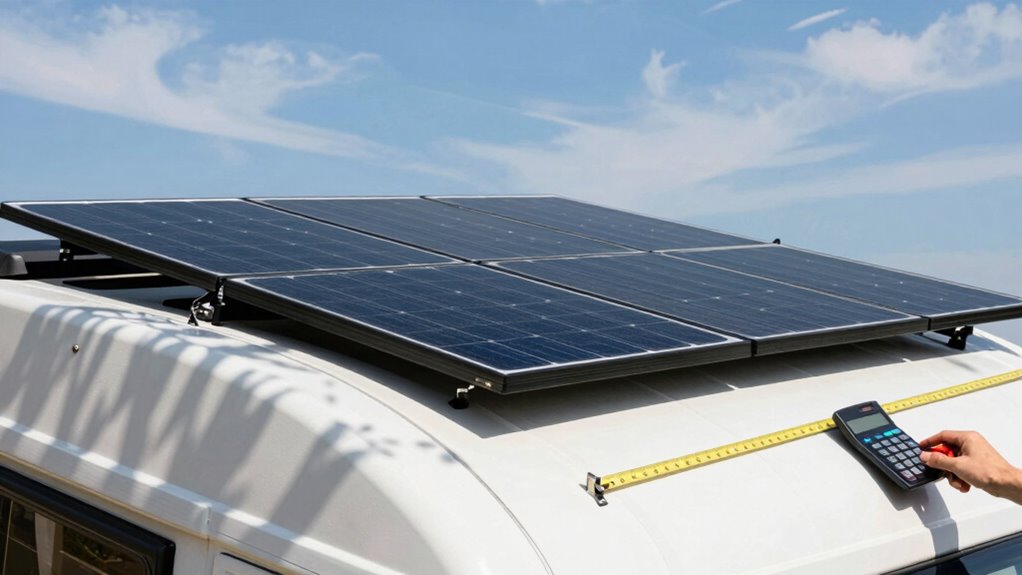

To size your solar panels accurately, start by listing all your devices and their wattages, then estimate how long you use each daily. Add up their energy needs to get your total daily requirement. Match this with your battery capacity and inverter specs, considering sunlight availability. Oversizing wastes money, while undersizing causes shortages. If you want to get it just right without guessing, keep exploring—there’s more to help you confidently plan your system.

Get audio and creator gear delivered free with Prime
- Fast, free delivery on millions of items
- Prime Video, Amazon Music and more included
- Member-only deals all year
Key Takeaways
- List all devices’ wattage and daily usage to accurately determine total energy needs.
- Match solar panel size to your total daily energy consumption and sunlight hours for optimal output.
- Choose batteries with capacity aligned to your daily energy use to ensure reliable storage.
- Select an inverter that handles peak device power and suits sensitive electronics with pure sine wave.
- Avoid oversizing or undersizing panels; balance system components for efficiency and cost-effectiveness.
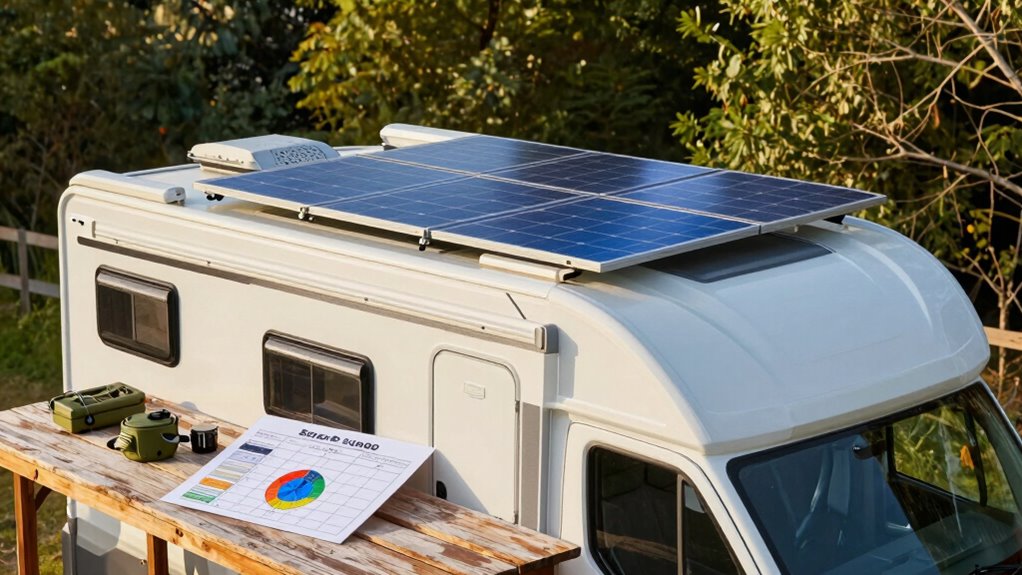
If you’re tired of guessing how much solar power your camper needs, you’re not alone. Many campers find it confusing to determine the right solar panel size and system components without overspending or underperforming. The key is understanding your energy consumption and matching it with the right setup. Start by figuring out your daily power needs: list all the devices you plan to run, how long you’ll use them, and their wattage. This gives you a clear picture of your total daily energy requirement, which is essential for sizing your solar system accurately.
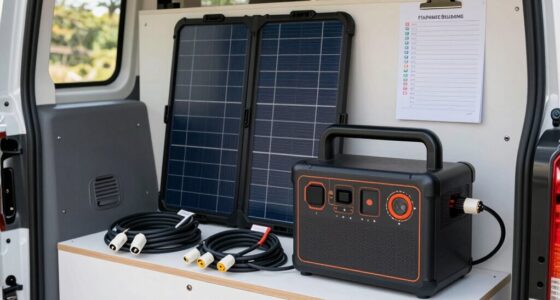
Once you know your daily energy consumption, focus on your battery capacity. Your batteries store the energy your solar panels generate, so choosing the right capacity guarantees you won’t run out of power during cloudy days or at night. A larger capacity battery can store more energy, providing peace of mind and reducing the need for frequent recharging. But don’t just pick the biggest battery out there; consider your space, weight limits, and budget. The goal is to have enough stored energy to cover your typical usage without unnecessary excess, which can be costly and cumbersome.
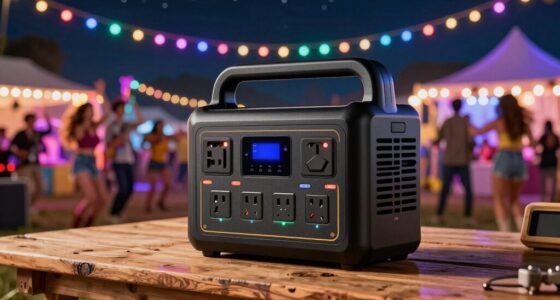
In tandem with battery capacity, selecting the right inverter is critical. The inverter converts the DC power stored in your batteries into AC power, which most appliances and devices use. When choosing an inverter, consider the inverter selection carefully: you’ll need one that can handle your peak power demands. If you plan to run high-wattage appliances like a microwave or hairdryer, make sure your inverter can handle those loads without tripping or overheating. For smaller, more energy-efficient setups, a pure sine wave inverter provides cleaner power and safer operation, especially for sensitive electronics. Proper system sizing is essential to ensure all components work harmoniously and efficiently.
Matching your solar panel size with your energy needs isn’t just about watts; it’s about creating a balanced system. Oversizing your panels can lead to wasted energy and unnecessary expense, while undersizing leaves you constantly short of power. By understanding your battery capacity and inverter requirements upfront, you set the foundation for a reliable system that meets your needs without guesswork. Proper sizing also involves considering your solar panel output, which depends on factors like sunlight availability and panel efficiency. Additionally, understanding how solar panel efficiency impacts your overall setup can help optimize performance. Proper sizing ensures your camper’s power system is efficient, dependable, and tailored to your lifestyle. In the end, taking the time to accurately assess and match these components means you can relax and enjoy your adventures without worrying about running out of juice.
As an affiliate, we earn on qualifying purchases.
Frequently Asked Questions
How Do I Calculate My Daily Energy Needs Accurately?
To calculate your daily energy needs accurately, start by listing all your devices and noting their power consumption in watts. Multiply each by the hours you’ll use them daily. Add up these totals to find your daily energy use in watt-hours. Consider your battery capacity to guarantee it can store enough energy, and plan your solar panel size accordingly to meet your power consumption without guesswork.
What Are the Best Types of Solar Panels for Camping?
You need the absolute best solar panels for camping, and that’s the ultra-portable, super-durable kind! Look for flexible panels that fold or roll for maximum portability, making setup a breeze in any spot. Prioritize panel durability, so they withstand rough conditions and weather. These panels give you the freedom to chase adventures without worrying about your gear breaking down, ensuring reliable power wherever you roam.
How Does Weather Affect Solar Panel Performance?
Weather considerably impacts your solar panel performance. Cloud cover reduces sunlight, decreasing energy production, so your panels generate less power on cloudy days. Temperature fluctuations also matter; high temperatures can lower efficiency, while cooler weather often boosts output. You’ll notice seasonal changes, so plan for variability. To optimize, consider panels with good temperature tolerance and monitor weather patterns to manage your energy expectations effectively.
Can I Upgrade My Solar System Later?
Yes, you can upgrade your solar system later. Think of it like adding new tools to a toolbox—you can start small with portable options and expand as your energy needs grow. Battery storage capacity can also be increased, ensuring you store enough power. Just plan your system with future upgrades in mind, and you’ll find it easy to adapt without starting from scratch, making your setup flexible and long-lasting.
What Maintenance Is Required for Camping Solar Panels?
You need to regularly clean your camping solar panels to maintain efficiency, especially after dirt, dust, or bird droppings settle. Use a soft brush or cloth with mild soap and water, avoiding harsh chemicals. Keep an eye on your battery lifespan by monitoring voltage levels and charging patterns. Proper maintenance guarantees your panels stay productive, extending their lifespan and keeping your power system reliable during camping trips.
As an affiliate, we earn on qualifying purchases.
Conclusion
Think of solar panel sizing like planting a garden—you wouldn’t toss seeds randomly and hope for a bumper crop. Instead, you plan carefully, considering your needs and the sun’s path. By sizing your panels wisely, you’re nurturing a dependable energy source, just like tending a garden ensures steady blooms. When you prevent guessing, your solar setup flourishes, giving you peace of mind on every adventure. Trust the process, and watch your camping energy grow reliably.
pure sine wave inverter for camping
As an affiliate, we earn on qualifying purchases.
As an affiliate, we earn on qualifying purchases.
As an affiliate, we earn on qualifying purchases.
Halloween Picks
halloween
As an affiliate, we earn on qualifying purchases.