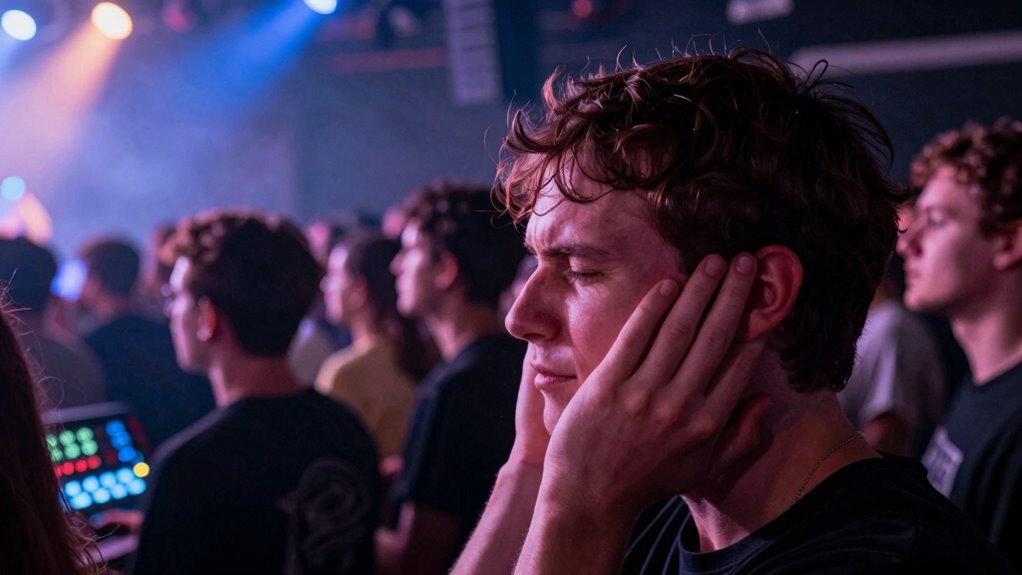

You can tell a venue is too loud before it becomes a problem by paying attention to your senses—if you find it hard to hear conversations without shouting, or your ears start ringing or feel full, it’s a sign the volume is too high. Echoes and sound reflections also indicate excessive noise. If this sounds familiar, there are ways to stay ahead of the noise and protect your ears—keep going to learn more.

Get audio and creator gear delivered free — and shop member deals
- Fast, free delivery on millions of items
- Access to Prime Big Deal Days deals on October 6–7
- Prime Video, Amazon Music and more included
Key Takeaways
- Trust your senses: difficulty hearing conversations or ear discomfort signals excessive noise.
- Observe echoes and sound reflections indicating poor acoustic treatment and high noise levels.
- Note if you need to shout to be heard, suggesting the environment is too loud.
- Check for signs of hearing fatigue, ringing, or fullness after time in the venue.
- Proactively step outside or into quieter areas when noise becomes overwhelming.

When you’re at a venue and struggling to hold a conversation or feeling uncomfortable, it’s a clear sign the noise level might be too high. Loud environments can quickly become overwhelming, making it hard to focus, relax, or enjoy yourself. One of the key factors influencing noise levels is the venue’s acoustic properties. If the space has hard, reflective surfaces like concrete walls, tile floors, or glass windows, sound bounces around more, amplifying the noise. Conversely, venues with soft furnishings, carpets, and drapes tend to absorb sound, reducing overall volume. Paying attention to these details can help you gauge whether the noise is excessive before it becomes a serious problem.
Understanding noise regulations is also crucial. Many areas have legal limits on sound levels, especially in public venues, to protect patrons’ hearing and reduce disturbance to neighbors. If you’re aware of these regulations, you can better identify when a venue is pushing beyond acceptable limits. For example, if music or crowd noise seems to be exceeding the decibel levels permitted by local laws, it’s a clear indication that the environment might be too loud. Sometimes, venues post their maximum volume or have staff monitor sound levels; asking staff about these standards can give you a quick sense of whether the noise is appropriate.
As you spend time in a venue, listen for signs that noise is affecting your experience. If you find it hard to hear your friends without shouting or if your ears start ringing after a while, those are warning signs. Elevated noise levels can cause discomfort and even temporary hearing issues if sustained. Pay attention to how the space’s design affects sound; a venue with poor acoustic treatment will likely be louder and more chaotic. If you notice echoes, sound reflections, or a generally overwhelming soundscape, it’s probably too loud. Additionally, acoustic properties play a significant role in determining how loud a space feels, influencing the overall comfort of the environment. Recognizing these acoustic factors can help you identify environments that are more likely to be comfortable and less chaotic. Being aware of the noise regulations can also help you advocate for quieter settings or better sound management when necessary. Awareness of sound absorption techniques used in venues can further assist in understanding how noise levels are managed or could be improved.
Ultimately, trusting your own senses is the best way to tell when a venue is too loud. If conversation becomes strained, if you’re straining to hear, or if your ears feel uncomfortably full, consider stepping outside or into a quieter area. Recognizing the role of acoustic properties and being aware of noise regulations can help you make smarter choices about when to enjoy a venue and when to seek a quieter environment. Being proactive about noise levels ensures your experience remains enjoyable and safe, without risking hearing damage or discomfort.
As an affiliate, we earn on qualifying purchases.
Frequently Asked Questions
How Can I Measure Venue Noise Levels Accurately?
You can measure venue noise levels accurately by using sound level meters, which provide precise readings of decibel levels. Use noise measurement techniques like taking multiple readings at different spots and times to guarantee consistency. Keep the meter at ear level and away from reflective surfaces. Regularly monitoring with a sound level meter helps you maintain noise within safe limits, preventing discomfort or hearing damage for your guests.
What Are the Health Risks of Loud Venues?
Exposure to loud venues puts you at risk of hearing damage and chronic tinnitus, which can cause ringing or buzzing in your ears. Prolonged loud noise can weaken your hearing over time, leading to long-term issues. To protect yourself, keep noise levels in check, wear ear protection, and take breaks from the noise. Ignoring these risks can seriously impact your hearing health and quality of life.
Are There Legal Noise Level Limits for Venues?
Think of venue acoustics as the rhythm of a dance, and noise mitigation as the dance partner guiding it smoothly. Yes, many places are bound by legal noise level limits, often measured in decibels, to keep the party from spiraling out of control. These regulations aim to protect everyone’s hearing and comfort, ensuring your favorite spot stays lively without crossing the line into chaos. Always check local laws to keep the vibe safe and enjoyable.
How Do Different Venues Compare in Noise Levels?
Different venues vary widely in noise levels due to venue acoustics and audience density. Smaller, intimate spaces often have lower decibel levels, while large concert halls or clubs with dense audiences can reach much higher volumes. You can gauge this by noticing how the sound feels—if it’s uncomfortably loud or causes difficulty hearing, the acoustics and audience density are likely contributing to excessive noise, signaling it might be too loud.
What Equipment Can I Use to Monitor Noise During Events?
You can use sound level meters or decibel meters to monitor noise during events actively. These devices measure sound pressure levels in real time, helping you stay within safe limits. Combine this with soundproofing techniques and acoustic treatment, like panels or diffusers, to control noise. Regularly checking levels guarantees the venue remains comfortable for guests and compliant with regulations, preventing noise issues before they escalate.
portable noise-canceling ear muffs
As an affiliate, we earn on qualifying purchases.
As an affiliate, we earn on qualifying purchases.
Conclusion
Remember, while loud venues can be exciting, your hearing is invaluable. Trust your instincts—if you start to feel discomfort or notice ringing in your ears afterward, it’s a sign to step back. Some experts suggest that your body gives subtle cues before damage occurs, like headaches or fatigue. Taking these signals seriously isn’t just about comfort; it’s about preserving your hearing health long-term. Don’t ignore the warning signs—your ears will thank you.
As an affiliate, we earn on qualifying purchases.
As an affiliate, we earn on qualifying purchases.
Fall Picks
fall essentials
As an affiliate, we earn on qualifying purchases.