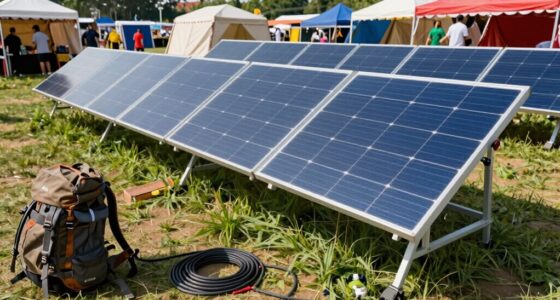
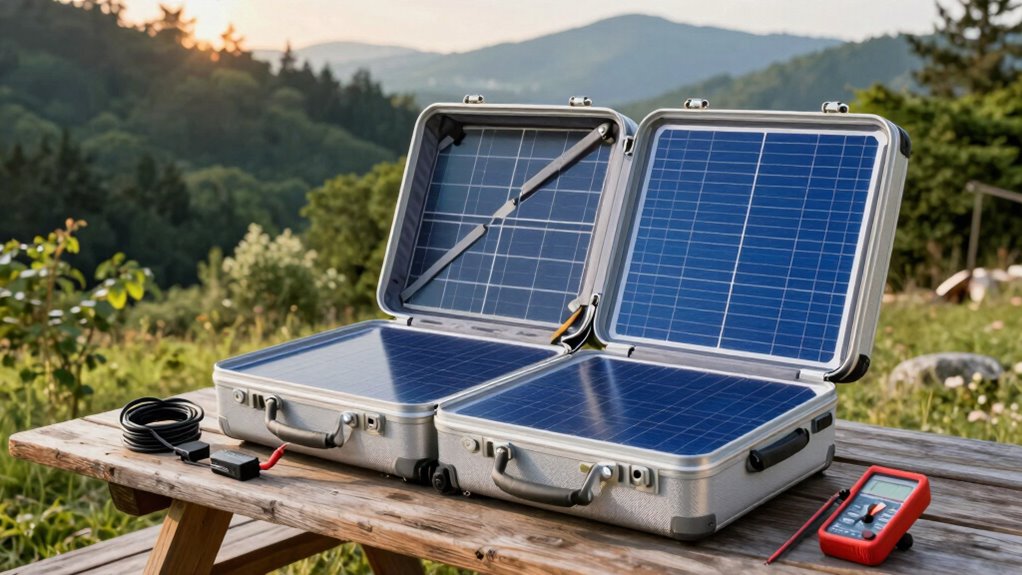
When setting up your solar panel suitcase kit for RV camping, guarantee panels are positioned in full sunlight and are securely mounted to avoid damage. Check connections regularly, keep terminals clean, and avoid shading that can reduce efficiency. Overloading the system or using an undersized inverter can cause issues. By following these essential steps, you’ll optimize your setup and prevent common mistakes. Keep going to discover how to perfect your solar system for trouble-free camping adventures.
Key Takeaways
- Ensure panels are placed in optimal sunlight, avoiding shadows and obstructions during setup.
- Verify all connections are tight, clean, and corrosion-free to maintain efficient power transfer.
- Use the correct inverter size based on total appliance wattage, including startup surges.
- Regularly inspect water levels (if flooded lead-acid) and clean terminals to prevent performance issues.
- Follow manufacturer instructions carefully for assembly and wiring to avoid common setup errors.
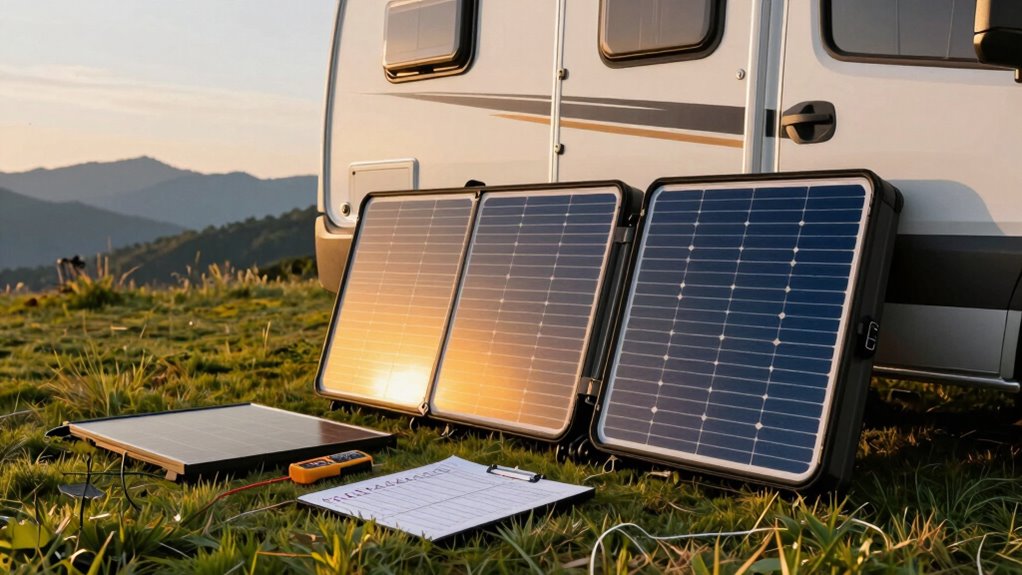
Setting up your solar panel suitcase kit for RV camping is a straightforward process that guarantees you’ll have reliable power wherever you go. However, to guarantee your system functions efficiently and lasts long, you need to pay attention to key details like battery maintenance and inverter sizing. Neglecting these aspects can lead to poor performance or even damage your equipment.
When it comes to battery maintenance, many RV owners overlook the importance of regular checks and proper care. Your batteries are the heart of your solar setup, storing energy for when the sun isn’t shining. You should routinely inspect your batteries for corrosion, loose connections, and water levels if you’re using flooded lead-acid types. Keeping terminals clean and tight helps prevent power loss and extends the lifespan of your batteries. Also, monitor their voltage and capacity periodically, especially after heavy use or over several charge cycles. Proper maintenance ensures your batteries perform at their best, providing a reliable power reserve for your RV adventures. Additionally, understanding your system’s capacity and how it impacts performance can help prevent overloads and optimize energy use.
Regularly inspect and maintain your batteries for optimal RV solar performance.
Inverter sizing is another common mistake that can hamper your solar system’s effectiveness. The inverter converts DC power from your batteries into AC power usable for your appliances. If your inverter is too small, it won’t handle the surge demands of starting appliances like refrigerators or microwave ovens, leading to tripped breakers or shutdowns. Conversely, oversizing your inverter results in unnecessary expenses and potentially increased energy consumption. To avoid this, you need to carefully calculate your total power needs. List all appliances you’ll run simultaneously, and consider their startup wattage, not just running wattage. This way, you select an inverter with a capacity that comfortably covers your peak demand without wasting energy. Proper inverter sizing ensures your RV’s power system is both reliable and efficient, preventing unexpected shutdowns and prolonging your equipment’s life.
Setting up your solar panel suitcase kit involves more than just placing panels in the sun. You must understand your system’s components and how they work together. Proper battery maintenance keeps your energy storage healthy, while correct inverter sizing guarantees your appliances run smoothly without overloading your system. Take the time to check connections, monitor your batteries, and calculate your power needs accurately. Doing so helps you avoid common mistakes that could diminish your system’s performance or cause costly repairs. With a little attention to detail, you’ll enjoy a steady, dependable power supply during your RV camping trips, making your outdoor adventures more comfortable and worry-free.
Frequently Asked Questions
How Do I Choose the Right Solar Panel Size for My RV?
To choose the right solar panel size for your RV, start by determining your solar capacity needs based on your power requirements. Calculate how much energy you consume daily and match it with the wattage of the panels. If you use multiple devices, opt for higher capacity panels to guarantee ample energy production. Remember, a larger solar capacity provides more reliable power, especially during cloudy days or extended trips.
What Safety Precautions Should I Take During Installation?
You might think installation is straightforward, but safety’s essential. Always wear personal protective equipment, like gloves and eye protection, to guard against electrical hazards. Turn off power sources before working on wiring, and use insulated tools. Keep a fire extinguisher nearby, and work in a dry, well-ventilated space. Prioritize electrical safety by double-checking connections, and never rush—your safety and system reliability depend on it.
How Do I Maintain and Clean My Solar Panels Effectively?
To maintain and clean your solar panels effectively, start with gentle cleaning methods like using a soft brush or sponge and water. Avoid harsh chemicals that could damage the surface. Regularly inspect for dirt, debris, or bird droppings and clean them off promptly. Maintenance tips include checking connections and mounting hardware periodically, ensuring they’re secure and free of corrosion, and keeping the panels angled correctly for maximum sunlight exposure.
Can I Upgrade My Solar Kit Later if Needed?
Did you know that over 60% of RV owners plan future expansion of their solar systems? Yes, you can upgrade your solar kit later if needed. Most portable solar panel suitcases are designed for easy solar panel upgrade, allowing you to add more capacity or replace components as your power needs grow. So, you won’t be limited—future expansion is simple, making your system more efficient over time.
What Troubleshooting Steps if My Solar System Isn’T Charging Properly?
If your solar system isn’t charging properly, start by checking your battery voltage with a multimeter to guarantee it’s within the correct range. Then, inspect all wiring connections for loose or corroded contacts. Make sure the cables are securely connected to the solar panels, charge controller, and batteries. If issues persist, verify the charge controller settings and look for any signs of damage or shading that could reduce efficiency.
Conclusion
Now that you’ve checked off each step, imagine your RV basking in the warm glow of the sun, your solar suitcase kit quietly powering your adventure. Avoid common pitfalls, and you’ll enjoy a smooth setup, free from worries. With everything in place, you can focus on the open road ahead, feeling confident as the gentle sunlight fuels your journey. Embrace the freedom of off-grid camping, knowing your solar system is ready to keep your adventures bright.