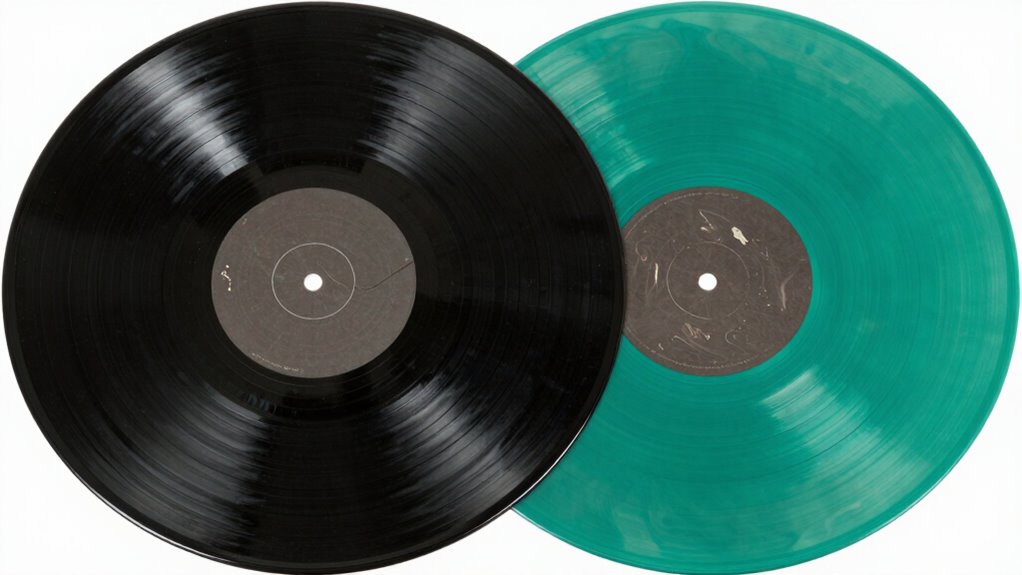

Colored vinyl and black vinyl mainly differ in appearance, manufacturing, and durability. Colored records feature vibrant hues that make them more eye-catching but can reveal scratches more easily due to their transparency. Black vinyl is made with added carbon pigment, making its production simpler and more consistent, and it hides minor damage better. Understanding these differences helps you choose the right one. If you want to explore the details more deeply, there’s plenty to discover.

Get audio and creator gear delivered free with Prime
- Fast, free delivery on millions of items
- Prime Video, Amazon Music and more included
- Member-only deals all year
Key Takeaways
- Colored vinyl offers vibrant visuals but may show scratches more easily than black vinyl’s more forgiving appearance.
- Manufacturing colored vinyl requires additional pigments and precise temperature controls, making it more complex than black vinyl production.
- Black vinyl generally has more consistent quality due to simpler manufacturing processes and fewer defects.
- Colored vinyl pigments can fade or discolor with prolonged light exposure, unlike the more light-resistant black vinyl.
- Both types should be stored properly in protective sleeves; colored vinyl’s bright hues make scratches more noticeable.
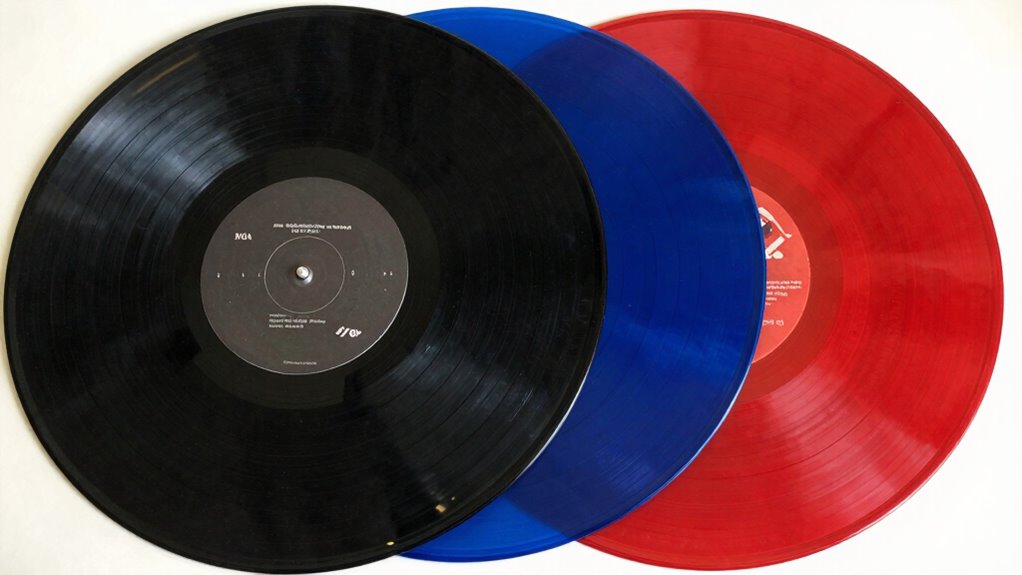
When choosing between colored vinyl and black vinyl, it’s important to understand how each option affects your project’s look and durability. The type of vinyl you select influences not only aesthetic appeal but also how the record is manufactured and stored. Colored vinyl often provides a vibrant, eye-catching appearance, making it a popular choice for special editions or collector’s items. Black vinyl, on the other hand, remains the industry standard, known for its classic look and consistent quality.
Pressing techniques play a significant role in how well each type of vinyl performs. Colored vinyl requires slightly different manufacturing processes because pigments are added during the production of the raw vinyl. This can impact the pressing process; colors may need more precise temperature controls or specific handling to prevent defects like mottling or uneven coloring. Black vinyl, being more straightforward to produce, generally results in fewer pressing issues and guarantees a consistent, high-quality finish. If you’re considering colored vinyl, it’s wise to work closely with your pressing plant to understand their capabilities and guarantee your design will turn out as intended.
Colored vinyl requires precise manufacturing to prevent defects like mottling.
Storage considerations are equally important when working with colored versus black vinyl. Both types of records should be stored vertically in a cool, dark environment to prevent warping and discoloration over time. However, colored vinyl can be slightly more sensitive to light exposure. The pigments used in colored records might fade or change shade if exposed to prolonged sunlight or harsh lighting, so storing them away from direct light is vital. Black vinyl tends to be more resilient in this regard because it doesn’t contain the same level of pigments that could degrade. Additionally, colored vinyl’s vibrant hues can sometimes make scratches or imperfections more noticeable than on black records. To preserve their visual appeal, handle them carefully and store them in protective sleeves. Black vinyl’s darker tone tends to mask minor scratches better, making it a more forgiving option if you anticipate frequent handling or storage in less-than-ideal conditions. Proper pressing techniques and storage practices are essential to maintain the quality and appearance of your vinyl records over time.
colored vinyl record protective sleeves
As an affiliate, we earn on qualifying purchases.
As an affiliate, we earn on qualifying purchases.
Frequently Asked Questions
Does Colored Vinyl Sound Different From Black Vinyl?
Colored vinyl doesn’t sound considerably different from black vinyl because the audio quality mainly depends on the manufacturing process, not the color. While some believe that colored vinyl might affect sound, most differences are minimal and due to factors like pressing quality and materials used. You’ll enjoy your music equally on colored or black vinyl, as long as the manufacturing process ensures good audio fidelity.
Is Colored Vinyl More Prone to Scratches and Damage?
Think of colored vinyl as a vibrant jewel, shining bright but more vulnerable to surface scratches and color fading over time. You might notice it’s slightly more prone to damage because the dye-infused surface can wear down faster than black vinyl’s resilient hue. Handle it gently, avoid rough surfaces, and store it carefully to preserve its brilliance. With love and care, your colorful record will stay stunning and sound amazing.
Are Colored Vinyl Records More Expensive Than Black Vinyl?
Yes, colored vinyl records are generally more expensive than black vinyl. This cost difference mainly comes from higher manufacturing costs, as colored vinyl requires specific dyes and additional processing steps. These extra materials and production complexity increase the price, making colored records less budget-friendly. You might notice the price hike, especially for limited editions or specialty colors, reflecting the extra effort and resources involved in their creation.
How Does Color Affect the Longevity of Vinyl Records?
Color can be a double-edged sword, like a delicate flower in the wind. It may fade over time, especially if exposed to sunlight or high heat, affecting your record’s longevity. While manufacturing quality plays a vital role, colored vinyl often has a higher risk of color fade compared to black vinyl. Proper storage and handling can help preserve your records, ensuring they stay vibrant and playable for years to come.
Can Colored Vinyl Be Recycled Like Black Vinyl?
Yes, colored vinyl can be recycled like black vinyl. During recycling processes, colored vinyl undergoes similar procedures to remove inks and dyes, allowing the material to be reused. However, the presence of colorants might slightly impact the environmental footprint, as some dyes are harder to process. Recycling colored vinyl helps reduce waste and minimizes environmental impact, but it’s crucial to check local recycling guidelines to guarantee proper disposal.
As an affiliate, we earn on qualifying purchases.
Conclusion
So, now you know the main differences between colored and black vinyl. But which one truly suits your style? The choice might seem straightforward, but there’s more beneath the surface. Will that vibrant color hold up over time? Or does the classic black offer unmatched durability? The decision isn’t just about looks—it’s about what’s right for you. The real question is: are you ready to make the leap and see where your vinyl journey takes you?
As an affiliate, we earn on qualifying purchases.
As an affiliate, we earn on qualifying purchases.
Columbus Day / Indigenous Peoples' Day Picks
long weekend sales
As an affiliate, we earn on qualifying purchases.