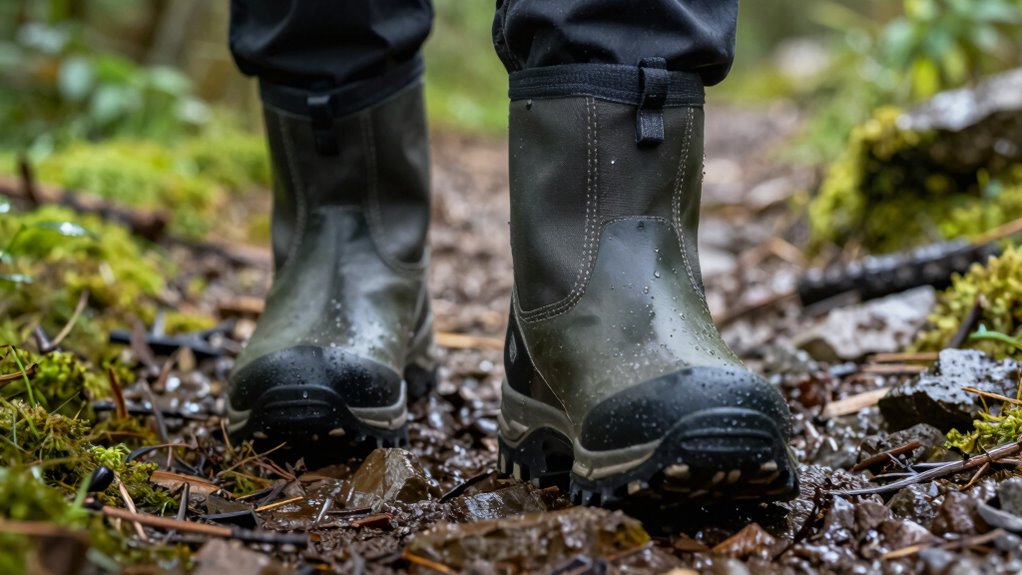
When choosing waterproof hiking boots, focus on features like breathability and sole construction, which impact comfort and stability. Look for breathable membranes like Gore-Tex to keep your feet dry from external moisture while venting internal sweat. Material choice affects weight and durability—leather offers robustness, while synthetics are lighter. The sole’s grip and cushioning boost safety on rugged terrain. If you want a clear breakdown of these important specs, keep exploring the details below.
Key Takeaways
- Focus on waterproof membranes like Gore-Tex for breathability and moisture management.
- Prioritize sole construction for grip, cushioning, and stability on rugged terrains.
- Consider material weight and durability; leather offers durability, synthetic boosts breathability and reduces weight.
- Balance weight and protection; heavier boots provide durability but may cause fatigue.
- Don’t overemphasize features like decorative elements; concentrate on technical specs that impact performance.

When choosing waterproof hiking boots, understanding their key specifications can make all the difference in ensuring comfort and durability on rough terrains. One of the most important factors to consider is breathability concerns. You want a boot that keeps your feet dry from external moisture while allowing sweat and heat to escape. If the boots lack proper breathability, your feet can become sweaty and uncomfortable, leading to blisters or even fungal issues. Look for boots with breathable membranes like Gore-Tex or similar materials, which are designed to provide a barrier against water while still venting internal moisture. This balance prevents your feet from feeling clammy during long hikes, especially in warmer weather or strenuous conditions. Incorporating European cloud innovation in manufacturing processes can also enhance the durability and performance of hiking boots. Weight considerations also play a pivotal role in selecting the right waterproof hiking boots. Heavier boots may offer increased durability and protection but can become tiring over time, especially on long or challenging hikes. Conversely, lightweight boots can boost your agility and reduce fatigue, but they might sacrifice some support or durability. It’s essential to find a middle ground that suits your hiking style and terrain. For day hikes or quick trips, lighter models might be your best bet, while for rugged, extended adventures, a slightly heavier but more robust boot could be preferable. Keep in mind that the materials used, such as leather or synthetic fabrics, greatly influence overall weight. Leather tends to be heavier but offers more durability, while synthetic options are lighter and often more breathable. Another aspect intertwined with weight considerations is the sole construction. A well-designed sole can improve comfort and stability without adding much weight. Look for soles that incorporate cushioning and good grip, especially if you’ll be traversing uneven or slippery surfaces. The weight of the boot also affects your overall energy expenditure; heavier boots demand more effort, which can tire you out faster on prolonged hikes. When trying on boots, pay attention to how they feel on your feet—comfort shouldn’t be sacrificed for the sake of durability or waterproofing.
Frequently Asked Questions
Are Waterproof Hiking Boots Suitable for Winter Conditions?
Yes, waterproof hiking boots are suitable for winter conditions, but you should look for winter-specific features like insulation and slip-resistant soles. Be mindful of breathability concerns, as waterproof boots can trap moisture inside. Choose boots with breathable membranes to stay dry and comfortable. This way, you can enjoy winter hikes without sacrificing warmth or risking moisture buildup, ensuring better comfort and safety during cold, wet conditions.
How Long Do Waterproofing Treatments Last?
A stitch in time saves nine, and so does reapplying waterproofing treatments regularly. Typically, waterproofing durability lasts about 4 to 6 months with regular use, but heavy exposure to water and wear can shorten this. To keep your boots reliably waterproof, you’ll need to reapply the treatment periodically. Check the manufacturer’s recommendations and inspect your boots for signs of wear to maintain their waterproof capabilities.
Can Waterproof Boots Be Breathless Enough for Hot Weather?
Yes, waterproof boots can be breathable enough for hot weather, but breathability concerns often come down to material limitations. Many waterproof boots use Gore-Tex or similar membranes, which are designed to keep water out while allowing moisture to escape. However, in high heat, some moisture may still build up inside, so look for boots with ventilation features or lighter materials to improve airflow and reduce sweating.
Are Waterproof Hiking Boots Heavier Than Non-Waterproof Ones?
Waterproof hiking boots are generally heavier than non-waterproof ones because of the additional waterproof membrane, which adds to the material weight. This membrane, often made from Gore-Tex or similar materials, increases the overall weight, making them feel a bit bulkier. However, advancements in materials have helped reduce this weight over time. Still, if lightweight gear matters most, non-waterproof boots might be a better choice for you.
Do Waterproof Boots Need Special Maintenance or Cleaning?
Yes, waterproof boots do require special maintenance to stay in top shape. You should clean them regularly—think of it as giving your gear a gentle refresh—using mild soap and water. Follow maintenance tips like reapplying waterproofing treatments after cleaning, especially if they start to lose their barrier. This keeps your boots performing well and prolongs their lifespan, ensuring they continue to protect you on every adventure.
Conclusion
Now that you know which waterproof hiking boot specs matter, you’re ready to find your perfect pair. Think of these specs as a map guiding you through rugged terrains and unpredictable weather. When you choose boots with the right features, you’ll have a trusty companion on every adventure, keeping your feet dry and comfortable like a shield of armor. Gear up confidently, and let your next hike be a journey of discovery, not discomfort.