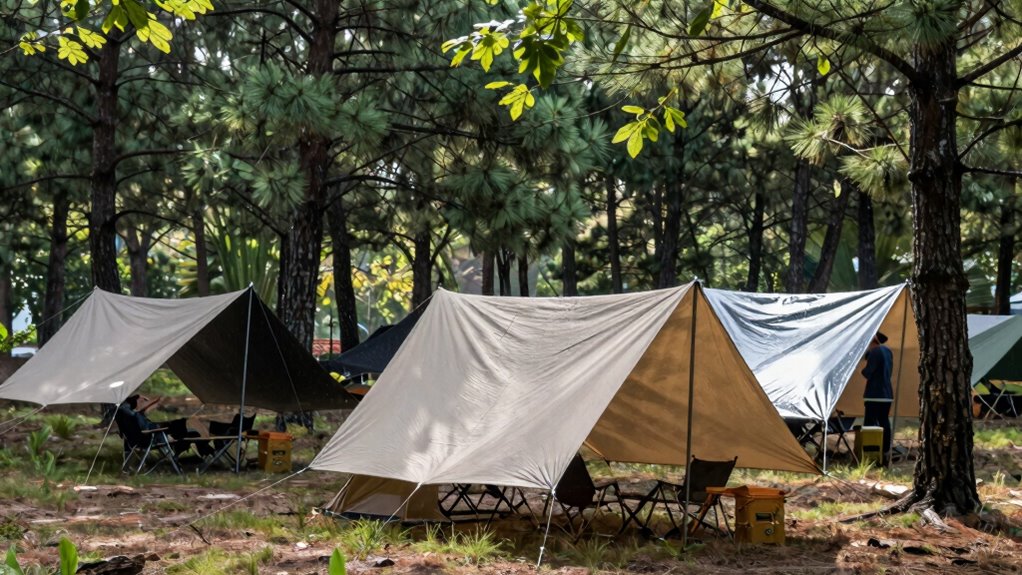

To create a better wind, rain, and shade plan, position your tent away from prevailing winds and facing the entrance opposite the wind flow. Use natural barriers like trees, rocks, or bushes to block gusts and divert rainwater, and set your tent on slightly elevated ground to prevent pooling. Place shelters under shade trees or use tarps for extra protection. Adjust your layout to maximize drainage and shade, and discover more tips below for a resilient campsite setup.

Get audio and creator gear delivered free with Prime
- Fast, free delivery on millions of items
- Prime Video, Amazon Music and more included
- Member-only deals all year
Key Takeaways
- Orient tents away from prevailing wind and rain directions, facing entrances opposite to wind flow for stability and comfort.
- Use natural features like trees, bushes, and rocks as windbreaks and shade providers to enhance shelter and reduce exposure.
- Position tents on elevated, well-drained ground, and face openings away from rain to prevent water pooling inside.
- Incorporate artificial barriers like tarps or logs alongside natural elements to improve wind and rain protection.
- Strategically arrange the campsite to maximize shade during peak heat hours and minimize weather impact overall.
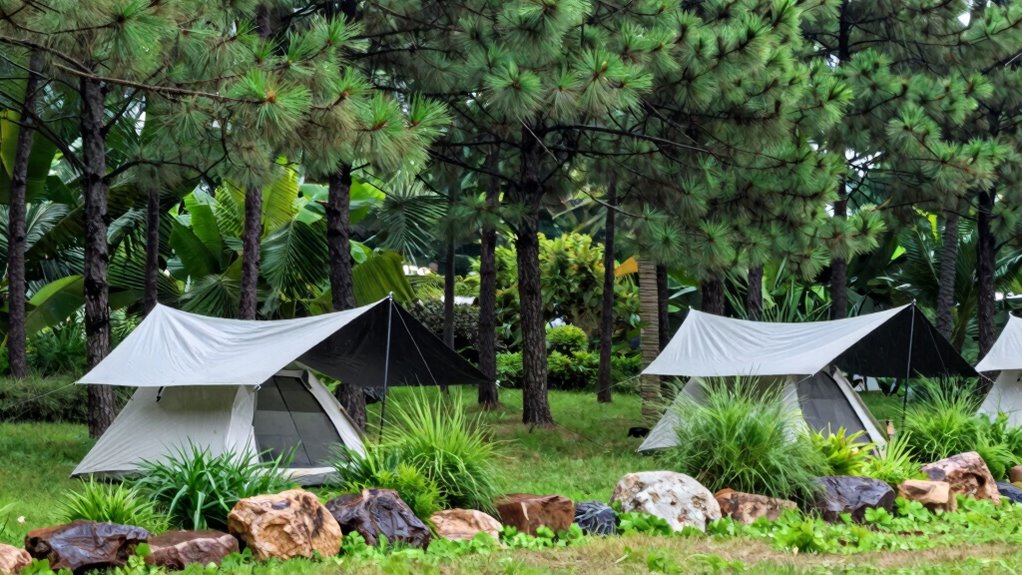
Have you ever wondered how to design an outdoor space that effectively shields you from harsh winds, rain, and excessive sun? When setting up a campsite, your goal is to create a comfortable environment where you can relax regardless of the weather. The way you position your tent plays a fundamental role in this. First, consider tent placement carefully. Position your tent so that it faces away from the prevailing wind direction. If the wind usually blows from the west, orient the tent so that its entrance faces east, providing a natural windbreak. This simple step can considerably reduce wind pressure on your shelter and keep the interior more stable.
Position your tent away from prevailing winds for a more stable, comfortable campsite shelter.
Next, think about natural barriers around your campsite. Trees, bushes, and rocky outcroppings are your best friends when it comes to blocking wind, rain, and direct sunlight. If possible, select a spot that already benefits from these features. For example, placing your tent near a cluster of trees can block gusts and provide some shade during the hottest parts of the day. Dense foliage acts as a natural barrier, breaking up wind flow and reducing its force. When natural barriers are limited, you can create your own by stacking logs or building windbreaks from available materials. These barriers don’t have to be tall or elaborate; even a modest wall can slow down and redirect wind, making your outdoor space much more comfortable. Additionally, organizing your campsite layout to maximize natural elements can improve overall weather resilience.
Rain protection is also essential, especially if you’re camping in an area prone to showers. Position your tent on slightly elevated ground to prevent water from pooling underneath and to avoid flooding in heavy rain. Additionally, arrange your camping layout so that the tent’s opening faces away from the rain’s direction, which can help keep the interior dry. Using natural barriers like bushes or rocks around your tent can divert rainwater runoff and reduce the amount of moisture that reaches your shelter. Incorporating biodiversity into your campsite planning can help maintain natural drainage and improve overall resilience against weather challenges. Moreover, ensuring good drainage around your site can prevent water accumulation and keep your campsite dry.
Shade is another essential element in creating a comfortable campsite. Besides natural barriers, consider placing your tent under a canopy of trees or near large rocks that cast shadows during the heat of the day. This not only keeps you cooler but also offers some protection from direct sunlight, which can make outdoor living uncomfortable. If natural shade is scarce, you might set up a tarp or an awning, anchored to nearby trees or sturdy structures, to provide additional shade where you need it most.
As an affiliate, we earn on qualifying purchases.
Frequently Asked Questions
How Do I Identify Natural Windbreaks at My Campsite?
To identify natural windbreaks at your campsite, look for features like dense trees, shrubs, or large rocks that can act as a wind barrier. Pay attention to the direction prevailing winds come from, and observe how the wind flows around natural shelters. These features reduce wind speed and offer protection, creating a more comfortable camping environment. Incorporating natural shelter elements helps improve your campsite’s overall wind resistance and comfort.
What Materials Are Best for Portable Shade Structures?
You should choose materials like lightweight, temporary fabric that’s easy to set up and take down, yet durable enough to withstand weather. Pair it with sturdy poles that provide reliable support and stability. Look for ripstop nylon or polyethylene for the fabric—both are weather-resistant and breathable. Use robust, corrosion-resistant poles made of aluminum or steel to guarantee your shelter remains stable, even in gusty conditions.
How Can I Predict Weather Changes During My Camping Trip?
To predict weather changes during your camping trip, rely on weather forecasting apps and websites for real-time updates. Pay attention to seasonal patterns in the area, as they offer clues about typical weather shifts. Check local weather reports before you leave, and monitor changes in wind, cloud cover, and temperature while you’re there. This proactive approach helps you adjust your wind, rain, and shade plan effectively.
What Are Quick Solutions for Unexpected Rain?
When unexpected rain hits, you need quick rain protection. Use your tarp, poncho, or raincoat to create immediate shelter. Look for natural shelter options like large trees or rocks for shelter improvisation. If you have a backpack or dry bag, turn it upside down and use it as a temporary shield. Keep essentials dry by covering them with plastic bags or your clothing. Acting fast guarantees you stay dry and comfortable.
How Do I Balance Sun and Shade for Comfort?
To balance sun and shade for comfort, consider shade optimization by positioning your tent and chairs based on the sun’s path. For example, in a summer camping trip, you might set up your tent on the shady side of a tree while placing a picnic table in a sunlit area for warmth. Adjust your setup throughout the day to minimize excessive sun exposure and maximize shade, ensuring a comfortable experience.
As an affiliate, we earn on qualifying purchases.
Conclusion
By thoughtfully planning your wind, rain, and shade strategies, you can transform any campsite into a comfortable retreat. Did you know that properly designed shelters can block up to 90% of wind and rain? This simple step not only keeps you dry and protected but also enhances your overall outdoor experience. So, take the time to plan ahead—your future camping trips will be more enjoyable, no matter the weather.
As an affiliate, we earn on qualifying purchases.
As an affiliate, we earn on qualifying purchases.
Halloween Picks
halloween
As an affiliate, we earn on qualifying purchases.