
Choosing the right campsite placement is more important than fancy gear because it directly impacts your safety, comfort, and connection with nature. When you pick a good spot, you avoid risks like flooding, wildlife encounters, or fire hazards. Proper placement also guarantees your environment stays undisturbed and enjoyable for future visitors. Prioritizing location helps you have a better experience with fewer problems. Keep exploring to discover how proper site selection can make all the difference.
Key Takeaways
- Proper site selection enhances safety, comfort, and connection with nature, often more impactful than expensive equipment.
- Strategic placement reduces risks like flooding, wildlife encounters, and fire hazards, ensuring a safer camping experience.
- Choosing sustainable locations minimizes environmental impact and preserves the natural environment for future visitors.
- Good campsite placement naturally improves overall comfort by avoiding moisture, uneven terrain, and high-traffic areas.
- Thoughtful site selection supports ecosystem health and reduces disturbances to wildlife, promoting responsible camping.
Have you ever wondered why some campsites feel more comfortable and enjoyable than others? It’s often not about having the most expensive gear or the fanciest tent; instead, it’s about smart campsite placement. The location you choose can profoundly impact your experience, safety, and connection with nature. When you prioritize good placement, you naturally enhance your comfort and reduce potential issues down the line.
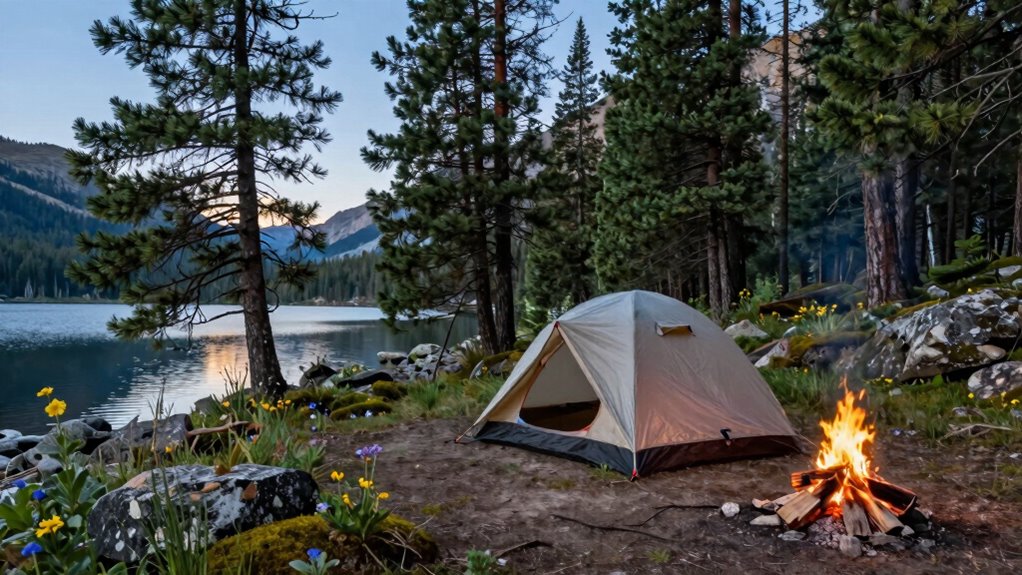
One of the most critical factors in campsite placement is ensuring you’re mindful of campfire safety. You want to pick a spot that’s away from overhanging branches, dry grass, or other flammable materials. A clear, open area with a safe distance from trees and bushes minimizes the risk of an uncontrolled fire spreading. Proper placement also means setting up your campfire on bare soil or gravel, never on grass or leaves, to prevent accidental wildfires. Good campfire safety isn’t just about having a lighter or fire extinguisher; it starts with choosing a safe location and maintaining control while enjoying your fire.
Choosing a safe campfire spot on bare soil or gravel reduces wildfire risk and enhances outdoor safety.
Wildlife awareness is another essential aspect of campsite placement. If you choose a site too close to animal trails or water sources, you might encounter unwanted visitors—raccoons rifling through your supplies or bears attracted by food. By selecting a campsite that’s a bit elevated and away from obvious animal pathways, you reduce the chances of disturbing or surprising wildlife. Additionally, placing your food and scented items securely away from your sleeping area helps prevent animals from becoming habituated to human food, which can be dangerous for both you and the local ecosystem. Understanding local wildlife behavior can help you better anticipate and avoid potential conflicts while camping. Being aware of the local terrain**** and how it influences animal movement can further improve your safety and experience.
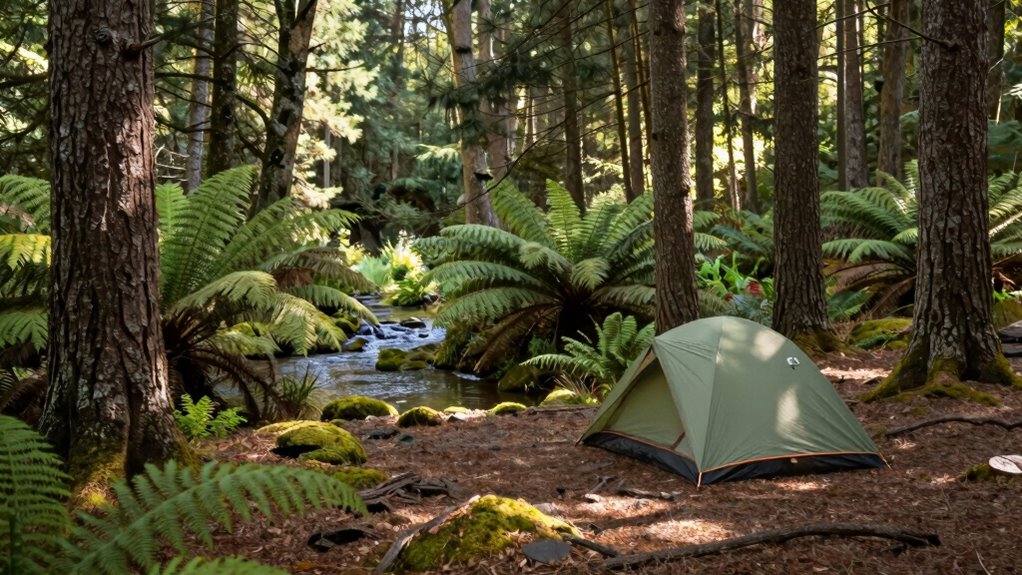
The placement of your tent also influences your overall experience. Setting up on level ground prevents discomfort and reduces the risk of your gear slipping or collapsing. Avoiding low-lying areas susceptible to flooding or moisture keeps you dry and comfortable. Furthermore, think about your proximity to water sources—while they’re convenient, camping too close can attract wildlife and create hygiene issues. Maintaining a respectful distance helps preserve the environment and keeps wildlife at a safe, natural distance. Being aware of the local terrain can help you select a more suitable and sustainable site that aligns with your needs and minimizes environmental impact. It’s also beneficial to familiarize yourself with biodiversity in the area to better understand the local ecosystem and its sensitivities. environmental impact during campsite selection is also crucial, as choosing sustainable spots helps protect the natural beauty and health of the environment for future visitors.
As an affiliate, we earn on qualifying purchases.
Frequently Asked Questions
How Do Weather Conditions Influence Campsite Selection?
Weather conditions directly influence your campsite choice by highlighting weather hazards like strong winds, heavy rain, or cold temperatures. You need to select a site with good drainage to prevent water pooling during rain, and avoid low-lying areas prone to flooding. By considering these factors, you reduce risks and stay dry and safe, ensuring your camping experience remains enjoyable regardless of unpredictable weather.
What Are the Best Practices for Evaluating a Campsite’s Safety?
You might think fancy gear keeps you safe, but the real key is evaluating campsite safety firsthand. Look for Leave No Trace principles, ensuring minimal environmental impact, and prioritize Campsite Accessibility, like stable ground and clear paths. Check for potential hazards such as falling branches, water flow, or uneven terrain. Trust your instincts, and always plan an escape route. Remember, safety starts with awareness, not just shiny equipment.
How Does Local Wildlife Impact Campsite Placement Decisions?
You should consider local wildlife because their presence influences your campsite choice. Wildlife disturbance can occur if you’re too close to animal habitats, risking both your safety and theirs. To guarantee animal safety, avoid setting up camp near nests, dens, or watering holes. By choosing a site that minimizes contact with wildlife, you reduce risks and create a safer, more harmonious environment for everyone.
What Are Common Mistakes to Avoid When Choosing a Site?
When choosing a site, avoid setting up too close to water or animal trails, which can cause safety issues. Don’t forget campfire safety—keep fires away from overhanging branches and tents. Use tent setup tips like leveling the ground and avoiding rocky spots to guarantee comfort and safety. Also, steer clear of areas with dead trees or loose soil, as these pose risks. Proper placement keeps your camping experience safe and enjoyable.
How Can I Find Environmentally Sustainable Campsite Locations?
Think of yourself as a modern-day eco-warrior, seeking harmony with nature. To find environmentally sustainable campsite locations, focus on eco-friendly camping practices and prioritize sustainable site selection. Look for areas with minimal impact, avoid fragile ecosystems, and choose established sites that promote conservation. Research local regulations, support protected areas, and opt for campgrounds committed to sustainability. Your mindful choices help preserve nature’s beauty for future adventures.
wildlife-proof food storage containers
As an affiliate, we earn on qualifying purchases.
As an affiliate, we earn on qualifying purchases.
Conclusion
So, next time you’re out camping, remember that choosing the right spot can make all the difference—more than any high-end gear. It’s funny how a perfect campsite can turn a good trip into a great one, almost by chance. Sometimes, it’s just about luck, or maybe intuition, that guides you to that ideal spot. Ultimately, where you set up matters more than what you bring, proving that placement truly is everything.
As an affiliate, we earn on qualifying purchases.
As an affiliate, we earn on qualifying purchases.