
Wireless studio monitor speakers are a convenient fit for desks and home studios, but this roundup includes both Bluetooth models and wired monitors, so check connectivity before buying. My best overall pick is the Edifier MR5 for shoppers who want a larger studio-oriented speaker with Bluetooth; the Edifier MR3 is a more compact wireless choice, while the Edifier R1280DBs suits listeners who value flexible home audio connections. The main tradeoff is between easy wireless playback and the direct, predictable connection many creators prefer for production. Speaker size, input options, and listening distance also affect which pair makes sense. Read on for the full breakdown and help matching a model to your setup.

Get audio and creator gear delivered free with Prime
- Fast, free delivery on millions of items
- Prime Video, Amazon Music and more included
- Member-only deals all year
Complete the kit


Key Takeaways
- Bluetooth does not mean every pick is wireless: The MR3, MR5, and R1280DBs list Bluetooth, while the M-Audio BX3 and several other options are wired-focused; check the exact model and listing before purchase.
- The MR5 stands apart for buyers wanting a larger studio-oriented Bluetooth option: Its stated 110W RMS output separates it from the compact MR3, though output figures alone do not guarantee better accuracy.
- The MR3 is the clearest compact wireless fit: It pairs studio-monitor positioning with Bluetooth in a smaller format, while wired options such as the PreSonus Eris 3.5 may suit users prioritizing a direct desktop setup.
- The R1280DBs leans toward flexible home listening: Optical input and a subwoofer output broaden its role beyond a basic nearfield workstation, but it is a bookshelf-speaker design rather than the most studio-focused pick.
- Several models appear in duplicate or near-duplicate listings: The white and black Ortizan C7 and the two MR3 and R1280DBs entries make exact variant, color, and included-pair details worth checking.
| Edifier MR3 Powered Studio Monitor Speakers with Bluetooth, White |  | Best Overall Wireless Studio Monitor | Speaker type: Powered studio monitor | Audio channels: 2.0 stereo | Output power: 18W × 2 RMS; 36W maximum | VIEW LATEST PRICE | See Our Full Breakdown |
| M-Audio BX3 3.5-Inch Wired Studio Monitor Speakers, Pair |  | Best Wired Starter Pair | Speaker type: Powered studio monitor pair | Audio output mode: Stereo | Power: 120W | VIEW LATEST PRICE | See Our Full Breakdown |
| PreSonus Eris 3.5 Powered Studio Monitors, Stereo Pair |  | Best for Room-Tuned Desktop Monitoring | Speaker type: Active near-field monitors | Audio output mode: Stereo pair | Amplification: 50 watts | VIEW LATEST PRICE | See Our Full Breakdown |
| Edifier R1280DBs Active Bluetooth Bookshelf Speakers with Optical Input and Subwoofer Output |  | Best for Wireless Desk and TV Listening | Speaker type: Powered bookshelf, monitor | Audio channels: 2 | Maximum output power: 42 watts | VIEW LATEST PRICE | See Our Full Breakdown |
| Edifier MR5 2.0 Studio Monitor Bookshelf Speakers, 110W RMS, Black |  | Best Premium Studio Pick | Speaker configuration: 2.0 stereo pair | Amplifier power: 110W RMS | Driver configuration: 5-inch woofer, 3.75-inch midrange driver, 1-inch silk-dome tweeter | VIEW LATEST PRICE | See Our Full Breakdown |
| Ortizan C7 Powered Studio Monitors, White |  | Best Compact Connectivity | Speaker type: Powered studio monitor | Mid-bass driver: 3.5-inch carbon fiber | Tweeter: 0.75-inch silk dome | VIEW LATEST PRICE | See Our Full Breakdown |
| Edifier MR3 Powered Studio Monitor Speakers with Bluetooth |  | Best for Flexible Listening Modes | Output power: 18 W × 2 RMS; 36 W maximum | Frequency response: 52 Hz–40 kHz | Drivers: 3.5-inch mid-low drivers and 1-inch tweeters | VIEW LATEST PRICE | See Our Full Breakdown |
| Edifier R1280DBs Bluetooth Bookshelf Speakers, 42W RMS, Black |  | Best for Living-Room Sources | Power output: 42W RMS | Woofer: 4 inches | Tweeter: 13 mm silk dome | VIEW LATEST PRICE | See Our Full Breakdown |
| Edifier MR4.5 Bi-Amped Studio Monitor Speakers, 80W RMS, Black |  | Best for Nearfield Monitoring and Tuning | Power output: 80W RMS total (30W × 2 + 10W × 2) | Frequency response: 50Hz–40kHz | Drivers: 4.5-inch mid-bass drivers and 1-inch silk dome tweeters | VIEW LATEST PRICE | See Our Full Breakdown |
| PreSonus Eris E4.5 Two-Way Nearfield Studio Monitors, Pair |  | Best Wired Nearfield Pick | Speaker type: Two-way nearfield studio monitor pair | Woofer: 4.5-inch woven-composite | Tweeter: 1-inch silk dome | VIEW LATEST PRICE | See Our Full Breakdown |
| Ortizan C7 Powered Studio Monitor Speakers, Pair, Black |  | Best for Flexible Wireless and Wired Connections | Speaker type: Powered studio monitor | Included quantity: Pair | Connectivity: RCA, USB, Bluetooth 5.3, 3.5 mm AUX, 6.35 mm TRS | VIEW LATEST PRICE | See Our Full Breakdown |
| Yamaha HS4 Powered Studio Monitor Speakers, Black, Pair |  | Best Compact Pick for Wired Editing Workflows | Speaker type: Powered two-way studio monitor | Package: Pair | Woofer: 4.5-inch cone | VIEW LATEST PRICE | See Our Full Breakdown |
| wireless studio monitor speaker | Inputs | Speaker type | Drivers |
|---|---|---|---|
| Edifier MR3 Powered Studio Mon | — | Powered studio monitor | 3.5-inch mid-low drivers; 1-inch tweeters |
| M-Audio BX3 3.5-Inch Wired Stu | 1/4-inch, 1/8-inch, and RCA | Powered studio monitor pair | — |
| PreSonus Eris 3.5 Powered Stud | Balanced TRS, RCA, front-panel aux | Active near-field monitors | 3.5-inch woven-composite woofers; 1-inch silk-dome tweeters |
| Edifier R1280DBs Active Blueto | Optical, coaxial, line-in, Bluetooth | Powered bookshelf, monitor | 4-inch woofers; 13 mm silk-dome tweeters |
| Edifier MR5 2.0 Studio Monitor | XLR, TRS, RCA, AUX | — | — |
| Ortizan C7 Powered Studio Moni | USB, Bluetooth 5.3, RCA, 3.5mm AUX, 6.35mm balanced TRS | Powered studio monitor | — |
| Edifier MR3 Powered Studio Mon | Balanced TRS, RCA, AUX, Bluetooth | — | 3.5-inch mid-low drivers and 1-inch tweeters |
| Edifier R1280DBs Bluetooth Boo | Optical, coaxial, RCA, Bluetooth | — | — |
| Edifier MR4.5 Bi-Amped Studio | XLR, TRS, RCA, AUX, Bluetooth | — | 4.5-inch mid-bass drivers and 1-inch silk dome tweeters |
| PreSonus Eris E4.5 Two-Way Nea | ¼-inch balanced TRS, RCA, ⅛-inch stereo AUX | Two-way nearfield studio monitor pair | — |
| Ortizan C7 Powered Studio Moni | — | Powered studio monitor | 3.5-inch carbon fiber mid-bass driver and 0.75-inch silk dome tweeter |
| Yamaha HS4 Powered Studio Moni | XLR/TRS combo, RCA, stereo mini | Powered two-way studio monitor | — |
More Details on Our Top Picks
Edifier MR3 Powered Studio Monitor Speakers with Bluetooth, White
The Edifier MR3 is the most balanced pick here for a desk setup that needs both wireless convenience and studio-style connections. Bluetooth 5.4 makes casual playback easy, while balanced TRS inputs keep it usable with audio gear; its Monitor, Music, and Custom modes also let you shift between a more work-focused sound and everyday listening. Compared with the M-Audio BX3, it adds wireless playback and app-based EQ, though the BX3 includes MPC Beats software and a front aux connection. The MR3’s 3.5-inch drivers suit nearfield listening, editing, and modest home-studio work, but they cannot deliver the low-end reach of the larger three-way Edifier MR5. It still needs mains power, so “wireless” applies to audio playback, not placement without cables.
Pros:- Bluetooth 5.4 adds convenient wireless playback without sacrificing balanced TRS connectivity.
- Music, Monitor, and Custom modes plus app EQ support different listening tasks.
- RCA, AUX, and headphone connections accommodate multiple desktop sources.
- MDF cabinets are designed to reduce distortion.
Cons:- The 3.5-inch drivers offer less bass reach than the larger Edifier MR5.
- Each speaker setup still requires corded electric power.
- No water resistance is specified.
Best for: Desktop creators who want Bluetooth playback alongside balanced inputs for a small home studio and everyday listening.
Not ideal for: Producers who need deep bass extension, high output for a large room, or speakers that operate without a power cable.
- Speaker type:Powered studio monitor
- Audio channels:2.0 stereo
- Output power:18W × 2 RMS; 36W maximum
- Frequency response:52Hz–40kHz
- Drivers:3.5-inch mid-low drivers; 1-inch tweeters
- Connectivity:Bluetooth 5.4, balanced TRS, RCA, AUX, headphone output
- Cabinet material:MDF
- Power source:Corded electric
Our verdict“Choose the MR3 if you want compact nearfield monitors with both Bluetooth convenience and practical studio inputs.”
M-Audio BX3 3.5-Inch Wired Studio Monitor Speakers, Pair
The M-Audio BX3 makes sense for a first desktop studio where straightforward wired connections matter more than Bluetooth. Its Kevlar woofers, silk-dome tweeters, and bass-reflex cabinet provide a purpose-built stereo setup, while rear EQ dials let you adjust high and low frequencies without an app. Compared with the wireless-capable Edifier MR3, the BX3 gives up Bluetooth and app tuning, but adds MPC Beats software and accessible front aux and headphone jacks. Those front connections are handy when switching between a computer and a phone or plugging in headphones. The tradeoff is less placement freedom: sources connect by cable, and the included speaker interconnect ties the pair together. Buyers wanting wireless playback or room tuning through an app should look at the MR3 instead.
Pros:- Kevlar woofers and a bass-reflex MDF cabinet are tailored to desktop monitoring.
- Rear 1/4-inch, 1/8-inch, and RCA inputs cover common audio sources.
- Front aux and headphone connections are convenient for quick swaps.
- High and low EQ dials allow basic tonal adjustment, and MPC Beats is included.
Cons:- No Bluetooth connection, unlike the Edifier MR3.
- The wired speaker interconnect and source cables limit placement flexibility.
- No water resistance is specified.
Best for: New bedroom producers and desktop musicians who want a wired stereo pair, front-panel connections, and included starter software.
Not ideal for: Listeners who want Bluetooth streaming, app-based room correction, or a cable-free connection to their source.
- Speaker type:Powered studio monitor pair
- Audio output mode:Stereo
- Power:120W
- Woofer and tweeter:3.5-inch Kevlar woofer; 1-inch silk-dome tweeter
- Inputs:1/4-inch, 1/8-inch, and RCA
- Front connections:1/8-inch aux input and headphone output
- Controls:High and Low EQ dials; Left and Right Active Speaker Position switch
- Included:Speaker interconnect, aux cable, RCA cable, foam feet, MPC Beats software
Our verdict“Pick the BX3 for an accessible wired starter setup if included software and front-panel connections matter more than wireless playback.”
PreSonus Eris 3.5 Powered Studio Monitors, Stereo Pair
The PreSonus Eris 3.5 is a strong fit for listeners who want compact active monitors with simple acoustic adjustments, rather than a speaker that leans on Bluetooth convenience. Its high- and low-frequency tuning controls can help tailor the sound to a desk or bookshelf placement, and balanced TRS, RCA, and front aux inputs make it flexible across studio and everyday sources. Compared with the Edifier MR3, the Eris offers 50 watts of amplification and a front headphone jack, but it lacks the MR3’s Bluetooth and app-based EQ. Its stated 80Hz lower frequency limit also makes it a less convincing choice for bass-heavy production than the three-way Edifier MR5. The compact footprint is useful on a crowded desk, but buyers should not expect deep bass or wireless source playback.
Pros:- High- and low-frequency tuning controls help adapt playback to the room.
- Balanced TRS, RCA, and front aux inputs support varied desktop sources.
- Front headphone output makes private listening easy.
- Compact dimensions suit desktop and bookshelf placement.
Cons:- No Bluetooth connectivity, unlike the Edifier MR3.
- The stated frequency range begins at 80Hz, limiting deep-bass monitoring.
- Requires corded electric power and is not water resistant.
Best for: Desktop editors, musicians, and gamers who need compact active monitors with room-adjustment controls and a front headphone jack.
Not ideal for: Wireless-first listeners or bass-focused producers who need Bluetooth playback or stronger low-frequency extension.
- Speaker type:Active near-field monitors
- Audio output mode:Stereo pair
- Amplification:50 watts
- Frequency range:80Hz–20kHz
- Drivers:3.5-inch woven-composite woofers; 1-inch silk-dome tweeters
- Inputs:Balanced TRS, RCA, front-panel aux
- Acoustic controls:High- and low-frequency tuning
- Dimensions:5.5 × 6 × 8.3 inches
Our verdict“Choose the Eris 3.5 if room tuning and compact wired monitoring matter more than wireless playback or deep bass.”
Edifier R1280DBs Active Bluetooth Bookshelf Speakers with Optical Input and Subwoofer Output
The Edifier R1280DBs is the most living-room-friendly option in this group: it pairs Bluetooth 5.0 with optical and coaxial inputs, making it easier to share between a computer, TV, and mobile device than a studio-first model. Its 4-inch woofers and 42 watts of continuous power give it a broader everyday-listening role than the smaller Edifier MR3, while a subwoofer output with automatic detection and a built-in crossover offers a route to more bass later. That flexibility comes with a different priority: it is a bookshelf speaker with bass, treble, and volume controls, not a monitor with balanced TRS or XLR inputs and room-tuning tools. For production work, the Edifier MR5 is the more studio-oriented choice; for mixed TV and desktop use, the R1280DBs is easier to integrate.
Pros:- Bluetooth 5.0 supports wireless playback from compatible devices.
- Optical and coaxial inputs make TV and computer connections straightforward.
- Subwoofer output includes automatic detection and a built-in crossover.
- Remote and side-panel controls provide convenient playback and tone adjustment.
Cons:- Lacks balanced TRS or XLR inputs found on studio-focused options such as the Edifier MR5.
- The listed Bluetooth range is 30 feet.
- No water resistance is specified.
Best for: People sharing speakers between a TV, computer, and phone who want Bluetooth, digital inputs, and an option to add a subwoofer.
Not ideal for: Producers who need balanced studio inputs, precise room tuning, or a monitor-focused design for critical mixing.
- Speaker type:Powered bookshelf, monitor
- Audio channels:2
- Maximum output power:42 watts
- Bluetooth:Version 5.0; listed range 30 feet
- Inputs:Optical, coaxial, line-in, Bluetooth
- Subwoofer output:Yes, with automatic detection and built-in crossover
- Drivers:4-inch woofers; 13 mm silk-dome tweeters
- Controls:Wireless remote; side-panel bass, treble, and volume controls
Our verdict“Choose the R1280DBs for a wireless TV-and-desktop setup, not for balanced-input critical studio monitoring.”
Edifier MR5 2.0 Studio Monitor Bookshelf Speakers, 110W RMS, Black
The Edifier MR5 is the most capable studio-focused choice in this batch, built around a three-way driver system and 110W RMS rather than the compact two-way layouts used by the MR3 and BX3. A dedicated 3.75-inch midrange driver separates vocal and instrument detail from the 5-inch woofer’s bass duties, while XLR and TRS inputs suit more serious audio interfaces. Bluetooth 6.0 with LDAC and multipoint adds wireless convenience, but the MR5’s stronger case is its combination of wired studio connections and room tuning through rear controls or the ConneX app. Its stated 46Hz low end reaches lower than the MR3’s 52Hz response, though neither spec promises subwoofer-level bass. The larger driver array and feature set make this a better fit for a more developed workspace than a small, casual desktop setup.
Pros:- Three-way design separates woofer, midrange, and tweeter duties.
- 110W RMS and a stated 46Hz–40kHz response offer more headroom and low-end reach than the MR3.
- XLR, TRS, RCA, and AUX inputs support studio and everyday sources.
- Bluetooth 6.0 with LDAC and multipoint complements rear and app-based room tuning.
Cons:- Larger and more feature-rich than necessary for casual listening on a small desk.
- Requires corded electric power despite Bluetooth audio support.
- No water resistance is specified.
Best for: Home-studio producers and editors seeking a more powerful three-way monitor pair with balanced inputs, app tuning, and wireless playback.
Not ideal for: Casual listeners with limited desk space or buyers seeking battery-powered speakers or water resistance.
- Speaker configuration:2.0 stereo pair
- Amplifier power:110W RMS
- Driver configuration:5-inch woofer, 3.75-inch midrange driver, 1-inch silk-dome tweeter
- Frequency response:46Hz–40kHz
- Audio resolution:24-bit/96kHz
- Bluetooth:Bluetooth 6.0 with LDAC and multipoint
- Inputs:XLR, TRS, RCA, AUX
- Room tuning:Rear controls or EDIFIER ConneX app
Our verdict“Choose the MR5 for a serious home studio that benefits from three-way playback, balanced connections, and flexible room tuning.”
Ortizan C7 Powered Studio Monitors, White
The Ortizan C7 is a compact pick for a desk where wired studio gear and wireless listening need to share a small footprint. Its Bluetooth 5.3, USB audio, RCA, AUX, and balanced TRS connections cover more source types than the wired-only PreSonus Eris E4.5, while the front headphone jack makes quick monitoring convenient. The 3.5-inch carbon-fiber driver and two-way crossover are aimed at balanced nearfield playback, but the small cabinet is less suited to listeners who need substantial bass from the monitors alone. Unlike the Edifier MR3, the C7’s listed feature set does not include app-based EQ or multiple sound modes. Its corded power also means wireless playback does not make the speakers portable. Choose it for a tidy, flexible desktop setup, not a room-filling system.
Pros:- Bluetooth 5.3 and USB audio complement balanced TRS, RCA, and AUX inputs.
- Compact dimensions suit crowded desks and small workspaces.
- Front-panel headphone output allows convenient monitoring.
- Two-way crossover and carbon-fiber mid-bass driver target detailed nearfield playback.
Cons:- The 3.5-inch drivers and compact cabinets limit low-frequency weight compared with larger monitors such as the Edifier MR4.5.
- Corded power restricts placement despite Bluetooth playback.
- No waterproofing is listed, so these are not suited to damp or outdoor settings.
Best for: Desktop musicians and editors who want Bluetooth alongside balanced TRS and USB inputs in a compact speaker pair.
Not ideal for: Listeners who need deep standalone bass, app-based room adjustment, or speakers they can place away from power outlets.
- Speaker type:Powered studio monitor
- Mid-bass driver:3.5-inch carbon fiber
- Tweeter:0.75-inch silk dome
- Inputs:USB, Bluetooth 5.3, RCA, 3.5mm AUX, 6.35mm balanced TRS
- Headphone output:Front panel
- Bluetooth range:18 meters
- Dimensions:5.11 × 5.9 × 7.67 inches
- Power:Corded electric
Our verdict“Choose the Ortizan C7 for a compact desktop setup that needs broad wired connectivity and Bluetooth, but not powerful standalone bass.”
Edifier MR3 Powered Studio Monitor Speakers with Bluetooth
The Edifier MR3 suits a home workspace that shifts between editing, music playback, and casual listening. Its Monitor, Music, and Custom modes, plus app-based EQ, give it more sound-shaping flexibility than the Ortizan C7, whose appeal is its broad physical input selection and compact footprint. Bluetooth multipoint is useful when switching between paired devices, while balanced TRS, RCA, and AUX keep wired sources in play. The stated 52 Hz–40 kHz response and 3.5-inch drivers make this a desktop-scale option rather than a substitute for larger monitors such as the Edifier MR4.5 when stronger low-end output is wanted. The MR3 also needs mains power and has a shorter listed Bluetooth range than the C7. Pick it for adaptable everyday use, not a wireless, battery-powered setup.
Pros:- Monitor, Music, and Custom modes support different listening tasks.
- App-based EQ provides more tuning flexibility than the Ortizan C7.
- Bluetooth multipoint works alongside balanced TRS, RCA, and AUX inputs.
- Headphone output supports private listening from the desktop.
Cons:- The 3.5-inch drivers offer less low-frequency reach than the Edifier MR4.5’s 4.5-inch drivers.
- Corded electric power limits placement.
- The listed Bluetooth range is 10 meters, shorter than the Ortizan C7’s stated 18 meters.
Best for: Home editors, guitar players, and desktop listeners who want Bluetooth multipoint and adjustable sound modes for different tasks.
Not ideal for: Producers seeking larger drivers and stronger low-frequency output, or anyone who needs battery-powered speakers.
- Output power:18 W × 2 RMS; 36 W maximum
- Frequency response:52 Hz–40 kHz
- Drivers:3.5-inch mid-low drivers and 1-inch tweeters
- Inputs:Balanced TRS, RCA, AUX, Bluetooth
- Bluetooth range:10 meters
- Sound modes:Music, Monitor, and Custom
- Cabinet material:MDF
- Warranty:2-year manufacturer warranty
Our verdict“Choose the MR3 if you want compact monitors that can shift between studio-focused and casual listening modes with app-based EQ.”
Edifier R1280DBs Bluetooth Bookshelf Speakers, 42W RMS, Black
The Edifier R1280DBs is better thought of as a wireless bookshelf speaker with some useful studio-adjacent conveniences than as a dedicated monitor. Its optical and coaxial inputs make it easier to connect a TV or digital audio source than the Ortizan C7 or PreSonus Eris E4.5, and Bluetooth plus a remote suit relaxed listening from across a room. A wired subwoofer output with automatic crossover detection gives buyers a path to more bass without replacing the speakers. The tradeoff is a less studio-oriented feature set: there are no balanced TRS inputs, and the listed response specification only gives a 20 kHz figure rather than a full range. Its 4-inch woofers are larger than the C7’s, but this model is aimed more at convenient media playback than critical nearfield decisions.
Pros:- Optical, coaxial, RCA, and Bluetooth connections cover common home audio sources.
- Remote control makes source listening more convenient than front-panel-only setups.
- Subwoofer output provides a wired route to additional low-frequency extension.
- Side-panel bass, treble, and volume controls allow basic adjustment.
Cons:- No balanced TRS input, unlike the Ortizan C7, Edifier MR3, and PreSonus Eris E4.5.
- The listed frequency response provides only a 20 kHz figure, limiting comparison of low-frequency reach.
- Plastic enclosure and bookshelf-oriented feature set are less studio-focused than the MDF-cabinet MR3.
Best for: Desktop or living-room listeners connecting a TV, digital source, or phone who want a remote and a future wired-subwoofer option.
Not ideal for: Audio producers who require balanced TRS connections, app-based monitor tuning, or clearly specified full-range response for critical mixing.
- Power output:42W RMS
- Woofer:4 inches
- Tweeter:13 mm silk dome
- Inputs:Optical, coaxial, RCA, Bluetooth
- Bluetooth:Version 5.0; 10-meter range
- Subwoofer output:Wired
- Controls:Remote control; side-panel volume, bass, and treble knobs
- Dimensions:5.7 × 9.2 × 7.7 inches
Our verdict“Choose the R1280DBs for convenient TV and everyday audio playback with Bluetooth and a subwoofer output, not for a balanced-input studio setup.”
Edifier MR4.5 Bi-Amped Studio Monitor Speakers, 80W RMS, Black
Among these options, the Edifier MR4.5 makes the strongest case for buyers who want wireless convenience without giving up a monitor-focused connection and adjustment set. Its 80W RMS bi-amped design, 4.5-inch mid-bass drivers, and XLR/TRS inputs give it more studio headroom and source flexibility than the compact Ortizan C7 or Edifier MR3. Bluetooth 6.0 with LDAC and multipoint adds easy playback, while independent high- and low-frequency controls and a 9-band EQ offer more tuning than the PreSonus Eris E4.5’s simpler high/low adjustments. That flexibility brings setup work: room-acoustic controls may need careful adjustment, and the 10-meter Bluetooth range is modest. Pick the MR4.5 when you want a more capable nearfield speaker pair, not a plug-and-play bookshelf system.
Pros:- 80W RMS bi-amped output and 4.5-inch drivers offer more headroom than the Ortizan C7 and Edifier MR3.
- XLR, balanced TRS, RCA, AUX, and Bluetooth support varied audio sources.
- Independent high/low controls and 9-band EQ allow detailed sound adjustment.
- Bluetooth 6.0 supports LDAC and multipoint pairing.
Cons:- Room and EQ controls can require setup to suit speaker position and room acoustics.
- Bluetooth range is listed at 10 meters, limiting freedom compared with the Ortizan C7’s stated range.
- The larger drivers and output may be more than a casual desktop listener needs.
Best for: Home-studio producers and editors who need balanced XLR/TRS inputs, Bluetooth streaming, and detailed EQ options in a tabletop setup.
Not ideal for: Buyers who want simple controls with little setup, or listeners who prioritize long-range wireless playback over monitor features.
- Power output:80W RMS total (30W × 2 + 10W × 2)
- Frequency response:50Hz–40kHz
- Drivers:4.5-inch mid-bass drivers and 1-inch silk dome tweeters
- Inputs:XLR, TRS, RCA, AUX, Bluetooth
- Bluetooth:Version 6.0, LDAC, multipoint; 10-meter range
- DSP audio:24-bit/96kHz
- Equalization:Independent high and low controls; 9-band EQ
- Signal-to-noise ratio:89 dB
Our verdict“Choose the MR4.5 for nearfield work that benefits from balanced inputs, greater output, and detailed EQ, provided you are willing to tune the setup.”
PreSonus Eris E4.5 Two-Way Nearfield Studio Monitors, Pair
The PreSonus Eris E4.5 is the straightforward choice here for buyers who value wired nearfield monitoring over Bluetooth. Each speaker pairs a 4.5-inch woven-composite woofer with a 1-inch silk-dome tweeter and 25 watts of Class AB amplification, giving it a larger-driver platform than the Ortizan C7 and Edifier MR3. Balanced TRS and RCA inputs accommodate studio and consumer sources, while front-panel AUX, volume, and headphone connections keep everyday desktop use simple. High- and low-frequency controls allow basic placement adjustments, though they are less extensive than the Edifier MR4.5’s 9-band EQ and room controls. The defining compromise is clear: the E4.5 has no listed Bluetooth input, so wireless streaming requires another device. Choose it for a practical wired desk system, not an all-wireless listening setup.
Pros:- 4.5-inch woofers provide a larger driver platform than the Ortizan C7 and Edifier MR3.
- Balanced TRS and RCA inputs connect studio gear and consumer audio sources.
- Front-panel AUX, volume, and headphone output make desktop connections accessible.
- High- and low-frequency controls allow basic adjustment for placement.
Cons:- No Bluetooth input is listed, unlike the Edifier MR3 and MR4.5.
- High/low tuning is less detailed than the Edifier MR4.5’s 9-band EQ.
- Additional low-frequency extension requires a separate companion subwoofer.
Best for: Musicians and editors building a wired desktop studio who want 4.5-inch nearfield monitors, balanced inputs, and front-panel headphone access.
Not ideal for: Listeners who want direct Bluetooth streaming or detailed app-based EQ and room correction.
- Speaker type:Two-way nearfield studio monitor pair
- Woofer:4.5-inch woven-composite
- Tweeter:1-inch silk dome
- Amplifier:50W total Class AB; 25W per side
- Inputs:¼-inch balanced TRS, RCA, ⅛-inch stereo AUX
- Controls:Front-panel volume; high- and low-frequency tuning
- Additional features:Headphone output and integrated amplifier
- Enclosure material:Medium-density fiberboard
Our verdict“Choose the Eris E4.5 for a capable, wired nearfield desktop setup, but pick the Edifier MR4.5 or MR3 if Bluetooth is a requirement.”
Ortizan C7 Powered Studio Monitor Speakers, Pair, Black
The Ortizan C7 is a strong fit for a compact desk where sources change often: it combines Bluetooth 5.3 with USB, RCA, AUX, and balanced 6.35 mm TRS inputs. That range makes it more adaptable than the Yamaha HS4, which offers multiple wired inputs and room controls but no listed Bluetooth connection. For monitoring, the C7 pairs a 24-bit DAC with flat-response tuning, while a front headphone output makes private checks convenient without reaching behind the speakers. Its tradeoff is size: the 3.5-inch drivers are less suited to bass-heavy work than larger options such as the HS4 with its 4.5-inch woofer. Bluetooth adds useful listening flexibility, but it does not remove the need for a corded power connection.
Pros:- Bluetooth 5.3 plus USB, RCA, AUX, and balanced TRS supports a wide range of sources.
- Built-in 24-bit DAC and flat-response tuning are aimed at balanced monitoring.
- Front headphone output makes private listening and quick checks convenient.
- Compact dimensions suit a crowded desktop.
Cons:- The 3.5-inch drivers offer less bass capability than the Yamaha HS4’s 4.5-inch woofer.
- Requires a corded power connection despite wireless audio playback.
Best for: Desktop producers and editors who want Bluetooth playback alongside balanced TRS and USB connections in a small workspace.
Not ideal for: Bass-focused producers or buyers who need stronger low-end extension from small monitors; the 3.5-inch drivers may call for a subwoofer or larger speakers.
- Speaker type:Powered studio monitor
- Included quantity:Pair
- Connectivity:RCA, USB, Bluetooth 5.3, 3.5 mm AUX, 6.35 mm TRS
- Drivers:3.5-inch carbon fiber mid-bass driver and 0.75-inch silk dome tweeter
- DAC:Built-in 24-bit
- Audio tuning:Flat response
- Headphone output:Yes
- Dimensions:5.11 x 5.9 x 7.67 inches
Our verdict“Choose the C7 if you want compact monitors that switch easily between Bluetooth listening and wired audio work; choose the Yamaha HS4 if larger woofers and room-adjustment controls matter more.”
Yamaha HS4 Powered Studio Monitor Speakers, Black, Pair
The Yamaha HS4 suits buyers who want compact two-way monitors with room-tuning controls rather than wireless source switching. Its XLR/TRS combo, RCA, and stereo mini inputs cover common studio and desktop setups, while room control and high trim let you adjust the response for a less-than-ideal placement. Compared with the Ortizan C7, the HS4 has a larger 4.5-inch woofer and gives you explicit sound-adjustment controls, but it lacks the C7’s listed Bluetooth and USB connectivity. The HS4’s specified 60 Hz–22 kHz frequency response provides a useful reference for its range, though its 26-watt maximum output makes it a better match for nearfield listening than filling a large room. It is a focused wired choice, not the most flexible wireless option here.
Pros:- 4.5-inch woofer and 1-inch dome tweeter form a compact two-way design.
- Room control and high-trim controls allow response adjustments for the listening space.
- XLR/TRS combo, RCA, and stereo mini inputs accommodate studio and desktop sources.
- Includes speaker cable, stereo mini-to-RCA cable, and an anti-slip pad.
Cons:- No Bluetooth input is listed, unlike the Ortizan C7.
- 26-watt maximum output is better suited to nearfield use than high-volume room coverage.
- No subwoofer output is listed in the supplied specifications.
Best for: Music makers and video editors who work at a desk, need XLR/TRS and consumer inputs, and want controls to adapt speaker response to their room.
Not ideal for: Buyers who prioritize Bluetooth streaming, louder playback across a large room, or a stronger low end than a compact monitor setup can provide.
- Speaker type:Powered two-way studio monitor
- Package:Pair
- Woofer:4.5-inch cone
- Tweeter:1-inch dome
- Frequency response:60 Hz–22 kHz (-10 dB)
- Maximum output power:26 watts
- Inputs:XLR/TRS combo, RCA, stereo mini
- Controls:Room control and high trim
Our verdict“Pick the HS4 for a wired desktop production setup where room-adjustment controls matter more than Bluetooth convenience or high output.”
How We Picked
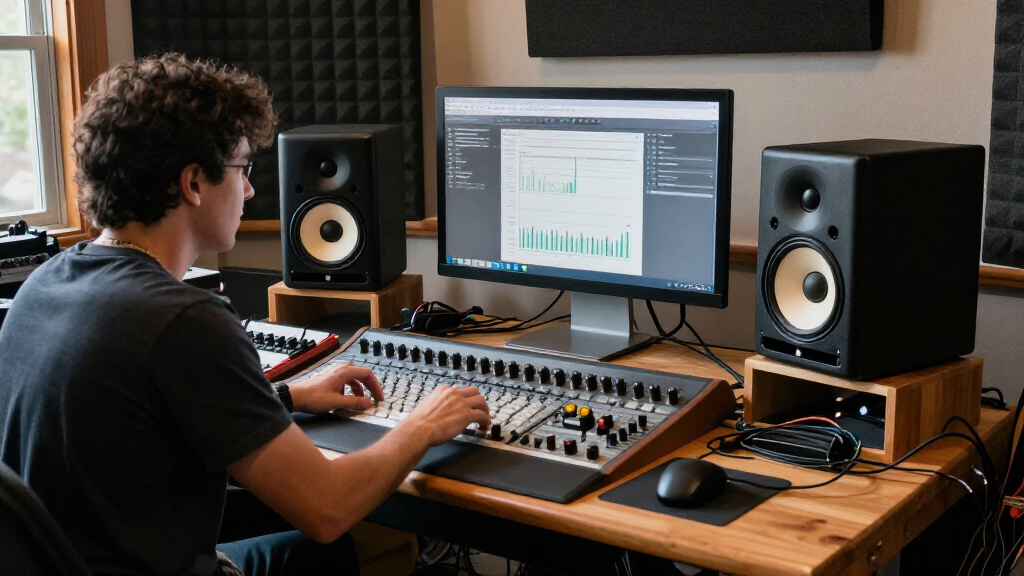
I ranked these options by how well their stated design and connections fit the specific promise of wireless studio monitor speakers. Bluetooth availability matters, but so do monitor-focused positioning, useful inputs, speaker size for desk placement, and whether a model is presented as a stereo pair. I also weighed practical fit: a compact speaker can be easier to place near a computer, while larger formats and more connection choices can better serve wider listening setups.
The ranking gives preference to models that combine wireless playback with a credible studio-oriented role, which puts the Edifier MR5 and MR3 ahead of speakers that are wired-only or primarily bookshelf-oriented. That does not make wired models poor choices: a direct connection can be preferable for production, and products such as the PreSonus Eris and Yamaha HS4 remain relevant for buyers who prioritize a studio workflow over Bluetooth. Since the supplied product details do not establish latency, frequency response, or room-correction performance, I do not treat those as verified ranking advantages.
| wireless studio monitor speaker | Speaker type |
|---|---|
| Edifier MR3 Powered Studio Mon | Powered studio monitor |
| M-Audio BX3 3.5-Inch Wired Stu | Powered studio monitor pair |
| PreSonus Eris 3.5 Powered Stud | Active near-field monitors |
| Edifier R1280DBs Active Blueto | Powered bookshelf, monitor |
| Edifier MR5 2.0 Studio Monitor | — |
| Ortizan C7 Powered Studio Moni | Powered studio monitor |
| Edifier MR3 Powered Studio Mon | — |
| Edifier R1280DBs Bluetooth Boo | — |
| Edifier MR4.5 Bi-Amped Studio | — |
| PreSonus Eris E4.5 Two-Way Nea | Two-way nearfield studio monitor pair |
| Ortizan C7 Powered Studio Moni | Powered studio monitor |
| Yamaha HS4 Powered Studio Moni | Powered two-way studio monitor |
Factors to Consider When Choosing Wireless Studio Monitor Speakers
Before choosing, decide whether wireless playback is a must-have or simply a convenient extra. The label studio monitor does not make every Bluetooth speaker equally suited to production, and a wireless feature does not replace the need to match speakers to your desk, source devices, and listening habits.
Decide Whether Bluetooth Is for Convenience or Production
Bluetooth is useful for sending music from a phone or laptop without adding another cable, but wireless playback can introduce delay that makes it a poor choice for live performance monitoring or tightly synchronized editing. For recording and mixing, plan to use a wired connection when the speaker and source support one, even if the speakers also offer Bluetooth. A common mistake is buying for the wireless feature and only later discovering that the preferred studio source needs an input the speaker lacks. Think of Bluetooth as a handy listening path, not proof that a speaker is built for every production task. If you need one pair for both casual playback and desk work, compare the wired inputs as carefully as the wireless specification.
Match Speaker Size to Your Listening Distance
Small speakers can work well at close range on a crowded desk, where sitting near the pair lets you hear detail without filling a room. Larger speakers may have more presence, but they can overwhelm a shallow desk or a small untreated room when placed too close to the listener. Do not select by wattage alone: output ratings do not tell you how a speaker will behave in your room or how balanced it will sound at your usual volume. Measure desk space, leave room for the cabinets, and consider whether stands can place the tweeters near ear height. If you listen across a room rather than directly in front of the speakers, prioritize that use case over a compact nearfield design.
Check Every Input Against Your Gear
List the devices you expect to connect before choosing a model: computer, audio interface, television, turntable preamp, or phone. Bluetooth handles a phone easily, but wired inputs determine whether your interface or other source can connect without adapters. Optical input, as listed for the R1280DBs, can be useful for compatible digital sources, while a subwoofer output can leave room for a later bass upgrade. Buyers often assume that two similar product names share the same connections; variants and listings can differ. Confirm the exact model number and input types rather than relying on a family name or product photo.
Separate Studio Monitoring From General Listening
Studio monitors are generally chosen for nearfield work and production decisions, while bookshelf speakers may put greater emphasis on flexible household playback. Neither label alone tells you whether a speaker will suit your ears, room, or workflow. If you make mix decisions, prioritize a direct signal path and a consistent listening position, then compare the available controls and connection options. If you mainly stream music and want a speaker for several sources, a bookshelf-style model with optical and Bluetooth connections may be more useful. Avoid paying for a studio identity when your main need is simple multi-device home audio.
Plan for Bass and Room Setup Before Adding a Subwoofer
Compact monitors may not reproduce the lowest bass as strongly as larger cabinets, but adding a subwoofer is not automatically the right fix. A subwoofer can take extra space, needs careful placement, and may make mixes less reliable if its level is set too high. A dedicated subwoofer output helps with connection, but it does not by itself guarantee seamless integration. First place the speakers symmetrically, keep them clear of walls where possible, and listen at a consistent level. Pay more for a larger speaker or subwoofer only when your work or listening regularly depends on low-frequency information.
Compare Exact Variants, Pairing, and Included Accessories
Roundups and retail listings can include color variants, revised versions, or descriptions that do not make clear whether the package contains one speaker or a stereo pair. This matters because a single monitor cannot provide the same stereo setup as a matched pair. The duplicate MR3, R1280DBs, and Ortizan C7 entries here show why checking the exact listing is part of the buying decision, not a minor detail. Confirm the finish, included cables, power supply arrangement, and whether the listed inputs match the version you intend to buy. A model with the right core features can still be the wrong choice if the package does not fit your setup.
Frequently Asked Questions
Can I use Bluetooth studio monitors for mixing?
You can use Bluetooth speakers to listen to a mix, but wireless delay can complicate recording, monitoring, or judging timing against a live input. For critical production, use a wired connection when available and treat Bluetooth as a secondary playback option. Also check that your computer or interface can connect to the speakers through compatible inputs. A model with Bluetooth is not automatically a low-latency production system. If your work depends on tight synchronization, make the wired path the deciding factor.
Which models in this roundup actually list Bluetooth?
The product names identify Bluetooth on the Edifier MR3, Edifier MR5, and Edifier R1280DBs entries. The M-Audio BX3 is explicitly described as wired, and the other listed studio monitor models are not identified here as Bluetooth speakers. Verify the exact product listing before ordering, especially where a product family has multiple variants. If Bluetooth is mandatory, do not assume that a speaker marketed as a studio monitor includes it. If a wired connection is acceptable, the choice of suitable monitor-focused models becomes broader.
Is a Bluetooth bookshelf speaker a substitute for a studio monitor?
It can serve as a convenient desktop or home-listening speaker, but it may not match the workflow or connection priorities of a monitor-focused pair. The Edifier R1280DBs, for example, lists optical input and a subwoofer output, making it flexible for compatible home sources. For production, think about whether you need a direct connection to an interface and whether the speaker suits nearfield listening. A bookshelf design is not disqualified from desk use, but its intended role and controls may differ. Choose according to the decisions you need to make while listening, not the label alone.
Should I choose the MR5 or the smaller MR3 for a computer desk?
The MR3 is the more straightforward candidate when desk space and close listening distance are the main constraints. The MR5’s stated 110W RMS output makes it a higher-output option on paper, but power alone does not tell you whether it will suit a small room or deliver more useful detail. Measure the available space and think about how far you sit from the speakers before choosing. If you need Bluetooth in a compact setup, the MR3 is a natural starting point; if you have more room and want a larger studio-oriented Bluetooth model, compare the MR5. Check the exact dimensions and connection details in the listing before deciding.
Do I need a subwoofer with compact studio monitors?
Not necessarily. Compact monitors can be adequate for close-range listening, editing, and everyday playback, while a subwoofer becomes more relevant when your work depends on judging deep bass or your room supports a careful sub setup. The R1280DBs lists a subwoofer output, but that connection alone does not mean you need to add one. Room placement and level matching affect bass judgment just as much as the extra hardware. Start with the speakers alone, identify what they cannot reproduce for your actual tasks, and add a sub only if that gap matters.
Conclusion
For most buyers seeking a blend of Bluetooth convenience and studio-oriented use, I would start with the Edifier MR5 as the best overall pick, then choose the MR3 if a compact desk setup matters more. The Edifier R1280DBs is my best value-style fit for buyers who want flexible home connections, including optical input and a subwoofer output, rather than a strictly production-first pair. For beginners, the MR3 offers a simple way to combine computer-desk use and wireless playback, while the wired PreSonus Eris 3.5 is a sensible alternative when Bluetooth is not needed. For a larger stated output, the MR5 is the premium-oriented choice in this list; for a more traditional wired monitor workflow, compare the Yamaha HS4, PreSonus Eris E4.5, and M-Audio BX3. Before ordering, verify the exact variant, input list, and whether the box includes a stereo pair.
Black Friday Picks

Vitamix Propel Series 510 Professional-Grade Blender, Black
As an affiliate, we earn on qualifying purchases.