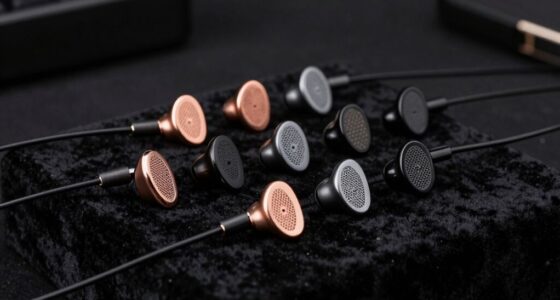


For IEMs for bass and sub-bass control, I’d start with the KZ ZA12: its tuning switches offer a way to adjust the low end rather than accept one fixed bass balance. The ZiiGaat Odyssey is a strong alternative for bass-focused listening, while the Kiwi Ears Cadenza suits listeners who want a simpler single-dynamic-driver option. The main tradeoff is between bass quantity, tightness, and the way low frequencies interact with vocals and treble; a fuller bass sound is not always a more controlled one. Fit, seal, and eartip choice can also change perceived sub-bass more than a product description suggests. Read on for the full comparison and picks by listening style.

Get audio and creator gear delivered free with Prime
- Fast, free delivery on millions of items
- Prime Video, Amazon Music and more included
- Member-only deals all year
Complete the kit


Key Takeaways
- The KZ ZA12 stands apart for tuning flexibility: its switches give bass-sensitive buyers more room to adjust the presentation than fixed-tuning options.
- The ZiiGaat Odyssey and Odyssey 2 offer different routes to hybrid-driver sound: compare their individual tuning and fit rather than assuming the shared name means they sound alike.
- Driver count alone does not predict bass control: the single-dynamic-driver Cadenza and hybrid models each have different tradeoffs in simplicity, tuning, and overall presentation.
- Several KZ options target distinct priorities: the ZST PRO X is the simpler, bass-forward choice, while the ZS10 Pro and ZS12 PRO add more drivers without automatically guaranteeing tighter sub-bass.
- BASN’s BmasterX and Bmaster5 foreground fit and monitoring practicality: their included fit-oriented accessories and detachable cables may matter as much as driver configuration for regular use.
| Linsoul Kiwi Ears Cadenza 10mm Beryllium Dynamic Driver IEM (Red) |  | Best for Balanced Bass | Driver size: 10mm | Driver material: Beryllium | Driver configuration: Single dynamic driver | VIEW ON AMAZON | See Our Full Breakdown |
| Linsoul ZiiGaat x Hangout Odyssey 2 In-Ear Monitor, 1DD + 3BA Hybrid HiFi Earbuds |  | Best for Controlled Sub-Bass | Driver configuration: 1 dynamic driver + 3 balanced armature drivers | Dynamic driver material: 2nd-generation bio-cellulose | Tuning: Neutral with sub-bass emphasis | VIEW ON AMAZON | See Our Full Breakdown |
| BASN In-Ear Monitor Headphones, Triple Driver HiFi Stereo Earbuds with Noise Isolation |  | Best Accessory Bundle | Driver configuration: Dual dynamic drivers + one balanced armature | Connectivity: Wired | Cable connector: MMCX detachable | VIEW ON AMAZON | See Our Full Breakdown |
| Linsoul KZ ZS10 Pro 4BA+1DD Hybrid In-Ear Monitor Earbuds |  | Best for Isolation and Detail | Driver configuration: 4 balanced armature + 1 dynamic driver | Frequency response: Extended beyond 40kHz | Noise isolation: Up to 26dB | VIEW ON AMAZON | See Our Full Breakdown |
| KZ ZS12 PRO 2 in-Ear Monitor Headphones, 5BA+1DD Hybrid Driver, Wired Earphones for Gaming and Audiophile, Black |  | Best for Gaming and Layered Bass | Driver configuration: 5 balanced armature + 1 dynamic driver | Driver types: Balanced armature and dynamic | Frequency response description: High-frequency extension with detailed treble | VIEW ON AMAZON | See Our Full Breakdown |
| KZ ZA12 In-Ear Monitor Earbuds, 2DD+4BA Hybrid, 4-Level Tuning Switch, Silver-Plated Cable, Matte Black |  | Best for Adjustable Bass Tuning | Drivers: 2 dynamic drivers + 4 balanced armatures | Tuning: 4-level user-defined tuning switch | Cable: Silver-plated twin cable | VIEW ON AMAZON | See Our Full Breakdown |
| BASN BmasterX In-Ear Audio Monitor with Hybrid 6 Drivers, Detachable Cable, Carrying Case, and Fit Kit |  | Best for Stage and Studio Flexibility | Drivers: 1 dynamic + 3 balanced armature + 2 piezoelectric tweeters | Connections: Interchangeable 3.5mm and 4.4mm jacks | Cable: Detachable silver-plated OFC wiring | VIEW ON AMAZON | See Our Full Breakdown |
| BASN Bmaster5 In-Ear Monitors with 5 Drivers, Detachable MMCX Cables, Noise Isolation, and Custom Fit |  | Best for a Customizable Fit | Drivers: 1 8mm liquid silicone diaphragm + 4 balanced armatures | Connector: MMCX | Plug: 3.5mm stereo | VIEW ON AMAZON | See Our Full Breakdown |
| Linsoul KZ ZS10 Pro 4BA+1DD Hybrid In-Ear Monitor Earbuds |  | Best for Bright, Detailed Bass Pairing | Drivers: 4 balanced armatures + 1 dynamic driver | Frequency response: Extended beyond 40kHz | Noise isolation: 26dB | VIEW ON AMAZON | See Our Full Breakdown |
| KZ ZST PRO X In-Ear Monitor Headphones, 1BA 1DD Hybrid Driver, Wired Gaming Earbuds, Deep Bass, HiFi Sound, No Microphone, Black Gold |  | Best Simple Pick for Deep Bass Impact | Driver configuration: 1 balanced armature + 1 dynamic driver | Connectivity: Wired, 3.5mm plug | Fit design: Over-ear ergonomic | VIEW ON AMAZON | See Our Full Breakdown |
| Linsoul ZiiGaat x Fresh Reviews Arete II IEM |  | Best for Deep Sub-Bass Impact | Driver configuration: 1 dynamic driver + 4 balanced armature drivers | Shell material: Full CNC aluminum | Cable: Detachable silver-plated OFC | VIEW ON AMAZON | See Our Full Breakdown |
| CCZ Yinyoo Melody In-Ear Monitors Earphones Wired Earbuds without Microphone, HiFi Bass, 1DD 1BA, Ear Fins, 4N OFC Cable, Black |  | Best for Lightweight, Everyday Bass | Driver configuration: 1 dynamic driver + 1 balanced armature driver | Cable: Detachable 4N OFC, 2-pin | Weight: 2.3 grams per earphone | VIEW ON AMAZON | See Our Full Breakdown |
| Linsoul ZiiGaat Odyssey In-Ear Monitor, 1DD+3BA Hybrid IEM Earphone, Wired Gaming Earbuds, Detachable Cable, Professional Sound Isolating Inner-ear Monitors for Bass Lovers and Audiophiles |  | Best for Fast, Defined Bass | Driver configuration: 1 dynamic driver + 3 balanced armature drivers | Dynamic driver: 10 mm topology driver with nano-particle dispersion diaphragm | Midrange driver: Knowles RAF 32873 | VIEW ON AMAZON | See Our Full Breakdown |
| iems for bass and sub bass control | Driver configuration | Cable |
|---|---|---|
| Linsoul Kiwi Ears Cadenza 10mm | Single dynamic driver | 4-core braided copper |
| Linsoul ZiiGaat x Hangout Odys | 1 dynamic driver + 3 balanced armature drivers | 4-core OFC copper + silver litz |
| BASN In-Ear Monitor Headphones | Dual dynamic drivers + one balanced armature | — |
| Linsoul KZ ZS10 Pro 4BA+1DD Hy | 4 balanced armature + 1 dynamic driver | Detachable gold-plated ODC |
| KZ ZS12 PRO 2 in-Ear Monitor H | 5 balanced armature + 1 dynamic driver | — |
| KZ ZA12 In-Ear Monitor Earbuds | — | Silver-plated twin cable |
| BASN BmasterX In-Ear Audio Mon | — | Detachable silver-plated OFC wiring |
| BASN Bmaster5 In-Ear Monitors | — | — |
| Linsoul KZ ZS10 Pro 4BA+1DD Hy | — | Detachable gold-plated ODC cable |
| KZ ZST PRO X In-Ear Monitor He | 1 balanced armature + 1 dynamic driver | — |
| Linsoul ZiiGaat x Fresh Review | 1 dynamic driver + 4 balanced armature drivers | Detachable silver-plated OFC |
| CCZ Yinyoo Melody In-Ear Monit | 1 dynamic driver + 1 balanced armature driver | Detachable 4N OFC, 2-pin |
| Linsoul ZiiGaat Odyssey In-Ear | 1 dynamic driver + 3 balanced armature drivers | Detachable IEM cable |
More Details on Our Top Picks
Linsoul Kiwi Ears Cadenza 10mm Beryllium Dynamic Driver IEM (Red)
The Cadenza is the most straightforward choice here for listeners who want full bass without letting it dominate. Its 10mm beryllium dynamic driver is described as delivering powerful low end alongside rich mids and clear treble, so it suits bass lines and kick drums while keeping vocals in the mix. Compared with the Odyssey 2, which specifically emphasizes sub-bass in a neutral hybrid tuning, the Cadenza offers a simpler single-driver approach and a more broadly balanced presentation. That can make it an easier everyday pick, though the product information gives less detail about sub-bass tuning and isolation. The detachable 2-pin cable allows replacement or customization, but buyers need compatible cables. Choose it for an all-rounder; skip it if sub-bass emphasis is your primary goal.
Pros:- 10mm beryllium dynamic driver is specified for powerful bass and detailed sound
- Balanced tuning pairs rich mids with clear treble rather than focusing only on low end
- Detachable 2-pin cable can be replaced or customized
- 3D-printed housing is described as shaped for a precise fit
Cons:- Sub-bass emphasis and noise-isolation performance are not specified
- Cable customization requires a compatible 2-pin replacement
- Single dynamic-driver setup offers less driver variety than the hybrid Odyssey 2 or ZS12 PRO 2
Best for: Listeners who want a balanced everyday IEM with substantial bass, clear treble, and a replaceable cable.
Not ideal for: Bass-first listeners seeking an explicitly sub-bass-focused tuning or buyers who want a bundled range of driver types and sound adjustments.
- Driver size:10mm
- Driver material:Beryllium
- Driver configuration:Single dynamic driver
- Connector:2-pin
- Cable:4-core braided copper
- Termination:3.5mm
- Color:Red
Our verdict“Choose the Cadenza if you want lively, balanced bass for varied listening rather than a sub-bass-specialist tuning.”
Linsoul ZiiGaat x Hangout Odyssey 2 In-Ear Monitor, 1DD + 3BA Hybrid HiFi Earbuds
The Odyssey 2 makes the strongest case for buyers who want sub-bass presence with a balanced overall signature. Its listed neutral tuning with sub-bass emphasis points to weight at the bottom without making the whole presentation bass-heavy; the bio-cellulose dynamic driver handles the low end while three balanced armatures support detail. Compared with the single-driver Kiwi Ears Cadenza, this hybrid design gives buyers a more explicitly targeted low-end profile and a separate set of drivers for mids and treble. The tradeoff is that its premium positioning and fit requirements make it less appealing as a casual, grab-and-go choice. Lightweight aluminum shells and a 2-pin cable add practical appeal, but the handcrafted construction may mean more maintenance. Pick it for controlled low-end weight and separation, not simply the biggest bass hit.
Pros:- Neutral tuning with specified sub-bass emphasis targets low-end weight without an all-bass presentation
- 1DD + 3BA hybrid configuration separates the dynamic low-end driver from balanced-armature drivers
- Lightweight aluminum shells offer a durable alternative to resin housings
- Detachable 0.78mm 2-pin cable supports replacement
Cons:- Proper fit is needed to reach its intended sound
- Handcrafted assembly may require more care or maintenance
- Premium positioning may be excessive for casual listening
Best for: Listeners and musicians who want audible sub-bass emphasis while keeping mids and treble comparatively balanced.
Not ideal for: Casual buyers seeking a simple, low-maintenance IEM or listeners who prefer a strongly bass-dominant sound.
- Driver configuration:1 dynamic driver + 3 balanced armature drivers
- Dynamic driver material:2nd-generation bio-cellulose
- Tuning:Neutral with sub-bass emphasis
- Shell material:Aluminum
- Connector:0.78mm 2-pin
- Cable:4-core OFC copper + silver litz
Our verdict“Choose the Odyssey 2 if controlled sub-bass emphasis matters more than simplicity or casual-use value.”
BASN In-Ear Monitor Headphones, Triple Driver HiFi Stereo Earbuds with Noise Isolation
The BASN triple-driver set stands out for buyers who want bass impact plus a ready-to-use kit, rather than the more explicitly sub-bass-focused tuning of the Odyssey 2. Its dual dynamic drivers are paired with one balanced armature, and the description calls out powerful bass and detailed sound; however, it does not specify a sub-bass tuning target, so I would not rank it ahead of the Odyssey 2 for low-frequency control. Its strongest practical distinction is the included ear tips, hard case, cleaning brush, clip, and cable options, including a version with microphone and volume control. The MMCX detachable cable can be replaced, but the wired design limits movement, and the housing may feel bulky during long sessions. This makes more sense for a musician or listener who values accessories and isolation than for someone chasing a carefully defined sub-bass curve.
Pros:- Dual dynamic drivers are paired with a balanced armature for bass and detail
- Detachable MMCX cable supports replacement
- Includes ear tips, hard case, cleaning brush, and T-shirt clip
- Cable options include versions with or without a microphone and volume control
Cons:- The tuning description does not specify sub-bass emphasis or low-frequency control
- Housing may feel bulky during extended wear
- Wired connection limits mobility
Best for: Wired listeners or musicians who want a bass-capable triple-driver IEM with useful fit, storage, and cable accessories included.
Not ideal for: Listeners prioritizing a stated sub-bass tuning, lightweight long-session wear, or wireless freedom.
- Driver configuration:Dual dynamic drivers + one balanced armature
- Connectivity:Wired
- Cable connector:MMCX detachable
- Cable options:With microphone and volume control, or without microphone
- Audio connection:3.5mm jack
- Adapter:6.35mm to 3.5mm
- Included accessories:Ear tips, cables, hard case, cleaning brush, T-shirt clip
Our verdict“Choose the BASN if you want a bass-capable wired set with a useful accessory kit, not a specifically documented sub-bass tuning.”
Linsoul KZ ZS10 Pro 4BA+1DD Hybrid In-Ear Monitor Earbuds
The ZS10 Pro is a better match for listeners who want hybrid-driver detail and a secure, isolating fit than for those whose main target is sub-bass control. Its single dynamic driver supplies the bass, while four balanced armatures support a bright, detailed presentation; the listed isolation figure of up to 26dB may also help keep outside noise from masking low-level bass detail. Compared with the KZ ZS12 PRO 2, this model has one fewer balanced armature and a specified isolation figure, while the ZS12 PRO 2 advertises layered bass and includes a microphone. The ZS10 Pro’s bright tuning can suit games and detailed listening, but may not satisfy anyone seeking a subdued treble or a clearly stated sub-bass emphasis. Its detachable cable is useful, though cable versions can vary.
Pros:- 4BA + 1DD hybrid configuration combines a dynamic bass driver with multiple balanced armatures
- Noise isolation is specified up to 26dB
- Stainless steel faceplate and resin cavity provide a mixed-material housing
- Detachable gold-plated ODC cable allows replacement or upgrades
Cons:- Bright sound profile may not suit listeners seeking a smoother treble balance
- Sub-bass emphasis is not specified
- Cable versions may differ, and no built-in microphone is listed
Best for: Listeners who want a secure-fitting hybrid IEM for detailed playback and stated noise isolation, with bass as one part of a brighter sound.
Not ideal for: Sub-bass-focused buyers who want a clearly specified low-end tuning, or listeners sensitive to bright treble.
- Driver configuration:4 balanced armature + 1 dynamic driver
- Frequency response:Extended beyond 40kHz
- Noise isolation:Up to 26dB
- Faceplate material:Stainless steel
- Cavity material:Imported resin
- Cable:Detachable gold-plated ODC
Our verdict“Choose the ZS10 Pro for isolation and a detailed, bright hybrid presentation, not for dedicated sub-bass tuning.”
KZ ZS12 PRO 2 in-Ear Monitor Headphones, 5BA+1DD Hybrid Driver, Wired Earphones for Gaming and Audiophile, Black
The ZS12 PRO 2 suits buyers who want layered bass, clear treble, and a microphone-equipped cable for gaming or general wired listening. Its 5BA + 1DD hybrid array is described as delivering powerful bass with layered texture, giving it a more feature-packed driver configuration than the ZS10 Pro. That extra balanced armature does not, on its own, establish stronger sub-bass control; the product details do not specify a sub-bass tuning target or isolation figure. The over-ear cable and ergonomic fit are useful for longer sessions, while the listed omnidirectional microphone adds a practical gaming feature absent from the ZS10 Pro description. The main compromise is limited technical detail: impedance and sensitivity are not provided, and the complex tuning may be less predictable for casual listeners. Choose it for a wired, multifunction setup rather than a guaranteed bass specialist.
Pros:- 5BA + 1DD configuration is described as producing detailed sound and layered bass
- Omnidirectional HD microphone supports voice communication
- Over-ear cable design pairs with an ergonomic fit for extended sessions
- Metal faceplate and resin shell are specified
Cons:- Impedance and sensitivity are not specified
- Sub-bass tuning and noise-isolation performance are not detailed
- Complex tuning may be harder to match to casual listening preferences
Best for: Gamers and wired listeners who want a microphone-equipped hybrid IEM with described layered bass and an over-ear cable.
Not ideal for: Buyers who need published impedance and sensitivity details or want a clearly specified sub-bass tuning and isolation level.
- Driver configuration:5 balanced armature + 1 dynamic driver
- Driver types:Balanced armature and dynamic
- Frequency response description:High-frequency extension with detailed treble
- Impedance:Not specified
- Cable design:Over-ear
- Shell materials:Metal faceplate and resin shell
- Microphone:Omnidirectional HD microphone
- Color options:Black, Silver
Our verdict“Choose the ZS12 PRO 2 for wired gaming and layered-bass versatility, but look elsewhere if documented sub-bass control is your priority.”
KZ ZA12 In-Ear Monitor Earbuds, 2DD+4BA Hybrid, 4-Level Tuning Switch, Silver-Plated Cable, Matte Black
The ZA12 is the most adaptable pick here for listeners who want to adjust bass emphasis instead of accepting one fixed tuning. Its two dynamic drivers provide the bass foundation, while the four-level tuning switch lets you tailor the presentation to your preferences. Compared with the simpler KZ ZST PRO X, which focuses on a single dynamic driver’s deep-bass impact, the ZA12 offers more ways to shape its sound. That flexibility suits listeners who switch between bass-heavy tracks and more balanced material, but it also adds setup choices that can feel unnecessary for casual listening. The product details don’t specify how much each switch setting changes the sound, so buyers should not assume the adjustment range is precisely defined. Its hooked fit supports longer sessions, though the cable calls for careful handling.
Pros:- Four-level tuning switch allows sound-profile adjustments
- Two dynamic drivers provide a dedicated bass foundation
- Hybrid 2DD+4BA configuration pairs bass drivers with multiple balanced armatures
- Hooked ergonomic design is intended for extended wear
Cons:- Switch options may add complexity for listeners who prefer a fixed tuning
- The supplied details do not describe the effect of each switch setting
- Silver-plated cable requires careful handling
Best for: Listeners who want multiple bass-tuning options for different genres and are comfortable experimenting with IEM switches.
Not ideal for: Casual plug-and-play listeners who want a simple, fixed sound, or anyone seeking clearly documented switch-by-switch bass levels.
- Drivers:2 dynamic drivers + 4 balanced armatures
- Tuning:4-level user-defined tuning switch
- Cable:Silver-plated twin cable
- Faceplate:Matte black
- Fit:Ergonomic, hooked design
- Connection:Wired
Our verdict“Choose the ZA12 if you want adjustable bass presentation and are willing to spend time finding a preferred switch setting.”
BASN BmasterX In-Ear Audio Monitor with Hybrid 6 Drivers, Detachable Cable, Carrying Case, and Fit Kit
The BmasterX suits bass listeners who also need a flexible monitor setup for stage, studio, or home listening. Its single dynamic driver handles the bass role, backed by three balanced armatures and two piezoelectric tweeters for a multi-driver design. The included 3.5mm and 4.4mm interchangeable jacks offer more connection flexibility than the fixed 3.5mm plug on the KZ ZST PRO X. Seven pairs of tips help with fit, which matters because a secure seal can affect both isolation and perceived low-end weight. This is a more elaborate package than the Bmaster5, but the listed driver count alone does not establish which one has stronger or tighter bass. The tradeoff is a feature-rich setup that may be more than a casual listener needs, with fit and cable comfort worth checking before choosing it for long sessions.
Pros:- Hybrid six-driver configuration combines one dynamic driver with BA and piezoelectric drivers
- Interchangeable 3.5mm and 4.4mm jacks support different compatible sources
- Seven pairs of tips provide fit options for achieving a secure seal
- Detachable silver-plated OFC cable and carrying case support stage and studio use
Cons:- Six-driver configuration and connector options may be excessive for casual listening
- A proper seal is needed for the intended isolation and bass presentation
- Cable length or weight may feel cumbersome to some users
Best for: Musicians and experienced listeners who want a bass-capable IEM with interchangeable 3.5mm and 4.4mm connections and a broad fit kit.
Not ideal for: Casual buyers seeking a straightforward, lightweight daily earphone or listeners who do not need interchangeable connectors.
- Drivers:1 dynamic + 3 balanced armature + 2 piezoelectric tweeters
- Connections:Interchangeable 3.5mm and 4.4mm jacks
- Cable:Detachable silver-plated OFC wiring
- Housing:Resin with aluminum plate
- Fit tips:7 pairs included
- Weight:8.47 ounces
- Color:Blue/White
Our verdict“Pick the BmasterX if you need a versatile monitor kit with multiple connection options, rather than a simple bass-focused everyday IEM.”
BASN Bmaster5 In-Ear Monitors with 5 Drivers, Detachable MMCX Cables, Noise Isolation, and Custom Fit
The Bmaster5 is a strong fit-first option for bass listeners who want several ways to find a secure, isolating seal. Its 8mm liquid silicone diaphragm driver is paired with four balanced armatures, and the product description emphasizes robust bass alongside extended treble. The standout practical feature is the 12 sizes of silicone and memory-foam tips, a broader selection than the seven pairs supplied with the BASN BmasterX. That can make it easier to tailor comfort and sealing, both of which affect how consistently low frequencies come through. The BmasterX counters with interchangeable 3.5mm and 4.4mm jacks; the Bmaster5 instead includes a 3.5mm connection and two cable types, including one with inline volume control. The extensive accessories add flexibility, but MMCX cable management and finding the right tip still take some effort.
Pros:- 8mm liquid silicone diaphragm driver is specified alongside four BA drivers
- Twelve silicone and memory-foam tip sizes allow extensive fit adjustment
- Detachable MMCX cables include an inline-volume-control option
- Accessory bundle includes an aluminum case, leather pouch, cleaning brush, and 1/4-inch adapter
Cons:- A secure fit still requires time spent trying different tips
- MMCX cable and accessory choices can complicate cable management
- Limited to a wired 3.5mm stereo connection
Best for: Listeners who struggle to get a reliable ear-tip seal and want a wide selection of silicone and foam sizes for music or stage use.
Not ideal for: Buyers who want wireless listening, a minimal accessory bundle, or the connector flexibility of interchangeable 3.5mm and 4.4mm jacks.
- Drivers:1 8mm liquid silicone diaphragm + 4 balanced armatures
- Connector:MMCX
- Plug:3.5mm stereo
- Cable options:OFC audio cable and mic cable with inline volume control
- Cable material:Silver-plated OFC
- Ear tips:12 sizes of silicone and memory foam
- Included accessories:Hard aluminum case, leather pouch, cleaning brush, 1/4-inch adapter, and cable clip
Our verdict“Choose the Bmaster5 if finding a comfortable, secure seal is your priority and you want a substantial fit and accessory kit.”
Linsoul KZ ZS10 Pro 4BA+1DD Hybrid In-Ear Monitor Earbuds
The ZS10 Pro is the lineup’s pick for listeners who want dynamic bass alongside a brighter, detail-forward presentation rather than bass as the only priority. Its one dynamic driver and four balanced armatures offer a different balance from the KZ ZA12’s dual dynamic drivers and adjustable tuning switch: the ZA12 gives buyers more stated control over its profile, while the ZS10 Pro keeps a simpler fixed configuration. A detachable cable adds the option to replace it, and the ergonomic resin cavity with stainless-steel faceplate gives the design a durable, monitor-style build. The listed noise isolation is 26dB, but fit still affects how much outside sound reaches the ear. Its bright character may not suit listeners who want subdued treble or a bass-dominant sound, and no microphone is included.
Pros:- 1DD+4BA hybrid configuration combines a dynamic driver with four balanced armatures
- Detachable cable can be replaced
- Stainless steel faceplate and resin cavity provide a monitor-style housing
- Listed noise isolation is 26dB
Cons:- Bright presentation may not suit listeners seeking bass emphasis without prominent highs
- No built-in microphone is included
- The supplied cable may vary, with no specific upgrade option listed
Best for: Listeners who want a hybrid IEM with a dynamic-driver bass foundation, detailed highs, and a replaceable cable for wired listening.
Not ideal for: Bass-first buyers who want adjustable tuning or subdued treble, and anyone who needs a built-in microphone for calls.
- Drivers:4 balanced armatures + 1 dynamic driver
- Frequency response:Extended beyond 40kHz
- Noise isolation:26dB
- Housing:Stainless steel faceplate and imported resin cavity
- Cable:Detachable gold-plated ODC cable
- Microphone:Not included
Our verdict“Pick the ZS10 Pro if you want bass in a bright, detailed hybrid presentation, but skip it if treble sensitivity or call support is a priority.”
KZ ZST PRO X In-Ear Monitor Headphones, 1BA 1DD Hybrid Driver, Wired Gaming Earbuds, Deep Bass, HiFi Sound, No Microphone, Black Gold
The ZST PRO X is the straightforward choice for buyers who want a claimed deep-bass presentation without switches or a large driver array. Its one dynamic driver and one balanced armature make for a simpler hybrid setup than the six-driver BASN BmasterX, which is aimed at buyers who also want more elaborate connectivity and accessories. The over-ear ergonomic design is intended to stay comfortable during longer gaming or music sessions, while the standard 3.5mm plug works with compatible wired devices. The tradeoff is limited flexibility: there is no wireless connection and no built-in microphone, so it is not a ready-made headset for voice chat. Fit may also vary by ear shape. Compared with the adjustable KZ ZA12, this model has fewer tuning options, but that simplicity may appeal to listeners who prefer a direct, fixed setup.
Pros:- 1DD+1BA hybrid driver setup keeps the design straightforward
- Product description highlights deep bass with clear vocals
- Over-ear ergonomic design is intended for extended wear
- 3.5mm plug suits compatible wired devices
Cons:- No built-in microphone for gaming chat or calls
- Wired-only connection offers no wireless listening option
- Fit may not suit every ear shape
Best for: Wired music and gaming listeners who want a simple hybrid IEM with claimed deep-bass impact and a standard 3.5mm connection.
Not ideal for: Gamers who need a built-in microphone, wireless users, or listeners who want adjustable bass tuning.
- Driver configuration:1 balanced armature + 1 dynamic driver
- Connectivity:Wired, 3.5mm plug
- Fit design:Over-ear ergonomic
- Housing materials:Metal faceplate and resin shell
- Listed colors:Black Gold and Tech Silver
- Microphone:Not included
Our verdict“Choose the ZST PRO X for a simple wired option with claimed deep-bass impact, but look elsewhere if you need a microphone or tuning controls.”
Linsoul ZiiGaat x Fresh Reviews Arete II IEM
The Arete II is the pick here for listeners who want bass they can feel without giving up detailed mids and treble. Its single dynamic driver and four balanced armatures pair a deep, subwoofer-like low end with the separation needed to keep vocals and brighter details audible. Compared with the lighter CCZ Yinyoo Melody, it is the more substantial, premium-built option, with a CNC aluminum shell and detachable silver-plated cable. That construction and its weight are tradeoffs: at 235 grams in the supplied specs, it may be less comfortable for extended sessions, and it is a less approachable choice for buyers watching their budget. I’d choose it for bass depth and a refined hybrid presentation, not for the lightest fit or simplest everyday use.
Pros:- Deep, subwoofer-like bass response
- Hybrid driver configuration pairs bass presence with detailed mids and extended treble
- Full CNC aluminum shell offers a premium, durable build
- Detachable silver-plated OFC cable can be replaced or customized
Cons:- Listed weight of 235 grams may make extended wear less comfortable
- Premium positioning may put it beyond some buyers’ budgets
- Limited color options
Best for: Bass-focused listeners and musicians who want deep sub-bass, detailed upper frequencies, and a sturdy metal-shell IEM.
Not ideal for: Listeners who prioritize a lightweight fit for long sessions or want an uncomplicated, lower-cost everyday earphone.
- Driver configuration:1 dynamic driver + 4 balanced armature drivers
- Shell material:Full CNC aluminum
- Cable:Detachable silver-plated OFC
- Weight:235 grams
- Warranty:1 year
- Sound description:Enhanced bass, detailed midrange, extended treble
Our verdict“Choose the Arete II if deep, controlled-feeling sub-bass and a premium hybrid build matter more than low weight or budget.”
CCZ Yinyoo Melody In-Ear Monitors Earphones Wired Earbuds without Microphone, HiFi Bass, 1DD 1BA, Ear Fins, 4N OFC Cable, Black
The Melody is the comfort-first choice in this group: each earpiece is listed at just 2.3 grams, and the included ear fins help keep it in place during active listening. Its dynamic-plus-balanced-armature setup is described as delivering deep bass with clear treble, making it a more approachable everyday option than the heavier CNC aluminum Arete II. The tradeoff is that the Melody is less clearly aimed at listeners seeking the Arete II’s pronounced, subwoofer-like low end or premium construction. Its 3.5 mm plug also limits use with devices that lack a headphone jack, and the product information conflicts on microphone support: the title says it has none, while the description mentions an inline microphone. I’d treat it as a wired, lightweight pick and verify the call-control details before buying.
Pros:- Very lightweight at 2.3 grams per earpiece
- Ear fins support a more secure fit during movement
- Dynamic and balanced-armature drivers are described as combining deep bass with clear treble
- Detachable 2-pin cable and included replacement cable support repair or replacement
Cons:- 3.5 mm plug requires a compatible device or adapter
- Microphone information is inconsistent between the title and description
- Less suited to buyers seeking the Arete II’s stronger subwoofer-like bass and aluminum construction
Best for: Listeners who want a very light wired IEM with ear fins for commuting, casual use, or stage movement on a 3.5 mm device.
Not ideal for: Buyers seeking forceful sub-bass, a metal-shell build, wireless convenience, or confirmed inline call support.
- Driver configuration:1 dynamic driver + 1 balanced armature driver
- Cable:Detachable 4N OFC, 2-pin
- Weight:2.3 grams per earphone
- Housing material:PC cavity with UV varnish
- Eartips and fins:TPE tips and ear fins
- Connector:3.5 mm plug
- Included accessories:3 pairs of silicone eartips, ear fins, replacement cable
Our verdict“Pick the Melody for a light, fin-stabilized wired fit and bass-forward everyday listening, not for the deepest sub-bass or verified call features.”
Linsoul ZiiGaat Odyssey In-Ear Monitor, 1DD+3BA Hybrid IEM Earphone, Wired Gaming Earbuds, Detachable Cable, Professional Sound Isolating Inner-ear Monitors for Bass Lovers and Audiophiles
The Odyssey is the more definition-focused bass pick: its 10 mm topology dynamic driver is specified for impactful, fast bass hits, while the balanced-armature drivers handle midrange and treble detail. That makes it a useful alternative to the Arete II, whose description emphasizes a deeper, subwoofer-like presentation; the Odyssey is better suited to listeners who want bass attacks to stay distinct alongside crisp highs. The supplied description also calls its tuning neutral, so bass lovers should not assume it will deliver the strongest low-end emphasis in this roundup. Custom-designed Knowles drivers and sound isolation suit focused listening, but the complex tuning may take adjustment, and the wired connection is less convenient than wireless earbuds. I’d favor it for bass definition and detail rather than sheer sub-bass weight.
Pros:- 10 mm topology dynamic driver is specified for impactful, fast bass hits
- Knowles midrange and treble drivers support detailed high-frequency reproduction
- Detachable cable can be replaced if damaged
- Sound-isolating design is suited to focused listening
Cons:- Neutral tuning description may not satisfy listeners seeking heavily emphasized sub-bass
- Complex tuning may require adjustment to suit personal preferences
- Wired connection is less convenient than wireless options
Best for: Audiophiles, gamers, and musicians who want clearly articulated bass hits, detailed treble, and a detachable wired IEM.
Not ideal for: Listeners whose main goal is maximum sub-bass quantity, or casual buyers who prefer wireless earbuds and a simple plug-and-play sound.
- Driver configuration:1 dynamic driver + 3 balanced armature drivers
- Dynamic driver:10 mm topology driver with nano-particle dispersion diaphragm
- Midrange driver:Knowles RAF 32873
- Treble driver:Knowles RAD 33518
- Cable:Detachable IEM cable
- Sound description:Powerful bass, detailed high frequencies, neutral tonal signature
- Use and fit:Wired, sound-isolating in-ear monitor
Our verdict“Choose the Odyssey when bass definition and speed matter more than the Arete II’s emphasis on deep, subwoofer-like impact.”

How We Picked
I ranked these IEMs around the specific question of how manageable their low frequencies are, not simply how much bass their product names promise. I weighed the available tuning information and driver configurations against likely buyer needs: sub-bass presence, bass balance, options for adjusting sound, fit and seal, cable practicality, and whether the overall design appears suited to everyday listening or monitoring. A driver count or a “bass” label is not proof of tighter bass, so I treated those claims as starting points rather than rankings by themselves.
The order reflects useful control and buyer flexibility first, then how clearly each option serves a distinct listening preference. Adjustable tuning earns the ZA12 a leading position; more fixed-tuning models rank by the fit and listening tradeoffs they appear to offer. Where two listings describe the same product, such as the two KZ ZS10 Pro entries, I treat them as duplicate options rather than inventing differences. Product descriptions alone cannot establish precise sound measurements, so I distinguish stated features from conclusions a buyer should confirm through fit, return terms, or reliable listening information.
Factors to Consider When Choosing Iems For Bass And Sub Bass Control
Choosing bass-focused IEMs is less about chasing the strongest low end and more about deciding what you want bass to do in your music. I’d weigh the following factors before treating driver counts or marketing language as a shortcut.
Separate Sub-Bass Reach From Mid-Bass Weight
Sub-bass is the deep rumble in kick drums, electronic bass, and cinematic effects, while mid-bass adds punch and warmth. A model can emphasize one without emphasizing the other, so descriptions that only say “deep bass” may not answer whether vocals will sound thick or kick drums will feel forward. Think about your usual listening: electronic and hip-hop listeners may want audible low rumble, while acoustic music may benefit from less mid-bass warmth. A broad bass boost can make low notes more prominent but also mask detail in the lower mids. Avoid choosing by bass quantity alone when your real goal is separation between bass notes. If possible, compare tracks with sustained sub-bass and fast kick patterns at the same listening level.
Treat Fit and Seal as Part of the Tuning
A reliable seal has a direct effect on how much sub-bass reaches your ear. An IEM that seems bass-light with one eartip may produce much stronger low frequencies with another size or shape, while a poor seal can make any tuning sound thin. Check nozzle comfort and shell fit as well as the accessories included; a fit kit can be more useful than an additional driver if it helps you find a stable seal. Do not force a larger tip just to increase bass, since discomfort can make extended listening unpleasant. Ear shape varies, so fit reports are more helpful as clues than guarantees. Before judging bass control, try a few tip sizes and listen at consistent volume.
Understand What Adjustable Tuning Can and Cannot Do
Tuning switches, like those on the KZ ZA12, can make one IEM more adaptable to different preferences or recordings. They are useful when you want a choice between bass balances without buying another model, but switch settings do not replace a comfortable fit or a well-matched sound signature. Check whether the manufacturer explains each setting clearly; a switch is less useful if you cannot tell what it changes. Fixed-tuning IEMs may be the simpler choice if you already know the balance you prefer. Do not assume that every setting will improve control: more bass can bring more impact while reducing the sense of separation in a busy mix. Choose adjustability for flexibility, not as a promise of a perfect setting for every track.
Do Not Use Driver Count as a Sound-Quality Shortcut
Driver configuration describes the hardware, not the final bass result. A single dynamic driver, as found in the Cadenza, can offer a straightforward design, while hybrid models combine driver types and may be tuned for different frequency ranges. More drivers do not automatically mean deeper sub-bass, quicker decay, or better separation. Crossover design, tuning, shell fit, and source material all influence what you hear. When comparing a hybrid such as the ZS10 Pro with a simpler option such as the ZST PRO X, focus on documented sound balance and your own priorities rather than counting drivers. Treat specifications as context, then look for dependable descriptions of bass texture and midrange balance.
Match the IEM to Listening and Daily Use
Practical details affect whether an IEM remains a good choice after the first listening session. Detachable cables can make replacement easier, and included fit accessories may help listeners who struggle with stable in-ear placement. For gaming or commuting, comfort and isolation can matter more than small differences in bass emphasis; for home listening, sound balance may carry more weight. Check whether the listing includes a microphone if calls matter, since several options here are described without one or do not make microphone support a defining feature. Consider cable connectors and replacement availability before buying into a model with a proprietary setup. The best match is the one that balances low-frequency preference with how and where you plan to use it.
Set Expectations for Bass Control
Control is not the same as restraint: a bass-forward IEM can still sound composed, while a leaner one can fail to deliver the impact you want. Listen for whether bass notes remain distinct when a track gets busy, whether kick drums have a clear start and finish, and whether vocals stay easy to follow. If you use EQ, start with small adjustments rather than a large bass boost that can reduce headroom or change the overall balance. Source devices and recording quality can also affect perceived impact, but they are less likely to solve a poor seal or a tuning mismatch. Decide which tradeoff you prefer before shopping: more physical rumble, cleaner separation, or a balanced middle ground. That choice is more useful than searching for a model described as having the most bass.
Frequently Asked Questions
Does the KZ ZA12 make more sense than a fixed-tuning IEM if I am unsure how much bass I want?
It may be a better starting point if you value the ability to change the tuning, because its switches offer more flexibility than a fixed-tuning model. That flexibility is most useful when you listen to varied genres or are still working out whether you prefer more bass impact or a lighter balance. A switch cannot correct a poor fit, so test eartips before deciding that a setting sounds wrong. If you already know your preferred tuning, a simpler model such as the Cadenza may be easier to choose and use. Compare the documented switch behavior with your preferences before buying, since the controls matter only if they adjust the frequencies you want to change.
Will a hybrid IEM automatically give me tighter bass than a single-dynamic-driver model?
No, driver type alone does not establish bass control. Hybrid models such as the ZS10 Pro, ZS12 PRO, and ZiiGaat options combine driver types, but the tuning and fit still shape the low-frequency result. A single-dynamic-driver design such as the Cadenza may suit someone who wants a more straightforward configuration, though that does not guarantee a particular bass balance. Look for evidence about bass texture, note separation, and midrange balance rather than relying on the number of drivers. If you can audition or buy with a suitable return window, compare the same tracks at matched volume.
How can I tell whether my IEM has too little sub-bass or just a poor seal?
Check the seal before judging the tuning. Try a different eartip size and confirm that the shells stay seated while you move your jaw or head. Play a familiar track with steady deep bass at a moderate volume; a loose seal often makes low frequencies sound unusually faint compared with the same IEM using a stable fit. If bass changes substantially when you press the shells gently into place, fit is likely part of the problem. Do not keep increasing volume to compensate for a leak, since that can make listening uncomfortable without restoring the intended balance.
Should I choose a bass-forward model or a more balanced IEM if I listen to many genres?
A balanced or adjustable option is usually easier to live with across a varied playlist, while a strongly bass-focused tuning can be more satisfying for music built around low-end impact. The ZA12’s switches offer a way to experiment with different balances, while fixed-tuning picks require you to accept one presentation. Consider how much bass you want in vocal, acoustic, and live recordings, not only in electronic or hip-hop tracks. If bass-heavy music is your main use, a more pronounced low end may suit you; if your library changes often, flexibility or a restrained tuning can reduce fatigue. Eartips and modest EQ can refine a preference, but they will not turn every tuning into a different model.
What should I prioritize if I want bass control for gaming as well as music?
Prioritize fit, isolation, and clear positional cues alongside bass balance. Extra low-end weight can make games feel more impactful, but an overly prominent bass region may distract from quieter effects or voice chat. Check the exact listing for microphone support rather than assuming a wired IEM includes one; the ZST PRO X listing, for example, specifies no microphone. Detachable cables can be convenient for replacement, but they do not determine sound quality or gaming performance. If competitive play matters, favor a presentation that keeps effects distinct and remains comfortable during long sessions over one chosen only for maximum rumble.
Conclusion
My best overall pick is the KZ ZA12 for buyers who want bass options rather than a single fixed presentation. For best value, I’d look first at the KZ ZST PRO X if a straightforward, bass-forward setup fits your needs; choose it for simplicity rather than expecting adjustable tuning. The best premium-leaning choice in this lineup is the ZiiGaat x Fresh Reviews Arete II for listeners drawn to a more specialized IEM option, while the ZiiGaat Odyssey is the clearer match for buyers specifically seeking a bass-focused model. For beginners, the Kiwi Ears Cadenza is an approachable starting point with a single dynamic driver and fewer configuration choices to weigh. For fit-focused or monitoring use, compare the BASN BmasterX and Bmaster5 accessories and cable setup; for gaming, verify microphone needs and prioritize isolation and comfort. I’d choose by fit and the kind of bass balance you want, not by driver count alone.
Evergreen bestsellers Picks
bestsellers
As an affiliate, we earn on qualifying purchases.