
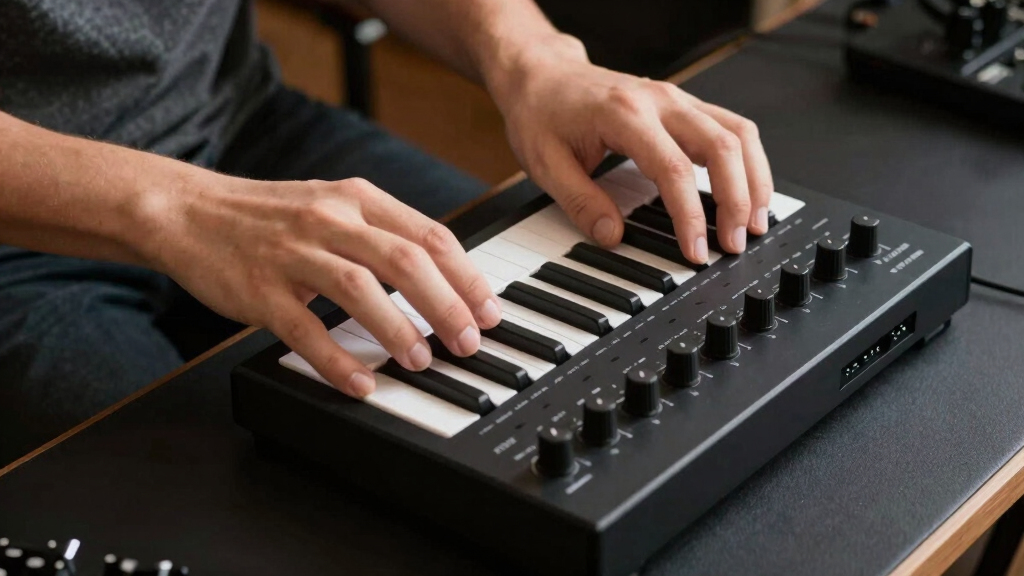

For producers seeking a realistic playing experience, a weighted MIDI controller can make a significant difference. The StudioLogic SL73 MK2 stands out as the overall best for its authentic hammer action and comprehensive features. For those prioritizing portability, the Akai MPK Mini Plus offers a compact yet responsive option. Meanwhile, the Arturia KeyLab Essential mk3 balances advanced functionality with affordability. Choosing the right weighted MIDI controller involves weighing factors like key feel, connectivity, and price, and each option presents tradeoffs in these areas. Keep reading for a detailed breakdown of the best picks for different needs and budgets.

Get audio and creator gear delivered free with Prime
- Fast, free delivery on millions of items
- Prime Video, Amazon Music and more included
- Member-only deals all year
Complete the kit


Key Takeaways
- The top-ranked models combine authentic hammer-action keys with versatile connectivity for professional use.
- Size and weight of the controller significantly impact portability versus playing feel, with compact options sacrificing some realism.
- Price ranges vary widely, with premium models offering more tactile feedback and build quality, while budget options focus on core features.
- Integration with DAWs and additional controls can add value but may also complicate setup for beginners.
- Tradeoffs often involve balancing key feel, size, features, and cost—no single controller excels in every area.
| STUDIOLOGIC SL73 MK2 Master Keyboard 73 Keys Weighted Hammer Action with Aftertouch, USB-C Audio Interface, MIDI 2.0, DAW Controls, Numa Player Integration |  | Best Overall Weighted MIDI Controller for Producers | Number of Keys: 73 | Action: Weighted Hammer Action with Aftertouch | Connectivity: USB-C, MIDI | VIEW LATEST PRICE | See Our Full Breakdown |
| Novation Launchkey 49 MK4 White USB MIDI Keyboard Controller |  | Best for Seamless DAW Integration and Creative Workflow | Number of Keys: 49 | Color: White | Pads: 16 FSR | VIEW LATEST PRICE | See Our Full Breakdown |
| Arturia KeyLab Essential mk3 USB MIDI Keyboard Controller, 88-Key – Black |  | Best for Full-Size, Expressive Playing on a Budget | Number of Keys: 88 | Color: Black | Connectivity: USB | VIEW LATEST PRICE | See Our Full Breakdown |
| Novation FLkey 2 61 USB MIDI Controller Keyboard |  | Best for FL Studio Users Needing Built-in Scale and Chord Modes | Number of Keys: 61 | Key Type: Semi-weighted | Pads: Velocity-sensitive | VIEW LATEST PRICE | See Our Full Breakdown |
| Nektar SE61 USB MIDI Controller Keyboard with DAW Integration |  | Best Compact, Multi-Platform MIDI Controller for Producers on the Move | Number of Keys: 61 | Connectivity: USB | Compatibility: Mac, PC, iOS | VIEW LATEST PRICE | See Our Full Breakdown |
| Akai Professional MPK Mini MK3 25-Key USB MIDI Keyboard Controller |  | Best Portable and Versatile MIDI Controller | Number of Keys: 25 | Keys Type: Mini velocity-sensitive keys | Pads: 8 backlit MPC-style pads | VIEW LATEST PRICE | See Our Full Breakdown |
| Studiologic SL88 MK2 88-Key MIDI Keyboard Controller |  | Best for Realistic Piano Feel and Professional Use | Number of Keys: 88 | Key Type: Weighted | Compatibility: Numa Player | VIEW LATEST PRICE | See Our Full Breakdown |
| Mackie MCU Pro 8-channel Control Surface with USB |  | Best for Deep Mixing and Studio Control | Number of Channels: 8 | Fader Type: 100mm motorized, touch-sensitive | Number of Faders: 9 | VIEW LATEST PRICE | See Our Full Breakdown |
| Expressive E Osmose CE Advanced MPE MIDI Controller 61-Key Bundle with Accessories |  | Best for Expressive, MPE-Enabled Performance | Number of Keys: 61 | Display: 4.3 inches | Presets: 900+ | VIEW LATEST PRICE | See Our Full Breakdown |
| M-Audio Keystation 88 MK3 USB MIDI Controller |  | Best for Full-Size Piano Feel at a Budget | Number of Keys: 88 | Key Type: Semi-weighted, velocity-sensitive | Connectivity: USB | VIEW LATEST PRICE | See Our Full Breakdown |
| Novation Launchkey 88 MK3 |  | Best Overall Weighted MIDI Controller for Producers | Number of Keys: 88 | Connectivity Technology: USB | Additional Features: Velocity Sensitive Key | VIEW LATEST PRICE | See Our Full Breakdown |
| Akai Professional MPK Mini Plus 37-Key USB MIDI Keyboard Controller |  | Best Compact MIDI Controller with Versatile Features | Number of Keys: 37 | Connectivity: USB, CV/Gate, MIDI I/O | Built-in Sequencer: 64-step | VIEW LATEST PRICE | See Our Full Breakdown |
| weighted MIDI controller for producer | Number of Keys | Connectivity |
|---|---|---|
| STUDIOLOGIC SL73 MK2 Master Ke | 73 | USB-C, MIDI |
| Novation Launchkey 49 MK4 Whit | 49 | — |
| Arturia KeyLab Essential mk3 U | 88 | USB |
| Novation FLkey 2 61 USB MIDI C | 61 | — |
| Nektar SE61 USB MIDI Controlle | 61 | USB |
| Akai Professional MPK Mini MK3 | 25 | — |
| Studiologic SL88 MK2 88-Key MI | 88 | — |
| Mackie MCU Pro 8-channel Contr | — | USB |
| Expressive E Osmose CE Advance | 61 | MIDI DIN, USB-C |
| M-Audio Keystation 88 MK3 USB | 88 | USB |
| Novation Launchkey 88 MK3 | 88 | — |
| Akai Professional MPK Mini Plu | 37 | USB, CV/Gate, MIDI I/O |
More Details on Our Top Picks
STUDIOLOGIC SL73 MK2 Master Keyboard 73 Keys Weighted Hammer Action with Aftertouch, USB-C Audio Interface, MIDI 2.0, DAW Controls, Numa Player Integration
The STUDIOLOGIC SL73 MK2 stands out as the best choice for producers who prioritize an authentic piano feel combined with advanced integration features. Its 73 weighted keys with aftertouch deliver a playing experience close to an acoustic instrument, making it ideal for composers and pianists. Unlike lighter or synth-action controllers like the Novation FLkey 2 61, this model offers a more expressive touch, suitable for detailed performance. The integrated audio interface and seamless DAW controls mean you can produce and monitor without extra gear, but this complexity might be overwhelming for beginners who prefer simplicity. Compared to the Arturia KeyLab Essential mk3, it offers richer controls and deeper integration, though at a higher learning curve. The tradeoff is that its advanced features require familiarity with music production software. Overall, this controller best serves those seeking professional-grade feel and connectivity in a single package.
Pros:- Authentic piano-like feel with weighted keys and aftertouch
- Built-in audio interface simplifies setup and monitoring
- Seamless integration with major DAWs and Numa Player
Cons:- Complex for users unfamiliar with advanced MIDI controls
- Higher price point compared to smaller or less feature-rich controllers
Best for: Professional musicians and producers who need a full-sized, expressive keyboard with integrated audio and advanced MIDI features.
Not ideal for: Beginners or producers on a tight budget who want a simple, lightweight MIDI controller without complex DAW integration.
- Number of Keys:73
- Action:Weighted Hammer Action with Aftertouch
- Connectivity:USB-C, MIDI
- Audio Interface:Integrated
- Compatibility:MIDI 2.0, DAWs (Ableton Live, Logic Pro, Cubase)
- Special Features:Numa Player integration, DAW controls, color display
Our verdict“Best suited for experienced producers and performers seeking a professional-grade weighted MIDI controller with all-in-one features.”
Novation Launchkey 49 MK4 White USB MIDI Keyboard Controller
The Novation Launchkey 49 MK4 excels as a flexible controller for producers who want smooth integration with their DAW, especially Ableton Live. Its 49 keys strike a balance between portability and performance, and the included software bundle expands creative options. Unlike the Arturia KeyLab Essential mk3, which emphasizes full-size keys, the Launchkey’s lighter action and MIDI-focus make it more accessible for quick setups and live use. Its 16 FSR pads, plus scale mode, support dynamic beat-making and melodic playing, but the lack of an onboard sound engine means it depends heavily on software. Compared to the Novation FLkey 2 61, it offers a more traditional keyboard feel, though the FLkey’s dedicated FL Studio controls could appeal more to FL Studio users. This model is best for producers wanting a versatile, hardware-based control surface that integrates deeply with their digital environment.
Pros:- Deep integration with Ableton Live and other DAWs
- Includes comprehensive software bundle for creative flexibility
- Responsive 16 FSR pads for drum triggering and clip launching
Cons:- Requires setup within DAWs for full functionality
- Limited keys for complex melodic performances
Best for: Producers and performers working primarily within Ableton Live or similar DAWs who need reliable, feature-rich control over their software.
Not ideal for: Casual users or those seeking a standalone instrument with built-in sounds; this controller relies on software for sound and sequencing.
- Number of Keys:49
- Color:White
- Pads:16 FSR
- Polyphonic Aftertouch:Yes
- Included Software:Ableton Live Lite, Cubase LE, Melodics, sounds from GForce, Klevgrand, Orchestral Tools, Native Instruments
- Compatibility:Ableton Live, Logic, Cubase, Reason, Reaper, FL Studio, Ardour, NKS
Our verdict“Ideal for Ableton-centric producers who need a versatile, DAW-integrated MIDI controller with expressive pads.”
Arturia KeyLab Essential mk3 USB MIDI Keyboard Controller, 88-Key – Black
The Arturia KeyLab Essential mk3 offers a full 88-key keyboard geared toward producers who want a traditional piano feel combined with essential DAW controls. Its full-sized keys support expressive, dynamic playing, making it suitable for piano, jazz, or classical-inspired workflows. Compared to the smaller Novation Launchkey 49, it prioritizes keyboard size over pad and control surface complexity, which might limit beat-making features. However, the lack of detailed specifications and onboard controls suggests it’s more of a straightforward MIDI keyboard than a comprehensive production hub. It fits producers looking for a reliable, full-length keyboard without the need for extensive onboard features or software bundle, but it doesn’t excel in advanced control or integrated sound. This makes it a good choice for those who value playing feel over extra controls.
Pros:- Full-sized 88 keys for expressive, realistic playing
- USB connectivity for easy setup
- Ideal for classical, jazz, and piano-based workflows
Cons:- Limited control features beyond basic MIDI functions
- Lack of detailed info on onboard controls or included software
Best for: Producers and performers who require a realistic, full-length keyboard for composition and live performance without needing extensive built-in features.
Not ideal for: Producers looking for a controller with extensive pads, faders, or integrated software; this model emphasizes keyboard playing over control surface capabilities.
- Number of Keys:88
- Color:Black
- Connectivity:USB
Our verdict“Best for pianists and composers seeking a full-size, expressive keyboard for detailed playing and composition, without extra control features.”
Novation FLkey 2 61 USB MIDI Controller Keyboard
The Novation FLkey 2 61 is the ideal choice for producers who primarily work within FL Studio, thanks to its dedicated controls and tailored features. Its 61 semi-weighted keys with velocity sensitivity allow expressive playing, while built-in scale and chord modes simplify complex melodic and harmonic creation. Compared to the Launchkey 49 MK4, the FLkey’s focus on FL Studio integration makes it more suited to that ecosystem, although it lacks standalone sound engines and has a higher price for casual users. The included six months of FL Studio Producer Edition enhances its value for dedicated FL Studio users, but others might find it limited outside that environment. This controller makes sense for those who want a seamless, workflow-enhancing tool specifically for FL Studio, especially if they value built-in musical modes over extensive hardware controls.
Pros:- Deep integration with FL Studio with dedicated controls
- Built-in scale and chord modes for easy melody/harmony creation
- Includes six months of FL Studio Producer Edition
Cons:- Limited to FL Studio users for full feature access
- No standalone sound engine, relies on software
Best for: FL Studio producers who want a dedicated, feature-rich MIDI controller with smart modes for quick melodic and harmonic composing.
Not ideal for: Producers working outside FL Studio or those needing a multi-platform controller with broader compatibility and more extensive hardware controls.
- Number of Keys:61
- Key Type:Semi-weighted
- Pads:Velocity-sensitive
- Included Software:6 months FL Studio Producer Edition
Our verdict“Best for FL Studio enthusiasts seeking a MIDI controller with smart modes and dedicated workflow features for rapid music creation.”
Nektar SE61 USB MIDI Controller Keyboard with DAW Integration
The Nektar SE61 offers a compact, versatile solution for producers who need reliable DAW integration across multiple platforms. Its 61 keys strike a balance between portability and playability, suitable for studio and mobile setups. Compared to the Arturia KeyLab Essential mk3, it lacks detailed onboard controls but excels in cross-platform compatibility, making it ideal for those who frequently switch between Mac, PC, and iOS devices. The inclusion of Bigwig Studio’s 8-track DAW and sound content adds value, especially for those new to digital production. However, its basic build quality and limited control surface might be a drawback for professional performers expecting more tactile feedback. This controller suits producers who prioritize compatibility and portability over extensive onboard features, especially in multi-device environments.
Pros:- Seamless DAW integration across Mac, PC, and iOS
- Includes sound content and DAW software
- Compact and lightweight design for portability
Cons:- Limited physical controls compared to larger controllers
- Basic build quality may impact durability
Best for: Mobile producers and those who need a compact, compatible MIDI controller for multiple platforms and DAWs.
Not ideal for: Producers seeking a full-featured or heavy-duty control surface; this model’s basic build may not withstand rigorous touring or studio use.
- Number of Keys:61
- Connectivity:USB
- Compatibility:Mac, PC, iOS
- Includes:Bigwig Studio 8-track DAW + sound content
Our verdict“Best for mobile musicians and producers needing a compact, cross-platform MIDI controller with integrated software support.”
Akai Professional MPK Mini MK3 25-Key USB MIDI Keyboard Controller
The Akai MPK Mini MK3 stands out for its compact size and integrated MPC-style pads, making it ideal for producers who need a portable setup without sacrificing key features. Compared with larger controllers like the M-Audio Keystation 88 MK3, it offers fewer keys but excels in mobility and beat-making capabilities. Its customizable knobs and included software create immediate productivity, though the limited number of keys restricts complex piano arrangements. The onboard arpeggiator and NKS support expand creative options, but the device relies solely on USB power, which may limit flexibility for some users. This pick makes the most sense for producers who prioritize portability and versatile controls in tight spaces.
Pros:- Very portable and lightweight for on-the-go music creation
- Includes MPC-style drum pads for versatile beat production
- Customizable knobs and joystick for dynamic control
- Bundled with software and sounds for immediate start
Cons:- Limited keys restrict full piano performance
- No standalone power option—requires USB connection
- Learning curve for mapping controls can be steep
Best for: Producers who need a compact, portable MIDI controller for studio and mobile use
Not ideal for: Pianists or composers requiring full-range 88-key control for complex arrangements
- Number of Keys:25
- Keys Type:Mini velocity-sensitive keys
- Pads:8 backlit MPC-style pads
- Knobs:8 assignable 360-degree knobs
- Arpeggiator:Yes, adjustable
- Included Software:MPC Beats, Virtual Instruments, Sound Content
Our verdict“Best suited for producers needing a compact, all-in-one MIDI controller for beat making and studio portability.”
Studiologic SL88 MK2 88-Key MIDI Keyboard Controller
The Studiologic SL88 MK2 provides a full-sized weighted key experience, making it a top choice for pianists and serious producers. Its 88 weighted keys surpass the M-Audio Keystation 88 MK3 in feel and responsiveness, offering a more authentic playing experience. The onboard display and seven encoders facilitate intuitive control over your setup, though its weight and size make it less portable than smaller options. While it lacks extensive connectivity details, its Numa Player compatibility broadens its use in professional environments. This controller is best for those focused on expressive, piano-style performance and detailed control at their workstation, but less ideal for mobile producers or live performers needing lightweight gear.
Pros:- Full-sized weighted keys for expressive playing
- Onboard display simplifies parameter navigation
- Multiple encoders for nuanced control
- Ideal for piano-based production and performance
Cons:- Heavy and bulky for portable use
- Limited info on additional connectivity options
- Less suited for mobile or stage setup
Best for: Producers and pianists seeking realistic key action and detailed control at a fixed station
Not ideal for: Mobile producers or performers who prioritize portability over authentic piano feel
- Number of Keys:88
- Key Type:Weighted
- Compatibility:Numa Player
- Onboard Display:Yes
- Encoders:7
- Additional Features:Full-size keys, MIDI control
Our verdict“Best for producers who prioritize authentic piano feel and detailed control in a fixed studio environment.”
Mackie MCU Pro 8-channel Control Surface with USB
The Mackie MCU Pro is a specialized control surface designed for detailed mixing and parameter adjustments rather than standalone playing. Its nine motorized 100mm faders and extensive controls provide a tactile, hands-on interface that surpasses the typical MIDI keyboard, making it ideal for mixing engineers. Compared with the Akai MPK Mini MK3, which is more suited for general production, the MCU Pro emphasizes precise control over existing tracks and plugins. Its expandability and high-quality display make it a powerful studio centerpiece, but the complexity and higher price point may deter casual users. This device is best for producers focusing on mixing and studio control, rather than keyboard-based composition or performance.
Pros:- Deep control with motorized faders and V-Pots
- High-quality display for parameters and timecode
- Expandable with additional Mackie control units
- Seamless integration with DAWs
Cons:- Setup can be complex and technical
- Premium price limits accessibility for casual users
- Primarily designed for mixing, not standalone MIDI performance
Best for: Producers and engineers needing detailed, hands-on mixing control
Not ideal for: Musicians seeking a portable, all-in-one MIDI keyboard for composition
- Number of Channels:8
- Fader Type:100mm motorized, touch-sensitive
- Number of Faders:9
- Display:Backlit LCD
- Connectivity:USB
- Expandability:Yes
Our verdict“Best for professional producers who need precise, tactile control over mixing and parameters.”
Expressive E Osmose CE Advanced MPE MIDI Controller 61-Key Bundle with Accessories
The Expressive E Osmose CE offers an incredibly expressive 61-key MPE keyboard, making it ideal for performers and producers focused on nuanced, gestural control. Its advanced keybed and expansive preset library provide a high level of expressivity unmatched by traditional controllers like the M-Audio Keystation 88 MK3. While its interface and features are complex, the built-in gestural controls and MPE capability allow for deeply expressive performances. The included accessories and presets enhance its usability, though the learning curve is steep. This controller is best for those who prioritize expressiveness and performance over straightforward studio playback, but it may be overkill for basic production needs.
Pros:- Highly expressive keybed with MPE support
- Includes over 900 presets and gestural controls
- Comprehensive bundle with accessories
- Smooth integration with DAWs for expressive performances
Cons:- Complex interface with a learning curve
- High price point for advanced features
- Limited detailed technical specs available
Best for: Performers and producers seeking expressive, gesture-based control and MPE support
Not ideal for: Producers needing simple, straightforward MIDI input for basic recording
- Number of Keys:61
- Display:4.3 inches
- Presets:900+
- Controls:7 gestural, 7 knobs, 9 buttons
- Connectivity:MIDI DIN, USB-C
- Additional Features:MPE support, expressive controls
Our verdict“Ideal for expressive performers and producers who want gestural, MPE-enabled control in a compact, feature-rich package.”
M-Audio Keystation 88 MK3 USB MIDI Controller
The M-Audio Keystation 88 MK3 offers full-size semi-weighted keys, making it a strong choice for players who want a realistic piano feel without complicating their workflow. Compared with the Studiologic SL88 MK2, it provides similar key size and velocity sensitivity, but at a more accessible price point. Its plug-and-play USB connection makes setup straightforward, though it lacks advanced controls or onboard display, limiting its versatility beyond basic MIDI input. The reliance on USB power means it’s less flexible for certain live or studio environments. This controller makes sense for pianists or producers who want a straightforward, full-key instrument for playing and recording, rather than detailed control or complex features.
Pros:- Full-size velocity-sensitive semi-weighted keys
- Plug-and-play USB connectivity with no drivers needed
- Compact and slimline for various setups
- Includes pitch and modulation wheels, transport controls
Cons:- Requires iOS Camera Adapter for iOS device use
- No built-in power supply—depends on USB power
- Limited control features beyond keys and basic controls
Best for: Pianists and producers seeking a full-range, realistic keyboard for recording and live performance on a budget
Not ideal for: Producers requiring extensive control features, onboard displays, or portability
- Number of Keys:88
- Key Type:Semi-weighted, velocity-sensitive
- Connectivity:USB
- Compatibility:Mac, PC, iOS (with adapter)
- Additional Features:Volume fader, transport buttons, pitch/mod wheels
Our verdict“Best for pianists and producers needing a full-sized, expressive keyboard at a budget-friendly price.”
Novation Launchkey 88 MK3
The Novation Launchkey 88 MK3 stands out as the best overall choice for producers seeking an expressive, full-size weighted key experience combined with seamless DAW integration. Its 88 semi-weighted keys provide an authentic feel that benefits pianists and melodic players, while the deep integration with Ableton and other DAWs streamlines workflow. Unlike smaller controllers like the Akai MPK Mini Plus, the Launchkey’s full 88 keys support complex arrangements without sacrificing playability. However, it lacks built-in sounds or speakers, so it’s reliant on external hardware and software, which could be a drawback for those wanting an all-in-one solution. This controller is ideal for serious producers needing a complete, expressive keyboard that integrates tightly with their DAW environment, but it’s less suited for mobile musicians or beginners with limited software setup experience.Pros:- Full-size 88 semi-weighted keys for expressive, realistic piano feeling
- Deep DAW integration facilitates smooth workflow with major software
- Creative modes like arpeggiator, scale, and chord functions enhance music production
- MIDI output for controlling hardware gear
Cons:- No built-in sounds or speakers, relying on external devices
- Requires compatible software and hardware for full functionality
Best for: Producers and keyboardists who prioritize full-range, expressive playing with deep DAW integration.
Not ideal for: Beginners or mobile producers who need a compact, standalone unit without requiring additional software or hardware.
- Number of Keys:88
- Connectivity Technology:USB
- Additional Features:Velocity Sensitive Key
- Supported Software:Ableton, Logic Pro, Cubase, HUI
- Connector Type:MIDI, USB
- Platform:Mac, Windows 10, Windows 7, iOS
Our verdict“This makes the most sense for dedicated producers and keyboard players wanting a professional-grade, full-range MIDI controller with advanced DAW features.”
Akai Professional MPK Mini Plus 37-Key USB MIDI Keyboard Controller
The Akai MPK Mini Plus distinguishes itself as the ideal choice for producers who need a portable, feature-rich MIDI controller without sacrificing creative flexibility. Its 37 keys strike a balance between playability and portability, making it suitable for producers who work in limited spaces or on the go. Compared to the Novation Launchkey 88 MK3, the MPK Mini Plus sacrifices full-range expression but offers advanced connectivity options like CV/Gate and MIDI I/O, which appeal to modular synth enthusiasts. The built-in 64-step sequencer and responsive MPC pads add creative layers that aren’t available on larger, more traditional controllers. The main tradeoff is its smaller keybed, which might feel cramped for detailed melodic lines, and the complex setup can challenge beginners. This controller is perfect for producers wanting a versatile, portable device with extensive connectivity, but it’s less suited for piano-oriented players or those needing a full-sized keyboard.Pros:- 37 keys with 3-octave range suitable for melodic and harmonic parts
- Advanced connectivity including CV/Gate and MIDI I/O for modular integration
- Built-in 64-step sequencer and responsive MPC pads for creative flexibility
- NKS support for seamless library integration
Cons:- Limited to 37 keys, which may restrict performance and arrangement
- Complex setup process might challenge beginners or those unfamiliar with modular gear
Best for: Mobile producers and modular synth enthusiasts who need versatile connectivity and creative control in a compact form factor.
Not ideal for: Pianists or producers who require a full-size keyboard for complex melodic work or studio setups with ample space.
- Number of Keys:37
- Connectivity:USB, CV/Gate, MIDI I/O
- Built-in Sequencer:64-step
- Pads:8 RGB MPC pads
- Rotary Knobs:8 assignable
- Software Included:MPC Beats
Our verdict“This controller is best for producers needing a portable, feature-packed MIDI device with extensive modular and software integration, but it’s less ideal for traditional piano players or those seeking a full-sized keyboard.”

How We Picked
In selecting these 12 controllers, I prioritized key aspects relevant to producers seeking weighted keys. Performance was assessed based on key feel, responsiveness, and build quality to ensure a realistic playing experience. Usability factors such as connectivity options, integration with popular DAWs, and additional control features were also considered. Value was evaluated by comparing features relative to price, aiming to highlight options that offer the best balance for various budgets. Overall, the ranking reflects a combination of tactile authenticity, versatility, and user experience, helping producers find options that align with their workflow and skill level.| weighted MIDI controller for producer | Connectivity |
|---|---|
| STUDIOLOGIC SL73 MK2 Master Ke | USB-C, MIDI |
| Novation Launchkey 49 MK4 Whit | — |
| Arturia KeyLab Essential mk3 U | USB |
| Novation FLkey 2 61 USB MIDI C | — |
| Nektar SE61 USB MIDI Controlle | USB |
| Akai Professional MPK Mini MK3 | — |
| Studiologic SL88 MK2 88-Key MI | — |
| Mackie MCU Pro 8-channel Contr | USB |
| Expressive E Osmose CE Advance | MIDI DIN, USB-C |
| M-Audio Keystation 88 MK3 USB | USB |
| Novation Launchkey 88 MK3 | — |
| Akai Professional MPK Mini Plu | USB, CV/Gate, MIDI I/O |
Factors to Consider When Choosing Best Weighted MIDI Controller For Producers
Choosing the best weighted MIDI controller involves evaluating several core factors. Beyond raw features, understanding how each aspect impacts your workflow can prevent costly mistakes and ensure a satisfying purchase. Consider your playing style, studio setup, and budget to find the right fit, as a controller that works well for one producer may fall short for another.Key Action and Feel
The most critical factor is the key mechanism. Weighted keys mimic the feel of acoustic pianos, providing resistance and aftertouch that enhance expressive playing. A heavier, hammer-action keybed suits serious pianists and those who want authentic touch, but it can be tiring for extended sessions or portable setups. Lighter weighted keys offer a balance, providing realism without fatigue, making them better for frequent use or layering in live scenarios.
Size and Portability
Size influences both comfort and mobility. Full-sized 88-key controllers replicate a traditional piano layout, ideal for advanced players and studio use. However, they’re bulkier and more expensive. Compact models with 49 or 61 keys are more portable and easier to integrate into smaller spaces, but they often compromise on key feel and range. Consider your available space and how often you’ll move the controller to decide which size best fits your needs.”
Connectivity and Compatibility
Check that the controller supports your setup—USB, MIDI DIN, or Bluetooth. Modern controllers often include built-in audio interfaces or multiple MIDI ports, reducing the need for external gear. Compatibility with your DAW is equally important; some controllers integrate seamlessly with specific software, streamlining workflow. Additionally, look for features like pedal inputs and expressive controls to enhance creative possibilities.
Additional Controls and Features
Beyond keys, consider what extra controls matter for your production style. Pads, knobs, faders, and transport buttons can speed up workflow and add expressive options. Some controllers offer advanced features like aftertouch or MPE support, which benefit electronic musicians seeking nuanced expression. Balance your need for extra controls with ease of use—overly complex layouts can hinder rather than help productivity.
Price and Value
Price spans a broad range, reflecting differences in key quality, build, and features. Premium models tend to provide a more authentic feel and durability but come at a higher cost. Budget options focus on core functionality, making them suitable for beginners or those on a tight budget. Consider what features are essential for your work and whether investing more will genuinely enhance your production or playing experience.
Frequently Asked Questions
Is weighted keys necessary for electronic music production?
Weighted keys are not essential for all electronic music producers but are highly beneficial if you want a realistic piano feel or plan to perform live. They provide better dynamics and touch sensitivity, which can improve your expressive control. For purely MIDI programming or basic melodies, non-weighted keys often suffice, but for nuanced playing and recording, weighted keys offer a noticeable advantage.Can I use a weighted MIDI controller for live performances?
Yes, many producers use weighted MIDI controllers on stage, especially if they play piano or keyboard parts live. However, portability and size are important considerations—full 88-key models may be cumbersome for gigging. Compact 61-key options with weighted action can strike a good balance, providing a realistic feel while remaining manageable on stage.Are higher-priced weighted MIDI controllers worth the investment?
Premium models often deliver superior key feel, build quality, and additional features that can justify their higher price for serious musicians. If you perform regularly, record professionally, or require high durability, investing in a higher-end controller can enhance your workflow and longevity. For hobbyists or beginners, mid-range options can provide excellent value without the expense.What should I consider if I want a portable weighted MIDI controller?
Portability hinges on size, weight, and power options. Smaller controllers with fewer keys are easier to carry, but they may lack the full range or tactile feedback you desire. Look for models that are lightweight yet sturdy, with USB power and simple connectivity. Balancing key feel with ease of transport ensures you won’t sacrifice too much realism for convenience.How important is aftertouch and expressive controls on a weighted MIDI controller?
Aftertouch and expressive controls add nuance and dynamics to your playing, which are especially valuable in genres like jazz, classical, or electronic music. Not all controllers include these features, but their presence can significantly expand your expressive range. If you prioritize detailed control over your sound, choosing a model with these options can be a worthwhile investment.Conclusion
For producers who prioritize absolute realism and are willing to invest, the StudioLogic SL73 MK2 offers an exceptional, authentic piano feel combined with versatile features. Beginners or those with a tighter budget should consider the Akai MPK Mini Plus for portability and value, despite its less realistic key action. Serious studio owners seeking a premium experience will find the Arturia KeyLab Essential mk3 a compelling choice, blending advanced controls with solid build quality. For those focused on live performance, compact, weighted options like the 61-key models can provide both realism and mobility. Ultimately, your choice depends on your playing style, workspace, and budget—matching the controller to your specific needs will ensure the best results.
As an affiliate, we earn on qualifying purchases.Halloween Picks
halloween




![Iron Maiden Legend Nicko McBrain Turned Down Trump Golf Invite: “[He] Should Be Put In Jail”](https://deadsetlive.com/wp-content/uploads/2026/10/iron-maiden-legend-nicko-mcbrain-turned-down-trump-golf-invite-he-should-be-put-featured-260x140.jpg)