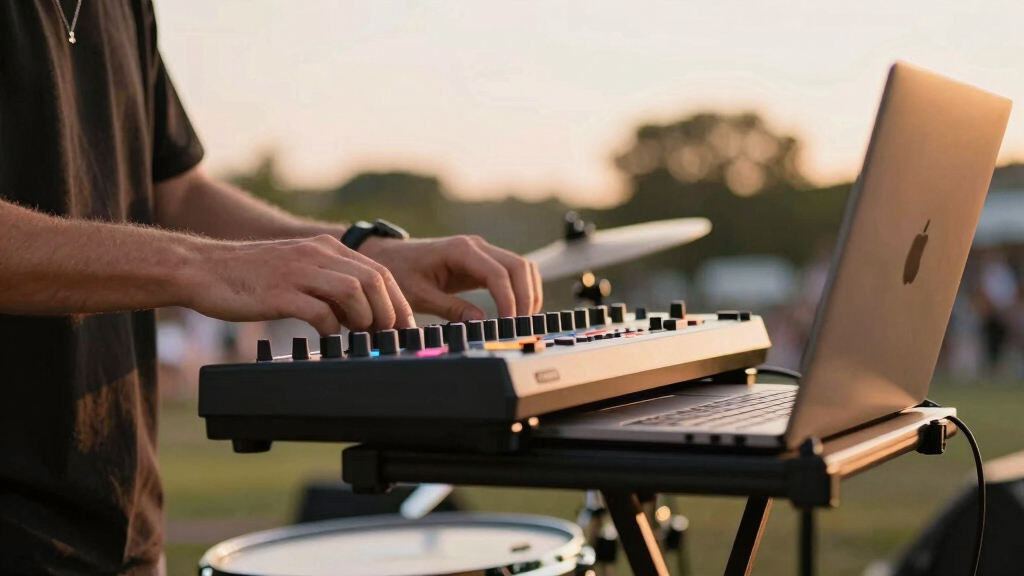

Finding the best drum machine for live sets depends on your performance style, portability needs, and sound preferences. The Akai Professional MPC Live II stands out for its all-in-one design with built-in speakers and versatile sampling, making it ideal for mobile performers. The Roland TR-8S offers authentic drum sounds and familiar workflow, perfect for seasoned performers seeking classic tones. A key tradeoff in this category is balancing sound quality, portability, and hands-on control. Keep reading to see how these options compare and which might suit your live setup best.
Complete the kit


Key Takeaways
- The top picks balance portability with professional sound quality, essential for live performance mobility.
- Authentic vintage sounds versus modern versatility define the main tradeoffs among these options.
- Built-in controls and interface ease significantly impact live usability and setup speed.
- Pricing varies widely, with premium models offering extensive features but not always necessary for casual performers.
- Battery-powered options provide freedom from power outlets, critical for outdoor or mobile gigs.
| Akai Professional MPC Live II – Battery Powered Drum Machine, Sampler, and Beat Maker with Speakers, Drum Pads, Synth Engines, Touch Display, and Native Instruments Integration |  | Best Overall for Versatile Live Performance | Display: 7-inch multi-touch | Pads: 16 velocity-sensitive RGB drum pads | Built-in speakers: Stereo studio monitoring system | VIEW LATEST PRICE | See Our Full Breakdown |
| Roland TR-6S Rhythm Performer – Compact Drum Machine with Authentic TR Sounds |  | Best for Classic Sound and Portability | Number of Tracks: 6 | Sounds Included: TR-808, TR-909, TR-606, TR-707, CR-78 | Sample Library: Large preset with support for custom samples | VIEW LATEST PRICE | See Our Full Breakdown |
| Akai Professional MPC Live III Portable Music Production Center |  | Best for Advanced Live and Studio Workflow | Processor: 8-core | RAM: 8GB | Storage: 128GB internal, expandable via SD or SSD | VIEW LATEST PRICE | See Our Full Breakdown |
| Behringer RD-78 Classic Analog Drum Machine with 15 Drum Sounds, 34 Rhythm Presets, 16-Step Sequencer |  | Best for Beginners and Durability | Drum Sounds: 15 | Rhythm Presets: 34 | Sequencer Steps: 16 | VIEW LATEST PRICE | See Our Full Breakdown |
| Roland TR-1000 Rhythm Creator |  | Best for Vintage Sound and Rugged Professional Use | Engine: Analog with TR-808 & TR-909 sounds | Sounds: Over 2,000 onboard sounds | Memory: 46 GB for user samples | VIEW LATEST PRICE | See Our Full Breakdown |
| Elektron Digitakt II 16-Track Drum Computer and Sampler |  | Best for Versatile Live Sampling and Sequencing | Number of audio tracks: 16 | Sampling capability: Stereo or mono samples | Sequencer: 128-step Elektron sequencer | VIEW LATEST PRICE | See Our Full Breakdown |
| Akai Professional MPC One G2 Next-Generation Standalone Production Center |  | Best for All-in-One Standalone Production and Live Performance | Processor: 8-core | Audio Tracks: 16 stereo | Display: 7″ touchscreen | VIEW LATEST PRICE | See Our Full Breakdown |
| Roland TR-8S Rhythm Performer Advanced Drum Machine |  | Best for Classic Sounds with Live Performance Flexibility | Heritage: Roland TR series | Sample Import: Yes, via SD card | Effects: Delay, overdrive, filters, reverb | VIEW LATEST PRICE | See Our Full Breakdown |
More Details on Our Top Picks
Akai Professional MPC Live II – Battery Powered Drum Machine, Sampler, and Beat Maker with Speakers, Drum Pads, Synth Engines, Touch Display, and Native Instruments Integration
The Akai MPC Live II stands out for its all-in-one design, combining portability with professional-level features such as a 7-inch multi-touch display and 16 velocity-sensitive RGB drum pads. Unlike the Roland TR-6S, which is more straightforward but limited in scope, the MPC Live II offers advanced sampling, sequencing, and mixing capabilities, making it ideal for live performers who also want studio-grade production features. The built-in stereo monitors provide high-quality sound without extra gear, but this convenience comes with a higher price and a steeper learning curve. While the 5-hour battery life might limit prolonged sets, its extensive connectivity options make it a flexible choice for complex live rigs.
Pros:- All-in-one portable setup with built-in speakers
- Professional sampling, sequencing, and mixing tools
- Large multi-touch display for intuitive control
- Extensive connectivity for studio integration
Cons:- Complex interface may require significant learning
- Premium price point limits accessibility
- Battery life of only 5 hours may restrict longer performances
Best for: Performers seeking a comprehensive, portable production hub with integrated sound and advanced controls.
Not ideal for: Beginners or solo artists who prefer a simpler, more straightforward drum machine without extensive features.
- Display:7-inch multi-touch
- Pads:16 velocity-sensitive RGB drum pads
- Built-in speakers:Stereo studio monitoring system
- Battery life:5 hours
- Inputs/Outputs:3 stereo TRS outputs, phono/line inputs, USB, MIDI, Wi-Fi, Bluetooth, 4 TRS CV/Gate outputs
- Storage:SD card slot, USB slots
Our verdict“This is best suited for experienced performers who want a versatile, standalone device capable of handling complex live sets and studio work.”
Roland TR-6S Rhythm Performer – Compact Drum Machine with Authentic TR Sounds
The Roland TR-6S offers a highly portable solution with six tracks of iconic TR sounds like TR-808 and TR-909, making it perfect for those who prioritize authenticity and ease of use. Compared with the Akai MPC Live II, the TR-6S sacrifices some advanced features for a more straightforward workflow, but it still provides powerful sequencing and support for custom samples. Its compact size and battery power make it ideal for spontaneous live performances, though the limited track count may restrict more complex arrangements. The large preset library and support for hybrid kits enable quick setup and creative flexibility, but users should be aware of the learning curve for mastering its advanced features.
Pros:- Authentic classic TR sounds including TR-808 and TR-909
- Highly portable and battery-powered for on-the-go use
- Advanced sequencing with support for custom samples
- Large preset library for quick inspiration
Cons:- Limited to six tracks, restricting complex compositions
- Learning curve for mastering advanced features
- Requires extra setup for optimal workflow with TR-EDITOR
Best for: Musicians and DJs who want authentic vintage sounds in a portable format for live gigs and quick setups.
Not ideal for: Producers seeking extensive sampling, mixing, or multi-track arrangements beyond six tracks.
- Number of Tracks:6
- Sounds Included:TR-808, TR-909, TR-606, TR-707, CR-78
- Sample Library:Large preset with support for custom samples
- Features:FM sound engine, advanced sequencer
- Power:Battery-powered
Our verdict“Ideal for live performers who need authentic sounds in a small, portable package without sacrificing creative control.”
Akai Professional MPC Live III Portable Music Production Center
The MPC Live III elevates portability with its powerful 8-core processor and 8GB RAM, allowing for seamless live performance and studio production. Its 3D-sensing MPCe pads offer expressive control, surpassing the basic velocity pads found on many competitors like the Behringer RD-78. The device’s extensive connectivity—including multiple outputs, MIDI, and CV/Gate—makes it suitable for integrating into larger setups, but its size and complexity may overwhelm beginners. The included software and plugins add value, yet the advanced features demand a learning curve that might not suit casual users. Compared to the Roland TR-1000, which emphasizes vintage sounds, the MPC Live III aims more at versatility and control.
Pros:- Powerful 8-core processor with 8GB RAM for fast, smooth workflow
- Expressive 3D-sensing MPCe pads for dynamic playing
- Extensive connectivity including multiple outputs and MIDI
- Includes comprehensive sample library and plugin instruments
Cons:- Complex interface may be challenging for beginners
- Large size reduces portability for some users
- Higher price point may be prohibitive for casual musicians
Best for: Experienced producers and performers seeking a flexible, powerful device for complex live setups and studio work.
Not ideal for: Novice users or those seeking a simple, plug-and-play drum machine for casual performances.
- Processor:8-core
- RAM:8GB
- Storage:128GB internal, expandable via SD or SSD
- Display:7-inch multi-touch
- Pads:3D-sensing MPCe pads
- Inputs:2 combo XLR/TRS, MIDI I/O, CV/Gate
Our verdict“This choice fits experienced artists demanding a high-performance device that bridges live performance and studio production seamlessly.”
Behringer RD-78 Classic Analog Drum Machine with 15 Drum Sounds, 34 Rhythm Presets, 16-Step Sequencer
The Behringer RD-78 offers a straightforward, analog approach with 15 drum sounds and 34 rhythm presets, making it accessible for beginners yet capable enough for live use. Its intuitive 16-step sequencer simplifies programming, similar to the Roland TR-6S but with a more traditional interface. While it lacks the advanced features and extensive connectivity of the MPC models, its rugged build and portable design make it a reliable option for gigging musicians who want classic sounds without complexity. However, the limited sound palette and basic interface could be restrictive for seasoned producers seeking deep customization or multi-layered arrangements.
Pros:- Authentic analog drum sounds with a straightforward interface
- Wide variety of rhythm presets for quick setup
- Portable and durable design for live performance
- Simple 16-step sequencer for easy programming
Cons:- Limited to 15 sounds, reducing flexibility
- Basic interface may lack advanced features for experienced users
- No onboard effects or extensive connectivity options
Best for: Beginners or live performers needing a durable, easy-to-use analog drum machine with classic sounds.
Not ideal for: Advanced producers or performers requiring extensive sampling, multi-track sequencing, or complex effects.
- Drum Sounds:15
- Rhythm Presets:34
- Sequencer Steps:16
- Design:Compact and durable
Our verdict“This drum machine excels for beginners or live performers wanting a rugged, easy-to-operate device with authentic sounds.”
Roland TR-1000 Rhythm Creator
The Roland TR-1000 combines classic TR-808 and TR-909 sounds with modern sampling and effects, creating a versatile tool for professionals. Its extensive onboard sounds and 46 GB user sample capacity surpass the simpler TR-6S, offering a broader palette for live sets. The next-generation TR-REC step sequencer and flexible I/O—including multiple outputs and MIDI—make it highly adaptable for complex setups. Compared to the MPC Live III, the TR-1000 emphasizes vintage character with modern enhancements, but its complex interface can be daunting for beginners and the high cost may deter casual users. Its robust build and extensive features make it a go-to for serious professionals.
Pros:- Authentic TR-808 and TR-909 sounds with modern updates
- Huge onboard library with 2,000+ sounds and 46 GB user sample capacity
- Flexible I/O options including multiple outputs and MIDI
- Robust metal chassis built for professional use
Cons:- Complex interface requires a learning curve
- High-end features come with a premium price tag
- Advanced features may be overkill for casual use
Best for: Pro musicians and sound designers seeking authentic vintage sounds with modern sampling and flexible routing.
Not ideal for: Newcomers or casual performers who prefer simple interfaces and basic features.
- Engine:Analog with TR-808 & TR-909 sounds
- Sounds:Over 2,000 onboard sounds
- Memory:46 GB for user samples
- Sequencer:Next-generation TR-REC step sequencer
- Inputs/Outputs:Stereo, individual instrument outputs, MIDI, trigger I/O, DIN sync
Our verdict“This device caters to professionals and sound enthusiasts who need authentic vintage sounds combined with modern sampling flexibility and rugged durability.”
Elektron Digitakt II 16-Track Drum Computer and Sampler
The Elektron Digitakt II stands out for its robust 16-track sampling and sequencing capabilities, making it ideal for performers who want comprehensive control over live loops and arrangements. Compared with the Roland TR-8S, it offers deeper sound manipulation options like swappable filters and multiple effects, but its interface can be intimidating for beginners. This model excels at creating complex, layered live sequences thanks to its 128-step sequencer and multiple LFOs, yet it’s primarily geared toward electronic musicians who are comfortable with its learning curve. Tradeoff: its complexity may slow down spontaneous live performance for less experienced users, but for those who master it, the range of sound design options is unmatched.
Pros:- Versatile 16-track sampling and sequencing.
- Multiple effects and swappable filters for sound shaping.
- Intuitive song mode for full live arrangements.
Cons:- Steep learning curve for new users.
- Limited to electronic music, restricting genre versatility.
Best for: Electronic performers and producers who need detailed control over live sampling and sequencing in real-time
Not ideal for: Beginners or acoustic musicians seeking a straightforward drum setup for live gigs
- Number of audio tracks:16
- Sampling capability:Stereo or mono samples
- Sequencer:128-step Elektron sequencer
- LFOs per track:3
- Effects:Delay, reverb, chorus, bit reduction, sample reduction, overdrive
- Filters:Swappable filters including Base-width, Multi-mode, Low pass, Comb, EQ, Legacy LP/HP
Our verdict“This pick is best suited for experienced electronic performers who want detailed sound design for live sets.”
Akai Professional MPC One G2 Next-Generation Standalone Production Center
The MPC One G2 makes a compelling case for those seeking a standalone device that combines sampling, sequencing, and live arrangement without relying on a computer. Its powerful 8-core processor and 7-inch touchscreen facilitate complex multi-track production, similar to the MPC Live II, but in a more compact form. This model shines for performers who want a portable yet full-featured setup, with extensive connectivity options like USB-C and MIDI. However, its learning curve is notable for newcomers, and the 16 stereo track limit can be restrictive for large, multi-layered performances. Tradeoff: while it offers incredible independence from a computer, users should be comfortable with MPC workflows and expect a higher investment.
Pros:- Standalone operation eliminates the need for a computer.
- Powerful 8-core CPU supports extensive multi-track production.
- Large 7″ touchscreen and versatile connectivity.
Cons:- Steep learning curve for new MPC users.
- Limited to 16 stereo tracks, which may be restrictive.
Best for: Solo performers and producers who need a portable, all-in-one live setup with extensive control and content library
Not ideal for: Beginners or performers requiring more than 16 stereo tracks for large, complex live sets
- Processor:8-core
- Audio Tracks:16 stereo
- Display:7″ touchscreen
- Connectivity:USB-C, MIDI
- Factory Content:Over 20GB including MPC Editions
- Included Software:MPC3 OS, Ableton Live Control Mode
Our verdict“This device is perfect for experienced producers seeking a portable, all-in-one live production hub.”
Roland TR-8S Rhythm Performer Advanced Drum Machine
The Roland TR-8S offers a blend of authentic classic drum machine sounds with modern live performance features. Its heritage from the TR series ensures iconic sounds like TR-808 and 909 are readily available, while the ability to import samples adds a layer of creative flexibility. Compared to the Elektron Digitakt II, it emphasizes ease of use and immediate sound access, making it suitable for performers who want quick, reliable access to classic drum tones. Its hands-on controls and kit storage facilitate live tweaking, but the complex interface and premium price tag could challenge users unfamiliar with Roland’s workflow. Tradeoff: it excels at straightforward, performance-ready sound design but may lack the deep editing capabilities of more complex devices.
Pros:- Authentic and versatile classic drum sounds.
- Flexible sample import and sound design.
- Designed specifically for live performance with kit storage.
Cons:- Complex interface can slow workflow for beginners.
- Higher price point for advanced features.
Best for: Performers who want authentic drum sounds with quick access and live tweakability in a performance context
Not ideal for: Producers seeking extensive sound design or multi-track sequencing beyond drum kits
- Heritage:Roland TR series
- Sample Import:Yes, via SD card
- Effects:Delay, overdrive, filters, reverb
- Built-in Sounds:TR-808, 606, 909, 707, 727, modified versions
- Performance Features:Kit storage, advanced workflow software
- Connectivity:SD card, MIDI
Our verdict“This drum machine is ideal for live performers who prioritize iconic sounds and hands-on control with minimal fuss.”

How We Picked
Our selection process focused on performance features, usability in live settings, build quality, and value for money. We prioritized devices with intuitive controls, reliable connectivity, and versatile sound engines that cater to different styles. Portability and battery operation were key factors, especially for performers working in diverse environments. We ranked products based on how well they balance these aspects, highlighting those that offer the most flexibility and durability for live sets.Factors to Consider When Choosing Best Drum Machine For Live Sets
Choosing the best drum machine for live sets involves understanding your performance environment, sound needs, and workflow preferences. Beyond features, consider how quickly you can set up and adjust sounds on stage, and whether the device’s interface matches your skill level. Budget constraints also influence options, but investing in a reliable, versatile model often pays off in performance quality. Here are key factors to weigh before making your decision.Portability and Power Options
For live performers, portability can be a game-changer. Battery-powered models enable outdoor gigs or locations without reliable power sources. Consider the weight and size of the device—compact units are easier to carry but may lack extensive controls. If portability isn’t your priority, larger models with dedicated outputs and extensive controls might suit studio-to-stage workflows better.
Sound Quality and Authenticity
The realism of drum sounds and the variety of kits available influence how well your performance resonates with the audience. Vintage-inspired sounds like those on the Roland TR-8S appeal to genres seeking classic tones, while modern sample-based options provide versatility for diverse styles. Balance your need for authenticity with the flexibility to craft unique sounds.
Control Interface and Usability
Intuitive controls, tactile pads, and clear displays speed up live adjustments. Devices with dedicated knobs and buttons allow for quick changes without digging through menus, essential during performances. Touchscreens or complex menus might slow you down, so evaluate how natural the workflow feels for your style.
Connectivity and Integration
Make sure your chosen drum machine integrates smoothly with other gear—MIDI, USB, and audio outputs are vital. Compatibility with DAWs or hardware controllers can expand your live setup, offering more creative options. Reliable connections prevent interruptions during your set, so test these features beforehand.
Budget and Long-term Value
While high-end models offer advanced features, they come with a higher price tag. Consider whether you need all those features or if a simpler, more affordable unit meets your needs. Investing in a durable, feature-rich device can be worthwhile if you perform frequently, but casual performers might prefer budget-friendly options with basic functionality.
Frequently Asked Questions
Is it better to choose a drum machine with built-in samples or one that I can load my own sounds?
Deciding between built-in samples and custom sound loading depends on your performance style. Built-in samples offer convenience and quick access, ideal for live improvisation and fast setups. Loading your own sounds provides greater creative control, allowing you to craft unique kits tailored to your genre. Consider your workflow and whether you prioritize ease of use or sound customization during live sets.
Do I need a battery-powered drum machine for outdoor performances?
Battery-powered models are highly advantageous for outdoor gigs or locations without reliable power. They eliminate the need for extensive cabling, making setup faster and more flexible. However, battery life and power management become important considerations—ensure the device’s battery lasts long enough for your set and has easy charging options. If most of your performances are indoors, AC-powered units may suffice.
How important is connectivity with other gear for live drum machines?
Connectivity is a key factor because it determines how seamlessly your drum machine integrates into your overall setup. MIDI, USB, and audio outputs allow synchronization and expansion, enabling complex live arrangements. Reliable connections prevent interruptions and make real-time control smoother. Always verify compatibility with your existing gear before purchasing.
Should I prioritize vintage sounds or modern versatility in my drum machine?
This choice hinges on your musical style and performance context. Vintage sounds like those on the Roland TR-8S appeal to genres that favor classic tones, while modern, sample-based units like the MPC Live III offer broader sonic palettes suitable for various styles. Think about the sound aesthetic you want to achieve and whether you need extensive editing or straightforward playback.
Is investing in a premium drum machine worthwhile for a beginner?
Premium models often provide enhanced durability, more features, and better sound quality, which can be beneficial if you’re serious about live performance. However, they come with a higher price tag, which might not be justified for beginners still exploring their style. Starting with a more affordable, user-friendly device allows you to learn without a steep investment, then upgrade as your needs evolve.
Conclusion
For performers seeking a reliable, all-in-one solution, the Akai Professional MPC Live II offers outstanding versatility and portability. Beginners or budget-conscious artists might prefer the Roland TR-6S for its straightforward interface and authentic sounds. For those wanting premium features and extensive control, the Roland TR-8S or Elektron Digitakt II stand out. Budget performers focused on outdoor gigs should prioritize battery-powered units like the MPC Live II, while studio-based musicians may opt for more expansive setups. Ultimately, your choice hinges on your specific needs, performance environment, and sound preferences.