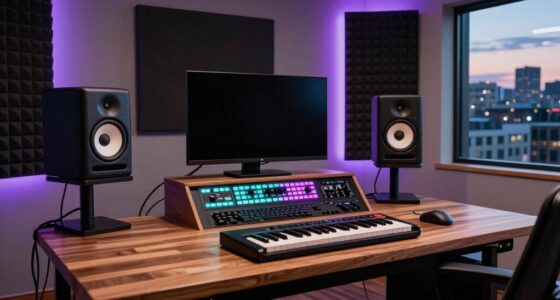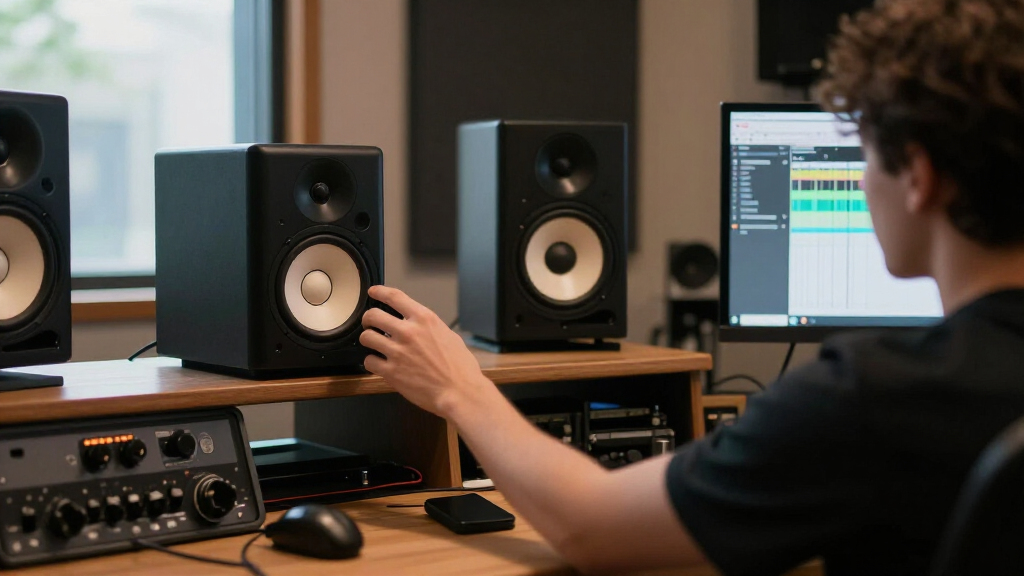

For creators, studio monitors are essential tools to produce accurate, professional-quality sound. The right monitor reveals every detail in your mix, but choosing one involves balancing performance, size, and budget. The IK Multimedia iLoud Micro Monitor stands out as the best overall due to its portability and clear sound, while the Yamaha HS5 offers a reliable, balanced option at a reasonable price. Tradeoffs often involve size versus sound accuracy or affordability versus build quality. Continue reading for a detailed breakdown of the best options to match your needs.

Get audio and creator gear delivered free with Prime
- Fast, free delivery on millions of items
- Prime Video, Amazon Music and more included
- Member-only deals all year
Complete the kit


Key Takeaways
- Size and power output vary significantly; smaller monitors are portable but may lack deep bass or volume for larger spaces.
- Sound accuracy and flat frequency response are key for mixing, favoring models like Yamaha HS series and Focal Alpha-Twin EVO.
- Built-in features such as Bluetooth or multiple input options add convenience but can increase cost or complexity.
- Budget options like the M-AUDIO BX3 and Mackie CR3.5 deliver decent performance for beginners or casual creators.
- Premium picks like Yamaha HS8 and Focal Alpha-Twin EVO prioritize sound fidelity but require more space and investment.
| IK Multimedia iLoud Micro Monitor 50W Portable Wireless Bluetooth Studio Reference Monitors |  | Best for Creators on the Go | Power: 50W RMS | Frequency Response: Down to 55Hz (-3dB) | Tweeter: 3/4” silk dome | VIEW LATEST PRICE | See Our Full Breakdown |
| PreSonus Eris E5 2-Way 5.25″ Near Field Studio Monitor |  | Best for Accurate Nearfield Monitoring | Woofer Size: 5.25 inches | Tweeter Size: 1 inch | Power: 80 watt | VIEW LATEST PRICE | See Our Full Breakdown |
| Yamaha HS5 W 5-Inch Powered Studio Monitor (White, 2-Pack) |  | Best for Accurate Studio Mixing | Quantity: 2 | Speaker Size: 5 inches | Color: White | VIEW LATEST PRICE | See Our Full Breakdown |
| M-AUDIO BX3 3.5-inch Wired Studio Monitors Pair |  | Best for Compact Desktop Setups | Driver Size: 3.5 inches | Woofer Material: Kevlar | Tweeter Type: Silk Dome | VIEW LATEST PRICE | See Our Full Breakdown |
| Focal Alpha-Twin EVO Active 2.5-Channel Studio Monitor |  | Best for Dynamic and Wide-Range Monitoring | Type: 2.5-Channel Studio Monitor | Features: Excellent dynamics, Wide dispersion, Slatefiber cone | Connects up to: 3 audio sources | VIEW LATEST PRICE | See Our Full Breakdown |
| Mackie CR3.5 3.5-inch Creative Reference Powered Studio Monitors | 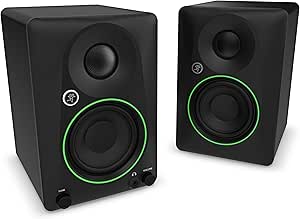 | Best Compact Versatility | Speaker Size: 3.5 inches | Tweeter: Silk dome | Woofer: Woven | VIEW LATEST PRICE | See Our Full Breakdown |
| Yamaha HS5 Powered Studio Monitor, Pair |  | Best for Accurate Sound Reproduction | Number of Monitors: 2 | Woofer Size: 5 inches | Tweeter Size: 1 inch | VIEW LATEST PRICE | See Our Full Breakdown |
| KRK RP5G5 Rokit 5 Generation Five 5-Inch Powered Studio Monitor Pair |  | Best for Enhanced High-Frequency Clarity | Size: 5 inches | Amplifier Type: Class D | Tweeter: 1″ silk dome | VIEW LATEST PRICE | See Our Full Breakdown |
| JBL 305P MkII 5″ 2-Way Active Studio Monitors (Pair) |  | Best for Balanced, Powerful Sound | Number of Speakers: 2 | Speaker Size: 5 inches | Power: 2 x 41-Watt | VIEW LATEST PRICE | See Our Full Breakdown |
| Yamaha HS8 8-Inch Powered Studio Monitor Pair – Black |  | Best for Professional Precision | Frequency Response: 38Hz – 30kHz | Woofer Size: 8 inches | Tweeter Size: 1 inch | VIEW LATEST PRICE | See Our Full Breakdown |
| PreSonus Eris 3.5 Powered Studio Monitors, Pair |  | Best Compact Desktop Monitors for Versatile Use | Power: 50W | Woofer: 3.5″ woven-composite | Tweeter: 1″ silk-dome | VIEW LATEST PRICE | See Our Full Breakdown |
| Ortizan C7 Powered Studio Monitors Pair with Bluetooth 5.3, Black |  | Best Wireless Connectivity for Home Studios | Bluetooth Version: 5.3 | Speaker Size: 3.5-inch mid-bass, 0.75-inch silk dome | Inputs: RCA, 3.5mm AUX, 6.35mm TRS, headphone | VIEW LATEST PRICE | See Our Full Breakdown |
| KRK Kreate 3 Powered Studio Monitors Pair |  | Best Versatile Connectivity for Small Studios | Woofer: 3.5” Glass Aramid | Tweeter: 1” Textile Dome | Features: Bluetooth input, multiple audio inputs | VIEW LATEST PRICE | See Our Full Breakdown |
| Yamaha HS3 Powered Studio Monitor Pair |  | Best Compact, Accurate Monitors for Critical Listening | Type: 2-way bass-reflex powered speaker | Woofer: 3.5 inches | Tweeter: 0.75 inches | VIEW LATEST PRICE | See Our Full Breakdown |
| studio monitors for creator | Inputs |
|---|---|
| IK Multimedia iLoud Micro Moni | Bluetooth, Stereo RCA, 1/8" aux |
| PreSonus Eris E5 2-Way 5.25" N | XLR, 1/4-inch, RCA |
| Yamaha HS5 W 5-Inch Powered St | — |
| M-AUDIO BX3 3.5-inch Wired Stu | 1/4-inch, 1/8-inch, RCA |
| Focal Alpha-Twin EVO Active 2. | — |
| Mackie CR3.5 3.5-inch Creative | TRS, RCA, 3.5 mm |
| Yamaha HS5 Powered Studio Moni | XLR and TRS |
| KRK RP5G5 Rokit 5 Generation F | XLR, 1/4" TRS |
| JBL 305P MkII 5" 2-Way Active | XLR/TRS |
| Yamaha HS8 8-Inch Powered Stud | — |
| PreSonus Eris 3.5 Powered Stud | TRS, RCA, aux |
| Ortizan C7 Powered Studio Moni | RCA, 3.5mm AUX, 6.35mm TRS, headphone |
| KRK Kreate 3 Powered Studio Mo | — |
| Yamaha HS3 Powered Studio Moni | XLR/TRS Combo, RCA, Stereo Mini |
More Details on Our Top Picks
IK Multimedia iLoud Micro Monitor 50W Portable Wireless Bluetooth Studio Reference Monitors
The iLoud Micro Monitor stands out for its portability and versatility, making it an excellent choice for creators who need accurate sound in mobile setups or small spaces. Compared to larger monitors like the Yamaha HS5, it sacrifices some low-end depth, but its 50W power and adjustable EQ provide a surprisingly full, balanced sound. Its wireless Bluetooth capability and multiple input options make it highly adaptable for different devices and environments. However, its small size limits bass response and maximum volume, which may not satisfy those needing loud, deep sound for larger rooms or critical mixing. It’s perfect for traveling musicians, podcasters, or producers who value mobility without sacrificing too much sound fidelity, but less ideal for those requiring high volume or deep bass in a fixed studio. Pros: Compact, portable design; Accurate, linear frequency response; Wireless Bluetooth streaming; Adjustable EQ settings. Cons: Limited bass and volume; Not battery-powered; Small size may not meet heavy-duty needs.
Verdict: This monitor is best suited for creators who need precise, portable sound for mobile production or casual use, accepting some compromises in low-end depth.- Power:50W RMS
- Frequency Response:Down to 55Hz (-3dB)
- Tweeter:3/4” silk dome
- Woofer:3” high-rigidity custom composite
- Inputs:Bluetooth, Stereo RCA, 1/8″ aux
- Portability:Lightweight, optional travel bag
PreSonus Eris E5 2-Way 5.25″ Near Field Studio Monitor
The PreSonus Eris E5 offers a balanced, transparent sound that appeals most to those focused on detailed editing and mixing. Its 5.25-inch woofer and silk-dome tweeter deliver a natural, clear response that rivals larger monitors like the Yamaha HS5 in accuracy, but at a more affordable price point. The inclusion of acoustic tuning controls and multiple input options allows precise customization to fit various setups. Unlike the Focal Alpha-Twin EVO, which emphasizes dynamics and dispersion, the Eris E5 leans toward neutrality, making it a strong choice for critical listening. Its main limitation is that it’s strictly a nearfield monitor and requires careful placement to avoid imaging issues. It’s ideal for home studios, mixing engineers, or producers working in small spaces, but less suited for large or loud environments. Pros: Accurate sound with minimal distortion; Versatile input options; Tunable for specific room acoustics; Affordable compared to premium monitors. Cons: Nearfield only; Setup required for optimal performance; Not designed for loud environments.
Verdict: This monitor is best for creators needing precise, detailed sound in a small, controlled environment, willing to fine-tune placement and setup.- Woofer Size:5.25 inches
- Tweeter Size:1 inch
- Power:80 watt
- Maximum SPL:102 dB
- Inputs:XLR, 1/4-inch, RCA
- Protection Features:RF interference, output current limiting, over-temperature, transient, subsonic
Our verdict“Best for Accurate Nearfield Monitoring — a strong pick in this lineup.”
Yamaha HS5 W 5-Inch Powered Studio Monitor (White, 2-Pack)
The Yamaha HS5 W duo is a staple for professional mixers seeking flat, transparent sound. These monitors excel at revealing subtle details, making them a favorite alongside the Focal Alpha-Twin EVO for high-fidelity, honest playback. Their flat response and high resolution make them ideal for critical listening, but this accuracy comes with a higher price tag, which could deter casual users or hobbyists. Proper placement is essential to avoid imaging issues, especially with a pair. They are less portable and more suited to dedicated studio setups, unlike the IK Multimedia iLoud which prioritizes mobility. This makes them less appealing for mobile creators but perfect for fixed studio environments. Pros: Precise, flat response; High-resolution audio; Widely used in professional settings; Reliable and durable build. Cons: Expensive; Requires careful placement; Less portable for mobile use.
Verdict: This monitor is ideal for creators who prioritize accuracy and have a dedicated space to achieve professional-quality mixes, but not for those needing portability.- Quantity:2
- Speaker Size:5 inches
- Color:White
- Type:Powered Studio Monitor
M-AUDIO BX3 3.5-inch Wired Studio Monitors Pair
The M-AUDIO BX3 offers a compact, wired solution for creators working in tight spaces or on desktop setups. Its 3.5-inch drivers deliver studio-grade clarity with punchy bass and clear highs, comparable to larger monitors like the Yamaha HS5 in sound quality, but in a much smaller footprint. The inclusion of bi-amplified power, Kevlar woofers, and customizable EQ controls makes it versatile for both hobbyists and semi-professionals. However, the small size limits low-end depth and maximum volume, making it less suitable for large rooms or loud environments. Also, lacking wireless connectivity, it’s geared toward fixed setups. It’s a great option for desktop producers, video editors, or gaming setups where space is limited but sound quality matters. Pros: Compact and space-efficient; Studio-grade sound quality; Multiple input options; Customizable EQ controls. Cons: Limited bass response; No wireless connectivity; No built-in amplification or battery.
Verdict: This monitor is best for desktop creators needing high-quality sound in a small space, with some tradeoffs in bass and volume.- Driver Size:3.5 inches
- Woofer Material:Kevlar
- Tweeter Type:Silk Dome
- Inputs:1/4-inch, 1/8-inch, RCA
- Included Accessories:Passive speaker, active speaker, foam feet, interconnect cables, software
Focal Alpha-Twin EVO Active 2.5-Channel Studio Monitor
The Focal Alpha-Twin EVO offers a unique 2.5-channel design, providing excellent dynamics and wide dispersion, making it suitable for creators who want consistent sound throughout a room. Its Slatefiber cone ensures a neutral, detailed sound with minimal distortion, outperforming many standard monitors in tonal balance. Compared to the PreSonus Eris E5, the Alpha-Twin EVO emphasizes dynamic range and dispersion, making it better for larger or acoustically challenging spaces. Its ability to connect up to three sources adds flexibility for complex setups. While it doesn’t have notable drawbacks listed, its price and specialized design might make it less appealing for casual or budget-conscious creators. It’s ideal for mixing engineers and serious producers who value tonal accuracy and dynamic performance. Pros: Accurate sound with excellent dynamics; Wide dispersion for room coverage; Neutral tonal balance; Versatile connectivity. Cons: No significant drawbacks listed; Potentially higher cost for entry-level users.
Verdict: This monitor suits creators needing precise, dynamic sound with room-filling dispersion, especially in larger or treated spaces.- Type:2.5-Channel Studio Monitor
- Features:Excellent dynamics, Wide dispersion, Slatefiber cone
- Connects up to:3 audio sources
Our verdict“Best for Dynamic and Wide-Range Monitoring — a strong pick in this lineup.”
Mackie CR3.5 3.5-inch Creative Reference Powered Studio Monitors
The Mackie CR3.5 stands out for its compact size and flexible connectivity, making it ideal for creators who need versatile audio in limited spaces. Compared to larger monitors like the Yamaha HS8, it sacrifices deep low-end but compensates with multiple inputs and a user-friendly tone control. This makes it a strong choice for casual producers, gamers, or those working on small desks. The switchable placement modes add convenience, but the modest 3.5-inch woofer limits bass response, often requiring an additional subwoofer for full-range sound. Its lightweight design and multiple input options are real strengths, yet it’s not suitable for those needing serious bass or large-room coverage. Best for creators who prioritize flexibility and space-saving design over deep low-end.
Pros:- Multiple input options (TRS, RCA, 3.5mm) for versatile connectivity
- Adjustable tone control for customized sound
- Switchable modes for desktop or bookshelf placement
- Compact size fits small desks and multi-use setups
Cons:- Bass may lack depth without an external subwoofer
- Limited to 3.5-inch woofer, restricting low-end performance
Best for: Creators with limited space who need a versatile, affordable monitor for casual music or multimedia work.
Not ideal for: Audio professionals or bass-heavy music producers who require deep lows and high SPL levels.
- Speaker Size:3.5 inches
- Tweeter:Silk dome
- Woofer:Woven
- Inputs:TRS, RCA, 3.5 mm
- Features:Tone knob, location switch, headphone output
Our verdict“This monitor is best suited for creators needing adaptable, space-saving sound with moderate audio demands.”
Yamaha HS5 Powered Studio Monitor, Pair
The Yamaha HS5 pair is renowned for its flat, transparent sound, making it a favorite among professionals who need precise mixing. Compared with the JBL 305P MkII, the HS5 has a slightly narrower frequency response (54 Hz to 30 kHz), but it offers a more neutral sound signature crucial for critical listening. This monitor is ideal for serious creators working in small to medium studios. While the 5-inch woofer provides decent bass, it might not satisfy those needing deep lows for bass-heavy genres. The HS5’s high fidelity and minimal coloration make it less suitable for casual listening or entertainment use, but its accuracy is unmatched for detailed mixing. Perfect for creators prioritizing fidelity and neutrality over loudness or bass depth.
Pros:- Accurate, flat frequency response for critical listening
- High-quality bi-amplified design for detailed sound
- Excellent build quality with professional inputs
Cons:- Limited to studio or professional use, not casual listening
- Higher price point may be a barrier for beginners
Best for: Professional or semi-professional creators focused on mixing and mastering in small studio environments.
Not ideal for: Casual hobbyists or those who prefer boosted bass for casual listening or multimedia use.
- Number of Monitors:2
- Woofer Size:5 inches
- Tweeter Size:1 inch
- Frequency Response:54 Hz – 30 kHz
- Power:45W LF + 25W HF
- Inputs:XLR and TRS
Our verdict“This monitor set is best for creators who need precise, uncolored sound for detailed audio work.”
KRK RP5G5 Rokit 5 Generation Five 5-Inch Powered Studio Monitor Pair
The KRK RP5G5 Rokit offers a notable upgrade in high-frequency response with its new 1″ silk dome tweeter and Class D amplification, making it appealing for creators who want detailed, crisp highs. Compared with the JBL 305P MkII, the RP5G5 emphasizes clarity in the treble, which benefits those mixing vocals or bright instruments. The inclusion of acoustic foam wedges helps with proper placement, but this model can be pricier for entry-level users and demands careful positioning for optimal sound. Its improved high-frequency performance is a real advantage, yet beginners might find it less forgiving if they lack experience with proper speaker placement. Ideal for creators seeking enhanced high-end detail and stereo imaging.
Pros:- Enhanced high-frequency response with a 1” silk dome tweeter
- Reduced distortion for clearer imaging
- Includes acoustic foam wedges for optimal placement
Cons:- Requires proper placement for best sound, which can be tricky
- Higher price for entry-level creators
Best for: Intermediate to advanced creators who want precise treble and detailed stereo imaging for mixing vocals or bright sounds.
Not ideal for: Beginners or casual listeners who may find the setup and cost prohibitive for basic use.
- Size:5 inches
- Amplifier Type:Class D
- Tweeter:1″ silk dome
- Inputs:XLR, 1/4″ TRS
Our verdict“This monitor pairs well with creators who need crisp, detailed highs and are comfortable with careful setup.”
JBL 305P MkII 5″ 2-Way Active Studio Monitors (Pair)
The JBL 305P MkII offers a potent combination of clarity, deep bass, and room adaptability. Its dual 41-watt Class-D amplifiers deliver a robust, balanced sound that suits music producers, sound designers, and podcasters alike. Compared to the Yamaha HS5, the JBL’s broader frequency response and adjustable boundary EQ help tailor sound in varied environments. This makes it highly versatile, especially in less-than-ideal room conditions. However, the size and power mean it’s less suitable for casual listening or very small spaces, where over-application of the EQ could cause distortion. Its balanced sound and flexibility make it a strong choice for creators who need a powerful, adaptable monitor. Excellent for versatile room setups requiring deep bass and room tuning options.
Pros:- Deep, powerful bass with dual amplifiers
- Adjustable boundary EQ and HF trim for room tuning
- Reliable, durable construction for long-term use
Cons:- Requires adequate space for optimal placement
- May be overkill for simple or casual setups
Best for: Music producers and sound designers who want powerful, adjustable monitors for flexible room environments.
Not ideal for: Casual creators or those with very limited space who do not need such high power or room correction features.
- Number of Speakers:2
- Speaker Size:5 inches
- Power:2 x 41-Watt
- Inputs:XLR/TRS
- Additional Features:Boundary EQ, HF Trim
Our verdict“This monitor is best for creators seeking a powerful, adaptable sound in varied room conditions.”
Yamaha HS8 8-Inch Powered Studio Monitor Pair – Black
The Yamaha HS8 pairs deliver a significant upgrade in bass and overall clarity with their 8-inch woofers and 120W bi-amp system. Compared to the smaller HS5, the HS8’s extended frequency response (38Hz to 30kHz) makes it more suitable for full-range mixes, especially in larger or more acoustically treated spaces. Its high power output ensures room-filling sound, but this comes with a higher price and larger dimensions, making it less suited for tight spaces or casual use. These monitors excel at detailed, accurate sound reproduction, but beginners may find the setup and cost somewhat daunting. For those working in professional or semi-professional settings, the HS8 provides unmatched fidelity. Ideal for creators who need high-volume, full-range sound with professional accuracy.
Pros:- Wide frequency response for full-range sound
- High power output for large or loud environments
- Accurate, detailed reproduction suitable for mixing and mastering
Cons:- Expensive and large, not ideal for small spaces
- Requires careful placement and sufficient space for optimal performance
Best for: Professional or advanced creators working in larger studios who need precise, full-spectrum sound reproduction.
Not ideal for: Hobbyists or creators with small desks and budget constraints who don’t require such high performance.
- Frequency Response:38Hz – 30kHz
- Woofer Size:8 inches
- Tweeter Size:1 inch
- Power Amplification:120W
- System:Bi-amp
Our verdict“This monitor is best for professionals needing high-volume, full-range accuracy in larger or well-treated rooms.”
PreSonus Eris 3.5 Powered Studio Monitors, Pair
The PreSonus Eris 3.5 stands out for delivering true studio-quality sound in a compact form, making it ideal for desktop setups where space is limited. Compared to larger monitors like the Yamaha HS3, these provide a surprisingly balanced frequency response despite their small size, though they lack the deep bass depth larger speakers offer. The adjustable tuning controls help optimize sound in varied environments, but this feature requires some initial setup. Their 50W power ensures room-filling volume, yet the limited bass reach may not satisfy those craving deep low-end for music production. They excel for creators who want reliable, clear sound without taking up much space, but are less ideal for mixing bass-heavy tracks.
Pros:- Delivers true studio-quality, clear, balanced audio
- Powerful 50W amplification for room-filling sound
- Adjustable tuning controls for different room environments
- Multiple input options including headphone jack
Cons:- Compact size limits bass depth for critical low-end work
- Requires some setup to optimize sound tuning
Best for: Creators with limited desk space needing accurate, balanced sound for editing, streaming, or gaming
Not ideal for: Producers working on bass-heavy music who require deep low-end response in larger rooms
- Power:50W
- Woofer:3.5″ woven-composite
- Tweeter:1″ silk-dome
- Frequency Range:80 Hz–20 kHz
- Inputs:TRS, RCA, aux
- Additional Features:Built-in acoustic tuning controls, front headphone jack
Our verdict“This pick makes the most sense for creators seeking compact, reliable monitors for desktop use and versatile applications.”
Ortizan C7 Powered Studio Monitors Pair with Bluetooth 5.3, Black
The Ortizan C7 offers a compelling option for creators who want wireless flexibility, thanks to Bluetooth 5.3, alongside multiple wired inputs like RCA and TRS. Compared with the KRK Kreate 3, the C7’s wireless streaming simplifies setup and reduces cable clutter, though it may compromise slightly on sound precision compared to more studio-focused monitors. Its 3.5-inch mid-bass and silk dome tweeter produce clear, balanced sound suitable for casual production, gaming, or streaming. The DAC supports high-quality audio, but the absence of front volume or tone controls means adjustments require external devices or software. This monitor pair suits those prioritizing convenience and versatility in small rooms, but it’s less ideal for detailed mixing or larger studio environments.
Pros:- Wireless Bluetooth 5.3 for quick pairing and convenience
- Multiple input options including RCA, AUX, and TRS
- High-fidelity sound with professional tuning
- Compact design suitable for small rooms
Cons:- Limited bass response due to small size
- No front volume or tone controls on the monitors
Best for: Home studio creators who need wireless streaming and multiple input options for casual or semi-professional use
Not ideal for: Producers requiring precise, flat frequency response for detailed mixing in larger spaces
- Bluetooth Version:5.3
- Speaker Size:3.5-inch mid-bass, 0.75-inch silk dome
- Inputs:RCA, 3.5mm AUX, 6.35mm TRS, headphone
- DAC:24-bit via USB
- Color:Black
Our verdict“This monitor set is ideal for creators seeking wireless flexibility and straightforward desktop setup in small environments.”
KRK Kreate 3 Powered Studio Monitors Pair
The KRK Kreate 3 makes a strong case for creators who want versatile connectivity, including Bluetooth, without sacrificing sound quality. Its 3.5-inch glass aramid woofer and textile dome tweeter produce clear highs and balanced mids, rivaling larger monitors like the Yamaha HS3 in accuracy. Compared to the Yamaha HS3, the Kreate 3’s Bluetooth input adds a layer of convenience for wireless streaming, but it may not match the flat response of dedicated studio monitors. It’s best suited for small studios or content creators who value flexibility and ease of use, though its size limits low-frequency depth, making it less suited for bass-heavy production.
Pros:- Clear high-frequency response with textile dome tweeter
- Wireless Bluetooth input for easy streaming
- Multiple audio inputs for flexible connectivity
Cons:- Limited bass performance due to small woofer
- No detailed info on active/passive design specifics
Best for: Content creators and small studio users requiring flexible wireless and wired connectivity in a space-efficient package
Not ideal for: Pro audio engineers needing detailed low-end response for mixing bass-heavy tracks in larger rooms
- Woofer:3.5” Glass Aramid
- Tweeter:1” Textile Dome
- Features:Bluetooth input, multiple audio inputs
Our verdict“This monitor is a smart choice for creators who prioritize connectivity options and space-saving design without sacrificing sound clarity.”
Yamaha HS3 Powered Studio Monitor Pair
The Yamaha HS3 is a staple for creators who need accurate, transparent sound in a compact form. Its 3.5-inch woofer and 0.75-inch tweeter deliver a flat frequency response from 70 Hz to 22 kHz, making it a reliable choice for precise mixing and editing. Unlike the KRK Kreate 3, which emphasizes connectivity, the HS3’s focus on sound accuracy makes it better suited for critical listening tasks. The multiple inputs—XLR, TRS, RCA—offer flexibility, but the small size means bass response is limited, which can be a drawback for full-range music production. It’s best for creators who prioritize fidelity over volume or deep bass.
Pros:- High-quality sound with clear high and mid frequencies
- Multiple input options for versatile connectivity
- Compact and suitable for small studio setups
Cons:- Limited bass response due to small woofer
- Requires external amplification or power source
Best for: Producers and audio engineers needing a compact yet accurate monitor for detailed editing
Not ideal for: Musicians or producers seeking deep bass or working in large room environments
- Type:2-way bass-reflex powered speaker
- Woofer:3.5 inches
- Tweeter:0.75 inches
- Frequency Response:70 Hz – 22 kHz
- Power Output:26 W
- Inputs:XLR/TRS Combo, RCA, Stereo Mini
Our verdict“This monitor is ideal for creators who need precise, transparent sound in a small, space-efficient package.”
How We Picked
Our evaluation focused on performance, build quality, versatility, and value for creators. We prioritized monitors that deliver accurate sound reproduction, essential for mixing and mastering. Ease of use, connectivity options, and user reviews also guided our rankings. We compared features across different price points to highlight options for beginners, intermediate, and professional creators, ensuring each product’s role was clear in the lineup.Factors to Consider When Choosing Studio Monitors For Creators
Choosing the right studio monitor involves more than just brand or size. Consider your workspace size, intended use, and budget to find a model that balances sound quality with practicality. Understanding key factors like frequency response, power, and connectivity can prevent costly mistakes and ensure your setup meets your creative needs.Size and Power Output
Size impacts both placement and sound characteristics. Smaller monitors, like 3.5-inch models, are portable and suitable for small spaces but may struggle with bass response. Larger monitors, such as 8-inch models, produce deeper bass and higher volume, ideal for more spacious studios or critical mixing. Match your workspace size with the monitor’s power output to avoid underperformance or overwhelming your environment.
Frequency Response and Sound Accuracy
Flat frequency response ensures your mixes translate well across different playback systems. Monitors like the Yamaha HS series and Focal Alpha-Twin EVO are designed for accuracy, revealing subtle details in your audio. Cheaper models may color the sound, making it harder to produce professional mixes. Identify your primary use—mixing, recording, or casual listening—and choose accordingly.
Connectivity and Features
Multiple input options, such as XLR, TRS, or Bluetooth, add flexibility to your setup. Built-in features like Bluetooth, seen in models like Ortizan C7, offer convenience but can introduce latency or compromise sound fidelity. Consider your existing gear and whether you need features like volume control, room calibration, or multiple inputs to streamline your workflow without unnecessary complexity.
Budget and Long-Term Value
While budget models like the M-AUDIO BX3 and Mackie CR3.5 provide decent sound for beginners, investing a bit more can significantly improve your experience and results. Professional-grade monitors demand a higher upfront investment but offer greater accuracy and durability, paying off in the long run for serious creators. Balance your current needs with potential future upgrades when choosing.
Space and Placement Considerations
Proper placement impacts monitor performance more than many realize. Monitors need to be positioned at ear level, forming an equilateral triangle with your listening position. Larger monitors like Yamaha HS8 require more space and careful placement to avoid sound reflections and bass buildup. Smaller or wall-mounted models may be better for tight spaces but can compromise on bass response or stereo imaging.
Frequently Asked Questions
How do I know which size monitor is right for my space?
Choosing the right size depends largely on your room dimensions and intended use. Smaller monitors, such as 3.5 or 5-inch models, are ideal for compact spaces and near-field listening, where you sit close to the speakers. Larger monitors, like 8-inch models, produce deeper bass and are better suited for larger rooms or for mixing genres that require full-range sound. Always consider your available space and how much volume headroom you need to avoid distortion or sound fatigue.
Should I buy monitors with Bluetooth or wireless features?
Wireless features like Bluetooth offer convenience, especially for casual listening or quick setup, but they can introduce latency and may not provide the same sound fidelity as wired connections. For critical listening, mixing, or detailed editing, wired monitors with XLR or TRS inputs tend to offer cleaner, more reliable audio. If you frequently switch between different devices or want a clutter-free workspace, a model with Bluetooth might suit your needs, but prioritize wired connections for professional accuracy.
Is it better to buy active or passive monitors?
Most studio monitors today, including those in this roundup, are active, meaning they have built-in amplification. Active monitors simplify setup and reduce the need for external amps, making them more convenient for creators. Passive monitors require an external amplifier, which adds complexity and cost but can offer customization and potentially higher power capacity. For most creators, active monitors provide a straightforward, reliable solution with excellent sound quality.
How important is room treatment when using studio monitors?
Room acoustics significantly affect how monitors sound in your space. Even the best monitors can produce inaccurate sound if the room has reflective surfaces, echo, or bass buildup. Investing in acoustic treatment—like bass traps, diffusers, and panels—can dramatically improve your listening environment. Proper placement combined with room treatment ensures your monitors reveal the most accurate sound possible, leading to better mixes and less guesswork.
When should I consider upgrading to a higher-end monitor?
If you find that your current monitors no longer meet your needs for accuracy, detail, or volume, it might be time to upgrade. Serious creators who work professionally or aspire to release high-quality mixes will benefit from monitors with flatter frequency response, larger drivers, and better build quality. Upgrading can also be justified if your workspace has changed or if you want features like advanced room calibration. A higher-end monitor can provide the clarity and reliability that professional projects demand.
Conclusion
For casual creators or those just starting out, models like the M-AUDIO BX3 or KRK Kreate 3 offer solid performance without breaking the bank. Serious professionals or those working in larger spaces should consider the Yamaha HS8 or Focal Alpha-Twin EVO for their superior accuracy. If portability and all-in-one features matter most, the IK Multimedia iLoud Micro Monitor provides a compelling package. Ultimately, your choice depends on your workspace, budget, and how critical sound accuracy is to your projects—choose the monitor that best aligns with your needs for a productive creative experience in 2026.
As an affiliate, we earn on qualifying purchases.Fall Picks
fall essentials