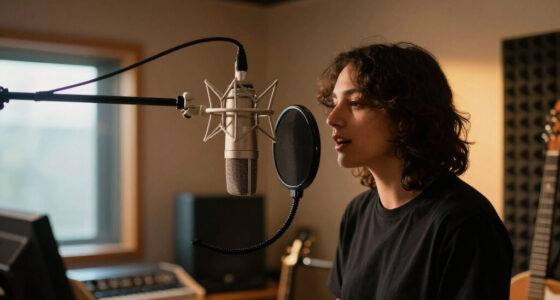
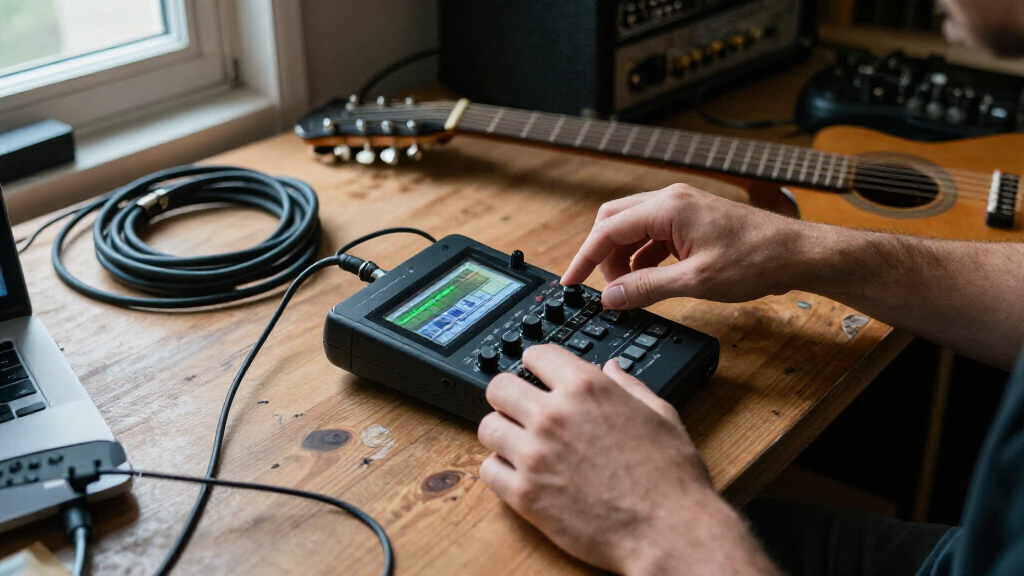

For most musicians, I’d start with the Zoom H4essential: its built-in stereo microphones and two XLR/TRS inputs cover both quick room recordings and external microphones. The Zoom R4 is a stronger fit when you want multitrack overdubbing and onboard production tools, while the TASCAM DR-05XP suits straightforward stereo capture. The main tradeoffs are built-in microphones versus external inputs, simple recording versus multitrack control, and portability versus hands-on features. The right choice depends on whether you record rehearsals, ideas, or separate instrument tracks. Read on for the full breakdown of all 11 options.

Get audio and creator gear delivered free with Prime
- Fast, free delivery on millions of items
- Prime Video, Amazon Music and more included
- Member-only deals all year
Complete the kit


Key Takeaways
- The Zoom H4essential is the most flexible all-rounder in this group, pairing stereo microphones with two combo inputs for musicians who switch between room capture and mics or instruments.
- The Zoom R4 is the clearest choice for self-contained multitrack work; it offers a more production-oriented workflow than the handheld recorders, but is less suited to grab-and-go stereo recording.
- 32-bit float appears across several leading picks, including the TASCAM DR-05XP, Zoom H2essential, H4essential, and TASCAM DR-40XP, but it does not replace good microphone placement or solve every recording problem.
- The H1 XLR and H1essential serve different needs: the H1 XLR prioritizes external XLR connections, while the H1essential is aimed at fast stereo capture with its built-in microphones.
- The EVIDA voice recorder and Zoom PodTrak P4 are specialist choices: the former is less music-focused, while the latter makes more sense for multi-mic conversations than typical instrument recording.
| TASCAM DR-05XP 32-Bit Float Portable Handheld Field Recorder and USB-C Audio Interface | 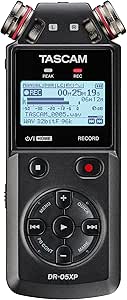 | Best All-in-One Stereo Recorder | Recording formats: 32-bit float, 24-bit, 16-bit, MP3 | Sample rates: 44.1 kHz, 48 kHz, 96 kHz | Microphones: Omnidirectional condenser | VIEW LATEST PRICE | See Our Full Breakdown |
| Zoom H1 XLR Portable Recorder Bundle with 64GB microSD Card and SD Adapter |  | Best Bundle for External Microphones | Recording format: WAV | Recording resolution: 32-bit float | Maximum sample rate: 96 kHz | VIEW LATEST PRICE | See Our Full Breakdown |
| Zoom R4 Multi-Track Recorder with 32-Bit Float, Two XLR/TRS Inputs, Built-In Microphone, Effects, Rhythms, and USB Audio Interface |  | Best for Building Song Ideas | Recorder tracks: 4 | Recording format and resolution: WAV, 32-bit float | Inputs: 2 XLR/TRS combo inputs | VIEW LATEST PRICE | See Our Full Breakdown |
| Zoom H1 XLR 2-Channel Portable Recorder |  | Best Compact Recorder for External Sources | Channels: 2 | Recording format and resolution: WAV, 32-bit float | Maximum sample rate: 96 kHz | VIEW LATEST PRICE | See Our Full Breakdown |
| Zoom H2essential Handheld Recorder with 32-Bit Float |  | Best for Flexible Room and Surround Capture | Microphones: 3 built-in | Recording patterns: 9 | Recording resolution: Up to 32-bit float / 96 kHz | VIEW LATEST PRICE | See Our Full Breakdown |
| EVIDA 128GB Digital Voice Recorder with Voice Activation, Playback, and Password Protection |  | Best for Long Rehearsal Notes | Storage: 128 GB | Recording formats: WAV up to 1536 kbps; MP3 at 128 or 192 kbps | Microphone: Built-in mono microphone with noise cancellation | VIEW LATEST PRICE | See Our Full Breakdown |
| Zoom H4essential Handheld Recorder with 32-Bit Float, 4-Track Recording, Stereo Microphones, and Dual XLR/TRS Inputs |  | Best for Flexible Band Recording | Tracks: 4 | Recording technology: 32-bit float | Maximum sample rate: 96 kHz | VIEW LATEST PRICE | See Our Full Breakdown |
| Zoom PodTrak P4 Portable Podcast Recorder with 4 XLR Inputs |  | Best for Rehearsal-Room Ensembles | Microphone inputs: 4 XLR inputs with phantom power | Headphone outputs: 4, each with individual volume control | USB audio interface: 2-in/2-out | VIEW LATEST PRICE | See Our Full Breakdown |
| Zoom H1essential Portable Stereo Recorder |  | Best Compact Stereo Recorder | Microphones: Built-in X/Y stereo microphones | Recording format and technology: WAV, 32-bit float | Storage: SD card; listed support up to 1 TB | VIEW LATEST PRICE | See Our Full Breakdown |
| TASCAM DR-40XP 4-Channel 32-Bit Float Portable Field Recorder and USB-C Audio Interface |  | Best for Adjustable Stereo Mic Placement | Channels: 4 | Recording formats: 32-bit float, 24-bit, and 16-bit WAV | Sample rates: 44.1, 48, and 96 kHz | VIEW LATEST PRICE | See Our Full Breakdown |
| Xvive XV1-R Portable Stereo Audio Recorder with 32-Bit Float and X/Y Microphones |  | Best for Simple Stereo Capture | Microphones: Built-in X/Y directional microphones | Recording formats: WAV (32-bit float or 24-bit PCM), AAC | Maximum sample rate: 96 kHz | VIEW LATEST PRICE | See Our Full Breakdown |
| digital audio recorders for musician | Microphones |
|---|---|
| TASCAM DR-05XP 32-Bit Float Po | Omnidirectional condenser |
| Zoom H1 XLR Portable Recorder | — |
| Zoom R4 Multi-Track Recorder w | — |
| Zoom H1 XLR 2-Channel Portable | — |
| Zoom H2essential Handheld Reco | 3 built-in |
| EVIDA 128GB Digital Voice Reco | — |
| Zoom H4essential Handheld Reco | Built-in stereo |
| Zoom PodTrak P4 Portable Podca | — |
| Zoom H1essential Portable Ster | Built-in X/Y stereo microphones |
| TASCAM DR-40XP 4-Channel 32-Bi | Adjustable A-B or X-Y unidirectional condenser microphones |
| Xvive XV1-R Portable Stereo Au | Built-in X/Y directional microphones |
More Details on Our Top Picks
TASCAM DR-05XP 32-Bit Float Portable Handheld Field Recorder and USB-C Audio Interface
The TASCAM DR-05XP suits musicians who want a self-contained stereo recorder that can also connect to a computer as an interface. Its built-in omnidirectional condenser microphones handle sound levels up to 125 dB SPL, making it a practical choice for rehearsals, acoustic ideas, and loud sources that might overwhelm simpler built-in mics. 32-bit float recording reduces the need to set input gain precisely, while USB-C offers a 2-in/2-out interface mode for home recording.
Compared with the Zoom H1 XLR, this TASCAM is ready to record with its own microphones, but it lacks that model’s two XLR/TRS inputs for external mics and instruments. Its up-to-17.5-hour battery life is useful for long sessions; the tradeoff is that the SD card and AA batteries are not included. Choose it for quick stereo capture, not a multi-mic band setup.
Pros:- 32-bit float recording helps reduce the risk of unusable levels from gain-setting mistakes.
- Built-in omnidirectional microphones support quick stereo recording without extra gear.
- Handles sound levels up to 125 dB SPL, suitable for loud rehearsal sources.
- 2-in/2-out USB-C interface mode supports computer recording.
Cons:- SD card and two AA batteries are not included.
- Built-in microphones are less adaptable than the H1 XLR’s external XLR/TRS inputs.
- Stereo capture does not provide the R4’s four-track layering and bouncing workflow.
Best for: Songwriters and musicians who want to capture rehearsals or acoustic ideas with built-in stereo microphones and occasionally record through USB-C.
Not ideal for: Musicians who need XLR inputs for external microphones or several separately recorded sources; the Zoom R4 offers track layering, while the H1 XLR has combo inputs.
- Recording formats:32-bit float, 24-bit, 16-bit, MP3
- Sample rates:44.1 kHz, 48 kHz, 96 kHz
- Microphones:Omnidirectional condenser
- Maximum sound pressure level:125 dB SPL
- USB interface:2-in/2-out USB-C
- Battery life:Up to 17.5 hours
- Battery type:2 AA alkaline batteries
Our verdict“Choose the DR-05XP for straightforward stereo music capture and USB-C recording, but pick a model with combo inputs if you rely on external microphones.”
Zoom H1 XLR Portable Recorder Bundle with 64GB microSD Card and SD Adapter
This Zoom H1 XLR bundle is aimed at musicians who already have microphones or instruments to plug in. Its two XLR/TRS combo inputs accept compatible mic- and line-level sources, while 32-bit float WAV recording at up to 96 kHz gives more latitude when recording performances with changing dynamics. The OLED waveform display offers a quick visual check during a take, and the included 64GB microSD card means storage is ready to go.
Unlike the TASCAM DR-05XP, it does not provide built-in microphones for immediate room or rehearsal capture; external microphones are not included either. That makes the H1 XLR more suitable for a small mic-based setup than spontaneous stereo recording. Compared with the non-bundle H1 XLR, this package adds a card and adapter, but its core recording capability remains the same. It is a focused two-input recorder, not a multitrack arrangement tool like the Zoom R4.
Pros:- Two XLR/TRS combo inputs connect compatible microphones and line-level sources.
- 32-bit float WAV recording supports capture without precise gain adjustment.
- Includes a 64GB microSD card and SD adapter.
- OLED waveform display provides a visual recording monitor.
Cons:- External microphones are not included, so it cannot provide built-in-mic recording on its own.
- Two inputs are limiting for recording a larger ensemble with separate sources.
- The included memory card and adapter are excluded from the stated Zoom product warranty.
Best for: Musicians who own one or two XLR or compatible line-level sources and want a portable 32-bit float recorder with storage included.
Not ideal for: Players seeking an all-in-one recorder for quick room capture, since external microphones are not included; also skip it if you need four-track layering.
- Recording format:WAV
- Recording resolution:32-bit float
- Maximum sample rate:96 kHz
- Inputs:Two XLR/TRS combo inputs; 3.5 mm stereo input
- Display:OLED waveform display
- Storage support:microSDHC and microSDXC cards up to 1 TB
- Included storage:64GB microSD card
- USB connection:USB Type-C
Our verdict“Pick this bundle if you need two external inputs and included storage, but choose the DR-05XP for built-in-mic simplicity or the R4 for layered tracks.”
Zoom R4 Multi-Track Recorder with 32-Bit Float, Two XLR/TRS Inputs, Built-In Microphone, Effects, Rhythms, and USB Audio Interface
The Zoom R4 is the most arrangement-focused pick here. Its four tracks let a musician record parts separately, layer them, and bounce tracks when an idea grows beyond a single live take. Two XLR/TRS inputs cover external microphones or instruments, while the built-in stereo microphone is handy for capturing a starting point without setting up a mic. More than 80 rhythm patterns and onboard effects give the R4 a self-contained sketching workflow that the H1 XLR does not offer.
That creative flexibility comes with a more involved workflow than the TASCAM DR-05XP, which is simpler for quick stereo recording. The R4 also works as a 2-in/2-out USB interface, not a four-input computer interface, so its track count does not translate to four simultaneous USB channels. It runs on four AA batteries away from USB-C power, and its four-track ceiling may not suit a full-band production.
Pros:- Four-track recording supports layering, bouncing, and undoing takes.
- Two XLR/TRS combo inputs accept microphones and compatible instruments.
- Built-in stereo microphone supports fast idea capture.
- Rhythm patterns, effects, and USB audio interface mode extend its use beyond basic recording.
Cons:- USB audio interface operation is limited to 2-in/2-out despite the four-track recorder design.
- Requires four AA batteries when not powered over USB-C.
- A four-track workflow is less direct than the DR-05XP for simple stereo rehearsal capture.
Best for: Solo musicians and small duos who want to layer parts, sketch arrangements, and make demos without relying on a computer.
Not ideal for: Musicians who need the simplest one-take stereo recorder or more than two simultaneous external inputs for a full-band session.
- Recorder tracks:4
- Recording format and resolution:WAV, 32-bit float
- Inputs:2 XLR/TRS combo inputs
- Built-in microphone:Stereo
- Rhythm patterns:Over 80
- USB audio interface:2-in/2-out
- Power:4 AA batteries or USB-C
- Weight:9.6 ounces
Our verdict“Choose the R4 if layering and arrangement are central to your portable workflow; choose the H1 XLR for a simpler two-input recorder.”
Zoom H1 XLR 2-Channel Portable Recorder
For musicians who need dependable connections more than built-in microphones, the Zoom H1 XLR keeps the setup compact and focused. Its two locking XLR/TRS combo inputs accept microphones, instruments, and other compatible sources, while 32-bit float WAV recording up to 96 kHz reduces the need to adjust gain during a performance. The 0.96-inch OLED waveform display makes it easier to check that a take is being captured, and SDXC support up to 1 TB leaves room for extended sessions.
Compared with the Zoom H1 XLR bundle, this version is listed without the bundled 64GB card and adapter, so buyers should plan their storage separately. Unlike the DR-05XP, it has no built-in microphones, making it less convenient for quick room recordings. Its compact body and two-channel design suit a small external-mic rig, but the 3.5 mm connections may not satisfy setups needing broader monitoring or routing options.
Pros:- Two locking XLR/TRS combo inputs provide connections for external microphones and instruments.
- 32-bit float recording up to 96 kHz reduces the pressure to set levels precisely.
- OLED waveform display helps monitor recording activity.
- Supports SDXC cards up to 1 TB.
Cons:- No built-in microphones are listed, so spontaneous stereo room capture requires external gear.
- Two AA batteries are required, with stated battery life of up to 10 hours.
- The 3.5 mm stereo input and headphone output may limit more elaborate monitoring setups.
Best for: Musicians with a pair of external microphones or compatible instruments who want a compact two-channel recorder for rehearsals, live takes, or location recording.
Not ideal for: Players who want built-in microphones, included storage, or a multitrack recorder for layering separate song parts.
- Channels:2
- Recording format and resolution:WAV, 32-bit float
- Maximum sample rate:96 kHz
- Inputs:2 locking XLR/TRS combo inputs; 3.5 mm stereo input
- Display:0.96-inch OLED waveform display
- Storage support:SDXC cards up to 1 TB
- Battery life:Up to 10 hours with 2 AA batteries
- Dimensions and weight:4.21 x 2.44 x 1.55 inches; 6.4 ounces
Our verdict“Choose this H1 XLR for a compact two-source external-mic rig, but pick the bundled version if you want a memory card included.”
Zoom H2essential Handheld Recorder with 32-Bit Float
The Zoom H2essential gives musicians more ways to capture a room than a conventional stereo handheld recorder. Three built-in microphones and nine recording patterns cover mono, stereo, and surround modes, so players can adapt the pickup to a solo practice, ensemble rehearsal, or a wider acoustic setting. It records 32-bit float WAV up to 96 kHz and can work as a USB microphone while saving a simultaneous card backup—a useful safeguard when sending a take directly to a computer.
Compared with the TASCAM DR-05XP, the H2essential offers more pickup patterns and surround recording, while the TASCAM adds a stated 2-in/2-out USB audio interface. It also differs from the Zoom R4: the H2essential captures flexible microphone configurations, but does not provide four-track layering for building an arrangement. Bluetooth remote control and audible menus add practical accessibility, though Bluetooth timecode synchronization requires compatible H2essential units. It runs on two AA batteries and needs an SD card for standalone recording.
Pros:- Three built-in microphones and nine patterns support mono, stereo, and surround capture.
- 32-bit float WAV recording reaches up to 96 kHz.
- USB microphone mode can record a simultaneous backup to an SD card.
- Audible menu navigation supports blind and visually impaired users.
Cons:- Requires two AA batteries and an SD card for standalone recording.
- Bluetooth timecode synchronization requires compatible H2essential units.
- Its built-in-mic focus does not replace the H1 XLR’s combo inputs for external microphones.
Best for: Musicians recording acoustic ensembles, room ambience, or practice sessions who want several built-in pickup patterns and a USB backup workflow.
Not ideal for: Songwriters who need separate overdub tracks or external XLR inputs; the R4 supports track layering, while the H1 XLR accepts external sources.
- Microphones:3 built-in
- Recording patterns:9
- Recording resolution:Up to 32-bit float / 96 kHz
- Recording modes:Mono, stereo, and surround
- Storage:SD card, up to 2 TB
- USB microphone mode:Yes; can record simultaneously to SD card
- Wireless connectivity:Bluetooth
- Battery life and weight:Up to 20 hours on 2 AA batteries; 6.72 ounces
Our verdict“Choose the H2essential for adaptable built-in-mic room capture, but select the R4 if your priority is layering song parts.”
EVIDA 128GB Digital Voice Recorder with Voice Activation, Playback, and Password Protection
The EVIDA is better suited to capturing song ideas, lessons, and spoken rehearsal notes than to recording a polished stereo performance: its built-in microphone is mono, and it lacks a headphone jack for monitoring. Its advantages over the Zoom H1essential are 128GB of internal storage and voice activation, which can help stretch recording time when you mainly need speech or intermittent ideas. WAV recording up to 1536 kbps and MP3 options give you formats for different uses, while bookmarks and A-B repeat can make reviewing passages easier. The tradeoff is a less music-focused setup than the Zoom recorders, which offer stereo microphones and, in some models, external inputs. Battery details are also unclear: the listing names a C battery while its description refers to a rechargeable recorder.
Pros:- 128GB of listed storage reduces the need to manage recordings frequently.
- Six voice-activation sensitivity levels can help limit silent gaps in speech recordings.
- WAV and MP3 recording provide options for higher-quality capture or smaller files.
- Bookmarks and A-B repeat make it easier to revisit and study recorded passages.
Cons:- The built-in microphone is mono, unlike the stereo microphones on the Zoom H1essential.
- No headphone jack is listed, so direct monitoring is unavailable.
- Power information conflicts between a listed C battery and the description’s rechargeable wording.
Best for: Songwriters, students, and band members who want lots of built-in space for spoken notes, lessons, and rough mono demos.
Not ideal for: Musicians who need stereo room recordings, headphone monitoring, or a clear, dependable rechargeable-power specification.
- Storage:128 GB
- Recording formats:WAV up to 1536 kbps; MP3 at 128 or 192 kbps
- Microphone:Built-in mono microphone with noise cancellation
- Voice activation:6 sensitivity levels
- Maximum continuous recording time:Up to 54 hours
- Connectivity:USB 2.0
- Dimensions:2.59 × 0.41 × 0.77 inches
Our verdict“Choose the EVIDA for high-capacity spoken notes and rough ideas, not for monitored stereo music recording.”
Zoom H4essential Handheld Recorder with 32-Bit Float, 4-Track Recording, Stereo Microphones, and Dual XLR/TRS Inputs
The Zoom H4essential earns its place as the most versatile compact option here for musicians who may record a room one day and plug in microphones or other sources the next. Its 32-bit float recording at up to 96 kHz helps accommodate unpredictable level changes, while the built-in stereo microphones capture a quick rehearsal without extra gear. Two XLR/TRS inputs add a path to external microphones or instruments, giving it more setup flexibility than the simpler Zoom H1essential. It also records four tracks and can send audio over USB-C while backing up to an SD card. That breadth comes with a practical cost: listed battery life is up to 10 hours on two AA batteries, and the H4essential is more recorder than a musician needs for simple voice memos.
Pros:- 32-bit float recording and a 96 kHz maximum sample rate suit changing performance levels.
- Built-in stereo microphones allow quick room and rehearsal recordings.
- Two XLR/TRS inputs expand recording options beyond the built-in microphones.
- USB-C supports recording or streaming to compatible devices while audio can be backed up to SD.
Cons:- Up to 10 hours of listed recording time means long sessions may call for spare AA batteries.
- Its extra inputs and four-track workflow may be unnecessary for musicians who only record quick ideas.
Best for: Bands and solo musicians who want one portable recorder for stereo room capture, external microphones, and occasional USB recording.
Not ideal for: Players who only need a pocket-sized stereo memo recorder or want longer listed runtime without carrying spare batteries.
- Tracks:4
- Recording technology:32-bit float
- Maximum sample rate:96 kHz
- Microphones:Built-in stereo
- Inputs:2 XLR/TRS
- Storage:SD card; listed support up to 1 TB
- Power and recording time:2 AA batteries; up to 10 hours
- Weight:243 g
Our verdict“Pick the H4essential if you want built-in stereo capture plus external inputs in one adaptable recorder.”
Zoom PodTrak P4 Portable Podcast Recorder with 4 XLR Inputs
The PodTrak P4 is the lineup’s clearest choice for a small ensemble that needs several mic positions and individual headphone feeds, though its podcast-first design makes it less flexible for general music recording than the Zoom H4essential or TASCAM DR-40XP. Four XLR inputs with phantom power can accommodate multiple microphones, and four separately controlled headphone outputs let players monitor at their own levels. That is a meaningful advantage for group rehearsals or live session discussions. Phone and USB connections, automatic mix-minus, and programmable sound pads are aimed at remote interviews and podcast production, not musical performance. The key compromise is up to 3.5 hours of battery life on two AA batteries; its USB interface is also limited to 2-in/2-out, despite the four mic inputs.
Pros:- Four XLR inputs with phantom power support multi-microphone setups.
- Four headphone outputs each have an individual volume control.
- Phone and USB connections with automatic mix-minus support remote guests.
- Programmable sound pads can trigger cues or audio during a session.
Cons:- Listed battery life is up to 3.5 hours on two AA batteries.
- The USB interface is limited to 2-in/2-out rather than exposing all four mic inputs.
- Its podcast-oriented features are less useful for musicians who mainly need stereo room capture.
Best for: Small bands or music educators who need four XLR microphones and separate headphone levels for a portable group session.
Not ideal for: Musicians seeking a general-purpose field recorder with built-in stereo mics, long battery sessions, or a USB interface that exposes all four mic inputs.
- Microphone inputs:4 XLR inputs with phantom power
- Headphone outputs:4, each with individual volume control
- USB audio interface:2-in/2-out
- Recording:Multitrack WAV
- Remote interview connections:TRRS jack and USB
- Sound pads:4 programmable pads
- Power and battery life:2 AA batteries; up to 3.5 hours
Our verdict“Choose the PodTrak P4 for multi-mic group sessions with separate headphone feeds, but not as a general-purpose music recorder.”
Zoom H1essential Portable Stereo Recorder
For musicians who want to capture a practice room, instrument idea, or quick live take without adding microphones, the H1essential is the most straightforward pick in this group. Its built-in X/Y stereo microphones and 32-bit float WAV recording make it a simpler grab-and-record option than the Zoom H4essential, which adds external inputs and a more involved four-track setup. USB-C also lets it serve as a microphone for compatible computers and mobile devices. The compact format comes with limits: it has no listed XLR/TRS inputs, so it cannot grow into a multi-mic setup like the H4essential or TASCAM DR-40XP. It records to an SD card, which is not specified as included, and relies on two AAA batteries with up to 10 hours of recording time.
Pros:- Built-in X/Y microphones capture stereo sound without a separate microphone setup.
- 32-bit float recording can accommodate unexpected changes in performance volume.
- USB-C supports use as a microphone with compatible computers and mobile devices.
- Spoken menu guidance and a straightforward workflow suit quick recordings.
Cons:- No XLR/TRS inputs are listed, limiting external microphone and instrument connections.
- An SD card is required, and the listing does not specify one as included.
- Two AAA batteries provide up to 10 hours of listed recording time.
Best for: Solo musicians and songwriters who want a compact stereo recorder for rehearsals, room sound, and quick performance ideas.
Not ideal for: Bands that need external microphone inputs, multitrack recording, or a recorder with included storage media.
- Microphones:Built-in X/Y stereo microphones
- Recording format and technology:WAV, 32-bit float
- Storage:SD card; listed support up to 1 TB
- USB interface:USB Type-C
- Headphone jack:3.5 mm
- Power and recording time:2 AAA batteries; up to 10 hours
- Weight:92 g
Our verdict“Choose the H1essential for simple, portable stereo capture; step up to the H4essential or DR-40XP for external inputs.”
TASCAM DR-40XP 4-Channel 32-Bit Float Portable Field Recorder and USB-C Audio Interface
The TASCAM DR-40XP is a strong fit for musicians who want a portable recorder that can shift from self-contained room capture to external-mic recording. Its adjustable A-B or X-Y condenser microphones let you choose between a broader stereo image and a more focused pickup, while two XLR/TRS inputs support a more involved setup. Like the Zoom H4essential, it records four channels and offers 32-bit float, but the TASCAM adds stated 24-bit and 16-bit WAV options alongside 32-bit float. Its 125 dB maximum microphone SPL also speaks to handling loud sources, though microphone placement and room conditions still matter. The drawbacks are practical: the microSD card and batteries are not included, and its 2-in/2-out USB-C interface is less useful for routing a full multichannel session to a computer.
Pros:- Adjustable A-B or X-Y microphones offer different stereo pickup configurations.
- 32-bit float recording is available alongside 24-bit and 16-bit WAV formats.
- Two XLR/TRS inputs allow external microphones or other compatible sources.
- USB-C supports use as a 2-in/2-out audio interface.
Cons:- A microSD card and batteries are not included.
- The USB interface is limited to 2-in/2-out, despite the recorder’s four-channel capability.
Best for: Musicians recording loud rehearsals or changing room setups who want adjustable built-in stereo mics plus two external inputs.
Not ideal for: Buyers who want a ready-to-record kit with storage and batteries included, or need more than a 2-in/2-out USB interface.
- Channels:4
- Recording formats:32-bit float, 24-bit, and 16-bit WAV
- Sample rates:44.1, 48, and 96 kHz
- Microphones:Adjustable A-B or X-Y unidirectional condenser microphones
- Maximum microphone SPL:125 dB
- Inputs:2 XLR/TRS
- USB interface:2-in/2-out USB-C
- Weight:6.1 ounces
Our verdict“Pick the DR-40XP for adjustable onboard stereo capture and external inputs, provided you can supply the card and batteries.”
Xvive XV1-R Portable Stereo Audio Recorder with 32-Bit Float and X/Y Microphones
The Xvive XV1-R suits musicians who want a compact recorder for rehearsals, acoustic ideas, and room sound without setting input gain for every take. Its 32-bit float recording can help preserve unexpectedly loud passages, while the X/Y microphones handle up to 130 dB SPL, giving it room for louder sources such as drums or amplified instruments. Compared with the TASCAM DR-40XP, the XV1-R is a simpler stereo-focused choice: it does not offer that recorder’s four-channel flexibility or external XLR/TRS inputs. It can also serve as a USB-C microphone with compatible devices, which adds a straightforward way to record at a desk. The tradeoffs are real: there is no headphone jack for monitoring, and power depends on two AA batteries. Choose it for quick stereo capture, not a full band-input setup.
Pros:- 32-bit float recording reduces the need to set gain precisely before a performance.
- Built-in X/Y microphones support sound levels up to 130 dB SPL.
- Records WAV up to 96 kHz and also supports AAC.
- USB-C audio interface functionality allows use as a microphone with compatible computers, tablets, and smartphones.
Cons:- No headphone jack means you cannot monitor audio directly from the recorder.
- Requires two AA batteries rather than using a built-in rechargeable battery.
- Stereo-focused recording lacks the external inputs and multitrack flexibility of models such as the TASCAM DR-40XP.
Best for: Musicians who want an easy-to-carry stereo recorder for rehearsals, songwriting ideas, and loud acoustic sources, with USB-C use as an added option.
Not ideal for: Players who need to monitor recordings through headphones or connect multiple microphones and instruments directly; the XV1-R has no headphone jack and is limited to its built-in stereo microphones.
- Microphones:Built-in X/Y directional microphones
- Recording formats:WAV (32-bit float or 24-bit PCM), AAC
- Maximum sample rate:96 kHz
- Maximum sound pressure level:130 dB SPL
- Storage:MicroSD cards up to 128 GB
- USB:USB-C, USB Audio Class 2.0; USB microphone operation at 48 kHz
- Display:1.7 inches
- Power and battery life:Two AA batteries; up to 12 hours
- Headphone jack:None
Our verdict“Choose the XV1-R for convenient, gain-forgiving stereo recordings; pick a multichannel recorder if you need external inputs or direct headphone monitoring.”
How We Picked
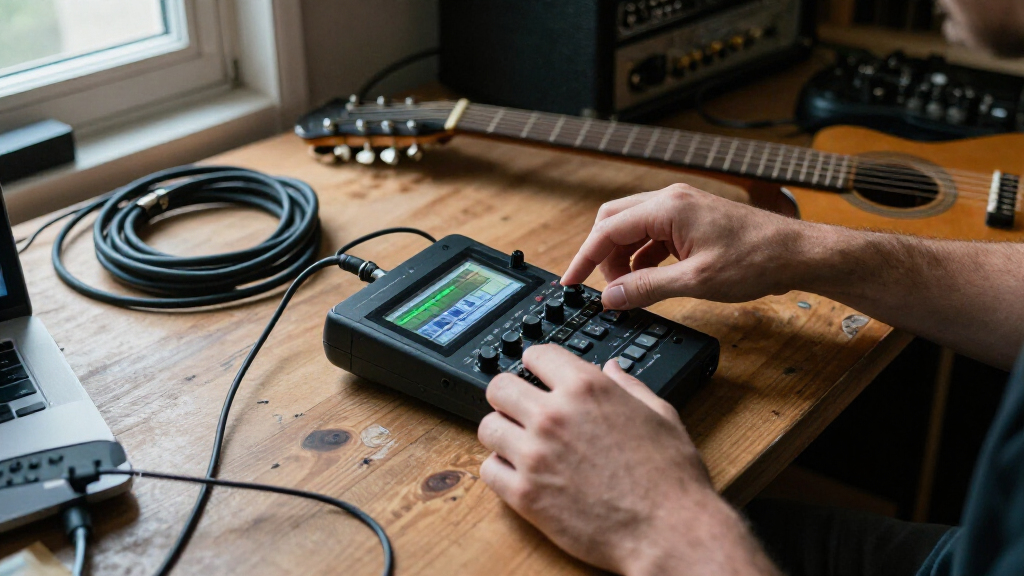
I ranked these digital audio recorders for musicians by how well their recording workflow fits common music tasks: capturing a rehearsal, saving a songwriting idea, recording external microphones, or building tracks through overdubs. I weighed input types and counts, built-in microphone usefulness, track and monitoring flexibility, portability, and whether each device can connect to a computer as an audio interface. Recording formats such as 32-bit float count as practical advantages, not automatic guarantees of better sound.
The order favors recorders that can serve more than one musical role without making routine recording cumbersome. That puts the H4essential near the top for its mix of built-in stereo capture and external inputs, while the R4 ranks highly for musicians who want a compact multitrack workflow. Simpler handheld models rank well for their focused use and lower setup burden; specialist podcast and voice recorders rank lower for general music work because their features are less aligned with capturing instruments and rehearsals.
Factors to Consider When Choosing Digital Audio Recorders For Musicians
Before choosing a model, I’d start with the recording job rather than the feature list. The best recorder for a quick melody memo may be a poor fit for a band rehearsal or a session with several microphones. These broader checks help prevent paying for inputs and controls you won’t use—or buying a simple recorder that can’t handle the way you make music.
Match the Recorder to the Recording Job
Write down the situations you expect to record most often: a solo practice, a full rehearsal, a direct instrument feed, or separate tracks for later mixing. A pocket stereo recorder can be ideal for saving ideas, but it cannot substitute for multiple independent inputs when several performers need their own microphones. Musicians often overbuy channels for hypothetical sessions and then carry a larger, more involved device every day. The reverse mistake is choosing based only on portability and discovering that the recorder cannot accept the mics or sources the session requires. If your needs vary, prioritize a model that can handle both fast built-in-mic recording and external sources.
Count Inputs, Not Just Tracks
Track count and physical input count describe different limits. A recorder may offer multiple tracks through overdubbing while still accepting only a small number of live sources at once. Before buying, count the microphones, pickups, or line-level devices you need to connect simultaneously, then check the connector types and whether the recorder supports the signal you intend to send. A band’s rehearsal recording may need fewer close mics than a multitrack drum session, even if both sound like “recording a band.” Extra inputs can add size and setup complexity, so paying for them makes sense only when they solve a real session need.
Treat 32-Bit Float as Headroom, Not a Fix
32-bit float recording can make level recovery more forgiving when a take is recorded too quietly or unexpectedly loud. That flexibility can help musicians who need to start recording quickly, especially during unpredictable rehearsals. It does not repair clipping that happens in an analog input stage, remove room noise, or make a poorly placed microphone sound good. Keep using sensible microphone placement and check the monitoring path when the recording matters. If you record controlled sessions and set levels carefully, other features—such as inputs, track workflow, and monitoring—may matter more than the format alone.
Think About the Room Before the Microphones
Built-in stereo microphones are convenient, but they capture the room along with the performers. In a reflective practice space, a distant recorder may emphasize echo and background noise; moving it closer can change the balance more than upgrading the device. External microphones offer more placement choices, although they add stands, cables, and setup time. Musicians who mainly need quick reference recordings may prefer the speed of built-in mics, while those shaping a cleaner instrument sound may benefit from external inputs. Test where a recorder can sit in your usual space before deciding which microphone arrangement will help.
Check the Whole Workflow, Including Power and Files
A recorder is only convenient if you can power it, monitor it, and move recordings into your editing setup without friction. Check the battery or power options against your rehearsal length, and confirm that headphones or monitoring gear connect the way you expect. Think through how files will be named, transferred, backed up, and sorted after a long session; a large card does not make a cluttered library easier to manage. USB audio-interface capability can reduce the need for another device when recording directly to a computer, but it may matter little if you only capture files for later editing. A quick workflow check can matter more than a long list of secondary effects or playback features.
Frequently Asked Questions
Is a handheld recorder enough to record a full band rehearsal?
It can be enough for a reference recording if your goal is to hear the overall arrangement and performance rather than mix each musician separately. Place the recorder where the band sounds balanced in the room, then make a short test recording before the full rehearsal. If you need to adjust vocals, drums, or instruments independently afterward, choose a recorder with suitable external inputs or a multitrack workflow. Room acoustics and microphone placement may affect the result more than adding tracks alone.
Should I choose the Zoom H1 XLR or the Zoom H1essential?
Choose based on how you plan to capture sound: the H1 XLR is the more relevant option if you need its external XLR connections, while the H1essential is aimed at straightforward stereo recording with built-in microphones. Neither should be treated as a substitute for a larger recorder when you need several sources at once. Consider what microphones or instruments you already own and whether you want to carry cables and stands. The right choice is the one that matches your usual setup, not the one with the more appealing feature list.
Does 32-bit float mean I can skip setting recording levels?
No. It can provide more room to adjust recorded levels later, but it does not make every part of the signal chain immune to overload or noise. Microphone placement, input-stage limits, and the sound of the room still shape the result. I’d treat 32-bit float as added protection against level mistakes, especially for unpredictable takes, rather than as a replacement for checking the signal. For important sessions, make a brief test recording and listen back.
When does a multitrack recorder make more sense than a stereo recorder?
A multitrack recorder is useful when you want to record or overdub parts separately and make mix decisions later. It can also help a solo musician build an arrangement without moving every recording to a computer between takes. A stereo recorder is simpler when you just want an accurate snapshot of a performance or an idea. Before choosing multitrack, check whether the number of simultaneous inputs fits your sessions; track capacity alone does not tell you how many sources you can record at once.
Is the Zoom PodTrak P4 a good choice for recording instruments?
It may suit a music project that also needs several microphone-based spoken parts, but its podcast-oriented controls and workflow make it a less direct fit for general instrument recording. Compare its inputs and monitoring needs with the gear you plan to connect, especially if you rely on stereo room capture or want to overdub tracks. For music-first use, a handheld recorder with built-in stereo microphones or a dedicated multitrack workflow may be more natural. Choose the P4 when its conversation-focused setup solves a specific need in your recording work.
Conclusion
For the broadest mix of rehearsal capture and external-mic recording, I recommend the Zoom H4essential as best overall. The TASCAM DR-05XP is my best value-style pick for musicians who mainly need portable stereo capture, while the Zoom R4 is the best premium-style choice for musicians building multitrack arrangements on the recorder. For beginners who want a simple way to capture ideas, I’d start with the Zoom H1essential; for XLR microphone connections in a compact format, look at the Zoom H1 XLR. Choose the TASCAM DR-40XP when four-channel recording matters, and the Zoom PodTrak P4 only when podcast-style multi-mic work is part of the plan. If you want a distinctive stereo capture option, compare the Zoom H2essential and Xvive XV1-R; the EVIDA is better suited to voice notes than music-focused recording.