
Choosing the right microphone for professional music production involves balancing sound quality, versatility, and budget. The Audio-Technica AT2035 stands out as the best overall, offering studio-grade sound with excellent noise rejection. For streaming and podcasting, the FIFINE K688 provides great value with both USB and XLR options, while the Sennheiser Professional Profile is ideal for those needing a reliable, high-quality USB condenser. The main tradeoffs involve balancing affordability with sound fidelity and considering whether you prefer USB ease or XLR versatility. Keep reading for a detailed breakdown of each microphone to find your perfect match.

Get audio and creator gear delivered free with Prime
- Fast, free delivery on millions of items
- Prime Video, Amazon Music and more included
- Member-only deals all year
Complete the kit

Key Takeaways
- Top picks excel by balancing sound clarity and build quality for professional-grade recordings.
- Many microphones offer both USB and XLR options, providing versatility for different studio setups.
- Condenser microphones generally deliver richer tonal detail, but may require better acoustic treatment.
- Dynamic microphones are often more durable and better suited for noisy environments or live settings.
- Price differences mostly reflect build quality, feature sets, and included accessories—value varies based on intended use.
| Logitech Blue Yeti USB Microphone for PC, Mac, Gaming, Recording, Streaming, Podcasting, Studio, Blackout | 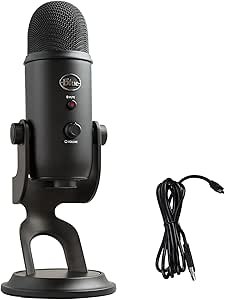 | Best Overall for Versatile Streaming and Podcasting | Pickup Patterns: Cardioid, Omni, Bidirectional, Stereo | Connectivity: USB | Software: Blue VO!CE | VIEW LATEST PRICE | See Our Full Breakdown |
| FIFINE K688 Dynamic Microphone with USB and XLR Output for Podcast and Streaming |  | Best Value for Dual USB/XLR Flexibility | Type: Dynamic Microphone | Connectivity: USB and XLR | Max SPL: 130dB | VIEW LATEST PRICE | See Our Full Breakdown |
| FIFINE K688 Podcast Microphone Kit with Boom Arm, USB/XLR Dynamic Microphone for Streaming and Recording |  | Best for Streamers Needing a Complete Setup | Microphone Type: Dynamic | Connectivity: USB and XLR | Polar Pattern: Cardioid | VIEW LATEST PRICE | See Our Full Breakdown |
| Sennheiser Professional Profile USB Cardioid Condenser Microphone & Table Stand |  | Best for Warm, Natural Sound with Easy Setup | Microphone Type: Condenser | Polar Pattern: Cardioid | Connectivity: USB-C | VIEW LATEST PRICE | See Our Full Breakdown |
| Audio-Technica AT2020USB-X Cardioid Condenser USB Microphone |  | Best for High-Resolution Home Studio Recording | Frequency Response: Extended | Sampling Rate: 24-Bit/96 kHz | Connectivity: USB-C to USB-A with adapters | VIEW LATEST PRICE | See Our Full Breakdown |
| Audio-Technica AT2035 Cardioid Condenser Microphone |  | Best Versatile Studio Microphone | Polar Pattern: Cardioid | Diaphragm: Large | High-Pass Filter: Switchable 80Hz | VIEW LATEST PRICE | See Our Full Breakdown |
| Audio-Technica AT2020 Cardioid Condenser Studio XLR Microphone |  | Best Value for Home Studios | Frequency Response: 20-20,000 Hz | Max SPL: 144 dB | Impedance: 100 Ω | VIEW LATEST PRICE | See Our Full Breakdown |
| AKG Pro Audio P120 Condenser Microphone |  | Best Budget-Friendly Professional Microphone | Polar Pattern: Cardioid | Frequency Bandwidth: 20 – 20,000 Hz | Equivalent Noise Level: 19 dB-A | VIEW LATEST PRICE | See Our Full Breakdown |
| professional music production microphone | Connectivity | Polar Pattern |
|---|---|---|
| Logitech Blue Yeti USB Microph | USB | — |
| FIFINE K688 Dynamic Microphone | USB and XLR | — |
| FIFINE K688 Podcast Microphone | USB and XLR | Cardioid |
| Sennheiser Professional Profil | USB-C | Cardioid |
| Audio-Technica AT2020USB-X Car | USB-C to USB-A with adapters | — |
| Audio-Technica AT2035 Cardioid | — | Cardioid |
| Audio-Technica AT2020 Cardioid | — | — |
| AKG Pro Audio P120 Condenser M | — | Cardioid |
More Details on Our Top Picks
Logitech Blue Yeti USB Microphone for PC, Mac, Gaming, Recording, Streaming, Podcasting, Studio, Blackout
The Blue Yeti stands out for its multiple pickup patterns, including cardioid, omni, bidirectional, and stereo, making it highly adaptable for different recording scenarios. Compared to the Sennheiser Profile, which offers a warmer sound, the Yeti emphasizes convenience and versatility with onboard controls and effects like Blue VO!CE. Its bulkier design, however, can clutter a compact workspace, and the USB-only connection limits mobility. Still, for streamers and podcasters seeking a plug-and-play device with broad functionality, this microphone balances ease of use with professional-sounding results.
Pros:- Multiple pickup patterns for diverse recording needs
- High-quality broadcast sound with Blue VO!CE effects
- Simple setup with adjustable desktop stand
Cons:- Bulkier design takes up desk space
- USB-only connection limits portability
- Onboard controls may be complex for beginners
Best for: Content creators, streamers, and podcasters who need flexible recording options and onboard processing
Not ideal for: Professional musicians or studio engineers who prefer XLR connections for higher audio fidelity and control
- Pickup Patterns:Cardioid, Omni, Bidirectional, Stereo
- Connectivity:USB
- Software:Blue VO!CE
- Color:Blackout
- Onboard Controls:Headphone volume, pattern selection, mute, mic gain
- Design:Pivoting, adjustable desktop stand
Our verdict“This mic is ideal for users who prioritize versatility and ease of use in streaming and podcasting contexts.”
FIFINE K688 Dynamic Microphone with USB and XLR Output for Podcast and Streaming
The FIFINE K688 offers a compelling combination of USB and XLR outputs, making it suitable for both casual and semi-professional setups. Unlike the Audio-Technica AT2020USB-X, which is solely USB, the K688’s dual connectivity provides future-proof versatility. Its noise reduction features and included accessories like the windscreen and shock mount improve sound clarity, though the absence of an arm stand or XLR cable limits immediate setup options. This microphone makes the most sense for those wanting a cost-effective solution that adapts from simple streaming to more advanced audio interfaces.
Pros:- Dual USB and XLR outputs for flexible recording
- Built-in mute and gain controls for quick adjustments
- Effective noise reduction with included accessories
Cons:- Arm stand and XLR cable not included
- Requires close distance for best sound quality
- Function controls limited to USB connection
Best for: Podcasters and streamers who need a flexible microphone that can evolve with their setup
Not ideal for: Professional studio engineers or musicians requiring XLR-only high-end microphones with extensive control
- Type:Dynamic Microphone
- Connectivity:USB and XLR
- Max SPL:130dB
- S/N Ratio:>80dB
- Included Accessories:Windscreen, shock mount, USB-C to USB-A cable, adapter
- Dimensions:Not specified
Our verdict“Ideal for budget-conscious users seeking a versatile mic that adapts from streaming to more professional recordings.”
FIFINE K688 Podcast Microphone Kit with Boom Arm, USB/XLR Dynamic Microphone for Streaming and Recording
The FIFINE K688 Podcast Microphone Kit excels as a complete streaming package, including a sturdy boom arm, windscreen, and shock mount, making it highly suitable for dedicated content creators. Its USB/XLR versatility sets it apart from standard USB-only mics like the Audio-Technica AT2020USB-X. The boom arm reduces vibrations and provides professional positioning, but adjusting the microphone or stand angle requires careful handling. The control features are only accessible via USB, which could be limiting for those relying solely on XLR setups. This kit is a smart investment for streamers who want a plug-and-play professional feel without extra purchases.
Pros:- Includes a sturdy boom arm for stable positioning
- Versatile USB and XLR connection options
- Noise suppression accessories improve audio clarity
Cons:- Function controls only work via USB connection
- XLR connection needs external mixer or interface
- Handling the microphone or stand angle takes care
Best for: Streamers and voice-over artists seeking a ready-to-go kit with a professional boom arm
Not ideal for: Musicians or engineers needing XLR-only equipment with extensive control options
- Microphone Type:Dynamic
- Connectivity:USB and XLR
- Polar Pattern:Cardioid
- Maximum SPL:130dB
- Included Accessories:Boom arm, windscreen, shock mount
- Compatible Devices:PC, XLR mixer, audio interface
Our verdict“Perfect for streamers who want an all-in-one professional setup without complex assembly.”
Sennheiser Professional Profile USB Cardioid Condenser Microphone & Table Stand
The Sennheiser Profile offers a straightforward, high-quality USB solution with a warm, natural tone thanks to its German-engineered condenser capsule. Compared to the Audio-Technica AT2020USB-X, the Sennheiser emphasizes clarity and a richer sound profile, making it ideal for podcasts and streaming. Its all-metal build adds durability, but its reliance on USB-C may require adapters for some devices, and it lacks a boom arm, limiting positioning flexibility without additional accessories. For users focused on ease and natural sound, this microphone provides a reliable, plug-and-play experience.
Pros:- Plug-and-play with no software needed
- Warm, natural sound quality
- Sturdy metal construction for durability
Cons:- Limited to USB-C, may need adapters
- No included boom arm for flexible positioning
- Requires separate purchase for advanced mounting options
Best for: Podcasters and streamers who value sound warmth and simple setup without needing XLR control
Not ideal for: Professional recording studios or musicians needing extensive control over sound via XLR
- Microphone Type:Condenser
- Polar Pattern:Cardioid
- Connectivity:USB-C
- Cable Length:1.2 m
- Controls:Mute, Gain, Mix, Volume
- Built-in Headphone Jack:Yes
Our verdict“Ideal for users seeking a durable, easy-to-use microphone with warm, natural sound for streaming or podcasting.”
Audio-Technica AT2020USB-X Cardioid Condenser USB Microphone
The Audio-Technica AT2020USB-X delivers high-resolution audio with 24-bit/96 kHz sampling, making it a strong choice for home studio recording and podcasting. Its built-in headphone jack allows for direct monitoring, simplifying the recording process compared to the Sennheiser Profile. While it offers excellent sound quality, its exclusive USB connection limits flexibility for those who want to upgrade to XLR interfaces later. Additionally, it requires aftermarket accessories for optimal positioning, and its controls are basic, making it less adaptable for complex setups. This mic suits users prioritizing clarity and ease of use over extensive control options.
Pros:- High-resolution 24-bit/96 kHz sampling
- Built-in headphone jack for direct monitoring
- Mute button with LED indicator for quick control
Cons:- Limited to USB connectivity, no XLR option
- Additional accessories needed for optimal positioning
- Basic controls may not suit complex setups
Best for: Home studio owners and podcasters needing high-res audio with straightforward operation
Not ideal for: Pro musicians or engineers seeking XLR connectivity for advanced control and mixing
- Frequency Response:Extended
- Sampling Rate:24-Bit/96 kHz
- Connectivity:USB-C to USB-A with adapters
- Included Accessories:Custom desk stand, USB cable
Our verdict“Best suited for home recording enthusiasts who want high-quality sound with simple, direct monitoring.”
Audio-Technica AT2035 Cardioid Condenser Microphone
The Audio-Technica AT2035 stands out for its natural sound profile and robust build, making it ideal for nuanced vocal and instrument recordings. Compared to the AKG P120, the AT2035 offers superior sound quality and better isolation thanks to its custom shock mount and cardioid pattern, though it does require an XLR interface, making it less suited for beginners without additional equipment. Its switchable high-pass filter and 10dB pad give more control over various recording environments. This microphone is best suited for experienced producers and serious hobbyists who want quality and flexibility in one package. It’s less ideal for those seeking a simple plug-and-play USB option or beginners without existing audio gear.
- Excellent sound quality with natural tone
- Good isolation thanks to shock mount and cardioid pattern
- Versatile with high SPL handling and wide dynamic range
- Requires XLR interface, not USB
- Better suited for users familiar with professional audio gear
Specs:- Polar Pattern: Cardioid
- Diaphragm: Large
- High-Pass Filter: Switchable 80Hz
- Pad: 10dB
- Output: XLR
- Includes: Shock mount, Pouch
Pros:- Excellent sound quality with natural tone
- Good isolation due to cardioid pattern and shock mount
- Versatile with high SPL handling and wide dynamic range
Cons:- Requires XLR interface, not USB
- Less suitable for beginners without additional equipment
Best for: Experienced home studio owners and professional musicians seeking natural sound and flexible controls
Not ideal for: Beginners or users with no existing XLR audio interface who prefer USB microphones
- Polar Pattern:Cardioid
- Diaphragm:Large
- High-Pass Filter:Switchable 80Hz
- Pad:10dB
- Output:XLR
- Includes:Shock mount, Pouch
Our verdict“Ideal for users who want a high-quality, versatile condenser microphone and already have some audio gear experience.”
Audio-Technica AT2020 Cardioid Condenser Studio XLR Microphone
The Audio-Technica AT2020 offers a solid entry point for those building a home studio, with high SPL handling and a broad frequency response that makes it suitable for vocals and instruments alike. Compared with the AKG P120, the AT2020 provides a wider frequency range and better transient response, giving recordings more clarity and detail. However, it relies on phantom power and an XLR connection, which means it isn’t as plug-and-play as USB options, and users without an audio interface will need additional gear. Its cardioid pattern ensures decent isolation, but it lacks a built-in stand or accessories, which could add to initial setup costs. This microphone makes the most sense for hobbyists and semi-professionals with existing audio interfaces seeking quality without a hefty price tag. It may not be ideal for absolute beginners or those wanting a simple USB mic.
- High SPL handling for versatile recording
- Wide frequency response and transient response
- Good sound isolation with cardioid pattern
- Requires phantom power and XLR interface
- No included stand or accessories
Specs:- Frequency Response: 20-20,000 Hz
- Max SPL: 144 dB
- Impedance: 100 Ω
- Power Requirement: 48V Phantom Power
- Output: XLR
Pros:- High SPL handling for loud sources
- Wide frequency response and transient response
- Good isolation of sound source
Cons:- Requires phantom power and XLR interface
- No included stand or accessories
Best for: Home studio creators and semi-professionals with existing audio interfaces seeking versatile, high-quality recordings
Not ideal for: Absolute beginners or users who want a quick, USB plug-and-play microphone without additional gear
- Frequency Response:20-20,000 Hz
- Max SPL:144 dB
- Impedance:100 Ω
- Power Requirement:48V Phantom Power
- Output:XLR
Our verdict“A dependable, cost-effective microphone that benefits users with existing audio gear who want professional sound quality.”
AKG Pro Audio P120 Condenser Microphone
The AKG P120 provides a practical, affordable option for capturing vocals and instruments with clarity, especially for those new to recording or on a tight budget. It offers a durable build, high SPL handling up to 150 dB, and a flat frequency response that renders natural sound. Compared to the AT2020, the P120’s straightforward design lacks some refined transient response, but its ruggedness makes it suitable for both studio and live settings. The cardioid pattern ensures decent isolation, though it doesn’t include a shock mount or pop filter, which might mean extra accessories for optimal results. It also requires phantom power, similar to other XLR mics. This model suits beginners, students, or those needing a versatile microphone for various environments. It’s less ideal for professionals needing ultra-fine detail or those seeking a wide polar pattern.
- Affordable price point for a condenser microphone
- High SPL handling up to 150 dB
- Durable construction for studio and live use
- Limited to cardioid pattern only
- No included shock mount or pop filter
Specs:- Polar Pattern: Cardioid
- Frequency Bandwidth: 20 – 20,000 Hz
- Equivalent Noise Level: 19 dB-A
- Sensitivity: 24 mV/Pa
- Signal to Noise: 75 dB-A
- Preattenuation Pad: -20 dB
Pros:- Affordable price for a professional-grade condenser
- High SPL handling for loud sources
- Durable build quality suitable for studio and live use
Cons:- Limited to cardioid pattern only
- No included shock mount or pop filter
Best for: Beginners, students, and budget-conscious musicians seeking a durable, versatile condenser microphone
Not ideal for: Professional producers or users needing a wide polar pattern or advanced features like shock mounts
- Polar Pattern:Cardioid
- Frequency Bandwidth:20 – 20,000 Hz
- Equivalent Noise Level:19 dB-A
- Sensitivity:24 mV/Pa
- Signal to Noise:75 dB-A
- Preattenuation Pad:-20 dB
Our verdict“A solid, budget-friendly choice for those starting out or working in environments where durability counts.”
How We Picked
The microphones in this roundup were evaluated based on sound performance, build quality, versatility, ease of use, and value for money. We prioritized products that are widely used in professional music settings and have proven reliability through industry reputation. The ranking also considers whether the microphone is suited for studio recording, streaming, or multi-purpose use, aiming to recommend options that cover a range of needs. Ultimately, the best microphones offer a combination of clarity, durability, and user-friendly features tailored to serious music production, while acknowledging tradeoffs like price and complexity.| professional music production microphone | Connectivity |
|---|---|
| Logitech Blue Yeti USB Microph | USB |
| FIFINE K688 Dynamic Microphone | USB and XLR |
| FIFINE K688 Podcast Microphone | USB and XLR |
| Sennheiser Professional Profil | USB-C |
| Audio-Technica AT2020USB-X Car | USB-C to USB-A with adapters |
| Audio-Technica AT2035 Cardioid | — |
| Audio-Technica AT2020 Cardioid | — |
| AKG Pro Audio P120 Condenser M | — |
Factors to Consider When Choosing Professional Music Production Microphones
When selecting a professional music production microphone, understanding key factors can help you avoid common pitfalls and make a choice that suits your workflow and budget. Different microphones excel in different scenarios, and a mismatch can lead to subpar recordings or unnecessary expenses. Here are some critical considerations to keep in mind:Type of Microphone (Condenser vs. Dynamic)
Condenser microphones are preferred for studio vocals and detailed instrument recordings due to their sensitivity and wide frequency response. Dynamic microphones, on the other hand, are more durable and handle high sound pressure levels better, making them suitable for live recordings or louder sources. Misjudging this can result in capturing too much background noise or lacking clarity, so match the mic type to your recording environment and source material.
Connectivity (USB vs. XLR)
USB microphones offer plug-and-play convenience, ideal for beginners or those who want a simple setup. XLR microphones require an audio interface but typically deliver higher sound quality and more control over your sound chain. Choosing incorrectly can limit your future upgrade options or compromise your audio quality; consider your current setup and whether you plan to expand your studio.
Frequency Response and Sound Quality
A microphone’s frequency response determines how well it captures the full tonal spectrum of vocals and instruments. Flat response is better for neutral recordings, while tailored responses can enhance specific sources. Overlooking this factor might lead to a recording that sounds dull or overly bright, so listen for models that match your style and genre.
Build Quality and Durability
Professional environments demand microphones that withstand regular use without performance loss. Metal construction and reliable internal components matter, especially if you record frequently or transport gear. Investing in a fragile mic can result in costly repairs or replacements, so consider durability alongside sound quality.
Additional Features and Accessories
Features like shock mounts, pop filters, and adjustable arms can significantly improve recording quality and ease of use. However, they add to the overall cost and complexity. Evaluate whether these extras are necessary for your workflow or if they can be purchased separately later, helping you avoid overspending on unnecessary features.
Frequently Asked Questions
Is a USB microphone good enough for professional music production?
USB microphones can deliver surprisingly high-quality recordings suitable for many professional applications, especially for solo artists, podcasters, or home studios. However, they typically lack the flexibility and expansion options of XLR microphones, which are preferred in larger, more complex studio setups. If you prioritize simplicity and portability, a USB model like the Sennheiser Professional Profile can suffice, but for ultimate sound control and scalability, an XLR microphone paired with an audio interface remains the standard.
Should I choose a condenser or a dynamic microphone for vocals?
For vocals, condenser microphones are generally the better choice because they capture more detail and have a wider frequency response, resulting in richer vocal recordings. Dynamic microphones can be used if you need something more durable or if your vocal recordings are in noisy environments, but they tend to sound less detailed. Consider your recording environment and the desired sound quality before making a decision, as this can greatly influence your results.
Can I use a microphone with both USB and XLR options?
Yes, some microphones, like the FIFINE K688, offer both USB and XLR outputs, providing flexibility to upgrade your setup over time. This dual capability means you can start with simple USB connection and switch to XLR as your studio grows, gaining better sound quality and control. Keep in mind, however, that using XLR requires an audio interface, which adds cost and complexity but yields better audio fidelity.
How important is the microphone’s frequency response for my recordings?
The frequency response impacts how accurately a microphone captures different sounds. For music production, a flat response provides neutral, uncolored recordings, ideal for mixing and mastering. If you aim for a specific tonal character, some microphones offer tailored responses that enhance particular frequencies. Ignoring this aspect can lead to recordings that sound dull or overly colored, so choose a model that aligns with your artistic goals.
What accessories should I consider when buying a professional microphone?
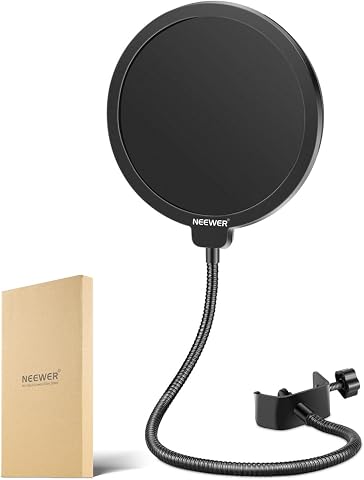
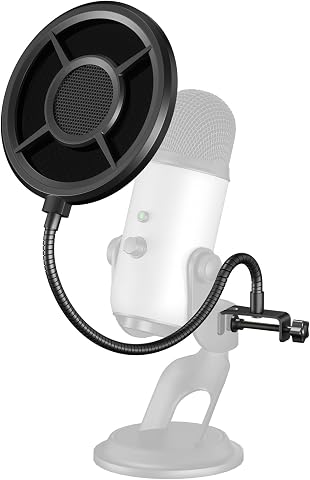
Essential accessories like pop filters, shock mounts, and mic stands can improve recording quality and protect your gear. Pop filters reduce plosive sounds, shock mounts minimize handling noise, and adjustable stands position your microphone optimally. While these add cost, they are often necessary for professional results, especially in vocal recording. Budgeting for these extras ensures a smoother recording process and better sound quality.
Conclusion
For those starting out or with a limited budget, the Audio-Technica AT2020USB-X offers reliable quality with plug-and-play convenience. Serious professionals aiming for studio-grade recordings should consider the Audio-Technica AT2035 for its detailed sound and durability. If your priority is streaming or podcasting, the Sennheiser Professional Profile provides a simple yet high-quality USB solution. Budget-conscious buyers will find the AKG P120 a solid entry point, while multi-purpose users may prefer the versatility of models like the FIFINE K688. The right choice depends on your specific needs, environment, and future growth plans.
Fall Picks
fall essentials
As an affiliate, we earn on qualifying purchases.