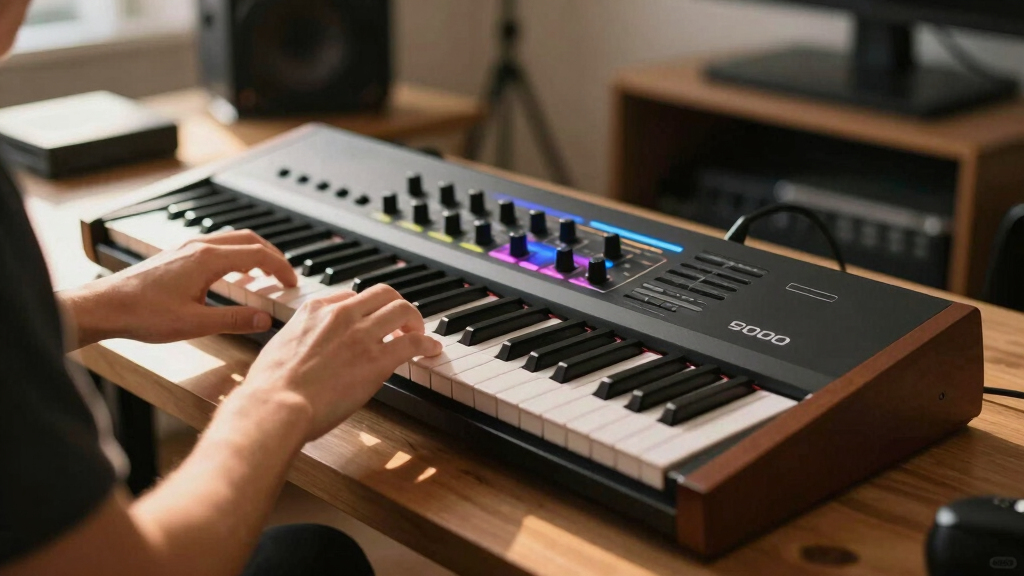
Finding the best synth workstation under $3000 in 2026 involves balancing power, usability, and value. The Yamaha MX61 stands out for its straightforward workflow and excellent sound quality, making it ideal for musicians seeking reliability without complexity. The Arturia MicroFreak offers a unique hybrid approach, perfect for experimental sound design on a budget. Meanwhile, Behringer’s PRO-800 provides classic analog character at a more accessible price point. As buyers face tradeoffs between features, interface, and portability, continuing reading will reveal how these options compare to help you make an informed choice.

Get audio and creator gear delivered free with Prime
- Fast, free delivery on millions of items
- Prime Video, Amazon Music and more included
- Member-only deals all year
Complete the kit

Key Takeaways
- The top-ranked synths combine sound quality with user-friendly interfaces, suitable for both studio and live use.
- Analog-style synths like Behringer models deliver classic tones but often lack modern digital features present in more advanced workstations.
- Hybrid and digital synths such as Arturia MicroFreak excel in versatility and experimental sound design, appealing to creative producers.
- Price-to-feature ratio varies significantly; some models offer more hands-on controls while others prioritize digital flexibility.
- Ease of use and build quality are consistent differentiators, with the best picks balancing these aspects without sacrificing sound or performance.
| Yamaha MX61 Music Production Synthesizer |  | Best Overall for Versatile Production and Performance | Connectivity: USB Audio/MIDI | Polyphony: 128 notes | Features: Motif Sound Engine, virtual circuit modeling, layer, zone, switch, cycle, randomize controls | VIEW LATEST PRICE | See Our Full Breakdown |
| Korg Kross 2-61 61-Key Synthesizer Workstation |  | Best for Versatile Sound Creation and Live Performance | Number of Keys: 61 | Sound Engine: EDS-i | Inputs: Mic/Line Inputs | VIEW LATEST PRICE | See Our Full Breakdown |
| Arturia MicroFreak Synthesizer Keyboard |  | Best for Experimental Sound Design in a Compact Form | Number of Keys: 25 | Special Features: Arpeggiator, Step Sequencer, Digital Oscillator Modes, State-Variable Filter, Touch-Plate Keyboard | Connectivity Technology: CV, USB, MIDI | VIEW LATEST PRICE | See Our Full Breakdown |
| Arturia MiniFreak 37-Key Polyphonic Hybrid Synthesizer Keyboard |  | Best for Versatile Sound and Creative Exploration | Number of Keys: 37 | Polyphony: 6 voices | Type: Hybrid synthesizer | VIEW LATEST PRICE | See Our Full Breakdown |
| Behringer MODEL D Authentic Analog Synthesizer |  | Best for Classic Analog Sound and Hands-On Synthesis | Number of VCOs: 3 | Filter Type: Ladder Filter | Format: Eurorack | VIEW LATEST PRICE | See Our Full Breakdown |
| Behringer PRO-800 Classic Analog 8-Voice Polyphonic Synthesizer |  | Best for Authentic Vintage Sound and Deep Programming | Voices: 8-voice polyphony | Oscillators per voice: 2 VCOs | Waveforms: saw, triangle, pulse | VIEW LATEST PRICE | See Our Full Breakdown |
| synth workstation under $3000 | Number of Keys |
|---|---|
| Yamaha MX61 Music Production S | — |
| Korg Kross 2-61 61-Key Synthes | 61 |
| Arturia MicroFreak Synthesizer | 25 |
| Arturia MiniFreak 37-Key Polyp | 37 |
| Behringer MODEL D Authentic An | — |
| Behringer PRO-800 Classic Anal | — |
More Details on Our Top Picks
Yamaha MX61 Music Production Synthesizer
The Yamaha MX61 stands out for its powerful Motif sound engine, offering a broad palette of tones suitable for both studio work and live gigs. Compared with the Korg Kross 2-61, it provides more authentic sounds and a richer effects suite, making it ideal for musicians who prioritize sound quality and flexibility. Its 128-note polyphony ensures smooth layering and complex performances without dropouts, a key advantage over simpler models. The USB audio/MIDI connectivity makes recording straightforward, though it lacks detailed onboard controls or advanced editing features, which might be a drawback for users seeking extensive hands-on editing. This makes the MX61 a strong choice for performers and producers who want professional-grade sounds without sacrificing ease of use.
Pros:- Rich Motif sound engine with extensive effects
- 128-note polyphony for complex layers
- Seamless USB audio/MIDI connectivity
- Supports stereo audio and MIDI recording
Cons:- Limited onboard controls and interface details
- No onboard effects or advanced editing options
Best for: Professional musicians and producers needing a versatile, high-quality synth for both live and studio use.
Not ideal for: Beginners or hobbyists who prefer a straightforward interface or a more portable, lightweight keyboard.
- Connectivity:USB Audio/MIDI
- Polyphony:128 notes
- Features:Motif Sound Engine, virtual circuit modeling, layer, zone, switch, cycle, randomize controls
- Audio Recording:Stereo audio and 16 channels of MIDI via USB
Our verdict“This synth works best for experienced performers and producers seeking professional sounds and versatile connectivity in a reliable package.”
Korg Kross 2-61 61-Key Synthesizer Workstation
The Korg Kross 2-61 offers a balanced blend of sound quality and performance features tailored to live musicians. Its 61-key synth-action keyboard makes it more expressive than the smaller MicroFreak, while the onboard MIDI sequencers and multiple audio inputs expand creative possibilities. Compared to the Arturia MicroFreak, which excels in experimental sound design, the Kross 2 provides a more traditional performance experience with more straightforward editing and playability. While it lacks a built-in display or advanced editing features, its high-quality sound engine and multiple inputs make it a reliable choice for gigs and studio sessions. This model is ideal for keyboard players who need a versatile, all-in-one workstation that balances sound quality with performance features.
Pros:- High-quality EDS-i sound engine
- Includes MIDI sequencers and multiple audio inputs
- 61-key synth-action for expressive playing
- Good balance of performance and production features
Cons:- Limited to 61 keys, which may restrict piano-style playing
- Lack of a dedicated onboard display for editing
Best for: Musicians seeking a portable, versatile workstation for live performance and studio production.
Not ideal for: Advanced sound designers or producers needing detailed editing or onboard effects, as these are limited in this model.
- Number of Keys:61
- Sound Engine:EDS-i
- Inputs:Mic/Line Inputs
- Model Name:KROSS261MB
- Warranty:1 year
Our verdict“This workstation suits performers who want a reliable, portable setup with versatile sound and input options for both stage and studio.”
Arturia MicroFreak Synthesizer Keyboard
The Arturia MicroFreak is a unique hybrid synthesizer that emphasizes experimental and hybrid sound creation. Its 17 oscillator modes and digital hybrid engine produce a wide range of textures, making it ideal for sound designers and adventurous musicians. Compared with the MiniFreak, which offers more polyphony and an intuitive interface, the MicroFreak’s compact size and flat PCB keyboard may feel less responsive but promote portability and versatility in studio setups. Its extensive connectivity, including CV and USB, supports integration with modular systems, giving it an edge for experimental setups. However, the limited number of keys and a steeper learning curve might deter beginners. This is best suited for users who want a portable, flexible synth with advanced modulation and sequencing options.
Pros:- Versatile oscillator modes and hybrid synthesis
- Compact and portable design
- Extensive connectivity including CV, USB, and MIDI
- Advanced sequencing and modulation features
Cons:- Limited number of keys may restrict performance style
- Learning curve for complex features
Best for: Advanced musicians and sound designers looking for a portable hybrid synth with extensive connectivity and modulation features.
Not ideal for: Beginners or performers requiring a full 88-key piano feel or straightforward operation, as the flat PCB keyboard may be less tactile.
- Number of Keys:25
- Special Features:Arpeggiator, Step Sequencer, Digital Oscillator Modes, State-Variable Filter, Touch-Plate Keyboard
- Connectivity Technology:CV, USB, MIDI
- Supported Software:Multiple DAWs
- Size:12.2 x 9.2 x 2.2 inches
- Weight:2.3 pounds
Our verdict“Ideal for experimental sound creation and hybrid synthesis in portable setups, especially for seasoned users comfortable with advanced features.”
Arturia MiniFreak 37-Key Polyphonic Hybrid Synthesizer Keyboard
The Arturia MiniFreak offers a compelling mix of polyphony and hybrid synthesis in a compact 37-key format. Its 6-voice polyphony and intuitive interface make it accessible for musicians eager to explore diverse sonic landscapes without a steep learning curve. Compared with the MicroFreak, the MiniFreak provides more polyphony and a more traditional keyboard feel, making it suitable for both performance and music production. Its straightforward controls promote quick sound design, although the limited keys might restrict piano-style playing. For those seeking a versatile, portable synth that balances ease of use with creative potential, the MiniFreak hits the sweet spot. This model is perfect for musicians wanting a flexible, portable synth that encourages experimentation.
Pros:- Polyphony of 6 voices for rich textures
- Hybrid synthesis with flexible sound design
- Intuitive interface for quick exploration
- Compact and portable design
Cons:- Limited to 37 keys, restricting performance styles
- Lack of detailed specifications in the available data
Best for: Musicians wanting a portable, versatile hybrid synth with a good balance of polyphony and ease of use.
Not ideal for: Pianists or performers needing full-range keyboards or extensive keybeds, as the 37 keys may limit performance styles.
- Number of Keys:37
- Polyphony:6 voices
- Type:Hybrid synthesizer
Our verdict“This synth suits creative musicians looking for a portable, flexible hybrid instrument with a straightforward interface.”
Behringer MODEL D Authentic Analog Synthesizer
The Behringer MODEL D delivers authentic analog warmth through its three VCOs, ladder filter, and versatile modulation options. Its classic circuitry makes it a favorite among producers seeking rich, fat sounds reminiscent of the original Minimoog. Compared with digital options like the MicroFreak or Kross 2, the MODEL D offers a tactile, hands-on synthesis experience, perfect for those who prefer to shape sounds through physical knobs and switches. However, its analog nature means it lacks digital connectivity and advanced preset management, and it can be intimidating for beginners without prior synthesis knowledge. For seasoned sound designers or producers dedicated to analog sound, this model offers unmatched character. This is a top pick for users who prioritize authentic, warm analog tones and hands-on control over digital convenience.
Pros:- Authentic analog sound reproduction
- Three VCOs with multiple oscillator shapes
- High-quality components and build
- Rich modulation options
Cons:- Complex for users unfamiliar with analog synthesis
- Limited digital features and preset storage
Best for: Experienced producers and sound designers seeking rich, classic analog synth tones and hands-on control.
Not ideal for: Beginners or digital producers who want extensive connectivity or preset storage, as the MODEL D is more straightforward and less digital-friendly.
- Number of VCOs:3
- Filter Type:Ladder Filter
- Format:Eurorack
- Oscillator Shapes:5
- Control:LFO
Our verdict“This synthesizer is ideal for users focused on creating classic, warm analog sounds with tactile hands-on control and deep modulation capabilities.”
Behringer PRO-800 Classic Analog 8-Voice Polyphonic Synthesizer
The Behringer PRO-800 stands out for its authentic analog architecture, offering rich, fat tones that rival higher-end vintage synths. Compared to the Arturia MiniFreak, which emphasizes hybrid digital-analog hybrid versatility and easier accessibility, the PRO-800 provides a more traditional, fully analog experience with extensive programmability—thanks to its 400 preset memories. However, its Eurorack format and complex controls can be daunting for newcomers, unlike the more straightforward layout of the MiniFreak. This synth is ideal for sound designers and vintage synth enthusiasts who want classic warmth and deep sound-shaping possibilities, but less so for beginners seeking immediate, simple operation. While it offers 8-voice polyphony with 2 VCOs per voice and a range of waveforms including saw, triangle, and pulse, it lacks detailed specifications on filter design and modulation options, which could influence its versatility.
Pros:- Authentic analog sound reproduction with rich, fat tones
- Multiple oscillator shapes for versatile sound design
- Extensive programmability with 400 preset memories
- Unison mode and arpeggiator for performance flexibility
Cons:- Limited detailed specs on filter and modulation options
- Potentially complex interface for users new to Eurorack synthesis
Best for: Producers and sound designers craving authentic analog tones with extensive programmability in a Eurorack format
Not ideal for: Beginners or users preferring plug-and-play interfaces without complex patching or programming
- Voices:8-voice polyphony
- Oscillators per voice:2 VCOs
- Waveforms:saw, triangle, pulse
- Features:Unison mode, arpeggiator, sequencer, 400 program memories
- Format:Eurorack
Our verdict“This synth makes the most sense for experienced synthesists who prioritize authentic analog sound and deep programming capabilities over ease of use.”

How We Picked
We evaluated synth workstations under $3000 based on a combination of performance, sound quality, user interface, build durability, and feature set. Priority was given to versatility, especially for different music styles and production environments, as well as ease of integration into existing setups. We compared each option’s value for the price, considering whether they offer a good balance of modern features and classic sounds. Our rankings reflect how well each synth serves both professional and semi-professional users, with a focus on long-term usability and unique strengths.Factors to Consider When Choosing Best Synth Workstation Under $3000
Choosing the best synth workstation under $3000 requires understanding your specific needs and how various features translate into real-world benefits. Beyond raw sound quality, consider how intuitive the interface is, whether the synth offers enough control options, and if its build can withstand your performance environment. Budgeting for future expandability, portability, and integration with other gear also matters. Being aware of common pitfalls—like overpaying for unnecessary features or choosing a complex interface that hampers workflow—can save you time and money. This guide highlights key factors to help you make a confident choice.Sound Quality and Oscillator Options
Sound quality is the core of any synth workstation. Look for models that offer a wide range of high-quality presets, or the ability to craft your own sounds with multiple oscillator types. Analog-style oscillators provide warmth and character, while digital oscillators excel in versatility and modern sound design. Consider whether the synth supports layering, splitting, and real-time modulation, which can add depth and expressiveness to your music. Keep in mind that more complex oscillator options may come with a steeper learning curve but offer greater creative potential.
User Interface and Workflow
An intuitive interface accelerates your workflow and reduces frustration. Physical knobs, sliders, and dedicated controls are preferable for live tweaking, while menus and screens suit detailed editing. Check if the synth offers comprehensive control over parameters directly accessible during performance or production. A cluttered or unintuitive layout can hinder creativity, especially during live sessions. The best models strike a balance—providing enough control for detailed editing without overwhelming the user, making them suitable for both beginners and advanced users.
Connectivity and Integration
Ensure the synth has ample connectivity options—MIDI, USB, audio outputs, and CV/gate if you plan to integrate with modular gear or other instruments. Compatibility with your DAW or hardware setup can streamline your workflow and expand creative possibilities. Some models include built-in audio interfaces, reducing the need for additional gear. Consider whether the synth supports external control via MIDI controllers, which can enhance live performance and studio flexibility. Connectivity features often determine how well the synth fits into your existing or future setup.
Build Quality and Portability
Durability matters, especially if you’ll take the synth on the road or use it in a busy studio. Look for sturdy construction materials and reliable buttons and knobs. Portability can be a deciding factor if you perform live frequently or move gear often; compact and lightweight models provide more flexibility. Be aware that some budget-friendly options may compromise on build quality, leading to potential issues with longevity. Balancing build with feature set ensures your investment remains reliable over the years.
Future-proofing and Expandability
Consider whether the synth allows for future upgrades or expansion, such as adding new sounds, connecting to external modules, or updating firmware. Features like USB audio or MIDI over USB can keep your setup current without needing new hardware. Also, check if the synth’s architecture supports software updates, which can add new features down the line. Investing in a model with expandability options ensures your gear stays relevant as your production needs evolve.
Frequently Asked Questions
Can I use a synth workstation under $3000 for professional music production?
Absolutely. Many synth workstations in this price range deliver professional-grade sounds, extensive control options, and reliable performance. They often include features like multi-layered sounds, comprehensive connectivity, and high-quality build, making them suitable for studio work, live performances, or both. The key is to choose a model that aligns with your specific workflow and sound preferences, rather than just focusing on price. With careful selection, you can assemble a versatile and capable setup that meets professional standards.
Are analog synths worth the extra investment over digital options in this price range?
Analog synths generally offer a richer, warmer sound that many producers find more expressive for certain styles. They also tend to have a hands-on interface that makes real-time tweaking more intuitive. However, digital synths provide a broader range of sounds, more complex modulation, and often better integration with modern DAWs at a similar price point. Your choice depends on whether you prioritize classic tone and tactile control or versatility and digital flexibility. Both can be valuable, but analog models often justify higher investment for dedicated analog sound seekers.
Is it better to buy a hybrid synth or a fully digital workstation in this category?
Hybrid synths, which blend analog and digital elements, offer a balance of warmth and versatility, making them appealing for a wide range of sounds. Fully digital workstations tend to provide more features, presets, and advanced editing capabilities, ideal for detailed sound design or studio use. Your decision should depend on your workflow: hybrids suit those who want a tactile experience with some classic character, while digital workstations are better for users needing maximum flexibility and programmability. Both options can serve different creative needs effectively.
What are common mistakes to avoid when choosing a synth workstation under $3000?
One common mistake is prioritizing features over usability, leading to a complex setup that hampers creativity. Another is overlooking the importance of build quality, which can result in gear that doesn’t withstand regular use or travel. It’s also easy to focus solely on sounds and forget about connectivity or interface considerations that impact workflow. Lastly, buying based solely on brand reputation without assessing whether the specific model fits your needs can lead to dissatisfaction. Carefully aligning features with actual use scenarios prevents these pitfalls.
Should I consider future expandability when choosing a synth under $3000?
Yes, choosing a synth with expandability in mind can extend its usefulness over time. Features like USB connectivity, support for external modulation sources, and firmware updates allow your gear to evolve with your production needs. If you plan to incorporate modular gear or additional hardware, ensure compatibility. While initial investment is important, future-proofing your setup prevents the need for frequent upgrades and ensures your synth remains relevant as your skills and projects grow.
Conclusion
For most users, the Yamaha MX61 offers a solid balance of quality, ease of use, and reliability, making it the best overall choice. Those seeking the most value for experimental sound design might prefer the Arturia MicroFreak due to its hybrid architecture and unique features. If your priority is capturing classic analog tones, the Behringer PRO-800 delivers authentic character at a more accessible price point. Beginners should consider models with intuitive controls and straightforward workflows, while professionals might lean toward options with extensive connectivity and editing capabilities. This lineup ensures there’s a suitable synth workstation for every type of buyer under $3000 in 2026.
Halloween Picks
halloween
As an affiliate, we earn on qualifying purchases.