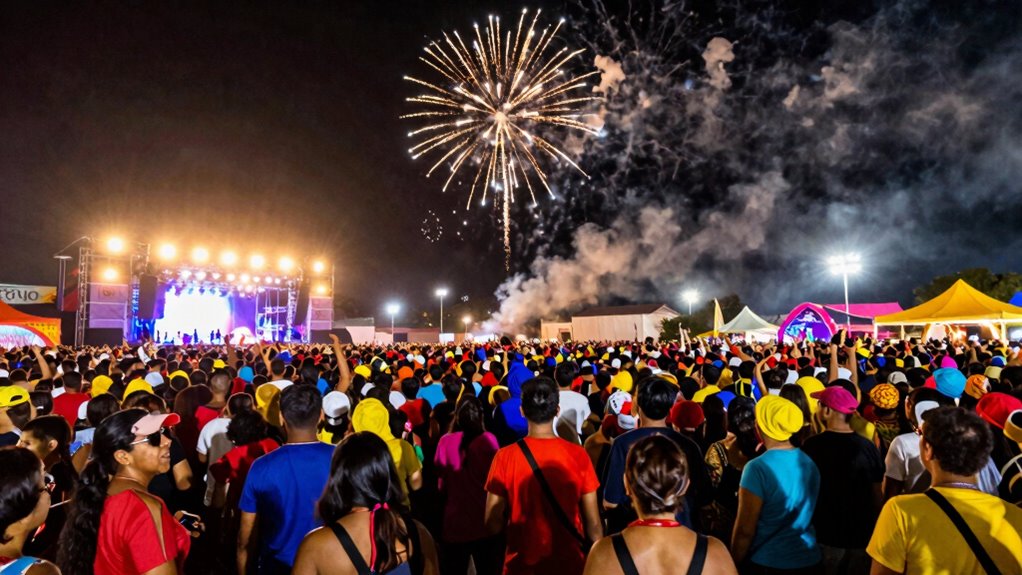
For a wide-angle lens for crowd shots at festivals, I’d put the Sigma 10-18mm f/2.8 DC DN Contemporary for Sony E first for its bright aperture and useful zoom range. The Sony E 11mm f/1.8 is a standout for dim stages and fast-moving scenes, while the Canon RF-S 10-18mm offers flexible framing in a compact package for compatible Canon mirrorless cameras. The main tradeoff is between a bright lens that helps after dark and a zoom that makes it easier to frame crowds without moving through people. Camera mount, sensor format, and how much distortion you can accept also shape the choice. Read on for the full breakdown and picks for different festival setups.

Get audio and creator gear delivered free with Prime
- Fast, free delivery on millions of items
- Prime Video, Amazon Music and more included
- Member-only deals all year
Complete the kit


Key Takeaways
- The Sigma 10-18mm f/2.8 for Sony E leads this lineup by pairing a bright constant aperture with zoom flexibility, a useful combination for changing crowd distances and evening sets.
- Fast primes suit low-light moments but give up framing flexibility: the Sony 11mm f/1.8 is the brightest APS-C option listed, while the Canon RF 16mm f/2.8 is a compact full-frame prime for Canon RF users.
- Ultra-wide does not always mean better crowd coverage. The Viltrox 9mm and Rokinon 14mm offer very broad views, but close faces near the frame edges can look stretched.
- Some picks are system-specific, not interchangeable alternatives: mount and sensor compatibility rule out several lenses before focal length or aperture enters the decision.
- Older DSLR zooms can cover useful focal ranges, but their slower apertures favor daylight. Nikon’s 10-20mm VR and 10-24mm DX, plus Sigma’s 10-20mm f/3.5 for Canon DSLR, trade low-light speed for zoom versatility.
| Canon RF-S10-18mm F4.5-6.3 IS STM Lens |  | Best Compact Zoom for Canon RF-S | Focal length: 10-18mm | Maximum aperture: f/4.5-6.3 | Mount: Canon RF | VIEW ON AMAZON | See Our Full Breakdown |
| VILTROX 20mm f/2.8 FE Full Frame AF Lens for Sony e-Mount |  | Best Lightweight Sony Full-Frame Prime | Focal length: 20mm | Maximum aperture: f/2.8 | Mount: Sony E | VIEW ON AMAZON | See Our Full Breakdown |
| Nikon 10-24mm f/3.5-4.5G ED AF-S DX Nikkor Wide-Angle Zoom Lens for Nikon Digital SLR Cameras |  | Best Framing Range for Nikon DSLR | Focal length: 10-24mm | Maximum aperture: f/3.5-4.5 | Mount and format: Nikon DX DSLR | VIEW ON AMAZON | See Our Full Breakdown |
| Viltrox AF 9mm F2.8 Air APS-C Lens for Fujifilm X-Mount |  | Best Ultra-Wide for Fujifilm X | Focal length: 9mm | Maximum aperture: f/2.8 | Minimum aperture: f/16 | VIEW ON AMAZON | See Our Full Breakdown |
| Rokinon FE14M-C 14mm F2.8 Ultra Wide Lens for Canon |  | Best Manual-Focus Low-Light Option | Focal length: 14mm | Maximum aperture: f/2.8 | Mount: Canon EF | VIEW ON AMAZON | See Our Full Breakdown |
| Canon RF 16mm F2.8 STM Lens |  | Best Compact Low-Light Prime | Focal length: 16mm | Maximum aperture: f/2.8 | Mount: Canon RF | VIEW ON AMAZON | See Our Full Breakdown |
| Sigma 10-20mm f/3.5 EX DC HSM ELD SLD Super Wide Angle Lens for Canon Digital SLR Cameras |  | Best for Canon DSLR Framing Flexibility | Focal length: 10-20mm | Maximum aperture: f/3.5 | Lens design: Zoom | VIEW ON AMAZON | See Our Full Breakdown |
| Sigma 10-18mm F2.8 DC DN Contemporary Lens for Sony E with Accessories Bundle |  | Best Festival Zoom Bundle | Focal length: 10-18mm | Aperture: f/2.8 | Mount: Sony E | VIEW ON AMAZON | See Our Full Breakdown |
| Sony E 11mm F1.8 APS-C Ultra-Wide-Angle Prime Lens for Cameras, Black |  | Best for Dim Stages | Focal length: 11mm | Maximum aperture: f/1.8 | Minimum aperture: f/16 | VIEW ON AMAZON | See Our Full Breakdown |
| Nikon AF-P DX NIKKOR 10-20mm f/4.5-5.6G VR Lens Black |  | Best Stabilized Nikon DX Zoom | Focal length: 10-20mm | Maximum aperture: f/4.5-5.6 | Mount: Nikon F | VIEW ON AMAZON | See Our Full Breakdown |
| wide angle lens for crowd shots at festival | Focal length | Maximum aperture | Mount | Filter size |
|---|---|---|---|---|
| Canon RF-S10-18mm F4.5-6.3 IS | 10-18mm | f/4.5-6.3 | Canon RF | 49mm |
| VILTROX 20mm f/2.8 FE Full Fra | 20mm | f/2.8 | Sony E | — |
| Nikon 10-24mm f/3.5-4.5G ED AF | 10-24mm | f/3.5-4.5 | — | — |
| Viltrox AF 9mm F2.8 Air APS-C | 9mm | f/2.8 | Fujifilm X | — |
| Rokinon FE14M-C 14mm F2.8 Ultr | 14mm | f/2.8 | Canon EF | — |
| Canon RF 16mm F2.8 STM Lens | 16mm | f/2.8 | Canon RF | 43mm |
| Sigma 10-20mm f/3.5 EX DC HSM | 10-20mm | f/3.5 | Canon EF | 8.2 cm |
| Sigma 10-18mm F2.8 DC DN Conte | 10-18mm | — | Sony E | 67mm |
| Sony E 11mm F1.8 APS-C Ultra-W | 11mm | f/1.8 | Sony E | 5.5 cm |
| Nikon AF-P DX NIKKOR 10-20mm f | 10-20mm | f/4.5-5.6 | Nikon F | 72mm |
More Details on Our Top Picks
Canon RF-S10-18mm F4.5-6.3 IS STM Lens
For Canon RF-S shooters who want to fit a wide stage and a packed foreground into one frame, the 10-18mm range gives more framing flexibility than the fixed-focal-length Viltrox 20mm f/2.8 FE. At the widest setting, the 100-degree diagonal view can help include more of a crowd when you cannot step back. Its 210g build and image stabilization also suit long festival days, particularly for handheld stills and video. The compromise is its f/4.5-6.3 maximum aperture: it gathers less light than the f/2.8 options here, which can make dim evening sets more challenging. It is best for daytime and well-lit stages, not a weather-sealed, night-focused setup.
Pros:- 10-18mm zoom gives framing options for tight venues and broad crowd scenes
- Optical image stabilization supports steadier handheld shots
- Approx. 210g weight is easy to carry through a festival
- 100-degree diagonal view at the wide end captures a broad scene
Cons:- f/4.5-6.3 aperture is less suited to dim stages than the f/2.8 lenses
- Short zoom range offers less reach than the Nikon 10-24mm
- No weather resistance is specified
Best for: Canon RF-S mirrorless owners who want a light, stabilized zoom to frame crowds and stages in changing daytime conditions.
Not ideal for: Festival shooters working mainly after dark or in rain, since the variable f/4.5-6.3 aperture limits low-light flexibility and no weather resistance is specified.
- Focal length:10-18mm
- Maximum aperture:f/4.5-6.3
- Mount:Canon RF
- Image stabilization:Yes
- Diagonal angle of view:100 degrees
- Focus:Auto/Manual
- Filter size:49mm
- Weight:Approx. 210g
Our verdict“Choose this if you use a Canon RF-S camera and value a portable stabilized zoom more than strong low-light performance.”
VILTROX 20mm f/2.8 FE Full Frame AF Lens for Sony e-Mount
The 157g weight makes this VILTROX an easy lens to keep mounted while moving through a festival, and its f/2.8 aperture offers more low-light latitude than the Canon RF-S 10-18mm at its widest setting. Its 20mm focal length suits crowd scenes when you want a wide environmental view without going to an extreme perspective. That fixed framing is also its main limitation: compared with the Nikon 10-24mm, there is no zoom to quickly widen the composition or tighten it around a stage. The supplied information highlights fast autofocus and near-silent operation, useful for candid moments and video, but does not provide an angle-of-view figure. This is a compact choice for Sony E shooters who favor low weight and a simple prime over framing flexibility.
Pros:- 157g weight is especially portable for all-day festival use
- f/2.8 aperture offers more light than the Canon RF-S 10-18mm at its widest setting
- Autofocus is described as fast for moving subjects
- Near-silent operation suits discreet video recording
Cons:- Fixed 20mm focal length cannot reframe like the Nikon 10-24mm zoom
- Less expansive framing than the 9mm Viltrox for very wide crowd scenes
- 0.17x maximum magnification is limited for close-up details
Best for: Sony E-mount photographers who want a lightweight full-frame wide prime for candid festival scenes and handheld video.
Not ideal for: Shooters who need to adjust framing quickly in dense crowds, or who want an ultra-wide zoom to capture a broad stage and audience together.
- Focal length:20mm
- Maximum aperture:f/2.8
- Mount:Sony E
- Format:Full frame
- Minimum focus distance:0.19m
- Maximum magnification:0.17x
- Weight:157g
- Optical construction:10 elements in 8 groups
Our verdict“Pick this for a light Sony full-frame setup when a 20mm view and f/2.8 aperture matter more than zoom flexibility.”
Nikon 10-24mm f/3.5-4.5G ED AF-S DX Nikkor Wide-Angle Zoom Lens for Nikon Digital SLR Cameras
The Nikon’s 10-24mm zoom range is the most adaptable option here for a Nikon DSLR shooter moving between a packed audience, a stage, and wider venue views. At 10mm, its stated 109-degree angle of view can take in a broad crowd; extending toward 24mm gives more control when an ultra-wide composition feels too expansive. That makes it more flexible than the fixed 14mm Rokinon, though the Rokinon’s f/2.8 aperture has an advantage for dim sets. The Nikon’s f/3.5-4.5 maximum aperture is not especially bright, and the lens is limited to Nikon DSLR cameras. I would favor it for daytime events and varied framing, rather than for a mirrorless kit or a festival dominated by dark performances.
Pros:- 10-24mm range adapts to changing crowd and stage compositions
- 109-degree angle of view at the wide end captures broad scenes
- Fast, quiet autofocus supports candid moments
- Close focusing distance of 0.8 feet allows foreground details to fill the frame
Cons:- Designed for Nikon DSLR cameras, limiting compatibility
- f/3.5-4.5 aperture is less suited to dim stages than the f/2.8 primes
- No image stabilization is listed in the supplied specifications
Best for: Nikon DSLR owners who need one wide zoom to cover audience scenes, venue views, and tighter stage framing during daylight.
Not ideal for: Mirrorless users or photographers whose festival shooting is mostly at night and calls for a brighter aperture like the Rokinon’s f/2.8.
- Focal length:10-24mm
- Maximum aperture:f/3.5-4.5
- Mount and format:Nikon DX DSLR
- Angle of view:109 to 61 degrees
- Close focusing distance:0.8 feet
- Autofocus:AF-S SWM
- Filter type:Screw-on
Our verdict“Choose this Nikon DSLR zoom for versatile festival framing when daylight flexibility matters more than a fast aperture.”
Viltrox AF 9mm F2.8 Air APS-C Lens for Fujifilm X-Mount
When the goal is to show the scale of a crowd rather than isolate one section, this Fujifilm X-mount Viltrox brings the widest stated angle of view here: 113.8 degrees. Its 9mm focal length can include a broad audience from close to the action, while the f/2.8 aperture gives it a low-light advantage over the Canon RF-S 10-18mm and Nikon 10-24mm zooms. The price of that expansive view is a fixed focal length: unlike those zooms, it cannot tighten the composition if the stage or crowd arrangement changes. At 175g, it remains easy to carry, and the listed silent autofocus helps with video. No weather sealing is specified, so it is a better fit for dry conditions than unpredictable outdoor festivals.
Pros:- 113.8-degree angle of view is well suited to broad crowd scenes
- f/2.8 maximum aperture is brighter than the listed Canon and Nikon zooms
- 175g weight makes it practical to carry all day
- Silent autofocus supports video and candid shooting
Cons:- Fixed 9mm focal length cannot tighten framing like the Nikon 10-24mm
- No weather sealing information is provided
- Firmware updates require a USB-C connection
Best for: Fujifilm X APS-C shooters who want to capture an especially broad crowd or venue view with a bright, portable lens.
Not ideal for: Photographers who need zoom flexibility or documented weather protection for outdoor festival conditions.
- Focal length:9mm
- Maximum aperture:f/2.8
- Minimum aperture:f/16
- Mount:Fujifilm X
- Angle of view:113.8 degrees
- Minimum focusing distance:0.13m
- Focus type:Auto/Manual
- Weight:175g
Our verdict“Pick this for a Fujifilm X camera when maximum scene coverage and f/2.8 matter more than zoom versatility.”
Rokinon FE14M-C 14mm F2.8 Ultra Wide Lens for Canon
The Rokinon pairs a 14mm focal length and f/2.8 aperture for Canon EF shooters who need a wide view with more light-gathering ability than the Canon RF-S 10-18mm. Its stated 115.7-degree angle of view is especially broad for crowd scenes, while the fast aperture can help when the festival moves into dimmer conditions. Unlike the autofocus VILTROX 20mm, this lens is manual focus only, so fast-moving performers or shifting subjects demand more deliberate focusing. At 900g, it is also substantially heavier than the compact mirrorless options in this group, and no stabilization is listed. I would choose it for deliberate compositions and low-light wide shots, not for quick, lightweight coverage while weaving through a crowd.
Pros:- 115.7-degree angle of view covers expansive festival scenes
- f/2.8 maximum aperture offers more low-light flexibility than the Canon RF-S zoom
- Manual focus supports deliberate control over focus placement
- Closest focus distance of 10.8 inches allows nearby crowd details in the composition
Cons:- Manual focus can slow response to moving performers and crowds
- 900g weight is heavy compared with the 157g VILTROX 20mm
- No image stabilization is listed
Best for: Canon EF photographers who prioritize a broad view and f/2.8 aperture for deliberate festival crowd and stage images.
Not ideal for: Shooters who need autofocus for fast action, stabilization for handheld video, or a lightweight lens for long periods in dense crowds.
- Focal length:14mm
- Maximum aperture:f/2.8
- Mount:Canon EF
- Angle of view:115.7 degrees
- Focus type:Manual
- Closest focus distance:10.8 inches
- Weight:900g
- Dimensions:6.0 x 3.5 x 3.7 inches
Our verdict“Choose the Rokinon if you shoot Canon EF and want a bright, very wide manual-focus lens, but skip it for fast action or lightweight video.”
Canon RF 16mm F2.8 STM Lens
For Canon EOS R shooters who want a broad festival crowd frame without carrying a zoom, the RF 16mm f/2.8 keeps the kit compact and gives you a brighter aperture than the Nikon AF-P DX 10-20mm’s f/4.5-5.6 range. Its 108-degree field of view can fit a sizable group when you can’t step farther back, while f/2.8 is useful as daylight fades. The fixed focal length means you must move to change composition, which can be awkward in a packed audience; the Sigma 10-18mm f/2.8 offers framing flexibility for Sony E shooters. I’d choose this Canon prime for a light, simple setup, not for weather-exposed shooting: it has no stated weather resistance and only digital stabilization.
Pros:- Compact, lightweight design is easy to carry through a crowded venue.
- f/2.8 aperture helps when ambient light drops.
- 108-degree field of view can include a broad crowd from close range.
- Smooth, quiet autofocus suits video and vlogging.
Cons:- Prime design offers no focal-length adjustment when movement is restricted.
- No water resistance is specified for outdoor festival conditions.
- Digital stabilization is not a substitute for optical lens stabilization.
Best for: Canon EOS R owners who want a compact, bright wide lens for crowd scenes and festival clips in changing light.
Not ideal for: Photographers who need to reframe quickly from the same spot, or who expect to shoot in rain and want weather protection.
- Focal length:16mm
- Maximum aperture:f/2.8
- Mount:Canon RF
- Field of view:108 degrees
- Minimum focusing distance:5.11 inches
- Magnification:0.26x
- Filter size:43mm
- Stabilization:Digital
Our verdict“Choose this if you shoot Canon EOS R and value a lightweight f/2.8 prime over zoom flexibility.”
Sigma 10-20mm f/3.5 EX DC HSM ELD SLD Super Wide Angle Lens for Canon Digital SLR Cameras
The Sigma 10-20mm f/3.5 is the Canon DSLR pick for festival-goers who want to adjust their framing without changing lenses. At 10mm, it can pull a nearby crowd into the frame; at 20mm, it gives a less expansive view that can keep edge distortion and unwanted foreground to a minimum. Its constant f/3.5 aperture holds exposure steady as you zoom, though it gathers less light than the Canon RF 16mm f/2.8 or Sony E 11mm f/1.8. That difference matters after sunset, when a wider aperture can help keep shutter speeds up. This lens is limited to Canon EF-mount cameras, has no image stabilization, and the supplied compatibility list includes specific DSLRs, so check your body before buying.
Pros:- 10-20mm zoom range allows reframing without changing position.
- Constant f/3.5 maximum aperture keeps exposure consistent across the zoom range.
- Petal-type hood is included.
- Auto and manual focus options give users control over focusing.
Cons:- f/3.5 is less suited to dim stages than the Canon RF 16mm f/2.8 or Sony E 11mm f/1.8.
- No image stabilization is specified for handheld video or slower shutter speeds.
- Canon EF mount limits use to compatible camera bodies.
Best for: Canon EF DSLR owners who need a versatile wide-to-ultra-wide zoom for daytime crowd scenes and changing compositions.
Not ideal for: Festival shooters working mostly after dark, or Canon mirrorless users without a compatible EF setup.
- Focal length:10-20mm
- Maximum aperture:f/3.5
- Lens design:Zoom
- Mount:Canon EF
- Focus type:Auto and manual
- Image stabilization:No
- Diaphragm blades:7
- Filter size:8.2 cm
Our verdict“Pick this for a compatible Canon DSLR when flexible daytime framing matters more than low-light reach.”
Sigma 10-18mm F2.8 DC DN Contemporary Lens for Sony E with Accessories Bundle
For Sony E-mount APS-C shooters, this bundle pairs a useful 10-18mm range with a constant f/2.8 aperture, making it a flexible choice when crowd distance and light both change. The wide end helps gather a packed audience into the frame; zooming toward 18mm can make a shot feel less exaggerated than a very wide prime such as the Sony E 11mm f/1.8. That prime is brighter at f/1.8, but it cannot zoom out of a tight composition. The included UV filter, backpack, and 64GB card may be handy for a festival kit, though they do not change the lens’s optical performance and may add items you already own. The supplied data does not specify stabilization or a full compatibility list, so check your camera and handheld video needs before choosing it.
Pros:- 10-18mm zoom range adapts to different crowd distances and compositions.
- Constant f/2.8 aperture offers more light than the Nikon AF-P DX 10-20mm’s f/4.5-5.6 range.
- Bundle includes a UV protector filter, backpack, and 64GB SDXC card.
- 7.1-inch minimum focusing distance supports close foreground details alongside crowd scenes.
Cons:- Included accessories may be redundant for photographers who already have a bag, filter, and card.
- Image stabilization is not specified in the supplied product data.
- The lens mount and sensor-format compatibility should be checked against the intended camera body.
Best for: Sony E-mount APS-C users who want a bright wide zoom and need a bundled bag, filter, and memory card for festival outings.
Not ideal for: Sony shooters who already own suitable accessories, need confirmed lens stabilization, or prefer the brightest possible prime for dim stages.
- Focal length:10-18mm
- Aperture:f/2.8
- Mount:Sony E
- Minimum focusing distance:7.1 inches
- Filter size:67mm
- Included memory card:64GB SDXC
Our verdict“Choose this Sony E zoom if you want f/2.8 flexibility and will use the bundled accessories.”
Sony E 11mm F1.8 APS-C Ultra-Wide-Angle Prime Lens for Cameras, Black
When festival crowds continue into low light, the Sony E 11mm f/1.8 stands out for its brightest aperture in this group. That f/1.8 rating gives it an advantage over the Sigma 10-18mm f/2.8 when you need a faster shutter speed to keep moving people sharp. Its 104-degree field of view is broad enough for tight audience settings, while the fixed 11mm perspective keeps the kit simple and compact. The tradeoff is that you cannot zoom to refine a frame, unlike the Sigma, and this lens is for Sony APS-C E-mount cameras, not full-frame bodies. The supplied data lists optical stabilization, though the product description also flags no built-in stabilization; confirm stabilization behavior for your camera and setup before relying on it for handheld video.
Pros:- f/1.8 aperture is brighter than the f/2.8 Sigma 10-18mm zoom and helps in low light.
- 104-degree field of view fits broad crowd scenes from close positions.
- Compact design is suited to carrying through crowded venues.
- Fast, quiet autofocus supports both stills and video.
Cons:- Fixed 11mm focal length offers no framing adjustment without moving.
- Compatible only with Sony APS-C E-mount cameras according to the supplied data.
- Stabilization information is inconsistent in the product data, so buyers should verify support for their setup.
Best for: Sony APS-C shooters who prioritize a bright aperture for dim stages, evening crowd portraits, and handheld festival clips.
Not ideal for: Full-frame Sony owners, or photographers who need zoom flexibility to reframe from within a dense audience.
- Focal length:11mm
- Maximum aperture:f/1.8
- Minimum aperture:f/16
- Field of view:104 degrees
- Mount:Sony E
- Compatible cameras:Sony APS-C E-mount cameras
- Filter size:5.5 cm
- Diaphragm blades:7
Our verdict“Choose this prime for Sony APS-C when low-light capability matters more than zoom range.”
Nikon AF-P DX NIKKOR 10-20mm f/4.5-5.6G VR Lens Black
The Nikon AF-P DX 10-20mm makes the most sense for Nikon DX DSLR owners who want a stabilized zoom for daylight crowds and festival video. Its 10-20mm range moves from an expansive group view to a tighter composition without changing lenses, while Vibration Reduction can help steady handheld shots. That gives it a practical advantage over the Sigma 10-20mm f/3.5 for supported handheld use, but the Nikon’s f/4.5-5.6 maximum aperture is slower than the Sigma and far slower than the Sony E 11mm f/1.8. In dim concert light, that can mean higher sensitivity or slower shutter speeds. It is light at about 230 grams, yet compatibility varies by Nikon body, and some cameras may need a firmware update.
Pros:- 10-20mm zoom range gives useful framing choices in a crowded venue.
- Vibration Reduction supports steadier handheld photos and video.
- Approximate 230-gram weight is practical for carrying all day.
- Near-silent autofocus is useful when recording festival video.
Cons:- f/4.5-5.6 aperture is limiting in low light compared with the Canon RF 16mm f/2.8 and Sony E 11mm f/1.8.
- Compatibility is limited to supported Nikon DX DSLR bodies.
- Some camera models may require a firmware update.
Best for: Nikon DX DSLR users who want a lightweight stabilized wide zoom for daytime crowd shots, travel, and handheld video.
Not ideal for: Photographers focused on dim stages or bodies outside the lens’s compatible-camera list, especially if they cannot update firmware.
- Focal length:10-20mm
- Maximum aperture:f/4.5-5.6
- Mount:Nikon F
- Minimum focus distance:0.22 meters
- Image stabilization:Yes, Vibration Reduction
- Filter size:72mm
- Weight:Approx. 230 grams
- Dimensions:Approx. 70 x 70 mm
- Compatible cameras:Nikon DX-format DSLR cameras
Our verdict“Pick this for a compatible Nikon DX DSLR when stabilization and zoom range matter more than low-light speed.”

How We Picked
I ranked these lenses around the problems festival photographers actually face: fitting a dense crowd into the frame, changing composition from a fixed spot, and making usable images as daylight fades. I compared focal range and maximum aperture alongside stabilization, autofocus, size, and the practical value of a zoom versus a prime. Wider views can capture more of the stage and audience, but they also exaggerate perspective when people are close to the camera; that tradeoff matters as much as the number printed on the lens.
The order reflects both festival usefulness and the limits of each option. Lenses with a strong balance of low-light capability and flexible framing rank ahead of choices that excel in only one area. I also accounted for camera-system fit: a lens can be a strong pick for its intended mount and still be the wrong purchase for someone with a different camera. Product names and mounts below are retained as supplied; verify the exact mount and camera compatibility before buying, especially for the Rokinon listing, which names Canon but uses an FE product code.
| wide angle lens for crowd shots at festival | Maximum aperture | Mount |
|---|---|---|
| Canon RF-S10-18mm F4.5-6.3 IS | f/4.5-6.3 | Canon RF |
| VILTROX 20mm f/2.8 FE Full Fra | f/2.8 | Sony E |
| Nikon 10-24mm f/3.5-4.5G ED AF | f/3.5-4.5 | — |
| Viltrox AF 9mm F2.8 Air APS-C | f/2.8 | Fujifilm X |
| Rokinon FE14M-C 14mm F2.8 Ultr | f/2.8 | Canon EF |
| Canon RF 16mm F2.8 STM Lens | f/2.8 | Canon RF |
| Sigma 10-20mm f/3.5 EX DC HSM | f/3.5 | Canon EF |
| Sigma 10-18mm F2.8 DC DN Conte | — | Sony E |
| Sony E 11mm F1.8 APS-C Ultra-W | f/1.8 | Sony E |
| Nikon AF-P DX NIKKOR 10-20mm f | f/4.5-5.6 | Nikon F |
Factors to Consider When Choosing Wide Angle Lens For Crowd Shots At Festivals
Choosing a festival lens is less about chasing the widest possible view and more about matching your camera, shooting position, and typical light. I’d settle those practical questions before comparing small differences in focal length.
Match the lens mount and sensor format first
A lens must fit the camera physically and support the camera’s sensor format as intended. APS-C lenses such as the Canon RF-S 10-18mm and Nikon DX models are designed for crop-sensor systems, while full-frame lenses such as the Canon RF 16mm and Viltrox 20mm FE belong to different system contexts. Sensor size changes the angle of view a focal length delivers, so a number that sounds wide on one camera may frame more tightly on another. Check the exact mount version, since similarly named lenses can be made for multiple systems. A mount adapter may help in some combinations, but it can affect autofocus, stabilization, or handling. Avoid buying based on focal length alone when the listing’s mount name or sensor coverage is unclear.
Choose between a bright prime and a flexible zoom
A prime offers one fixed framing, while a zoom lets you adjust the crop from your position. At a packed festival, zooming can be more practical than trying to move closer or farther through a crowd. A bright aperture, such as f/1.8 or f/2.8, admits more light and can help keep shutter speeds high as the stage darkens. Slower zooms may still be sensible for daytime events, especially when stabilization helps with static scenes. Stabilization does not freeze a jumping audience member, so it cannot replace a fast shutter speed for action. Decide whether your priority is framing flexibility or holding onto light before paying for one advantage at the expense of the other.
Think about where you will stand
Your shooting position can matter more than a small difference in focal length. From far back, a wide lens may include a large sweep of stage and audience, but performers can become tiny in the frame. Near the front, an ultra-wide view captures atmosphere and surrounding people, yet faces at the edges may stretch and close subjects can dominate the composition. A mid-wide zoom gives more options when barriers, security, or dense crowds limit movement. If you expect to shoot mostly from one spot, pick a range that can handle both a broad scene and a tighter environmental portrait. Do not assume the widest lens will make every crowd photograph stronger.
Balance low-light speed with shutter speed
Festival lighting shifts quickly, and a lens’s maximum aperture affects how much exposure flexibility you have. Faster apertures can help maintain shutter speeds for performers, waving hands, and people moving through the frame. Still, a bright lens cannot compensate for every lighting challenge; high ISO performance, exposure choices, and the camera body all play a part. Stabilization can reduce blur from your hands when photographing a mostly still scene, but it will not stop subject movement. For daytime crowds, a slower zoom may be an easier all-round choice than a fast prime with limited framing options. If evening sets are your main subject, give aperture more weight than you would for an afternoon event.
Account for distortion, size, and event rules
Very wide lenses can make a crowd feel expansive, but perspective distortion becomes more obvious when people are close to the edges. Leave room around important faces and keep key subjects away from the far corners when a natural look matters. A compact lens is easier to carry through a long day and less intrusive in a tight audience, while a larger setup may offer a more useful zoom range or brighter aperture. Check the venue’s camera and interchangeable-lens rules before choosing gear; some events restrict camera bodies or lens sizes. Also think about dust, rain, and crowd contact, since a lens that is awkward to protect may spend more time packed away. Practical carry comfort can shape how often you are ready to shoot.
Frequently Asked Questions
Which lens in this roundup is the strongest choice for a dark evening set?
For Sony APS-C users, the Sony E 11mm f/1.8 offers the brightest listed maximum aperture, which can help keep shutter speeds up as stage light drops. The Sigma 10-18mm f/2.8 for Sony E is a more flexible alternative if you want to change framing without moving, while giving up some light compared with f/1.8. On a compatible Canon RF body, the RF 16mm f/2.8 is a bright, fixed-focal-length option. These choices serve different mounts and sensor formats, so the brightest figure alone does not identify the right lens for every camera. For fast crowd action, pair a bright aperture with a shutter speed that keeps movement sharp.
Is a 9mm or 11mm lens too wide for photographing people in a crowd?
Not necessarily: very wide lenses are useful when you want the audience, stage, and surroundings in one frame or have little room to step back. The tradeoff is that people close to the camera, especially near the edges, can appear stretched or disproportionately large. The Viltrox 9mm and Sony 11mm are better suited to expansive scenes than to flattering close portraits. If people are the main subject, keep them nearer the center or choose a zoom that lets you tighten the composition. Your shooting distance and the look you want matter as much as the focal-length number.
Should I choose a zoom or a prime for a crowded festival?
A zoom is often easier when you cannot change position, because it lets you move between a broad crowd view and a tighter stage composition. The Sigma 10-18mm options and several Nikon zooms illustrate that flexibility, though their apertures differ. A prime can be smaller or brighter, making it attractive for low light and a simpler carry setup, but you must accept its fixed framing. Moving through a dense audience to compensate may be impractical or disruptive. Choose a prime if you already know the framing you want; choose a zoom if the distance to your subjects is likely to change.
Can I use an APS-C lens on a full-frame camera for festival photos?
Compatibility depends on the camera mount and how that camera handles an APS-C lens. Some full-frame bodies can switch to a crop mode, which uses a smaller portion of the sensor and reduces the available image area. That may be fine for casual sharing, but it gives you less resolution than using a suitable full-frame lens across the sensor. Do not confuse sensor format with mount compatibility: both need to check out. Confirm the camera maker’s guidance for the exact body and lens combination before buying.
Are older DSLR wide zooms a poor choice for festivals?
No: DSLR zooms such as the Nikon 10-20mm VR and 10-24mm DX can still suit daytime festivals and photographers who value a flexible range. Their slower apertures make them less convenient than bright options when the light falls or subjects move quickly. Stabilization on a lens can help with hand shake in relatively still scenes, but it cannot freeze motion in a crowd. Weight, autofocus behavior, and camera-body compatibility also affect whether an older DSLR setup feels practical for a long event. Pick one if you already own a compatible body and mainly shoot in good light; do not choose it expecting prime-like low-light performance.
Conclusion
Best overall: I’d choose the Sigma 10-18mm f/2.8 DC DN Contemporary for Sony E if I wanted both a bright aperture and a zoom range for changing festival scenes. Best for low light: Sony APS-C owners who favor a very bright, fixed view should look at the Sony E 11mm f/1.8. Best value-minded pick: the Nikon AF-P DX 10-20mm VR makes the most sense for compatible Nikon DSLR users who shoot mostly in daylight and want a flexible range. Best for beginners: the Canon RF-S 10-18mm is an approachable zoom choice for compatible Canon RF-S cameras, while the Nikon 10-20mm serves a similar role for Nikon DX DSLR users. Best for specific needs: choose the Viltrox 9mm for an especially expansive APS-C view, or the Canon RF 16mm f/2.8 for a compact prime on a compatible Canon RF camera. I’d make the final call only after checking mount, sensor coverage, and the venue’s camera rules.
Halloween Picks
halloween
As an affiliate, we earn on qualifying purchases.