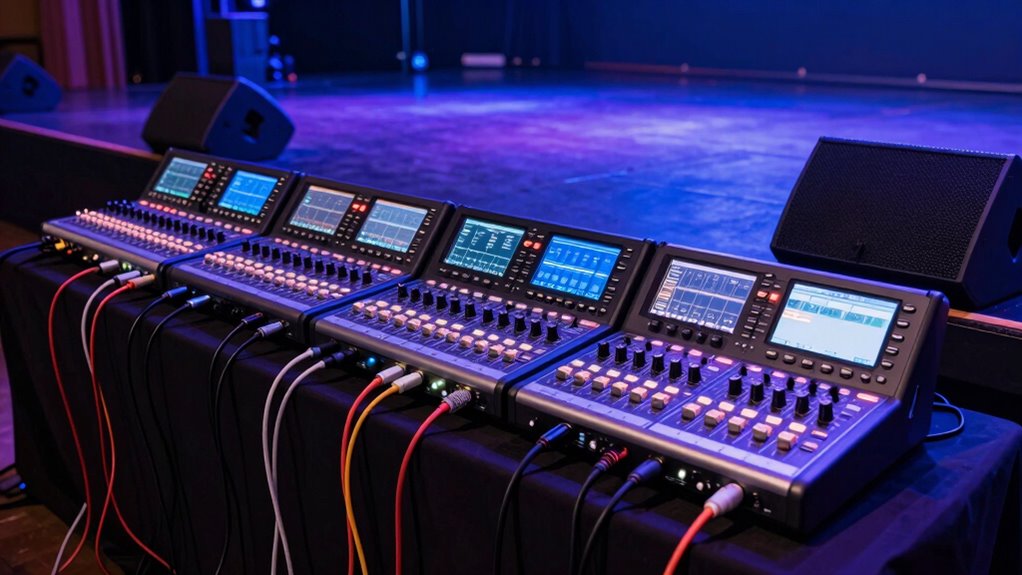

For a touring rig that needs 32 input channels, I’d start with the Behringer X32 as the best overall console: it combines hands-on control with a broad feature set suited to live production. The PreSonus StudioLive 64S is the premium choice for larger, more flexible setups, while the Mackie DL32SE suits crews that want a rack mixer controlled remotely. The key tradeoff is between a physical fader surface, a compact or rack-based setup, and the headroom to handle more sources than a typical 32-channel show. I also distinguish full mixers from the Midas DL32 stage box, which adds stage connectivity but needs a compatible mixer to do the mixing. Read on for the full breakdown and a recommendation by touring setup.

Get audio and creator gear delivered free with Prime
- Fast, free delivery on millions of items
- Prime Video, Amazon Music and more included
- Member-only deals all year
Complete the kit



Key Takeaways
- The X32 is the most balanced touring console in this lineup: it offers a full control surface, while the X32 Compact and Producer trade surface size for easier transport.
- Rack mixers change the crew workflow: the Mackie DL32SE and DL32S save space but rely on remote control, so they suit operators comfortable mixing from a tablet or a separate control position.
- The StudioLive 64S is the expansion pick: its additional channel capacity gives larger productions room to grow, though smaller shows may not need that headroom.
- The Midas DL32 is not a standalone mixer: it is a stage box, making sense when the rig already includes a compatible console and needs more stage inputs and outputs.
- Bundles and near-duplicate models call for careful comparison: the X32 bundle adds transport and cabling, while the standard X32 focuses on the console; the two Mackie rack options also warrant checking for the connectivity and control setup your rig requires.
| Behringer X32 32-Channel Digital Mixing Console Bundle with Gator Carry Bag and XLR Cables |  | Best Touring Bundle | Input channels: 32 | Mix buses: 16 configurable | Display: 7-inch color TFT | VIEW ON AMAZON | See Our Full Breakdown |
| Behringer X32 40-Input, 25-Bus Digital Mixing Console |  | Best for Large Input and Bus Counts | Input channels: 40 | Buses: 25 | Microphone preamps: 32 MIDAS-designed, fully programmable | VIEW ON AMAZON | See Our Full Breakdown |
| BEHRINGER X32 COMPACT |  | Best Compact Console Surface | Input channels: 40 | Buses: 25 | Programmable mic preamps: 16 MIDAS-designed | VIEW ON AMAZON | See Our Full Breakdown |
| Mackie DL32SE 32-Channel Digital Rack Mixer | 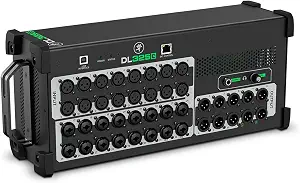 | Best Rack Mixer for Lightweight Touring | Channels: 32 | Mic preamps: Onyx+ | Inputs: 16 XLR and 16 combo; 2 combo inputs with Hi-Z | VIEW ON AMAZON | See Our Full Breakdown |
| Behringer X32 Producer Digital Mixer |  | Best for Case-Protected Console Touring | Channels: 32 | Buses: 25 | Programmable mic preamps: 16 MIDAS-designed | VIEW ON AMAZON | See Our Full Breakdown |
| PreSonus StudioLive Series III 32SX Digital Console Mixer |  | Best for Recording-Ready Touring | Inputs: 40 | Mixing channels: 32 | DSP: Dual-core FLEX DSP with 286 simultaneous processors | VIEW ON AMAZON | See Our Full Breakdown |
| Midas DL32 32 Input, 16 Output Stage Box with 32 Midas Microphone Preamplifiers, ULTRANET and ADAT Interfaces |  | Best Stage Box for Expanding I/O | Microphone preamps: 32 Midas PRO | Phantom power: Switchable 48 V | Outputs: 16 electronically balanced low-impedance line outputs | VIEW ON AMAZON | See Our Full Breakdown |
| Mackie DL32S 32-Channel Digital Rack Mixer |  | Best Compact Rack Mixer | Channels: 32 | Mic preamps: 32 Onyx+ recallable | Assignable outputs: 10 XLR | VIEW ON AMAZON | See Our Full Breakdown |
| PreSonus StudioLive Series III 64S Digital Console Mixer |  | Best for Large Touring Productions | Channels: 64 | Mixing channels: 76 | Buses: 43 | VIEW ON AMAZON | See Our Full Breakdown |
| channel digital mixer for touring | Weight |
|---|---|
| Behringer X32 32-Channel Digit | — |
| Behringer X32 40-Input | — |
| BEHRINGER X32 COMPACT | 34 pounds |
| Mackie DL32SE 32-Channel Digit | 8.8 pounds |
| Behringer X32 Producer Digital | 11.4 kilograms |
| PreSonus StudioLive Series III | — |
| Midas DL32 32 Input | — |
| Mackie DL32S 32-Channel Digita | 8.8 pounds |
| PreSonus StudioLive Series III | 37 pounds |
More Details on Our Top Picks
Behringer X32 32-Channel Digital Mixing Console Bundle with Gator Carry Bag and XLR Cables
The X32 bundle is a strong fit for touring crews that need 32 input channels and flexible monitor routing in a console format. Its 16 configurable mix buses, scene recall, and eight stereo effects slots can help a crew prepare repeatable show files and handle common processing without extra effects hardware. Compared with the rack-based Mackie DL32SE, the X32 gives the operator a physical console workflow; the tradeoff is a listed weight of 71.7 pounds, which makes load-in more demanding. Two AES50 ports support stagebox networking, while the included padded bag and XLR cables add useful touring kit. Buyers should note that the supplied product details are truncated, so some setup and connection specifics are not stated here.
Pros:- 32 input channels and 16 configurable mix buses support complex live setups
- Scene recall helps repeat setups move faster between venues
- Two AES50 ports support digital stagebox connections
- Bundle includes a padded Gator bag and two 25-foot XLR cables
Cons:- Listed 71.7-pound weight complicates transport and handling
- A full console takes more transport space than the rack-mount Mackie DL32SE
- Product details are truncated, leaving some technical information unspecified
Best for: Touring engineers who want a full console surface, scene recall, AES50 stagebox networking, and included transport protection.
Not ideal for: Small touring crews that prioritize light rack transport; the listed 71.7-pound weight makes frequent solo load-ins less convenient.
- Input channels:32
- Mix buses:16 configurable
- Display:7-inch color TFT
- Analog outputs:16 XLR
- Networking:2 AES50 ports with KLARK TEKNIK SuperMAC
- Built-in effects:8 true-stereo FX slots
- USB connectivity:USB
- Listed weight:71.7 pounds
- Included accessories:Gator padded bag and two 25-foot XLR cables
Our verdict“Choose this bundle if you want a traditional X32 console workflow and touring accessories, and can accommodate its substantial weight.”
Behringer X32 40-Input, 25-Bus Digital Mixing Console
For touring shows with dense channel lists and many monitor or effects sends, this X32 stands out for its stated 40 inputs and 25 buses. Its 32 programmable MIDAS-designed preamps give crews substantial mic-input capacity, while motorized faders and LCD scribble strips make scene changes and channel identification easier to follow from the surface. Compared with the bundle version, this listing emphasizes a larger bus count and describes its preamp and fader complement more clearly, but it does not list a carry bag or cables. The 16 XLR outputs are useful for a range of stage and system feeds; crews needing more physical outputs may want to compare connection needs carefully. It suits operators who want console control and extensive routing, though its size and setup complexity may be excessive for lean productions.
Pros:- 40 inputs and 25 buses provide headroom for complex show routing
- 32 programmable MIDAS-designed microphone preamps
- Motorized 100 mm faders support scene changes and quick layer recall
- LCD scribble strips help identify channels and buses
Cons:- 16 XLR outputs may constrain productions needing many physical feeds
- No transport bag or cable bundle is specified in the provided product details
- Console workflow and routing depth can be more than small touring acts need
Best for: Touring engineers handling large bands, festival input lists, or monitor mixes that benefit from numerous buses and physical fader control.
Not ideal for: Compact touring teams seeking a light rack mixer or a bundle with transport accessories included.
- Input channels:40
- Buses:25
- Microphone preamps:32 MIDAS-designed, fully programmable
- Faders:25 motorized 100 mm
- XLR outputs:16
- Additional connections:6 line inputs/outputs and 2 phone connectors
- Applications:Studio and live
Our verdict“Pick this X32 when input and bus capacity matter more than compact transport or bundled touring accessories.”
BEHRINGER X32 COMPACT
The X32 Compact keeps the 40-input, 25-bus format in a smaller console layout, making it a practical middle ground for touring engineers who want hands-on control without the larger X32 footprint. Its 17 motorized faders and dynamic LCD scribble strips help operators manage scenes and identify channels quickly, while 16 programmable preamps cover a useful mic count. Compared with the full-size X32 listing, it has fewer stated XLR outputs—eight rather than 16—so a show with many direct console feeds may need additional routing hardware. At a listed 34 pounds, it is easier to move than the 71.7-pound X32 bundle, though it is still a console rather than a lightweight rack unit like the Mackie DL32SE. The smaller surface trades output count and control area for easier touring logistics.
Pros:- 40 inputs and 25 buses in a compact console format
- 17 automated motorized faders support scene management and DAW control
- Dynamic LCD scribble strips aid channel identification
- Listed weight of 34 pounds is below the X32 bundle’s listed weight
Cons:- Eight XLR outputs provide fewer direct feeds than the full-size X32
- Sixteen programmable mic preamps are fewer than the 32 listed for the full-size X32
- Still larger and heavier to transport than the rack-mount Mackie DL32SE
Best for: Touring operators who want motorized faders and a console surface but need a more manageable load than a full-size X32.
Not ideal for: Crews that need 16 direct XLR outputs or prefer wireless tablet control from a rack mixer.
- Input channels:40
- Buses:25
- Programmable mic preamps:16 MIDAS-designed
- Motorized faders:17 automated, 100 mm
- XLR outputs:8
- Additional connections:6 line inputs/outputs and 2 phone connectors
- Talkback:Integrated or external microphone support
- Weight:34 pounds
Our verdict“Choose the X32 Compact if you want a tactile touring console with broad routing and can work within its eight XLR outputs.”
Mackie DL32SE 32-Channel Digital Rack Mixer
The DL32SE is the clearest choice here for crews building a rack-based touring rig around app control. At 8.8 pounds, it is far easier to move than the console-format X32 models, and its 32×32 USB interface can support multitrack recording and playback alongside the live mix. The Master Fader SE app offers remote control across several platforms, which gives a mixing engineer freedom to work from different positions in the venue. Unlike the X32 Compact, it has no local fader surface described in the supplied details, and wireless operation requires a separate router. Its 10 XLR outputs sit between the Compact’s eight and the full X32’s 16, so output needs should guide the choice. Four stereo effects processors and Onyx+ preamps round out a capable rack system.
Pros:- 8.8-pound rack format reduces transport burden compared with console mixers
- 32×32 USB interface supports multitrack recording and playback
- App control works with iOS, Android, macOS, and Windows
- Ten XLR outputs and four stereo effects processors support flexible live rigs
Cons:- Wireless control requires a separate wireless router
- No physical fader surface is specified, which may not suit hands-on operators
- Ten XLR outputs are fewer than the 16 on the full-size X32
Best for: Touring engineers who want a lightweight rack mixer, multitrack USB recording, and app control from around the venue.
Not ideal for: Operators who need an onboard fader surface or cannot rely on supplying and configuring a wireless router.
- Channels:32
- Mic preamps:Onyx+
- Inputs:16 XLR and 16 combo; 2 combo inputs with Hi-Z
- Outputs:10 XLR line-level
- USB audio interface:32×32
- Wireless control:Wi-Fi via wireless router
- Effects processors:4 stereo
- Dimensions:5.8 × 17.6 × 7.3 inches
- Weight:8.8 pounds
Our verdict“Choose the DL32SE if light rack transport and remote app mixing outweigh the convenience of console faders.”
Behringer X32 Producer Digital Mixer
The X32 Producer makes sense for touring operators who want a physical console with motorized faders and a road case included in the described package. Its stated 25 buses support routing for monitor and effects mixes, while 16 MIDAS-designed programmable preamps cover a substantial mic setup. Compared with the X32 Compact, this listing emphasizes the road case and multiple connection types, which can matter when the mixer travels frequently; however, it provides less detail about the number of outputs and faders than the Compact listing. The specified weight is 11.4 kilograms, and the case adds further handling bulk. Its complex interface may also take time for newer operators to learn. This is a practical pick when physical controls and protection are priorities, but rack-focused crews may prefer the lighter Mackie DL32SE.
Pros:- 25 buses support multiple monitor and effects mixes
- 16 MIDAS-designed programmable mic preamps
- Motorized faders support scene management and rapid adjustments
- Described package includes a touring-grade road case
Cons:- Listed weight of 11.4 kilograms adds transport effort, with the case adding further bulk
- Complex interface may require a learning period
- Provided specifications omit detailed output counts and software support
Best for: Touring bands and production crews who want a console surface with motorized faders and a protective road case in the package.
Not ideal for: Solo operators prioritizing the lightest load or buyers who need fully specified output counts before choosing a console.
- Channels:32
- Buses:25
- Programmable mic preamps:16 MIDAS-designed
- Connectivity:USB, AES/EBU, MIDI
- Input connector:XLR
- Output connector:XLR
- Weight:11.4 kilograms
- Included protection:Touring-grade road case
Our verdict“Choose the X32 Producer when you want a case-protected console and motorized controls, and can accept sparse connection details.”
PreSonus StudioLive Series III 32SX Digital Console Mixer
The StudioLive 32SX suits touring engineers who want a console that can move between live mixing and multitrack recording without adding a separate recorder. Its onboard SD recording and Virtual Soundcheck let me work through a set using recorded inputs, while the 128-channel USB interface supports computer-based sessions. Built-in AVB networking also gives compatible stage boxes and monitor mixers a path into the setup. Compared with the larger StudioLive 64S, the 32SX is the more portable choice, though it has fewer FlexMixes and less room to grow into a high-channel-count production. The dual-core DSP and 16 FlexMixes provide broad routing and processing, but the console still asks for time to learn its scene management and workflow.
Pros:- Onboard SD multitrack recording supports Virtual Soundcheck without a separate recorder
- 128-channel USB interface suits multitrack computer recording
- Built-in AVB networking connects compatible stage boxes and monitor mixers
- Dual-core FLEX DSP and 16 FlexMixes offer flexible processing and routing
Cons:- Fewer FlexMixes and less channel capacity than the StudioLive 64S
- Scene management and routing may take time to learn
- AVB benefits depend on using compatible networked equipment
Best for: Touring engineers who need 32-channel mixing, onboard multitrack capture, and Virtual Soundcheck in a more portable console.
Not ideal for: Large productions that need the 64S’s 32 FlexMixes, 76 mixing channels, or expanded bus capacity.
- Inputs:40
- Mixing channels:32
- DSP:Dual-core FLEX DSP with 286 simultaneous processors
- Networking:Built-in AVB
- USB interface:128 channels (64×64)
- SD recording:Onboard multitrack recording with Virtual Soundcheck
- FlexMixes:16
- Effects:4 FLEX FX slots and 4 dedicated effects buses
- Included software:Studio One Artist and Capture
Our verdict“Choose the 32SX if touring and recording need to share one flexible console; choose the 64S when the show needs substantially more mix capacity.”
Midas DL32 32 Input, 16 Output Stage Box with 32 Midas Microphone Preamplifiers, ULTRANET and ADAT Interfaces
The Midas DL32 earns a place here as an I/O expansion option for touring rigs built around compatible AES50 consoles; it is a stage box, not a mixer, so it does not replace a 32-channel console. Its 32 Midas PRO microphone preamps put inputs near the stage, while 16 balanced outputs can feed wedges, fills, or other line-level destinations. Two AES50 ports allow compatible DL16 boxes to be cascaded without a separate merger or router, a practical way to extend a larger setup. Compared with the Mackie DL32S, which is a self-contained rack mixer with wireless app control, the DL32 depends on a compatible host console for mixing and control. That dependence narrows its appeal, but makes it useful when a touring system already centers on AES50 and needs substantial stage I/O.
Pros:- 32 Midas PRO microphone preamps provide extensive stage input capacity
- 16 electronically balanced outputs support multiple monitor and line-level feeds
- Dual AES50 ports support cascading compatible DL16 stage boxes
- ULTRANET and ADAT connections extend monitoring and digital integration options
Cons:- Requires a compatible host console and does not mix independently
- AES50 compatibility limits its use across unrelated touring systems
- No product-specific weight or dimensions are provided in the supplied data
Best for: Touring crews with an AES50-compatible console who need 32 stage inputs and 16 line outputs from a remote stage position.
Not ideal for: Buyers seeking a standalone digital mixer, onboard mixing DSP, or wireless control from a phone or tablet.
- Microphone preamps:32 Midas PRO
- Phantom power:Switchable 48 V
- Outputs:16 electronically balanced low-impedance line outputs
- Digital audio and control:Dual AES50 SuperMAC ports
- Expansion:Supports cascading DL16 stage boxes
- Personal monitoring:ULTRANET connectivity
- Additional interface:ADAT
- Speaker-system networking:ULTRANET connectivity for compatible Turbosound systems
Our verdict“Pick the DL32 to expand stage I/O in a compatible AES50 rig, but choose the Mackie DL32S if you need the mixer itself.”
Mackie DL32S 32-Channel Digital Rack Mixer
The DL32S is a rack-mount option for touring teams that want a 32-channel mix engine without carrying a traditional control surface. Its built-in Wi-Fi and Master Fader app let performers or an engineer control the mix from a mobile device, and the supplied data says the app supports up to 20 devices. The 32 Onyx+ recallable preamps and 10 assignable XLR outputs cover a substantial input and output setup, while 32×32 USB recording supports multitrack capture and virtual soundchecks. Compared with the PreSonus StudioLive 32SX, the DL32S saves the console surface and emphasizes app-based operation, but it lacks the listed onboard SD recorder and AVB networking. That makes it a strong fit for compact or stage-managed rigs, provided the crew is comfortable relying on app control.
Pros:- Built-in Wi-Fi supports wireless control through the Master Fader app
- 32 Onyx+ recallable mic preamps suit a full band input list
- 32×32 USB recording supports multitrack capture and virtual soundchecks
- 10 assignable XLR outputs provide flexible monitor and main feeds
Cons:- App-based operation offers no onboard physical fader surface
- No onboard SD recorder is listed, unlike the StudioLive 32SX
- Wireless control depends on a reliable network and compatible mobile devices
Best for: Touring bands and engineers building a compact rack system with wireless mix control and USB multitrack recording.
Not ideal for: Operators who want physical faders at the mix position or need onboard SD recording and AVB integration.
- Channels:32
- Mic preamps:32 Onyx+ recallable
- Assignable outputs:10 XLR
- USB recording:32×32
- Effects:4 stereo processors
- Connectivity:USB and built-in Wi-Fi
- Weight:8.8 pounds
- Control app:Master Fader for iOS and Android; supports up to 20 devices
Our verdict“Choose the DL32S when rack space and wireless control matter most, and the StudioLive 32SX when onboard recording and a physical console workflow matter more.”
PreSonus StudioLive Series III 64S Digital Console Mixer
For a touring show that regularly outgrows a 32-channel desk, the StudioLive 64S brings 64 channels, 76 mixing channels, and 43 buses into one console. Its 32 configurable FlexMixes can serve as aux, subgroup, or matrix mixes, which gives larger monitor and routing plans more room than the 32SX’s 16 FlexMixes. USB and onboard SD multitrack recording support different capture workflows, while AVB can connect compatible stage boxes and monitor mixers. This capacity comes with a 37-pound console and a deeper learning curve; the more compact 32SX may make more sense when a tour’s input list and routing needs are stable and modest. I would place the 64S high for productions that need broad routing and recording in one desk, but not for crews optimizing for quick load-ins and minimal setup.
Pros:- 64 channels and 43 buses support large, complex show files
- 32 configurable FlexMixes accommodate varied aux, subgroup, and matrix needs
- USB and onboard SD recording enable flexible multitrack capture
- AVB networking integrates with compatible stage boxes and monitor mixers
Cons:- 37-pound weight adds to touring transport and load-in demands
- Extensive routing and feature set can take time to learn
- Its capacity may be unnecessary for shows that fit comfortably on the StudioLive 32SX
Best for: Touring engineers mixing large bands or productions that need extensive channel, bus, monitor, and recording capacity in one console.
Not ideal for: Small touring crews with modest input lists who prioritize lighter carry weight and a simpler setup.
- Channels:64
- Mixing channels:76
- Buses:43
- USB interface:128 channels (64×64)
- FlexMixes:32, configurable as aux, subgroup, or matrix mixes
- DCA groups:24
- Faders:33 touch-sensitive motorized
- Recording and networking:USB and onboard multitrack SD; AVB
- Weight:37 pounds
Our verdict“Choose the 64S when a tour needs extensive channel and bus capacity in one console, and the 32SX when portability and a smaller workflow take priority.”

How We Picked
I ranked these products for touring use by looking at how well each can support a working live rig: input capacity, available operator controls, physical footprint, stage connectivity, and room to expand. A console with faders has an advantage when an engineer needs quick hands-on adjustments; a rack mixer can be easier to pack but shifts more responsibility to remote control. I also considered whether each listing is a complete mixer or a supporting component, since that changes what a buyer must bring to the show.
The X32 leads for its balance of console operation and touring flexibility. The StudioLive 64S follows for productions that benefit from extra capacity, while the Mackie rack mixers serve space-conscious crews with a different control workflow. Compact X32 variants rank below the full console when surface access matters, though they can suit smaller rigs. The Midas DL32 ranks as a specialist stage-box choice rather than a direct substitute for a mixer, and the included accessories affect the bundle’s convenience more than its mixing capability.
Factors to Consider When Choosing 32 Channel Digital Mixer For Touring
A touring mixer choice affects more than channel count: it shapes setup time, operator position, transport, and how easily the rig adapts to a venue. I’d settle the control and connectivity questions before comparing model names.
Count sources for the whole show
Build a channel list for the largest show you expect to mix, including talkback, playback, guest inputs, and spare microphones. A 32-channel label does not always tell you how many inputs can be mixed at once, since product specifications may count local, networked, or expandable sources differently. Leave some capacity for changeovers and unexpected additions; a rig that uses every channel at rehearsal can become awkward on the road. At the same time, paying for substantially more capacity makes little sense if your show file rarely grows. Verify which inputs are available through the console itself and which require a stage box or other compatible hardware.
Choose the control position before the mixer format
A physical fader surface gives the engineer direct access to levels and mutes, which can matter when a show changes quickly. A rack mixer frees space and can simplify transport, but it makes the tablet, network, and control app part of the working setup. Think about where the engineer will stand, whether another crew member needs access, and how you will recover if a control device loses connection. A remote workflow can be practical for monitor mixing near the performers, while front-of-house work may benefit from a dedicated surface. Avoid choosing rack format on footprint alone without planning the control path.
Plan stage connections and cable runs
Input capacity is useful only when those inputs can reach the mixer reliably. Decide whether the mixer will sit at the stage or front of house, then map the analog cable runs and any digital links between positions. A stage box can reduce long analog runs and tidy stage cabling, but it is a separate part of the system and must match the console’s connection standard. Check output needs too: monitor sends, fills, recording feeds, and playback returns can consume connections faster than expected. Touring between venues with different layouts rewards a connection plan that can be reused without improvising adapters at each stop.
Check what the listing actually includes
Product names can describe a console, a bundle, or a stage box, and those are not interchangeable purchases. Read the included-items list to see whether transport protection, cabling, a control surface, or only the stage interface is part of the package. Then confirm what else the system needs to function, such as a compatible mixer, network hardware, or a tablet for control. Bundled accessories can save setup effort, but they should not determine the choice if they do not fit your touring case or cable plan. Compare the full system you need to take on the road, not just the headline product name.
Balance expansion against road burden
Extra inputs and outputs can protect a growing production from an early replacement, but they can also add cost, setup complexity, and more equipment to maintain. Ask whether likely changes involve more channels, more monitor mixes, extra zones, or recording; each puts pressure on a different part of the rig. A larger console is not automatically easier to tour if it requires a bigger case or more crew time to deploy. Conversely, a compact mixer can create workarounds when a production adds performers or playback sources. Choose the smallest system that covers your realistic show plan with practical spare capacity.
Make a touring support plan
Touring puts repeated handling, changing power conditions, and tight changeovers ahead of a mixer. Check how the unit will be protected in transit, how quickly the crew can reconnect it, and whether the control setup can be restored from a saved show file. Keep a documented channel list and connection map so a substitute engineer can understand the rig. For remote mixers, plan a backup control device and a dependable network arrangement. These habits often matter as much to a smooth show as another feature on the spec sheet.
Frequently Asked Questions
Is the Midas DL32 a complete mixer for a touring rig?
No. The DL32 is a stage box with microphone preamps and input and output connections; it does not replace a mixing console or rack mixer. It makes sense when you already have a compatible mixer and want to place more connections near the stage. Before buying, check the console’s supported link, routing, and channel capacity. If you need one purchase to handle mixing as well as inputs, compare the actual mixer models instead.
Should I choose a rack mixer or a console with faders for touring?
Choose based on how the engineer will control the show, not only on how much rack space is available. A console offers immediate hands-on fader access, which can help during fast changes and guest appearances. A rack mixer can reduce the footprint and put control closer to performers, but depends on a reliable remote-control setup. For a rack approach, plan a backup device and test the control network before the first show. If multiple crew members need to make adjustments, confirm how the system supports shared access.
Does a 32-channel mixer give me 32 usable microphone inputs?
Not always: manufacturers may describe total input capacity, local analog inputs, or expanded inputs differently. Check the technical specifications for the number and type of physical microphone preamps, then see how network or stage-box inputs add to the channel count. Also map any line-level sources that may use the same inputs. If your show depends on 32 microphones at once, confirm that exact configuration rather than relying on the product name. Leave spare capacity for talkback and last-minute additions.
Is the X32 bundle a better touring choice than the standard X32?
The bundle’s main distinction is the included carry bag and XLR cables, which may help a crew assemble a basic transport and connection kit. Those extras do not change the mixer’s channel capacity or control functions. Check whether the bag fits your existing case plan and whether the cable lengths and quantities suit your stage layout. If you already own suitable protection and cables, the standalone console may fit your setup more cleanly. Compare included accessories against the specific items your touring rig still needs.
When does it make sense to choose the StudioLive 64S over a 32-channel option?
Its greater channel capacity is useful when a production has a large input list, multiple playback sources, or room to expand without replacing the console. That extra headroom may be unnecessary for a stable show that stays within 32 sources. Consider the rest of the system too: stage connections, outputs, transport, and the crew’s familiarity can matter as much as channel count. A larger console does not solve a stage-box or routing mismatch by itself. Choose it when the production plan has a concrete use for the additional capacity.
Conclusion
For most touring engineers who want one unit to serve as the central mixing console, I’d choose the Behringer X32 as the best overall balance. The Behringer X32 Producer is the value-oriented route when a smaller control surface fits the rig, while the PreSonus StudioLive 64S is my premium pick for shows that can use its expanded capacity. Beginners who want physical controls should start with a console format such as the X32 Compact, after checking that its surface suits their show; crews comfortable with tablet control can instead consider the Mackie DL32SE. For a rack-first workflow, compare the Mackie DL32SE and DL32S against the crew’s remote-control needs, and choose the Midas DL32 only when a compatible mixer is already part of the plan. The right choice is the one whose channel count, control method, and stage connections match the show you actually tour.
Halloween Picks
halloween
As an affiliate, we earn on qualifying purchases.