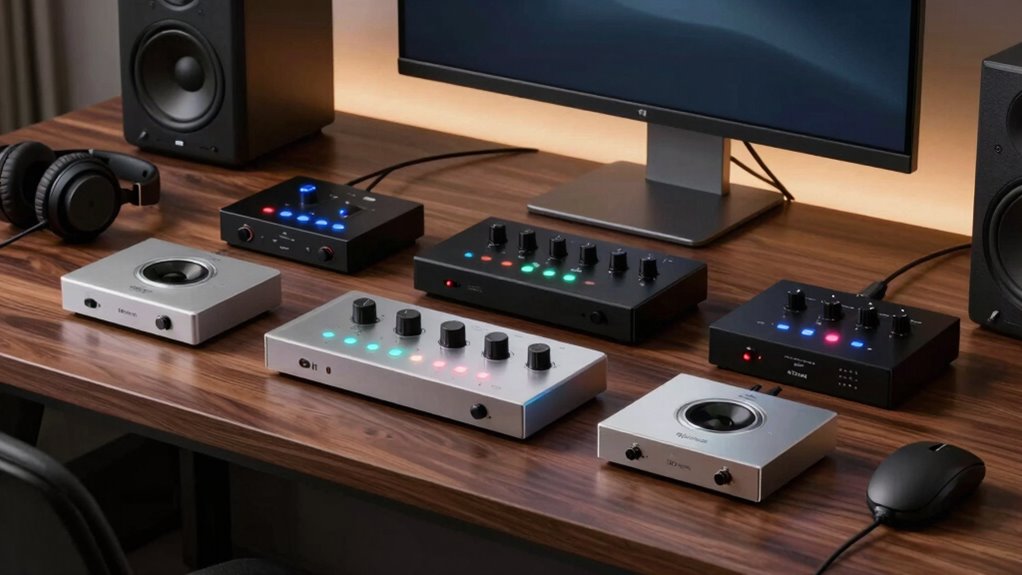
If you’re searching for an audio interface under 300, you’re looking for a balance of quality and affordability. The Focusrite Scarlett Solo 3rd Gen stands out as the best overall choice, offering reliable performance for both beginners and pros. The Behringer UMC404HD delivers excellent I/O options and Midas preamps at a competitive price, while the Universal Audio Volt 2 offers premium sound quality and build for those willing to spend a bit more. While budget options are appealing, tradeoffs often include fewer features or lower build quality. Keep reading for a detailed breakdown of what makes these options stand out and what to consider before buying.

Get audio and creator gear delivered free with Prime
- Fast, free delivery on millions of items
- Prime Video, Amazon Music and more included
- Member-only deals all year
Complete the kit



Key Takeaways
- The top picks balance sound quality, build durability, and feature set within the $300 limit.
- More I/O channels generally mean higher versatility but may increase cost or complexity.
- Premium preamps like Midas or Universal Audio significantly improve audio clarity for professional use.
- Compact models are ideal for portability but may sacrifice expansion options or input/output variety.
- Price differences often reflect build quality, included software, and feature sets rather than raw audio performance.
| Behringer U-PHORIA UMC404HD Audiophile 4×4 USB Audio/MIDI Interface with Midas Preamplifiers |  | Best Overall | Connectivity Technology: USB | Number of Channels: 4 | Supported Software: Pro Tools, Ableton Live, Cubase | VIEW ON AMAZON | See Our Full Breakdown |
| PreSonus AudioBox 96 25th Anniversary USB Audio Interface |  | Best Value Pick | Number of channels: 2 | Sampling rate: 96 kHz | Bit depth: 24-bit | VIEW ON AMAZON | See Our Full Breakdown |
| MAONO PS22 Lite USB Audio Interface for PC and Mac |  | Best for Beginners and Streaming | Resolution: 24-bit/192 kHz | Dynamic Range: 106dB | Preamp Gain: up to 56 dB | VIEW ON AMAZON | See Our Full Breakdown |
| Universal Audio Volt 2 USB Audio Interface |  | Best Premium Pick Under $300 | Audio Quality: 24-bit / 192 kHz | Compatibility: Mac, Windows, iPad, iPhone | Power Requirements: External power and adapters | VIEW ON AMAZON | See Our Full Breakdown |
| M-Audio M-Track Solo USB Audio Interface for Recording, Streaming, and Podcasting |  | Best for Entry-Level Creators | Audio Resolution: 48kHz | Inputs: XLR/Line with phantom, 1 Line/Instrument | Outputs: Headphone, stereo RCA | VIEW ON AMAZON | See Our Full Breakdown |
| M-AUDIO M-Track Duo USB Audio Interface for Recording, Streaming, and Podcasting |  | Best Budget-Friendly Portable Interface | Audio Resolution: 48kHz | Inputs: 2 combo XLR/Line/Instrument with phantom power | Outputs: Stereo 1/4″ main and headphone outputs | VIEW ON AMAZON | See Our Full Breakdown |
| Arturia MiniFuse 1 – Compact USB Audio Interface with Software for Recording, Production, Podcasting, Guitar – White |  | Best for Creative Flexibility and Software Bundles | Connectivity: USB | Supported Devices: Laptop, PC | Maximum Sample Rate: 192 KHz | VIEW ON AMAZON | See Our Full Breakdown |
| Focusrite Scarlett Solo 3rd Gen USB Audio Interface for Guitarists, Vocalists, Podcasters, and Producers |  | Best for Studio-Quality Recording in a Compact Form | Inputs: 1 XLR Mic Preamp, 1 Hi-Z Instrument | Sample Rate: 24-Bit/192kHz | Gain Range: 56dB | VIEW ON AMAZON | See Our Full Breakdown |
| Jolgoo 2×2 USB Audio Interface, 24-Bit/192kHz Phantom Power Recording Card |  | Best for High-Fidelity Multi-Device Recording | Audio Quality: 24-Bit/192kHz | Power: USB-powered | Inputs: XLR/Line combo with phantom power | VIEW ON AMAZON | See Our Full Breakdown |
| Synido USB C Audio Interface for Recording, Streaming, and Podcasting with XLR and Line Inputs |  | Best for Versatile Recording with User-Friendly Features | Sampling Rate: 48kHz | Bit Depth: 24-bit | Inputs: XLR, Line In | VIEW ON AMAZON | See Our Full Breakdown |
| MAONO P2 Hybrid USB Audio Interface Dual XLR for PC Phone iPad Guitar |  | Best Overall | Compatible Devices: Guitar, Headphone, Laptop, Microphone, Smartphone | Supported Software: Ableton Live, Studio One, Logic Pro, Cubase, GarageBand, FL Studio, YouTube, TikTok, OBS, Twitch, Discord | Connectivity Technology: USB | VIEW ON AMAZON | See Our Full Breakdown |
| Depusheng USB Audio Interface with ASIO Drivers, 24Bit 192KHz, Phantom Power +48V, 4 Channels, Compatible with PC/MAC |  | Best Value | Bit Depth: 24-bit | Sample Rate: 192 kHz | Channels: 4 | VIEW ON AMAZON | See Our Full Breakdown |
| Zoom AMS-22 Audio Interface |  | Best Compact Solution | Inputs: 1 XLR/TRS, 1 stereo 3.5mm | Outputs: 2 | Loopback: Yes | VIEW ON AMAZON | See Our Full Breakdown |
| Audio Interface, 2×2 24-bit/192kHz for PC/Mac/iOS with XLR/TRS Inputs and Loopback |  | Best for Home Studio & Mobile Recording | Resolution: 24-bit/192kHz | Inputs: 2 XLR/TRS combo | Phantom Power: 48V | VIEW ON AMAZON | See Our Full Breakdown |
| Behringer UMC202HD Audiophile 2×2 USB Audio Interface with Midas Mic Preamplifiers |  | Best for Professional Sound | Inputs: 2 combo (XLR/TRS) | Outputs: 2 TRS | Sample Rate: 24-bit/192kHz | VIEW ON AMAZON | See Our Full Breakdown |
| audio interface under 300 | Inputs | Outputs |
|---|---|---|
| Behringer U-PHORIA UMC404HD Au | — | — |
| PreSonus AudioBox 96 25th Anni | 2 mic preamps, 2 instrument | Balanced ¼” TRS, headphone |
| MAONO PS22 Lite USB Audio Inte | XLR, instrument | Headphone |
| Universal Audio Volt 2 USB Aud | — | — |
| M-Audio M-Track Solo USB Audio | XLR/Line with phantom, 1 Line/Instrument | Headphone, stereo RCA |
| M-AUDIO M-Track Duo USB Audio | 2 combo XLR/Line/Instrument with phantom power | Stereo 1/4" main and headphone outputs |
| Arturia MiniFuse 1 | 1 combo Mic/Inst/Line with 48V phantom, 2 TRS Line | 1/4" TRS balanced, headphone |
| Focusrite Scarlett Solo 3rd Ge | 1 XLR Mic Preamp, 1 Hi-Z Instrument | 2 balanced outputs |
| Jolgoo 2×2 USB Audio Interface | XLR/Line combo with phantom power | — |
| Synido USB C Audio Interface f | XLR, Line In | Headphone, Line Out |
| MAONO P2 Hybrid USB Audio Inte | — | — |
| Depusheng USB Audio Interface | 4 combo (XLR/1/4-inch) | — |
| Zoom AMS-22 Audio Interface | 1 XLR/TRS, 1 stereo 3.5mm | 2 |
| Audio Interface | 2 XLR/TRS combo | — |
| Behringer UMC202HD Audiophile | 2 combo (XLR/TRS) | 2 TRS |
More Details on Our Top Picks
Behringer U-PHORIA UMC404HD Audiophile 4×4 USB Audio/MIDI Interface with Midas Preamplifiers
The Behringer UMC404HD stands out for its combination of professional-grade Midas preamps and versatile 4-in/4-out connectivity, making it ideal for serious musicians and home studio owners who need multiple inputs. Compared to the PreSonus AudioBox 96, it offers more channels and higher resolution, though the UMC404HD’s complex setup might challenge beginners. Its durable metal chassis and high-quality preamps justify its price, but limited support for newer operating systems and the absence of built-in inputs mean you’ll need external gear and technical know-how. This interface is perfect for those prioritizing professional sound and expandability over plug-and-play simplicity.
Pros:- High-quality Midas preamps with +48V phantom power
- Supports high-resolution audio up to 192 kHz
- Multiple input/output options for flexible recording
- Durable, impact-resistant metal chassis
Cons:- Limited support for newer operating systems beyond Windows XP
- No built-in microphone or instrument inputs, requires external sources
Best for: Producers and advanced musicians seeking a studio-grade, multi-input setup within a budget
Not ideal for: Beginners or users with limited space who prefer plug-and-play simplicity without external gear
- Connectivity Technology:USB
- Number of Channels:4
- Supported Software:Pro Tools, Ableton Live, Cubase
- Maximum Sample Rate:192 KHz
- Item Dimensions:11.5″D x 5.12″W x 1.81″H
- Item Weight:2.7 pounds
Our verdict“This interface suits experienced users needing expandability and professional sound quality, though it demands some technical setup.”
PreSonus AudioBox 96 25th Anniversary USB Audio Interface
The PreSonus AudioBox 96 offers a compelling balance of affordability and quality, with high-quality Class-A mic preamps and a straightforward 2-channel design that’s ideal for beginners and mobile musicians. Unlike the Behringer UMC404HD, it has fewer channels, but its portable, bus-powered setup makes it perfect for recording on the go. While it supports up to 96 kHz and comes with Studio One Artist and Ableton Live Lite, its limited inputs mean it’s less suited for larger projects. Still, it delivers professional sound at a lower price point, making it a smart choice for those starting out or with simple needs.
Pros:- High-quality Class-A mic preamps ensure clear recordings
- Includes professional-grade recording software
- Compact, bus-powered, ideal for portable use
- Supports high-resolution recording up to 96 kHz
Cons:- Limited to 2 channels, restricting larger setups
- No onboard effects or DSP for processing
Best for: Beginners and mobile recording artists looking for an affordable, reliable interface
Not ideal for: Users needing multiple inputs or complex routing for multi-track recording
- Number of channels:2
- Sampling rate:96 kHz
- Bit depth:24-bit
- Inputs:2 mic preamps, 2 instrument
- Outputs:Balanced ¼” TRS, headphone
- Power:USB bus-powered
Our verdict“This interface is perfect for newcomers and mobile musicians prioritizing simplicity and value over expandability.”
MAONO PS22 Lite USB Audio Interface for PC and Mac
The MAONO PS22 Lite shines for its user-friendly design and versatility, making it ideal for podcasters, streamers, and newcomers wanting professional sound in a compact package. Its 24-bit/192kHz resolution surpasses many basic interfaces, and the included routing software simplifies live streaming and virtual channel creation. Unlike the Universal Audio Volt 2, it doesn’t offer vintage preamp emulation or industry-standard plug-ins, but its straightforward setup and portable size make it accessible for those just starting out. The main tradeoff is its basic feature set, which may not satisfy those needing advanced routing or multi-channel recording.
Pros:- High-resolution audio up to 192 kHz for professional quality
- Compact, portable design with intuitive controls
- Supports Windows, Mac, and iPad connectivity
- Includes routing software for live streaming and virtual channels
Cons:- Limited features for advanced studio use
- Requires driver setup on some systems for optimal performance
Best for: Beginners, podcasters, and streamers seeking an easy-to-use, high-quality audio interface
Not ideal for: Professional studio users or those needing multiple inputs and advanced routing options
- Resolution:24-bit/192 kHz
- Dynamic Range:106dB
- Preamp Gain:up to 56 dB
- Inputs:XLR, instrument
- Outputs:Headphone
- Compatibility:Windows, Mac, iPad
Our verdict“This interface suits newcomers and content creators who want high-quality sound with simple operation and portability.”
Universal Audio Volt 2 USB Audio Interface
The Universal Audio Volt 2 offers a rare combination of studio-grade quality and mobile versatility, supporting 24-bit/192kHz audio and vintage preamp emulation. Its compatibility with Mac, Windows, iPad, and iPhone makes it suitable for professionals and serious hobbyists alike. The inclusion of UAD plug-ins and tutorials adds value, but its need for external power and adapters can complicate setup compared to bus-powered models. Compared with the PreSonus AudioBox 96, it provides more advanced features and industry-standard emulation, albeit at the cost of portability and simplicity, as it lacks a built-in battery or portable power option. It’s best suited for users who want studio-quality sound on the go, despite some setup complexity.
Pros:- High-quality audio with professional-grade converters
- Vintage preamp emulation and access to UAD plug-ins
- Versatile device compatibility including iOS devices
- Includes tutorials for learning and mastering features
Cons:- Requires external power supply and adapters for iPads
- No built-in battery for portable use
Best for: Advanced hobbyists and mobile professionals seeking studio-quality recording with emulation features
Not ideal for: Casual users or those on a tight budget who prefer plug-and-play simplicity without external power needs
- Audio Quality:24-bit / 192 kHz
- Compatibility:Mac, Windows, iPad, iPhone
- Power Requirements:External power and adapters
- Features:Vintage preamp emulation, UAD plug-ins
Our verdict“This interface is ideal for experienced users wanting studio-grade sound and emulation in a portable form, despite setup complexity.”
M-Audio M-Track Solo USB Audio Interface for Recording, Streaming, and Podcasting
The M-Audio M-Track Solo provides an accessible entry point into digital recording with a focus on simplicity and essential features. Its 48kHz resolution, combined with combo XLR/Line inputs with phantom power, makes it suitable for basic vocals, guitar, and streaming setups. Unlike the MAONO PS22 Lite, it emphasizes more traditional recording features, though it lacks advanced routing or onboard effects. The software bundle, including MPC Beats, offers creative flexibility for beginners, but limited input channels restrict multi-instrument or multi-mic setups. This model makes the most sense for those prioritizing straightforward recording with decent sound quality over elaborate features.
Pros:- High-quality 48kHz audio resolution for clear sound
- Versatile combo XLR/Line inputs with phantom power
- Includes production software for immediate use
- Simple and effective for basic recording and streaming
Cons:- Limited to basic recording features, no advanced routing
- No onboard effects or processing options
Best for: Beginners and hobbyists starting their recording or streaming journey
Not ideal for: Advanced producers or multi-mic/multi-instrument setups that need more inputs and routing options
- Audio Resolution:48kHz
- Inputs:XLR/Line with phantom, 1 Line/Instrument
- Outputs:Headphone, stereo RCA
- Software Included:MPC Beats
Our verdict“This interface is best suited for newcomers and casual creators seeking reliable sound quality with minimal complexity.”
M-AUDIO M-Track Duo USB Audio Interface for Recording, Streaming, and Podcasting
The M-Audio M-Track Duo stands out for its portability and straightforward functionality, making it ideal for those who record on the go or stream casually. Compared to the Focusrite Scarlett Solo, it offers a more compact form factor and zero-latency monitoring, but it’s limited to 48kHz resolution, which could be a drawback for more demanding audio work. Its dual combo inputs with phantom power support a variety of microphones and instruments, and its included software helps beginners get started. However, professionals needing higher sample rates or advanced features might find this model too basic. Best for beginners and mobile creators who prioritize simplicity and portability over maximum audio fidelity.
Pros:- Compact and lightweight design for portability
- High-quality crystal preamps with phantom power
- Zero-latency monitoring for real-time feedback
- Compatible with most DAWs and operating systems
Cons:- Limited to 48kHz resolution, not suitable for high-end professional use
- Basic software bundle may require additional purchases for advanced features
Best for: Beginners, podcasters, and streamers who need a lightweight, easy-to-use interface without sacrificing essential features.
Not ideal for: Professional audio engineers or producers requiring higher resolution recording, multi-channel setups, or advanced routing options.
- Audio Resolution:48kHz
- Inputs:2 combo XLR/Line/Instrument with phantom power
- Outputs:Stereo 1/4″ main and headphone outputs
- Power:USB powered
- Software Included:MPC Beats, ProTools First | M-Audio Edition
Our verdict“This interface makes the most sense for newcomers or mobile streamers who want reliable basic recording at an affordable price.”
Arturia MiniFuse 1 – Compact USB Audio Interface with Software for Recording, Production, Podcasting, Guitar – White
The Arturia MiniFuse 1 delivers high-resolution audio up to 192kHz, making it a strong choice for home producers and musicians who need detailed sound. Unlike the Focusrite Scarlett Solo, which emphasizes simplicity and high-quality preamps, the MiniFuse offers a broader range of inputs including MIDI, and bundled software like Ableton Live Lite and Analog Lab, providing a more comprehensive creative environment. Its durable build and extensive software package make it a good investment for users who want versatility without complexity. However, its single main input channel limits multi-instrument recording, and the USB connection may be less portable for some. Best suited for solo producers, hobbyists, or mobile musicians who value software options and build quality.
Pros:- High-quality audio at up to 192kHz
- Multiple input/output options including MIDI
- Bundled with professional-grade creative software
- Solid, durable construction
Cons:- Limited to one main input channel at a time
- Some beginners may find the software bundle overwhelming
Best for: Home studio owners and mobile musicians seeking a versatile, high-quality interface with extensive software support.
Not ideal for: Users needing multiple simultaneous inputs or multi-track recording capabilities without additional interfaces.
- Connectivity:USB
- Supported Devices:Laptop, PC
- Maximum Sample Rate:192 KHz
- Inputs:1 combo Mic/Inst/Line with 48V phantom, 2 TRS Line
- Outputs:1/4″ TRS balanced, headphone
- MIDI:Yes
Our verdict“This interface is ideal for creative users who want high-resolution sound and a versatile software package for production and experimentation.”
Focusrite Scarlett Solo 3rd Gen USB Audio Interface for Guitarists, Vocalists, Podcasters, and Producers
The Focusrite Scarlett Solo 3rd Gen excels with its high-quality mic pre-amps and the innovative Air mode, which adds brightness to vocals and guitars, making it a favorite for singers and guitarists. Compared with the Jolgoo 2×2, it supports higher-level professional workflows with support for up to 192kHz, but it offers only one XLR and one instrument input, limiting multi-mic or multi-instrument recordings. Its compact design makes it highly portable, though it does require an external power source, unlike bus-powered models. For users prioritizing studio-quality sound and simplicity, this is a clear choice. Best for solo musicians, vocalists, and podcasters seeking professional-grade sound in a small package.
Pros:- Excellent preamps with Air mode for enhanced clarity
- Supports up to 24-bit/192kHz for professional quality
- Includes useful software and plugins
- Compact and portable design
Cons:- Limited to two inputs, not suitable for large recording sessions
- Requires external power, impacting portability
Best for: Vocalists, guitarists, and podcasters who want high-fidelity sound with minimal complexity.
Not ideal for: Producers or bands needing multiple input channels or multi-track recording capabilities.
- Inputs:1 XLR Mic Preamp, 1 Hi-Z Instrument
- Sample Rate:24-Bit/192kHz
- Gain Range:56dB
- Outputs:2 balanced outputs
- Compatibility:macOS, Windows, iPadOS
- Software Included:Pro Tools, Ableton, Cubase
Our verdict“This interface suits individuals who need professional sound quality in a simple, portable package for solo projects.”
Jolgoo 2×2 USB Audio Interface, 24-Bit/192kHz Phantom Power Recording Card
The Jolgoo 2×2 offers exceptional audio clarity with 24-bit/192kHz resolution, making it suitable for serious recording projects. In comparison to the Synido, which offers similar specs but with a more user-friendly design, Jolgoo emphasizes durability with its rugged metal housing and plug-and-play compatibility across many platforms, including iOS and Android. Its two combo inputs with phantom power support a range of microphones and instruments. However, it’s limited to just two inputs and outputs and lacks bundled software, which could be a drawback for beginners. It’s ideal for mobile or studio use when high fidelity is the priority. Best for mobile musicians and engineers who need rugged, high-quality recording gear without extra features or software.
Pros:- High-fidelity 24-bit/192kHz recording quality
- Zero-latency direct monitoring
- Rugged metal construction for durability
- Plug-and-play compatibility across multiple platforms
Cons:- Limited to 2 inputs and outputs, not suited for multi-tracking
- No included software or advanced routing options
Best for: Musicians and audio professionals seeking a durable, high-resolution interface for straightforward recording tasks.
Not ideal for: Users looking for multi-channel recording or integrated software solutions for editing and mixing.
- Audio Quality:24-Bit/192kHz
- Power:USB-powered
- Inputs:XLR/Line combo with phantom power
- Connectivity:USB-C, USB-A
- Compatibility:Windows, macOS, iOS, Android
- Build:Rugged metal housing
Our verdict“This model is a solid choice for mobile professionals needing reliable, high-quality audio recording with rugged durability.”
Synido USB C Audio Interface for Recording, Streaming, and Podcasting with XLR and Line Inputs
The Synido USB C Audio Interface offers a balanced mix of simplicity and functionality, supporting 24-bit/48kHz sampling—adequate for streaming and podcasting. In comparison with the M-Audio M-Track Duo, it provides more flexible monitoring modes and a straightforward design. Its three monitoring modes and professional phantom power make it versatile for different recording environments, though it’s limited to 2 channels, which restricts multi-mic or multi-instrument recordings. Its compact size and lightweight design are well-suited for mobile use, but it relies on third-party drivers for certain OS compatibility. Overall, it’s a good pick for beginners or casual creators. Best for streamers and podcasters who want simple, high-quality sound with flexible monitoring options.
Pros:- Supports 24-bit/48kHz audio for clear recordings
- Multiple monitoring modes for tailored use
- Compact and lightweight design
- Supports professional phantom power
Cons:- Limited to two channels, not for multi-mic setups
- Requires third-party drivers for some OS compatibility
Best for: Casual streamers, podcasters, and solo content creators needing a portable, easy-to-use interface.
Not ideal for: Pro studios or musicians requiring multi-channel multi-track recording or advanced routing features.
- Sampling Rate:48kHz
- Bit Depth:24-bit
- Inputs:XLR, Line In
- Outputs:Headphone, Line Out
- Phantom Power:48V
- Dimensions:14 x 11.5 x 4.5 cm
Our verdict“This interface is a practical choice for users prioritizing ease of use and portability in streaming or podcasting contexts.”
MAONO P2 Hybrid USB Audio Interface Dual XLR for PC Phone iPad Guitar
The MAONO P2 stands out for its versatility, supporting high-quality 24-bit/192kHz recordings across multiple devices, including smartphones and tablets. Compared to the Behringer UMC202HD, it offers more flexible connectivity options and hybrid operation, making it ideal for creators who need mobility and compatibility. However, its advanced features can be complex for beginners, and it’s limited to two channels, which might restrict larger multi-mic setups. The absence of included headphones or microphones means additional investment is necessary. This interface makes the most sense for mobile content creators and streamers who value flexibility over extensive I/O options.
Pros:- Supports high-quality 24-bit/192kHz audio recording
- Hybrid connectivity for multiple devices simultaneously
- Built-in loopback and software routing enhance content creation
- Compact and durable design for mobile use
Cons:- Requires some technical knowledge to optimize advanced features
- Limited to two channels, not suitable for multi-mic recording setups
Best for: Content creators and streamers who need portable, multi-device connectivity and high-quality audio.
Not ideal for: Producers requiring multi-mic setups or larger recording configurations, due to its 2-channel limit and complexity.
- Compatible Devices:Guitar, Headphone, Laptop, Microphone, Smartphone
- Supported Software:Ableton Live, Studio One, Logic Pro, Cubase, GarageBand, FL Studio, YouTube, TikTok, OBS, Twitch, Discord
- Connectivity Technology:USB
- Number of Channels:2
- Frequency Response:20 KHz
- Operating System:Android, ChromeOS, Windows, iOS, macOS
Our verdict“Best suited for mobile content creators seeking versatile, high-quality audio with flexible device compatibility.”
Depusheng USB Audio Interface with ASIO Drivers, 24Bit 192KHz, Phantom Power +48V, 4 Channels, Compatible with PC/MAC
The Depusheng USB Audio Interface offers a solid balance of quality and affordability, providing four combo inputs with phantom power, making it a versatile choice for home studio setups. Unlike the Zoom AMS-22, which is more portable with fewer inputs, the Depusheng caters to users who need multiple microphones and instruments connected simultaneously. While its driver installation can be a barrier for some, the low latency ASIO drivers ensure smooth monitoring during recording. Its basic design may not appeal to those seeking a sleek or rugged build, but it delivers reliable performance at a budget-friendly price. This model makes the most sense for hobbyists or semi-professionals who want more I/O without overspending.
Pros:- Four combo inputs with XLR/1/4-inch compatibility
- Supports 24-bit/192kHz high-resolution recording
- Built-in phantom power for condenser mics
- Low latency ASIO drivers for real-time monitoring
Cons:- Requires driver installation, adding setup complexity
- Basic design may lack durability or aesthetic appeal for some users
Best for: Home studio owners or semi-professional musicians requiring multiple inputs and phantom power on a budget.
Not ideal for: Travelers or mobile content creators needing ultra-compact gear, as its design is more suited to stationary setups.
- Bit Depth:24-bit
- Sample Rate:192 kHz
- Channels:4
- Inputs:4 combo (XLR/1/4-inch)
- Phantom Power:+48V
- Compatibility:PC and Mac
Our verdict“A reliable, multi-input interface ideal for home studios needing value and flexibility without high expense.”
Zoom AMS-22 Audio Interface
The Zoom AMS-22 offers a highly portable option with a single XLR/TRS combo input plus a stereo 3.5mm jack, making it perfect for on-the-go recording and streaming. Its real-time monitoring and loopback features are tailored for podcasters and streamers who want quick setup and ease of use. Compared to the PIYONE 2×2, which provides more channels, the AMS-22 emphasizes simplicity and portability. Its limited input options restrict complex multitrack recording, but its plug-and-play nature and USB-C power make it an excellent choice for quick sessions. It’s most suitable for solo creators or those who prioritize mobility over multi-mic capabilities.
Pros:- Ultra-compact and lightweight design
- Real-time monitoring and loopback for streaming
- USB-C powered for fast, easy connectivity
- Switchable studio and streaming modes
Cons:- Limited input options restrict multi-mic setups
- No external power supply option for higher power needs
Best for: Podcasters, solo musicians, and streamers needing a compact, easy-to-use interface for quick setups.
Not ideal for: Multi-mic recording or larger studio projects, due to its single XLR/TRS input and limited inputs overall.
- Inputs:1 XLR/TRS, 1 stereo 3.5mm
- Outputs:2
- Loopback:Yes
- Direct Monitoring:Yes
- Power:USB-C
- Compatibility:PC, Mac, iOS, Android
Our verdict“Ideal for mobile creators and streamers who need a straightforward, portable interface for solo work.”
Audio Interface, 2×2 24-bit/192kHz for PC/Mac/iOS with XLR/TRS Inputs and Loopback
The PIYONE 2×2 delivers professional-grade audio quality with 24-bit/192kHz fidelity, packaged in a sleek illuminated design that’s appealing for both home and mobile studios. Its two versatile XLR/TRS combo inputs support microphones and instruments, and zero-latency monitoring enhances real-time tracking. Unlike the Behringer UMC202HD, which offers Midas preamps, the PIYONE emphasizes aesthetics and simplicity without sacrificing core performance. Its USB-C connection ensures compatibility with latest devices, though it may need adapters for older ports. This interface makes sense for musicians and producers seeking high-resolution recording with a stylish touch that’s easy to operate in dim environments.
Pros:- High-quality 24-bit/192kHz audio fidelity
- Versatile XLR/TRS combo inputs
- Zero-latency monitoring for precise tracking
- Elegant illuminated design for ease of use
Cons:- Limited to two channels, restricting larger recordings
- No external power supply, which may limit device compatibility
Best for: Musicians and producers who want high-fidelity recordings in a compact, stylish package for home or mobile use.
Not ideal for: Large multi-mic recording setups or those needing extensive I/O options, as it only supports two channels.
- Resolution:24-bit/192kHz
- Inputs:2 XLR/TRS combo
- Phantom Power:48V
- Connectivity:USB-C
- Design:Illuminated, portable
Our verdict“Best for artists and producers seeking high-resolution audio with a sleek look in a portable form factor.”
Behringer UMC202HD Audiophile 2×2 USB Audio Interface with Midas Mic Preamplifiers
The Behringer UMC202HD combines Midas preamps with 24-bit/192kHz high-resolution conversion, making it a standout for those who prioritize sound quality. Its dual inputs and outputs are versatile for most small to medium recording setups. Compared to the Depusheng, which emphasizes value, the UMC202HD offers a more polished build and Midas preamps, providing a richer, more professional tone. However, it’s more limited in channel count and lacks standalone operation, which could be restrictive for users seeking greater flexibility. This interface is ideal for musicians and engineers who need high-end preamps and reliable performance on a budget, especially for studio use.
Pros:- Midas-designed mic preamps for superior sound quality
- Supports 24-bit/192kHz high resolution
- Zero-latency direct monitoring
- Versatile inputs and outputs for various recording needs
Cons:- Limited to 2 inputs and 2 outputs, not expandable
- Requires USB connection, no standalone mode
Best for: Professional-minded musicians or home studio owners requiring high-quality preamps and audio fidelity.
Not ideal for: Mobile creators or streamers needing ultra-compact or multi-input configurations, due to its fixed 2-input design and reliance on a computer connection.
- Inputs:2 combo (XLR/TRS)
- Outputs:2 TRS
- Sample Rate:24-bit/192kHz
- Preamps:Midas-designed
- Connectivity:USB 2.0
- Phantom Power:+48V
Our verdict“Best suited for creators and engineers who seek professional-grade sound in a compact, reliable package.”

How We Picked
To determine the best audio interfaces under 300, I evaluated each product based on performance, build quality, ease of use, connectivity options, and value for money. I prioritized models offering clear, professional-grade sound with reliable drivers and durable construction. Features such as the number of inputs/outputs, preamp quality, and compatibility with various software and devices also played a key role. The ranking aims to balance high-end features with affordability, ensuring options suitable for a wide range of users from beginners to semi-professionals.Factors to Consider When Choosing Audio Interface Under 300
Choosing the right audio interface under 300 involves weighing several key factors. Understanding your specific needs—whether for podcasting, music production, streaming, or multi-instrument recording—will help narrow down options. Consider the number of inputs and outputs, as this impacts your ability to connect multiple microphones, instruments, or other gear. Build quality and driver stability are also essential for reliable operation. Lastly, think about the software bundle and compatibility with your setup, as these can influence your overall experience and value.Number of Inputs and Outputs
The number of inputs and outputs determines how many sources you can connect simultaneously. If you plan to record multiple instruments or microphones at once, look for models with at least 2-4 inputs. Conversely, if your needs are simpler, a 1-2 input setup may suffice. Keep in mind that more I/O options typically increase the price and complexity, so match the interface to your actual workflow to avoid overpaying for unused features.
Preamp Quality and Audio Performance
The quality of preamps significantly affects your recorded sound. Models with Midas or Universal Audio preamps tend to deliver cleaner, more transparent audio, which is valuable for professional-sounding recordings. Cheaper preamps may introduce noise or coloration, especially at higher gain levels. It’s worth considering how critical pristine sound is for your projects, as investing in better preamps can yield noticeably better results.
Build Quality and Durability
Since you’ll likely transport your interface or use it frequently, durability matters. Metal chassis and robust connectors tend to withstand daily wear better than plastic shells. Budget models may feel less sturdy, but some compromise is acceptable if portability and light weight are priorities. Consider your environment and usage habits when evaluating build quality to ensure longevity.
Connectivity and Compatibility
Ensure the interface connects seamlessly with your computer, whether via USB, USB-C, or Thunderbolt. Compatibility with your operating system and DAWs is essential—most models support Windows and Mac, but check for specific driver requirements. Some interfaces include bundled software or plugins that add value, especially for beginners or those on a budget. Confirm that your devices and software are supported before purchasing.
Software and Additional Features
Included software can enhance your recording experience, especially for new users. Look for interfaces that come with DAWs, plugins, or monitoring tools. Features like direct monitoring, loopback, or built-in DSP effects can streamline your workflow. However, extra features often mean higher costs, so assess whether they match your needs and skill level.
Frequently Asked Questions
Can I record professional-quality audio with an interface under 300?
Yes, many interfaces in this price range provide high-quality preamps and converters capable of professional-sounding recordings. However, achieving the best results also depends on your microphones, recording environment, and skills. Investing in a good interface is a key step, but proper technique and acoustics remain crucial for true studio-quality sound.
Is a USB-C interface worth the extra cost over USB-A models?
USB-C interfaces often offer faster data transfer and better compatibility with newer computers, which can reduce latency and improve stability. While the price difference may be minimal or nonexistent in some cases, having USB-C can future-proof your setup and ensure compatibility with current and future devices. Consider your device ports and whether upgrading to USB-C is justified for your workflow.
Should I prioritize preamp quality over more I/O channels?
For most users, high-quality preamps will have a greater impact on sound clarity than additional inputs. If you primarily record a solo voice or instrument, focus on a reliable preamp. However, if you plan to record multiple sources simultaneously, having enough inputs is equally important. Balancing both aspects based on your needs will lead to better results.
Are bundled software packages necessary when choosing an interface?
Bundled software can add value, especially for beginners or those on a tight budget. It often includes DAWs, plugins, or monitoring tools that facilitate immediate use. However, the quality and relevance of the included software vary, and some users may prefer to purchase their preferred DAWs separately. Weigh the software’s usefulness against the overall cost and your specific needs.
How important is portability when choosing an audio interface under 300?
Portability is vital if you plan to record on the go, at multiple locations, or in different setups. Compact, lightweight models are easier to carry but may sacrifice some features or expandability. Conversely, larger, more robust units are suitable for stationary setups. Choose based on how often you’ll need to move your interface and your mobility requirements.
Conclusion
For most users, the Focusrite Scarlett Solo 3rd Gen offers an unbeatable combination of sound quality, user-friendliness, and value, making it the best overall pick. If you’re seeking the best balance of features and affordability, the Behringer UMC404HD shines for its multiple inputs and solid preamps. For those prioritizing premium sound and durability, the Universal Audio Volt 2 is worth considering, though it pushes the upper edge of the budget. Beginners or hobbyists will find the MAONO PS22 Lite or Arturia MiniFuse 1 easy to use and budget-friendly. More advanced users needing multiple channels or specific features should focus on models like the Zoom AMS-22 or Audio Interface, 2×2 24-bit/192kHz. Your choice depends on your specific recording needs, budget, and future plans.
As an affiliate, we earn on qualifying purchases.Evergreen bestsellers Picks
bestsellers