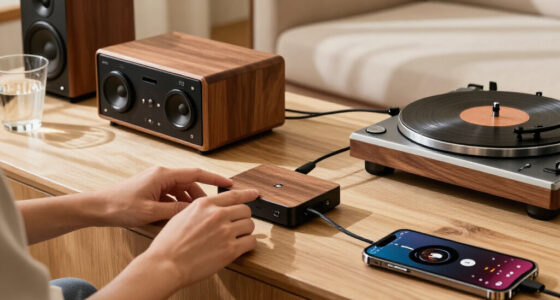


For a desktop DAC under $1,000, I’d start with the Fosi Audio ZH3 as the best overall fit in this lineup: it combines varied inputs and outputs with headphone amplification and preamp use. The FiiO K7 is a strong alternative if a capable headphone amp is your priority, while the Fosi Audio ZD3 suits a speaker-focused system that needs HDMI ARC. The main tradeoff is between a compact, simple DAC and a more flexible unit with extra connections and controls. Match the outputs to your headphones or speakers before paying for features you may not use. Read on for the full breakdown and recommendations by setup.

Get audio and creator gear delivered free with Prime
- Fast, free delivery on millions of items
- Prime Video, Amazon Music and more included
- Member-only deals all year
Complete the kit


Key Takeaways
- The ZH3 leads on connection flexibility: its USB, optical, coaxial, and RCA inputs pair with XLR, RCA, headphone, and balanced headphone outputs, making it adaptable across several desktop setups.
- The K7 is the clearer headphone-first alternative: its dedicated headphone amplification and balanced output matter more to many headphone listeners than the ZD3’s HDMI ARC and speaker-oriented preamp role.
- The ZD3 fills a specific connection gap: HDMI ARC gives it a place in TV-connected desktop or small-room systems, while it is less directly suited to someone who mainly needs a headphone amp.
- Simple models can be the smarter buy: the D10s is a DAC-focused choice, while the Q4 and Q6 offer more approachable desktop functions; choosing fewer features can simplify setup rather than limit sound quality by default.
- Gaming features and hi-fi connectivity serve different buyers: the EPOS GSX 1000 2nd Edition is aimed at gaming control, while models such as the ZH3, K7, and K11 are more relevant to mixed music and headphone systems.
| Fosi Audio Q6 Mini Desktop DAC |  | Best Compact DAC for Speakers | DAC chip: AKM AK4493S | Audio processor: XMOS XU316 | Inputs: Optical, coaxial, USB-C | VIEW ON AMAZON | See Our Full Breakdown |
| Fosi Audio SK02 DAC Headphone Amplifier & Preamp |  | Best Compact Headphone DAC | DAC chip: ESS SABRE ES9038Q2M | Op-amps: SGM8262 | Decoding support: DSD256; PCM 32-bit/384 kHz | VIEW ON AMAZON | See Our Full Breakdown |
| Topping D10s HiFi USB DAC |  | Best for a USB-Based Desktop System | DAC chip: ESS ES9038Q2M | USB interface: XMOS XU208 | PCM support: 16–32-bit, 44.1–384 kHz | VIEW ON AMAZON | See Our Full Breakdown |
| Fosi Audio K7 Desktop DAC Headphone Amplifier |  | Best Feature-Rich Desktop Hub | DAC: AK4493S | USB processor: XMOS XU208 | Maximum decoding: PCM 32-bit/384 kHz; DSD256 | VIEW ON AMAZON | See Our Full Breakdown |
| iFi Zen DAC 3 Desktop Digital Analog Converter (Black Stealth) |  | Best for High-Resolution Headphone Listening | DAC chipset: Burr-Brown True Native | PCM support: 32-bit/768 kHz | DSD support: DSD512 | VIEW ON AMAZON | See Our Full Breakdown |
| Audioengine D1 Desktop DAC and Headphone Amplifier – 32-Bit USB DAC, Preamp and Headphone Amp for PC, Mac, Gaming and Music |  | Best Compact Desktop Pick | Product type: Desktop DAC, preamp, and headphone amplifier | Size: Approximately 4 × 3 inches | Audio support: 32-bit, 24-bit, and CD-quality capable | VIEW ON AMAZON | See Our Full Breakdown |
| Fosi Audio K5 Pro Gaming DAC and Headphone Amplifier |  | Best for Gaming Controls and Connectivity | Model: Fosi Audio K5 Pro | Inputs: USB-C, optical, and coaxial | Outputs: RCA and 3.5 mm AUX | VIEW ON AMAZON | See Our Full Breakdown |
| iFi Zen DAC V2 | Desktop Digital Analog Converter with USB 3.0 B Input only/Outputs: 6.3mm Unbalanced / 4.4mm Balanced/RCA – MQA DECODER – Audio System Upgrade (Unit only) |  | Best for Balanced Headphone Listening | DAC: Burr-Brown True Native | Digital input: USB 3.0 Type-B, USB 2.0 compatible | Headphone outputs: 6.3 mm unbalanced and 4.4 mm balanced | VIEW ON AMAZON | See Our Full Breakdown |
| Fosi Audio ZH3 DAC Headphone Amp, Fully Balanced Preamp with AKM4493SEQ, XMOS XU316, PCM 768kHz, USB/Optical/COAX/RCA Inputs, XLR/RCA/4.4mm/6.35mm Outputs, Remote |  | Best Balanced All-in-One Value | DAC and processor: AKM4493SEQ DAC and XMOS XU316 | Supported formats: PCM up to 768 kHz/32-bit and DSD512 | Inputs: USB, optical, coaxial, and RCA | VIEW ON AMAZON | See Our Full Breakdown |
| Luxsin X8 Desktop DAC and Headphone Amplifier |  | Best Feature-Rich Premium Pick | DACs: 8 × Cirrus Logic CS43198 | Architecture: Parallel dual-mono, four DACs per channel | Maximum output power: 4,800 mW per channel | VIEW ON AMAZON | See Our Full Breakdown |
| Fosi Audio Q4 DAC and Headphone Amplifier |  | Best Value for Simple, Flexible Connections | Inputs: USB, optical, coaxial | Outputs: 3.5 mm headphone, RCA | Headphone impedance range: 16–200 Ω | VIEW ON AMAZON | See Our Full Breakdown |
| Fosi Audio ZD3 Desktop DAC Preamp with HDMI ARC, Bluetooth, USB, Optical, Coax, XLR/RCA Outputs |  | Best for a Flexible Speaker-Based System | DAC chipset: ES9039Q2M | Additional chips: XMOS XU316, QCC3031, LME49720 | Supported formats: DSD512, PCM up to 32-bit/768 kHz | VIEW ON AMAZON | See Our Full Breakdown |
| FiiO K11 DAC and Headphone Amplifier for Home Audio or PC |  | Best for Headphone Output Flexibility | Inputs: USB, coaxial, optical | Headphone outputs: 4.4 mm balanced, 6.35 mm | Other outputs: RCA line-out, coaxial | VIEW ON AMAZON | See Our Full Breakdown |
| FiiO K7 Desktop DAC and Amplifier |  | Best for Power-Hungry Headphones | DACs: Dual AK4493SEQ | Amplifier chips: Dual THX AAA 788+ | Inputs: USB, optical, coaxial, AUX | VIEW ON AMAZON | See Our Full Breakdown |
| EPOS GSX 1000 2nd Edition USB DAC and Gaming Amplifier |  | Best for PC Gaming and Chat Control | Connectivity: USB-C | Compatible devices: PC, Mac, laptops, desktops | Audio output modes: Stereo, surround sound | VIEW ON AMAZON | See Our Full Breakdown |
| desktop dac under 1000 | Inputs | Outputs |
|---|---|---|
| Fosi Audio Q6 Mini Desktop DAC | Optical, coaxial, USB-C | RCA, sub-out |
| Fosi Audio SK02 DAC Headphone | USB-C, optical | 4.4 mm balanced, 3.5 mm single-ended |
| Topping D10s HiFi USB DAC | — | — |
| Fosi Audio K7 Desktop DAC Head | USB-C, optical, coaxial, Bluetooth aptX HD/LL, 3.5 mm microphone | 4.4 mm balanced, 3.5 mm, RCA |
| iFi Zen DAC 3 Desktop Digital | — | — |
| Audioengine D1 Desktop DAC and | — | — |
| Fosi Audio K5 Pro Gaming DAC a | USB-C, optical, and coaxial | RCA and 3.5 mm AUX |
| iFi Zen DAC V2 | Desktop Digit | — | — |
| Fosi Audio ZH3 DAC Headphone A | USB, optical, coaxial, and RCA | 6.35 mm, 4.4 mm balanced, XLR, and RCA |
| Luxsin X8 Desktop DAC and Head | USB, optical, coaxial, and IIS | Balanced and unbalanced |
| Fosi Audio Q4 DAC and Headphon | USB, optical, coaxial | 3.5 mm headphone, RCA |
| Fosi Audio ZD3 Desktop DAC Pre | Bluetooth, USB, optical, coaxial, HDMI ARC | XLR, RCA |
| FiiO K11 DAC and Headphone Amp | USB, coaxial, optical | — |
| FiiO K7 Desktop DAC and Amplif | USB, optical, coaxial, AUX | 4.4 mm balanced, 6.35 mm and 3.5 mm single-ended |
| EPOS GSX 1000 2nd Edition USB | — | — |
More Details on Our Top Picks
Fosi Audio Q6 Mini Desktop DAC
The Fosi Audio Q6 is a focused choice for a desktop or living-room system built around powered speakers or an amplifier. Its USB-C, optical, and coaxial inputs accommodate a computer, TV, or streamer, while RCA and a dedicated sub-out make it easier to connect a stereo setup with a subwoofer. Compared with the Fosi Audio SK02, the Q6 puts its connections toward speaker systems rather than headphone listening: it cannot drive headphones or passive speakers directly, so you will need amplification downstream. PCM support up to 32-bit/768 kHz and DSD512 are generous formats, though they may matter less than the Q6’s input flexibility for many buyers. Its aluminum chassis keeps the unit compact, but this is a DAC, not an all-in-one desktop hub.
Pros:- USB-C, optical, and coaxial inputs suit computers, TVs, and digital audio sources
- RCA and dedicated sub-out support a stereo speaker setup with a subwoofer
- Supports PCM up to 32-bit/768 kHz and DSD512
- Compact aluminum-alloy construction
Cons:- Cannot drive headphones or passive speakers directly
- Requires a separate amplifier or powered speakers for listening
- No headphone output for a quick, all-in-one desktop setup
Best for: Desktop listeners with powered speakers or an existing amplifier who want USB, optical, coaxial, and subwoofer connections in a compact DAC.
Not ideal for: Headphone-first buyers or anyone expecting to connect passive speakers directly; the Q6 has no headphone amplifier or speaker power stage.
- DAC chip:AKM AK4493S
- Audio processor:XMOS XU316
- Inputs:Optical, coaxial, USB-C
- Outputs:RCA, sub-out
- Maximum PCM sampling:32-bit/768 kHz
- DSD support:DSD512
- Signal-to-noise ratio:≥121 dB
- Total harmonic distortion:<0.00012%
Our verdict“Choose the Q6 if you need a compact, high-resolution DAC with flexible digital inputs and sub-out for powered speakers or an existing amplifier.”
Fosi Audio SK02 DAC Headphone Amplifier & Preamp
The Fosi Audio SK02 is the more direct fit than the Q6 for someone who wants one small desktop unit to handle both conversion and headphone amplification. Its 3.5 mm and 4.4 mm outputs cover single-ended and balanced headphones, and the listed 1100 mW at 32 ohms gives it useful drive for many desktop headphones. USB-C and optical inputs make it straightforward to pair with a computer or compatible TV, while its preamp role adds a route to active speakers or an amplifier. The tradeoff is a narrower input selection than the Fosi Audio K7: there is no coaxial or Bluetooth input, and no remote control is specified. Buyers seeking a screen, more source options, and richer desktop controls may prefer the K7; the SK02 makes more sense when compact headphone use is the priority.
Pros:- 4.4 mm balanced and 3.5 mm single-ended headphone outputs
- Listed output power of 1100 mW at 32 ohms
- USB-C and optical inputs with plug-and-play computer use
- CNC-machined aluminum body and preamp functionality
Cons:- No Bluetooth or remote control is specified
- Fewer source inputs than the Fosi Audio K7, with no coaxial connection
- Compact enclosure may limit heat dissipation during extended high-power use
Best for: Computer listeners using 16–300-ohm headphones who want both balanced and single-ended outputs, plus a preamp option for active speakers.
Not ideal for: Buyers who need Bluetooth, coaxial input, a remote, or the wider control and connection set offered by the Fosi Audio K7.
- DAC chip:ESS SABRE ES9038Q2M
- Op-amps:SGM8262
- Decoding support:DSD256; PCM 32-bit/384 kHz
- Inputs:USB-C, optical
- Outputs:4.4 mm balanced, 3.5 mm single-ended
- Impedance range:16–300 ohms
- Balanced output power:1100 mW at 32 ohms
- Signal-to-noise ratio:120 dB
Our verdict“Pick the SK02 for a compact desktop headphone setup that needs balanced and single-ended outputs without the K7’s broader feature set.”
Topping D10s HiFi USB DAC
The Topping D10s is a straightforward pick for a computer-centered setup where the DAC will feed powered speakers, an amplifier, or a separate headphone amp. It supports PCM up to 32-bit/384 kHz and DSD256, and its USB interface can also send coaxial or optical digital output to another DAC. That pass-through role gives it a useful place in a system that may grow, unlike the Fosi Audio Q6, which is described around analog RCA and sub-out connections. The D10s is less suited to buyers who want to plug headphones straight into the DAC: no headphone output is specified, and the supplied details describe USB as its input rather than offering the Q6’s optical and coaxial source inputs. An op-amp socket appeals to DIY owners, but changing components can alter its electrical performance.
Pros:- Supports PCM up to 32-bit/384 kHz and DSD256
- USB interface can provide coaxial and optical digital output
- Can connect to powered speakers or feed an amplifier or headphone amp
- Replaceable op-amp socket offers a customization path for experienced DIY users
Cons:- No headphone output or built-in headphone amplifier is specified
- USB-centered input arrangement is less flexible than the Fosi Audio Q6 for multiple sources
- Changing the op-amp can alter the unit’s electrical parameters
Best for: PC listeners who need a USB DAC for powered speakers or a separate amplifier, or a USB-to-optical/coaxial bridge for another DAC.
Not ideal for: Headphone users seeking an integrated headphone amp, or buyers who need multiple digital inputs for TV, disc player, and streamer sources.
- DAC chip:ESS ES9038Q2M
- USB interface:XMOS XU208
- PCM support:16–32-bit, 44.1–384 kHz
- DSD support:DSD64–DSD256, DoP and Native
- Input:USB
- Digital outputs:Coaxial, optical
- THD+N:0.0002% at 1 kHz
- Op-amp:Replaceable socket
Our verdict“Choose the D10s for a PC-based system that needs a compact USB DAC or digital bridge, not an all-in-one headphone solution.”
Fosi Audio K7 Desktop DAC Headphone Amplifier
The Fosi Audio K7 stands apart from the simpler DACs here by combining headphone amplification, speaker or amplifier outputs, Bluetooth, and front-panel controls. Its USB-C, optical, coaxial, and Bluetooth inputs make it easier to switch among a computer, TV, and wireless source than with the USB-and-optical-only SK02. Up to 2100 mW output power and 4.4 mm balanced and 3.5 mm headphone connections suit a broader headphone setup, while the display, dual knobs, and shortcut buttons put adjustments within reach. That breadth comes with more setup commitment: the K7 needs its included 12 V supply, and the 3.5 mm microphone input may not match every microphone. Compared with the Q6, it is the stronger all-in-one headphone choice, but it is more than needed if the only job is feeding powered speakers.
Pros:- USB-C, optical, coaxial, and Bluetooth aptX HD/LL inputs
- Up to 2100 mW output power with 4.4 mm balanced and 3.5 mm headphone outputs
- RCA output adds a connection path to speakers or an amplifier
- Display, dual knobs, and shortcut buttons support hands-on desktop control
Cons:- Requires a 12 V power supply for desktop operation
- The 3.5 mm microphone input may not suit other microphone connector types
- More features and controls than needed for a simple speaker-only DAC setup
Best for: Desktop users who switch among wired and Bluetooth sources, use headphones, and want one unit with controls and outputs for a broader audio setup.
Not ideal for: Listeners who need only a basic DAC for powered speakers, or buyers who want a microphone input guaranteed to fit a connector other than 3.5 mm.
- DAC:AK4493S
- USB processor:XMOS XU208
- Maximum decoding:PCM 32-bit/384 kHz; DSD256
- Inputs:USB-C, optical, coaxial, Bluetooth aptX HD/LL, 3.5 mm microphone
- Outputs:4.4 mm balanced, 3.5 mm, RCA
- Output power:Up to 2100 mW
- Headphone amplifier:TPA6120
- Power supply:12 V
Our verdict“Choose the K7 if you want one desktop unit for multiple wired and Bluetooth sources, headphones, and speaker-system connections.”
iFi Zen DAC 3 Desktop Digital Analog Converter (Black Stealth)
The iFi Zen DAC 3 is aimed at listeners who want high-resolution decoding and both balanced and single-ended headphone connections in a desktop component. Its 4.4 mm balanced and 6.3 mm single-ended outputs cover common headphone plugs, while PowerMatch and TrueBass provide ways to tailor output and bass response to a particular setup. PCM 32-bit/768 kHz and DSD512 support match the Q6’s listed format ceilings, and the Zen adds full MQA decoding according to the supplied description. Unlike the Fosi Audio K7, the details here do not list Bluetooth, optical, or coaxial inputs; USB-C is the stated connection, so this is a better fit for a computer-led system than a multi-source hub. No output power figures are provided, making headphone-drive comparisons less clear from the available specifications.
Pros:- 4.4 mm balanced and 6.3 mm single-ended headphone outputs
- Supports PCM 32-bit/768 kHz and DSD512
- PowerMatch and TrueBass offer headphone-oriented adjustments
- Full MQA decoding is listed in the product description
Cons:- USB-C is the only input listed in the supplied product details
- Bluetooth, optical, and coaxial inputs are not specified
- No output-power figures are provided for comparing headphone drive
Best for: Computer-based headphone listeners who want 4.4 mm balanced and 6.3 mm single-ended connections, plus onboard bass and gain adjustments.
Not ideal for: Buyers needing Bluetooth or multiple digital inputs, or those who want published output-power figures to compare headphone-driving capacity.
- DAC chipset:Burr-Brown True Native
- PCM support:32-bit/768 kHz
- DSD support:DSD512
- MQA:Full decoding
- Input:USB-C
- Balanced headphone output:4.4 mm
- Single-ended headphone output:6.3 mm
- Headphone features:PowerMatch, TrueBass
Our verdict“Pick the Zen DAC 3 for a USB-connected headphone setup that values output choice and built-in adjustments over broad source connectivity.”
Audioengine D1 Desktop DAC and Headphone Amplifier – 32-Bit USB DAC, Preamp and Headphone Amp for PC, Mac, Gaming and Music
The D1 suits a desk where small footprint and easy switching matter more than a long list of connections. Its roughly 4-by-3-inch size leaves room for other gear, while headphone and speaker modes let one device serve private listening and desktop speakers. Compared with the Fosi Audio K5 Pro, it is the simpler choice: the K5 Pro adds optical and coaxial inputs, microphone support, and tone controls, while the D1 keeps the setup focused on computer audio and quick output changes. The tradeoff is limited connection detail in the supplied product information, so buyers needing multiple digital sources or a gaming mic should look elsewhere. Its stated 32-bit capability is useful for compatible playback, but format support alone does not guarantee a noticeable improvement with every source or headphone.
Pros:- Compact 4-by-3-inch footprint helps preserve desk space.
- Switches between headphone and speaker listening.
- Designed for PC, Mac, gaming, music, and home-office setups.
- Supports 32-bit, 24-bit, and CD-quality audio.
Cons:- Product information does not specify a broad range of digital inputs.
- No microphone input or onboard bass and treble controls are listed.
- Less suited to multi-source systems than the Fosi Audio K5 Pro.
Best for: Desktop listeners who want a compact DAC to switch between headphones and speakers without adding a large control unit.
Not ideal for: Gamers who need a microphone input or buyers connecting several optical and coaxial sources; the K5 Pro spells out those options more clearly.
- Product type:Desktop DAC, preamp, and headphone amplifier
- Size:Approximately 4 × 3 inches
- Audio support:32-bit, 24-bit, and CD-quality capable
- Listening outputs:Headphones and speakers
- Intended sources:PC and Mac
- Use cases:Gaming, music, home office, computer room, and dorm
Our verdict“Choose the D1 for a small, straightforward computer DAC with headphone and speaker switching, not for a feature-rich gaming or multi-input hub.”
Fosi Audio K5 Pro Gaming DAC and Headphone Amplifier
The K5 Pro earns its place for buyers who want a gaming-friendly control set alongside useful source flexibility. USB-C, optical, and coaxial inputs cover more than a basic computer-only DAC, and its microphone input, bass and treble knobs, and headphone support from 16 to 300 ohms make it practical for a mixed gaming and music desk. Compared with the Audioengine D1, it offers more explicit connection and tone-control options; compared with the Fosi Audio ZH3, it is less ambitious as a high-resolution, balanced hi-fi hub but easier to frame around everyday gaming. Its main limitation is that USB-C audio tops out at 24-bit/96 kHz, below optical and coaxial, and the audio connection uses the USB-A/C port rather than the combined charging/audio port. Buyers should check their cable and source arrangement before setup.
Pros:- Accepts USB-C, optical, and coaxial audio inputs.
- Microphone input and master, bass, and treble controls suit gaming setups.
- Supports headphones rated from 16 to 300 ohms.
- Provides RCA and 3.5 mm outputs and includes a headphone splitter.
Cons:- USB-C audio input is limited to 24-bit/96 kHz.
- Audio must connect through the USB-A/C port rather than the combined charging/audio USB-C port.
- Does not offer the balanced headphone and XLR outputs found on the Fosi Audio ZH3.
Best for: PC and console-style desk gamers who want a microphone input, quick tone adjustments, and both digital and analog connections.
Not ideal for: Listeners building a balanced headphone system or seeking the extensive output formats and higher-resolution support of the Fosi Audio ZH3.
- Model:Fosi Audio K5 Pro
- Inputs:USB-C, optical, and coaxial
- Outputs:RCA and 3.5 mm AUX
- Microphone input:Yes
- Headphone impedance range:16–300 ohms
- USB-C audio support:Up to 24-bit/96 kHz
- Optical/coaxial audio support:Up to 24-bit/192 kHz
- Output power:1000 mW at 16 ohms; 500 mW at 32 ohms; 80 mW at 300 ohms
- Controls:Master volume, bass, treble, and input mode
Our verdict“Pick the K5 Pro if gaming controls and flexible everyday connections matter more than balanced outputs or maximum format support.”
iFi Zen DAC V2 | Desktop Digital Analog Converter with USB 3.0 B Input only/Outputs: 6.3mm Unbalanced / 4.4mm Balanced/RCA – MQA DECODER – Audio System Upgrade (Unit only)
The Zen DAC V2 is aimed at headphone listeners who want balanced output and useful analog tuning in one desktop unit. Its 4.4 mm balanced and 6.3 mm unbalanced headphone connections, plus RCA output for speakers or an amplifier, make it more adaptable for a headphone-focused stereo setup than the Audioengine D1. It also adds PowerMatch for adjusting output to different headphone types and TrueBass for listeners who want a little more low-end presence. The tradeoff is a USB-only digital input; unlike the Fosi Audio K5 Pro, it cannot take optical or coaxial sources. The supplied product information also warns that the analog volume control may show slight channel imbalance below the 9 o’clock position, suggesting extra care with sensitive earphones at low listening levels.
Pros:- Offers both 6.3 mm unbalanced and 4.4 mm balanced headphone outputs.
- RCA output supports connection to active speakers or an amplifier.
- PowerMatch adjusts output for different headphone and earphone types.
- Supports PCM up to 384 kHz/24-bit, DSD256, DXD 384 kHz, and MQA decoding.
Cons:- USB is the only listed digital input, unlike the optical and coaxial options on the Fosi Audio K5 Pro.
- Slight channel imbalance may occur below the 9 o’clock volume position.
- The listing describes a unit-only package, so buyers should verify included cables and accessories.
Best for: Headphone listeners with balanced 4.4 mm cables who also want RCA connectivity and selectable gain and bass options.
Not ideal for: Buyers who need optical or coaxial inputs, or sensitive in-ear monitor users who regularly listen at very low volume settings.
- DAC:Burr-Brown True Native
- Digital input:USB 3.0 Type-B, USB 2.0 compatible
- Headphone outputs:6.3 mm unbalanced and 4.4 mm balanced
- Line output:RCA
- PCM support:Up to 384 kHz/24-bit
- Other format support:DSD256, DXD 384 kHz, and MQA decoding
- Headphone features:PowerMatch and TrueBass
- Dimensions:6.3 × 4.6 inches
Our verdict“Choose the Zen DAC V2 for balanced headphone listening and analog adjustment, provided USB-only input fits your source setup.”
Fosi Audio ZH3 DAC Headphone Amp, Fully Balanced Preamp with AKM4493SEQ, XMOS XU316, PCM 768kHz, USB/Optical/COAX/RCA Inputs, XLR/RCA/4.4mm/6.35mm Outputs, Remote
The ZH3 makes sense for buyers who want one desktop component to handle headphones, speakers, and multiple digital sources. USB, optical, coaxial, and RCA inputs pair with 4.4 mm and 6.35 mm headphone jacks plus XLR and RCA outputs, a broader system role than the USB-focused iFi Zen DAC V2. Its balanced headphone output is rated at 2570 mW into 32 ohms, giving it more headroom on paper than the Zen DAC V2’s feature-focused headphone offering. The cost of that flexibility is a busier setup: output levels differ between RCA and XLR, and EQ applies only to headphone output. Compared with the Luxsin X8, the ZH3 is a less elaborate alternative, but its inputs and outputs still cover many desktop and stereo configurations without relying on a touchscreen interface.
Pros:- Combines USB, optical, coaxial, and RCA inputs with balanced and unbalanced outputs.
- Balanced headphone output is rated at 2570 mW into 32 ohms.
- Supports PCM up to 768 kHz/32-bit and DSD512.
- Includes bass and treble EQ and selectable filter types.
Cons:- RCA and XLR output levels differ substantially, so output matching needs attention.
- EQ adjustments apply only to the headphone output.
- Its many connection and configuration options may be less approachable than the iFi Zen DAC V2.
Best for: Listeners assembling a desktop system with balanced headphones, active speakers or an amplifier, and several source devices.
Not ideal for: Beginners who want simple plug-and-play operation or buyers who expect EQ changes to affect both headphones and speaker outputs.
- DAC and processor:AKM4493SEQ DAC and XMOS XU316
- Supported formats:PCM up to 768 kHz/32-bit and DSD512
- Inputs:USB, optical, coaxial, and RCA
- Outputs:6.35 mm, 4.4 mm balanced, XLR, and RCA
- Single-ended output power:640 mW at 32 ohms
- Balanced output power:2570 mW at 32 ohms
- Weight:2.87 pounds
- Warranty:24 months
Our verdict“The ZH3 is a strong fit for buyers who want balanced headphone drive and broad system connectivity in a single desktop DAC.”
Luxsin X8 Desktop DAC and Headphone Amplifier
The X8 is the most feature-heavy option in this group, built for listeners who want powerful headphone drive and extensive DSP control rather than a bare-bones converter. Its eight CS43198 DACs in a dual-mono layout, touchscreen, app and web control, and AI-assisted parametric EQ make it more configurable than the Fosi Audio ZH3. The listed maximum of 4,800 mW per channel also gives it a substantial power specification for demanding headphones, while USB, optical, coaxial, and IIS inputs support a broad desktop system. That capability comes with practical compromises: the unit is a tabletop component, 3.5 mm headphones need the included adapter, and the one-year warranty is shorter than the ZH3’s listed 24 months. Buyers who want only basic USB headphone listening may find the X8’s controls and features unnecessary.
Pros:- Eight DACs are arranged in a parallel dual-mono architecture.
- AI-assisted parametric EQ, crossfeed, and app, web, or remote control add extensive tuning options.
- Maximum output is listed at 4,800 mW per channel.
- Includes USB, optical, coaxial, and IIS inputs with balanced and unbalanced outputs.
Cons:- Designed as a tabletop unit rather than a compact desk accessory.
- 3.5 mm headphones require the included 6.35 mm-to-3.5 mm adapter.
- Its one-year warranty is shorter than the Fosi Audio ZH3’s listed 24-month warranty.
Best for: Experienced desktop-audio listeners who want high headphone output, configurable EQ and crossfeed, and several digital input choices.
Not ideal for: Minimalist setups, small desks, or buyers who want direct 3.5 mm headphone connection without using an adapter.
- DACs:8 × Cirrus Logic CS43198
- Architecture:Parallel dual-mono, four DACs per channel
- Maximum output power:4,800 mW per channel
- Audio formats:DSD512 and PCM up to 768 kHz/32-bit
- Inputs:USB, optical, coaxial, and IIS
- Outputs:Balanced and unbalanced
- Display:4-inch touchscreen
- Chassis and weight:CNC aluminum; 1 kg
- Warranty:1 year
Our verdict“Choose the X8 if you want a highly configurable desktop DAC with substantial stated output power; skip it if a simple, compact setup is the goal.”
Fosi Audio Q4 DAC and Headphone Amplifier
The Fosi Audio Q4 earns its place as a straightforward desktop DAC for listeners who need several digital inputs without a complicated setup. USB, optical, and coaxial connections make it easier to share the unit between a computer, television, and other sources than the USB-only Topping D10s. Its bass and treble controls also let you make quick adjustments without relying on software. The compact metal case suits a crowded desk, and plug-and-play operation keeps setup approachable. The tradeoff is a more basic feature set: it has no balanced output, microphone input, or stated high-resolution support beyond 24-bit/192 kHz. Compared with the more capable FiiO K11, it is the simpler choice, but not the one I would pick for demanding headphones or advanced output options.
Pros:- USB, optical, and coaxial inputs cover common desktop and TV sources.
- Bass and treble controls allow quick sound adjustments.
- Compact metal enclosure fits smaller workspaces.
- Plug-and-play setup avoids driver installation.
Cons:- No microphone input for headset communication.
- No balanced headphone output or advanced headphone-drive features are listed.
- 24-bit/192 kHz support is less extensive than the higher-resolution formats offered by some alternatives.
Best for: Desk listeners who want an affordable, compact DAC for a computer or TV, with multiple digital inputs and simple tone controls.
Not ideal for: Buyers who need a microphone connection, balanced headphone output, or support for formats beyond 24-bit/192 kHz.
- Inputs:USB, optical, coaxial
- Outputs:3.5 mm headphone, RCA
- Headphone impedance range:16–200 Ω
- Audio resolution:24-bit/192 kHz
- Controls:Bass, treble, volume
- Dimensions:3.9 × 2.9 in
- Weight:430 g
- Power supply:5 V DC
Our verdict“Choose the Q4 for a small, easy-to-use DAC with useful input variety, but pick the FiiO K11 if headphone output options and more headroom matter more.”
Fosi Audio ZD3 Desktop DAC Preamp with HDMI ARC, Bluetooth, USB, Optical, Coax, XLR/RCA Outputs
The Fosi Audio ZD3 is the most connection-focused preamp in this group. Its HDMI ARC and Bluetooth inputs add TV and wireless sources to the usual USB, optical, and coaxial options, while XLR and RCA outputs let it connect to different powered speakers or amplifiers. That makes it a stronger fit for a multi-source home setup than the headphone-centered FiiO K11 or FiiO K7. The OLED display and remote are useful when the DAC sits across a room rather than beside a keyboard. Its high-resolution format support is extensive, but that does not make it a headphone amplifier: no headphone output or power rating is provided. The broad feature set may also take more setup than the plug-and-play Fosi Q4, so beginners seeking a basic computer DAC may not benefit from its extra connections.
Pros:- HDMI ARC, Bluetooth, USB, optical, and coaxial inputs serve varied sources.
- XLR and RCA outputs support balanced and unbalanced system connections.
- OLED display and remote make operation easier at a distance.
- Supports DSD512 and PCM up to 32-bit/768 kHz.
Cons:- No headphone output or headphone amplifier power rating is specified.
- Its range of connections and preamp options can complicate setup for first-time buyers.
- The feature set is less useful for someone who only needs a computer-to-headphones DAC.
Best for: Listeners building a desktop or living-room speaker system who need HDMI ARC, wireless input, and both balanced and unbalanced line outputs.
Not ideal for: Headphone-first buyers who need a built-in headphone amp, or beginners who want a minimal USB DAC with few setup choices.
- DAC chipset:ES9039Q2M
- Additional chips:XMOS XU316, QCC3031, LME49720
- Supported formats:DSD512, PCM up to 32-bit/768 kHz
- Inputs:Bluetooth, USB, optical, coaxial, HDMI ARC
- Outputs:XLR, RCA
- Display:1.5-inch OLED
- Additional features:Remote control, preamp bypass, 12 V trigger in/out
Our verdict“Pick the ZD3 when your desktop DAC needs to anchor a multi-source speaker system, not when you mainly want to power headphones.”
FiiO K11 DAC and Headphone Amplifier for Home Audio or PC
The FiiO K11 makes the most sense for a desktop listener who wants one box for headphones and a speaker or amplifier connection. Its 4.4 mm balanced and 6.35 mm headphone outputs give it a wider headphone connection choice than the single 3.5 mm output on the Fosi Audio Q4, while RCA line-out adds a path to external audio gear. USB, optical, and coaxial inputs cover the usual computer and digital-source needs. The VA display reports settings such as sampling rate, volume, and gain, which makes status easier to read at a glance. The supplied details cite up to 1400 mW and 384 kHz/24-bit with DSD256 support, though they do not specify the conditions for the power figure. Unlike the FiiO K7, the K11’s complete input and output specifications are less clearly documented here.
Pros:- 4.4 mm balanced and 6.35 mm single-ended headphone outputs accommodate different cables.
- RCA line-out supports connection to an external amplifier or speaker system.
- VA display shows operating details including sampling rate, volume, gain, and output mode.
- Aluminum alloy body and slim design suit a tidy desktop setup.
Cons:- The provided specifications do not state the conditions behind the 1400 mW output figure.
- No Bluetooth or HDMI ARC input is listed, unlike the Fosi Audio ZD3.
- The available product data does not fully detail its output configuration and supported formats.
Best for: Headphone listeners who want both balanced and single-ended connections, a readable status display, and a line output for powered speakers or an amplifier.
Not ideal for: Buyers who need a fully documented power specification or who want HDMI ARC, Bluetooth, or other inputs beyond USB, optical, and coaxial.
- Inputs:USB, coaxial, optical
- Headphone outputs:4.4 mm balanced, 6.35 mm
- Other outputs:RCA line-out, coaxial
- Output power:Up to 1400 mW
- Maximum sample rate:384 kHz
- Bit depth:24-bit
- DSD support:DSD256
- Display:VA display showing sampling rate, volume, gain, and output mode
- Body material:Aluminum alloy
Our verdict“Choose the K11 for varied headphone connections and a useful desktop display, while buyers prioritizing more fully documented amplifier details may prefer the FiiO K7.”
FiiO K7 Desktop DAC and Amplifier
The FiiO K7 stands out for listeners who need a dedicated desktop headphone amp rather than a compact DAC with basic output. Its dual THX AAA 788+ amplifier chips and listed 2000 mW output target full-size headphones that may need more drive than the Fosi Audio Q4 is specified to provide. Balanced 4.4 mm and single-ended 6.35 mm and 3.5 mm outputs also give it more connection flexibility than the Q4. USB, optical, coaxial, and AUX inputs accommodate several sources, while gain and output-level choices let users adapt the setup. The cost of that capability is a heavier, mains-powered desktop unit rather than a portable accessory. Compared with the FiiO K11, the K7’s amplifier specifications are more explicit; buyers who do not need the added output options may find a simpler DAC sufficient.
Pros:- Listed 2000 mW output is aimed at driving a broad range of headphones.
- 4.4 mm balanced and 6.35 mm and 3.5 mm single-ended outputs offer connection choice.
- USB, optical, coaxial, and AUX inputs support multiple sources.
- Adjustable gain and RGB indicators provide at-a-glance operating information.
Cons:- Requires a 12 V power supply, limiting portability.
- At 1.13 kg, it takes more desk space and is less convenient to move than the compact Fosi Q4.
- The supplied THD+N figure is listed as 1% under balanced output, which gives limited context for comparing performance.
Best for: Headphone owners with full-size or harder-to-drive models who want balanced and single-ended outputs plus multiple desktop inputs.
Not ideal for: Travelers, small-desk users, or listeners with easy-to-drive headphones who do not need the K7’s larger powered amplifier setup.
- DACs:Dual AK4493SEQ
- Amplifier chips:Dual THX AAA 788+
- Inputs:USB, optical, coaxial, AUX
- Outputs:4.4 mm balanced, 6.35 mm and 3.5 mm single-ended
- Output power:2000 mW
- Gain and output settings:2 gain levels, 3 output levels
- Power supply:12 V
- Material and weight:Aluminum alloy, 1.13 kg
Our verdict“Choose the K7 if headphone-driving power and output flexibility lead your checklist; skip it if a small, low-complexity DAC will meet your needs.”
EPOS GSX 1000 2nd Edition USB DAC and Gaming Amplifier
The EPOS GSX 1000 2nd Edition serves a different purpose from music-focused desktop DACs: it is built around game audio, chat, and quick switching rather than broad source support or high-resolution playback. Its separate game and chat controls, adjustable sidetone, saved profiles, and 7.1 surround mode give PC players convenient control over a headset setup. The touch panel and volume ring also make frequent adjustments accessible without opening software menus, and switching between headphones and speakers avoids cable changes. Compared with the FiiO K7, though, it is far more specialized and offers just USB-C connectivity with a 48 kHz maximum sample rate. Buyers wanting a DAC for varied music sources, optical or coaxial devices, or higher-resolution files should choose a more general desktop unit. Its described headset connection also suits two-jack analog headsets.
Pros:- Separate game and chat controls make balancing voice and gameplay straightforward.
- Adjustable sidetone helps users monitor their own voice.
- 7.1 surround mode and EQ presets focus on gaming audio options.
- Switches between headphone and speaker output without unplugging cables.
Cons:- Maximum sample rate is 48 kHz, below the support listed for the FiiO K11 and FiiO K7.
- USB-C is the only listed connection, limiting use with other digital sources.
- Headset compatibility is described for two-jack analog headsets, which may not suit every headphone or microphone setup.
Best for: PC and Mac gamers using a compatible two-jack analog headset who want quick control of game, chat, sidetone, and surround settings.
Not ideal for: Music listeners seeking high-resolution playback or buyers needing optical, coaxial, Bluetooth, or a broadly compatible headphone amplifier.
- Connectivity:USB-C
- Compatible devices:PC, Mac, laptops, desktops
- Audio output modes:Stereo, surround sound
- Surround channels:2.0, 7.1
- Maximum sample rate:48 kHz
- Signal-to-noise ratio:120 dB
- Controls:LED touch panel, aluminum volume wheel
- Audio features:Adjustable sidetone, separate game and chat controls, EQ presets, four saved profiles
- Dimensions:5.63 × 5.47 × 2.76 in
Our verdict“Pick the GSX 1000 for hands-on game-and-chat control on a compatible computer headset, not as a general-purpose music DAC.”
How We Picked
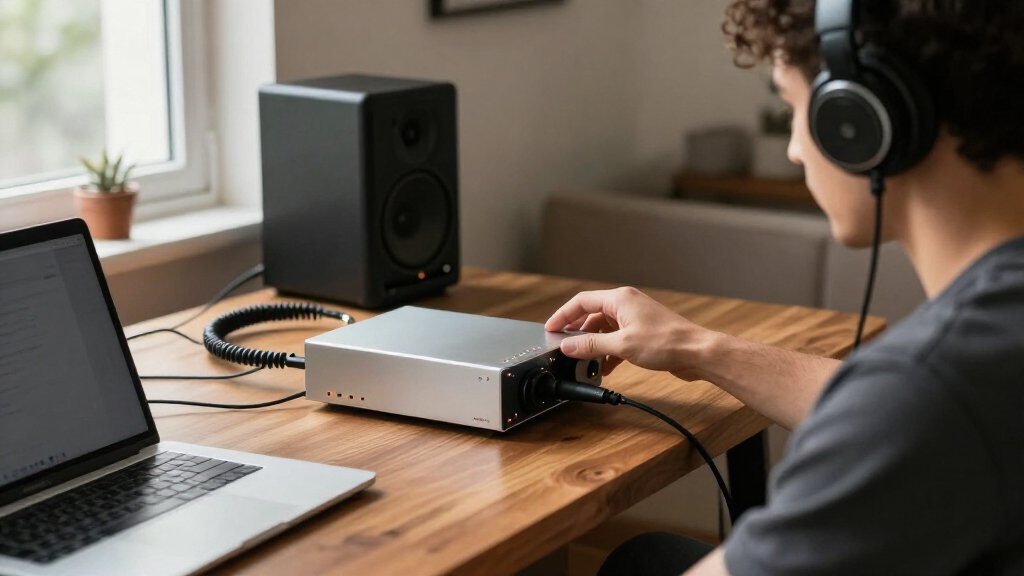
I compared these 15 models by how well their functions match common desktop jobs: feeding headphones, driving powered speakers, connecting a TV or game system, and serving as a DAC in a wider audio setup. I weighed usable input and output choices, headphone amplification, balanced connections, physical controls, and how much setup flexibility each model provides. I also looked at whether a product’s feature set appears focused or adds functions a buyer may not need.
The ranking favors models that serve more than one plausible desktop setup without losing a clear purpose. That puts the ZH3 first for its broad connectivity and headphone/preamp roles, with the K7 higher for headphone-focused use and the ZD3 distinguished by HDMI ARC and preamp connectivity. Compact or simpler units rank better for buyers who value straightforward use, while specialist gaming or DAC-only models rank for their narrower strengths rather than being treated as universal picks. I did not rank by claimed sound quality alone; system fit and practical tradeoffs matter more when choosing among DACs.
Factors to Consider When Choosing Desktop Dac Under 1000
I’d choose a desktop DAC by starting with the devices it must connect and the job it needs to do. The DAC chip or supported sample-rate figures rarely settle the decision on their own; output type, amplification, controls, and the rest of the system usually matter more.
1. Decide Whether You Need a DAC, a Headphone Amp, or Both
A DAC converts digital audio into an analog signal, but it does not necessarily provide enough power or control for every pair of headphones. A combo unit adds headphone amplification, which can reduce clutter and give you a single desktop control point. If you mainly use powered speakers or an existing amplifier, a DAC with line-level outputs may be all you need. A common mistake is paying for a strong headphone amp when the unit will only feed powered speakers. Check whether your headphones need more drive than your current source provides, and think about whether you want a volume knob to control speakers too.
2. Match Inputs and Outputs to Your Actual Setup
List every source and destination before comparing specifications: a computer, TV, console, headphones, powered speakers, and external amp may each use different connections. USB is a common computer link, while optical and coaxial can connect other digital sources; HDMI ARC can be useful when a TV is part of the system. On the output side, RCA is common for consumer equipment, while XLR is useful in setups built around balanced connections. Extra ports have little value if your sources cannot use them, and adapters may add cost or clutter. Leave room for one likely future source, but do not buy a connection-rich model solely for hypothetical upgrades.
3. Treat Balanced Connections as a System Choice
Balanced headphone outputs and balanced line outputs are different features, so check which one a product actually provides. A balanced headphone connection may be useful with compatible headphones and an amplifier designed for it, but it does not make every headphone sound better by itself. Balanced line connections matter most when the downstream amplifier or speakers have matching inputs, especially in a setup where cable noise is a concern. Do not replace a good single-ended system just to gain a balanced socket. Confirm connector compatibility and the manufacturer’s guidance before pairing equipment.
4. Prioritize Controls You Will Use Every Day
Desktop gear is handled often, so physical volume control, input selection, a display, and remote operation can affect everyday satisfaction more than a rarely used format specification. A remote helps when the DAC sits beside a TV or across a desk, while a front-panel knob makes quick headphone adjustments easier. Smaller units can fit crowded desks but may offer fewer direct controls. Buyers sometimes focus on maximum supported resolution even when their listening sources and software do not use it. Choose for the way you switch sources and adjust volume, not for the longest spec sheet.
5. Keep Gaming and Music Priorities Separate
Gaming-focused DACs may emphasize game-oriented controls or sound processing, while general-purpose DACs tend to prioritize source connections, line outputs, and headphone use. Decide whether you need a simple computer-to-headphone path, specialized gaming functions, or one device to handle both games and music. A gaming unit can be a poor match for a speaker system if it lacks the outputs you need; a hi-fi DAC can also be awkward if you expect gaming-specific controls. Check console compatibility and the connection method before purchase, since USB support and features can vary by platform. For a mixed setup, favor reliable switching and the right outputs over labels aimed at one listening category.
6. Pay for Headroom and Flexibility Only When They Fit
A higher-powered headphone amp can be useful for demanding headphones, but it is not a universal upgrade for easy-to-drive models. Likewise, high-resolution format support matters only when your playback chain and files use those formats; it should not outweigh noise performance, usable controls, or compatibility. Paying more can make sense when it consolidates several devices or adds inputs your system genuinely needs. It makes less sense when the added functions duplicate equipment you already own. Compare the cost of a combo unit with the separate DAC and amplifier you would otherwise need, then choose the simpler arrangement that meets your requirements.
Frequently Asked Questions
Should I choose the Fosi Audio ZH3 or the FiiO K7 for headphones?
I’d lean toward the FiiO K7 if your main goal is a desktop headphone setup and you want the amplifier role to be central. The ZH3 makes more sense if you also need a wider mix of sources, preamp use, or multiple output types. Compare the connections on your headphones and any amplifier or speakers you already own before deciding. A feature-rich DAC is not automatically the better headphone choice if its extra inputs will go unused. Check the manufacturers’ output and compatibility details for your specific headphones.
Do I need HDMI ARC on a desktop DAC?
HDMI ARC is useful when a TV is one of your regular audio sources and you want a direct link to a DAC or preamp. It is usually unnecessary for a computer-only desk, where USB may handle the main source. Before choosing a model with ARC, confirm that your TV and the DAC support the connection in the way your system requires. Also check how volume control will work across the TV, DAC, and speakers. If the TV is only an occasional source, a different digital input may be enough.
Is a DAC-only model enough if I already own an amplifier?
Often, yes: if your amplifier has the input you need and your headphones are already driven by a suitable headphone amp, a DAC-only unit may be the tidier choice. The Topping D10s illustrates the more focused DAC role in this group, compared with combo units such as the K7 or SK02. Confirm that the DAC’s output type matches the amplifier’s input and that you have a convenient way to control listening volume. If you plan to connect headphones directly, a DAC-only device may not provide the amplification you need. Avoid paying for a second amp unless it solves a specific problem.
Will a desktop DAC improve sound from every computer or headphone setup?
No. A DAC can address a weak or inconvenient audio output, but the result depends on the source, headphones or speakers, amplification, and how the system is configured. If your current audio is already clean and compatible with your gear, a new unit may add convenience or connections without a clear audible change. Check that the DAC supports your computer’s operating system and your preferred playback connection. Also confirm that it can drive your headphones or provide the right line output for your speakers. Prioritize a known connection or amplification need rather than buying on resolution numbers alone.
Which option makes the most sense for a gaming desk used for music too?
I’d choose based on whether gaming-specific controls or general audio flexibility matters more. The EPOS GSX 1000 2nd Edition is the specialist option here for a gaming-oriented setup, while the K7 or ZH3 better suits a desk that also needs broader headphone and source connections. If you use speakers as well as a headset, confirm the outputs and switching behavior before committing. Check compatibility with your console or computer, since features can depend on the platform and connection. For regular music listening, make sure the unit’s everyday volume and input controls are comfortable for your routine.
Conclusion
For most mixed desktop systems, I’d choose the Fosi Audio ZH3 as best overall because its inputs and outputs cover more use cases than a simple DAC or headphone-only unit. My best value pick is the Fosi Audio Q4 for buyers who want a straightforward DAC and headphone amp without needing the ZH3’s broader feature set; the K7 is a stronger alternative if headphone amplification is the priority. For a best premium, feature-led choice, the Luxsin X8 is the model to compare when you want a more ambitious desktop DAC and headphone amp, though its extra capability may be unnecessary for basic setups. Beginners can start with the Audioengine D1 for a recognizable DAC, preamp, and headphone-amp combination, while the Fosi Audio ZD3 is the better fit for a TV-connected system that benefits from HDMI ARC. For gaming-specific use, consider the EPOS GSX 1000 2nd Edition; for a focused DAC feeding equipment you already own, look at the Topping D10s. The best choice is the one that matches your connections and listening habits, not the one with the longest feature list.