
For a desktop DAC under $500, I’d start with the FiiO K7 as the best overall choice for buyers who want a versatile DAC and headphone amplifier, while the FiiO K11 R2R stands out for its distinct R2R design and the Fosi Audio K7 for gaming-friendly connectivity. The lineup ranges from simple USB converters to full headphone amps and DAC/preamp hubs, so the right pick depends on what you’ll connect and how much power your headphones need. More inputs and balanced outputs can add flexibility, but they may bring extra controls or features you won’t use. I compare all 15 options by function, connections, usability, and tradeoffs below. Read on for the full breakdown and a guide to matching a DAC to your setup.

Get audio and creator gear delivered free with Prime
- Fast, free delivery on millions of items
- Prime Video, Amazon Music and more included
- Member-only deals all year
Complete the kit


Key Takeaways
- The FiiO K7 is my best overall pick because it serves as a capable desktop DAC and headphone amplifier without narrowing the setup to one use case.
- R2R models are a distinct choice, not an automatic upgrade: the FiiO K11 R2R and K13 R2R appeal to buyers who specifically want that conversion approach, while the standard K11 and other DACs suit more conventional needs.
- Gaming connections change the shortlist: the Fosi Audio K7 adds Bluetooth and a microphone input, features that matter more to a gaming desk than a basic DAC’s format support.
- A DAC/preamp is not the same purchase as a headphone amp: the Fosi Audio ZD3 focuses on system integration, while models such as the K7 and K5 Pro combine DAC and headphone amplification.
- The simplest models can be the smarter buy: the Fosi Audio Q4 and Q6 make more sense for straightforward connections than feature-heavy units if a buyer does not need balanced headphone outputs or multiple modes.
| iFi ZEN DAC V2 Desktop USB DAC with MQA Decoder |  | Best All-Rounder for Headphone and Speaker Setups | Type: Desktop digital-to-analog converter | Input: USB 3.0 Type-B; USB 2.0 compatible | Outputs: 6.3 mm unbalanced, 4.4 mm balanced, RCA | VIEW ON AMAZON | See Our Full Breakdown |
| Fosi Audio K5 Pro Gaming DAC and Headphone Amplifier |  | Best for Gaming and Multiple Digital Sources | Inputs: USB-C, optical, coaxial | Outputs: RCA, 3.5 mm AUX | Headphone impedance range: 16–300 ohms | VIEW ON AMAZON | See Our Full Breakdown |
| iFi Zen Air DAC 2 Hi-Res Audio Converter |  | Best for a Simple Hi-Res Headphone Upgrade | Product type: Hi-res audio converter | Listed source devices: PCs, laptops, tablets | Headphone output: Balanced headphone output | VIEW ON AMAZON | See Our Full Breakdown |
| Fosi Audio ZD3 Desktop DAC Preamp with Fully Balanced Digital to Analog Conversion |  | Best for a Speaker or Home Audio System | Chipset: XMOS XU316, ES9039Q2M, QCC3031, LME49720 | Supported audio: DSD512, PCM 32-bit/768 kHz | Inputs: Bluetooth, USB, optical, coaxial, HDMI ARC | VIEW ON AMAZON | See Our Full Breakdown |
| FiiO K11 R2R Desktop DAC and Headphone Amplifier, Black | 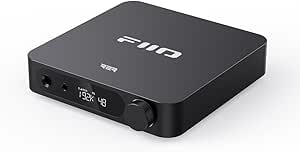 | Best for R2R Sound Options and Headphone Power | DAC architecture: Four-channel, fully differential 24-bit R2R resistor array | Resistors: 192 total; 0.1% accuracy | Operating modes: NOS and OS; OS oversamples to 384 kHz | VIEW ON AMAZON | See Our Full Breakdown |
| AIYIMA DAC A7 Bluetooth Desktop DAC and Headphone Amplifier |  | Best for Wireless Listening | DAC chip: ESS ES9038Q2M | Bluetooth chip and version: Qualcomm QCC3084; Bluetooth 5.4 | Bluetooth codecs: LDAC, aptX-HD | VIEW ON AMAZON | See Our Full Breakdown |
| Fosi Audio ZH3 Balanced Desktop DAC, Headphone Amplifier, and Preamp |  | Best for System Flexibility | DAC chipset and processor: AKM4493SEQ; XMOS XU316 | Supported audio: PCM up to 768kHz/32-bit; DSD512 | Headphone outputs: 4.4mm balanced; 6.35mm single-ended | VIEW ON AMAZON | See Our Full Breakdown |
| FiiO K5Pro ESS Desktop DAC and Headphone Amplifier |  | Best for Straightforward Wired Setups | DAC chip: ES9038PRO | USB decoding chip: XUF208 | Supported inputs: USB, coaxial, optical, RCA line-in | VIEW ON AMAZON | See Our Full Breakdown |
| FiiO K7 Desktop DAC and Amplifier |  | Best for Balanced Headphones | DACs: Dual AK4493SEQ | Amplifiers: Dual THX AAA 788+ | Inputs: USB, optical, coaxial, AUX | VIEW ON AMAZON | See Our Full Breakdown |
| Fosi Audio K7 DAC Headphone Amp |  | Best for Gaming and Mixed Sources | Supported audio resolution: PCM up to 384kHz/32-bit | Output power: 2100mW | Connectivity: USB-C, Bluetooth aptX HD/LL, optical, coaxial, mic input | VIEW ON AMAZON | See Our Full Breakdown |
| Fosi Audio Q4 DAC Headphone Amplifier |  | Best Budget-Friendly Starter | Inputs: USB, optical, coaxial | Outputs: RCA, 3.5mm headphone | Maximum audio resolution: 24-bit/192kHz | VIEW ON AMAZON | See Our Full Breakdown |
| FiiO K11 Desktop Headphone DAC and Amplifier, Titanium |  | Best for Powerful Headphone Driving | Inputs: USB, coaxial, optical | Headphone outputs: 4.4mm balanced, 6.35mm | Other outputs: RCA line-out, coaxial | VIEW ON AMAZON | See Our Full Breakdown |
| Fosi Audio SK02 DAC Headphone Amplifier & Preamp |  | Best Compact Balanced DAC/Amp | DAC: ESS SABRE ES9038Q2M | Inputs: USB-C, optical | Headphone outputs: 4.4mm balanced, 3.5mm | VIEW ON AMAZON | See Our Full Breakdown |
| Fosi Audio Q6 Mini Desktop DAC |  | Best for Speaker and Subwoofer Systems | DAC chip: AKM AK4493S | Audio processor: XMOS XU316 | Inputs: Optical, coaxial, USB-C | VIEW ON AMAZON | See Our Full Breakdown |
| FiiO K13 R2R Desktop DAC and Headphone Amplifier |  | Best Feature-Rich R2R Pick | DAC architecture: Fully differential 24-bit R2R | DAC resistors: 192 thin-film resistors; 0.1% tolerance; 30ppm temperature drift | Listening modes: NOS and OS; OS upsampling up to 384kHz | VIEW ON AMAZON | See Our Full Breakdown |
| desktop dac under 500 | Outputs | Inputs |
|---|---|---|
| iFi ZEN DAC V2 Desktop USB DAC | 6.3 mm unbalanced, 4.4 mm balanced, RCA | — |
| Fosi Audio K5 Pro Gaming DAC a | RCA, 3.5 mm AUX | USB-C, optical, coaxial |
| iFi Zen Air DAC 2 Hi-Res Audio | — | — |
| Fosi Audio ZD3 Desktop DAC Pre | XLR, RCA | Bluetooth, USB, optical, coaxial, HDMI ARC |
| FiiO K11 R2R Desktop DAC and H | — | — |
| AIYIMA DAC A7 Bluetooth Deskto | — | — |
| Fosi Audio ZH3 Balanced Deskto | 4.4mm, 6.35mm, RCA, XLR | Coaxial, optical, USB, RCA |
| FiiO K5Pro ESS Desktop DAC and | 6.35mm headphone out; RCA line-out | — |
| FiiO K7 Desktop DAC and Amplif | 4.4mm balanced; 6.35mm and 3.5mm single-ended | USB, optical, coaxial, AUX |
| Fosi Audio K7 DAC Headphone Am | 4.4mm balanced, 3.5mm, RCA | — |
| Fosi Audio Q4 DAC Headphone Am | RCA, 3.5mm headphone | USB, optical, coaxial |
| FiiO K11 Desktop Headphone DAC | — | USB, coaxial, optical |
| Fosi Audio SK02 DAC Headphone | — | USB-C, optical |
| Fosi Audio Q6 Mini Desktop DAC | RCA, sub-out | Optical, coaxial, USB-C |
| FiiO K13 R2R Desktop DAC and H | — | — |
More Details on Our Top Picks
iFi ZEN DAC V2 Desktop USB DAC with MQA Decoder
The iFi ZEN DAC V2 earns this role by balancing headphone features with useful connections for a broader desktop system. Its 4.4 mm balanced and 6.3 mm unbalanced headphone outputs suit different headphones, while RCA lets it feed powered speakers or an amplifier. Compared with the Fosi Audio K5 Pro, it offers balanced headphone output and broader high-resolution format support, but lacks the K5 Pro’s optical, coaxial, and microphone connections. PowerMatch adjusts output for different headphone needs, and TrueBass gives listeners a way to add low-end weight without changing the source. The tradeoff is a USB-focused input setup, and very low volume settings may bring channel imbalance. I’d choose it for a mixed headphone-and-speaker desk, not a gaming station that needs a mic input.
Pros:- 4.4 mm balanced, 6.3 mm unbalanced, and RCA outputs support varied desktop systems.
- Supports PCM up to 384 kHz/24-bit, DSD256, DXD 384 kHz, and MQA.
- PowerMatch and TrueBass add practical headphone adjustments.
Cons:- USB is the only listed digital input, limiting connection to TVs and other optical or coaxial sources.
- May have slight channel imbalance at very low volume settings.
- The listed package includes the unit only.
Best for: Desktop listeners who want one USB DAC for balanced or unbalanced headphones and RCA-connected speakers or an amplifier.
Not ideal for: Gamers needing microphone input or users who want optical and coaxial digital inputs on the DAC.
- Type:Desktop digital-to-analog converter
- Input:USB 3.0 Type-B; USB 2.0 compatible
- Outputs:6.3 mm unbalanced, 4.4 mm balanced, RCA
- Supported formats:PCM up to 384 kHz/24-bit, DSD256, DXD 384 kHz, MQA
- Controls:Variable analog volume, PowerMatch, TrueBass
- Material:Aluminium
- Dimensions:6.3 × 4.6 in
Our verdict“Choose the ZEN DAC V2 if you want a USB-centered desktop DAC that can serve headphones and RCA-connected speakers, and skip it if you need gaming or TV inputs.”
Fosi Audio K5 Pro Gaming DAC and Headphone Amplifier
The Fosi Audio K5 Pro is the practical pick for a desk that needs gaming-friendly controls and more than one digital source. USB-C, optical, and coaxial inputs make it easier to connect a computer alongside compatible consoles or other gear, while the microphone input and bass and treble controls suit headset use and quick sound adjustments. That makes it a more natural gaming choice than the iFi ZEN DAC V2, which has balanced headphone output and broader format support but no listed mic input or optical and coaxial inputs. The K5 Pro supports headphones from 16 to 300 ohms, though its USB stream tops out at 24-bit/96 kHz; optical and coaxial handle higher sample rates. I’d favor its versatility over audiophile format range, and skip it if balanced headphone output is a priority.
Pros:- USB-C, optical, and coaxial inputs cover several common desktop and entertainment sources.
- Microphone input and bass and treble controls are useful for gaming and headset setups.
- Supports headphones from 16 to 300 ohms, with output power specified across that range.
- Includes a headphone splitter and USB and optical cables.
Cons:- USB audio is limited to 24-bit/96 kHz, below its optical and coaxial limits.
- Offers 3.5 mm headphone output rather than a balanced connection.
- Phone audio must connect through the USB-A/C port.
Best for: PC and console gamers who want a microphone connection, tone controls, and multiple digital inputs in a compact desktop setup.
Not ideal for: Listeners seeking balanced headphone output, MQA decoding, or higher-resolution USB audio than 24-bit/96 kHz.
- Inputs:USB-C, optical, coaxial
- Outputs:RCA, 3.5 mm AUX
- Headphone impedance range:16–300 ohms
- USB audio resolution:Up to 24-bit/96 kHz
- Optical/coaxial resolution:Up to 24-bit/192 kHz
- Output power:1000 mW at 16 ohms; 500 mW at 32 ohms; 300 mW at 64 ohms; 150 mW at 128 ohms; 80 mW at 300 ohms
- Controls:Master volume, bass, treble, input mode
Our verdict“Pick the K5 Pro for a gaming desk that needs mic support and flexible inputs, but choose another model if balanced headphone drive or high-resolution USB playback matters more.”
iFi Zen Air DAC 2 Hi-Res Audio Converter
The iFi Zen Air DAC 2 is aimed at listeners who want a straightforward step up from a computer or tablet’s built-in audio without a long list of setup choices. Its stated focus is clarity, dynamics, and increased headphone drive, with PowerMatch intended to adapt output to different headphones. Compared with the Fosi Audio K5 Pro, it is presented more as a music-listening DAC than a gaming hub: the K5 Pro has specified USB, optical, and coaxial inputs, plus a mic input and tone controls, while the Zen Air DAC 2’s connectivity details are limited. That lack of detail makes it harder to judge how well it fits a complex desktop system. I’d shortlist it for a simple headphone setup, but readers who need confirmed inputs, outputs, or format limits should favor a better-documented option such as the iFi ZEN DAC V2.
Pros:- Designed to improve clarity and dynamics from compatible computers, laptops, and tablets.
- PowerMatch is intended to adapt output for different headphones.
- Balanced headphone output is listed.
- Metal fascia and midnight blue finish give the unit a more substantial desktop presence.
Cons:- Connectivity details are limited, making system compatibility harder to verify.
- The supplied information does not specify supported formats or output connections beyond balanced headphone output.
- Less suited to gaming and multi-source setups than the Fosi Audio K5 Pro.
Best for: Computer, laptop, or tablet listeners seeking a simple DAC and headphone-drive upgrade for music from streaming services.
Not ideal for: Buyers who need clearly specified digital inputs, speaker outputs, or detailed supported-format limits before choosing.
- Product type:Hi-res audio converter
- Listed source devices:PCs, laptops, tablets
- Headphone output:Balanced headphone output
- Headphone control:PowerMatch
- Headphone drive:Advertised as 300% more
- Finish:Midnight blue with metal fascia
Our verdict“Consider the Zen Air DAC 2 for a simple computer-to-headphone upgrade, but choose a more fully specified model if your setup needs particular inputs or outputs.”
Fosi Audio ZD3 Desktop DAC Preamp with Fully Balanced Digital to Analog Conversion
The Fosi Audio ZD3 stands apart from the headphone-focused iFi ZEN DAC V2 and FiiO K11 R2R: it is primarily a DAC and preamp for connecting a range of sources to a separate amplifier or powered speaker system. Its HDMI ARC, Bluetooth, USB, optical, and coaxial inputs make it the most flexible source hub in this group, while XLR and RCA outputs support both balanced and unbalanced downstream connections. The OLED display and remote make input selection and system control easier than on a simpler USB DAC. Its DSD512 and PCM 32-bit/768 kHz support exceeds the listed format limits of the ZEN DAC V2, although those limits alone do not determine audible results. The tradeoff is that it has no listed headphone output, so I would not buy it as a one-box headphone amplifier.
Pros:- HDMI ARC, Bluetooth, USB, optical, and coaxial inputs accommodate a broad range of sources.
- XLR and RCA outputs connect to balanced and unbalanced downstream equipment.
- OLED display and remote simplify operation from a desk or listening seat.
- Supports PCM up to 32-bit/768 kHz and DSD512.
Cons:- No headphone output is listed, so headphones require a separate amplifier.
- Its preamp and multi-input feature set may be more involved than a basic computer DAC.
- Power supply specifications are not provided in the supplied product data.
Best for: Listeners building a desktop or living-room system around powered speakers or a separate amplifier who need several digital sources and balanced outputs.
Not ideal for: Headphone-first buyers who want a built-in headphone amplifier, or beginners who prefer a simple USB-only setup.
- Chipset:XMOS XU316, ES9039Q2M, QCC3031, LME49720
- Supported audio:DSD512, PCM 32-bit/768 kHz
- Inputs:Bluetooth, USB, optical, coaxial, HDMI ARC
- Outputs:XLR, RCA
- Display:1.5-inch OLED
- Controls and system features:Remote control, preamp bypass, 12V trigger in/out
Our verdict“Choose the ZD3 as a versatile source hub for speakers or an external amplifier, not as a standalone DAC and headphone amp.”
FiiO K11 R2R Desktop DAC and Headphone Amplifier, Black
The FiiO K11 R2R is the specialist choice here: its four-channel resistor-array DAC and switchable NOS and OS modes let buyers choose between the unit’s two processing approaches rather than relying on a conventional DAC design alone. Three gain settings and up to 2.6 W of stated maximum output power give it a stronger headphone-driving brief than the more connection-focused Fosi Audio ZD3, which has no listed headphone output. It also supports both 6.35 mm single-ended and 4.4 mm balanced headphones. The tradeoffs are a comparatively large footprint and the need for an external 12 V supply. DSD256 also requires native output mode and is converted internally to PCM for R2R processing. I’d pick it for headphone listeners who want R2R operation and power, not for shoppers prioritizing multiple source inputs.
Pros:- Four-channel, fully differential 24-bit R2R array with switchable NOS and OS modes.
- 6.35 mm single-ended and 4.4 mm balanced headphone outputs.
- Three gain settings and up to 2.6 W maximum output power support varied headphone needs.
- Supports PCM up to 32-bit/384 kHz and DSD256.
Cons:- Requires an external 12 V power supply.
- DSD256 is internally converted to PCM for R2R processing.
- Listed dimensions make it larger than a compact desktop DAC.
Best for: Headphone listeners who want a desktop R2R DAC, balanced and single-ended outputs, and gain choices for different headphones.
Not ideal for: Buyers who need HDMI ARC, Bluetooth, optical, or coaxial inputs in one unit, or who have limited desktop space.
- DAC architecture:Four-channel, fully differential 24-bit R2R resistor array
- Resistors:192 total; 0.1% accuracy
- Operating modes:NOS and OS; OS oversamples to 384 kHz
- Supported audio:PCM up to 32-bit/384 kHz; DSD256
- Headphone outputs:6.35 mm single-ended; 4.4 mm balanced
- Output power:Up to 1300 mW × 2; maximum output power 2.6 W
- Gain modes:3
- Power supply:External 12 V
- Dimensions:9.72 × 7.76 × 2.4 inches
Our verdict“Choose the K11 R2R if headphone drive and switchable R2R modes matter more than broad source connectivity or a small footprint.”
AIYIMA DAC A7 Bluetooth Desktop DAC and Headphone Amplifier
The DAC A7 is the pick for a desk where wireless convenience matters as much as wired headphone listening. Its Bluetooth 5.4 with LDAC and aptX-HD gives compatible phones a higher-quality wireless option, while the 3.5mm and 6.35mm outputs accommodate different headphone plugs without an adapter. Its stated 16–600Ω range also makes it more flexible across headphone types than the Bluetooth-focused feature set alone might suggest. Compared with the FiiO K7, the AIYIMA puts more emphasis on wireless playback and broad OS driverless support, while the K7 offers balanced headphone output and a more clearly specified desktop amplifier setup. The tradeoff is that the AIYIMA’s Bluetooth transmission tops out at 96kHz/24-bit, and it needs a separate 5V supply rated for at least 2A. I’d choose it for mixed phone-and-computer use, not for a system centered on balanced connections.
Pros:- Bluetooth 5.4 supports LDAC and aptX-HD.
- 3.5mm and 6.35mm headphone outputs suit common plug types.
- Specified for headphones from 16Ω to 600Ω, with up to 1500mW at 32Ω.
- Preamp mode and driverless operation support several operating systems.
Cons:- Requires a DC 5V power supply rated for at least 2A.
- Bluetooth transmission is specified up to 96kHz/24-bit.
- No balanced headphone output is listed.
Best for: Desktop listeners who switch between a computer and a compatible phone and want both Bluetooth codecs and standard wired headphone outputs.
Not ideal for: Listeners building a balanced-headphone setup or seeking the more extensive analog connectivity of the Fosi Audio ZH3.
- DAC chip:ESS ES9038Q2M
- Bluetooth chip and version:Qualcomm QCC3084; Bluetooth 5.4
- Bluetooth codecs:LDAC, aptX-HD
- Headphone impedance range:16–600Ω
- Maximum output power:1500mW at 32Ω
- Headphone outputs:3.5mm and 6.35mm
- Power input:DC 5V, at least 2A
- Dimensions and weight:3.94 × 1.18 × 5.12 inches; 14.1 ounces
Our verdict“Choose the AIYIMA DAC A7 if wireless phone playback and straightforward wired headphone connections matter more than balanced output.”
Fosi Audio ZH3 Balanced Desktop DAC, Headphone Amplifier, and Preamp
The ZH3 earns its place for buyers who want one desktop component to connect headphones, speakers, and a wider source setup. Its 4.4mm balanced output is rated at 2570mW at 32Ω, alongside a 6.35mm output, while RCA and XLR outputs let it serve as a preamp in a speaker system. Coaxial, optical, USB, and RCA inputs give it more connection choices than the FiiO K7, and its headphone-only bass and treble adjustment adds a practical way to tailor listening. That flexibility comes with more controls and setup choices than a simpler DAC amp such as the FiiO K5Pro ESS. Note that the EQ does not affect line outputs, and the specified RCA and XLR output levels differ, so matching output to the receiving equipment matters. I’d favor it when inputs and routing options matter more than a minimal interface.
Pros:- Combines DAC, headphone amplifier, and preamp functions.
- Offers 4.4mm balanced and 6.35mm single-ended headphone outputs.
- Multiple digital and analog inputs and RCA and XLR outputs support varied systems.
- Includes headphone EQ, six filter types, swappable op-amps, and a remote.
Cons:- Bass and treble adjustments apply only to headphone output.
- RCA and XLR output levels differ and must suit the connected equipment.
- Its 2.9-pound desktop form and wide feature set may be more than a basic headphone setup needs.
Best for: Desktop audio enthusiasts connecting balanced headphones, active speakers, and several digital sources to one component.
Not ideal for: Listeners seeking a simple plug-in headphone DAC or those who need headphone EQ to carry over to speaker outputs.
- DAC chipset and processor:AKM4493SEQ; XMOS XU316
- Supported audio:PCM up to 768kHz/32-bit; DSD512
- Headphone outputs:4.4mm balanced; 6.35mm single-ended
- Output power:640mW at 32Ω via 6.35mm; 2570mW at 32Ω via 4.4mm
- Supported headphone impedance:16–300Ω
- Inputs:Coaxial, optical, USB, RCA
- Outputs:4.4mm, 6.35mm, RCA, XLR
- Additional features:Three-level gain, bass and treble EQ, six filter types, two swappable op-amps, UAC mode switching, 12V trigger, remote
Our verdict“Choose the ZH3 if you want a configurable hub for balanced headphones and speaker components, and can work with its output-level choices.”
FiiO K5Pro ESS Desktop DAC and Headphone Amplifier
The K5Pro ESS is a strong fit for a wired desktop chain that needs useful source options without the extra tuning features of the Fosi Audio ZH3. It accepts USB, coaxial, optical, and RCA line-in, then feeds headphones through a 6.35mm jack or active speakers through RCA line-out. Its stated output reaches 1.5W at 32Ω, with a 20Vpp maximum at 300Ω, making it a sensible match for a broad range of wired headphones. The FiiO K7 adds balanced headphone outputs, which the K5Pro ESS lacks; the K5Pro instead keeps its output choices simpler. High-resolution input support is extensive, but format limits alone do not tell a buyer how a system will sound. The supplied data also gives little guidance on build details, and a new user may need time to sort out the input and output options. I’d pick it for a multi-source wired desk, not for Bluetooth or balanced listening.
Pros:- USB, coaxial, optical, and RCA line-in accommodate varied sources.
- RCA line-out supports connection to active speakers or another audio component.
- Up to 1.5W at 32Ω and 20Vpp at 300Ω are specified for headphone driving.
- Supports input resolutions up to 768kHz and DSD512.
Cons:- Only a 6.35mm headphone output is listed; there is no balanced output.
- No Bluetooth connectivity is listed.
- The supplied product data gives limited build-quality detail and may leave setup questions for beginners.
Best for: Wired desktop listeners who use several digital sources, want a 6.35mm headphone jack, and may connect active speakers.
Not ideal for: Buyers who need Bluetooth, balanced headphone output, or especially simple setup guidance.
- DAC chip:ES9038PRO
- USB decoding chip:XUF208
- Supported inputs:USB, coaxial, optical, RCA line-in
- Maximum input resolution:Up to 768kHz; DSD512
- Outputs:6.35mm headphone out; RCA line-out
- Power output:Up to 1.5W at 32Ω
- Maximum voltage:20Vpp at 300Ω
Our verdict“Pick the K5Pro ESS for a wired, multi-source desk where a strong single-ended headphone output and RCA speaker connection are enough.”
FiiO K7 Desktop DAC and Amplifier
The K7 is the clearest match here for someone whose headphones have a balanced cable and who wants a dedicated desktop amplifier rather than a Bluetooth-first device. Its 4.4mm balanced output sits alongside 6.35mm and 3.5mm single-ended connections, so it accommodates different headphone cables without making balanced listening the only option. Dual AK4493SEQ DACs and dual THX AAA 788+ amplifiers define its hardware, while USB, optical, coaxial, and AUX inputs cover common desktop sources. Compared with the AIYIMA DAC A7, the K7 favors wired balanced listening over Bluetooth codecs; compared with the Fosi Audio ZH3, its listed feature set is less focused on EQ, filters, and preamp flexibility. It weighs 1.13kg and needs a 12V supply, so it is a fixed desk component rather than a portable pick. The supplied distortion figure is unusual enough that I would not use it as a sound-quality comparison.
Pros:- Provides 4.4mm balanced plus 6.35mm and 3.5mm single-ended outputs.
- USB, optical, coaxial, and AUX inputs connect several source types.
- Two gain levels and three output levels allow output adjustment.
- Aluminum alloy construction is specified.
Cons:- Requires a 12V power supply.
- At 1.13kg, it is intended for a stationary desktop setup.
- No Bluetooth playback is listed.
Best for: Headphone owners with a 4.4mm balanced cable who want multiple wired digital inputs and adjustable gain at a fixed desk.
Not ideal for: Phone-first listeners who want LDAC or aptX-HD wireless playback, or anyone needing a compact portable unit.
- DACs:Dual AK4493SEQ
- Amplifiers:Dual THX AAA 788+
- Inputs:USB, optical, coaxial, AUX
- Outputs:4.4mm balanced; 6.35mm and 3.5mm single-ended
- Output power:2000mW stable output
- Gain and output adjustment:Two gain levels; three output levels
- Material and weight:Aluminum alloy; 1.13kg
- Power supply:12V
Our verdict“Choose the FiiO K7 if balanced headphone output and a range of wired inputs matter more than wireless playback or extensive EQ.”
Fosi Audio K7 DAC Headphone Amp
The Fosi Audio K7 suits a desk shared by gaming hardware, a computer, and wireless sources. Its connection list includes USB-C, Bluetooth aptX HD/LL, optical, coaxial, and mic input, a broader mix for this use than the wired-only input list of the FiiO K5Pro ESS. A 4.4mm balanced output joins 3.5mm and RCA outputs, making it useful for both headphone listening and a speaker connection. The listed PCM ceiling is 384kHz/32-bit, below the 768kHz and DSD512 support specified for the K5Pro ESS and the Fosi Audio ZH3; that difference matters most to buyers who prioritize those format ceilings, not to every gaming setup. The all-metal build and display-oriented controls suggest a feature-rich desktop unit, but the product data omits dimensions and does not detail the control layout. I’d choose it for source variety and gaming inputs, not for a minimalist or fully documented setup.
Pros:- Combines USB-C, Bluetooth aptX HD/LL, optical, coaxial, and mic input.
- Includes 4.4mm balanced, 3.5mm, and RCA outputs.
- Supports PCM up to 384kHz/32-bit.
- Aluminum alloy construction and a high-resolution display are listed.
Cons:- Its 384kHz PCM ceiling is below the 768kHz support listed for the FiiO K5Pro ESS and Fosi Audio ZH3.
- Product data does not provide dimensions.
- The number of connection options and controls may take extra setup for beginners.
Best for: PC and console gamers who want one desktop DAC amp for wired sources, aptX Bluetooth, microphone input, and multiple headphone connections.
Not ideal for: Listeners who prioritize the highest listed PCM and DSD format support or need verified dimensions before planning a compact desk layout.
- Supported audio resolution:PCM up to 384kHz/32-bit
- Output power:2100mW
- Connectivity:USB-C, Bluetooth aptX HD/LL, optical, coaxial, mic input
- Outputs:4.4mm balanced, 3.5mm, RCA
- Material:Aluminum alloy
- Dimensions:Not specified
Our verdict“Choose the Fosi Audio K7 for a gaming or shared desktop that benefits from microphone input, Bluetooth, and several wired connections.”
Fosi Audio Q4 DAC Headphone Amplifier
The Q4 is the simplest entry point here for a desktop setup that needs both a headphone jack and a connection to powered speakers or an amplifier. Its USB, optical, and coaxial inputs cover common computer and TV sources, while bass and treble knobs let listeners make quick adjustments without software. Compared with the more powerful FiiO K11, the Q4 has fewer output options and is aimed at less demanding headphones, but it is also a more straightforward fit for basic listening systems. The compact metal case and plug-and-play operation keep setup uncomplicated. Its tradeoffs are real: there is no microphone input, its headphone support tops out at a stated 200Ω, and its entry-level design is less suited to buyers building a higher-powered or feature-rich chain.
Pros:- USB, optical, and coaxial inputs support several common digital sources.
- Bass and treble knobs provide quick tone adjustment without an app.
- RCA and 3.5mm outputs serve speakers and headphones from one compact unit.
- Plug-and-play setup and a metal enclosure suit a simple desktop system.
Cons:- No microphone input for gaming or headset use.
- Headphone impedance support is listed only up to 200Ω.
- Lacks the balanced outputs and greater feature depth of the FiiO K11.
Best for: First-time desktop DAC buyers connecting a computer or TV to powered speakers and everyday headphones.
Not ideal for: Owners of demanding high-impedance headphones or anyone who needs a microphone input, balanced outputs, or extensive desktop controls.
- Inputs:USB, optical, coaxial
- Outputs:RCA, 3.5mm headphone
- Maximum audio resolution:24-bit/192kHz
- Headphone impedance support:16Ω–200Ω
- Channels:Stereo
- Material:Metal
- Dimensions:3.9 x 2.9 inches
- Power supply:5V DC
Our verdict“Choose the Q4 for a low-fuss desktop connection to everyday headphones and powered speakers, not for a high-powered or feature-heavy setup.”
FiiO K11 Desktop Headphone DAC and Amplifier, Titanium
The K11 is the most direct choice in this group for listeners whose priority is ample wired headphone output rather than Bluetooth or extensive processing. Its balanced output reaches 1400mW at 32Ω, with a listed 250mW at 300Ω, giving it a stronger case for harder-to-drive headphones than the entry-level Q4. USB, coaxial, and optical inputs also make it easy to share across a computer and other digital sources. The VA display shows sampling rate, volume, gain, and output mode, so settings are visible at a glance. Compared with the Fosi SK02, the K11 adds a 6.35mm connection and adjustable RCA line output; it does not offer the SK02’s stated DSD256 and PCM 32-bit/384kHz support. Its external 12V supply and one-year warranty are practical tradeoffs.
Pros:- Balanced headphone output is rated up to 1400mW at 32Ω.
- 4.4mm and 6.35mm outputs accommodate different headphone cables.
- VA display makes sampling rate, volume, gain, and output mode easy to check.
- Adjustable RCA line output can feed an external speaker or amplifier system.
Cons:- Requires an external 12V power supply.
- Optical and coaxial input support is specified up to 192kHz.
- Does not include Bluetooth or the SK02’s listed DSD256 support.
Best for: Desktop listeners using balanced or high-impedance wired headphones who want visible gain and output settings.
Not ideal for: Buyers seeking a USB-powered portable unit, Bluetooth streaming, or advanced high-resolution format support across every input.
- Inputs:USB, coaxial, optical
- Headphone outputs:4.4mm balanced, 6.35mm
- Other outputs:RCA line-out, coaxial
- Balanced output power:1400mW at 32Ω; 250mW at 300Ω
- Optical and coaxial input support:Up to 192kHz
- RCA line output:Adjustable up to 2Vrms
- Display:VA display for sampling rate, volume, gain, and output mode
- Power source:External DC power supply
Our verdict“Pick the K11 if headphone drive, a useful front-panel display, and multiple wired outputs matter more than wireless features.”
Fosi Audio SK02 DAC Headphone Amplifier & Preamp
The SK02 packs a balanced headphone output and high-resolution format support into a compact aluminum desktop unit. Its 4.4mm and 3.5mm outputs cover balanced and conventional headphone connections, while USB-C and optical inputs suit a computer-plus-TV style setup. The stated 1100mW at 32 ohms balanced gives it more defined power credentials than the Q4, and its listed PCM 32-bit/384kHz and DSD256 support exceeds the K11’s stated optical and coaxial input ceiling. That does not make it the best fit for every desk: the SK02 has no coaxial input, and it requires external power rather than working as a battery-powered portable DAC. Its feature set may be more than casual listeners need, while the compact footprint is appealing to buyers who want balanced headphone capability without a larger component.
Pros:- 4.4mm balanced and 3.5mm outputs support two common headphone connection types.
- Listed support for PCM 32-bit/384kHz and DSD256 covers high-resolution files.
- USB-C and optical inputs work with computer and other digital sources.
- Aluminum construction and compact design suit space-limited desktops.
Cons:- No coaxial input, unlike the FiiO K11 and Fosi Q4.
- Requires an external power source and has no built-in battery.
- Its high-resolution feature set may be unnecessary for casual listeners.
Best for: Headphone listeners with 4.4mm balanced cables who want a compact desktop DAC for USB-C or optical sources.
Not ideal for: People who need Bluetooth, coaxial input, battery-powered portability, or a basic low-cost DAC for casual listening.
- DAC:ESS SABRE ES9038Q2M
- Inputs:USB-C, optical
- Headphone outputs:4.4mm balanced, 3.5mm
- Supported formats:DSD256; PCM up to 32-bit/384kHz
- Balanced output power:1100mW at 32Ω
- Listed impedance range:16Ω–300Ω
- Material:Aluminum alloy
Our verdict“Choose the SK02 for compact balanced headphone listening and high-resolution USB-C or optical playback, provided you do not need coaxial or wireless inputs.”
Fosi Audio Q6 Mini Desktop DAC
The Q6 is the specialist pick for a desktop or small-room speaker chain, not an all-in-one headphone DAC. Its RCA and subwoofer outputs let it feed an amplifier or powered speakers while providing a dedicated sub connection, and USB-C, optical, and coaxial inputs cover a broad range of digital sources. The stated PCM 32-bit/768kHz and DSD512 support is more extensive than the Q4’s 24-bit/192kHz ceiling, though format support alone will not matter to every listener. The key distinction from the FiiO K11 and Fosi SK02 is that the Q6 cannot drive headphones or passive speakers directly; it is a converter for downstream equipment. That makes it a better match for an existing speaker system than for someone seeking a single box to power headphones. Its aluminum-alloy case keeps the form compact, though the listed weight is 2.2 lb.
Pros:- Dedicated sub-out complements RCA output in a speaker-based desktop setup.
- USB-C, optical, and coaxial inputs accept a range of digital sources.
- Supports PCM up to 32-bit/768kHz and DSD512.
- Aluminum-alloy construction and stated low distortion suit a component-style setup.
Cons:- Cannot drive headphones or passive speakers directly.
- Requires powered speakers or a separate amplifier for listening.
- Less versatile as a standalone desktop unit than the headphone-equipped K11 or SK02.
Best for: Desktop speaker owners who already have powered speakers or an amplifier and want RCA plus a dedicated subwoofer connection.
Not ideal for: Headphone-only listeners or buyers expecting to connect passive speakers directly without a separate amplifier.
- DAC chip:AKM AK4493S
- Audio processor:XMOS XU316
- Inputs:Optical, coaxial, USB-C
- Outputs:RCA, sub-out
- Maximum PCM sampling rate:32-bit/768kHz
- DSD support:DSD512
- Signal-to-noise ratio:≥121dB
- Total harmonic distortion:<0.00012%
- Weight:2.2 lb
Our verdict“Choose the Q6 as a high-format-support DAC for an existing powered-speaker or amplifier system, not as a headphone amplifier.”
FiiO K13 R2R Desktop DAC and Headphone Amplifier
The K13 R2R stands apart from the more conventional headphone-focused K11 with a fully differential 24-bit R2R design, selectable NOS and OS modes, Bluetooth 5.4, and a customizable 10-band EQ. Those features give buyers more ways to shape and route playback than the simpler Q4 or compact SK02. Its connection range is also broad: balanced 4.4mm and single-ended 6.35mm headphone outputs sit alongside XLR and dual RCA line outputs, making it a stronger fit for a mixed headphone-and-speaker desktop system. PCM up to 384kHz/32-bit and DSD256 round out the format support. The tradeoff is focus: this is a desktop component, not a portable DAC, and its Bluetooth codecs are limited to LDAC, AAC, and SBC. Buyers who only need basic wired headphone conversion may find its extra modes and EQ unnecessary.
Pros:- NOS and OS modes provide two playback approaches, including OS upsampling up to 384kHz.
- 10-band PEQ offers detailed sound adjustment through app and web control.
- Bluetooth 5.4 with LDAC, AAC, and SBC adds wireless source flexibility.
- 4.4mm, 6.35mm, XLR, and dual RCA connections suit mixed desktop systems.
Cons:- Designed for desktop use rather than portable listening.
- Bluetooth codec support is limited to LDAC, AAC, and SBC.
- Its added modes and EQ may be unnecessary for buyers seeking a basic wired DAC.
Best for: Enthusiasts who want R2R playback modes, app- or web-adjustable EQ, Bluetooth, and both balanced and single-ended outputs at a desktop.
Not ideal for: Listeners seeking a portable or simple plug-in DAC, or buyers who need wireless codecs beyond LDAC, AAC, and SBC.
- DAC architecture:Fully differential 24-bit R2R
- DAC resistors:192 thin-film resistors; 0.1% tolerance; 30ppm temperature drift
- Listening modes:NOS and OS; OS upsampling up to 384kHz
- Supported formats:PCM up to 384kHz/32-bit; DSD256
- Headphone outputs:4.4mm balanced, 6.35mm single-ended
- Line outputs:XLR balanced, dual RCA
- Bluetooth:Bluetooth 5.4; LDAC, AAC, SBC
- Equalizer:10-band PEQ with app and web control
Our verdict“Pick the K13 R2R if you want a configurable desktop hub with R2R modes, EQ, Bluetooth, and broad output choices rather than a simple DAC/amp.”
How We Picked
I ranked these 15 desktop DACs by how well their stated design and connections fit common desk setups: headphones, powered speakers, gaming systems, and mixed-use systems. I looked at whether each unit includes headphone amplification or serves mainly as a DAC/preamp, the variety of digital and analog connections, available headphone outputs, and practical controls. I also weighed how easily a buyer can understand the device’s role before adding it to a system.
The order favors versatile choices that can serve more than one likely use without making connectivity or setup needlessly complex. That puts the FiiO K7 first as a balanced all-rounder, while specialized options rank higher for particular needs rather than general appeal. Simpler converters and entry-level headphone DACs remain useful picks, but they rank below models that offer a clearer combination of system flexibility and headphone support. I did not treat high-resolution format claims or balanced connections as benefits on their own; they matter only when they fit the buyer’s equipment and habits.
Factors to Consider When Choosing Desktop Dac Under 500
Before choosing, I’d match the DAC’s job to the rest of the desk. A box meant to drive headphones, a converter feeding powered speakers, and a hub for a gaming setup solve different problems, even when all are called desktop DACs.
Decide Whether You Need a Headphone Amplifier
A DAC changes digital audio into an analog signal; a headphone amplifier supplies the drive needed by headphones. Many products here combine both jobs, but the Fosi Audio Q6 and Fosi Audio ZD3 are oriented toward DAC or preamp duties rather than being direct substitutes for every headphone amp. Check your headphones’ connector and power needs, then confirm the chosen unit has a matching output and enough amplification for your listening level. A common mistake is buying by DAC features alone and later discovering the device lacks the headphone connection or drive you need. If your headphones already work well from your current source, a separate headphone amp may add little practical value. If they sound quiet or constrained, prioritize the amp section over extra format support.
Map Every Source and Destination Before Choosing Inputs
List the devices you want to connect—computer, console, television, phone, powered speakers, or an existing amplifier—and identify their actual output ports. USB is convenient for a computer, while optical and coaxial can help connect other digital sources; Bluetooth adds wireless playback but does not replace a wired connection in every setup. Also check whether you need an analog line output to feed speakers or a separate amplifier. Extra inputs can keep a desk flexible, but unused ports should not outweigh ease of use or the right outputs. Gaming setups may benefit from microphone and console-related connectivity, while a music-only computer desk may not. Verify that the DAC supports the specific connection path you plan to use rather than assuming every listed input works with every source.
Treat Balanced Outputs as a Matching Feature, Not a Goal
Balanced headphone outputs such as 4.4mm can be useful when your headphones have a compatible cable and the amplifier supports that connection. They are not automatically better for every listener, and buying a new cable only to use a balanced jack may not be worthwhile. Balanced line outputs serve a different purpose from balanced headphone outputs, so check which kind a product actually provides. Consider whether your current headphones, speakers, or amplifier can use the connection before making it a deciding factor. A standard 3.5mm or RCA setup may be simpler and fully adequate for many desks. Paying for unused output options can push attention away from more practical needs, such as input selection or volume control.
Choose Between a DAC/Headphone Amp and a DAC/Preamp
These product types can look similar on a desk but serve different parts of a system. A DAC/headphone amplifier is meant to drive headphones directly, while a DAC/preamp is often chosen to feed powered speakers or a power amplifier and control their signal. Some devices combine several roles, but the presence of RCA outputs alone does not tell you exactly how the volume control behaves or what equipment it can drive. Think through the signal path from source to speakers or headphones before choosing. If you need both desk headphones and speaker playback, prioritize a model whose outputs and switching make that changeover practical. Avoid paying for preamp features if your only goal is a direct computer-to-headphones connection.
Pick the Right Level of Controls for Your Desk
Physical volume controls, input selectors, and display information can make a desktop device easier to use day to day, especially when it sits within reach. Extra modes and menus may be useful for a mixed setup but can add steps for someone who only listens from one computer. Decide whether you want the DAC to be a set-and-forget converter or a central control point. For shared desks or frequent source changes, accessible controls can matter more than a small difference in supported formats. For a compact, simple system, fewer controls may mean less clutter and less setup overhead. Check product descriptions for the controls you will actually use rather than equating more buttons with better usability.
Pay for the Capability You Will Use
Within this group, the biggest practical differences are often the role a unit serves and its connection options, not a headline sampling-rate figure. A more feature-rich DAC can make sense if it replaces multiple devices or supports several sources, but unused Bluetooth, balanced outputs, or specialized conversion may not improve your routine. R2R models such as the FiiO K11 R2R and K13 R2R are best approached as a specific design preference rather than a required step up from a conventional DAC. Likewise, a basic model can be a strong fit if it covers your source, output, and headphone needs cleanly. Before spending more, name the limitation you want to solve; if you cannot identify one, the simpler option may be the better match.
Frequently Asked Questions
Should I choose the FiiO K7 or a FiiO K11 for a first desktop setup?
I’d choose the K7 if you want a broadly capable DAC and headphone amplifier that can anchor a desk setup. The K11 is a simpler path if its connections and feature set already match your headphones and source. The K11 R2R is a separate choice for buyers specifically interested in that conversion design, not simply a higher tier for every system. Check the outputs you need and whether you want extra flexibility before deciding. If you expect your setup to grow, the K7’s all-rounder role is the safer starting point.
Is the Fosi Audio K7 a better fit than the FiiO K7 for gaming?
The Fosi Audio K7 is the more gaming-oriented option in this lineup because its stated feature set includes Bluetooth and a microphone input alongside multiple connection types. The FiiO K7 is a strong all-purpose DAC and headphone amplifier, but gaming-specific routing may matter more than general versatility at a gaming desk. Confirm that the console or computer you use supports the connection method you plan to use. Also check whether you need microphone handling from the DAC itself or already use a separate headset interface. Choose based on your actual setup, not the product name or a feature list alone.
Do I need a balanced headphone output for these DACs?
No; a balanced output is useful only when it matches your headphones’ cable and the unit’s amplifier design. Several models offer balanced connections, but a standard 3.5mm setup can be entirely suitable. Do not confuse a balanced headphone jack with balanced line outputs for speakers or an amplifier. If your current cable is single-ended and you are happy with its use, a balanced port may not change your decision. Give it priority only when you have compatible equipment or a specific reason to use it.
Can a DAC/preamp such as the Fosi Audio ZD3 replace a headphone DAC/amp?
Not automatically. A DAC/preamp is generally aimed at sending a signal to powered speakers or an external amplifier, while a headphone DAC/amp is designed to drive headphones directly. Check the ZD3’s specified outputs and compare them with the exact headphones or downstream equipment you plan to connect. If you need direct headphone listening, choose a unit with a suitable headphone output and amplification. If speakers or an existing amp are the main destination, a DAC/preamp may fit better. Some buyers need both roles, so confirm that one device supports both paths before relying on it as an all-in-one solution.
Is an R2R DAC worth choosing over a conventional desktop DAC?
It can be a good choice if you specifically want an R2R design, as found in the FiiO K11 R2R and K13 R2R. The label alone does not tell you whether a unit is a better match for your headphones, sources, or speakers. Compare its connections, amplification, and controls with conventional choices such as the FiiO K7 or standard K11. If you have no preference about conversion architecture, prioritize system fit and usability instead. That keeps a design distinction from overshadowing the features you will use every day.
Conclusion
For the best overall fit, I recommend the FiiO K7 as the most balanced starting point in this lineup. For value and a straightforward setup, consider the Fosi Audio Q4 if its simpler connection and headphone needs match yours; beginners should favor a model with a clear role and the ports their current system uses, rather than paying for unfamiliar extras. For a premium-focused R2R option, look at the FiiO K13 R2R, while the K11 R2R offers a more compact way to explore that design. For gaming, the Fosi Audio K7 is the specific-use pick thanks to its gaming-oriented connection set; for a DAC/preamp-centered speaker system, consider the Fosi Audio ZD3. Match the device to your signal path, headphones, and source list, and the right choice should become clear without chasing features you will not use.