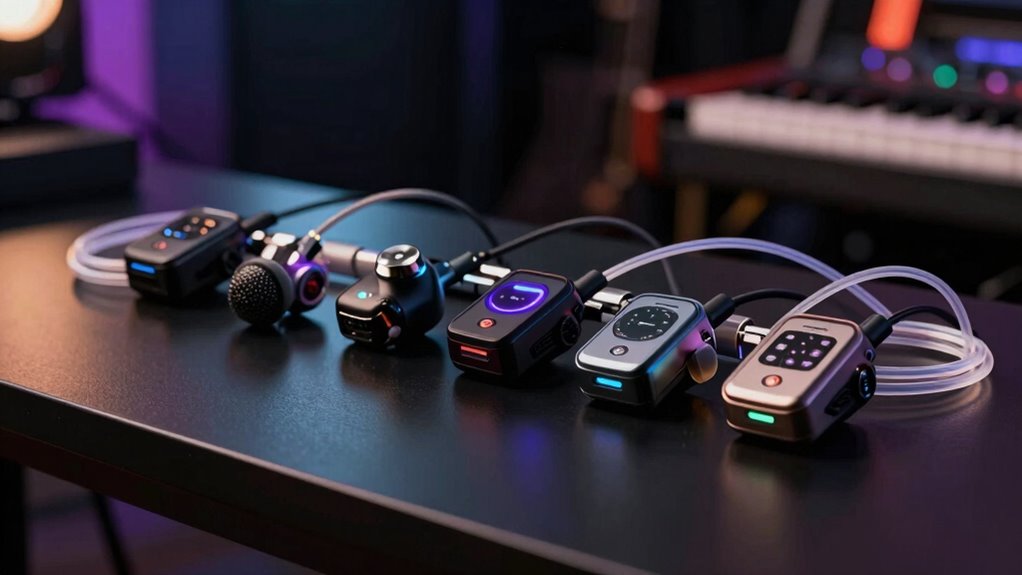

For musicians, a reliable in ear monitor wireless system can make or break a performance. The best models deliver clear, low-latency sound with stable connectivity, but tradeoffs often involve price, complexity, and battery life. The LEKATO Wireless In-Ear Monitor MS-20 stands out as the overall top pick thanks to its long battery life and extensive range. Meanwhile, the Xvive U45 offers a solid frequency range for studio and live use, and the Phenyx Pro UHF System provides excellent value for multi-channel setups. Continue reading for a detailed breakdown of these options and what to consider before choosing your system.

Get audio and creator gear delivered free with Prime
- Fast, free delivery on millions of items
- Prime Video, Amazon Music and more included
- Member-only deals all year
Complete the kit


Key Takeaways
- Long battery life remains a priority for all-day performances, with top picks offering 6+ hours of reliable power.
- Frequency range and stability vary significantly—UHF systems tend to be more stable for large stage use, while 2.4GHz models excel in portability.
- Auto-pairing and multi-receiver support are game-changers for ease of setup and performance flexibility.
- Higher-priced models often provide better latency performance and more robust construction, but affordable options can suffice for smaller gigs.
- Choosing between mono and stereo systems depends on your monitoring preferences and stage setup complexity.
| LEKATO Wireless In-Ear Monitor MS-20 with 30H Battery Life, 2.4G System, OTG Support, and 150FT Range |  | Best Overall for Long-Lasting, Versatile Performance | Battery Life: 30 hours | Battery Capacity: 2000mAh | Range: 150 feet | VIEW ON AMAZON | See Our Full Breakdown |
| XTUGA RW2080 Wireless In-Ear Monitor System, 4 Bodypacks, UHF 902-928MHz |  | Best for Professional-Grade, Multi-Channel Stage Use | Frequency Range: 902-928 MHz | Range: up to 300 feet | Number of Bodypacks: 4 | VIEW ON AMAZON | See Our Full Breakdown |
| Wireless In-Ear Monitor System for Musicians |  | Best for Stage Professionals Needing Reliable Mono Performance | Frequency Range: 520–580 MHz | Range: up to 330 feet | Channels: 40 switchable | VIEW ON AMAZON | See Our Full Breakdown |
| Donner Wireless In-Ear Monitor System with Transmitter and Color Screen Receiver |  | Best for Studio and Rehearsal with High-Resolution Sound | Sampling Rate: 192kHz | SNR: 110dB | Latency: <6ms | VIEW ON AMAZON | See Our Full Breakdown |
| LEKATO Wireless In-Ear Monitor System 2.4GHz, Stereo, Transmitter and Receiver, Auto-Pairing, 5H Battery, 100Ft Range |  | Best for Small Gigs and Rehearsals with Easy Setup | Frequency Band: 2.4GHz | Transmission Type: Stereo | Battery Life: 5 hours | VIEW ON AMAZON | See Our Full Breakdown |
| LEKATO Wireless In-Ear Monitor System MS-02 |  | Best Overall for Live Performance Flexibility | Latency: <4.5ms | Sampling Rate: 24bit/48KHz | Wireless Range: 100 feet | VIEW ON AMAZON | See Our Full Breakdown |
| Xvive U45 Wireless In-Ear Monitor System |  | Best for Studio and Stage Clarity | Frequency: 5.8 GHz | Range: 100 ft / 30.5 m | Audio Resolution: 24-bit/48kHz | VIEW ON AMAZON | See Our Full Breakdown |
| Wireless In-Ear Monitor System with Transmitter and Receiver |  | Best for Simplicity and Long Battery Life | Frequency Band: 2.4GHz | Audio Processor: 24-bit/48KHz | Battery Life: 10 hours | VIEW ON AMAZON | See Our Full Breakdown |
| Phenyx Pro UHF Wireless In-Ear Monitor System for Musicians |  | Best for Larger Groups and Professional Use | Frequency Range: UHF 900MHz | Channels: Mono 2-Channel | Range: 164 ft | VIEW ON AMAZON | See Our Full Breakdown |
| Wireless In-Ear Monitor System, 4-Pack Mono Musician IEM System |  | Best for Stage Flexibility and Multiple Performers | Frequency Range: 520-580 MHz | Number of Receivers: 4 | Coverage Range: up to 330 feet | VIEW ON AMAZON | See Our Full Breakdown |
| Xvive U4 Wireless In-Ear Monitor System for Studio, Rehearsal, and Live Performance |  | Best Overall for Versatile Use and High-Resolution Audio | Frequency: 2.4GHz | Battery Life: 5 hours | Audio Quality: 24-bit/48kHz | VIEW ON AMAZON | See Our Full Breakdown |
| A98T Wireless In-Ear Monitor System 2.4GHz Wireless IEM System |  | Best for Versatile Instrument Compatibility and Low Latency | Technology: 2.4GHz wireless | Latency: less than 4ms | Range: 100 ft | VIEW ON AMAZON | See Our Full Breakdown |
| Xvive U4 Wireless In-Ear Monitor System Set |  | Best for Long-Range Performances and Multiple Channels | Wireless Frequency: 2.4GHz | Range: 90 feet | Channels: 6 | VIEW ON AMAZON | See Our Full Breakdown |
| JOYO Wireless In-Ear Monitor System 2.4G with Transmitter and Receiver |  | Best for Long-Lasting, Stable Monitoring with Wide Range | Frequency: 2.4GHz | Audio Quality: 48kHz/16bit | Latency: <5ms | VIEW ON AMAZON | See Our Full Breakdown |
| Phenyx Pro 4-Channel UHF Mono Wireless In-Ear Monitor System PTM-33-4B |  | Best for Professional Multi-Channel Monitoring in Large Venues | Channels: 4 | Frequency Range: UHF 25 channels | Range: 140-164 ft | VIEW ON AMAZON | See Our Full Breakdown |
| in ear monitor wireless system for musician | Battery Life | Range |
|---|---|---|
| LEKATO Wireless In-Ear Monitor | 30 hours | 150 feet |
| XTUGA RW2080 Wireless In-Ear M | — | up to 300 feet |
| Wireless In-Ear Monitor System | — | up to 330 feet |
| Donner Wireless In-Ear Monitor | — | 100 feet |
| LEKATO Wireless In-Ear Monitor | 5 hours | — |
| LEKATO Wireless In-Ear Monitor | 6-8 hours | — |
| Xvive U45 Wireless In-Ear Moni | Up to 5 hours | 100 ft / 30.5 m |
| Wireless In-Ear Monitor System | 10 hours | — |
| Phenyx Pro UHF Wireless In-Ear | — | 164 ft |
| Wireless In-Ear Monitor System | — | — |
| Xvive U4 Wireless In-Ear Monit | 5 hours | — |
| A98T Wireless In-Ear Monitor S | 5 hours | 100 ft |
| Xvive U4 Wireless In-Ear Monit | Up to 5 hours | 90 feet |
| JOYO Wireless In-Ear Monitor S | Over 8 hours | — |
| Phenyx Pro 4-Channel UHF Mono | — | 140-164 ft |
More Details on Our Top Picks
LEKATO Wireless In-Ear Monitor MS-20 with 30H Battery Life, 2.4G System, OTG Support, and 150FT Range
This LEKATO MS-20 stands out primarily for its exceptional 30-hour battery life, surpassing most competitors like the LEKATO MS-01. Its support for multiple receivers makes it ideal for band performances, and the extensive 150-foot range offers stage freedom. The auto-pairing and OTG connectivity streamline setup, especially for those using compatible devices. Compared to the XTUGA RW2080, it sacrifices some advanced tuning options for simplicity and longer runtime. The main tradeoff is that earphones are not included, requiring an additional purchase, and sound quality specifics remain vague. For musicians needing all-day reliability and multi-actor support, this is a comprehensive choice.
Pros:- Extremely long 30-hour battery life for all-day use
- Supports up to 10 receivers simultaneously for group performances
- Wide 150-foot transmission range for stage mobility
- Auto-pairing and OTG support for quick setup
Cons:- Earphones are not included, adding extra cost
- Limited sound quality info may concern audiophiles
- Requires compatible OTG devices for full functionality
Best for: Musicians performing long sets or rehearsals who need extended battery life and multi-user capability.
Not ideal for: Solo performers or those seeking stereo sound, since it supports mono output and requires separate earphones.
- Battery Life:30 hours
- Battery Capacity:2000mAh
- Range:150 feet
- Frequency:2.4GHz
- Audio Quality:24bit/48K HD Audio
- Supports:Multiple receivers (up to 10)
Our verdict“This system suits performers demanding all-day operation and multi-recipient support, with some setup considerations.”
XTUGA RW2080 Wireless In-Ear Monitor System, 4 Bodypacks, UHF 902-928MHz
Compared with the LEKATO MS-20, the XTUGA RW2080 offers a more rugged, rackmount-ready build, making it ideal for professional venues that need multiple bodypacks and interference management. Its UHF frequency range provides reliable, long-distance coverage up to 300 feet, suitable for large stages or complex setups. The adjustable channels help mitigate interference, a feature missing in the LEKATO. However, it doesn’t specify battery life, which could be limiting for extended performances, and its complex setup might challenge beginners. This system makes the most sense for touring bands or venues where durability and interference management are priorities, rather than casual or solo use.
Pros:- Up to 300-foot range for large venues
- Multiple adjustable frequencies for interference-free operation
- Durable metal transmitter with rackmount capability
- Includes four bodypacks for versatile multi-performer use
Cons:- Limited info on battery life or rechargeable options
- Potentially complex setup for non-professionals
- UHF band may require careful tuning to avoid interference
Best for: Professional performers and venue operators requiring multi-channel, durable wireless monitoring.
Not ideal for: Solo musicians or hobbyists who need a simple, plug-and-play system without extensive tuning or multiple receivers.
- Frequency Range:902-928 MHz
- Range:up to 300 feet
- Number of Bodypacks:4
- Channels:2
- Power Supply:Included
- Materials:Metal transmitter, ABS bodypack
Our verdict“This system excels for professional environments needing reliable multi-user performance over large distances, with a steeper setup curve.”
Wireless In-Ear Monitor System for Musicians
This UHF mono system offers a straightforward, reliable solution with a 330-foot transmission range, surpassing the Donner and LEKATO systems in distance. Its 40 switchable channels provide flexible interference management, essential for busy wireless environments. The included eight receivers are perfect for multi-artist setups but may be excessive for solo performers, adding complexity and cost. The system’s durability and simple IR sync make it suitable for stage professionals who prioritize stable, clear audio, yet it only provides mono sound, limiting stereo experience. Its limited compatibility with stereo sources could be a drawback for musicians seeking richer sound.
Pros:- Stable UHF performance with clear audio
- Long transmission range up to 330 feet
- 40 switchable channels for interference reduction
- Lightweight, durable design
Cons:- Includes multiple receivers, not ideal for solo performers
- Limited to mono audio, not stereo
- Requires power sources for all units
Best for: Stage professionals or bands requiring a dependable mono system with extensive range and channel flexibility.
Not ideal for: Solo acts or those wanting stereo sound, as it only supports mono output and includes multiple receivers unnecessarily for solo use.
- Frequency Range:520–580 MHz
- Range:up to 330 feet
- Channels:40 switchable
- Number of Receivers:8
- Included Components:transmitter, 8 bodypacks, antennas, earphones
- Material:Metal/ABS
Our verdict“This system fits stage setups demanding high reliability and long-range mono transmission, with extra receivers for multi-artist needs.”
Donner Wireless In-Ear Monitor System with Transmitter and Color Screen Receiver
This Donner system emphasizes high-quality sound with a 192kHz sampling rate and low latency (<6ms), making it suitable for studio and rehearsal environments. The interactive color screen allows real-time monitoring, a feature that enhances usability over simpler systems like the LEKATO MS-1. Its 100-foot range is adequate for most stage setups, but it falls short of the XTUGA’s 300-foot coverage, making it less ideal for large venues. The system’s compatibility depends on the user’s audio devices, which could be a hurdle for some users. Its main tradeoff is potential interference in crowded wireless environments, a common issue with the 2.4 GHz band.
Pros:- High-fidelity sound with 192kHz sampling rate
- Low latency ensures real-time monitoring
- Interactive color screen for easy control
- Reliable wireless transmission within 100 feet
Cons:- Limited to 100-foot range compared to larger systems
- Requires compatible audio equipment for full use
- Potential interference in crowded environments
Best for: Studio musicians and rehearsal spaces where audio fidelity and low latency are critical.
Not ideal for: Performers needing long-range coverage or multi-actor setups, due to shorter transmission distance and lack of multiple receivers.
- Sampling Rate:192kHz
- SNR:110dB
- Latency:<6ms
- Range:100 feet
- Included Components:transmitter, receiver, antennas, earphones
- Interfaces:1/4″ TRS, 1/8″ TRS, XLR
Our verdict“This system provides excellent audio quality for studio and rehearsal use but is less suited for large-stage performances requiring extensive range.”
LEKATO Wireless In-Ear Monitor System 2.4GHz, Stereo, Transmitter and Receiver, Auto-Pairing, 5H Battery, 100Ft Range
The LEKATO MS-1 system offers a stereo transmission experience with auto-pairing for quick setup, making it suitable for smaller gigs or rehearsals. Its 5-hour battery life is adequate for shorter performances but less than the MS-20’s 30 hours, so long events may require extra charging. The 100-foot range is sufficient for most stage environments but less than the XTUGA or LEKATO MS-20 systems, limiting mobility slightly. Its support for up to six receivers makes it versatile for small bands or duo acts, but it may fall short for larger groups or demanding stage setups. It performs well with stereo sources but needs a stereo output to maximize its capabilities.
Pros:- Supports up to six receivers for flexible use
- Auto-pairing simplifies setup process
- Stereo sound with low latency
- Compact, lightweight design
Cons:- Battery life limited to 5 hours, requiring frequent charging
- Range of only 100 feet may limit stage mobility
- Requires stereo source for optimal experience
Best for: Small band rehearsals or duo performances seeking quick, reliable stereo wireless monitoring.
Not ideal for: Large concerts or multi-actor stage setups that require longer battery life or greater range, due to its shorter runtime and range.
- Frequency Band:2.4GHz
- Transmission Type:Stereo
- Battery Life:5 hours
- Wireless Range:100 feet
- Supports:Up to 6 receivers
- Audio Resolution:24-bit/48kHz
Our verdict“This system suits smaller performances and rehearsals needing quick setup and stereo sound, with some limitations on range and runtime.”
LEKATO Wireless In-Ear Monitor System MS-02
The LEKATO MS-02 stands out for its ultra-low latency of under 4.5ms, making it highly suitable for live performers who need real-time feedback without delay. Its support for up to four receivers and long battery life of 6-8 hours offers versatility for band setups and rehearsals. Compared to the Xvive U45, which excels in high-resolution audio, the MS-02 emphasizes immediate responsiveness, though it requires users to purchase earbuds separately. The auto-pairing feature simplifies setup, but the system’s limitation to four receivers might restrict larger ensembles. This model is perfect for musicians prioritizing minimal latency and multi-user support in dynamic stage environments.
Pros:- Ultra-low latency for real-time monitoring
- Supports up to 4 receivers simultaneously
- Long-lasting battery life of 6-8 hours
- Easy auto-pairing and mono/stereo switching
Cons:- Earbuds are sold separately, increasing overall cost
- Requires some familiarity with wireless setup
- Limited to 4 receivers, unsuitable for larger groups
Best for: Musicians performing live who need low latency and multiple in-ear feeds.
Not ideal for: Studio engineers or solo performers seeking integrated earbuds or stereo sound without additional purchases.
- Latency:<4.5ms
- Sampling Rate:24bit/48KHz
- Wireless Range:100 feet
- Battery Life:6-8 hours
- Connection:2.4GHz stereo wireless
- Supported Receivers:up to 4
Our verdict“This system is ideal for live performers who need fast, reliable monitoring with flexible multi-user support.”
Xvive U45 Wireless In-Ear Monitor System
The Xvive U45 offers a reliable 5.8GHz connection, providing high-quality audio that’s well-suited for both stage and studio environments. Its easy channel scan feature simplifies setup, a significant advantage over systems like the Phenyx Pro UHF, which requires more manual tuning. While its 5-hour battery life may be limiting compared to the 10-hour capacity of some models, USB-C charging makes quick top-ups straightforward. The U45’s broad frequency response and low noise floor make it an excellent choice for musicians demanding crystal-clear sound, though it may require some familiarity with manual channel matching. It’s best for performers needing dependable wireless audio with straightforward setup.
Pros:- Reliable 5.8GHz wireless connection
- High-resolution audio with 24-bit/48kHz sampling
- Automatic channel scan simplifies setup
- Quick USB-C charging
Cons:- Limited to 5 hours of operation per charge
- Manual channel matching required for optimal performance
- No included earbuds or accessories
Best for: Musicians who prioritize audio quality and ease of setup in studio or live settings.
Not ideal for: Performers needing all-day battery life or larger multi-receiver configurations without frequent recharging.
- Frequency:5.8 GHz
- Range:100 ft / 30.5 m
- Audio Resolution:24-bit/48kHz
- Signal-to-Noise Ratio:110 dB
- Battery Life:Up to 5 hours
- Charging Port:USB-C
Our verdict“This system is well-suited for musicians who value stable, high-quality audio in a straightforward setup.”
Wireless In-Ear Monitor System with Transmitter and Receiver
This 2.4GHz wireless in-ear system offers automatic pairing and a substantial 10-hour battery life, making it ideal for performers who need extended use without frequent recharging. Its support for multiple receivers allows several band members to monitor simultaneously, similar to the 4-pack Mono System but with more straightforward operation and in-ear focus. However, the system’s limited water resistance and absence of stereo capability restrict its appeal for more demanding or outdoor environments. Compared to UHF systems like the Phenyx Pro, it provides easier setup but may be less stable in crowded spectrum zones. This pick is best for performers seeking a simple, long-lasting wireless solution for stage use.
Pros:- Automatic pairing simplifies setup
- Long 10-hour battery life
- Supports multiple receivers simultaneously
- Good sound with clear bass
Cons:- Limited to in-ear monitoring only
- No water resistance info
- Requires wireless setup familiarity
Best for: Live performers needing a lightweight, easy-to-use system with extended battery life.
Not ideal for: Musicians who require stereo sound or outdoor outdoor outdoor use in adverse weather conditions.
- Frequency Band:2.4GHz
- Audio Processor:24-bit/48KHz
- Battery Life:10 hours
- Supported Receivers:up to 6
- Includes:transmitter, receiver, in-ear headphones, cable, 6.35mm jack, user manual
Our verdict“This system is best for performers prioritizing long operational hours and simple, reliable wireless monitoring.”
Phenyx Pro UHF Wireless In-Ear Monitor System for Musicians
The Phenyx Pro UHF excels in providing reliable mono audio over a 164-foot range, making it suitable for large stages and broadcasters. Its dual-channel setup allows two performers or sources to be monitored separately or in daisy chain configurations, offering flexibility not matched by systems like the LEKATO MS-02. However, its mono output and UHF band can pose interference issues in crowded spectrum zones, and it requires batteries for each receiver. The rack-mount kit adds convenience for fixed setups, but the system’s complexity and spectrum considerations may be a hurdle for smaller or less technical users. It’s best for larger ensembles or professional environments demanding robust, multi-channel monitoring.
Pros:- Reliable UHF performance with up to 164 ft range
- Dual-channel capability and daisy chaining
- Rack-mountable for professional setups
- Includes multiple accessories for versatile use
Cons:- Limited to mono, no stereo option
- Potential interference in crowded UHF spectrum
- Batteries needed for each receiver
Best for: Large acts, broadcasters, or churches needing dependable mono monitoring over long distances.
Not ideal for: Solo performers or small bands requiring stereo sound or easier setup with fewer channels.
- Frequency Range:UHF 900MHz
- Channels:Mono 2-Channel
- Range:164 ft
- Includes:Transmitter, 4 bodypack receivers, earphones, power adapter, antennas, batteries, rackmount kit, carry case, user manual
Our verdict“This system offers robust performance for large groups or professional setups where mono sound suffices.”
Wireless In-Ear Monitor System, 4-Pack Mono Musician IEM System
The 4-Pack Mono UHF System provides a stable, long-range monitoring solution for multiple musicians, with a range extending up to 330 feet. Its UHF PLL technology reduces interference, making it suitable for large venues or outdoor stages. While it offers multiple frequency options, the system focuses on mono sound, which may not satisfy performers desiring stereo in-ear mixes. Its lightweight, durable construction supports active stage use, but the lack of detailed battery life specifications and absence of water resistance details might be concerns in demanding environments. Compared with the LEKATO MS-02, which offers lower latency, this system prioritizes extended range and multi-user stability.
Pros:- Stable UHF connection with minimal interference
- Extended coverage up to 330 feet
- Supports four receivers simultaneously
- Lightweight, durable design
Cons:- Limited to mono audio, not stereo
- Battery life details are unclear
- No explicit water resistance features
Best for: Bands and stage performers needing reliable, multi-user mono monitoring over large distances.
Not ideal for: Solo artists or those needing stereo sound or outdoor weather resistance in rainy conditions.
- Frequency Range:520-580 MHz
- Number of Receivers:4
- Coverage Range:up to 330 feet
- Includes:power adapter, antennas, in-ear earphones, user manual
Our verdict“This system suits large groups requiring dependable mono monitoring across expansive stages or outdoor venues.”
Xvive U4 Wireless In-Ear Monitor System for Studio, Rehearsal, and Live Performance
The Xvive U4 stands out for delivering professional-grade sound with low latency and high-resolution audio, making it suitable for studio, rehearsal, and live settings. Compared with the JOYO JW-07, it offers a slightly simpler setup but lacks multi-channel monitoring, which might limit its flexibility for larger bands. Its 5-hour rechargeable battery supports extended sessions, yet it’s limited to only two monitoring channels, which could be a drawback for performers needing more complex mixes. The metal housing adds durability, but the absence of included headphones means additional investment. This pick makes the most sense for musicians seeking reliable, high-quality audio without the need for extensive multi-channel routing.
Pros:- Low latency with high-resolution 24-bit/48kHz audio
- Long 5-hour rechargeable battery life
- Simple, user-friendly setup with easy channel matching
Cons:- Limited to only 2 monitoring channels, restricting complex mixes
- No included headphones, requiring additional purchase
Best for: Professional musicians and band members needing clear, dependable monitoring across various environments
Not ideal for: Musicians requiring multi-channel monitoring or a built-in audio mixer, as it only supports stereo output and no mixing features
- Frequency:2.4GHz
- Battery Life:5 hours
- Audio Quality:24-bit/48kHz
- Frequency Response:20Hz-20kHz
- Signal-to-Noise Ratio:107 dB
- Latency:Less than 5ms
Our verdict“This system is ideal for solo performers or small ensembles prioritizing audio quality and ease of use over multi-channel flexibility.”
A98T Wireless In-Ear Monitor System 2.4GHz Wireless IEM System
The A98T offers interference-free, high-definition sound with ultra-low latency, making it a strong contender for stage performers and studio work alike. Its broad compatibility with instruments like guitar and bass, plus a 270° rotatable transmitter, provides flexibility for different setups. Compared to the Xvive U4, it supports a wider range of instruments but shares the limitation of a 5-hour battery life, which might be insufficient for lengthy gigs. The plug-and-play design simplifies operation, yet some users might find the need for additional accessories for full systems. This system is best suited for musicians who need reliable, high-definition sound across a variety of instruments with minimal latency.
Pros:- Interference-free, high-definition sound quality
- Ultra-low latency under 4ms
- Long-lasting 5-hour battery with quick recharge
Cons:- Limited to 5 hours per charge, which may be short for long performances
- Requires additional accessories for complete system setup
Best for: Stage performers and studio musicians who work with multiple instruments and require quick setup
Not ideal for: Musicians needing all-in-one systems with longer battery endurance or built-in mixing capabilities
- Technology:2.4GHz wireless
- Latency:less than 4ms
- Range:100 ft
- Battery Life:5 hours
- Plug Type:6.35mm
- Compatibility:Guitar, bass, other instruments
Our verdict“Ideal for versatile instrument players who prioritize sound quality and low latency during performances and recordings.”
Xvive U4 Wireless In-Ear Monitor System Set
The Xvive U4 Set extends the original U4’s capabilities with over 90 feet of wireless range and support for up to 6 channels, making it suitable for larger venues or touring. Compared to the A98T, it offers more channels but remains limited to mono monitoring, which can restrict the mix options for band members. Its less than 5ms latency keeps audio synchronized and distraction-free, while the rechargeable batteries support up to 5 hours of operation. The tradeoff is that it’s primarily designed for in-ear monitoring, not for general audio playback, and the extended range may require careful interference management. Best suited for performers needing freedom to move around a stage with multiple monitoring channels.
Pros:- Extended wireless range of 90+ feet
- Supports up to 6 channels for multi-user setups
- Low latency ensures real-time monitoring
Cons:- Limited to mono monitoring, no stereo option
- Designed specifically for in-ear use, not for general audio
Best for: Musicians performing at large venues or on touring setups needing extended wireless range and multiple channels
Not ideal for: Solo artists or small groups that don’t require extensive range or multiple channels, as it may be overkill
- Wireless Frequency:2.4GHz
- Range:90 feet
- Channels:6
- Latency:Less than 5ms
- Battery Life:Up to 5 hours
Our verdict“This system is best for band members or performers needing maximum mobility and multiple channel options in larger performance spaces.”
JOYO Wireless In-Ear Monitor System 2.4G with Transmitter and Receiver
The JOYO JW-07 delivers impressive over 8 hours of battery life, making it suitable for lengthy rehearsals or gigs. Its wide operating range of 40-60 feet and support for 12 channels across 4 groups provide flexibility for complex setups. Compared directly with the Phenyx Pro PTM-33-4B, it offers a longer battery duration but lacks the multi-channel UHF interference-free technology, relying instead on less complex frequency management. Its stable connection and high audio clarity support professional use, but the single transmitter limits multi-receiver connectivity, which might restrict group setups. This option is best for performers needing extended battery life and a broad range in smaller to mid-sized venues.
Pros:- Over 8 hours of battery life for extended use
- Stable connection with anti-interference technology
- Wide operating range of 40-60 feet
Cons:- Limited to a single transmitter with one receiver at a time
- No multi-channel UHF interference-free technology
Best for: Performers and bands needing long battery life and a stable connection for rehearsals and shorter gigs
Not ideal for: Large stage setups requiring multiple, simultaneous in-ear feeds or multi-transmitter configurations
- Frequency:2.4GHz
- Audio Quality:48kHz/16bit
- Latency:<5ms
- Operating Range:40-60ft
- Battery Life:Over 8 hours
Our verdict“This system suits performers valuing extended battery life and dependable wireless stability over multi-channel complexity.”
Phenyx Pro 4-Channel UHF Mono Wireless In-Ear Monitor System PTM-33-4B
The Phenyx Pro PTM-33-4B excels in delivering interference-free, multi-channel UHF audio across a long-range of up to 164 feet. Its 4 mono channels ensure each performer can have a dedicated feed, ideal for large stage setups or church services. Compared with the Xvive U4, it offers more channels but only in mono, which limits stereo mixes. The system’s rack-mount compatibility makes it suitable for permanent installations, but the multiple components could require more setup time. The need for line of sight for optimal range is standard for UHF systems, and the mono-only output may not suit all performance styles. It’s best for larger groups needing multiple, interference-free feeds with extensive range.
Pros:- Four interference-free UHF channels for multi-performer setups
- Long range of up to 164 feet
- Rack-mountable for fixed installations
Cons:- Mono only, no stereo option
- Requires line of sight for maximum range
- Multiple components increase setup complexity
Best for: Large ensembles, worship teams, or stage productions needing robust, multi-channel UHF monitoring
Not ideal for: Solo performers or small bands that do not require multiple channels or UHF performance
- Channels:4
- Frequency Range:UHF 25 channels
- Range:140-164 ft
- Connectivity:1/4″ TS jack
- Power Supply:AC adapter, 8 x AA batteries
Our verdict“This system is well-suited for large-scale performances demanding multiple, reliable mono feeds with extensive coverage.”

How We Picked
The products in this roundup were evaluated based on performance, connectivity stability, ease of use, build quality, and value for money. We prioritized systems with reliable wireless ranges, low latency, and user-friendly features like auto-pairing. Durability and battery life also played key roles, especially for live performers needing all-day reliability. The ranking reflects a balance between premium features and affordability, ensuring options suit different budgets and needs. Our aim was to highlight systems that consistently perform well in real-world scenarios, not just on paper.Factors to Consider When Choosing In Ear Monitor Wireless System For Musicians
Selecting the right in ear monitor wireless system involves several key factors beyond just features. Understanding these considerations helps ensure you choose a setup that enhances your performance without unnecessary complexity or cost. The right system should align with your stage size, mobility needs, and technical comfort. Avoid common pitfalls like underestimating battery life or choosing a system with limited frequency options that could cause interference. Here are the main factors to guide your decision:Frequency Range and Interference Resistance
Choosing between UHF and 2.4GHz systems is crucial. UHF systems generally offer better stability and less interference in large venues, but they can be more expensive and complex. 2.4GHz models are often more affordable and easier to set up, making them suitable for smaller gigs or rehearsals. Consider your typical stage environment—if interference is common or you perform outdoors, prioritize systems with broader frequency options and clear auto-scanning features.
Battery Life and Charging
Battery longevity directly affects your performance, especially during long sets or festivals. Systems with 6+ hours of continuous use provide peace of mind, and some offer quick-charging features. Look for models with swappable batteries if you need extended operation without downtime. Poor battery life can lead to interruptions or unreliable monitoring, so weigh this factor heavily based on your gig length and mobility.
Ease of Setup and User Interface
Features like auto-pairing, simple controls, and clear displays reduce setup time and minimize technical issues during live performances. For less tech-savvy users or those who frequently switch setups, these features can save frustration. Conversely, more complex systems with advanced controls might appeal to seasoned musicians seeking customization, but they can require a steeper learning curve.
Build Quality and Durability
Stage environments demand sturdy gear that withstands bumps, sweat, and frequent use. Look for rugged enclosures, water resistance, and reliable connectors. Cheaper systems may compromise on this aspect, leading to failures during critical moments. Spending more on durable materials often ensures longevity and consistent performance over time.
Multi-Channel and Monitoring Options
If you need to manage multiple mixes or perform with a band, systems supporting multiple channels and stereo monitoring are vital. Some models allow multiple receivers to connect seamlessly, simplifying stage management. For solo performers or small setups, mono systems with fewer channels might suffice, saving cost and complexity. Always consider your specific stage and monitoring requirements before choosing.
Frequently Asked Questions
How do I prevent interference with my wireless in ear monitor system?
To minimize interference, choose a system with a broad and clear frequency range, preferably with auto-scan features that find the best available channels. Operating in UHF bands can reduce interference from other wireless devices, especially in crowded venues. Always perform a frequency scan before your performance and avoid overlapping with other wireless gear on stage. Regularly checking for updates and maintaining a clean frequency environment helps sustain signal stability.
Is it better to get a stereo or mono in ear monitor system?
The choice between stereo and mono depends on your monitoring preferences. Stereo systems provide a more immersive, natural sound, which can improve musicians’ ability to differentiate instruments. Mono systems are simpler and often more reliable, especially in environments with potential interference. For solo performers or smaller setups, mono might be sufficient, but bands with complex mixes tend to benefit from stereo systems for clearer, more detailed monitoring.
How important is battery life for a wireless in ear monitor system?
Battery life is critical, particularly for lengthy performances, outdoor gigs, or festivals. A system with insufficient battery duration risks losing signal mid-set, disrupting your performance. Models with longer battery life and quick-charging capabilities reduce this risk. For all-day events, consider systems that support hot-swappable batteries or have backup power options to maintain continuous monitoring without interruption.
What should I consider if I perform in large venues?
In large venues, the key factors are a stable, long-range signal, UHF frequency support, and minimal interference. Systems with a range of 150 feet or more help ensure consistent monitoring across the stage. Additionally, choosing a model with strong RF shielding and multiple frequency channels reduces the risk of dropout. Test your setup beforehand to confirm it performs reliably in your typical performance environment.
Are more expensive wireless in ear monitor systems worth the investment?
Higher-priced systems often deliver lower latency, better build quality, and more reliable connectivity, which can significantly improve live performance experiences. If you perform regularly, especially in large or interference-prone venues, investing in a premium system can be worthwhile. However, for occasional or smaller gigs, mid-range options still offer good performance at a more accessible price point, making them a practical choice for many musicians.
Conclusion
For solo artists or beginners, a straightforward, affordable system like the LEKATO Wireless In-Ear Monitor MS-20 offers excellent value and long battery life. Bands and performers who need robust, interference-resistant setups should consider UHF options like the Phenyx Pro UHF System or the XTUGA RW2080. Musicians seeking premium features and maximum reliability will find the Xvive U45 or higher-end models a better fit. Ultimately, your choice depends on your stage size, budget, and performance demands. Carefully weigh the factors outlined here to select the system that will keep you focused on your music, not on technical issues.
Fall Picks
fall essentials
As an affiliate, we earn on qualifying purchases.