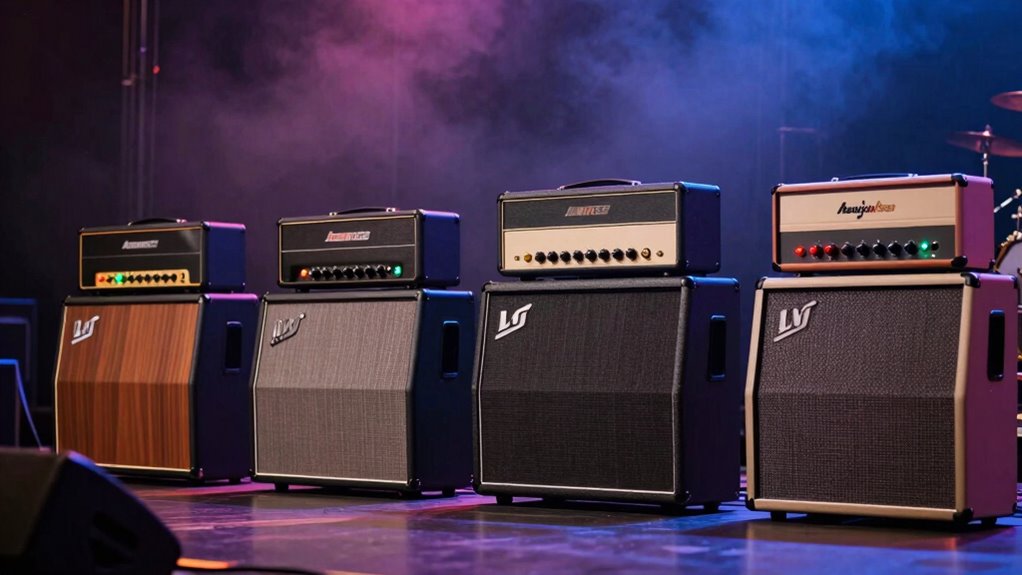

The BOSS Katana-50 Gen 3 is my best overall pick for live gigs because its 50-watt format balances stage-ready volume, familiar controls, and practical flexibility. For larger stages and hands-on preset changes, the Fender Mustang GTX100 adds more output and a footswitch, while the Positive Grid Spark LIVE suits players who want an amp that can also handle vocals or backing tracks. The main tradeoff is between gig-ready headroom and portability: compact amps are easier to carry, but may need PA support to keep up with a band. I also weigh control access, speaker projection, and how much practice-focused smart functionality matters once the set starts. Read on for the full comparison and help matching an amp to your stage, transport needs, and playing style.

Get audio and creator gear delivered free with Prime
- Fast, free delivery on millions of items
- Prime Video, Amazon Music and more included
- Member-only deals all year
Complete the kit


Key Takeaways
- The Katana-50 Gen 3 leads as the most balanced gig choice: its 50-watt format is more stage-oriented than the practice-first LT25, without the larger footprint of the GTX100.
- More wattage is not the only route to a workable live rig: the Spark LIVE is distinguished by its PA-style versatility, while smaller amps can make sense when a venue provides reliable sound reinforcement.
- Preset access matters mid-set: the GTX100’s included footswitch gives it a clear control advantage over amps that rely more heavily on panel adjustments or app interaction.
- Practice features do not automatically translate to gig utility: Spark 2 and Spark GO offer smart practice tools, but buyers should judge them against stage volume and monitoring needs.
- Portable NUX models serve distinct use cases: Mighty Space brings wireless play and built-in IRs in a compact rig, while Mighty 8BT MKII is better treated as a small-format option than a full-band backline amp.
| Line 6 Spider V 30 MKII |  | Best for Tone Variety on a Compact Stage | Amp models: 200+ amps, cabs, and effects | Speaker modes: Multiple modes | Built-in features: Presets, tuner, metronome, and jam loops | VIEW ON AMAZON | See Our Full Breakdown |
| Fender Mustang LT25 25-Watt Guitar Amplifier with 8-Inch Speaker |  | Best for Beginner Gigging Guitarists | Power: 25 watts | Speaker: 8 inches | Amplifier type: Digital modeling | VIEW ON AMAZON | See Our Full Breakdown |
| Fender Mustang GTX100 100-Watt Guitar Amp with 7-Button Footswitch |  | Best Overall for Full-Band Gigs | Power: 100 watts | Speaker: 12-inch Celestion | Presets: 200 onboard user presets | VIEW ON AMAZON | See Our Full Breakdown |
| VOX VT20X 20-Watt Modeling Guitar Amplifier with 8-Inch Speaker, Classic Blue |  | Best for Tube-Inspired Response | Amplifier type: Hybrid | Output wattage: 20 watts | Speaker: 8 inches | VIEW ON AMAZON | See Our Full Breakdown |
| Positive Grid Spark LIVE 150W Smart Guitar Amp, PA and Bluetooth Speaker | 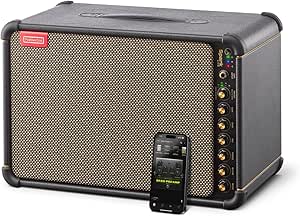 | Best for Multi-Instrument Live Sets | Channels: 4 | Output wattage: 150 watts | Channel 1 effects: 33 amps and 43 effects | VIEW ON AMAZON | See Our Full Breakdown |
| Fender Mustang GTX50 Modeling Guitar Amplifier, 50 Watts, Black |  | Best for Broad Tone Variety | Power: 50 watts | Speaker: 12-inch Celestion | Amp models: 40 | VIEW ON AMAZON | See Our Full Breakdown |
| Positive Grid Spark GO 5W Ultra-Portable Smart Guitar Amp & Speaker | 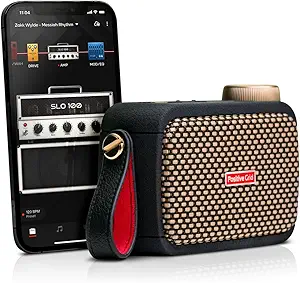 | Best for Portable Practice and Small Jams | Power: 5 watts | Amps: 33 | Effects: 43 | VIEW ON AMAZON | See Our Full Breakdown |
| Positive Grid Spark 2 50W Smart Guitar Practice Amp & Bluetooth Speaker with Looper and AI Features |  | Best for Loop-Based Sets and Tone Matching | Power: 50 watts | Speaker type: FRFR speakers | Battery life: Up to 12 hours | VIEW ON AMAZON | See Our Full Breakdown |
| NUX Mighty Space Wireless 30W Portable Modeling Guitar Amplifier with Built-in IRs and Effects |  | Best Portable Amp for Wireless Stage Setups | Power: 30 watts | Speakers: Dual 4-inch coaxial speakers | Built-in IRs: 34, with 20 user slots | VIEW ON AMAZON | See Our Full Breakdown |
| BOSS Katana-50 Gen 3 50-Watt Guitar Amplifier |  | Best for Straightforward Live-Ready Control | Amplifier type: Class AB | Output power: 50 watts | Speaker: 12-inch custom speaker | VIEW ON AMAZON | See Our Full Breakdown |
| NUX Mighty 8BT MKII 8W Portable Modeling Amp, Bluetooth, 6.5” FRFR Speaker, 7 Presets, Drum Machine |  | Best Ultra-Portable Amp for Quiet Gigs | Power: 8W | Speaker: 6.5-inch FRFR | Default IRs: 36 | VIEW ON AMAZON | See Our Full Breakdown |
| modeling guitar amp for live gig | Connectivity | Power | Speaker | Dimensions |
|---|---|---|---|---|
| Line 6 Spider V 30 MKII | USB interface and remote app | 30 watts | — | — |
| Fender Mustang LT25 25-Watt Gu | USB and headphone | 25 watts | 8 inches | 11.8 x 14.6 x 17 inches |
| Fender Mustang GTX100 100-Watt | Bluetooth audio streaming, Wi-Fi, stereo XLR outputs, and stereo effects loop | 100 watts | 12-inch Celestion | 13.2 x 22.6 x 27.4 inches |
| VOX VT20X 20-Watt Modeling Gui | USB | — | 8 inches | 16.93 x 19.68 x 9.84 inches |
| Positive Grid Spark LIVE 150W | USB, XLR, MIDI in/out, and Bluetooth | — | — | 18.27 x 9.87 x 12.05 inches |
| Fender Mustang GTX50 Modeling | Wi-Fi, Bluetooth, USB | 50 watts | 12-inch Celestion | 22.5 × 20 × 12.5 inches |
| Positive Grid Spark GO 5W Ultr | Bluetooth, USB-C | 5 watts | — | — |
| Positive Grid Spark 2 50W Smar | Bluetooth | 50 watts | — | — |
| NUX Mighty Space Wireless 30W | Wireless with NUX transmitter | 30 watts | — | — |
| BOSS Katana-50 Gen 3 50-Watt G | — | — | 12-inch custom speaker | 21 × 12 × 17 inches (D × W × H) |
| NUX Mighty 8BT MKII 8W Portabl | Bluetooth, USB, 1/4-inch line out | 8W | 6.5-inch FRFR | — |
More Details on Our Top Picks
Line 6 Spider V 30 MKII
The Spider V 30 MKII is my pick for players who want a broad set of modeled sounds in a small gig-ready combo. Its 200+ amp, cab, and effect models give it far more tonal range than the Fender Mustang LT25, whose 30 presets make for a simpler starting point. Speaker modes are intended to make modeled tones feel more natural through the amp, while the tuner, metronome, and jam loops also cover rehearsal needs. The remote app and USB interface add control and recording options beyond what its modest power rating suggests. The tradeoff is headroom: 30 watts and a compact format suit smaller rooms or a PA-supported set better than a loud stage without reinforcement. Its many options may also take longer to sort through than the LT25’s beginner-friendly layout.
Pros:- More than 200 amp, cab, and effect models provide a wide range of sounds.
- Speaker modes are designed to give modeled tones a more organic response.
- Built-in tuner, metronome, and jam loops are useful for rehearsal and practice.
- USB interface and remote app support recording and convenient tone control.
Cons:- 30-watt output may not provide enough stage volume for larger venues without PA reinforcement.
- The number of models and controls can make finding a preferred sound less immediate.
Best for: Guitarists playing small rooms or rehearsals who want many tones, onboard practice tools, and app-based editing in one compact amp.
Not ideal for: Bands playing loud stages without PA support, or players who prefer a short, simple preset list and minimal editing.
- Amp models:200+ amps, cabs, and effects
- Speaker modes:Multiple modes
- Built-in features:Presets, tuner, metronome, and jam loops
- Connectivity:USB interface and remote app
- Compatible devices:Mac, PC, iOS, and Android
- Power:30 watts
Our verdict“Choose the Spider V 30 MKII for compact, feature-rich tone variety at smaller gigs, but look to a higher-powered amp for unreinforced stages.”
Fender Mustang LT25 25-Watt Guitar Amplifier with 8-Inch Speaker
The Mustang LT25 earns a place here as an approachable first modeling amp, rather than a strong choice for loud stages. Its 30 presets and 1.8-inch color display make browsing tones less involved than on the Line 6 Spider V 30 MKII, which offers many more models but can feel more complex. That simplicity is useful for a newer player preparing a few dependable sounds for rehearsals or small, PA-supported gigs. The 25-watt output and 8-inch speaker keep the combo compact, but they also limit its ability to compete with a full band at stage volume. Unlike the larger Fender Mustang GTX100, it has no included live footswitch or stereo XLR outputs in the listed specs. I would treat USB and headphone connectivity as useful practice and recording features, not substitutes for gig-focused outputs.
Pros:- Thirty presets provide a useful range of tones without an extensive editing process.
- Color display and simple interface suit players new to modeling amps.
- Compact 8-inch speaker combo is easier to place and transport than larger gig-oriented models.
- USB and headphone connections support practice and computer use.
Cons:- 25-watt output and 8-inch speaker are limiting for louder live performances.
- Single output channel offers less routing flexibility than the Mustang GTX100.
- No footswitch is listed for hands-free preset changes during a set.
Best for: New guitarists who want an uncomplicated modeling amp for home practice, rehearsals, and occasional small gigs with PA support.
Not ideal for: Players who need strong unreinforced stage volume, direct stereo PA connections, or extensive hands-free control during a set.
- Power:25 watts
- Speaker:8 inches
- Amplifier type:Digital modeling
- Presets:30
- Display:1.8-inch color display
- Output channels:1
- Connectivity:USB and headphone
- Dimensions:11.8 x 14.6 x 17 inches
- Weight:15.2 pounds
Our verdict“Pick the LT25 to learn modeling and cover small, PA-supported gigs simply, but choose a higher-powered amp for regular full-band stage use.”
Fender Mustang GTX100 100-Watt Guitar Amp with 7-Button Footswitch
For a player who needs one modeling combo to cover a full set, the Mustang GTX100 has the strongest live-specific package in this group. Its 100-watt output and 12-inch Celestion speaker give it more stage presence than the 20- and 30-watt combos here, while stereo XLR outputs allow connection to a PA without relying only on the cabinet’s volume. The included seven-button footswitch supports preset selection, tap tempo, and looping, making it more practical onstage than the Fender Mustang LT25. Two hundred presets and movable effects add depth, though the larger range takes more preparation than the LT25’s simpler set of sounds. The main compromise is portability: at 47.55 pounds, it is much heavier than the compact practice-oriented options. Bluetooth and app editing are helpful, but app control depends on a compatible mobile device.
Pros:- 100-watt output and 12-inch Celestion speaker are better suited to full-band stage use than the smaller combos.
- Stereo XLR outputs support direct PA connections.
- Included seven-button footswitch provides live preset, effect, tap-tempo, and looper control.
- Two hundred presets and movable effects offer broad set-by-set tone flexibility.
Cons:- At 47.55 pounds, it is substantially less convenient to transport than the LT25 or Spider V 30 MKII.
- The broad preset and effect selection can require more setup than a simpler modeling amp.
- App editing requires a compatible iOS or Android device.
Best for: Gigging guitarists who want a powerful modeling combo, hands-free preset and effect control, and direct stereo connections to a PA.
Not ideal for: Players who carry their amp frequently on foot or stairs, or who need a lightweight practice-first combo.
- Power:100 watts
- Speaker:12-inch Celestion
- Presets:200 onboard user presets
- Footswitch:Seven-button, with tap tempo and 60-second looper
- Connectivity:Bluetooth audio streaming, Wi-Fi, stereo XLR outputs, and stereo effects loop
- Dimensions:13.2 x 22.6 x 27.4 inches
- Weight:47.55 pounds
- Warranty:2-year limited warranty
Our verdict“Choose the Mustang GTX100 for a full-featured, PA-ready modeling combo with practical foot control, provided its weight suits your gig routine.”
VOX VT20X 20-Watt Modeling Guitar Amplifier with 8-Inch Speaker, Classic Blue
The VT20X is a more focused choice for players drawn to amp feel and resonance rather than maximum stage output. Its Valvetronix tube preamp pairs modeled amp styles with tube-inspired tonal response, while the sealed cabinet and bass-reflex design aim to add body from its compact 8-inch speaker. That makes it a different proposition from the Line 6 Spider V 30 MKII, whose appeal centers on a much larger selection of models and effects. USB connectivity also gives the VOX a route to computer or mobile-device integration. For live gigs, though, the 20-watt output and single output channel place it closer to rehearsal and small-room use than the Fender Mustang GTX100, which offers more power and stereo XLR outputs. I would pick it for its tonal approach, not as a stand-alone solution for a loud stage.
Pros:- Valvetronix tube preamp adds a tube-inspired tonal response to its modeled amp styles.
- Sealed cabinet and bass-reflex design are intended to give the compact speaker stronger resonance.
- USB connection supports integration with computers and compatible mobile devices.
- Three-band EQ offers direct control over basic tone shaping.
Cons:- 20-watt output and 8-inch speaker may fall short on larger stages without PA support.
- Single output channel provides less live routing flexibility than the Mustang GTX100.
- The listed specs do not include a dedicated footswitch or XLR output.
Best for: Guitarists playing quieter rooms or PA-supported sets who prefer modeled amp variety with a tube-inspired preamp response.
Not ideal for: Players needing high stage volume, direct stereo PA outputs, or a broad set of dedicated live-control features.
- Amplifier type:Hybrid
- Output wattage:20 watts
- Speaker:8 inches
- Output channels:1
- Equalizer:3 bands
- Connectivity:USB
- Dimensions:16.93 x 19.68 x 9.84 inches
- Weight:7.3 kg
- Compatible devices:Guitar, PC, Mac, iOS, and Android devices
Our verdict“Choose the VT20X for tube-inspired response in a compact, quieter-gig setup, not for unreinforced stage volume.”
Positive Grid Spark LIVE 150W Smart Guitar Amp, PA and Bluetooth Speaker
The Spark LIVE stands apart from the conventional guitar combos here: it is a four-channel amp and PA built to handle guitar alongside vocals, bass, acoustic instruments, and other sources. That flexibility can reduce the amount of separate gear a small act needs to bring, while its built-in mixing and app integration give players more control than the guitar-focused Fender Mustang GTX100. The listed 150-watt output, line-level outputs, and XLR connectivity make it especially relevant for compact live setups, though wattage alone does not guarantee it will suit every room. Its optional rechargeable battery can provide up to eight hours of operation, but battery power requires buying that accessory; it is not included as a standard portable solution. At 34.6 pounds, it is also not a lightweight alternative to the smaller combos.
Pros:- Four channels support guitar, bass, vocals, acoustic instruments, and other sources.
- Built-in mixing and app integration help manage a compact live setup.
- XLR and line-level outputs provide options for connecting to external sound systems.
- Optional rechargeable battery offers up to eight hours of operation per charge.
Cons:- Portable battery operation requires an optional rechargeable battery.
- At 34.6 pounds, it is heavier than compact combos such as the Mustang LT25.
- Its multi-source PA design may be more equipment than a guitar-only player needs.
Best for: Solo performers and small acts who need to amplify guitar plus vocals or other instruments through one mixer-equipped system.
Not ideal for: Guitarists seeking a light, guitar-only practice combo, or buyers who need battery operation without purchasing an optional battery.
- Channels:4
- Output wattage:150 watts
- Channel 1 effects:33 amps and 43 effects
- Inputs:¼-inch and ¼-inch/XLR combo
- Outputs:Headphone and 2 line-level outputs
- Connectivity:USB, XLR, MIDI in/out, and Bluetooth
- Battery life:Up to 8 hours with optional rechargeable battery
- Dimensions:18.27 x 9.87 x 12.05 inches
- Weight:34.6 pounds
Our verdict“Pick the Spark LIVE when one system needs to cover guitar and multiple live sources, but account for its weight and optional battery.”
Fender Mustang GTX50 Modeling Guitar Amplifier, 50 Watts, Black
The Mustang GTX50 is the pick here for players who want many amp voices in a conventional combo format. Its 40 amp models and built-in effects make it easier to cover different setlist styles without bringing several amps, while the 12-inch Celestion speaker gives it a more gig-oriented footprint than the Spark GO. At 50 watts, it sits in the same power class as the BOSS Katana-50 Gen 3, but leans harder into model variety and Wi-Fi, Bluetooth, and USB connectivity than the Katana’s simpler six-character approach. That flexibility comes with a learning curve: dialing in and organizing presets can take more effort than choosing a Katana voice. Its sizeable cabinet also makes it a poorer fit for cramped rooms or players prioritizing battery-powered portability.
Pros:- Forty amp models provide broad coverage for varied setlists.
- A 12-inch Celestion speaker and 50-watt output suit a conventional combo setup for smaller gigs.
- Wi-Fi, Bluetooth, and USB offer flexible connection options.
- Built-in effects reduce the need to bring a separate effects chain.
Cons:- The large cabinet is awkward for tight storage and frequent transport.
- The broad feature set can take time to learn and organize.
- Unlike the Spark GO, it is not specified as battery-powered.
Best for: Gigging guitarists who want many distinct amp models, effects, and wireless or USB connectivity in a 50-watt combo.
Not ideal for: Players who need a small battery-powered amp, or beginners who would rather use a simpler control set than manage a large modeling library.
- Power:50 watts
- Speaker:12-inch Celestion
- Amp models:40
- Connectivity:Wi-Fi, Bluetooth, USB
- Dimensions:22.5 × 20 × 12.5 inches
- Warranty:2 years
Our verdict“Choose the GTX50 if you want a gig-capable 50-watt combo with a wider range of modeled amps than the Katana-50 Gen 3.”
Positive Grid Spark GO 5W Ultra-Portable Smart Guitar Amp & Speaker
The Spark GO earns its place for mobility, not for filling a live venue. Its 5-watt output and compact design make it easy to carry to a rehearsal, use for private practice, or bring along for an informal acoustic-volume jam; its rechargeable battery is rated for up to eight hours. The 33 amps and 43 effects offer plenty of tone options for a small device, and Bluetooth lets it serve as a speaker between playing sessions. Compared with the NUX Mighty Space, it is the more compact choice, but the NUX’s 30-watt output, dual speakers, and footswitch control make it substantially better suited to performance. Spark GO’s app-linked features and Smart Jam tools are useful for practice, though relying on the app or downloads may add setup friction. For louder gigs, choose a more powerful amp.
Pros:- Compact design and rechargeable battery make it easy to take away from a power outlet.
- Up to eight hours of battery life supports extended practice sessions.
- The 33 amps and 43 effects provide varied sounds in a small amp.
- Bluetooth, Auto Chords, and Smart Jam add practice and playback options.
Cons:- Five-watt output is limited for live performances with a full band.
- Some features may depend on app access or additional downloads.
- Its small format is less suited to the projection and stage control offered by the NUX Mighty Space.
Best for: Players who need a rechargeable grab-and-go amp for practice, travel, and low-volume jams rather than amplified band gigs.
Not ideal for: Guitarists playing with a full band or in larger rooms who need more projection than a 5-watt portable amp can provide.
- Power:5 watts
- Amps:33
- Effects:43
- Tone library:Over 100,000 tones
- Battery life:Up to 8 hours
- Connectivity:Bluetooth, USB-C
Our verdict“Pick the Spark GO for portable practice and quiet jamming, not as your main amp for a loud live gig.”
Positive Grid Spark 2 50W Smart Guitar Practice Amp & Bluetooth Speaker with Looper and AI Features
The Spark 2 is a smart choice for players who want practice tools to carry over into rehearsals and compact performance setups. Its 50-watt output gives it a stronger live-use case than the Spark GO, while the built-in looper and drum patterns let a solo player build parts without extra gear. HD amp models and app-based AI tone matching make sound selection more guided than the broad model library on the Fender Mustang GTX50, though that guidance depends on the Smart app and may not suit players who prefer direct controls. The listed battery life reaches up to 12 hours, but batteries are sold separately, so portable use requires extra planning. It is a flexible option, but the supplied details do not list a speaker size or footswitch control, which may matter for stage use.
Pros:- Fifty-watt output offers more live potential than the Spark GO’s 5 watts.
- Built-in looper and drum patterns support solo practice and layered parts.
- AI tone matching can help players find and shape sounds through the app.
- Listed battery life of up to 12 hours supports portable use when paired with batteries.
Cons:- Batteries are sold separately, adding a required extra for battery-powered use.
- The smart app and feature set may take time to learn.
- The provided specifications do not state speaker size or footswitch control.
Best for: Solo performers and rehearsal players who want a 50-watt modeling amp with onboard looping, drum patterns, and app-assisted tone matching.
Not ideal for: Players who want a ready-to-go battery setup, extensive physical stage controls, or the Fender GTX50’s stated 12-inch speaker.
- Power:50 watts
- Speaker type:FRFR speakers
- Battery life:Up to 12 hours
- Looper:Built-in
- Connectivity:Bluetooth
- AI features:Tone matching via Spark app
- App compatibility:Smart app with Spark AI
Our verdict“Choose the Spark 2 if looping and app-guided tones matter more to your setup than a simpler, clearly specified combo such as the BOSS Katana-50 Gen 3.”
NUX Mighty Space Wireless 30W Portable Modeling Guitar Amplifier with Built-in IRs and Effects
The NUX Mighty Space stands out for players who want wireless freedom and performance tools in a smaller amp than a typical 50-watt combo. It pairs 30 watts with dual 4-inch coaxial speakers, built-in drum and loop functions, and footswitch control, making it more stage-oriented than the Spark GO despite remaining portable. Its 34 built-in IRs and 20 user slots give players room to shape speaker character; the listed 512-sample IR resolution supports that modeling focus. Against the Fender Mustang GTX50, the NUX trades a larger 12-inch speaker and higher output class for wireless operation and a compact format. That means it is better suited to smaller gigs than large rooms, and its seven-hour battery life may be limiting for long sessions. Expect a learning curve with its extensive effects and IR options.
Pros:- Wireless connection with a NUX transmitter reduces cable clutter.
- Built-in IR choices and user slots allow detailed speaker-cabinet shaping.
- Drum and loop functions support practice and solo performance.
- Footswitch control adds useful hands-free operation.
Cons:- Thirty watts and dual 4-inch speakers are less suited to larger venues than 50-watt combos such as the GTX50.
- Seven-hour battery life may not cover long sessions without recharging.
- The combination of effects, IRs, and controls can take time to learn.
Best for: Gigging players who want a portable, battery-powered modeling amp with wireless guitar connection, looping, and footswitch control for smaller venues.
Not ideal for: Bands playing larger rooms that need more output and a larger speaker, or players who want a straightforward amp with minimal setup.
- Power:30 watts
- Speakers:Dual 4-inch coaxial speakers
- Built-in IRs:34, with 20 user slots
- IR resolution:512 samples
- Battery life:7 hours
- Connectivity:Wireless with NUX transmitter
- Additional features:Drum and loop functions; footswitch control
Our verdict“The Mighty Space fits players who value wireless mobility and hands-free control for smaller gigs more than the stronger projection of a 50-watt combo.”
BOSS Katana-50 Gen 3 50-Watt Guitar Amplifier
The BOSS Katana-50 Gen 3 is the clearest choice here for players who want gig-capable output without committing to a sprawling modeling menu. Its 50 watts and custom 12-inch speaker put it in the same broad live-use class as the Fender Mustang GTX50, but the Katana focuses on six amp characters with selectable variations rather than the GTX50’s 40 models. That narrower palette can make setup more direct; five effects sections, including booster and reverb, still give players practical tone shaping without a separate pedalboard for every sound. Tube Logic response is aimed at a more amp-like playing feel, while BOSS Tone Studio adds remote editing. The tradeoff is a corded power requirement and a single output channel, so this is less flexible for battery-powered sets or players seeking extensive wireless connectivity.
Pros:- Fifty-watt output and a 12-inch speaker suit practice and smaller live setups.
- Six amp characters with variations provide 12 voicing options without an overwhelming model count.
- Five effects sections support practical tone shaping from the amp.
- BOSS Tone Studio allows remote amp and effects editing.
Cons:- Corded electric power limits use away from outlets.
- Single output channel offers less channel flexibility.
- Its six amp characters provide fewer model choices than the Fender Mustang GTX50.
Best for: Gigging guitarists who want a 50-watt, 12-inch combo with accessible amp voices and built-in effects rather than a very large model library.
Not ideal for: Players who need battery-powered operation, broad Wi-Fi or Bluetooth connectivity, or the GTX50’s larger selection of amp models.
- Amplifier type:Class AB
- Output power:50 watts
- Speaker:12-inch custom speaker
- Amp characters:6 with selectable variations for 12 voicing options
- Effects sections:Booster, Mod, FX, Delay, Reverb
- Connectors:3.5 mm jack, USB
- Power source:Corded electric
- Dimensions:21 × 12 × 17 inches (D × W × H)
Our verdict“Choose the Katana-50 Gen 3 if you want a straightforward 50-watt gig combo with useful effects and fewer amp choices to manage.”
NUX Mighty 8BT MKII 8W Portable Modeling Amp, Bluetooth, 6.5” FRFR Speaker, 7 Presets, Drum Machine
The NUX Mighty 8BT MKII suits buskers, small acoustic sets, and low-volume performances where carrying a full-size combo is a burden. Its 6.5-inch FRFR speaker and 36 built-in IRs give it more tonal flexibility than its compact size suggests, while Bluetooth playback and a drum machine can support practice or a simple solo set. Compared with the NUX Mighty Space, it is much easier to carry but gives up substantial output and headroom; the 8W rating makes it a poor match for loud bands or venues without PA support. The battery can run for up to eight hours, though the USB port cannot power the amp. Its app and multiple effects add control, but may take more setup than players seeking simple, immediate operation want.
Pros:- Portable design with up to eight hours of battery life for sets away from an outlet
- 36 default IRs and multiple effects offer a broad range of electric and acoustic guitar tones
- Bluetooth supports audio playback without a separate playback connection
- Built-in drum machine and MightyAmp app add practice and tone-control options
Cons:- 8W output limits its usefulness for loud bands and larger venues
- USB cannot power the amp, limiting its value as a charging or power option
- The app and control options may feel complex to players who want straightforward operation
Best for: Solo performers, buskers, and guitarists playing quiet, close-range sets who want battery operation, backing rhythms, and a lightweight amp.
Not ideal for: Guitarists playing with a loud drummer or covering larger rooms without PA support; its 8W output is better suited to low-volume use.
- Power:8W
- Speaker:6.5-inch FRFR
- Default IRs:36
- Presets:7
- Battery life:Up to 8 hours
- Connectivity:Bluetooth, USB, 1/4-inch line out
- Effects:Amp modeling and cabinet IRs, among other effects
- Additional features:Drum machine and MightyAmp app
Our verdict“Choose the Mighty 8BT MKII for portable, low-volume gigs and battery-powered flexibility, but pick the more powerful NUX Mighty Space or a larger combo for louder stages.”
How We Picked
I ranked these amps around the demands of live playing, not the number of models, effects, or app features listed on a spec sheet. My main criteria were usable volume and speaker projection, how quickly a player can reach sounds or change presets, and whether the amp can fit into a gigging setup without unnecessary weight or setup complexity. I also weighed connectivity and secondary roles, such as serving as a practice speaker or supporting other audio sources, because those features can make an amp more useful between shows.
The order reflects the balance of those factors. The Katana-50 Gen 3 places first as a broadly practical stage option; the GTX100 ranks highly for players who value greater output and foot control, while Spark LIVE earns attention for its expanded PA role. Smaller practice-oriented models rank lower for full-band use, though they can be better choices for rehearsals, quiet stages, and travel. I treat advertised wattage as one clue rather than a guarantee of loudness: speaker design, band volume, venue support, and monitoring all affect whether an amp works for a particular gig.
Factors to Consider When Choosing Modeling Guitar Amp For Live Gigs
A modeling amp can cover many sounds, but a live setup succeeds or fails on practical details that are easy to overlook when shopping. I would decide first how the amp will be heard, then match its controls and connections to the way you perform.
How Much Stage Volume Do You Actually Need?
Wattage alone cannot tell you whether an amp will hold its place beside a drummer. Speaker size and design, the room, the band’s volume, and whether the amp is mic’d all affect what reaches the audience. Before buying, ask the venue or band whether your sound will go through a PA and whether you will have a monitor. If the amp must fill the room on its own, a small practice model may leave you short even if its feature list looks extensive. If it will be mic’d, a lighter, quieter amp can work well because the PA does the heavy lifting. Buying far more power than your usual venues require can add bulk without improving the mix.
Plan Your Connection to the PA and Monitoring
Do not assume every amp connects to a PA in the same way or gives you the same stage-monitoring experience. Check the exact output options and whether the sound you send to the house can reflect your chosen cabinet or speaker simulation. A direct feed can make setup easier and reduce dependence on a microphone, but your personal sound onstage still needs attention. Ask whether you will hear yourself through a floor monitor, in-ear monitors, or the amp’s own speaker. A common mistake is choosing an amp for its direct connection while overlooking how the player will hear it. If the venue supplies consistent PA support, portability may matter more than filling the room from the stage.
Choose Controls That Match Your Performance Style
The right control setup depends on whether you stay on one sound or move between tones within a song. Players who change presets, effects, or channels mid-performance benefit from foot control that works without reaching down to the amp. If your set uses only a clean sound and a lead sound, a simple, reliable switching setup may matter more than a large preset library. Check what controls are included and what requires a separate accessory or app. Editing through a phone can be convenient during setup, but it is less reassuring as your only live control method. Decide before buying how you will make every needed change while holding a guitar.
Treat Portability as a Whole-Rig Question
A compact amp is only a genuine travel advantage if it also fits the rest of your gigging workflow. Consider the amp’s size and weight alongside its power supply, footswitch, cables, and any device needed to manage presets. Wireless features can cut cable clutter, but they do not replace checking battery or connection requirements for the full setup. Some players prefer a single heavier unit that covers multiple roles; others would rather carry a small amp and depend on venue equipment. Think about stairs, public transport, car space, and how often you load in alone. A lighter practice amp can be a poor trade if you later need extra gear to make it audible.
Separate Practice Features From Live Essentials
Bluetooth playback, lessons, looping, and app-based tone editing can make an amp more useful at home, but they do not all improve a live set. If you use backing tracks or want an amp to handle more than guitar, check whether its inputs and outputs fit that job without awkward workarounds. Smart tools may add value for players who practice frequently, while a gig-focused player may get more from dependable preset recall and straightforward switching. Make a list of the features you will use onstage and the ones that are mainly for home. This prevents paying in complexity, setup time, or space for functions that stay unused. A versatile feature is valuable only when it fits the way you actually rehearse and perform.
Match the Amp to Your Venue and Band
There is no single stage setup that suits a quiet acoustic-style set, a loud rehearsal room, and a small club with a strong PA. Ask how loud the drummer plays, how the band handles monitoring, and whether venues routinely provide a working sound system. If you play varied rooms, flexibility in output and control can be more useful than choosing an amp around your loudest possible gig. For a regular band with a fixed sound setup, a simpler amp may be easier to manage than a feature-heavy model. Test your plan at rehearsal volume before relying on it at a show. The key is buying for the real sound reinforcement around you, not an imagined stage scenario.
Frequently Asked Questions
Can a 20- or 30-watt modeling amp handle a full band gig?
It can work if the amp is mic’d or connected to a PA and you have a dependable monitor mix. Without sound reinforcement, a small amp may struggle to stay clear beside a loud drummer, even if it sounds strong at home. Speaker size and projection also shape how well you hear yourself onstage. Ask the venue what connections and monitoring it provides before relying on a compact amp as your only sound source. For rehearsals or gigs with uncertain PA support, more headroom gives you a safer margin.
Should I choose a modeling amp with a PA-style role or a dedicated guitar amp?
Choose a PA-style option if you expect the amp to cover several audio roles, such as guitar, backing tracks, or other sources. That flexibility can reduce the amount of equipment you carry, but it may not be the simplest answer for a player who only needs guitar tones and a familiar stage amp setup. Think through your actual signal path, including how each source will be controlled and monitored. A dedicated guitar amp can be easier to operate when guitar performance is the only priority. The best fit depends on whether versatility replaces gear you would otherwise bring or simply adds features you will not use.
Is a footswitch worth prioritizing for live use?
A footswitch is most useful when you change tones or effects while playing and cannot pause to reach the amp’s controls. It can also reduce uncertainty by making preset changes more repeatable from one song to the next. If you use one sound for most of a set, it may matter less than speaker projection or a reliable PA connection. Check whether the switch is included, what functions it controls, and whether it supports the changes your set needs. Do not assume a large preset count means you can access those sounds easily onstage.
Will a compact practice amp work as my only gigging amp?
It may work for quiet venues, solo sets, or performances where the amp feeds a PA and you receive a clear monitor mix. For louder band settings, compact practice models can run out of usable stage volume or become harder to hear without reinforcement. Portability is a real benefit, but it does not solve monitoring or projection needs. Decide whether you are comfortable relying on venue equipment at every show. If those details vary from gig to gig, a more stage-oriented amp or a backup plan can reduce the risk.
Should live players prioritize smart features like Bluetooth, apps, or looping?
Prioritize them when they solve a specific part of your routine, such as practicing with tracks, building tones at home, or adding a loop to a performance. For a straightforward band set, direct access to core sounds and dependable switching may be more useful than extra smart functions. App-based editing can speed up preparation, though it is wise to have a workable way to manage sounds without depending on a phone during a show. Check how the amp handles playback or looping alongside guitar sound before treating those tools as a live advantage. Choose features for the jobs you will actually use, not simply because they are available.
Conclusion
For most players seeking one amp for varied live situations, I recommend the BOSS Katana-50 Gen 3 as the best overall choice because it balances stage use and practical versatility. The Fender Mustang GTX50 is my best value direction for players who want a mid-size modeling amp without stepping up to the GTX100, while the Fender Mustang GTX100 is the best premium pick here for greater output and included foot control. Beginners who want an approachable home-and-rehearsal option can start with the Fender Mustang LT25, provided they understand its limits for unreinforced band gigs. For a multi-source rig, choose the Positive Grid Spark LIVE; for a portable wireless setup, look at the NUX Mighty Space. If you need an ultra-compact practice companion, the Spark GO or NUX Mighty 8BT MKII fits that brief better than a full-band backline role. Match your choice to your venues and monitoring plan, and you will have a clearer answer than wattage or feature count alone can provide.