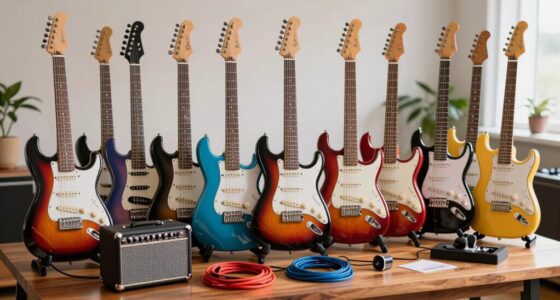
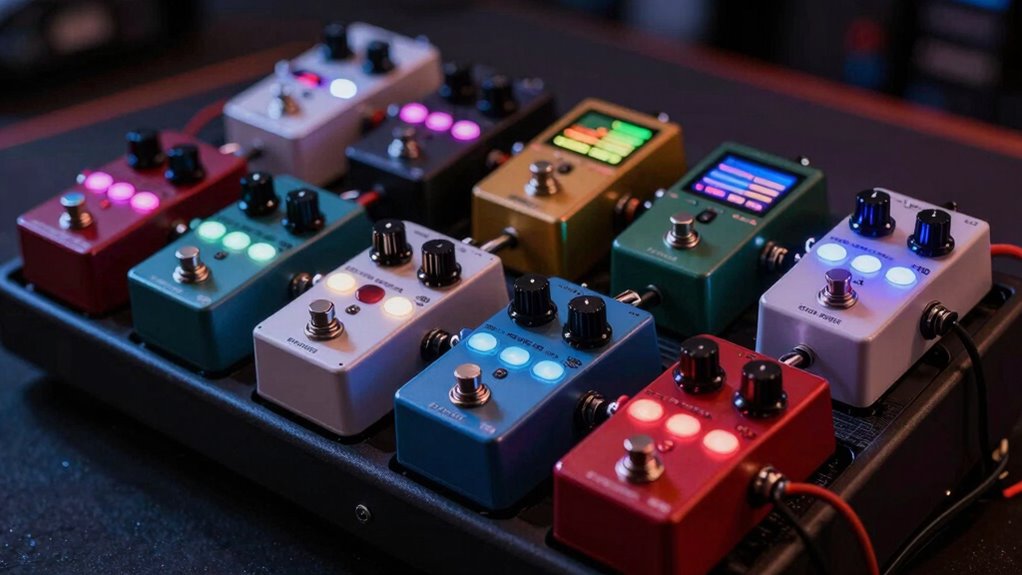
For guitarists searching for a multi effects pedalboard for guitar, the choice comes down to how much flexibility you need versus how quickly you want to dial in a sound. The BOSS ME-90 stands out as the best overall for its intuitive knob-per-function layout and rugged build, while the MOOER GE150 Pro offers exceptional value with deep amp modeling and a built-in looper. If you’re just starting out, the Zoom G1X Four provides a friendly entry point with an expression pedal. The main tradeoff in this category is between hands-on control and menu-diving, plus whether you need amp/cab simulation or just effects. Keep reading for the full breakdown of all 13 options.

Get audio and creator gear delivered free with Prime
- Fast, free delivery on millions of items
- Prime Video, Amazon Music and more included
- Member-only deals all year
Complete the kit


Key Takeaways
- The BOSS ME-90 separates itself with analog-style knobs that avoid menu diving, making it the fastest to edit live.
- Budget picks like the LEKATO and MOOER GE100 pack surprising features like IR loading and Bluetooth, but their build quality and preset management lag behind.
- The HeadRush Flex Prime is the only option with a touchscreen and full color display, justifying its premium price for players who want deep editing.
- Expression pedal integration varies widely; the Zoom G1X Four and ME-90 offer real pedal control, while many compact units lack it entirely.
- Amp and cab simulation is no longer a premium-only feature—several sub-$200 units now include IR support, but the quality of those models differs significantly.
| LEKATO Multi Effects Guitar Pedal |  | Best Ultra-Portable All-in-One | Effects Count: 125 | Amp Models: 40 | Cabinet Sims: 40 | VIEW ON AMAZON | See Our Full Breakdown |
| MOOER GE150 Pro Guitar Multi Effects Processor |  | Best Feature-Rich Powerhouse | Presets: 200 | Amp Models: 55 | Effects Count: 170 | VIEW ON AMAZON | See Our Full Breakdown |
| BOSS ME-90 Guitar Multi-Effects Processor |  | Best for Tactile Live Control | Effects Count: 60 | Preset Patches: 36 | Interface Type: Knob-based | VIEW ON AMAZON | See Our Full Breakdown |
| Flatsons KMF-1 Multi-Effects Guitar Pedal |  | Best Hybrid Power & Practice Tool | Effect Count: 77 | Amp Models: 18 | Cabinet Simulators: 18 | VIEW ON AMAZON | See Our Full Breakdown |
| Zoom G1X Four Guitar Multi-Effects Processor |  | Best Budget Beginner Starter | Effects Count: 71 | Amp Models: 13 | Looper Time: 30 seconds | VIEW ON AMAZON | See Our Full Breakdown |
| SONICAKE QME-20 Smart Box Multi-Effects Pedal for Guitar |  | Best All-Around for Multi-Instrument Use | Number of Effects: 130+ | Effect Modules: 9 | Preset Slots: 100 | VIEW ON AMAZON | See Our Full Breakdown |
| SONICAKE Acoustic Pedal Guitar Effect Multi Effects Preamp Chorus Delay Reverb Sonic Wood with XLR Output |  | Best Dedicated Acoustic Solution | Voltage: 9 volts | Amperage: 120 milliamps | Effects: Chorus, Delay, Reverb | VIEW ON AMAZON | See Our Full Breakdown |
| LEKATO ME-01 Multi Effects Guitar Pedal |  | Best Portable Practice Companion | Effect Modules: FX, AMP, MOD, DELAY, REVERB, IR CAB | Presets: 80 (40 factory, 40 user) | IRs: 20 built-in, third-party loadable | VIEW ON AMAZON | See Our Full Breakdown |
| Multi Effects Guitar Pedal with Reverb, Delay, Chorus, Phaser, IR Loading, and Bluetooth 5.0 |  | Best Compact Budget Pick | Voltage: 5 volts | Amperage: 0.4 A | Effects: Distortion, Overdrive, Delay, Reverb, Chorus, Phaser | VIEW ON AMAZON | See Our Full Breakdown |
| MOOER GE100 Multi-Effects Guitar Pedal with 80 Presets and 66 Effects |  | Best for Practice and Learning | Presets: 80 preset patches, 80 user patches | Effects: 66 effect types | Effect Modules: 8 | VIEW ON AMAZON | See Our Full Breakdown |
| MOOER GE150 Max Guitar Amp Modeling & Effects Pedalboard |  | Best for Live Performance | Presets: 200 | Amp Models: 55 | Cabinet Simulations: 26 | VIEW ON AMAZON | See Our Full Breakdown |
| HeadRush Flex Prime Electric Guitar Multi-Effects Pedal |  | Best Premium Powerhouse | Display: 4-inch touchscreen | Effects: Distortion, delay, chorus, reverb, modulation | Looper: Built-in with drum machine | VIEW ON AMAZON | See Our Full Breakdown |
| LEKATO Multi Effects Guitar Pedal with IR Loading, 9 Amp Models, Delay, Reverb, Distortion, Overdrive, Rechargeable, Bluetooth |  | Best Portable Practice Pedal | Amp Models: 9 | IR Cabinets: 8 (third-party IR supported) | Battery Life: 6-8 hours | VIEW ON AMAZON | See Our Full Breakdown |
| multi effects pedalboard for guitar | Weight | Dimensions | Amp Models | Connectivity |
|---|---|---|---|---|
| LEKATO Multi Effects Guitar Pe | 8.8 ounces | — | 40 | Bluetooth, USB Type C, 1/4-inch output |
| MOOER GE150 Pro Guitar Multi E | 1.1 kg | 12.2 x 6.02 x 12.2 inches | 55 | — |
| BOSS ME-90 Guitar Multi-Effect | 16 ounces | 21.35 x 11.1 x 4.9 inches | — | USB Type C |
| Flatsons KMF-1 Multi-Effects G | 1065 g | — | 18 | — |
| Zoom G1X Four Guitar Multi-Eff | — | 6.2 x 8.5 x 2 inches | 13 | USB Micro-B, Barrel Jack |
| SONICAKE QME-20 Smart Box Mult | 430 g | 5.51 x 2.36 x 5.91 inches | — | USB-C, Bluetooth, 1/4-inch, 3.5mm |
| SONICAKE Acoustic Pedal Guitar | 0.48 kg | 10.31"L x 2.52"W x 1.77"H | — | — |
| LEKATO ME-01 Multi Effects Gui | 450 g | 4.33 x 4.33 x 1.77 inches | — | Bluetooth, USB, headphone output |
| Multi Effects Guitar Pedal wit | 0.35 kg | 3.15 x 1.42 x 6.69 inches | 9 | Bluetooth 5, USB |
| MOOER GE100 Multi-Effects Guit | — | — | — | — |
| MOOER GE150 Max Guitar Amp Mod | 3.6 pounds | 12.83 x 2.48 x 2.83 inches | 55 | — |
| HeadRush Flex Prime Electric G | 1.6 kg | 11.76 x 6 x 2 inches | — | Wireless, USB 2.0 Type-B, 1/4" TRS/TS, 1/8" MIDI |
| LEKATO Multi Effects Guitar Pe | — | — | 9 | — |
More Details on Our Top Picks
LEKATO Multi Effects Guitar Pedal
This compact unit stands out for its rechargeable battery, offering a distinct advantage over the corded MOOER GE150 Pro when you need to play without an outlet nearby. With 125 effects and 40 amp models, it packs a surprising amount of variety into a palm-sized chassis. The inclusion of NAM A2/IR support is a modern touch rarely seen at this size, allowing for high-fidelity tone shaping that rivals larger processors. However, the 40-second looper is shorter than what you might find on dedicated practice units, and the tiny screen can make deep editing tedious compared to the clearer interface of the BOSS ME-90. It is a convenience-first device that trades some editing depth for sheer mobility.Pros:- Built-in rechargeable battery eliminates the need for external power banks or wall adapters.
- Supports NAM A2/IR files, offering modern tone-shaping capabilities in a tiny package.
- USB audio interface allows for direct recording into a computer without extra hardware.
Cons:- Battery life is limited to approximately 4 hours, which may not suffice for long sessions.
- The small 2-inch screen makes navigating the extensive effect list cumbersome.
- Lacks a built-in expression pedal, limiting real-time dynamic control.
Best for: Guitarists who prioritize portability and need a self-powered unit for outdoor practice or quick travel.
Not ideal for: Users who require extensive preset editing on-screen or long looper times for complex songwriting.
- Effects Count:125
- Amp Models:40
- Cabinet Sims:40
- Looper Time:40 seconds
- Power Source:Rechargeable battery (1500mAh)
- Weight:8.8 ounces
- Connectivity:Bluetooth, USB Type C, 1/4-inch output
Our verdict“This is the ideal choice for players who value the freedom of wireless power over deep editing capabilities.”
MOOER GE150 Pro Guitar Multi Effects Processor
The MOOER GE150 Pro dominates this list with its sheer volume of processing power, offering 55 amp models and 170 effects. This is significantly more headroom than the LEKATO Multi Effects Guitar Pedal, making it better suited for complex signal chains that require multiple simultaneous effects. The large color display and expression pedal provide a tactile, intuitive experience that simplifies live adjustments far better than knob-based units like the Zoom G1X Four. However, this power comes with bulk; at over a kilogram, it lacks the pocketability of smaller options. The interface, while visual, can present a steep learning curve for those accustomed to simpler stompboxes.Pros:- Massive library of 200 presets and 170 effects allows for highly complex signal routing.
- Integrated expression pedal enables dynamic volume and wah control without extra hardware.
- USB OTG functionality facilitates easy recording and preset management directly from a mobile device.
Cons:- Significantly larger and heavier than compact alternatives, reducing portability.
- The depth of features can be overwhelming for beginners just starting with multi-effects.
- Requires a standard 9V power supply, limiting use in locations without AC outlets.
Best for: Advanced players who need extensive preset storage and real-time control via an expression pedal.
Not ideal for: Minimalists or travelers who find a 12-inch wide pedalboard too large for their gig bag.
- Presets:200
- Amp Models:55
- Effects Count:170
- Dimensions:12.2 x 6.02 x 12.2 inches
- Weight:1.1 kg
- Power Source:Corded Electric (9V)
- Interfaces:1/4-inch, 3.5mm, USB Type C
Our verdict“Choose this model if you need a comprehensive studio-grade processor that fits on a standard pedalboard.”
BOSS ME-90 Guitar Multi-Effects Processor
If you hate diving into menus during a gig, the BOSS ME-90 is the superior choice. Its knob-driven interface allows for immediate tone tweaking, a stark contrast to the screen-heavy navigation found in the MOOER GE150 Pro. BOSS’s reputation for reliability is evident in the build quality and sound processing, which feels more refined than the budget-friendly LEKATO options. While it offers fewer total effects than the Zoom G1X Four, the quality of the included patches and the ease of access make it a favorite for working musicians. The main drawback is the lack of a built-in expression pedal, meaning you must carry an extra unit for dynamic control, unlike the all-in-one approach of the MOOER.Pros:- Physical knobs provide intuitive, real-time control over effect parameters without menu diving.
- Robust BOSS processing delivers professional-grade amp and cabinet simulations.
- Compact footprint fits easily on crowded pedalboards without sacrificing sound quality.
Cons:- Does not include an expression pedal, requiring additional gear for dynamic effects.
- Limited preset memory compared to larger processors like the MOOER GE150 Pro.
- Requires a 9V power adapter, which is not always included in the box.
Best for: Live performers who need to adjust gain, delay, or reverb instantly with physical knobs.
Not ideal for: Home recordists who prefer deep menu-based editing and comprehensive preset libraries.
- Effects Count:60
- Preset Patches:36
- Interface Type:Knob-based
- Dimensions:21.35 x 11.1 x 4.9 inches
- Weight:16 ounces
- Power Source:Corded Electric (9V)
- Connectivity:USB Type C
Our verdict“This pedal is best for gigging guitarists who prioritize ease of use and reliability over maximum feature count.”
Flatsons KMF-1 Multi-Effects Guitar Pedal
The Flatsons KMF-1 strikes a balance between the portability of the LEKATO and the feature set of the Zoom G1X Four. Its standout feature is the dual power option, allowing you to run on AA batteries for outdoor sessions or a standard DC adapter for studio use. The 512-point IR sampling provides detailed cabinet simulation, offering a more realistic amp feel than many competitors in this price bracket. However, the LCD screen is smaller and less vibrant than the color displays on the MOOER or BOSS units, making fine-tuning less visually engaging. It is a solid middle-ground device for players who want flexibility without the bulk of a full-sized pedalboard.Pros:- Flexible power options support both 9V DC adapters and 6 AA batteries for outdoor use.
- Includes a built-in expression pedal, offering dynamic control without extra accessories.
- Advanced DSP with 512-point IR sampling delivers realistic cabinet simulation.
Cons:- Battery life on AA batteries is limited to approximately 2.5 hours.
- The monochrome LCD screen offers less visual clarity than color TFT displays.
- Cab module must be enabled for headphone use, which can be a confusing default setting.
Best for: Versatile players who need a unit that works both on battery power and with a standard pedalboard setup.
Not ideal for: Audiophiles who demand the highest resolution displays and deepest editing software integration.
- Effect Count:77
- Amp Models:18
- Cabinet Simulators:18
- Power Source:DC 9V Adapter or 6 AA Batteries
- Weight:1065 g
- Looper Time:30 seconds
- Display:128×32 LCD Screen
Our verdict“A strong contender for players who want the convenience of battery power combined with a built-in expression pedal.”
Zoom G1X Four Guitar Multi-Effects Processor
The Zoom G1X Four remains a staple for beginners due to its low barrier to entry and extensive effect library. It offers 71 effects and 13 amp models, which, while fewer than the MOOER GE150 Pro, cover the essential sounds most new players need. The inclusion of an expression pedal is a significant value-add compared to the BOSS ME-90, which requires a separate purchase for similar functionality. However, the Micro-B USB connector feels dated compared to the modern Type-C ports on newer models like the LEKATO. The interface, while functional, lacks the visual clarity of newer competitors, making preset management slightly more manual.Pros:- Includes a built-in expression pedal, providing dynamic control at a budget-friendly price point.
- Extensive library of 71 effects and 68 rhythm patterns supports diverse practice routines.
- Lightweight and compact design makes it easy to transport for lessons or small gigs.
Cons:- Uses older Micro-B USB connectivity, which is less convenient than modern standards.
- The interface can feel cluttered and less intuitive for quick adjustments during live play.
- Amp modeling quality is acceptable but lacks the depth of premium units.
Best for: Beginners looking for an affordable, all-in-one unit with a built-in expression pedal.
Not ideal for: Users who prefer modern USB-C connectivity or high-resolution color screens for editing.
- Effects Count:71
- Amp Models:13
- Looper Time:30 seconds
- Rhythm Patterns:68
- Power Source:9V Battery or Adapter
- Dimensions:6.2 x 8.5 x 2 inches
- Connectivity:USB Micro-B, Barrel Jack
Our verdict“This is the most cost-effective entry point for guitarists who want a complete effects suite with dynamic control.”
SONICAKE QME-20 Smart Box Multi-Effects Pedal for Guitar
The SONICAKE QME-20 earns its place as the most flexible option in this roundup because it doesn’t lock you into one instrument. With over 130 effects spread across 9 modules and 100 presets, it covers amp simulation, cab IRs, modulation, pitch shifting, and even synth sounds. That breadth matters if you switch between electric, acoustic, and bass — something the dedicated SONICAKE Acoustic Pedal can’t do. The stereo TRS outputs and Bluetooth streaming make it a genuine live-performance tool, not just a practice toy.
The tradeoff is battery stamina. At up to 3.5 hours, it falls far short of the LEKATO ME-01‘s 10-hour runtime, so you’ll want the USB-C power option for gigs. Also, the package omits the power supply and USB cable, which feels stingy at this level. If you need one pedal that adapts to any guitar in your collection, this is the one.
Pros:- 130+ effects across 9 modules covers nearly every tone-shaping need
- Stereo TRS outputs and Bluetooth make it stage-ready
- Rechargeable battery plus USB-C offers flexible power options
- Works for guitar, bass, and acoustic instruments
Cons:- Battery life of 3.5 hours is short for extended gigs
- Power supply and USB cable are not included
- Windows 11 users may hit firmware update issues
Best for: Guitarists who play multiple instruments (electric, acoustic, bass) and want a single pedalboard solution for both studio and stage
Not ideal for: Players who need all-day battery life or who expect a plug-and-play power supply right out of the box
- Number of Effects:130+
- Effect Modules:9
- Preset Slots:100
- Power:9V DC or USB, rechargeable 2000mAh battery
- Outputs:Stereo TRS, headphone, EXP/FS TRS, Bluetooth, USB
- Connectivity:USB-C, Bluetooth, 1/4-inch, 3.5mm
- Weight:430 g
- Dimensions:5.51 x 2.36 x 5.91 inches
Our verdict“Buy the SONICAKE QME-20 if you want one multi-effects unit that handles every guitar in your arsenal without forcing you to choose a single style.”
SONICAKE Acoustic Pedal Guitar Effect Multi Effects Preamp Chorus Delay Reverb Sonic Wood with XLR Output
Most multi-effects pedals treat acoustic guitar as an afterthought, but the SONICAKE Acoustic Pedal is built specifically for it. The analog preamp with a 2-band EQ delivers a warm, natural foundation, while the chorus, delay, and reverb add depth without turning your signal into a synthetic mess. The standout feature is the XLR output — you can plug straight into a PA or mixer with no DI box, something the SONICAKE QME-20 can’t offer despite its broader effect library.
That focus comes with limits. You get only three effect types, no amp modeling, and no battery option — it needs a 9V adapter. If you play electric as well, you’ll need a second pedal. But for acoustic players who want a simple, gig-ready tone-shaping tool with pro-level connectivity, this is the most direct route.
Pros:- XLR output connects directly to mixers and PA systems
- Analog preamp with 2-band EQ preserves natural acoustic tone
- Tap tempo on delay and reverb for live timing control
- Compact and lightweight design fits easily on any pedalboard
Cons:- Only three effects (chorus, delay, reverb) — no distortion or modulation variety
- Requires external 9V power supply; no battery option
- Not suited for electric guitar or other instruments
Best for: Acoustic guitarists who perform live and want a compact, dedicated pedal with XLR output for direct PA connection
Not ideal for: Electric guitar players or anyone needing amp modeling, multiple effect types, or battery-powered operation
- Voltage:9 volts
- Amperage:120 milliamps
- Effects:Chorus, Delay, Reverb
- Power Source:DC Adapter
- Outputs:XLR, 1/4-inch (6.35mm)
- Dimensions:10.31″L x 2.52″W x 1.77″H
- Weight:0.48 kg
Our verdict“Choose the SONICAKE Acoustic Pedal if you’re an acoustic performer who values a transparent preamp and direct XLR connectivity over a wide effect palette.”
LEKATO ME-01 Multi Effects Guitar Pedal
The LEKATO ME-01 is the pedal you’ll actually throw in a gig bag and forget about until you need it. Its 4.33-inch square footprint and 450g weight make it the smallest full-featured unit here, and the 10-hour rechargeable battery blows past the SONICAKE QME-20‘s 3.5 hours by a mile. You get 80 presets across 6 editable modules, plus 20 built-in IRs and the ability to load third-party cabinet IRs via app — a level of tone customization that’s rare at this size.
Bluetooth audio lets you jam over backing tracks from your phone, and the headphone output makes silent practice effortless. The tradeoffs: the tuner only uses standard 12-tone equal temperament, so no special guitar/bass modes, and the OTG cable for mobile recording isn’t included. If portability and battery life are your priorities, this is the clear winner over the M-VAVE Cube-Baby, which offers similar features but shorter runtime.
Pros:- Up to 10 hours of battery life — best in this roundup
- Pocket-sized design (4.33″ square) fits anywhere
- Third-party IR loading via app for custom cab tones
- Bluetooth audio and headphone output for silent practice
Cons:- Tuner lacks dedicated guitar/bass modes
- OTG cable for mobile recording not included
- Only 6 effect modules, fewer than some rivals
Best for: Traveling guitarists and bedroom players who need a compact, battery-powered pedal with IR loading and Bluetooth jamming
Not ideal for: Players who need precise tuner modes for alternate tunings or who expect an OTG cable included for phone recording
- Effect Modules:FX, AMP, MOD, DELAY, REVERB, IR CAB
- Presets:80 (40 factory, 40 user)
- IRs:20 built-in, third-party loadable
- Battery Life:Up to 10 hours
- Connectivity:Bluetooth, USB, headphone output
- Weight:450 g
- Dimensions:4.33 x 4.33 x 1.77 inches
Our verdict“Pick the LEKATO ME-01 if you want a featherweight, long-lasting multi-effects pedal that lets you practice anywhere without dragging along a power supply.”
Multi Effects Guitar Pedal with Reverb, Delay, Chorus, Phaser, IR Loading, and Bluetooth 5.0
The M-VAVE Cube-Baby packs a surprising amount of tone into a chassis that’s barely bigger than a smartphone. With 9 amp models, 8 IR cabinet bodies, and effects including distortion, overdrive, delay, reverb, chorus, and phaser, it covers the essentials without the bulk of the SONICAKE QME-20. The rechargeable battery offers 6-8 hours — a solid middle ground between the LEKATO ME-01’s 10 hours and the QME-20’s 3.5. Bluetooth 5.0 lets you tweak presets and record from your phone.
Where it stumbles is the interface. The touch-sensitive controls and menu-diving might frustrate beginners who just want to turn a knob and play. Also, it only accepts 5V power, so you’ll likely need a separate adapter if you don’t have a USB source. For players on a tight budget who want a compact, modern multi-effects with IR support, this beats the MOOER GE100 on portability, though the GE100 offers a looper and drum machine for practice.
Pros:- 9 amp models and 8 IR cabinets for realistic amp tones
- Rechargeable battery with 6-8 hours of use
- Bluetooth 5.0 for preset editing and recording
- Compact footprint (3.15 x 6.69 inches) fits any board
Cons:- Touch-based interface can be confusing for new users
- Only accepts 5V power, requiring an extra adapter in some setups
- No looper or drum machine for standalone practice
Best for: Budget-conscious guitarists who want a small, Bluetooth-enabled multi-effects pedal with amp modeling and IR loading for home recording
Not ideal for: Beginners who prefer simple knob-per-function controls or players who need a built-in looper or drum machine
- Voltage:5 volts
- Amperage:0.4 A
- Effects:Distortion, Overdrive, Delay, Reverb, Chorus, Phaser
- Amp Models:9
- IR Cabinets:8
- Battery Life:6-8 hours
- Connectivity:Bluetooth 5, USB
- Weight:0.35 kg
- Dimensions:3.15 x 1.42 x 6.69 inches
Our verdict“If you want a tiny, affordable multi-effects pedal with modern IR and Bluetooth features and don’t mind a learning curve, the M-VAVE Cube-Baby delivers the most value per square inch.”
MOOER GE100 Multi-Effects Guitar Pedal with 80 Presets and 66 Effects
The MOOER GE100 stands apart from every other pedal in this roundup because it’s designed as much for education as for performance. Beyond the 80 presets and 66 effects across 8 modules, it includes a 180-second looper, a drum machine, and scale/chord learning functions. That makes it a complete practice station — you can loop a progression, layer a drum beat, and then use the built-in trainer to work on scales without touching a computer. The SONICAKE QME-20 offers more effects, but none of these practice tools.
The downside is that the interface has a learning curve, and the effects quality, while decent, doesn’t match the premium feel of pricier units. It’s also strictly for guitar — no bass or acoustic modes. Compared to the LEKATO ME-01, it’s bulkier and lacks Bluetooth, but the looper and learning aids make it the better choice for a student or a player who wants to improve.
Pros:- 180-second looper and drum machine for standalone practice
- Scale and chord learning functions help build technique
- 80 presets and 66 effects cover a wide tonal range
- Assignable expression pedal parameters for live control
Cons:- Interface has a steeper learning curve than simpler pedals
- No battery option — requires external power
- Limited to guitar; no bass or acoustic-specific modes
Best for: Guitar students and self-taught players who want a looper, drum machine, and scale/chord trainer in a single pedal
Not ideal for: Performing musicians who need battery portability, Bluetooth connectivity, or multi-instrument support
- Presets:80 preset patches, 80 user patches
- Effects:66 effect types
- Effect Modules:8
- Looper:180 seconds
- Drum Machine:Built-in
- Learning Features:Scale and chord learning
- Expression Pedal:Assignable parameters
Our verdict“Buy the MOOER GE100 if your main goal is to practice and learn guitar with a looper, drum machine, and built-in lessons, rather than to chase the latest effects or go fully portable.”
MOOER GE150 Max Guitar Amp Modeling & Effects Pedalboard
The MOOER GE150 Max earns its place as the live-performance specialist in this roundup. Where the HeadRush Flex Prime leans on a touchscreen for deep editing, the GE150 Max focuses on stage-ready immediacy. Its stereo XLR outputs let you plug straight into a mixer without a DI box, and the spill-over effect engine keeps delays and reverbs ringing naturally between preset changes — a detail that matters far more on stage than in the bedroom. The built-in expression pedal adds hands-free control over wah, volume, or pitch, which is something the LEKATO practice pedal simply cannot offer.
Compared with the BOSS ME-90, the GE150 Max gives you more amp models and presets for less money, but the interface is denser. You’ll need to spend time with the manual to unlock its full potential. It’s also bulkier than a compact stompbox, so if your rig is minimal, this might feel like overkill.
Pros:- Stereo XLR outputs for direct mixer connection
- Spill-over effect engine preserves delays and reverbs across preset changes
- Built-in expression pedal for wah, volume, and pitch control
- 200 presets and 55 amp models cover a wide tonal range
Cons:- Complex menu navigation can frustrate players who prefer knob-per-function layouts
- Requires a 9V power supply — no battery option for quick portable use
- Larger footprint than single-effect pedals, taking up more pedalboard space
Best for: Gigging guitarists who need stereo XLR outputs, spill-over effects, and an integrated expression pedal for live sets without carrying extra gear
Not ideal for: Beginners who want a simple plug-and-play pedal — the menu structure and parameter depth require a learning curve
- Presets:200
- Amp Models:55
- Cabinet Simulations:26
- Outputs:Stereo XLR, 1/4-inch, 3.5mm
- Expression Pedal:Built-in
- Power Supply:9V DC, 300mA
- Dimensions:12.83 x 2.48 x 2.83 inches
- Weight:3.6 pounds
Our verdict“If you play live and want a self-contained rig with professional output options, the GE150 Max delivers where simpler units fall short.”
HeadRush Flex Prime Electric Guitar Multi-Effects Pedal
The HeadRush Flex Prime is the heavyweight champion of this batch, and it’s not just about the 4-inch touchscreen. That display makes deep editing actually enjoyable — you can drag and drop effects, adjust amp parameters, and see your signal chain at a glance. The extensive effects library and amp modeling rival dedicated modelers like the MOOER GE150 Max, but the Flex Prime goes further with a built-in looper, drum machine, and wireless cloud sharing for downloading user presets.
Where the LEKATO practice pedal is all about portability and simplicity, the Flex Prime is a studio-in-a-box that also holds its own on stage. The analog signal path preserves your tone’s warmth, and the comprehensive I/O includes 1/4-inch TRS stereo outs, an effects loop, and USB for recording. The tradeoff? It’s heavy at 1.6 kg, and the sheer number of options can overwhelm anyone who just wants to plug in and play. If you don’t need this much power, the BOSS ME-90 offers a more tactile, knob-driven experience at a lower cost.
Pros:- 4-inch touchscreen makes preset editing intuitive and visual
- Extensive effects library and amp modeling cover virtually any genre
- Built-in looper and drum machine for practice and songwriting
- Wireless cloud sharing lets you download and upload presets
Cons:- Heavier than most competitors at 1.6 kg, making it less portable
- Learning curve is steep for beginners due to the depth of features
- Premium pricing puts it out of reach for budget-conscious players
Best for: Serious players and producers who want a full-featured modeling rig with a touchscreen interface, looper, and cloud-based preset sharing for both studio and stage
Not ideal for: Casual guitarists who prefer simple knobs and instant gratification — the touchscreen and deep menus demand time and patience
- Display:4-inch touchscreen
- Effects:Distortion, delay, chorus, reverb, modulation
- Looper:Built-in with drum machine
- Connectivity:Wireless, USB 2.0 Type-B, 1/4″ TRS/TS, 1/8″ MIDI
- Power:12V DC, 3A
- Dimensions:11.76 x 6 x 2 inches
- Weight:1.6 kg
Our verdict“For players who want the most powerful and flexible multi-effects unit with a modern interface, the Flex Prime is worth every penny — if you’re ready to climb the learning curve.”
LEKATO Multi Effects Guitar Pedal with IR Loading, 9 Amp Models, Delay, Reverb, Distortion, Overdrive, Rechargeable, Bluetooth
The LEKATO Multi Effects Pedal is the most travel-friendly option in this lineup, thanks to its built-in rechargeable battery that lasts 6-8 hours. That alone sets it apart from the MOOER GE150 Max, which requires a wall outlet, and the HeadRush Flex Prime, which is too heavy to toss in a gig bag. But the LEKATO isn’t just about convenience — it offers 9 amp models and 8 IR cabinets, plus the ability to load third-party IR files, so you can shape your tone far beyond what its price suggests.
Bluetooth connectivity lets you stream backing tracks from your phone and record directly to your DAW, making it a practical practice tool. Compared with the Zoom G1X Four, the LEKATO is more modern with IR support and a rechargeable battery, but it has fewer effects and presets. The setup requires downloading software to edit presets, which is a hurdle if you want to tweak on the fly. Battery life also varies depending on how much you use the Bluetooth and display.
Pros:- Rechargeable battery with 6-8 hours of playtime
- Supports third-party IR files for custom cabinet tones
- Bluetooth for streaming audio and recording to phone or computer
- Headphone output enables silent practice
Cons:- Preset editing requires a software download and configuration — not immediate
- Limited preset memory without customization
- Battery life can drop when using Bluetooth and high-output effects
Best for: Practice-focused guitarists who need a compact, battery-powered pedal for late-night sessions, travel, or quick recording without hauling extra gear
Not ideal for: Gigging musicians who need multiple footswitches for live preset switching — this pedal’s single-switch design limits onstage control
- Amp Models:9
- IR Cabinets:8 (third-party IR supported)
- Battery Life:6-8 hours
- Charging Time:2 hours
- Headphone Output:3.5mm
- Bluetooth:Yes
- Recording Support:Yes
Our verdict“If you prioritize portability and battery life over deep effects libraries, the LEKATO is the perfect grab-and-go practice companion.”
How We Picked
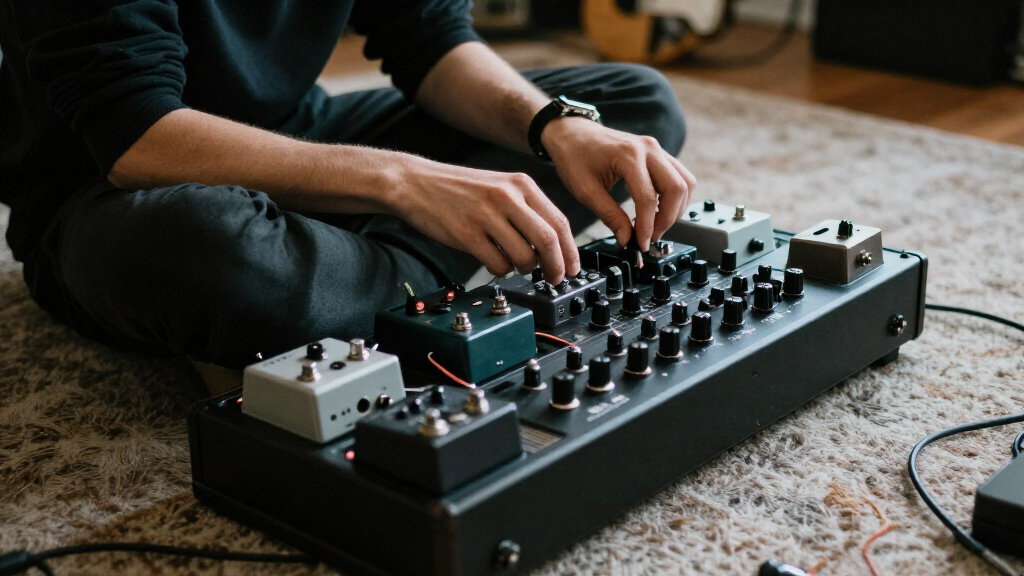
To rank these 13 multi effects pedalboards, I evaluated each unit on five core criteria: sound quality and effect authenticity, ease of live editing, build robustness, connectivity and I/O flexibility, and overall value. I also considered how well each pedal handles amp and cab simulation, since that’s become a deciding factor for players who want to go direct to a mixer or interface. The ranking prioritizes products that deliver a balanced mix of features without compromising usability.
Products that force you into deep menu navigation scored lower for live performance, while those with dedicated knobs or touchscreens earned higher marks. I also weighed the quality of the built-in effects—having 200 effects means nothing if most of them sound thin or artificial. Build quality matters for gigging musicians, so plastic housings with flimsy switches were penalized. Finally, I looked at whether each unit offers expandability via IR loading, USB audio, or Bluetooth, because those features extend the pedal’s lifespan.
Factors to Consider When Choosing Multi Effects Pedalboard For Guitar
Choosing the right multi effects pedalboard for guitar involves more than just counting effects. The sections below walk through the key factors that separate a great purchase from a regretful one. These considerations apply across all price points and will help you match the pedal to your actual playing situation.
Effects Quality vs. Quantity
A pedal that boasts 300 effects can feel impressive on paper, but the real test is how many of those sounds you’ll actually use. Cheap units often pad their specs with unusable variations of the same distortion or chorus. Look for pedals that offer studio-quality recreations of classic pedals rather than endless generic presets. The BOSS ME-90 and HeadRush Flex Prime excel here because their effects are modeled after real gear. If you mostly need delay, reverb, and overdrive, a simpler unit like the SONICAKE QME-20 will serve you better than a bloated budget pedal.
Amp & Cab Simulation
If you plan to record directly into an audio interface or play through a PA system, amp and cab simulation becomes essential. Many budget pedals now include IR loading, but the accuracy of those models varies dramatically. The MOOER GE150 Pro and LEKATO units offer usable amp models, while the HeadRush Flex Prime delivers the most realistic response thanks to its proprietary modeling engine. Consider whether you need realistic breakup and speaker response or just a decent approximation for practice. For bedroom players using a traditional amp, this feature matters less.
User Interface & Editing
The biggest frustration with multi-effects pedals is menu diving. A pedal with a tiny screen and a single knob will make you scroll through pages just to change the delay time. The BOSS ME-90 solves this with dedicated knobs for every effect type, while the HeadRush Flex Prime uses a touchscreen for quick adjustments. The Zoom G1X Four offers a reasonable balance with a clear LCD and dedicated buttons. If you plan to tweak sounds live, prioritize hands-on control over compact size. For studio editing, make sure the pedal has USB connectivity for a companion software editor.
Connectivity & I/O
Think about how the pedal will fit into your current rig. Do you need stereo outputs, an effects loop, or a headphone jack for silent practice? USB audio interface capability is a huge plus for recording, but not all pedals include it. The LEKATO models and MOOER GE150 Pro offer USB audio, while the BOSS ME-90 requires an additional interface. Also check whether the pedal can accept an expression pedal or external footswitch for expansion. Having the right I/O prevents you from outgrowing the pedal as your setup evolves.
Build & Portability
Multi-effects pedals are meant to be stomped on, so build quality directly affects reliability. The BOSS ME-90 and HeadRush Flex Prime feature metal chassis that can survive years of gigging, while many budget options use plastic that flexes under pressure. If you’re a gigging musician, invest in a sturdier unit. For home use only, a lighter plastic pedal like the SONICAKE QME-20 is fine and easier to pack. Also consider the pedal’s footprint—a full-size unit like the ME-90 takes up significant pedalboard space, whereas compact options like the LEKATO ME-01 fit in a gig bag pocket.
Budget vs. Long-Term Value
It’s tempting to buy the cheapest pedal with the most features, but that often leads to frustration with sound quality and reliability. A $100 pedal with 200 effects might sound worse than a $200 pedal with 30 effects. Set a realistic budget based on how serious you are about guitar. Beginners can start with the Zoom G1X Four or LEKATO ME-01 and upgrade later. Intermediate players will find the MOOER GE150 Pro offers the best balance of price and performance. Professionals should look at the HeadRush Flex Prime or BOSS ME-90 for their durability and sound fidelity. Paying more upfront often saves money in the long run because you won’t need to replace the pedal.
Frequently Asked Questions
Do I need amp modeling in a multi-effects pedal, or just effects?
That depends on your output method. If you’re plugging into a traditional guitar amp, you can skip amp modeling and use only the effects, since your amp provides the tone. However, if you plan to record directly into an interface, use headphones, or play through a PA, amp and cab simulation is essential. Pedals like the MOOER GE150 Pro and HeadRush Flex Prime include high-quality amp models that make direct recording sound convincing. If you already own a great amp and only need effects, a simpler unit like the SONICAKE QME-20 might be all you need.
How many effects do I actually need in a multi-effects pedal?
Most guitarists use fewer than 10 effects regularly—typically overdrive, distortion, delay, reverb, chorus, and maybe a phaser or flanger. Having 200 effects sounds impressive, but you’ll likely settle on a few favorites. Focus on the quality of the core effects rather than the total count. The BOSS ME-90 offers fewer effects than many budget pedals, but each one sounds authentic and responds like a real pedal. A pedal with 30 high-quality effects is more useful than one with 300 that all sound mediocre.
Can I use a multi-effects pedal designed for electric guitar with an acoustic guitar?
Yes, but with caveats. Most multi-effects pedals are optimized for electric guitar and may color the acoustic tone in unflattering ways. However, the SONICAKE Acoustic Pedal in this roundup is specifically designed for acoustic guitars, offering preamp EQ, chorus, delay, and reverb with an XLR output for direct connection to a mixer. For occasional acoustic use, any multi-effects pedal can work if you stick to modulation and time-based effects and avoid heavy distortion. If you play acoustic regularly, invest in a dedicated acoustic pedal.
What’s the difference between a multi-effects pedal and a traditional pedalboard?
A multi-effects pedal combines dozens of effects into one unit, saving space and money compared to buying individual stompboxes. The tradeoff is that you often lose the tactile control and unique character of separate pedals. A traditional pedalboard lets you mix and match specific pedals for a personalized tone, but it requires more investment and setup time. Multi-effects pedals like the BOSS ME-90 offer the convenience of preset switching and easy recall, while a pedalboard gives you more flexibility to swap effects. Many players use both—a multi-effects pedal for practice and a pedalboard for gigs.
How important is an expression pedal in a multi-effects unit?
An expression pedal adds real-time control over effects like wah, volume, and pitch shifting, which is invaluable for expressive playing. The Zoom G1X Four includes a built-in expression pedal, while the BOSS ME-90 has an external expression input. If you play styles that rely on wah or volume swells, this feature is a must. Many budget units omit expression pedal support entirely, so check the specs. For players who only need preset switching, skipping the expression pedal can save money and reduce the pedal’s footprint.
Conclusion
After comparing all 13 multi effects pedalboards, the BOSS ME-90 earns the best overall title for its intuitive control layout, rugged build, and authentic effects that make live tweaking effortless. For budget-conscious players, the MOOER GE150 Pro offers the best value with its amp modeling, looper, and USB audio at a fraction of the cost. Beginners should start with the Zoom G1X Four, whose expression pedal and straightforward interface ease you into multi-effects without overwhelming you. If money is no object and you want the most advanced editing, the HeadRush Flex Prime delivers a premium touchscreen experience and studio-grade sound. For players who need a compact pedal for practice or travel, the SONICAKE QME-20 packs surprising quality into a tiny footprint. Match your choice to your playing context, and you’ll find a pedal that grows with you.
Evergreen bestsellers Picks
bestsellers
As an affiliate, we earn on qualifying purchases.