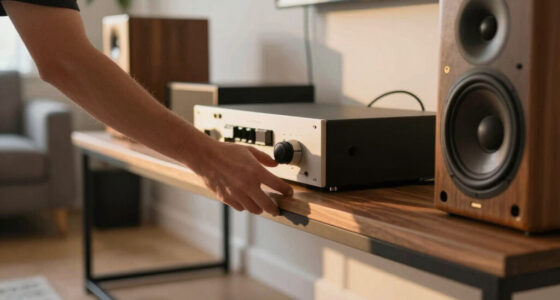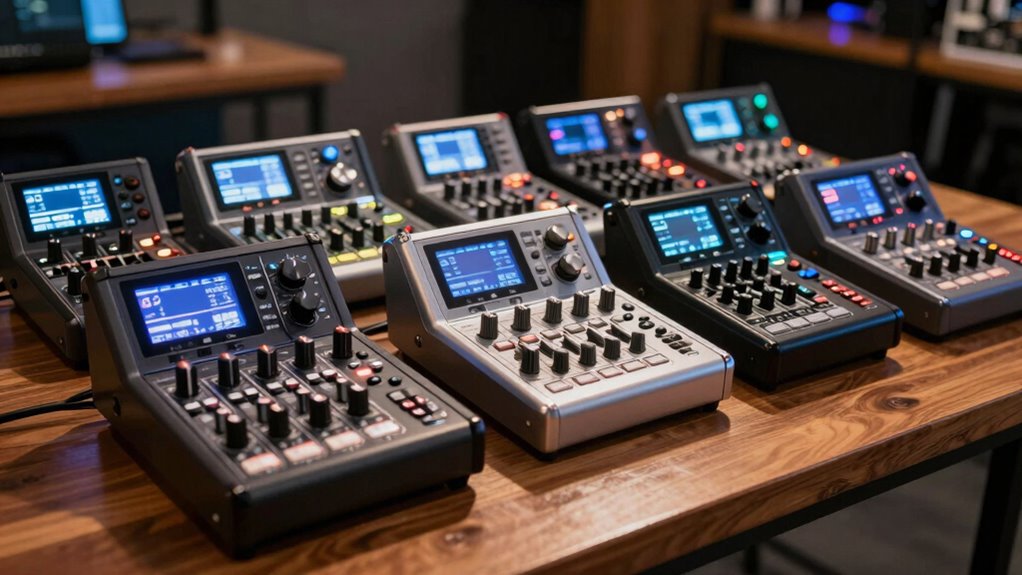
For a powered mixer for a small venue, my best overall pick is the Behringer PMP1680S: its 10 channels give a typical small band or event room more input flexibility than the four-channel models without jumping to a 14-channel setup. The Rockville RPM80BT stands out for a compact eight-channel rig with Bluetooth, while the Peavey PVi 6500 is worth a look if you want an all-in-one approach. The main tradeoffs are channel capacity versus setup simplicity, onboard features versus ease of use, and advertised amplifier power versus the needs of your speakers and room. A powered mixer can reduce separate gear, but it is not a substitute for checking speaker compatibility and coverage. Continue reading for the full comparison and a guide to choosing the right fit.

Get audio and creator gear delivered free with Prime
- Fast, free delivery on millions of items
- Prime Video, Amazon Music and more included
- Member-only deals all year
Complete the kit


Key Takeaways
The Behringer PMP1680S takes the overall spot because its 10-channel layout offers a middle ground between compact four- and eight-channel mixers and the larger 14-channel options.
Four-channel models favor simple setups: the Aveek, W IN-MIX, and Rockville RPM45BT/RPM48S are more suited to a few microphones or playback sources than a busy band input list.
Bluetooth and USB recur throughout the lineup, so those features alone do little to distinguish a pick; buyers should focus on channel needs, controls, and speaker matching.
The 14-channel Rockville RPM1470 and Behringer PMP2000D suit larger input lists, but their added capacity may mean more mixer than a small room needs.
High wattage claims do not settle speaker compatibility: matching the mixer’s powered outputs to the speakers’ requirements matters more than comparing headline numbers alone.


| powered mixer for small venue | Channels | Power output | Connectivity | Phantom power |
|---|---|---|---|---|
| Rockville RPM80BT Powered 8-Ch | 8 | 600W RMS | Bluetooth, XLR, 1/4-inch TRS, RCA AUX, USB | 48V |
| Aveek 150W x2 Powered Audio Mi | 4 | 150W × 2 RMS | Bluetooth, USB, RCA, XLR, Type-C | 48V |
| TF-800 8-Channel Power Mixer w | 8 | — | Bluetooth, USB | 48V |
| Rockville RPM45BT 1800W 4-Chan | 4 | 225W × 2 RMS at 8 ohms | Bluetooth, USB playback | +48V |
| Rockville RPM48S 4-Channel Ste | 4 | 250W RMS × 2 | Bluetooth, USB, SD | +48V |
| Rockville RPM870 8-Channel 600 | 8 | 750 W x 2 RMS at 4 ohms; 500 W x 2 RMS at 8 ohms | USB, Bluetooth, RCA | — |
| Rockville RPM1470 14-Channel 6 | 14 | 750 W RMS x 2 at 4 ohms | USB, Bluetooth, RCA, XLR | — |
| Behringer PMP1680S 1600-Watt 1 | 10 | 1600 W in bridged mode | — | — |
| 8 Channel Mixer Power Amplifie | — | 2 x 300 W | Bluetooth, USB | Yes |
| Rockville RPM85 8-Channel Powe | 8 | 300 W x 2 RMS at 4 ohms | Bluetooth, USB, SD, XLR, TRS, RCA | +15 V |
| Behringer EUROPOWER PMP2000D 2 | 14 | 2000 watts | XLR and auxiliary | Switchable +48V |
| Peavey PVi 6500 All-In-One Pow | 5 | 400 watts | XLR, TRS, and RCA | — |
| Rockville RPM45 Powered 4-Chan | 4 | 1800W peak; 225W x 2 RMS at 8 ohms | — | +15V |
| W IN-MIX 150W x2 Powered Mixer | 4 | 150W per channel | — | 48V |
More Details on Our Top Picks
Rockville RPM80BT Powered 8-Channel Mixer/Amplifier with Bluetooth, EQ
The RPM80BT earns my lead spot for small venues that need room for several microphones or instruments without stepping up to a much larger mixer. Its eight channels, 600W RMS output, 48V phantom power, and Bluetooth, USB, RCA, XLR, and TRS connections suit mixed live sets, talks, and background music. Compared with the Rockville RPM45BT, it gives a small band or event crew more input capacity and a five-band EQ, but takes up more space and weighs 24 pounds rather than 18. The onboard effects add useful vocal shaping, though the controls may take more time to learn than the simpler four-channel options. I’d choose it when flexibility matters more than grab-and-go weight; buyers running only a couple of sources may find the RPM45BT easier to manage.
Pros:- Eight channels accommodate more microphones and instruments than the four-channel models here.
- 600W RMS output is specified clearly, giving buyers a more useful power reference than peak figures alone.
- Bluetooth, USB, RCA, XLR, and TRS connections support varied sources and setups.
- Five-band EQ, effects, and 48V phantom power offer useful sound-shaping and condenser-mic support.
Cons:- At 24 pounds, it is heavier than the four-channel Rockville RPM45BT and Aveek mixer.
- The extensive controls may be less approachable for a first-time mixer operator.
- The stated warranty period is one year.
Best for: Small bands, community halls, and event operators who need eight inputs, phantom power, and several playback options in one powered mixer.
Not ideal for: Solo presenters or karaoke hosts with only a few sources who want the lightest, simplest setup; the 24-pound body and broader control set are more than they may need.
- Channels:8
- Power output:600W RMS
- Peak power:2400W
- Connectivity:Bluetooth, XLR, 1/4-inch TRS, RCA AUX, USB
- Phantom power:48V
- Equalizer:5-band
- Dimensions:11.8 × 19.7 × 7.2 inches
- Weight:24 pounds
Our verdict“Choose the RPM80BT if your small venue needs eight channels and broad control options more than minimum weight or simplicity.”
Aveek 150W x2 Powered Audio Mixer with 4 Channels and Wireless Microphones
The Aveek makes the most sense when wireless microphones are part of the job, not an accessory to source separately. It includes two microphones alongside four channels, 150W × 2 RMS output, Bluetooth, USB playback, headphone monitoring, and 48V phantom power. That bundle is more immediately useful for karaoke nights or small presentations than the Rockville RPM45BT, which has four channels and effects but does not list included wireless mics. In exchange, the Aveek gives up the Rockville’s listed remote control and wood enclosure, and its Bluetooth range is specified as just 1.5 feet—a real constraint if a phone needs to sit away from the mixer. USB playback and Bluetooth also cannot run at once. I’d favor it for a fixed, compact setup with vocal hosts; buyers building a more flexible live rig should compare the Rockville options.
Pros:- Includes two wireless microphones, reducing the need to source vocal mics separately.
- 150W × 2 RMS output is stated, alongside four channels for a small vocal or playback setup.
- Type-C, XLR, RCA, USB, and Bluetooth provide several connection options.
- Headphone monitoring, echo and delay, and 48V phantom power support varied vocal and recording tasks.
Cons:- Bluetooth range is listed as only 1.5 feet, limiting convenient phone placement.
- Bluetooth and USB playback cannot be used simultaneously.
- Some TV connections require an additional converter.
Best for: Karaoke hosts, small community groups, and presenters who want two wireless microphones included with a compact powered mixer.
Not ideal for: Operators who need wireless playback from across a room or simultaneous Bluetooth and USB playback; the stated Bluetooth range is short and those playback modes cannot run together.
- Channels:4
- Power output:150W × 2 RMS
- Wireless microphones:2 included
- Connectivity:Bluetooth, USB, RCA, XLR, Type-C
- Input types:XLR, 1/4-inch unbalanced, RCA
- Phantom power:48V
- Additional features:Echo and delay effects; headphone jack
- Weight:2 kg
Our verdict“Pick the Aveek for a compact karaoke or presentation rig where its included wireless microphones matter more than flexible playback or longer-range Bluetooth.”
TF-800 8-Channel Power Mixer with Bluetooth/USB, 650W Amplifier, 99 Reverb Effects, Large Spectrum Display, 48V Phantom Power for KTV, Bar DJ, Lectures, Stage
The TF-800 is aimed at buyers who want eight channels plus abundant onboard reverb choices for vocals, karaoke, or varied event programming. Its 650W amplifier, 99 reverb effects, Bluetooth and USB, 48V phantom power, and large spectrum display set it apart from the Rockville RPM80BT, which offers a stated 600W RMS rating and a five-band EQ but lists effects without a count. That makes the TF-800 appealing for effect experimentation and visual level checking, while the Rockville’s more detailed connectivity list gives buyers clearer guidance on compatible sources. The TF-800’s product data leaves some questions open: it lists a 5V supply and 20 kHz frequency response but gives little detail on inputs beyond microphone and 3.5mm jack. I’d choose it for effects-led use, not for a rig where exact connection and power details are essential.
Pros:- Eight channels suit a more involved small-venue setup than the four-channel mixers in this batch.
- The 99 reverb effects provide a wide range of vocal treatment choices.
- A large spectrum display offers a visual reference while adjusting levels.
- Bluetooth, USB, and 48V phantom power cover common playback and microphone needs.
Cons:- Input details are limited compared with the Rockville RPM80BT’s listed XLR, TRS, RCA, and USB connections.
- The listed 5V voltage specification leaves the power setup unclear for a venue mixer.
- The available information does not specify built-in recording capability or software update support.
Best for: KTV operators, vocal-focused event hosts, and small venues that want eight channels, many reverb choices, and a prominent spectrum display.
Not ideal for: Buyers who need clearly documented input options and power requirements before building a live rig; the available specifications leave important setup details unclear.
- Channels:8
- Amplifier power:650W
- Reverb effects:99
- Connectivity:Bluetooth, USB
- Input types:Microphone, 3.5mm jack
- Phantom power:48V
- Dimensions:41.5 × 35.5 × 13 cm
- Weight:2.8 pounds
- Listed voltage:5V
Our verdict“Choose the TF-800 if reverb variety and a visual display matter most, but favor the RPM80BT when you need more clearly documented connections and power details.”
Rockville RPM45BT 1800W 4-Channel Powered Mixer/Amplifier with Bluetooth and EQ
For a small venue with a short input list, the RPM45BT offers a four-channel layout and a compact footprint without the extra controls of the eight-channel RPM80BT. Its power figures are given as 225W × 2 RMS at 8 ohms and 1800W peak, so I’d focus on the RMS specification when matching it to speakers rather than treating the peak number as continuous output. Bluetooth, USB playback, XLR, RCA, and 1/4-inch inputs cover common event sources; phantom power and echo/delay add flexibility for microphones. Compared with the RPM48S, it lists onboard effects and a remote control, while the RPM48S specifies USB/SD playback and a 3-band EQ. The RPM45BT still weighs 18 pounds, so “compact” describes its footprint more than a truly light carry.
Pros:- Four channels keep a small event setup simpler than the eight-channel RPM80BT.
- 225W × 2 RMS at 8 ohms gives a useful speaker-matching reference.
- Bluetooth, USB, XLR, RCA, and 1/4-inch inputs support common playback and live sources.
- Echo/delay, 48V phantom power, and remote control add practical event features.
Cons:- Four channels leave less room for expanding a live setup than the RPM80BT’s eight.
- At 18 pounds, it is not especially light for frequent carrying.
- The listed peak figure is much higher than its stated RMS output, so buyers should compare using RMS specifications.
Best for: Small-event hosts, karaoke operators, and duos who need four channels, basic onboard effects, and Bluetooth or USB playback.
Not ideal for: Small bands with several simultaneous microphones or instruments, or buyers prioritizing light transport; it has only four channels and weighs 18 pounds.
- Channels:4
- Power output:225W × 2 RMS at 8 ohms
- Peak power:1800W
- Connectivity:Bluetooth, USB playback
- Input connectors:1/4-inch TS, RCA, XLR
- Phantom power:+48V
- Additional features:Echo/delay effects, remote control
- Dimensions:8.9 × 18.9 × 6.3 inches
- Weight:18 pounds
Our verdict“Choose the RPM45BT for a compact four-channel event setup with effects, but step up to the RPM80BT if your venue needs more inputs.”
Rockville RPM48S 4-Channel Stereo Powered Mixer with Bluetooth
The RPM48S is the clearest fit for a small venue that wants simple stereo playback options alongside four live inputs. Bluetooth, USB, and SD support give an event operator several ways to play backing tracks or recorded music, while four XLR and four 1/4-inch TS inputs offer a broad connection set for its four-channel format. Compared with the Rockville RPM45BT, it lists SD playback and a three-band EQ, but the RPM45BT is the stronger pick for buyers who specifically want stated echo/delay effects and a remote control. The RPM48S’s 250W RMS × 2 rating is more useful for speaker matching than its 2000W peak figure. Its main limitation is a relatively straightforward feature set: no built-in effects are specified, and at 19.8 pounds it is not featherweight for mobile events.
Pros:- Bluetooth, USB, and SD playback provide more listed playback choices than the RPM45BT.
- Four XLR and four 1/4-inch TS inputs accommodate a range of microphones and instruments.
- 250W RMS × 2 gives a practical power figure for comparing speaker needs.
- Three-band EQ provides basic treble, mid, and bass adjustment.
Cons:- No built-in effects are specified, unlike the RPM45BT’s echo and delay.
- At 19.8 pounds, it is heavier than the RPM45BT for repeated transport.
- The available product details do not specify software update support.
Best for: DJs, musicians, and event organizers who need four channels with Bluetooth, USB, and SD playback for a small room or community venue.
Not ideal for: Vocal hosts who want specified onboard echo or delay, or frequent solo operators seeking a particularly light mixer; the RPM45BT lists effects and weighs less.
- Channels:4
- Power output:250W RMS × 2
- Peak power:2000W
- Connectivity:Bluetooth, USB, SD
- Inputs:4 XLR, 4 1/4-inch TS
- Equalizer:3-band: treble, mid, bass
- Phantom power:+48V
- Dimensions:8.9 × 18.9 × 6.3 inches
- Weight:19.8 pounds
Our verdict“Pick the RPM48S when USB and SD playback are priorities, but choose the RPM45BT if onboard vocal effects and lower carry weight matter more.”
Rockville RPM870 8-Channel 6000W Powered Mixer with USB Bluetooth FX
The RPM870 suits small venues that need several mic and playback sources without stepping up to a 14-channel unit. Its eight channels, phantom-powered mic preamps, USB and Bluetooth playback, plus effects and detailed EQ give a host or small band room to handle vocals and backing audio from one mixer. Compared with the RPM85, it emphasizes a much higher stated amplifier output and more involved sound shaping, while retaining the same channel count. That extra capability comes with a less convenient footprint: at 17.72 inches deep, it is not the easiest choice for frequent load-ins, and its controls may take beginners longer to learn. The advertised peak figure is much higher than the listed RMS figures, so I would base speaker-matching decisions on the RMS output, not the headline peak rating.
Pros:- Eight channels accommodate a small band or event setup
- Phantom-powered mic preamps support condenser microphones
- USB and Bluetooth provide convenient playback options
- Effects and detailed EQ offer more sound-shaping control than a basic mixer
Cons:- Deep, bulky enclosure is awkward for frequent transport
- Multiple controls and features can complicate setup for new users
- Peak power claims should not be treated as continuous RMS output
Best for: Small venue operators and bands needing eight inputs, phantom power, onboard effects, and USB or Bluetooth playback in one unit.
Not ideal for: Beginners seeking a simple setup or mobile performers prioritizing low carry weight and compact dimensions.
- Channels:8
- Power output:750 W x 2 RMS at 4 ohms; 500 W x 2 RMS at 8 ohms
- Peak output:Up to 3000 W x 2 peak
- Connectivity:USB, Bluetooth, RCA
- Mic preamps:Mic preamps with phantom power
- Dimensions:17.72 x 15.16 x 7.09 inches
Our verdict“Choose the RPM870 if you want an eight-channel small-venue mixer with broad playback and sound-shaping options and can accept a bulky, more involved setup.”
Rockville RPM1470 14-Channel 6000W Powered Mixer with USB and Bluetooth
For a small venue that regularly hosts full bands, panel events, or several microphones at once, the RPM1470’s 14 channels are its main advantage. It offers more room to keep sources connected than the eight-channel RPM870, and its dual 7-band graphic EQs and 24-bit effects processor give operators more control over the mix. USB, Bluetooth, RCA, and XLR connections also suit varied event sources, while the listed 28.9-pound weight makes its portability tradeoff clear. This is a larger, more demanding choice than the Behringer PMP1680S, which has fewer channels but a lighter stated weight. For a compact venue with only a few microphones, much of the RPM1470’s input capacity may go unused; its size and setup complexity make more sense when the event schedule actually needs them.
Pros:- Fourteen channels offer substantial input capacity
- Fourteen XDR2 mic preamps include +48V phantom power
- Dual 7-band graphic EQs support detailed mix adjustment
- USB, Bluetooth, RCA, and XLR cover varied source connections
Cons:- At 28.9 pounds, it is a substantial load for frequent transport
- Its channel count and controls can be excessive for simple small-room setups
- Larger dimensions demand more storage and setup space
Best for: Small venues hosting full bands, multi-mic events, or performances with many sources that need to stay connected.
Not ideal for: Solo performers and small rooms with only a few inputs, especially where easy carrying and quick setup matter most.
- Channels:14
- Power output:750 W RMS x 2 at 4 ohms
- Peak output:6000 W peak
- Mic preamps:14 XDR2 preamps with +48V phantom power
- Connectivity:USB, Bluetooth, RCA, XLR
- Effects:24-bit processor with 16 presets
- Equalization:Dual 7-band graphic EQs
- Dimensions and weight:22.44 x 17.72 x 7.09 inches; 28.9 pounds
Our verdict“Pick the RPM1470 when your small venue often needs more than eight connected sources and you can accommodate its weight and setup demands.”
Behringer PMP1680S 1600-Watt 10-Channel Powered Mixer
The PMP1680S makes a sensible middle ground for venues that need more inputs than an eight-channel mixer but do not need the RPM1470’s 14-channel capacity. Its 10 channels, eight mic preamps, Speakon and TRS outputs, and built-in effects support a conventional live setup. The listed 21.8-pound weight and Class-D design are appealing for operators who move gear between rooms, although it is not a featherweight unit. Its 100 effect presets and feedback detection add useful tools for vocal events, but the supplied data does not specify wireless playback, so it is less convenient for phone-based music than the RPM1470 with Bluetooth. I would choose this model for wired sound systems and straightforward input expansion, not for shoppers who want clearly documented modern playback options or a minimal control surface.
Pros:- Ten channels provide more room than an eight-channel mixer
- Eight mic preamps support microphone-led performances
- Class-D design keeps the listed weight below the RPM1470’s
- Built-in effects and feedback detection offer useful live-sound tools
Cons:- Wireless playback is not specified
- Available product details leave some capabilities unclear
- The feature set may still take time for beginners to learn
Best for: Venue operators who need around ten inputs, built-in effects, and a comparatively manageable mixer for wired live sound.
Not ideal for: Performers who depend on Bluetooth playback, need clearly specified connectivity, or want the simplest possible controls.
- Channels:10
- Power output:1600 W in bridged mode
- Amplifier design:Class-D
- Mic preamps:8
- Effects:24-bit FX processors with 100 presets
- Output connectors:Speakon, TRS
- Audio input:XLR
- Weight:21.8 pounds
Our verdict“Choose the PMP1680S for a wired small-venue rig that benefits from ten channels and onboard effects without the RPM1470’s larger input count.”
8 Channel Mixer Power Amplifier with DSP Reverb for Speakers
This mixer is aimed at a small room where two powered-out speaker channels and basic source flexibility matter more than extensive input capacity. Bluetooth and USB handle playback, while XLR, 1/4-inch, microphone, and instrument inputs cover common event sources. Its 16 DSP reverb effects and five-band master EQ give an operator some vocal and room adjustment without the RPM870’s broader stated power and more elaborate EQ controls. One spec needs careful reading: the product name says eight-channel, but the listed channel count is two, so I would not buy it expecting eight independently mixable inputs. The stated 2 x 300 W output also places it below the larger Rockville models on paper. It may suit modest karaoke or speech setups, but the conflicting channel information makes it a less dependable pick for expanding acts.
Pros:- Bluetooth and USB support convenient music playback
- XLR, 1/4-inch, microphone, and instrument inputs cover varied sources
- Sixteen DSP reverb effects offer vocal ambience choices
- Five-band master EQ allows basic overall tone adjustment
Cons:- Listed channel count is two despite the eight-channel product name
- Stated output of 2 x 300 W is below the larger Rockville options
- Conflicting channel details make it difficult to judge fit for multi-source events
Best for: Karaoke hosts and speech-focused operators in modest rooms who want Bluetooth or USB playback, reverb, and basic microphone and instrument connections.
Not ideal for: Bands or event operators who need several independent channels, a clearly verified input count, or higher stated amplifier output.
- Listed channels:2
- Product title channel claim:8-channel
- Power output:2 x 300 W
- Connectivity:Bluetooth, USB
- Inputs:XLR, 1/4-inch line, microphone, musical instrument
- Effects:16 DSP reverb effects
- Phantom power:Yes
- Equalization:5-band master control
Our verdict“Consider this model for modest karaoke or speech use only if its listed two-channel configuration matches your needs and you verify the input layout.”
Rockville RPM85 8-Channel Powered Mixer with Bluetooth and USB/SD
The RPM85 is the more practical fit for small venues that need eight channels and easy playback without the RPM870’s deeper chassis and more ambitious stated power figures. Bluetooth, USB, and SD playback let an operator run music without adding a separate source device, while XLR, TRS, and RCA connections accommodate a mixed event setup. Its 5-band graphic EQ and echo and delay effects provide useful adjustments for speech and vocals, though they are less elaborate than the RPM870’s detailed EQ and versatile effects. The two amplifiers are listed at 300 W RMS each into 4 ohms, a more useful planning figure than the 2400 W peak headline. At 25.4 pounds, it is portable in the sense of being movable by one person, not especially light; frequent solo load-ins may still feel burdensome.
Pros:- Eight channels suit small event and performance setups
- Bluetooth, USB, and SD playback reduce the need for separate music sources
- XLR, TRS, and RCA provide a range of connection options
- 5-band EQ and echo and delay effects support basic vocal and room adjustments
Cons:- At 25.4 pounds, it can be tiring to carry often
- Its EQ and effects are less involved than the RPM870’s control options
- The 2400 W peak figure is not the same as its 300 W x 2 RMS rating
Best for: Mobile DJs, community halls, and small event operators needing eight inputs plus Bluetooth, USB, and SD playback in one unit.
Not ideal for: Users who need a light carry, advanced EQ and effects, or more clearly documented output headroom for demanding speaker loads.
- Channels:8
- Power output:300 W x 2 RMS at 4 ohms
- Peak output:2400 W peak
- Connectivity:Bluetooth, USB, SD, XLR, TRS, RCA
- Phantom power:+15 V
- Equalization:5-band graphic EQ
- Effects and cooling:Echo and delay effects; fan-vent cooling
- Dimensions and weight:12 x 19 x 7.5 inches; 25.4 pounds
Our verdict“Choose the RPM85 for an eight-channel small-venue setup where built-in Bluetooth, USB, and SD playback matter more than advanced processing or low carry weight.”
Behringer EUROPOWER PMP2000D 2000-Watt 14-Channel Powered Mixer Bundle with 2 XLR Microphone Cables
For a small venue that regularly handles several vocalists, instruments, or presenters, the 14-channel layout gives this Behringer more room to grow than the four-channel Rockville RPM45 or W IN-MIX. Its 2000-watt power rating is the largest stated output in this group, while nine IMP microphone preamps with switchable phantom power can accommodate a varied mic setup. The built-in 24-bit effects processor adds 25 presets, reducing the need for separate effects gear. The tradeoff is that this much capacity can be unnecessary for a simple karaoke rig, and a 27.1-pound chassis is less convenient to move than the 4.6-pound W IN-MIX. Setup may also take more audio knowledge than a compact, limited-channel option. I’d choose it when input flexibility matters more than minimal controls or weight.
Pros:- 14 channels provide more room for performers and source devices than the four-channel options in this group.
- Nine IMP mic preamps with switchable 48V phantom power support a range of microphone setups.
- Built-in 24-bit effects processor offers 25 presets without requiring a separate effects unit.
- Includes two XLR microphone cables.
Cons:- At 27.1 pounds, it is less convenient to carry than the compact W IN-MIX.
- The number of channels and controls may take time to configure for less experienced operators.
- Wireless-ready functionality is mentioned, but compatibility details are not specified.
Best for: Small venues with multiple performers, microphones, and instruments that need many inputs and substantial stated power capacity.
Not ideal for: Solo performers and basic karaoke users who need a lightweight, simple mixer rather than 14 channels and a more involved setup.
- Power output:2000 watts
- Channels:14
- Microphone preamps:9 IMP preamps
- Phantom power:Switchable +48V
- Effects processor:24-bit, 25 presets
- Connectivity:XLR and auxiliary
- Weight:27.1 pounds
- Included accessories:2 XLR microphone cables
Our verdict“Choose the PMP2000D when a small venue needs substantially more inputs and stated power than the compact four-channel mixers provide.”
Peavey PVi 6500 All-In-One Powered Mixer
The Peavey PVi 6500 stands apart from the Behringer PMP2000D by favoring hands-on sound-shaping tools over a high channel count: it has five channels, with XLR, TRS, and RCA connections for a modest venue setup. Its feedback-locating feature can help operators identify troublesome frequencies, while Mid Morph EQ and Kosmos enhancement offer more adjustment options than the W IN-MIX’s listed playback features. Built-in digital effects add flexibility without another processor. The main compromise is portability: at 22.3 pounds and nearly 20 inches wide, it is a bulky choice beside the 4.6-pound W IN-MIX. Its stated 90-day warranty is also short. This makes more sense for a venue that values connection options and sound control over easy transport or a large number of inputs.
Pros:- XLR, TRS, and RCA inputs accommodate several common audio sources.
- Feedback locating can help address problem frequencies during live sound setup.
- Mid Morph EQ, Kosmos enhancement, and digital effects provide multiple onboard sound-shaping tools.
- 400-watt output is specified for its powered-mixer setup.
Cons:- Five channels offer far less input capacity than the 14-channel Behringer PMP2000D.
- Its 22.3-pound weight and broad dimensions make it cumbersome for frequent transport.
- The listed warranty is only 90 days.
Best for: Small venue operators who use a few sources and want feedback locating, multiple input types, and onboard sound-shaping controls.
Not ideal for: Mobile performers who carry their mixer between locations, or groups that need more than five channels for a busy stage setup.
- Channels:5
- Power output:400 watts
- Connectivity:XLR, TRS, and RCA
- Output connectors:TRS and RCA
- Sound tools:Feedback locating, Mid Morph EQ, and Kosmos enhancement
- Dimensions:14 x 19.8 x 13 inches
- Weight:22.3 pounds
- Warranty:90 days
Our verdict“Pick the PVi 6500 for a mostly stationary small venue that values feedback and EQ tools more than portability or extra channels.”
Rockville RPM45 Powered 4-Channel Mixer Amplifier, 1800W, USB, EQ
The Rockville RPM45 is a practical middle ground for a small venue that needs more source options than a bare-bones four-channel rig but does not need the Behringer PMP2000D’s 14 inputs. It combines four channels with XLR, 1/4-inch TRS, USB, and RCA auxiliary connections, so a setup can mix microphones with playback sources. Adjustable echo, delay, and reverb suit karaoke, announcements, and straightforward live sets. The power figures need context: its 1800W rating is peak, while the listed continuous specification is 225 watts per channel at 8 ohms. That distinction makes it a less direct match for buyers comparing headline wattage with the Behringer’s stated 2000 watts. The 19-pound wooden enclosure is portable enough for some mobile use, but still heavier and larger than the W IN-MIX.
Pros:- USB, RCA auxiliary, XLR, and 1/4-inch TRS inputs cover a useful mix of sources.
- Echo, delay, and reverb provide onboard effects for karaoke and live use.
- Dual speaker outputs and a 1/4-inch effects loop support a flexible basic system.
- Wooden enclosure weighs 19 pounds.
Cons:- Four channels are restrictive compared with the Behringer PMP2000D’s 14-channel layout.
- The 1800-watt figure is peak output; the listed RMS figure is 225 watts per channel at 8 ohms.
- At 19 pounds and over 23 inches deep, it is not as compact as the W IN-MIX.
Best for: Karaoke hosts, DJs, and small-venue performers who want USB and analog playback connections alongside a few microphone inputs.
Not ideal for: Bands or event operators who need many simultaneous inputs, or buyers who want power specifications expressed only as continuous output.
- Channels:4
- Power output:1800W peak; 225W x 2 RMS at 8 ohms
- Inputs:4 XLR, 1/4-inch TRS, USB, and RCA AUX
- Outputs:RCA recording, 1/4-inch effects loop, and dual speaker outputs
- Phantom power:+15V
- Effects:Adjustable echo, delay, and reverb
- Dimensions:23.2 x 12.5 x 8.3 inches
- Weight:19 pounds
Our verdict“Choose the RPM45 for a small gig or karaoke setup that needs varied playback inputs and onboard effects without a high channel count.”
W IN-MIX 150W x2 Powered Mixer with 4 Channels, Bluetooth, USB/MP3 Playback & 48V Phantom Power for Karaoke, DJ, Home Studio & Live Sound
When carrying and setup space matter more than channel count, the W IN-MIX is the easiest fit in this group: its 4.6-pound weight and 10-inch-square footprint contrast sharply with the 19-pound Rockville RPM45 and the much larger Peavey PVi 6500. Four channels suit a solo act, small karaoke setup, or compact presentation system, while Bluetooth and USB/MP3 playback give users ways to add music without a separate player. Its 150W-per-channel rating is aimed at modest systems, not buyers seeking the Behringer PMP2000D’s much higher stated output or greater input capacity. The listed 48V phantom power also makes it useful with condenser microphones. I’d shortlist it for lightweight rigs, but check speaker and microphone needs: those are not included, and four channels leave little room to expand.
Pros:- At 4.6 pounds, it is much easier to carry than the Rockville RPM45 or Peavey PVi 6500.
- Bluetooth and USB/MP3 playback support music playback without a separate source device.
- 48V phantom power supports condenser microphones.
- Compact 10 x 10 x 5-inch dimensions suit tight storage and setup spaces.
Cons:- Four channels offer limited room for additional performers or instruments compared with the Behringer PMP2000D.
- Its stated 150 watts per channel is a more modest fit than the higher-output options in this group.
- External speakers and microphones are needed for a complete setup.
Best for: Mobile solo performers, karaoke hosts, and small presentation setups that need a lightweight mixer with Bluetooth, USB playback, and condenser-mic support.
Not ideal for: Bands with multiple simultaneous sources or venues needing greater channel capacity and power than a compact four-channel mixer provides.
- Channels:4
- Power output:150W per channel
- Playback:Bluetooth and USB/MP3
- Phantom power:48V
- Power source:Corded electric
- Output connector:XLR
- Dimensions:10 x 10 x 5 inches
- Weight:4.6 pounds
- Warranty:1-year manufacturer warranty
Our verdict“Choose the W IN-MIX for a highly portable, small-scale rig where Bluetooth and USB playback matter more than extra channels or high output.”

How We Picked
I ranked these mixers for the realities of small venues: limited setup space, a manageable input list, straightforward operation, and the need to connect compatible passive speakers without adding a separate power amp. I compared channel counts, stated connectivity and onboard tools, and whether each model’s feature set appears suited to simple speech, playback, karaoke, or live music use. A large advertised wattage figure did not earn a higher position by itself, since it cannot confirm real-world output or speaker compatibility.
The Behringer PMP1680S ranks first as a practical middle-ground option, while compact four-channel mixers rank better for restrained setups and larger 14-channel models fit venues with more sources. Models with similar core features are separated by their stated channel capacity and intended setup rather than by unverified performance claims. Because product listings do not provide a consistent basis for comparing every technical detail, buyers should check the manufacturer’s specifications for output ratings, speaker impedance, and included accessories before choosing.
Factors to Consider When Choosing Powered Mixer For Small Venues
The right choice depends less on the size of the room alone and more on what you need to connect, who will run sound, and which speakers you already own. I would settle those questions before weighing convenience features such as Bluetooth or onboard effects.
Count Inputs for the Whole Event
Write down every source that may need a channel: vocal microphones, instruments, a playback device, and any wired announcement microphone. Leave room for occasional additions, since a mixer that fits today’s setup exactly can become limiting when a second speaker, performer, or audio source joins. At the same time, buying far more channels than you use can make setup and control less direct. Count stereo playback needs carefully, as a source may occupy more than one input depending on the mixer’s layout. Choose capacity for your busiest realistic event, not an imagined maximum.
Match the Powered Outputs to Your Speakers
A powered mixer combines mixing and amplification, but that does not mean it will work with every speaker. Check whether your speakers are passive or powered; powered speakers have their own amplification and generally do not need a mixer’s speaker-level output. For passive speakers, verify the mixer’s supported impedance and output arrangement against the speaker specifications. Do not use a headline wattage number as the sole comparison, since ratings can be presented under different conditions. If the specifications are unclear, confirm compatibility with the manufacturer before connecting equipment.
Prioritize Setup Clarity for Volunteer Operators
In a small venue, the person adjusting the sound may also be organizing the event, greeting guests, or running a presentation. A familiar, clearly labeled control layout can matter more than a long feature list. Think about who will set levels and whether they need quick access to microphone volume, tone controls, or effects. More channels and built-in options can help a capable operator, but they can also add choices that slow down an occasional user. If multiple people share the system, favor controls they can understand without a detailed handoff.
Treat Bluetooth and USB as Convenience Features
Wireless playback can simplify background music or a short presentation, while USB playback may offer another way to play stored audio. Neither should be the only playback plan for an important event: wireless connections can be interrupted, and file or device compatibility can vary. Decide whether you need playback from a phone, a computer, or a dedicated player, then check that the mixer supports your intended source. Keep a wired backup available for speeches and scheduled music. Choose these features for the way your venue operates, not just because they appear on a product listing.
Choose Effects and Phantom Power Around Your Microphones
Onboard reverb can add polish to vocals or announcements, but it is not a replacement for careful microphone placement and sensible level setting. Phantom power matters when your microphones require it; it is not needed for every microphone, so check the mic specifications first. A larger collection of effects may be useful for live music or karaoke, while a speech-focused room may gain more from simple, predictable controls. Avoid buying features you cannot name a real use for. Keep the microphone type and the operator’s comfort level at the center of this decision.
Plan for Room Coverage, Not Just Mixer Output
A mixer cannot make one speaker cover every seat evenly. Room shape, audience placement, speaker positioning, and background noise all affect how clearly people hear speech. Before choosing a higher-powered unit, identify where speakers can safely be placed and whether the system needs to cover separate areas. A small venue with awkward layout may benefit more from suitable speaker placement or additional compatible speakers than from a larger mixer alone. Keep cable runs, storage, ventilation, and transport in mind as part of the full setup.
Frequently Asked Questions
Is a powered mixer the right choice if my venue already has powered speakers?
It can still serve as a mixer, but its built-in power amplifier may go unused when connected to powered speakers. Check the mixer’s available outputs and the speaker’s accepted input level before connecting them; do not send a speaker-level output into an input designed for line level. If you already own powered speakers, a conventional unpowered mixer may be a simpler match. A powered mixer makes more sense when you plan to use compatible passive speakers. Confirm the connection details in both manuals before the first event.
How many channels should I leave unused as a spare?
There is no fixed spare-channel rule, but I would count the most demanding event you expect and leave capacity for at least one likely addition if the budget and setup allow. A small acoustic performance may need fewer inputs than a room that hosts panels, karaoke, and background playback. Remember that stereo sources can use multiple inputs, depending on the mixer. If your events are tightly defined, a compact channel count may be easier to run. If the venue hosts changing acts or formats, extra channels can prevent an early replacement.
Can I choose a mixer by comparing its advertised wattage?
No. Wattage figures are only useful when you know the measurement conditions and how they relate to the connected speakers. Compare the mixer’s documented output and supported speaker impedance with the speaker manufacturer’s requirements. Also think about the room’s coverage and listening level, since placement and speaker design shape the result. Avoid assuming that the largest number in a product name guarantees clearer sound or more headroom. When specifications are incomplete, ask the manufacturer to confirm the intended speaker pairing.
Will Bluetooth playback be reliable enough for a live event?
Bluetooth is convenient for background music and informal playback, but I would not make it the sole source for a time-sensitive performance or announcement. Wireless connections depend on the source device, distance, and local conditions, and notifications can interrupt playback. Test the connection from the actual operating position before the event. Keep a wired source or another prepared playback device ready as a backup. If your venue relies on scheduled audio, reliability should matter more than the convenience of pairing a phone.
Should I buy a 14-channel mixer now to avoid outgrowing a smaller one?
Choose 14 channels if your current events regularly need that many inputs or you have a clear plan to add sources soon. Otherwise, a 10-channel or eight-channel mixer may be easier to manage and more appropriate for a small venue’s usual setup. Extra channels can help with changing performers, panels, or multiple microphones, but they do not improve speaker coverage on their own. Make a written input list for a typical event and a busiest-case event before deciding. That comparison shows whether future capacity is a real need or just a possibility.
Conclusion
For the best overall balance, I recommend the Behringer PMP1680S to small venues that need more room than a four-channel mixer provides without moving straight to a 14-channel setup. For a best value-style fit focused on a compact input list and wireless microphones, compare the Aveek 150W x2 with the W IN-MIX and choose by the features your setup actually uses. Beginners with only a few sources may find a four-channel model such as the Rockville RPM48S easier to manage. For a premium-capacity choice, the Rockville RPM1470 or Behringer PMP2000D makes more sense when the venue regularly needs 14 channels. For an all-in-one approach, consider the Peavey PVi 6500; for compact eight-channel flexibility, look at the Rockville RPM80BT. Before buying any of them, confirm speaker compatibility and plan your busiest event’s input list.
Fall Picks
fall essentials
As an affiliate, we earn on qualifying purchases.