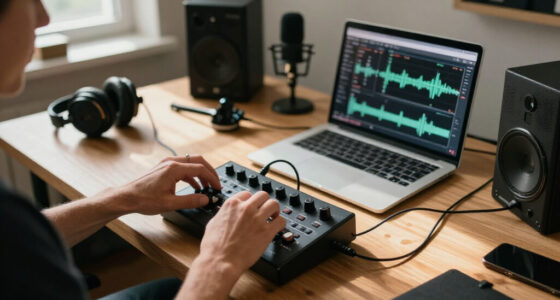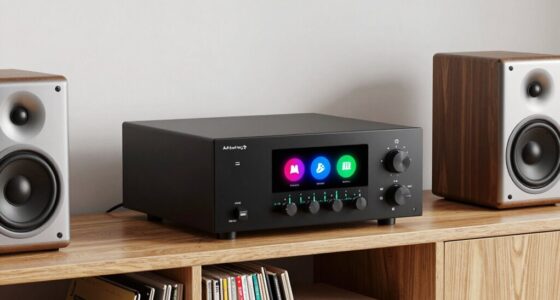


The FiiO KA15 is my best overall pick for a portable DAC amp for iPhone and Android because it combines flexible outputs and useful power in a compact format. For a simpler, smaller setup, the FiiO KA11 focuses on 3.5mm listening, while the iFi hip-dac2 is a fuller-featured choice for listeners who accept a larger device. The main tradeoffs are size, output options, headphone power, and phone compatibility; a balanced output is only useful if your headphones and cable support it. I also separate straightforward dongles from models with more elaborate features, since extra capability can mean more bulk or setup. Read on for the full comparison and guidance on matching a DAC amp to your phone and headphones.

Get audio and creator gear delivered free with Prime
- Fast, free delivery on millions of items
- Prime Video, Amazon Music and more included
- Member-only deals all year
Complete the kit


Key Takeaways
- The FiiO KA15 is the strongest all-round fit in this group when you want a compact unit with more flexibility than a basic 3.5mm adapter.
- Simple 3.5mm dongles suit the widest range of everyday setups; the KA11 models and CX31993-based adapters avoid paying in bulk for an output you may not use.
- Balanced 4.4mm output is a system choice, not an automatic upgrade: the KA13, Go Link Max, MECHEN AP10, and several other models only make sense if your headphones have a compatible cable.
- The hip-dac2 is the portability compromise: it offers a more substantial feature set than a tiny dongle, but its larger form is less pocket-friendly.
- iPhone and Android compatibility needs checking at the connection level; a USB-C connector alone does not confirm that a particular phone, cable, or adapter will work as intended.
| FiiO KA15 Portable DAC and Headphone Amplifier (Black) |  | Best Overall | Model: KA15 | Supported sampling rates: Up to 768kHz/32-bit | DSD support: DSD256 | VIEW ON AMAZON | See Our Full Breakdown |
| TRN Black Pearl USB-C DAC Amp, Dual CS43131 Portable Headphone Amplifier |  | Best for Balanced Headphones | Connectivity: USB-C | DAC chips: Dual Cirrus Logic CS43131 | Supported formats: PCM up to 32-bit/384kHz; DSD256 | VIEW ON AMAZON | See Our Full Breakdown |
| iFi Hip-dac2 Gold Edition – Portable Balanced DAC Headphone Amplifier for Android, iPhone with USB Input, 3.5mm Unbalanced / 4.4mm Balanced Outputs, MQA Decoder |  | Best for Battery-Powered Listening | Input: USB | Outputs: 3.5mm unbalanced; 4.4mm balanced | Battery life: 6–8 hours | VIEW ON AMAZON | See Our Full Breakdown |
| iFi Audio Go Link Max – Portable Headphone Amp/DAC Dongle USB-C to 3.5/4.4mm |  | Best Compact Balanced Dongle | DAC chips: Dual ESS Sabre DACs | Connectivity: USB-C | Outputs: 3.5mm; 4.4mm balanced | VIEW ON AMAZON | See Our Full Breakdown |
| FiiO JadeAudio KA13 Portable DAC Dongle, USB-C Adapter with 3.5mm and 4.4mm Outputs, Supports PCM 384kHz/32bit and DSD256, High Power 550mW |  | Best High-Power Dongle | Interface: USB-C | Channels: 2 | Audio output mode: Stereo | VIEW ON AMAZON | See Our Full Breakdown |
| USB-C to 3.5mm Audio Adapter with CX31993+MAX97220 DAC Amplifier |  | Best for High-Resolution Simplicity | DAC and amplifier chips: CX31993 + MAX97220 | Maximum supported audio: 32-bit/384kHz | Connector: USB Type-C | VIEW ON AMAZON | See Our Full Breakdown |
| USB C to 3.5mm Audio Adapter with CX31993+MAX97220 DAC Amplifier |  | Best for Inline Controls and Device Flexibility | DAC chip: CX31993 | Amplifier chip: MAX97220 | Maximum sampling rate: 32-bit/384kHz | VIEW ON AMAZON | See Our Full Breakdown |
| FiiO KA11 USB-C to 3.5mm Audio Adapter Hi-Fi DAC Amplifier |  | Best Compact Everyday Pick | Connector: USB Type-C | Output: 3.5mm | Maximum sampling rate: 32-bit/384kHz | VIEW ON AMAZON | See Our Full Breakdown |
| Questyle M15i Portable USB DAC & Headphone Amplifier, MFi Certified |  | Best for Balanced Headphones and iPhone | DAC chip: ESS ES9281AC | Outputs: 3.5mm single-ended and 4.4mm balanced | Maximum PCM support: 768kHz/32-bit | VIEW ON AMAZON | See Our Full Breakdown |
| Daakro USB-C to 3.5mm HiFi Audio Adapter and Headphone Amplifier |  | Best for Adjustable Listening and Headphone Matching | DAC chips: Cirrus Logic CS43198 and CT7601 | Connector: USB-C | Headphone output: 3.5mm | VIEW ON AMAZON | See Our Full Breakdown |
| Portable Headphone Amplifier USB-C Mini DAC Amp Dongle with 3.5mm & 4.4mm Outputs |  | Best for On-Dongle Controls | DAC chips: Dual CS43131 | Supported formats: Up to 32-bit/384kHz and DSD256 | Outputs: 3.5mm single-ended; 4.4mm balanced | VIEW ON AMAZON | See Our Full Breakdown |
| Fosi Audio DS2 USB-C to AUX Headphone Amp DAC Dongle | 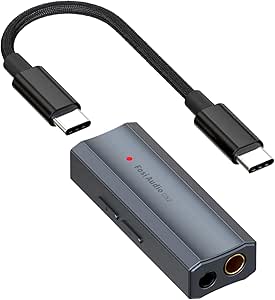 | Best Value for Dual Outputs | DAC chips: 2 × Cirrus Logic CS43131 | Supported formats: PCM 32-bit/384kHz; DSD256 | Outputs: 3.5mm single-ended; 4.4mm balanced | VIEW ON AMAZON | See Our Full Breakdown |
| BZINK BA36 USB C DAC with CS43131+SGM8262 HiFi Chip Headphone Amplifier |  | Best for Higher-Impedance Headphones | Chipset: CS43131 + SGM8262 | Supported sampling rate: Up to 384kHz | Output power: 227mW at 32Ω | VIEW ON AMAZON | See Our Full Breakdown |
| FiiO KA11 USB C to 3.5mm Audio Adapter, HiFi DAC Amplifier, 32bit/384KHz, Compatible with Android, iOS, Windows, Mac (Silver) |  | Best Compact Pick | DAC chip: CS43131 | Sampling rate: 32-bit/384kHz | Nominal power: 245mW | VIEW ON AMAZON | See Our Full Breakdown |
| MECHEN AP10 USB DAC Dongle 3.5mm/4.4mm HiFi Amp Balanced Black |  | Best for High Balanced Output | Chipset: ES9028Q2M + ES9603Q | Supported audio: PCM up to 384kHz; DSD256 | Outputs: 3.5mm single-ended; 4.4mm balanced | VIEW ON AMAZON | See Our Full Breakdown |
| portable dac amp for iphone and android | Outputs | Weight |
|---|---|---|
| FiiO KA15 Portable DAC and Hea | — | — |
| TRN Black Pearl USB-C DAC Amp | 3.5mm single-ended; 4.4mm balanced | Approximately 25g |
| iFi Hip-dac2 Gold Edition | 3.5mm unbalanced; 4.4mm balanced | 0.23kg |
| iFi Audio Go Link Max | 3.5mm; 4.4mm balanced | — |
| FiiO JadeAudio KA13 Portable D | 3.5mm; 4.4mm | — |
| USB-C to 3.5mm Audio Adapter w | — | — |
| USB C to 3.5mm Audio Adapter w | — | — |
| FiiO KA11 USB-C to 3.5mm Audio | — | 0.02kg |
| Questyle M15i Portable USB DAC | 3.5mm single-ended and 4.4mm balanced | — |
| Daakro USB-C to 3.5mm HiFi Aud | — | 14g |
| Portable Headphone Amplifier U | 3.5mm single-ended; 4.4mm balanced | 18 g |
| Fosi Audio DS2 USB-C to AUX He | 3.5mm single-ended; 4.4mm balanced | 1.92 ounces |
| BZINK BA36 USB C DAC with CS43 | — | 37.65 g |
| FiiO KA11 USB C to 3.5mm Audio | — | 8.5 g |
| MECHEN AP10 USB DAC Dongle 3.5 | 3.5mm single-ended; 4.4mm balanced | — |
More Details on Our Top Picks
FiiO KA15 Portable DAC and Headphone Amplifier (Black)
The FiiO KA15 is my most versatile pick for listeners who want more control than a simple USB-C dongle offers. Its color display, app-based parametric EQ, and support for both iOS and Android make it easier to tailor playback across devices; its 560mW-per-channel Desktop Mode also gives it more headroom than the pocket-focused iFi Go Link Max. The tradeoff is that this higher-output mode needs external power, so it is not the simplest choice for an all-day phone setup. Its listed 3.5mm connection also supports microphone and SPDIF output, adding flexibility for calls and other gear. App control is limited to Android, however, which makes this a less even experience for iPhone owners. I’d choose it for broad compatibility and adjustable listening, not for the smallest possible dongle.
Pros:- Works with Android, iOS, iPadOS, Windows, and macOS
- Color LCD and app-based parametric EQ provide more control than a basic dongle
- High-resolution support includes PCM up to 768kHz/32-bit and DSD256
- 3.5mm output supports an inline microphone and SPDIF
Cons:- App control is limited to the Android version
- Desktop Mode requires external power
- Some premium features may depend on firmware updates
Best for: Android and iPhone listeners who want display-based controls, customizable EQ, and a DAC they can also use with computers and tablets
Not ideal for: iPhone owners who want app-based EQ control, or phone listeners who need high output without an external power source
- Model:KA15
- Supported sampling rates:Up to 768kHz/32-bit
- DSD support:DSD256
- Output power:560mW + 560mW in Desktop Mode
- Display:0.96-inch IPS color LCD
- Connectivity:USB; 3.5mm jack with microphone and SPDIF output; coax output
- Compatible devices:Android, iOS, iPadOS, Windows, macOS
- Additional features:Parametric EQ, app control, detachable cable, inline-microphone support
Our verdict“Choose the KA15 if you want one adaptable DAC for phone and computer use, and can accept Android-focused app control and externally powered Desktop Mode.”
TRN Black Pearl USB-C DAC Amp, Dual CS43131 Portable Headphone Amplifier
The TRN Black Pearl makes the most sense for USB-C phone owners who already have, or plan to use, headphones with a 4.4mm balanced plug. Unlike the FiiO KA15, which puts more emphasis on its display and broad device compatibility, the Black Pearl offers both 3.5mm and 4.4mm outputs in a compact metal-and-glass body. Its listed 320mW output at 32 ohms through the balanced connection gives suitable headphones more drive than its 3.5mm output. The tradeoff is a narrower compatibility story: the connection is USB-C, and the 8-band EQ requires an app, with full features dependent on compatible devices. It also weighs about 25g, so it is not the lightest kind of adapter. I’d shortlist it for balanced-output flexibility rather than cross-platform convenience.
Pros:- Provides both 3.5mm single-ended and 4.4mm balanced outputs
- Dual CS43131 DAC chips and support for PCM up to 32-bit/384kHz and DSD256
- Metal construction with a tempered-glass panel and on-device controls
- Supports calls and recording, with an 8-band EQ available through an app
Cons:- USB-C connectivity limits use with devices that lack a compatible USB-C connection
- EQ adjustments require an app, and full features depend on device compatibility
- Its 3.5mm output is less powerful than the balanced output
Best for: Android phone owners with USB-C who use 4.4mm balanced headphones or IEMs and want on-device controls
Not ideal for: iPhone users without a compatible USB-C setup, or listeners whose headphones use only a 3.5mm plug and who do not need balanced output
- Connectivity:USB-C
- DAC chips:Dual Cirrus Logic CS43131
- Supported formats:PCM up to 32-bit/384kHz; DSD256
- Outputs:3.5mm single-ended; 4.4mm balanced
- Power output at 32 ohms:125mW via 3.5mm; 320mW via 4.4mm
- Weight:Approximately 25g
- Build:Metal with tempered-glass panel
- Additional features:Android 8-band EQ; calls and recording support
Our verdict“Pick the Black Pearl if your USB-C phone and headphones can take advantage of its 4.4mm balanced output; skip it if broad iPhone compatibility matters more.”
iFi Hip-dac2 Gold Edition – Portable Balanced DAC Headphone Amplifier for Android, iPhone with USB Input, 3.5mm Unbalanced / 4.4mm Balanced Outputs, MQA Decoder
The iFi Hip-dac2 Gold Edition is the battery-powered alternative for listeners who want a portable DAC amp without drawing its operating power from a phone. Its stated 6–8 hours of battery life and both 3.5mm and 4.4mm outputs suit longer listening sessions and a mix of headphone types. By comparison, the iFi Go Link Max is a USB-C dongle, so it avoids carrying a separate battery-powered unit but depends on the connected device. The Hip-dac2’s USB input and listed 0.23kg weight make it less pocket-simple than dongles such as the FiiO JadeAudio KA13. Its MQA support may matter to listeners with compatible playback, but it adds little for those who do not use that format. I’d favor this model when onboard battery power is a priority.
Pros:- Built-in battery is rated for 6–8 hours of listening
- Offers both 3.5mm unbalanced and 4.4mm balanced outputs
- Supports high-resolution audio and MQA decoding
- Compatible with smartphones, tablets, PCs, and Macs
Cons:- USB input is the only listed connection
- At 0.23kg, it is heavier than small dongles such as the FiiO JadeAudio KA13
- Battery life varies with usage, and MQA support benefits only listeners using compatible files or playback
Best for: Travelers and phone listeners who want a separate battery-powered DAC amp, balanced and unbalanced outputs, and several hours of playback between charges
Not ideal for: People who want a tiny, cable-light phone dongle or need an amp with more than the listed 6–8 hours of battery life
- Input:USB
- Outputs:3.5mm unbalanced; 4.4mm balanced
- Battery life:6–8 hours
- Power output:400mW
- Maximum supply voltage:6.3 volts
- Channels:2
- Material:Aluminum
- Weight:0.23kg
- Compatible devices:Smartphones, tablets, PCs, Macs
Our verdict“Choose the Hip-dac2 if you want battery-powered portability and two output options, rather than the smaller, phone-powered format of a USB-C dongle.”
iFi Audio Go Link Max – Portable Headphone Amp/DAC Dongle USB-C to 3.5/4.4mm
The iFi Audio Go Link Max is the straightforward choice for a USB-C phone owner who wants a dongle with both 3.5mm and 4.4mm outputs. Its plug-and-play connection avoids the separate battery and larger form factor of the iFi Hip-dac2, while the balanced output and listed power of up to 241mW offer more flexibility than a basic single-output adapter. It supports PCM up to 384kHz and DSD256, though those formats matter only when the source material and playback software support them. The central limitation is device fit: USB-C is the only listed connection, making this less suitable for iPhones or other devices without compatible USB-C audio. Its power rating is also below the listed balanced output of the TRN Black Pearl. I’d choose it for a simpler balanced dongle, not maximum output.
Pros:- Plug-and-play USB-C connection keeps setup simple
- Includes both 3.5mm and 4.4mm headphone outputs
- Supports PCM up to 384kHz and DSD256
- Dual ESS Sabre DAC chips and listed output up to 241mW
Cons:- USB-C-only connectivity limits compatibility with devices lacking a compatible port
- Listed output is lower than the TRN Black Pearl’s 320mW balanced output
- Provides headphone and audio output connections only
Best for: USB-C Android listeners who want a compact, plug-and-play adapter with both standard and balanced headphone connections
Not ideal for: iPhone users whose device does not provide compatible USB-C audio, or listeners seeking the highest listed balanced output in this group
- DAC chips:Dual ESS Sabre DACs
- Connectivity:USB-C
- Outputs:3.5mm; 4.4mm balanced
- Maximum output power:Up to 241mW
- Supported PCM:Up to 384kHz
- DSD support:DSD256
- Conductors:Silver-plated copper
- Connector finish:Gold-plated USB-C and headphone sockets
Our verdict“Choose the Go Link Max for a simple USB-C balanced-output dongle, but choose the TRN Black Pearl if its higher listed balanced power is your priority.”
FiiO JadeAudio KA13 Portable DAC Dongle, USB-C Adapter with 3.5mm and 4.4mm Outputs, Supports PCM 384kHz/32bit and DSD256, High Power 550mW
The FiiO JadeAudio KA13 pairs a compact USB-C dongle format with a listed 550mW output, making it the strongest fit here for phone owners who want substantial drive without carrying a larger battery-powered device. It also includes both 3.5mm and 4.4mm outputs, while its PCM 384kHz/32-bit and DSD256 support matches the high-resolution formats offered by pricier, more feature-focused options such as the FiiO KA15. The difference is control: the KA15 adds a display and broader connection options, while the KA13 keeps to a simpler dongle design. Its USB-C connection means device compatibility deserves a check, particularly for iPhone owners, and the product data does not specify separate power figures for each output. I’d pick it for output and portability, not for screen-based controls.
Pros:- Listed 550mW output offers substantial drive in a portable dongle format
- Includes both 3.5mm and 4.4mm outputs
- Supports PCM up to 384kHz/32-bit and DSD256
- Aluminum construction and app control for customizable settings
Cons:- USB-C interface may not suit devices without compatible USB-C audio
- No built-in battery is listed, so use depends on the connected device
- The supplied data does not separate the 550mW rating by output
Best for: USB-C phone users with harder-to-drive headphones who want a portable dongle and both 3.5mm and 4.4mm connections
Not ideal for: Listeners who need a DAC with its own battery, a built-in display, or confirmed compatibility with a device that lacks USB-C audio
- Interface:USB-C
- Channels:2
- Audio output mode:Stereo
- Supported audio:PCM up to 384kHz/32-bit; DSD256
- Power output:550mW
- Outputs:3.5mm; 4.4mm
- Material:Aluminum
- Compatible devices:Headphones, PC, smartphone
Our verdict“Choose the KA13 if high listed output and dual headphone connections matter more than a display, built-in battery, or wider connection options.”
USB-C to 3.5mm Audio Adapter with CX31993+MAX97220 DAC Amplifier
This adapter suits phone and tablet listeners who want a USB-C-to-3.5mm connection with support for audio up to 32-bit/384kHz, without moving to a larger DAC with balanced outputs. Its CX31993 and MAX97220 chips are presented as a paired DAC and amplifier, while the aluminum casing and braided-style, silver-plated cable point to a sturdier build than a basic adapter. Compared with the FiiO KA11, the listed details emphasize materials and broad device examples rather than output power or a particularly tiny, lightweight design. That makes this a plausible fit for everyday wired headphones across phones, tablets, and computers, but the specs do not state its output power, so I would not choose it based on a need to drive demanding headphones. It also requires USB-C and may not work with every device.
Pros:- Supports audio up to 32-bit/384kHz
- Combines CX31993 DAC and MAX97220 amplifier chips
- Aviation-grade aluminum casing and silver-plated cable are positioned for added durability
- Lists compatibility across phones, tablets, laptops, and desktops
Cons:- Requires a USB-C port, so Lightning iPhones need an additional compatible adapter
- Output power is not listed, making headphone-driving capacity harder to judge
- The product data notes possible compatibility issues with some devices
Best for: USB-C phone and tablet owners who want a compact 3.5mm adapter with high-resolution format support and a more robust cable and housing.
Not ideal for: Lightning iPhone owners and listeners with demanding headphones who need a clearly specified power output or balanced connection.
- DAC and amplifier chips:CX31993 + MAX97220
- Maximum supported audio:32-bit/384kHz
- Connector:USB Type-C
- Audio output:3.5mm
- Cable material:8-strand 4N single-crystal copper, silver-plated
- Housing:Aviation-grade aluminum; metallic black finish
- Compatibility examples:Phones, tablets, laptops, desktops, and Steam Deck
Our verdict“Choose this for a durable-feeling USB-C 3.5mm adapter with high-resolution support, but pick the FiiO KA11 if portability and stated output power matter more.”
USB C to 3.5mm Audio Adapter with CX31993+MAX97220 DAC Amplifier
This version of the CX31993/MAX97220 dongle is the more clearly specified choice for buyers who care about inline microphone and music controls. It lists a 124dB signal-to-noise ratio, -95dB THD+N, and 63mW at 32 ohms, giving headphone shoppers more concrete performance information than the similarly named B0F5GK4KWC adapter, whose output power is not stated. It also claims broad compatibility across USB-C and USB-A devices, though iPhone use may depend on the right adapter and device support. The short 12.5cm cable keeps the connection compact, but gives less slack than a longer lead, and the listing says external power is needed for maximum output. Compared with the FiiO KA11, this is a better match for call controls and published measurements than for buyers prioritizing an established compact-format design.
Pros:- Lists 63mW output at 32 ohms
- Supports inline microphone and music functions
- Provides stated 124dB signal-to-noise ratio and -95dB THD+N
- Claims compatibility with USB-C and USB-A devices
Cons:- The 12.5cm cable may offer too little reach for some setups
- External power is required for maximum output
- iPhone compatibility may require an adapter and is not guaranteed across models
Best for: USB-C Android users and laptop listeners who want inline call and music controls plus stated output and noise measurements.
Not ideal for: Buyers who need a longer cable, want to avoid external power considerations, or expect direct compatibility with every iPhone model.
- DAC chip:CX31993
- Amplifier chip:MAX97220
- Maximum sampling rate:32-bit/384kHz
- Output power:63mW at 32Ω
- Signal-to-noise ratio:124dB
- THD+N:-95dB
- Cable length:12.5cm
- Cable material:8-strand 4N single-crystal copper
- Controls:Inline microphone and music functions
Our verdict“Pick this adapter if inline controls and published audio measurements matter more to you than extra cable length or a simpler compatibility story.”
FiiO KA11 USB-C to 3.5mm Audio Adapter Hi-Fi DAC Amplifier
The FiiO KA11 is the straightforward choice here for carrying a known-brand DAC dongle between a phone, tablet, and computer. It supports up to 32-bit/384kHz and lists 245mW of power, giving it a clearer case for headphone use than either CX31993/MAX97220 adapter in this batch, where the first has no power figure and the second lists 63mW at 32 ohms. The supplied data also gives its weight as just 0.02kg, supporting its pocket-friendly role. Its output remains 3.5mm only, though, so buyers who want balanced headphones should look toward the Questyle M15i or other dual-output options in the roundup. FiiO notes that an app is needed to switch UAC modes, which adds setup friction; this is less appealing for someone seeking a plug-and-play adapter with no configuration.
Pros:- Supports audio up to 32-bit/384kHz
- Lists 245mW power
- Lightweight at 0.02kg
- Compatible with Android, iOS, Windows, and Mac devices
Cons:- Provides only a 3.5mm output, with no balanced connection
- Requires an app to switch UAC modes
- Setup may feel less direct than a basic plug-in adapter
Best for: Listeners who want a lightweight, single-ended dongle for everyday 3.5mm headphones across Android, iOS, Windows, and Mac devices.
Not ideal for: Balanced-headphone owners or buyers who want to avoid app-based setup for UAC mode changes.
- Connector:USB Type-C
- Output:3.5mm
- Maximum sampling rate:32-bit/384kHz
- Power:245mW
- Weight:0.02kg
- Finish:Matte black
- Compatibility:Android, iOS, Windows, and Mac
- Warranty:1 year
Our verdict“The KA11 makes the most sense for buyers who value low weight and a stated power figure but do not need balanced output.”
Questyle M15i Portable USB DAC & Headphone Amplifier, MFi Certified
The Questyle M15i is the most flexible headphone connection in this group: it offers both 3.5mm single-ended and 4.4mm balanced outputs, while the adapters and FiiO KA11 here are limited to 3.5mm. Its MFi certification makes it a particularly compelling option for iPhone listeners using a compatible connection, and Android 5.1 or later is also listed. Support for PCM up to 768kHz/32-bit and DSD512 exceeds the format ceilings stated for the FiiO KA11 and both CX31993/MAX97220 adapters, though those figures alone do not determine sound quality. The tradeoff is a more involved setup: Lightning iPhones need a Lightning-to-USB-C adapter, and balanced use requires headphones with a 4.4mm plug. Buyers with ordinary 3.5mm earbuds may get more from the simpler KA11 without needing the M15i’s extra output option.
Pros:- Offers both 3.5mm single-ended and 4.4mm balanced outputs
- MFi certified for iOS device use
- Supports PCM up to 768kHz/32-bit and DSD512
- Lists compatibility with Android 5.1 and later and Windows 10 and later
Cons:- Lightning iPhones require an additional Lightning-to-USB-C adapter
- The benefits of balanced output require compatible 4.4mm headphones
- The listed warranty is limited to one year
Best for: iPhone and Android listeners who own 4.4mm balanced headphones or want one portable DAC for both balanced and standard 3.5mm connections.
Not ideal for: Users with only basic 3.5mm earbuds who want the simplest and smallest adapter, or Lightning iPhone owners unwilling to add an adapter.
- DAC chip:ESS ES9281AC
- Outputs:3.5mm single-ended and 4.4mm balanced
- Maximum PCM support:768kHz/32-bit
- DSD support:DSD512
- iOS support:MFi certified
- Compatibility:iOS, Android 5.1+, and Windows 10+
- Warranty:1 year
Our verdict“Choose the M15i if you need balanced headphone support and broad iPhone and Android compatibility, rather than a basic 3.5mm dongle.”
Daakro USB-C to 3.5mm HiFi Audio Adapter and Headphone Amplifier
Daakro stands apart from the simpler dongles with five filter modes and high/low gain settings. Those controls give listeners a way to tailor playback and adjust gain for different headphones, while its stated 16–600Ω impedance range covers a broader variety of loads than the product details provide for the KA11 or either CX31993/MAX97220 adapter. It also supports PCM up to 32-bit/768kHz and DSD256, plus 3.5mm output in a 14-gram body. Compared with the Questyle M15i, it offers listening adjustments but no listed 4.4mm balanced output, so it is not the choice for balanced-headphone owners. There is another practical limitation for phone users: the listing says incoming calls cannot be answered, and some iPhone models need an OTG cable that is not included.
Pros:- Supports PCM up to 32-bit/768kHz and DSD256
- Includes five filter modes and high/low gain settings
- Lists compatibility with headphones from 16Ω to 600Ω
- Weighs 14 grams
Cons:- Does not support answering incoming calls
- Some iPhone models require an OTG cable that is not included
- Offers 3.5mm connectivity rather than the Questyle M15i’s additional 4.4mm balanced output
Best for: Android and USB-C listeners with different wired headphones who want selectable gain and filter modes in a lightweight DAC.
Not ideal for: iPhone owners who need call answering through the adapter, users who want balanced output, or buyers without a required OTG cable.
- DAC chips:Cirrus Logic CS43198 and CT7601
- Connector:USB-C
- Headphone output:3.5mm
- Supported PCM:32-bit/768kHz
- DSD support:DSD256
- Output power:60mW at 16Ω; 55mW at 32Ω
- Filter and gain controls:5 filter modes; high/low gain
- Impedance range:16–600Ω
- Weight:14g
Our verdict“Choose Daakro if adjustable gain and filters matter more than call handling or balanced headphone connectivity.”
Portable Headphone Amplifier USB-C Mini DAC Amp Dongle with 3.5mm & 4.4mm Outputs
This compact pick pairs dual CS43131 DACs with both 3.5mm and 4.4mm outputs, giving phone listeners a way to use either standard or balanced headphones without carrying a larger unit. Its physical playback buttons add convenient control when a phone is in a pocket or bag, a feature that separates it from the more stripped-down FiiO KA11. At just 18 g, it is easy to pack, and the aluminum-and-glass body includes a heat-dissipation design. The tradeoff is that the KA11 is lighter still and simpler if you only need a 3.5mm socket. This dongle also depends on power from the connected device, and its USB-C connection may rule out older phones without a suitable adapter. Its small controls may feel cramped for listeners who prefer larger buttons.
Pros:- Dual CS43131 DACs support high-resolution audio up to 384kHz and DSD256.
- 3.5mm and 4.4mm outputs accommodate standard and balanced headphones.
- Physical playback buttons offer access without reaching for the phone.
- Lightweight aluminum-and-glass enclosure includes a heat-dissipation design.
Cons:- Draws power from the connected phone or computer rather than using a built-in battery.
- USB-C connection can require an adapter or exclude older devices.
- Compact controls may be awkward for listeners who want larger buttons.
Best for: USB-C phone owners who want both balanced and standard headphone connections plus physical playback controls on the dongle.
Not ideal for: Listeners with older phones lacking USB-C, or anyone who wants a self-powered DAC amp or larger controls.
- DAC chips:Dual CS43131
- Supported formats:Up to 32-bit/384kHz and DSD256
- Outputs:3.5mm single-ended; 4.4mm balanced
- Compatibility:Android, iPhone, Windows, Mac
- Dimensions:2.24 × 0.95 × 0.43 inches
- Weight:18 g
- Materials:Aluminum and glass
- Additional features:Physical playback buttons; heat-dissipation design
Our verdict“Choose this dongle if you want balanced-output flexibility and onboard playback controls in a lightweight USB-C package.”
Fosi Audio DS2 USB-C to AUX Headphone Amp DAC Dongle
The Fosi Audio DS2 is a practical choice for listeners who want 3.5mm and 4.4mm outputs without stepping up to a larger portable unit. Its dual CS43131 DACs support PCM up to 32-bit/384kHz and DSD256, while independent volume controls with memory can make repeated phone listening more convenient. Compared with the single-output FiiO KA11, the DS2 leaves room to use balanced headphones; compared with the physical-button-focused B0F6TZBBDN, it emphasizes volume adjustment instead. The CNC-machined metal body is a sturdy touch, but the product data does not specify its dimensions, which makes pocket fit harder to judge. It requires USB-C and power from the host device, and reported compatibility issues mean buyers should check their phone’s audio support before relying on it.
Pros:- Dual CS43131 DACs support PCM 32-bit/384kHz and DSD256.
- 3.5mm single-ended and 4.4mm balanced outputs support different headphone connections.
- Independent volume control includes a memory function.
- CNC-machined metal construction provides a solid enclosure.
Cons:- USB-C is required, and compatibility can vary by connected device.
- Dimensions are not provided, making pocket fit difficult to gauge.
- Relies on the connected device for power.
Best for: USB-C phone and tablet owners who want independent volume control and the option to use either 3.5mm or balanced 4.4mm headphones.
Not ideal for: Buyers who need a clearly documented compact size, a built-in battery, or a dongle known to work with every USB-C device.
- DAC chips:2 × Cirrus Logic CS43131
- Supported formats:PCM 32-bit/384kHz; DSD256
- Outputs:3.5mm single-ended; 4.4mm balanced
- Output power:170mW per channel at 32Ω
- Compatibility:iPhone, iPad, Android devices, computers
- Connection:USB-C
- Weight:1.92 ounces
- Warranty:24 months
Our verdict“Pick the DS2 if you want dual headphone outputs and independent volume control in a metal USB-C dongle.”
BZINK BA36 USB C DAC with CS43131+SGM8262 HiFi Chip Headphone Amplifier
The BZINK BA36 makes its case through 227mW output at 32Ω and a stated headphone range of 16Ω–600Ω, making it the power-focused choice in this group. That emphasis suits listeners whose headphones can be harder to drive; the FiiO KA11 is lighter and more pocket-friendly, but the BA36 is the more direct fit when extra amplification capacity matters. Its CS43131 and SGM8262 chipset supports high-resolution playback up to 384kHz, and the aluminum-alloy build is designed for portable use. The cost of that extra drive is a heavier 37.65 g body, and the provided data does not identify its headphone outputs or specify supported formats beyond the sampling rate. USB-C is required, and compatibility may vary across devices, so this is less straightforward than a basic 3.5mm adapter.
Pros:- 227mW output at 32Ω offers more amplification capacity than a basic adapter.
- Listed impedance range spans 16Ω–600Ω.
- CS43131 and SGM8262 chipset supports audio up to 384kHz.
- Aluminum-alloy construction is suited to portable use.
Cons:- At 37.65 g, it is heavier than the FiiO KA11.
- Product data does not specify the headphone output types.
- Requires USB-C and may not work consistently with every device.
Best for: USB-C phone or tablet owners using higher-impedance headphones who want a compact DAC amp with a stated 16Ω–600Ω range.
Not ideal for: Listeners prioritizing the lightest pocket setup, or buyers who need clearly specified output sockets and broad device compatibility.
- Chipset:CS43131 + SGM8262
- Supported sampling rate:Up to 384kHz
- Output power:227mW at 32Ω
- Impedance range:16Ω–600Ω
- Connector:USB Type-C
- Compatible devices:USB-C iPhone 15 series, Android phones, iPad, tablets, laptops
- Weight:37.65 g
- Warranty:1 year
Our verdict“Choose the BA36 if your priority is driving higher-impedance headphones from a USB-C device and you can accept the extra weight.”
FiiO KA11 USB C to 3.5mm Audio Adapter, HiFi DAC Amplifier, 32bit/384KHz, Compatible with Android, iOS, Windows, Mac (Silver)
At 8.5 g and 1.73 inches long, the FiiO KA11 is the easiest option here to leave attached to a phone or tuck into a small pocket. Its CS43131 DAC supports 32-bit/384kHz playback, and the listed nominal power of 245mW gives it more than a basic passive adapter. The tradeoff is a single 3.5mm output: unlike the Fosi Audio DS2 or the dual-output B0F6TZBBDN, it cannot connect directly to balanced 4.4mm headphones. That simpler layout also keeps the KA11 notably lighter than the BZINK BA36. It suits listeners who value portability over extra sockets, but UAC1.0 mode switching requires an app, and its USB-C connection may call for an adapter on devices without that port.
Pros:- Weighs just 8.5 g and measures 1.73 inches long.
- CS43131 DAC supports 32-bit/384kHz audio.
- Listed nominal power is 245mW.
- Compatible with Android, iOS, Windows, and Mac devices.
Cons:- 3.5mm output only; no 4.4mm balanced connection.
- UAC1.0 mode switching requires an app.
- USB-C connection may require an adapter for devices without that port.
Best for: Phone listeners who use 3.5mm headphones and want the lightest, simplest DAC amp in this selection for daily carry.
Not ideal for: Owners of 4.4mm balanced headphones, or buyers who want physical playback controls or balanced output.
- DAC chip:CS43131
- Sampling rate:32-bit/384kHz
- Nominal power:245mW
- Output:3.5mm
- Connector:USB Type-C
- Supported devices:Android, iOS, Windows, Mac
- Dimensions:1.73 × 0.41 × 0.04 inches
- Weight:8.5 g
Our verdict“Choose the KA11 for a lightweight USB-C-to-3.5mm setup, but pick the Fosi DS2 or B0F6TZBBDN if you need balanced output.”
MECHEN AP10 USB DAC Dongle 3.5mm/4.4mm HiFi Amp Balanced Black
The MECHEN AP10 is the power-oriented dual-output option here, listing 522mW at 32Ω through its balanced output alongside 111mW single-ended. That makes it a stronger match for listeners who already own 4.4mm headphones and want substantial output from a portable DAC amp. Its ES9028Q2M+ES9603Q chipset supports PCM up to 384kHz and DSD256, while the 3.5mm and 4.4mm sockets keep standard headphones usable too. Compared with the Fosi Audio DS2, the AP10 lists much higher balanced output, but the DS2 identifies dual CS43131 DACs and independent volume control more clearly. The AP10’s product data does not state its weight, dimensions, or exact connection type, making phone fit and compatibility harder to confirm. It also draws power from the host device.
Pros:- Lists 522mW output at 32Ω through the balanced connection.
- Includes both 3.5mm single-ended and 4.4mm balanced outputs.
- Supports PCM up to 384kHz and DSD256.
- CNC-machined solid-metal construction.
Cons:- No built-in battery; it relies on the connected device for power.
- Product data does not give dimensions or weight.
- Exact host connection type is not specified in the supplied data.
Best for: Listeners with 4.4mm balanced headphones who want a portable dongle with a high stated balanced output and support for PCM and DSD.
Not ideal for: Buyers who need a clearly documented size, weight, or connection type, or who do not need balanced output.
- Chipset:ES9028Q2M + ES9603Q
- Supported audio:PCM up to 384kHz; DSD256
- Outputs:3.5mm single-ended; 4.4mm balanced
- Signal-to-noise ratio:120dB
- Balanced output power:522mW at 32Ω
- Single-ended output power:111mW
- Compatibility:iPhone, iPad Pro, Android phones, computers, laptops, Macs
- Material:CNC-machined solid metal
Our verdict“Pick the AP10 if you can use its 4.4mm output and value high stated balanced power more than clearly documented size and connectivity.”

How We Picked
I ranked these 15 options for the specific job of connecting wired headphones to an iPhone or Android phone. I weighed phone compatibility, output type, practical headphone drive, portability, and ease of use more heavily than headline sampling-rate figures, since those numbers alone do not tell a buyer whether a device fits their headphones or daily routine. I also favored products with a clear purpose: a small 3.5mm dongle, a dual-output model, or a more capable portable unit.
The ordering reflects tradeoffs rather than a claim that one DAC amp suits everyone. The KA15 leads as a flexible everyday pick, while compact single-output options rank well for buyers who value simplicity and the hip-dac2 serves people willing to carry a larger device for added features. Models with less distinct advantages or limited detail in their product descriptions rank lower, and similarly named KA11 versions are treated as separate listings rather than different classes of device. Before buying, I would confirm the exact connector and included cable details for the phone in use.
Factors to Consider When Choosing Portable Dac Amp For Iphone And Android
Before choosing a portable DAC amp, I would start with the headphones and phone you already own—not the biggest number on a specification sheet. These factors help distinguish a genuinely useful upgrade from extra capability that adds cost, cable clutter, or bulk without changing your setup.
Match the output to your headphone cable
A 3.5mm output is the practical default for many wired headphones and earbuds, while a 4.4mm balanced output requires a matching balanced cable. Balanced is not a plug adapter shortcut: using the wrong wiring can cause problems, and an adapter does not convert an unbalanced headphone cable into a balanced one. If you own only 3.5mm headphones, a dual-output DAC amp may offer flexibility for a future cable but can be unnecessary now. Check the headphone maker’s cable options before choosing a model mainly for 4.4mm support. Put the money and carry space toward a feature you can use today.
Check phone connections and power behavior
Connector shape does not tell the whole compatibility story. Some iPhones use USB-C, while older models require a Lightning connection path, and Android phones can differ in how they handle USB audio and power. Confirm the required cable or adapter for your exact phone, including whether it is included or sold separately. A bus-powered dongle also draws power from the phone, which may matter during long listening sessions or travel. If you need charging while listening, check whether the DAC amp and your phone support a workable pass-through arrangement rather than assuming any USB splitter will do.
Choose power for your headphones, not a spec race
Hard-to-drive headphones may benefit from more output power, but many sensitive earphones do not need a high-powered amplifier. Impedance and sensitivity both affect how demanding headphones are, so neither figure should be read alone. A power-focused model can provide more headroom for demanding headphones, but it may consume more phone battery or require more careful volume control with sensitive earphones. If you listen mainly with efficient in-ear monitors, prioritize low-noise operation and fine volume control over maximum output claims. For full-size headphones, check credible power figures at the impedance you plan to use.
Decide how much size you will carry
Small dongles are easy to leave connected to a phone, while a larger portable unit can offer more controls or outputs at the cost of pocket space. Daily carry changes which features are worth having: a device that stays at home cannot help during a commute. Consider cable strain, where the dongle will hang, and whether you can store the unit without bending its connectors. A larger device may suit desk listening or a bag-based setup better than one-handed phone use. Choose for your actual routine, not just the most feature-rich listing.
Separate useful compatibility from format claims
High-resolution format support can matter if your source files and listening app use those formats, but it does not guarantee a noticeable improvement with every recording. Compatibility and stable everyday use come first: the phone must recognize the DAC, the app must send audio through it, and the connection must suit your headphones. Claims such as MQA decoding or very high sample-rate support are relevant only to listeners whose playback chain uses them. For ordinary streaming, a reliable USB connection and appropriate output are often more useful buying criteria. Avoid letting a single format specification decide the purchase.
Account for adapters, cables, and replacement needs
The DAC amp is only one part of a phone listening setup. A Lightning adapter, USB-C cable, balanced headphone cable, or case-compatible connector can change the total convenience of a product. Check what is included and what your setup still needs before ordering, especially when a listing names USB-C but does not clearly describe phone-specific accessories. Cable length and connector shape matter if you listen while walking or keep your phone in a pocket. For inexpensive adapters, also look for clear manufacturer information about warranty and support rather than relying on a chip name alone.
Frequently Asked Questions
Will a USB-C DAC amp work with every iPhone and Android phone?
No. A USB-C plug may fit some phones but does not confirm compatibility with every model or operating system. Older iPhones may need a Lightning-to-USB connection, and the required adapter can affect cost and ease of use. Android phones can also vary in USB audio handling and power behavior. I would verify the exact phone model, required cable, and any stated compatibility notes before buying.
Should I choose a 4.4mm balanced DAC amp if my headphones use 3.5mm?
Only if you plan to use headphones with a properly wired 4.4mm balanced cable. A balanced output does not make a standard 3.5mm cable balanced, and a simple plug adapter cannot change the cable’s wiring. If you have no reason to switch cables, a capable 3.5mm model may be easier to carry and use. Choose a dual-output device when you value the option to change headphones later, not because balanced is automatically better.
Do I need a high-power DAC amp for ordinary wired earbuds?
Usually not, particularly if your earbuds are sensitive and reach comfortable listening levels from a phone. More power is useful when headphones are difficult to drive or when you need extra headroom, but excess output can make volume control less convenient with sensitive earphones. Noise performance and smooth volume adjustment may matter more for that use. Check your headphone specifications and listening habits before choosing a power-focused model.
Is the larger iFi hip-dac2 a better travel choice than a dongle?
It depends on whether you prioritize features or minimal carry. A larger portable unit may suit a bag, desk, or planned listening session, while a small dongle is easier to leave attached to a phone and carry every day. The hip-dac2 is the pick here for buyers willing to accept more size for a fuller device experience. If your goal is the least cable clutter on a commute, a compact model such as the KA11 is a more natural fit.
Can I use one portable DAC amp with both an iPhone and an Android phone?
Often, but you may need different cables or adapters for the two phones. The DAC amp’s output to your headphones can remain the same, while the phone-side connection changes between USB-C and Lightning. Confirm that the model supports the connection paths you need and check whether accessories are included. If you switch phones often, favor a unit with clear cross-platform support and budget for a suitable spare cable rather than assuming one connector will cover every device.
Conclusion
For most buyers, I would start with the FiiO KA15 as the best overall choice because it balances portability and output flexibility. The FiiO KA11 is my best value and beginner direction for listeners who want a straightforward 3.5mm connection without carrying features they do not need. Choose the iFi hip-dac2 as the best premium-style pick if you accept a larger form for a more feature-rich portable setup. For balanced headphones, compare the KA13, Go Link Max, and MECHEN AP10 against your cable and power needs; for a tiny everyday adapter, look at the KA11 or a simple CX31993-based option. The right choice comes down to your phone connector, headphone cable, and willingness to carry extra size—not the longest specification list.
Halloween Picks
halloween
As an affiliate, we earn on qualifying purchases.