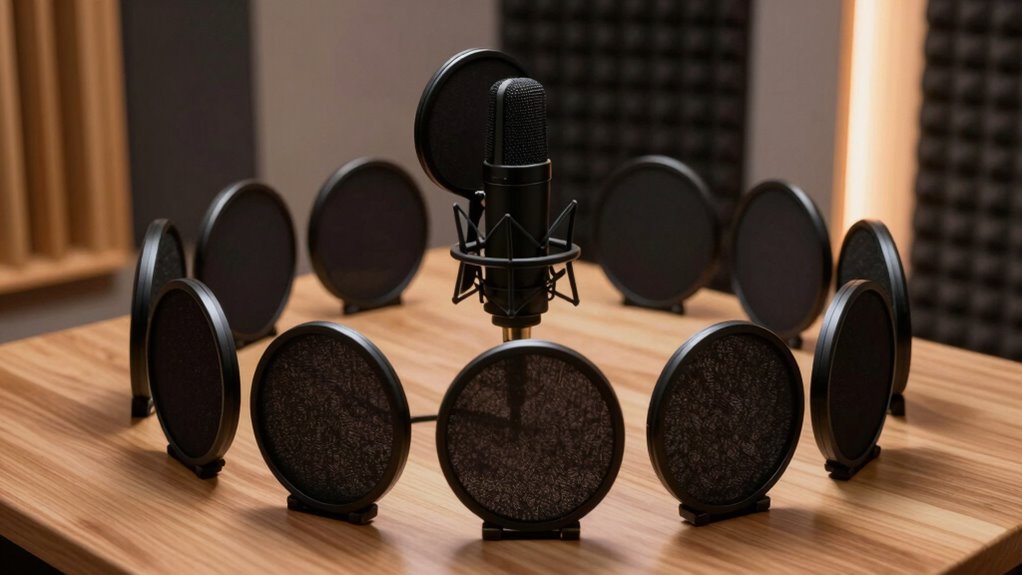

A reflection filter for vocal recording can reduce sound bouncing back from nearby surfaces, but it cannot replace room treatment or block every outside noise. My best overall pick is the sE Electronics RF-X for its portable, purpose-built design; the RF Pro stands out for buyers who want a more substantial acoustic structure, while the Tascam TM-AR1 is a straightforward alternative for a compact setup. The main tradeoffs are coverage versus portability, sturdier construction versus easier mounting, and how well a filter fits your mic, stand, and recording position. A shield that crowds the microphone or sits poorly on the stand can be less useful than a simpler model with a better fit. Read on for the full comparison, selection criteria, and advice on matching a filter to your room.

Get audio and creator gear delivered free with Prime
- Fast, free delivery on millions of items
- Prime Video, Amazon Music and more included
- Member-only deals all year
Complete the kit

Key Takeaways
- Purpose-built designs stand apart: the sE Electronics RF-X, RF Pro, RF Space, and RF Pro Black offer distinct size and construction choices, so the sE lineup is not a single interchangeable recommendation.
- Large coverage brings setup tradeoffs: the RF Space and LZSIG 30″ x 12.9″ XL suit buyers seeking a broader shield, but their larger footprints call for more stand and desk clearance.
- Mount compatibility matters as much as acoustic material: several foldable models list 3/8-inch and 5/8-inch threaded mounts, while other options include a stand or use a different mounting arrangement.
- Standalone convenience varies: options such as the six-panel shield and studio shield with stand package may reduce the need to source support pieces separately, but a bundled stand is not automatically the best fit for every recording position.
- A reflection filter is not a soundproof booth: these products are intended to manage nearby reflections around a microphone; room noise, traffic, and sound traveling through walls still call for other solutions.
| XTUGA MIS02 Recording Microphone Isolation Shield, 5 Panels Soundproof Foam |  | Best for Adjustable Panel Coverage | Panel design: Five panels | Material: Plastic | Color: Black | VIEW ON AMAZON | See Our Full Breakdown |
| Microphone Wind Shield Pop Filter with Acoustic Foam Isolation Ball |  | Best for Lightweight Plosive Control | Microphone compatibility: Most XLR and USB microphones with 50–75 mm diameter | Weight: 120 g | Material: Sound-absorbing foam | VIEW ON AMAZON | See Our Full Breakdown |
| Moukey Microphone Isolation Shield – Foldable Triple Sound Insulation Reflection Filter |  | Best for Flexible Setup and Storage | Acoustic construction: Three layers: reflective, filter, and absorbing | Mount threads: 3/8 inch and 5/8 inch adapters | Mounting options: Tabletop or microphone stand | VIEW ON AMAZON | See Our Full Breakdown |
| sE Electronics RF-X Reflexion Filter – Portable Microphone Isolation Shield |  | Best Premium Pick | Acoustic construction: Four-layer filter | Item weight: 4.84 pounds | Product dimensions: 18 x 13 x 8 inches | VIEW ON AMAZON | See Our Full Breakdown |
| Microphone Isolation Shield – Foldable Reflection Filter for Recording Studio, Podcasts, Singing, and Broadcasting |  | Best Compact Foldable Pick | Panel design: Two adjustable panels | Acoustic material: High-density acoustic foam | Back plate: Vented metal | VIEW ON AMAZON | See Our Full Breakdown |
| Aokeo Microphone Isolation Shield – Foldable Triple Sound Insulation Reflection Filter with 3/8″ and 5/8″ Mic Mount |  | Best for Desktop Setups | Dimensions: 23.2 × 11 × 2 inches | Weight: 1.3 kg | Materials: Metal alloy and sound-absorbing foam | VIEW ON AMAZON | See Our Full Breakdown |
| 6-Panel Microphone Isolation Shield with Adjustable Stand |  | Best for Flexible Coverage | Panel count: 6 | Material: High-density acoustic foam | Stand: Adjustable metal stand | VIEW ON AMAZON | See Our Full Breakdown |
| sE Electronics RF Pro Reflexion Filter Microphone Isolation Shield, Portable Vocal Booth for Recording, Podcasting & Voice Over, Patented 9-Layer Acoustic Design |  | Best for Detailed Acoustic Control | Model: RF-PRO | Acoustic design: Patented 9-layer absorption and diffusion design | Weight: 7 pounds | VIEW ON AMAZON | See Our Full Breakdown |
| Marantz Professional Sound Shield – Vocal Reflection Filter with Studio-Grade EVA Acoustic Foam |  | Best for Shaping the Recording Space | Dimensions: 12.8 × 14.57 × 17.91 inches | Weight: 6.6 pounds | Maximum height: 36.5 cm | VIEW ON AMAZON | See Our Full Breakdown |
| sE Electronics RF Space Reflexion Filter Portable Vocal Booth – Large Microphone Isolation Shield for Recording, Podcasts & Voice-Over |  | Best for Large Studio Setups | Material: Metal | Design: Multi-layer acoustic sound shield | Surface area: Large, with deeper air gaps | VIEW ON AMAZON | See Our Full Breakdown |
| LZSIG Microphone Isolation Shield, Foldable Reflection Filter with Triple Soundproofing, 30″x12.9″ XL |  | Best for a Wide Foldable Shield | Size: XL, 30 x 12.9 inches | Product dimensions: 29.72 x 1.77 x 13 inches | Weight: 5.6 ounces | VIEW ON AMAZON | See Our Full Breakdown |
| Professional Studio Recording Microphone Isolation Shield with Stand and Pop Filter |  | Best Complete Starter Setup | Shield material: High-quality steel | Included components: Isolation shield, stand, parts kit, user guide | Pop filter: Included | VIEW ON AMAZON | See Our Full Breakdown |
| sE Electronics RF Pro Black Reflexion Filter Microphone Isolation Shield |  | Best Premium Acoustic Design | Acoustic design: Patented 9-layer technology | Construction: Metal | Color: Black | VIEW ON AMAZON | See Our Full Breakdown |
| Tascam TM-AR1 Microphone Reflection Filter |  | Best for Flexible Stand Placement | Model: TMAR1 | Dimensions: 17 x 9 x 15 inches | Weight: 7.8 pounds | VIEW ON AMAZON | See Our Full Breakdown |
| sE Electronics RF-X/WB Reflection Filter, Lightweight, White |  | Best for a Simple Home Vocal Rig | Color: White | Construction: 4-layer design | Mounting: Mounted on top of a straight microphone stand | VIEW ON AMAZON | See Our Full Breakdown |
More Details on Our Top Picks
XTUGA MIS02 Recording Microphone Isolation Shield, 5 Panels Soundproof Foam
The XTUGA MIS02 suits vocalists who want to shape the shield around their microphone rather than rely on a fixed enclosure. Its five adjustable panels offer more control over the recording area than the two-panel foldable shield from B0GYDPP7MY, which can help when you need to adapt the setup to different room positions. It is also designed to come apart for installation on different stands, a useful flexibility for a changing home studio. The tradeoff is its plastic construction: buyers prioritizing a more substantial build may prefer the sE Electronics RF-X. At nearly four pounds and with a relatively broad footprint, the MIS02 is less appealing for a cramped desk or frequent compact storage. It is a practical choice when panel adjustability matters more than a premium-feeling frame.
Pros:- Five adjustable panels allow coverage to be adapted to different recording setups.
- Designed to reduce unwanted noise interference around vocal recordings.
- Can be disassembled and installed on different stands.
- Multi-layer design targets reflections as well as noise entering the recording area.
Cons:- Plastic construction may feel less durable than the sE Electronics RF-X’s stated durable materials.
- Its footprint can be awkward in a compact recording space.
- The supplied information does not specify an included microphone or stand.
Best for: Home vocalists and podcasters who reposition their microphone and want multiple adjustable panels to tailor reflection coverage.
Not ideal for: Recording in a very small workspace or needing a metal-built shield, since this model is bulky and uses plastic construction.
- Panel design:Five panels
- Material:Plastic
- Color:Black
- Item weight:3.97 pounds
- Product dimensions:15.75 x 7.87 x 7.09 inches
- Model number:A-BURNER PRO
- ASIN:B096FQLLQZ
Our verdict“Choose the XTUGA MIS02 if adjustable five-panel coverage matters more than compact storage or a metal frame.”
Microphone Wind Shield Pop Filter with Acoustic Foam Isolation Ball
This foam isolation ball combines reflection control with a double-layer pop filter, making it a focused option for close-mic vocal work where plosives and nearby room sound both need attention. At 120 g, it is much lighter to carry than the 4.84-pound sE Electronics RF-X, though it also offers less of a conventional stand-mounted shield setup. Its five-sided seal is intended to surround the microphone, and the stated compatibility covers many XLR and USB models with 50–75 mm diameters. That size limit is the main buying constraint: check the microphone body before choosing it. Unlike the adjustable XTUGA MIS02, this design does not list angle or panel adjustments, so placement flexibility is more limited. It makes sense for portable, close-range recording, but not for buyers wanting a larger shield they can reposition around a stand.
Pros:- Combines acoustic foam isolation with a double-layer pop filter.
- Five-sided design surrounds the microphone for close-range reflection and noise control.
- Light 120 g build is easier to carry than the sE Electronics RF-X.
- Compatible with many XLR and USB microphones within its stated size range.
Cons:- Compatibility is limited to microphones with a 50–75 mm diameter.
- Some setups may need additional mounting accessories.
- No adjustable angles or positions are specified.
Best for: Mobile podcasters and vocalists using a 50–75 mm microphone who want a lightweight enclosure with pop filtering.
Not ideal for: Owners of microphones outside the stated diameter range or buyers who need adjustable shield angles and broad stand-side coverage.
- Microphone compatibility:Most XLR and USB microphones with 50–75 mm diameter
- Weight:120 g
- Material:Sound-absorbing foam
- Design:Five-sided seal with double-layered filter
- Stated noise reduction:20 dB
- Mounting:Fits desktop stands, tripods, and arms
- Color:Black
Our verdict“Pick this foam isolation ball for portable close-mic vocals and plosive control, provided your microphone fits its diameter range.”
Moukey Microphone Isolation Shield – Foldable Triple Sound Insulation Reflection Filter
The Moukey balances setup flexibility with a design that folds away between recording sessions. Its three acoustic layers are intended to manage reflections and ambient noise, while the foldable panels can be used on a tabletop or mounted to a mic stand. That gives it more placement options than the foam isolation ball, which is limited by microphone diameter and does not list adjustable positions. The included 3/8-inch and 5/8-inch threaded adapters also reduce guesswork when matching common mic-stand threads. Compared with the sturdier-feeling construction claimed for the XTUGA MIS02, the Moukey’s folding panels may feel less rigid during intensive vocal sessions. Still, its sub-kilogram weight and tool-free setup make it a sensible middle ground for singers and podcasters who need a filter that can be repositioned and stored without much fuss.
Pros:- Three-layer acoustic design targets reflections and ambient noise.
- Folds for easier storage and transport.
- Can be used on a tabletop or mounted to a microphone stand.
- Includes 3/8-inch and 5/8-inch threaded adapters for common stand connections.
Cons:- Foldable panels may feel less rigid than a fixed shield during intensive sessions.
- At 0.96 kg, it is heavier than the 120 g foam isolation ball.
- The product data does not provide dimensions for checking desk fit in advance.
Best for: Home-studio singers and podcasters who switch between tabletop and stand-mounted recording and need a filter that folds for storage.
Not ideal for: Buyers who prioritize rigid fixed panels for demanding sessions or want a heavier, permanently installed shield.
- Acoustic construction:Three layers: reflective, filter, and absorbing
- Mount threads:3/8 inch and 5/8 inch adapters
- Mounting options:Tabletop or microphone stand
- Item weight:0.96 kg
- Material:Metal and ABS plastic
- Model number:MPFBK3
- Warranty:2-year manufacturer warranty
- Manufacturer part number:MK0118-PAN-DE
Our verdict“Choose the Moukey if you want adaptable tabletop or stand use and folding storage, and can accept panels that may feel less rigid.”
sE Electronics RF-X Reflexion Filter – Portable Microphone Isolation Shield
The sE Electronics RF-X is the choice here for buyers who put established, purpose-built construction ahead of the lowest carry weight or the most folding flexibility. Its four-layer acoustic filter is described as providing even frequency attenuation, a useful aim for vocal recording where a filter should reduce room reflections without being treated as a substitute for room treatment. Compared with the Moukey, the RF-X is less focused on tabletop versatility and quick folding; compared with the XTUGA MIS02, it is presented as a more durable, handcrafted option. The cost of that sturdier approach is a 4.84-pound weight and an 18-inch length, which may make it cumbersome in a small setup. Some microphone arrangements may also need extra mounting hardware. I would favor this model for a stable home recording position rather than frequent packing and repositioning.
Pros:- Four-layer filter is designed for even frequency attenuation.
- Portable format supports use across vocal, instrument, and podcast recording.
- Described as handcrafted with durable materials.
- Compatible with most microphones and microphone stands.
Cons:- At 4.84 pounds, it is heavier than the Moukey and the 120 g isolation ball.
- Its 18 x 13 x 8-inch dimensions may crowd a compact recording area.
- Some setups may require additional mounting hardware.
Best for: Vocalists, voice-over artists, and podcasters who want a dedicated, durable reflection filter for a regular recording position.
Not ideal for: Traveling creators or owners of very compact desks who need a particularly light or small shield.
- Acoustic construction:Four-layer filter
- Item weight:4.84 pounds
- Product dimensions:18 x 13 x 8 inches
- Color:Black
- Microphone compatibility:Most microphones
- Stand compatibility:Most microphone stands
- ASIN:B091BQ7GGR
Our verdict“Choose the RF-X for a durable, dedicated filter in a fixed vocal setup, not for the lightest or smallest travel rig.”
Microphone Isolation Shield – Foldable Reflection Filter for Recording Studio, Podcasts, Singing, and Broadcasting
This shield prioritizes a compact footprint and pack-away convenience over broad, multi-panel coverage. At 11.5 x 10.63 x 5.87 inches, it is smaller than the sE Electronics RF-X, making it a better fit for a tight desk or a portable recording corner. Its two adjustable panels and vented metal back plate are designed to reduce reflections while keeping the structure stable on a compatible mic stand. The steel frame is a useful contrast with the plastic XTUGA MIS02, though the folding joints may become less rigid with repeated use. It also adds height to the microphone setup, so a short stand may not place the mic comfortably. I would choose this model when storage and footprint matter more than the Moukey’s three-layer design and broader tabletop-or-stand placement options.
Pros:- Compact dimensions take up less room than the sE Electronics RF-X.
- Two adjustable panels collapse flat for storage and transport.
- Vented metal back plate and high-density acoustic foam target reflections and ambient noise.
- Steel frame provides stable support on compatible microphone stands.
Cons:- Adds height to the microphone setup and may require a taller stand.
- Foldable panels may lose rigidity after repeated use.
- Two panels offer less coverage flexibility than the five-panel XTUGA MIS02.
Best for: Bedroom vocalists and traveling creators who need a small foldable reflection filter and have a tall enough microphone stand.
Not ideal for: Users who need a low-profile microphone position, highly rigid folding panels, or broader coverage than a two-panel design provides.
- Panel design:Two adjustable panels
- Acoustic material:High-density acoustic foam
- Back plate:Vented metal
- Frame:Steel
- Weight:4 pounds
- Dimensions:11.5 x 10.63 x 5.87 inches
Our verdict“Choose this foldable shield for compact storage and a small recording footprint if your stand can handle the added height.”
Aokeo Microphone Isolation Shield – Foldable Triple Sound Insulation Reflection Filter with 3/8″ and 5/8″ Mic Mount
The Aokeo is a practical fit for vocalists and podcasters who need a foldable filter with its own desktop stand, rather than a larger shield that depends on a separate stand. Its foam front and ventilated metal back are intended to reduce room sound reaching the microphone, while the included 3/8-inch and 5/8-inch mounting options cover common threaded setups. Compared with the Marantz Professional Sound Shield, it is lighter and more compact, though it offers less scope for shaping a larger enclosure around the mic. The tradeoff is its 1.3 kg weight: that is manageable for many desks but can burden a small or lightly built tabletop stand. I’d choose it for a portable home-recording station, not as a substitute for treating the whole room.
Pros:- Foldable design and included desktop stand simplify setup and storage.
- Includes 3/8-inch mounting and a 5/8-inch adapter for common microphone threads.
- Metal-alloy and foam construction combines a ventilated backing with sound-absorbing material.
- Listed as compatible with Blue Yeti and Blue Snowball iCE microphones.
Cons:- At 1.3 kg, it may be heavy for compact or lightly built tabletop setups.
- Its compact dimensions provide less coverage than larger filters such as the Marantz Sound Shield.
Best for: Home podcasters and vocalists using a desktop microphone who want a foldable shield and broad threaded-mount compatibility.
Not ideal for: People with a small, lightweight tabletop stand or anyone seeking broad room treatment rather than a barrier close to the microphone.
- Dimensions:23.2 × 11 × 2 inches
- Weight:1.3 kg
- Materials:Metal alloy and sound-absorbing foam
- Mic mount thread:3/8 inch with included 5/8-inch adapter
- Compatibility:Blue Yeti, Blue Snowball iCE, and microphones with 3/8-inch or 5/8-inch threads
- Included setup:Desktop stand
- Warranty:2-year limited warranty and 90-day replacement
Our verdict“Choose the Aokeo for a foldable desktop recording setup with flexible mic-thread compatibility, provided your stand can support its weight.”
6-Panel Microphone Isolation Shield with Adjustable Stand
This six-panel shield is aimed at singers and voice-over creators who want to shape a more enclosed space around the microphone. Its foldable panels can be arranged to surround different setups, while the adjustable metal stand gives more positioning flexibility than the Aokeo’s supplied desktop stand. The stated 360-degree noise-control goal makes it a candidate for reducing nearby reflections, but it does not mean the filter will block sound from every direction or replace room treatment. Compared with the sE Electronics RF Pro, its appeal is the adjustable stand and panel layout, rather than a specified multi-layer acoustic design. The tradeoffs are limited fit details for different microphone sizes and foam that may need replacement over time. I’d favor it when adaptable coverage matters more than established construction details.
Pros:- Six panels can be folded and positioned to suit different recording setups.
- Adjustable metal stand allows more placement flexibility than a fixed desktop arrangement.
- High-density acoustic foam is intended to reduce echo and reverb near the microphone.
- Foldable construction makes storage easier between recording sessions.
Cons:- The product information warns that some microphone sizes may not fit.
- Foam may need replacement over time, adding a maintenance requirement.
- No dimensions or weight are provided to help buyers confirm desk and stand fit.
Best for: Home vocalists and voice-over creators who want foldable multi-panel coverage with a stand they can adjust for different recording positions.
Not ideal for: Owners of unusually large microphones or buyers seeking detailed materials and long-term foam durability information.
- Panel count:6
- Material:High-density acoustic foam
- Stand:Adjustable metal stand
- Foldable:Yes
- Compatibility:Blue Yeti, Audio-Technica, and most standard microphones
- Intended acoustic use:Reducing nearby echo and reverb
Our verdict“Pick this shield if you need adjustable, foldable panel coverage, but verify microphone fit before buying.”
sE Electronics RF Pro Reflexion Filter Microphone Isolation Shield, Portable Vocal Booth for Recording, Podcasting & Voice Over, Patented 9-Layer Acoustic Design
The RF Pro is the most technically specified choice here for buyers who want a filter designed to absorb and diffuse sound, rather than relying on foam panels alone. Its patented nine-layer acoustic design is intended to limit room reflections while retaining a more natural vocal character. The adjustable mounting system also allows changes to height, distance, and angle—useful when a singer’s position or microphone changes. Compared with the lighter Aokeo, the RF Pro puts more emphasis on durable, precise positioning, but its 7-pound weight makes it a poor match for casual portable setups. It also arrives without a pop filter or extra acoustic accessories, so buyers need to plan for those separately. I’d place it ahead of simpler shields when positioning and layered acoustic construction are the priorities.
Pros:- Patented nine-layer design combines sound absorption and diffusion.
- Adjustable mounting supports changes to height, distance, and angle.
- Metal construction is suited to a more permanent studio setup.
- Listed as compatible with most large-diaphragm condenser microphones and mic stands.
Cons:- At 7 pounds, it is heavy and less convenient to move than the Aokeo.
- No built-in pop filter or additional acoustic accessories are included.
- Its weight and bulk call for a sturdy stand and more setup space.
Best for: Studio vocalists and voice-over artists using a sturdy mic stand who want adjustable positioning and a layered absorption-and-diffusion design.
Not ideal for: Mobile recordists, users with lightweight stands, or buyers who need a pop filter included with the shield.
- Model:RF-PRO
- Acoustic design:Patented 9-layer absorption and diffusion design
- Weight:7 pounds
- Construction:Metal components
- Mounting:Adjustable mounting system
- Compatibility:Most large-diaphragm condensers and microphone stands
- Warranty:2 years, or 3 years if registered online
Our verdict“Choose the RF Pro for adjustable, layered reflection control in a stable studio setup, not for lightweight mobile recording.”
Marantz Professional Sound Shield – Vocal Reflection Filter with Studio-Grade EVA Acoustic Foam
The Marantz Sound Shield suits vocalists who want to adjust how much the filter surrounds the microphone. Its five sculpted walls fold into different positions, letting the user tailor the nearby reflective surface rather than work with a fixed panel arrangement. High-density EVA foam backs the walls, while the mounting hardware and shock mount connector support a more involved mic setup. Compared with the Aokeo, this filter offers more configurable walls but is heavier at 6.6 pounds and takes more assembly and adjustment. Its stated maximum height of 36.5 centimeters also suggests checking the intended stand and recording position before committing. This is a useful middle ground between a compact desktop shield and the heavier, more specialized sE Electronics RF Pro, though it is still not a lightweight travel option.
Pros:- Five sculpted walls can be folded into different configurations around the microphone.
- High-density EVA foam backing is designed to absorb nearby acoustic reflections.
- Includes mounting hardware and an Allen wrench.
- Listed with a shock mount connector for flexible microphone attachment.
Cons:- At 6.6 pounds, it is heavier than the Aokeo and less convenient to move frequently.
- Assembly and positioning take more effort than a simple desktop shield.
- Its dimensions may make it awkward in very limited recording spaces.
Best for: Home studio vocalists who want foldable walls they can reposition around a microphone and have room for a heavier mounted filter.
Not ideal for: Traveling recordists or people with very limited desk space who want a quick, lightweight setup.
- Dimensions:12.8 × 14.57 × 17.91 inches
- Weight:6.6 pounds
- Maximum height:36.5 cm
- Wall count:5 sculpted, foldable walls
- Material:Metal with high-density EVA acoustic foam
- Included components:Mounting hardware and Allen wrench
- Warranty:One year parts and labor
Our verdict“Choose the Marantz Sound Shield if adjustable five-wall coverage matters more than low weight or fast setup.”
sE Electronics RF Space Reflexion Filter Portable Vocal Booth – Large Microphone Isolation Shield for Recording, Podcasts & Voice-Over
The RF SPACE is the lineup’s large-format pick for users who need a broader shield and flexible mounting across different recording jobs. Its multi-layer acoustic construction and deeper air gaps are intended to manage reflections across a wide frequency range, while adjustable, lockable hardware supports positioning on mic stands or drum hardware. That makes it more adaptable than the desktop-oriented Aokeo when recording vocals or instruments in a larger setup. The size is also the central compromise: it takes more room, is less convenient to carry, and needs secure mounting to stay stable. Compared with the sE Electronics RF Pro, the RF SPACE is described as a larger filter with deeper air gaps, but the provided specifications do not give exact dimensions or weight for a direct fit check. I’d reserve it for dedicated recording spaces rather than occasional desk use.
Pros:- Large surface area and deeper air gaps are designed for broad acoustic control.
- Multi-layer construction is intended to work across a wide frequency range.
- Adjustable, lockable hardware supports microphone stands and drum hardware.
- Listed for vocals, instruments, podcasting, and voice-over recording.
Cons:- Large size makes it less portable and more demanding on recording-space layout.
- Stable use depends on appropriate mounting hardware.
- Exact dimensions and weight are not provided for planning fit and support.
Best for: Studio owners and multi-instrument recordists who need a large reflection filter with adjustable mounting for varied setups.
Not ideal for: Casual podcasters, mobile creators, or anyone who cannot provide sturdy mounting hardware and adequate space.
- Material:Metal
- Design:Multi-layer acoustic sound shield
- Surface area:Large, with deeper air gaps
- Mounting hardware:Adjustable, lockable hardware
- Mounting compatibility:Microphone stands and drum hardware
- Microphone compatibility:Large-diaphragm condenser microphones
- Intended uses:Vocals, instruments, podcasts, and voice-over
Our verdict“Choose the RF SPACE for a roomy, well-mounted studio setup where broad coverage matters more than portability.”
LZSIG Microphone Isolation Shield, Foldable Reflection Filter with Triple Soundproofing, 30″x12.9″ XL
I’d choose the LZSIG XL when a broad shield and fold-away storage matter more than a complete recording booth. Its roughly 30-inch span and adjustable panels give you room to shape the reflective barrier around a vocal mic, while the three-layer construction targets nearby room reflections. Compared with the Tascam TM-AR1, the LZSIG offers a larger stated format and a more explicitly layered design; it also folds for transport. That does not make it a fix for loud traffic, roommates, or other strong noise sources, since a reflection filter treats sound around the microphone rather than sealing the room. Its light listed weight is appealing, but setup and panel adjustment may take patience, and the product data does not spell out a stand or mounting system.
Pros:- XL format provides a broad area around the microphone
- Three-layer construction is designed to reduce nearby reflections
- Foldable panels support storage and portability
- Adjustable panel angles allow different microphone setups
Cons:- Not intended to block strong external noise or replace room treatment
- Panel assembly and angle adjustment may be fiddly
- Included stand or mounting hardware is not specified
Best for: Home vocalists who want a wide, foldable reflection barrier and can record in a reasonably quiet room.
Not ideal for: Singers recording beside persistent noise or buyers who need a clearly specified stand and simple, ready-to-use mounting.
- Size:XL, 30 x 12.9 inches
- Product dimensions:29.72 x 1.77 x 13 inches
- Weight:5.6 ounces
- Material:ABS
- Construction:Three-layer acoustic structure
- Panels:Adjustable and foldable
- Microphone compatibility:Described as compatible with various microphone setups
Our verdict“Choose the LZSIG if you want a wide, foldable filter for a quiet home recording space and can accommodate some setup adjustment.”
Professional Studio Recording Microphone Isolation Shield with Stand and Pop Filter
This package is the most convenient starting point here for someone who needs more than a filter: it includes a stand, pop filter, and mounting accessories. That makes it a more complete route into vocal recording than the sE Electronics RF PRO, which is the more specialized filter choice but does not include a stand or microphone. The adjustable stand, with a listed maximum height of 182 cm, gives buyers flexibility to position the shield and mic without relying on an existing stand. High-density absorbent foam is intended to reduce nearby reflections, not eliminate noise from a busy room. The tradeoff is footprint and setup: steel construction adds structure, but the assembled system may crowd a small room, and it requires assembly. The microphone itself is not included, so this is a starter rig, not a full recording package.
Pros:- Includes an adjustable stand, pop filter, and mounting parts
- Height adjustment supports flexible microphone placement
- Steel construction provides a sturdy support structure
- Designed for Blue Yeti and other condenser microphones
Cons:- Microphone is not included
- Assembly takes time and the full setup can be bulky
- A reflection shield cannot isolate vocals from strong room noise
Best for: First-time home podcasters or vocalists who own a compatible condenser microphone but still need a stand, shield, and pop filter.
Not ideal for: Traveling creators or people with cramped recording corners who already have a stand and want a compact filter alone.
- Shield material:High-quality steel
- Included components:Isolation shield, stand, parts kit, user guide
- Pop filter:Included
- Maximum adjustable height:182 cm
- Compatibility:Blue Yeti and other condenser microphones
- Warranty:1 year
- Microphone:Not included
Our verdict“Pick this package if you need a stand and pop filter alongside a reflection shield, and have space to assemble the full setup.”
sE Electronics RF Pro Black Reflexion Filter Microphone Isolation Shield
I’d place the sE Electronics RF PRO above simpler foldable shields for buyers who prioritize a purpose-built acoustic design and durable construction. Its patented nine-layer technology is intended to manage reflections around the microphone, while the metal build and adjustable mounting system suit a more permanent studio setup. Compared with the four-layer sE Electronics RF-X/WB, the RF PRO is the more elaborate design, but that added construction does not make it a soundproof booth or remove the need for a quiet recording space. It is also a filter-only purchase: you need a compatible microphone and stand, unlike the stand-and-pop-filter bundle in the Professional Studio Recording Shield. The product data lists XLR connectivity, though buyers should confirm their actual mic and mounting setup rather than assume the filter itself supplies audio connections.
Pros:- Patented nine-layer acoustic design targets room reflections
- Metal construction is suited to regular studio use
- Adjustable mounting supports flexible positioning
- Designed for studio, home, and mobile recording settings
Cons:- Microphone and stand are not included
- Bulky shape may be awkward in small recording spaces
- Does not block strong external noise like an enclosed booth
Best for: Studio vocalists and voice-over artists who already own a suitable stand and want a durable, multi-layer reflection filter.
Not ideal for: New creators seeking an all-in-one kit, or anyone with limited space who needs a compact shield and stand combination.
- Acoustic design:Patented 9-layer technology
- Construction:Metal
- Color:Black
- Mounting:Adjustable mounting system
- Portability:Portable
- Listed connectivity:XLR
- Included microphone or stand:Neither specified as included
Our verdict“Choose the RF PRO for a durable, more elaborate filter when you already have the microphone, stand, and quiet room it needs.”
Tascam TM-AR1 Microphone Reflection Filter
The Tascam TM-AR1 is a straightforward pick for singers who want a folding filter that mounts to a standard microphone stand and can be repositioned as a room or session changes. Its adjustable design makes it more adaptable than a fixed barrier, while the folding format helps with storage between recording sessions. Compared with the larger-format LZSIG XL, Tascam’s listed dimensions are more compact, but the product data does not specify a multi-layer acoustic design or an extra-wide coverage area. Its plastic and metal-alloy body may also feel less robust than the all-metal sE RF PRO. This filter is intended to reduce reflections around a microphone, not to soundproof a room; its 7.8-pound listed weight also makes “lightweight” a questionable description for anyone planning frequent transport.
Pros:- Folding design supports storage between sessions
- Adjustable placement helps tailor the filter to the microphone
- Fits standard microphone stand thread sizes
- Compact listed dimensions compared with the LZSIG XL
Cons:- Plastic and metal-alloy body may be less durable than an all-metal filter
- Listed weight of 7.8 pounds may be cumbersome for frequent transport
- Reduces reflections but does not create a soundproof enclosure
Best for: Home-studio vocalists who want an adjustable filter for a standard stand and need it to fold away after recording.
Not ideal for: Mobile creators prioritizing low carry weight, or buyers seeking a documented multi-layer design and heavy-duty metal construction.
- Model:TMAR1
- Dimensions:17 x 9 x 15 inches
- Weight:7.8 pounds
- Maximum height:15 inches
- Stand threads:3/8 inch and 5/8 inch
- Body materials:Plastic and metal alloy
- Design:Adjustable and foldable
- Warranty:1 year parts; 90 days labor
Our verdict“Choose the TM-AR1 if adjustable stand mounting and fold-away storage matter more than minimum weight or a layered acoustic specification.”
sE Electronics RF-X/WB Reflection Filter, Lightweight, White
The sE Electronics RF-X/WB suits home vocalists who want a dedicated filter without the more elaborate design of the sE Electronics RF PRO. Its four-layer construction is designed to provide even filtering across frequency bands, and the white finish offers a different look from the black RF PRO and Tascam TM-AR1. It mounts on top of a straight microphone stand, keeping the setup relatively direct for a basic vocal rig. The tradeoff is scope: this is aimed at vocal recording, and its own product data cautions that it may not provide enough isolation in a noisy environment. Compared with the stand-and-pop-filter Professional Studio package, it is a narrower purchase—you need to supply the stand and other recording gear—but that can suit buyers who already have a working setup.
Pros:- Four-layer design is intended to filter across frequency bands
- Mounts on top of a straight microphone stand
- Purpose-built for home vocal recording
- White finish provides an alternative to the black filters in this lineup
Cons:- Stand and microphone are not specified as included
- Limited application focus compared with a complete recording kit
- May not provide sufficient isolation in noisy environments
Best for: Home singers with a straight microphone stand who want a dedicated, multi-layer filter for vocals in a quiet room.
Not ideal for: Podcasters needing a broader accessory package, or vocalists recording near persistent noise who expect a filter to soundproof the space.
- Color:White
- Construction:4-layer design
- Mounting:Mounted on top of a straight microphone stand
- Item weight:8.56 pounds
- Package dimensions:17.63 x 12.76 x 7.36 inches
- Intended use:Home vocal recording
- Microphone and stand:Not specified as included
Our verdict“Pick the RF-X/WB for a simple home vocal setup if you already have a straight stand and record in a quiet space.”

How We Picked
I compared these 15 options by how directly their design serves vocal recording: reflection coverage, mounting and adjustment, portability, and the practical fit around a microphone and singer. I also looked at the product information provided for construction, panel count, foam or acoustic layers, included support, and stated thread compatibility. A feature mattered most when it could change a real setup decision—for example, whether a larger filter needs extra stand clearance or whether a foldable design is easier to store.
The ranking gives more weight to a clearly differentiated, purpose-built filter than to a generic shield description, while recognizing that no single format suits every room. The sE Electronics models rank as distinct choices because the RF-X, RF Pro, RF Space, and RF Pro Black present different design or coverage propositions. Standalone and bundled options remain relevant for buyers prioritizing setup convenience or value, but I would verify dimensions, hardware, and microphone fit before choosing them. Since the supplied product details do not establish measured acoustic performance, I avoid treating claims such as “soundproof” as proof of isolation.
Factors to Consider When Choosing Reflection Filter For Vocal Recording
Choosing a reflection filter is less about finding the most panels and more about matching the shield to your room, mic position, and recording habits. These factors can help prevent a common mismatch: buying a large or feature-heavy filter that is awkward to mount, hard to position, or expected to solve a problem it was not designed to fix.
Match Coverage to Your Room and Vocal Position
A wider or taller shield may cover more of the area around the microphone, but it also takes up more space and can limit how closely you can work the mic. Before choosing, measure the space behind and beside your microphone, including room for the singer and any pop filter. Compare the filter’s stated dimensions with that usable area rather than relying on labels such as “XL” or “large.” A compact shield can make more sense in a bedroom corner or shared workspace, even if a larger design looks more substantial on paper. Do not assume greater coverage equals a treated room: sound can still reach the microphone from uncovered directions and reflective surfaces. Prioritize the size that lets you keep a comfortable, repeatable recording position.
Check Mounting, Thread Size, and Stand Stability
Filters place extra weight and leverage on a microphone stand, so the mounting method affects more than convenience. Check whether the listing specifies 3/8-inch or 5/8-inch threads, whether an adapter is included, and how the microphone itself attaches. A filter that fits the stand but forces the mic into an awkward angle can make vocal distance harder to control. Large or multi-panel designs may need a sturdier stand than a lightweight desktop boom, so account for your existing hardware before buying. Bundled stands can simplify a first setup, but confirm their height range and footprint against your recording position. When details are unclear, verify compatibility with the seller or manufacturer rather than assuming fittings are universal.
Choose Portability Based on How Often You Reposition
A foldable or lighter filter suits a setup that moves between a desk, a shared room, and storage, while a larger shield can be a better fit when it stays mounted in one place. Portability is not just about carrying weight: folding hinges, setup steps, and storage dimensions all affect whether you will actually put the filter away after a session. If you record in different rooms, check whether the filter can be assembled and positioned without relying on a fixed stand arrangement. If it will live beside a workstation, a bulkier format may be acceptable, but check that it will not obstruct the screen, keyboard, or camera. Buyers often focus on the folded form and overlook the space needed when the panels are open. Pick for the routine you have, not a hypothetical studio layout.
Read Acoustic Claims With Realistic Expectations
Terms such as “soundproof,” “isolation,” and “vocal booth” can suggest stronger noise control than a microphone-side filter can provide. A reflection filter is mainly intended to reduce some nearby reflections reaching the microphone; it does not seal a room or stop sound coming through walls, windows, and doors. If your main problem is street noise, a loud computer fan, or a noisy household, deal with the source or recording time as well as the room acoustics. Foam, layered construction, and panel shape can distinguish products, but product descriptions alone do not establish comparable measured results. Avoid expecting a filter to remove reverb already captured in a recording or to make a poor microphone position sound treated. Set your goal as improving the immediate recording area, not creating silence.
Decide Whether You Need a Stand or Pop Filter in the Package
Some packages include support hardware or a pop filter, while others focus on the reflection shield itself. Bundles can save setup effort for a beginner, but included accessories may not suit your preferred mic height, placement, or plosive control. If you already own a stable stand and a pop filter, paying attention to those bundled parts may distract from the shield’s dimensions and mounting design. If you are starting from scratch, list every part needed to record before comparing packages: microphone stand, compatible fittings, pop filter, and cable clearance. A pop filter handles bursts of air at the capsule; it does not perform the same job as acoustic treatment. Choose a package for useful compatibility, not simply for the number of accessories.
Spend More for a Specific Fit, Not Just More Material
A premium or more elaborate filter can make sense when its construction, coverage, or mounting design addresses a clear need in your setup. It is less persuasive when the only visible difference is a longer list of acoustic claims without dimensions or compatibility details. Compare the actual footprint, how the mic sits inside the shield, and whether you can keep the filter stable while adjusting your position. For occasional voice work, a simpler foldable model may be easier to store and use than a larger design. For frequent vocal sessions in a fixed room, a more substantial shield may be worth considering if it fits your stand and recording posture. The best upgrade is the one that resolves a real constraint rather than adding bulk around the microphone.
Frequently Asked Questions
Will a reflection filter make my untreated room sound like a vocal booth?
No. A reflection filter can help reduce some nearby sound reflections around the microphone, but it does not surround the singer or treat the whole room. Reflections may still reach the mic from walls, ceilings, floors, and uncovered directions. It also will not block traffic, voices in another room, or noise passing through a window. If room echo remains prominent, combine sensible microphone placement with room treatment at the main reflection points. Treat the filter as one part of a recording setup, not a substitute for a booth.
Should I choose a larger filter or a more compact one?
Choose based on the space you can give the filter and the way you position yourself at the microphone. Larger formats such as the sE Electronics RF Space or LZSIG XL may appeal when broader coverage is the goal, but they need room around the stand and can be harder to move or store. A more compact option may suit a desk setup where screen access, camera framing, or limited floor space matters. Check the product’s dimensions and your mic’s position inside the shield before deciding. A filter that lets you maintain a consistent, comfortable distance is usually more useful than one that simply occupies more space.
Can I mount these filters on any microphone stand?
No. Mounting arrangements and thread sizes vary, and some products specify 3/8-inch and 5/8-inch compatibility while others may require a different fitting or adapter. The stand also needs to support the shield and microphone without sagging or tipping, especially with wider or multi-panel designs. Check what hardware is included and compare it with your stand before ordering. If the filter uses a separate mic mount, confirm that your microphone can sit at the angle and height you need. When a listing does not explain the connection clearly, ask the manufacturer rather than guessing.
Do I still need a pop filter if my reflection shield includes one?
A pop filter and a reflection shield address different issues: the pop filter helps soften bursts of air from plosive sounds, while the shield is intended to manage some reflections around the microphone. A bundled pop filter may be a convenient starting point, but its arm length and placement might not suit every microphone or singer. You may prefer a separate filter if you need finer positioning or already have one that works with your setup. Check whether the accessory can sit between your mouth and the mic without interfering with the shield. Do not treat a pop filter as a replacement for room acoustics, or vice versa.
Which option makes the most sense for a beginner with limited space?
A beginner with limited space should favor a foldable design whose dimensions and mount are clearly compatible with the existing stand. The RF-X is a strong starting point among the purpose-built options, while simpler foldable shields may suit buyers who want to keep the setup straightforward. If you need a stand as well, compare the bundled package’s footprint and height range rather than assuming an included stand will fit a desk. A smaller setup is easier to reposition, but may offer less coverage than a large filter. Measure the area first, then prioritize easy mounting and comfortable mic placement over extra panels.
Conclusion
For most vocal recording setups, I would start with the sE Electronics RF-X as the best overall pick: it offers a clear portable, purpose-built option without making the choice depend on maximum size. The best premium choice is the sE Electronics RF Pro for buyers drawn to its stated nine-layer acoustic design, while the RF Space is the more fitting sE option when a larger shield is the priority. For best value, compare the foldable Moukey, Aokeo, and generic isolation-shield options by their actual mounting hardware and dimensions; the product information here does not establish a single winner on price or measured performance. Beginners should favor the RF-X or a clearly specified shield-and-stand bundle that matches their setup, while buyers needing broader coverage can look first at the RF Space or LZSIG XL. Whichever you choose, check stand stability and room clearance, and remember that no reflection filter replaces room treatment or sound isolation.
Halloween Picks
halloween
As an affiliate, we earn on qualifying purchases.