
A streamer DAC combo for home audio can simplify music playback, but the right choice depends on whether you need a DAC, a preamp, an amplifier, or all three. My best overall pick is the EVERSOLO DMP-A10, which combines streaming, DAC, preamp functions, and room correction for a flexible home system. The Bluesound Node Icon is a strong choice for a polished streaming hub, while the WiiM Amp Ultra suits listeners who want streaming and speaker amplification in one unit. The main tradeoffs are system compatibility, control options, room tuning, and how much hardware you want to keep. Read on for the full breakdown and guidance on matching a streamer DAC to your speakers and other components.

Get audio and creator gear delivered free — and shop member deals
- Fast, free delivery on millions of items
- Access to Prime Big Deal Days deals on October 6–7
- Prime Video, Amazon Music and more included
Complete the kit


Key Takeaways
- The EVERSOLO DMP-A10 stands out for combining streamer, DAC, preamp, and room correction functions, making it the most flexible system hub in this lineup.
- The WiiM Amp Ultra is the clearest all-in-one option for passive speakers because it adds stereo amplification and HDMI ARC; it is not a substitute for a separate high-end DAC and amplifier stack.
- The Bluesound Node Icon prioritizes a dedicated streaming-hub experience, while the FiiO S15 adds a large touchscreen and HDMI ARC for buyers who want more direct control.
- The Gustard X26III and DAC-R26II illustrate a key distinction: a capable DAC or preamp does not automatically provide network streaming, so check each unit’s role before buying.
- The FiiO SR11 and MS.1 are simpler wireless additions, while the MP10 and iFi NEO Stream 3 offer different routes to a more feature-rich source; app support and connection needs matter as much as headline formats.
| Gustard X26III Network Streamer Full Balanced DAC Preamp with Dual ES9039SPRO (Silver) |  | Best for a Dedicated High-End DAC and Preamp | Model: X26III | DAC chips: Dual ESS ES9039SPRO | Channels: 2 | VIEW ON AMAZON | See Our Full Breakdown |
| WiiM Amp Ultra Stereo Streaming Amplifier, HDMI ARC & RoomFit, Silver |  | Best All-in-One for Passive Speakers | Amplifier power: 100W | Speaker compatibility: Up to four speakers | DAC: ESS SABRE | VIEW ON AMAZON | See Our Full Breakdown |
| FiiO SR11 AirPlay Audio Streamer Receiver, WiFi Multiroom Streamer, Supports Hi-Res Audio from Spotify, Amazon Music, Tidal (Black) |  | Best for Adding Network Streaming to an Existing DAC | Networking: Dual-band 2.4GHz and 5GHz Wi-Fi; 1000Mbps Ethernet | Supported audio formats: Up to 768kHz/32-bit PCM and DSD256 | Outputs: Digital outputs; dual USB outputs listed | VIEW ON AMAZON | See Our Full Breakdown |
| Bluesound Node Icon Hi-Res Music Streamer with RC1 Remote – Black (Bundle) |  | Best for Multi-Room and AirPlay Households | Model number: N530BLKUNV | DACs: Dual ESS SABRE ES9039Q2M | Connectivity: Optical, USB, HDMI, Bluetooth, Wi-Fi | VIEW ON AMAZON | See Our Full Breakdown |
| WiiM Amp Ultra Stereo Streaming Amplifier, HDMI ARC & RoomFit, Space Gray |  | Best for a Space Gray Living-Room System | Power output: 100W | Speaker compatibility: Up to four speakers | DAC: ESS SABRE | VIEW ON AMAZON | See Our Full Breakdown |
| Gustard DAC-R26II R2R DAC Digital-Analog Converter with High-Resolution Support | 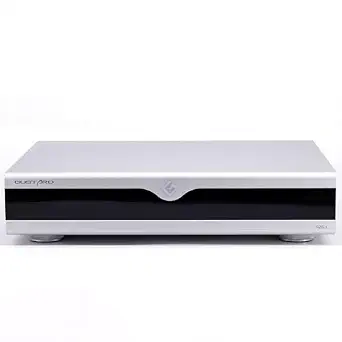 | Best for R-2R DAC Enthusiasts | Architecture: Discrete R-2R resistor ladder | Supported formats: DSD2048; PCM up to 768kHz/32-bit | Digital inputs: USB, optical, coaxial, IIS, AES, LAN | VIEW ON AMAZON | See Our Full Breakdown |
| EVERSOLO DMP-A10 Hi-End Music Streamer with DAC, Preamp, Room Correction, 6.5” LCD Touchscreen |  | Best Premium All-in-One | DAC chip: ES9039PRO | Display: 6.5-inch LCD touchscreen | Connectivity: Bluetooth, Ethernet, SFP fiber, Wi-Fi | VIEW ON AMAZON | See Our Full Breakdown |
| iFi Audio NEO Stream 3 Network Audio Streamer with Integrated DAC |  | Best for Straightforward Network Streaming | DAC architecture: Burr-Brown | Supported formats: PCM up to 768kHz; DSD512 | Connectivity: Wi-Fi | VIEW ON AMAZON | See Our Full Breakdown |
| MS.1 AirPlay 2 Wireless Audio Streamer with Google Cast and Spotify Connect |  | Best for Multiroom and Smart-Home Integration | Streaming protocols: AirPlay 2, Google Cast, Spotify Connect | Connectivity: Coaxial, Ethernet, optical, USB, Wi-Fi | Listed connectors: Coaxial, HDMI, optical, USB | VIEW ON AMAZON | See Our Full Breakdown |
| MP10 HiFi Music Streamer with ESS9039Q2M DAC, Android 14, 8GB RAM, 64GB Storage, WiFi 6, Bluetooth 5.4, DSD512, PCM768kHz, MQA Decoding, AirPlay2, DLNA |  | Best for Local Libraries and Format Flexibility | Operating system: Android 14 | Display: 6-inch 1080 x 1920 FHD touchscreen | DAC: ESS9039Q2M x4 | VIEW ON AMAZON | See Our Full Breakdown |
| FiiO S15 HiFi Audio Streamer & Desktop DAC, AK4191+AK4499EX, Snapdragon 660, HDMI ARC, 7.84-Inch Touchscreen Music Player |  | Best for a Full-Feature Touchscreen System | Operating system: Android 12 | Display: 7.84-inch touchscreen | DAC: AK4191 + AK4499EX | VIEW ON AMAZON | See Our Full Breakdown |
| streamer dac combo for home audio | Connectivity | Display |
|---|---|---|
| Gustard X26III Network Streame | — | — |
| WiiM Amp Ultra Stereo Streamin | Wi-Fi 6, Bluetooth 5.3, HDMI ARC | 3.5-inch glass-covered touchscreen |
| FiiO SR11 AirPlay Audio Stream | — | Custom LCD |
| Bluesound Node Icon Hi-Res Mus | Optical, USB, HDMI, Bluetooth, Wi-Fi | 5-inch HD display |
| WiiM Amp Ultra Stereo Streamin | Wi-Fi 6, Bluetooth 5.3, HDMI ARC | 3.5-inch glass-covered touchscreen |
| Gustard DAC-R26II R2R DAC Digi | — | — |
| EVERSOLO DMP-A10 Hi-End Music | Bluetooth, Ethernet, SFP fiber, Wi-Fi | 6.5-inch LCD touchscreen |
| iFi Audio NEO Stream 3 Network | Wi-Fi | — |
| MS.1 AirPlay 2 Wireless Audio | Coaxial, Ethernet, optical, USB, Wi-Fi | — |
| MP10 HiFi Music Streamer with | USB, HDMI, optical, coaxial, RCA, XLR, AirPlay 2, DLNA | 6-inch 1080 x 1920 FHD touchscreen |
| FiiO S15 HiFi Audio Streamer & | Bluetooth, HDMI, USB, Wi-Fi | 7.84-inch touchscreen |
More Details on Our Top Picks
Gustard X26III Network Streamer Full Balanced DAC Preamp with Dual ES9039SPRO (Silver)
I’d choose the Gustard X26III when the system already has an amplifier and the priority is a feature-rich, balanced DAC/preamp at its center. Its dual ES9039SPRO chips, FPGA logic, and PLL clock are aimed at precise digital conversion, while its range of USB, LAN, optical, coaxial, AES, and IIS inputs gives it room to work with varied sources. Compared with the WiiM Amp Ultra, this is a more flexible component for a separates system, but it does not provide the WiiM’s built-in speaker amplification or room correction. The tradeoff is complexity: the inputs and configuration options may be more than a casual streamer setup needs, and its tabletop footprint calls for dedicated space. I’d skip it if a simple all-in-one speaker solution is the goal.
Pros:- Dual ES9039SPRO conversion is designed for separate left- and right-channel processing.
- Broad digital input selection accommodates a variety of source components.
- Balanced DAC/preamp format suits systems built around separate amplification.
- FPGA logic and PLL clock provide dedicated digital timing and processing features.
Cons:- Does not include the speaker amplification found in the WiiM Amp Ultra.
- Extensive connection and configuration options may complicate setup for beginners.
- Tabletop form factor requires more room than a small streaming receiver.
Best for: Listeners building a separates-based home system who want a balanced DAC/preamp with multiple digital source connections.
Not ideal for: Beginners seeking a single box to drive passive speakers, or buyers with limited shelf space.
- Model:X26III
- DAC chips:Dual ESS ES9039SPRO
- Channels:2
- Form factor:Tabletop / free-standing
- Inputs:USB, LAN, optical, coaxial, AES, IIS, external clock
- Circuitry:FPGA programmable logic, GCLK-02 PLL clock, Class-A circuitry
- Warranty:2 years
Our verdict“Choose the Gustard X26III if you want a configurable balanced DAC/preamp for a separates system, not an all-in-one streamer amplifier.”
WiiM Amp Ultra Stereo Streaming Amplifier, HDMI ARC & RoomFit, Silver
The WiiM Amp Ultra is the most direct fit here for someone who wants streaming, DAC conversion, and speaker power in one compact unit. Its 100W stereo output means there is no need to add a separate power amplifier, while HDMI ARC makes it practical for a living-room TV system. Built-in RoomFit can help tailor playback to the room, a capability the Gustard X26III does not offer, though Gustard has a broader selection of digital inputs for component-heavy setups. The WiiM also brings Wi-Fi 6, Bluetooth 5.3, a touchscreen, and multi-room support. Its limits matter: it does not support AirPlay, and its speaker configuration is more constrained than a separates system. I’d pick it for streamlined home audio, not for a system built around extensive component swapping.
Pros:- Combines a streamer, ESS SABRE DAC, and 100W stereo amplifier in one unit.
- HDMI ARC connects conveniently to a compatible television.
- RoomFit provides built-in room correction rather than requiring a separate processor.
- Wi-Fi 6, Bluetooth 5.3, touchscreen control, and multi-room support add flexible playback options.
Cons:- Does not support AirPlay.
- Speaker configuration is limited compared with a separates system.
- RoomFit and network features require setup to make full use of them.
Best for: Home listeners who want to stream music and power passive speakers from one unit, especially when connecting a TV over HDMI ARC.
Not ideal for: AirPlay-dependent households, or owners who want separate amplification and broad component-level flexibility.
- Amplifier power:100W
- Speaker compatibility:Up to four speakers
- DAC:ESS SABRE
- Amplifier technology:Dual TI TPA3255 amps with PFFB
- Connectivity:Wi-Fi 6, Bluetooth 5.3, HDMI ARC
- Display:3.5-inch glass-covered touchscreen
- Room correction:RoomFit
- Dimensions and weight:7.87 x 8.3 x 3 inches; 5.4 pounds
Our verdict“Choose the WiiM Amp Ultra if you want a single streaming box that can drive passive speakers and connect to a TV.”
FiiO SR11 AirPlay Audio Streamer Receiver, WiFi Multiroom Streamer, Supports Hi-Res Audio from Spotify, Amazon Music, Tidal (Black)
I’d consider the FiiO SR11 when the home system already has a DAC or other digital decoder and needs a network streaming source. Dual-band Wi-Fi and gigabit Ethernet offer wired and wireless connection choices, while its digital outputs let a compatible downstream component handle conversion. That makes it a different kind of pick from the Bluesound NODE N530, which is described as having built-in DACs and adds AirPlay 2 and BluOS multi-room features. The SR11’s listed high-resolution support and LCD display are appealing, but those formats depend on compatible decoding equipment, and the product data lists no analog output. I would not treat it as a complete streamer-DAC combo on its own: its value is as a source component, not as a direct connection to conventional analog inputs.
Pros:- Offers both dual-band Wi-Fi and gigabit Ethernet networking.
- Digital outputs can feed a compatible external DAC or decoder.
- LCD display and included infrared remote provide local control options.
- Listed support includes high-resolution PCM and DSD formats.
Cons:- No analog outputs are listed, so it cannot directly feed every amplifier or powered speaker.
- Full use of high-resolution formats depends on compatible downstream decoding equipment.
- Setup may be less straightforward than using a streamer with an integrated DAC.
Best for: Owners of a DAC or digital-input amplifier who want to add Wi-Fi or Ethernet streaming and can connect over digital output.
Not ideal for: Buyers who need analog outputs or want a streamer with a self-contained DAC-to-amplifier path.
- Networking:Dual-band 2.4GHz and 5GHz Wi-Fi; 1000Mbps Ethernet
- Supported audio formats:Up to 768kHz/32-bit PCM and DSD256
- Outputs:Digital outputs; dual USB outputs listed
- Streaming services:Spotify, Tidal, Amazon Music
- Control:App control and infrared remote
- Display:Custom LCD
- Dimensions:5.91 x 5.12 x 1.18 inches
- Weight:0.64 kg
Our verdict“Choose the FiiO SR11 as a network source for an existing digital audio chain, not as a standalone DAC-and-amplifier solution.”
Bluesound Node Icon Hi-Res Music Streamer with RC1 Remote – Black (Bundle)
The Bluesound NODE bundle suits a home built around easy network listening, particularly if AirPlay 2 or multi-room playback is part of the plan. BluOS support, Wi-Fi, Bluetooth, and the included RC1 remote give it a broader everyday control story than the FiiO SR11, which is better framed as a digital source for an external DAC. The Bluesound listing also names dual ESS SABRE ES9039Q2M DACs and a five-inch display, so it is positioned as a more complete streaming component. HDMI and optical connections widen its role in a home setup, while Dirac Live is listed as a room-correction feature. The tradeoff is that it still needs a stereo system or powered speakers; it is not the speaker-driving all-in-one represented by the WiiM Amp Ultra. Setup may also take patience.
Pros:- AirPlay 2 and BluOS support suit multi-room and shared household playback.
- Built-in dual ESS SABRE DACs provide an integrated conversion path.
- Optical, USB, HDMI, Bluetooth, and Wi-Fi connections support varied sources.
- Bundle includes an RC1 remote, alongside the listed five-inch HD display.
Cons:- Requires a compatible stereo system or powered speakers; it does not replace a speaker amplifier.
- The combination of network and room-correction features may take time to configure.
- Feature overlap may be unnecessary for buyers who only need a basic digital streamer.
Best for: Households using AirPlay 2 or BluOS multi-room audio who want a network streamer with a built-in DAC and included remote.
Not ideal for: Buyers who need an integrated amplifier for passive speakers, or who want the simplest possible initial setup.
- Model number:N530BLKUNV
- DACs:Dual ESS SABRE ES9039Q2M
- Connectivity:Optical, USB, HDMI, Bluetooth, Wi-Fi
- Multi-room and wireless features:BluOS, AirPlay 2, aptX Adaptive Bluetooth
- Display:5-inch HD display
- Room correction:Dirac Live listed
- Bundle:NODE N530 streamer and RC1 remote
Our verdict“Choose the Bluesound NODE bundle for an AirPlay 2 or BluOS home that needs a capable streamer and built-in DAC, not speaker amplification.”
WiiM Amp Ultra Stereo Streaming Amplifier, HDMI ARC & RoomFit, Space Gray
The space gray WiiM Amp Ultra is the same all-in-one proposition as the silver version: streaming, ESS SABRE conversion, and 100W stereo amplification in a compact chassis. I’d rank this finish-specific listing for buyers matching existing components or furniture, not as a different performance tier. Like the silver WiiM, it combines HDMI ARC and RoomFit, so it can serve both music and TV playback without a separate amplifier or room-correction box. Compared with the Bluesound NODE bundle, it can drive passive speakers, while the Bluesound brings AirPlay 2 and BluOS support. The WiiM’s lack of AirPlay is a real drawback for some households, and its speaker setup is bounded by the stated compatibility. Choose this listing for its color and all-in-one function; there is no supplied basis to claim a sound advantage over the silver model.
Pros:- Combines streaming, an ESS SABRE DAC, and 100W stereo amplification.
- HDMI ARC supports straightforward connection to a compatible TV.
- RoomFit offers built-in auto-calibration for the listening space.
- Wi-Fi 6, Bluetooth 5.3, touchscreen controls, and multi-room features are listed.
Cons:- Does not support AirPlay, unlike the Bluesound NODE bundle.
- Limited to the stated speaker configurations rather than a flexible separates arrangement.
- The supplied product data does not identify a technical advantage over the silver version.
Best for: Listeners who want the WiiM Amp Ultra’s streaming amplifier features in space gray to coordinate with their home audio setup.
Not ideal for: AirPlay-dependent buyers or anyone looking for a distinct performance upgrade over the silver WiiM Amp Ultra.
- Power output:100W
- Speaker compatibility:Up to four speakers
- DAC:ESS SABRE
- Amplifier technology:Dual TI TPA3255 amps
- Connectivity:Wi-Fi 6, Bluetooth 5.3, HDMI ARC
- Room correction:RoomFit auto-calibration
- Display:3.5-inch glass-covered touchscreen
- Dimensions and weight:7.87 x 8.3 x 3 inches; 5.4 pounds
Our verdict“Choose the space gray WiiM Amp Ultra when its finish suits your room and you want one box to stream and power passive speakers.”
Gustard DAC-R26II R2R DAC Digital-Analog Converter with High-Resolution Support
The Gustard DAC-R26II is the DAC-focused choice here: its discrete R-2R ladder, balanced XLR outputs, and broad digital-input selection suit a system built around a separate streamer and amplifier. LAN is listed as an input, but the supplied details do not establish the streaming-service or app features found on the EVERSOLO DMP-A10; I would treat this primarily as a converter, not a complete streaming hub. Its support for DSD2048 and PCM up to 768kHz gives high-resolution file collectors plenty of headroom, while coaxial, optical, AES, IIS, and USB help connect varied sources. The tradeoff is a more involved component-based setup, and its size and weight make it less suitable for a small shelf. Choose it over the all-in-one EVERSOLO when DAC architecture and input flexibility matter more than built-in streaming and room correction.
Pros:- Discrete R-2R architecture offers a distinct alternative to the ESS-based DACs in the EVERSOLO DMP-A10 and MP10.
- Supports DSD2048 and PCM up to 768kHz/32-bit.
- RCA and balanced XLR outputs allow connection to a range of home audio systems.
- USB, optical, coaxial, IIS, AES, and LAN inputs accommodate multiple digital sources.
Cons:- Streaming services, app control, and room correction are not specified, so a separate streamer may be needed.
- At 5.5 kg and 330 x 260 x 65 mm, it takes more rack or shelf space than compact options.
- The many input choices and system components can make setup less approachable for newcomers.
Best for: Listeners with a separate network streamer, balanced amplifier, and high-resolution library who want an R-2R DAC with several digital inputs.
Not ideal for: Buyers seeking a single box with an established streaming interface, room correction, and straightforward setup; the listed product data does not detail those streamer functions.
- Architecture:Discrete R-2R resistor ladder
- Supported formats:DSD2048; PCM up to 768kHz/32-bit
- Digital inputs:USB, optical, coaxial, IIS, AES, LAN
- Outputs:RCA, XLR
- Dynamic range:>117dB
- Signal-to-noise ratio:>122dB
- Dimensions and weight:330 x 260 x 65 mm; 5.5 kg
Our verdict“Choose the Gustard if you want an R-2R DAC at the center of a source-separated system, not an all-in-one streaming solution.”
EVERSOLO DMP-A10 Hi-End Music Streamer with DAC, Preamp, Room Correction, 6.5” LCD Touchscreen
The EVERSOLO DMP-A10 earns its premium all-in-one role by combining a streamer, DAC, preamp, and room correction in one substantial component. That integration can simplify a system compared with pairing the Gustard DAC-R26II with a separate streamer, while its dual subwoofer outputs offer a clear path for systems built around subwoofers. The supplied description names TIDAL, Qobuz, and Amazon Music, and the 6.5-inch touchscreen provides direct control alongside app operation. Wi-Fi, Ethernet, and SFP fiber give network connections more options than the Wi-Fi-only detail listed for the iFi NEO Stream 3. The cost of that breadth is physical scale and a more involved feature set; at 12.5 kg, it also needs a sturdy, roomy shelf. It lacks HDMI output, so it is a less natural fit when TV integration is a priority.
Pros:- Combines network streaming, DAC, preamp, and room correction.
- Lists support for TIDAL, Qobuz, and Amazon Music.
- Two subwoofer outputs offer flexibility for subwoofer-based home audio.
- Ethernet, Wi-Fi, and SFP fiber provide multiple network connection options.
Cons:- Its 12.5 kg weight and large listed dimensions demand substantial, sturdy placement.
- The extensive feature set may take more setup than a simpler streamer such as the iFi NEO Stream 3.
- No HDMI output is listed for connecting a television.
Best for: Audiophiles building a dedicated two-channel system who want streaming, preamp functions, room correction, and subwoofer connections in one component.
Not ideal for: TV-centered setups that require HDMI output, or listeners who want a compact, simple streamer with few configuration choices.
- DAC chip:ES9039PRO
- Display:6.5-inch LCD touchscreen
- Connectivity:Bluetooth, Ethernet, SFP fiber, Wi-Fi
- Inputs:RCA, XLR
- Room correction:Yes
- Subwoofer outputs:2
- Memory:4 GB RAM, 64 GB storage
- Dimensions and weight:12.2 x 17 x 4.7 inches; 12.5 kg
Our verdict“Pick the DMP-A10 when you want a feature-rich streaming preamp with room correction and can accommodate its size and complexity.”
iFi Audio NEO Stream 3 Network Audio Streamer with Integrated DAC
The iFi Audio NEO Stream 3 is the most focused network-streaming option in this group: it pairs an integrated DAC with Wi-Fi and named support for Tidal, Spotify, and Qobuz, rather than bundling in room correction and preamp features like the EVERSOLO DMP-A10. That narrower brief may suit listeners who want streaming playback without committing to the EVERSOLO’s larger, more elaborate setup. The description cites PCM up to 768kHz and DSD512, plus Burr-Brown DAC architecture and K2HD processing. However, the supplied specifications list USB and optical connectors but do not identify analog outputs, so buyers should verify how it connects to their amplifier before choosing it as a complete streamer-DAC source. Hardware durability and long-term reliability details are also limited. It is less fully documented than the Gustard DAC-R26II, whose balanced and RCA outputs are clearly specified.
Pros:- Integrated DAC and Wi-Fi streaming make it a focused alternative to a separate streamer-and-DAC stack.
- The description lists PCM up to 768kHz and DSD512 support.
- Named support includes Tidal, Spotify, and Qobuz.
- Burr-Brown DAC architecture and K2HD processing are specified in the product description.
Cons:- The supplied connector details do not specify RCA or XLR analog outputs.
- Long-term durability and reliability information is limited in the provided product data.
- It does not list the room correction or dual subwoofer outputs offered by the EVERSOLO DMP-A10.
Best for: Network listeners who use Tidal, Spotify, or Qobuz and want a Wi-Fi streamer with an integrated DAC for a compatible existing system.
Not ideal for: Buyers who need clearly specified RCA or XLR analog outputs, room correction, or extensive published hardware details before choosing a source component.
- DAC architecture:Burr-Brown
- Supported formats:PCM up to 768kHz; DSD512
- Connectivity:Wi-Fi
- Listed connectors:USB, optical
- Supported services:Tidal, Spotify, Qobuz
- Processing feature:K2HD sound restoration
- Color:Satin matte black
Our verdict“Consider the NEO Stream 3 for focused Wi-Fi music streaming, but confirm its analog connection options suit your amplifier first.”
MS.1 AirPlay 2 Wireless Audio Streamer with Google Cast and Spotify Connect
The MS.1 prioritizes access and system integration over the standalone DAC emphasis of the Gustard DAC-R26II. AirPlay 2, Google Cast, and Spotify Connect make it a natural match for households using different phones and streaming ecosystems, while multiroom support and voice control can help connect music across rooms. Its compact 5.75-inch-square footprint is easier to place than the EVERSOLO DMP-A10, and HDMI eARC, optical, USB, and analog RCA connections give it potential roles with a TV or existing stereo. The product details do not identify a DAC chip or specify its analog output implementation, so I would not choose it on DAC performance claims alone. Nor do they explain the user interface or app experience. It makes most sense when wireless compatibility and connection variety are the priority, not when detailed converter specifications are the deciding factor.
Pros:- Supports AirPlay 2, Google Cast, and Spotify Connect for a range of streaming ecosystems.
- Multiroom features and Siri and Google Assistant voice-control compatibility suit connected homes.
- HDMI eARC, optical, USB, and analog RCA provide several connection options.
- Compact 5.75 x 5.75 x 1.75-inch form factor is easier to place than the full-size EVERSOLO DMP-A10.
Cons:- The supplied data does not specify a DAC chip or detailed conversion performance.
- User interface and app usability are not described.
- Its broad connectivity does not include the listed room correction features of the EVERSOLO DMP-A10.
Best for: Smart-home households that want AirPlay 2, Google Cast, Spotify Connect, and multiroom playback in a compact unit for a TV or stereo.
Not ideal for: DAC-focused buyers who need published conversion specifications, or shoppers who want a clearly documented setup and control experience.
- Streaming protocols:AirPlay 2, Google Cast, Spotify Connect
- Connectivity:Coaxial, Ethernet, optical, USB, Wi-Fi
- Listed connectors:Coaxial, HDMI, optical, USB
- Supported services:Apple Music, Spotify, YouTube Music
- Special features:Hi-res audio, multiroom, stereo pairing
- Dimensions:5.75 x 5.75 x 1.75 inches
- Warranty:2 years
Our verdict“Choose the MS.1 for compact multiroom and smart-home streaming, rather than for a DAC with detailed published specifications.”
MP10 HiFi Music Streamer with ESS9039Q2M DAC, Android 14, 8GB RAM, 64GB Storage, WiFi 6, Bluetooth 5.4, DSD512, PCM768kHz, MQA Decoding, AirPlay2, DLNA
The MP10 stands apart as a screen-led Android music hub for listeners with large local libraries as well as streaming accounts. Its 8GB of RAM, 64GB of storage, network-disk support, USB storage expansion, and CD playback and ripping give it a broader library-management role than the iFi NEO Stream 3, whose supplied details emphasize Wi-Fi streaming and an integrated DAC. Four ESS9039Q2M chips and support for DSD512, PCM768kHz, and MQA add format breadth, while RCA and XLR outputs cover common stereo connections. AirPlay 2 and DLNA add further ways to send or share audio. This flexibility comes with a more computer-like setup, a large touchscreen, and a demanding feature set; it is a heavier, more involved proposition than the compact MS.1. Choose it for library control and connections, not simplicity or minimal shelf space.
Pros:- Four ESS9039Q2M DAC chips and listed support for DSD512, PCM768kHz, and MQA.
- CD playback and ripping, network-disk support, and USB storage expansion suit large music libraries.
- RCA and XLR outputs plus USB, HDMI, optical, and coaxial connections offer system flexibility.
- Android 14, a 6-inch touchscreen, Wi-Fi 6, Bluetooth 5.4, AirPlay 2, and DLNA provide broad control and connectivity.
Cons:- The broad Android feature set may require more setup than a simpler streamer such as the iFi NEO Stream 3.
- The large touchscreen and component-style connectivity need more shelf space than the compact MS.1.
- Its library, storage, and decoding features may be excessive for listeners who only use a few streaming services.
Best for: Digital music collectors who want a touchscreen player for local files, CD ripping, network storage, and high-resolution playback through a stereo system.
Not ideal for: Listeners seeking a small, simple Wi-Fi streamer or a TV-first device; its many functions and large format may be unnecessary for basic streaming.
- Operating system:Android 14
- Display:6-inch 1080 x 1920 FHD touchscreen
- DAC:ESS9039Q2M x4
- Memory and storage:8GB DDR4 RAM; 64GB eMMC
- Supported formats:DSD512, PCM768kHz, MQA, FLAC, WAV, APE, DSD, ISO, AIFF, ALAC, MP3
- Network and wireless:Wi-Fi 6, Bluetooth 5.4, LAN 1000M/100M/10M
- Connectivity:USB, HDMI, optical, coaxial, RCA, XLR, AirPlay 2, DLNA
- Additional features:CD playback and ripping, network-disk support, USB storage expansion
Our verdict“Pick the MP10 if you want a touchscreen-centered hub for local files, CD ripping, and varied high-resolution formats, and are comfortable with a more involved setup.”
FiiO S15 HiFi Audio Streamer & Desktop DAC, AK4191+AK4499EX, Snapdragon 660, HDMI ARC, 7.84-Inch Touchscreen Music Player
The FiiO S15 makes the most sense when you want a streamer and DAC to serve as a central home-audio source, not just a way to add wireless playback. Its 7.84-inch touchscreen and Android 12 interface offer direct control, while HDMI ARC, XLR, RCA, and several digital connections make it adaptable to a TV, amplifier, or separate power amp. Compared with the simpler FiiO SR11, the S15 adds an integrated DAC and broader system connectivity; unlike the WiiM Amp Ultra, it is not an all-in-one streaming amplifier, so you still need amplification for passive speakers. That flexibility brings a cost in space and setup effort: at 5 kg and 16 inches long, it is a substantial component, and its many options may overwhelm beginners. Choose it for a feature-rich source hub, not a compact plug-and-play streamer.
Pros:- Large touchscreen provides direct, at-a-glance control without relying solely on a phone.
- HDMI ARC supports integration with a compatible TV.
- XLR, RCA, and multiple digital connections suit varied home systems.
- Android 12 and support for Roon Ready, AirPlay, DLNA, and Bluetooth offer flexible playback options.
Cons:- Does not include speaker amplification, unlike the WiiM Amp Ultra.
- Its size and 5 kg weight make it a poor fit for compact or portable setups.
- The wide feature set can make setup and operation more involved for newcomers.
Best for: Home listeners building a component-based system who want a large touchscreen, HDMI ARC, and balanced XLR output from one streamer-DAC source.
Not ideal for: Beginners seeking a simple streamer-and-speaker solution, or listeners with limited rack space who want a small, lightweight device.
- Operating system:Android 12
- Display:7.84-inch touchscreen
- DAC:AK4191 + AK4499EX
- Processor:Snapdragon 660
- Supported protocols:UPnP, SMB, WebDAV
- Connectivity:Bluetooth, HDMI, USB, Wi-Fi
- Inputs and outputs:HDMI ARC, I2S, AES, coaxial, RCA, optical, XLR
- Dimensions:16 × 12 × 4 inches
- Weight:5 kg
Our verdict“Choose the FiiO S15 if you want a touchscreen-controlled streamer-DAC hub with broad home-system connections and already have an amplifier.”

How We Picked
I compared the 11 products by how completely they serve as a home audio streamer DAC, then by how well their connections and controls fit common systems. I gave weight to built-in amplification, preamp capability, room correction, display and remote control, and access to network or wireless playback. I also separated true streaming components from DACs that need a separate streamer, since those products solve different problems despite overlapping in a home audio setup.
The ranking favors useful system integration and flexibility over specification lists alone. Products with wider roles can suit more setups, but that does not make them the right choice for every buyer: compact streamers may be simpler, and a dedicated DAC can make sense when streaming is already handled elsewhere. I also considered likely tradeoffs such as extra complexity, reliance on apps, and whether a product’s amplification or connection set matches the rest of the system.
Factors to Consider When Choosing Streamer Dac Combo For Home Audio
Before choosing a streamer DAC, I’d start with the components it must connect and the jobs you want it to handle. A feature-rich source can be the wrong purchase if your system already has a DAC, or if you need it to power speakers directly. These factors help narrow the choice beyond comparing formats and feature lists.
Match the Unit to Your System’s Missing Role
Write down whether your setup needs a network streamer, DAC, preamp, amplifier, or a combination before comparing models. Passive speakers need an amplifier somewhere in the chain; a streamer with line-level outputs will not drive them on its own. An integrated amplifier such as the WiiM Amp Ultra covers more of the chain, while a standalone DAC such as the Gustard DAC-R26II is intended to convert a digital signal rather than supply every system function. A common mistake is buying a DAC because its name sounds like a full source component, then discovering that streaming or amplification remains unresolved. If your current amplifier already has a DAC, check whether a streamer with digital output is all you need. Buying only for the missing role can reduce both clutter and setup friction.
Check Every Connection You Plan to Use
Make a short connection map for your television, amplifier, speakers, wired network, and any digital sources. HDMI ARC can make TV audio easier to route through compatible equipment, but its presence alone does not make a unit a complete home theater receiver. Balanced outputs can suit compatible components and longer cable runs, while ordinary line-level connections may be a better match for many existing systems. Confirm whether the streamer offers the input and output types you need, rather than assuming that a long list of supported audio formats covers physical compatibility. Also check whether you expect wireless playback, wired Ethernet, or both; a dependable home network can matter more to everyday use than an advanced file format. The right connection set is the one that fits your actual chain without adding adapters or unnecessary boxes.
Choose the Control Style You Will Actually Use
Streamer control can come through a phone app, a remote, a touchscreen, or a mix of these. Touchscreens and remotes can make playback easier when a phone is charging, shared, or being used for something else, while app-led models can keep the hardware compact. A large screen may be useful for browsing a library from across the room, but it can also add cost and complexity without improving sound by itself. Before buying, check how the device handles your preferred services and whether the app supports the way you organize music. Buyers who mainly cast from a phone may need fewer controls than listeners who browse a local library directly on the component. Prioritize the control method you expect to use every day, not the one that looks most impressive in a feature list.
Treat Room Correction as a System Tool, Not a Sound Guarantee
Room correction can help address problems caused by speaker placement and room acoustics, but it cannot make every room or speaker behave alike. Check how the correction process works, what microphone or measurements it requires, and whether adjustments can be reviewed or changed. It is most useful when a system has persistent bass or balance issues that careful placement cannot resolve. A frequent mistake is paying extra for correction while leaving speakers in poor positions or using settings without checking the result. It can also be unnecessary in a well-balanced setup where the listener prefers manual adjustments. Treat it as a way to tune the whole speaker-and-room combination, not as a stand-alone sound-quality rating.
Decide Whether One Box or Separate Components Make More Sense
An all-in-one unit can simplify setup and reduce the number of cables, but a separate streamer, DAC, and amplifier can make upgrades more targeted. Integration favors convenience; separates favor flexibility when one part of the system is likely to change. A streamer DAC with amplification makes particular sense when starting a system around passive speakers, while a standalone DAC suits a setup that already has a streamer and amplifier. Avoid paying for a built-in stage you will not use, especially if your existing equipment already handles that job. Separate boxes also take more space and can make input selection and troubleshooting less straightforward. Think about the next likely change to your system, not only the setup you have today.
Look Beyond Format Support to Everyday Reliability
High-resolution format support matters only if your music library or service uses those formats and the rest of your system can play them. Service compatibility, app stability, and network performance have a bigger effect on daily enjoyment than a maximum sample-rate figure that rarely comes into use. Check whether the services and playback methods you rely on are supported, including casting or multiroom features if those are part of your routine. Wired Ethernet can be a sensible choice for a fixed home system, particularly when Wi-Fi coverage is inconsistent. Also consider software support and how the device receives updates, since a streamer depends on software in a way a basic DAC may not. Choose format headroom when it fits your library, but do not let headline numbers obscure practical compatibility.
Frequently Asked Questions
Do I need a streamer DAC with a built-in amplifier for passive speakers?
Yes, unless you already own a separate amplifier. A streamer DAC with only line-level or digital outputs provides a signal but does not supply the power passive speakers need. The WiiM Amp Ultra is the most direct fit in this lineup for a setup that needs streaming and stereo speaker amplification in one chassis. If you already have an integrated amplifier, a separate streamer DAC may be a better match and avoid duplicating amplification. Check your speaker connections and amplifier arrangement before choosing.
Can I use the Gustard DAC-R26II as my network streamer?
The DAC-R26II is presented here as a DAC, not as a complete network streamer. That means you should plan on feeding it a digital signal from a separate streaming device or another compatible source. This can suit a system whose streaming is already handled elsewhere and where the buyer wants a dedicated conversion component. If you want one box to browse and play network music, compare it with options such as the EVERSOLO DMP-A10 or Bluesound Node Icon. Confirm the exact input connections you need before building a chain around it.
Should I choose the WiiM Amp Ultra or a streamer with a separate amplifier?
Choose the WiiM Amp Ultra when you want streaming and speaker amplification together, especially if HDMI ARC and room tuning suit your setup. A separate streamer and amplifier make more sense if you already own an amplifier you like, want to keep source and power components independent, or expect to upgrade them on different schedules. The all-in-one route can simplify wiring, but it gives you fewer separate boxes to swap when a particular function becomes limiting. Check that the amplifier’s speaker connections and capabilities fit your speakers and room. Your existing equipment should drive this choice more than a general preference for integrated or separate systems.
Is a touchscreen worth choosing over app-only control?
A touchscreen is useful if you often browse music at the system itself or want playback information visible without opening a phone app. The FiiO S15 and EVERSOLO DMP-A10 offer screen-focused control, while more compact network devices may place greater emphasis on app or remote use. A screen does not by itself guarantee that browsing will be faster; the software and library interface matter too. If you usually select music on your phone, the display may add little value to your routine. Consider a touchscreen for direct access and visibility, not as a sound-quality feature.
When does a simple wireless streamer make more sense than a full streamer DAC?
A simpler wireless streamer can be the better buy when your amplifier already has a DAC, you mainly play from a phone, or you want to add network playback without rebuilding the system. The FiiO SR11 and MS.1 fill a different role from the more integrated EVERSOLO, WiiM, and FiiO S15 options. A full streamer DAC is more useful when you need conversion, preamp functions, a screen, or amplification in the same component. Do not pay for capabilities that your current system already supplies. First identify which component in your chain is missing, then choose the least complicated option that fills that gap.
Conclusion
For the widest range of home audio setups, I’d choose the EVERSOLO DMP-A10 as best overall for its combined streaming, DAC, preamp, and room-correction roles. The WiiM Amp Ultra is my value-oriented all-in-one pick for listeners who need a streamer and amplifier for passive speakers, while the Bluesound Node Icon is a better fit for buyers seeking a dedicated streaming hub. For beginners, I’d favor the WiiM Amp Ultra when one box needs to handle speakers, or the FiiO SR11 when an existing system only needs a wireless streaming addition. For premium, screen-led control, consider the FiiO S15 or EVERSOLO; for a setup that already has streaming but needs a dedicated DAC, look at the Gustard DAC-R26II. My final choice would depend first on the role your system lacks, then on the connections and controls you will use most.
Halloween Picks
halloween
As an affiliate, we earn on qualifying purchases.