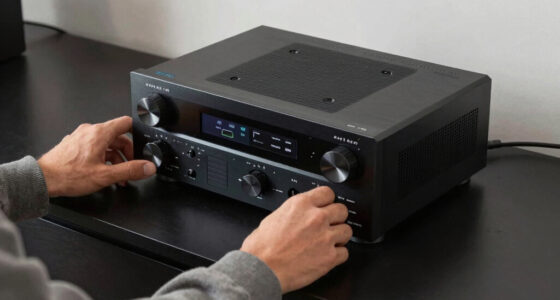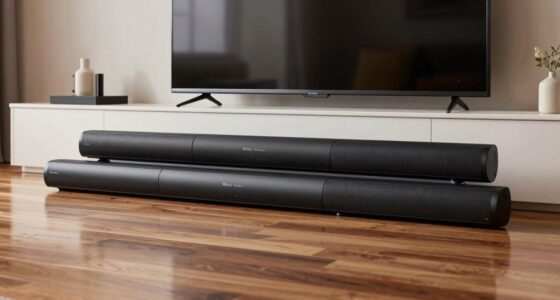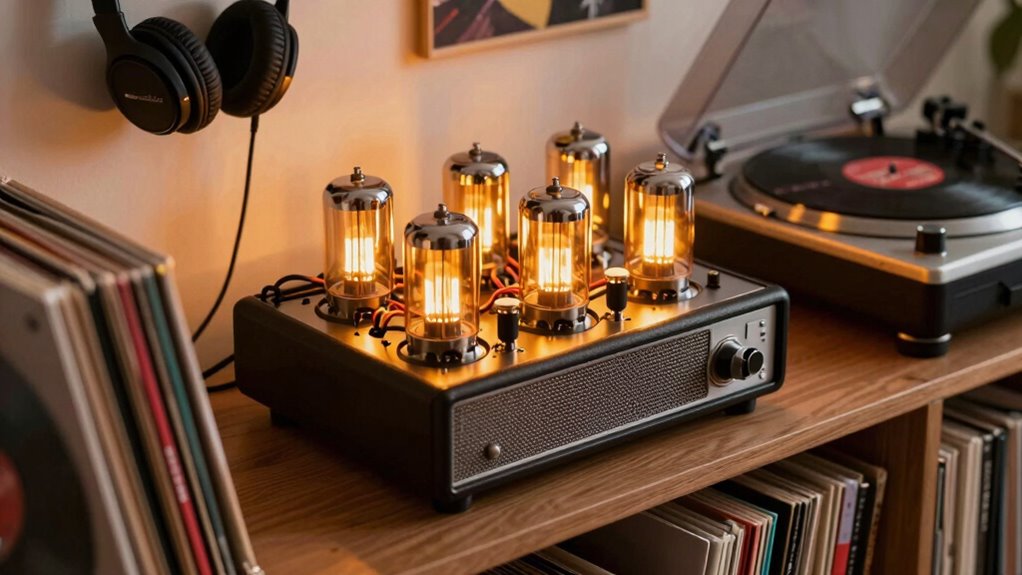

A tube amplifier for vinyl listening can be a traditional tube integrated amp, a hybrid design, or a phono preamp paired with a separate amplifier—and that choice affects setup as much as sound. My best overall pick is the Juson Audio JTA50, because its built-in phono stage and broad range of connections make it a flexible match for a turntable-centered system. The Dayton Audio HTA200 stands out for listeners who want substantial power and hybrid operation, while the Oldchen EL34 suits buyers seeking a simpler, lower-power Class A approach. The main tradeoffs are connection convenience versus a more traditional tube signal path, speaker-driving power versus simplicity, and built-in features versus room to build a separate system. Continue reading for the full breakdown, including what to check before pairing an amp with your turntable and speakers.

Get audio and creator gear delivered free with Prime
- Fast, free delivery on millions of items
- Prime Video, Amazon Music and more included
- Member-only deals all year
Complete the kit


Key Takeaways
- Turntable hookup is not guaranteed by a tube label: the JTA50 lists a phono preamp, while several other picks need an external phono stage or a separate phono preamp such as the Douk Audio T9.
- Integrated features separate the flexible picks from traditional designs: the JTA50, Fosi Audio MC331, and Douk Audio ST-01 PRO offer multiple digital or wireless inputs alongside their amplifier functions.
- Power figures do not tell the whole speaker-matching story: the Oldchen EL34 is a 10W-per-channel Class A design, while the Dayton HTA200 and Douk ST-01 PRO list 200W; speaker sensitivity and listening habits still matter.
- Tube configurations point to different priorities: KT88 models such as the Oilily A88MK and R8 emphasize higher-power integrated operation, while EL34 choices include both the Oldchen’s single-ended design and the PA2‘s push-pull format.
- Subwoofer and headphone support vary across the lineup: the CR888, CR988, and JTA50 list subwoofer outputs, while the Douk T9, Fosi MC331, and R8 explicitly include headphone outputs.
| Douk Audio ST-01 PRO 200W Bluetooth Amplifier, 2 Channel Vacuum Tube Power Amp with USB DAC, Coaxial Optical Inputs, VU Meter, Treble & Bass Control |  | Best for Digital-Source Flexibility | Power output: 100W per channel at 4Ω | Inputs: Bluetooth 5.0, USB, coaxial, optical, RCA | Output: AUX output for additional speakers or a subwoofer | VIEW ON AMAZON | See Our Full Breakdown |
| Douk Audio Tube Phono Amp Bluetooth Receiver 2-Channel Amplifier for MM Turntables |  | Best for Direct MM Turntable Connection | Tube type: JAN5725 | Bluetooth: Version 5.0 with aptX and aptX-HD | Power output: 160W×2 at 4Ω | VIEW ON AMAZON | See Our Full Breakdown |
| Oilily A88MK KT88 X4 Tube Amplifier, 45W+45W Class AB, Vacuum Tube Integrated Amplifier with Triode & Ultra-Linear Mode, High-Fidelity Sound for Audiophiles (Black) |  | Best Premium All-Tube Choice | Power output: 45W+45W per channel | Operating modes: Triode and Ultra-Linear | Tube types: KT88, EL34, 6SL7, 6SN7 | VIEW ON AMAZON | See Our Full Breakdown |
| CR888 Hi-End Class A KT88 Single-Ended Tube Amplifier with Bluetooth and Subwoofer Output | 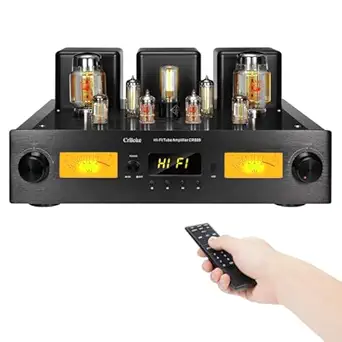 | Best for a Full-Size Speaker-and-Sub System | Amplifier type: Class A, KT88 single-ended | Output power: 480W listed; per-channel rating not specified | Inputs: RCA, optical, coaxial, Bluetooth | VIEW ON AMAZON | See Our Full Breakdown |
| XDUOO TA-66 High-Performance Tube Amplifier |  | Best Compact Tube Preamp for Headphone Setups | Tube types: 6N2 and 6N5P | Channels: 1 listed | Maximum output power: 200mW | VIEW ON AMAZON | See Our Full Breakdown |
| R8 KT88 x4 Tube Amplifier Hi-Fi Integrated Vacuum Tube Amp with Headphone Output, KT88/EL34 Replaceable (Black) |  | Best for Tube Rolling | Tube compatibility: KT88, EL34, 6550 | Amplifier functions: Integrated, power, and headphone amplifier | Operating modes: Triode and ultra-linear | VIEW ON AMAZON | See Our Full Breakdown |
| Fosi Audio MC331 Tube Integrated Amplifier with DAC, 2 Channel Home Audio Stereo Power Amp for Bookshelf Speakers and Headphones |  | Best for Compact, Connected Setups | Power output: 105W x 2 at 4Ω | Inputs: Bluetooth, USB, coaxial, optical, RCA | Outputs: Pre-out, 3.5 mm headphone jack | VIEW ON AMAZON | See Our Full Breakdown |
| Oldchen EL34 Single-Ended Class A Tube Amp – Hand-Wired Integrated 10W |  | Best for Efficient Speakers and Vocal-Focused Listening | Amplifier type: Single-ended Class A integrated tube amplifier | Power output: 10W x 2 RMS at 8Ω | Frequency response: 20Hz–25kHz | VIEW ON AMAZON | See Our Full Breakdown |
| CR988 Hi-End Class A KT88 X 4 Push-Pull Tube Amplifier with Built-in LDAC Bluetooth and Active Subwoofer Output |  | Best for Large Speaker Systems | Channels: 2 | Listed maximum output power: 560W | Tube configuration: KT88 x 4 | VIEW ON AMAZON | See Our Full Breakdown |
| PA2 EL34 Tube Amplifier, Push-Pull Integrated Tube Amp, Triode & Ultralinear Mode, Vacuum Tube Headphone Amp for Home Audio Stereo |  | Best for a Straightforward Tube-and-Headphone Setup | Amplifier type: Push-pull Class AB tube integrated amplifier | Output power: 18 watts | Output channels: 2 | VIEW ON AMAZON | See Our Full Breakdown |
| Douk Audio T9 Vacuum Tube Phono Preamp with Headphone Output and Tone Controls |  | Best for Vinyl-First Headphone Listening | Channels: 2 | Supply voltage: 12 volts | Maximum output power: 250 milliwatts | VIEW ON AMAZON | See Our Full Breakdown |
| Dayton Audio HTA200 200W Integrated Stereo Hybrid Tube Amp with Bluetooth |  | Best for Powerful, Connected Vinyl Systems | Connectivity: Bluetooth 5.0, USB DAC, phono, AUX, optical, and coaxial | Inputs: RCA, phono, optical, and coaxial | Built-in features: VU meters, exposed tubes, motorized volume control, headphone jack, and remote control | VIEW ON AMAZON | See Our Full Breakdown |
| Juson Audio JTA50 2025 50W x 2 Tube Amplifier with Bluetooth 5.0, Phono Preamp, Headphone Output, USB/Coax/AUX/Opt, Subwoofer Out, 2.1 Channel for Turntable and CD Player |  | Best Value for a Versatile Vinyl Setup | Output: 50 watts per channel as stated in the product title; 100 watts total listed | Channels: 2 | Amplifier type: Tube | VIEW ON AMAZON | See Our Full Breakdown |
More Details on Our Top Picks
Douk Audio ST-01 PRO 200W Bluetooth Amplifier, 2 Channel Vacuum Tube Power Amp with USB DAC, Coaxial Optical Inputs, VU Meter, Treble & Bass Control
For vinyl listening, the ST-01 PRO is a fit only if your turntable already has a phono preamp: its RCA input is not identified as a dedicated phono input. That makes it less direct for a basic turntable setup than the Douk Audio Tube Phono Amp, which specifically accepts MM cartridges. The ST-01 PRO earns its place for listeners who want one amplifier to handle a preamplified turntable alongside a TV, computer, or wireless source. Its Bluetooth, USB, coaxial, and optical inputs reduce the need for separate source equipment, while the bass and treble controls offer a way to tailor playback. The stated 100W per channel at 4Ω suits a range of passive speakers, but digital versatility comes at the cost of vinyl-specific convenience: buyers need to supply phono gain elsewhere.
Pros:- Bluetooth, USB, coaxial, optical, and RCA inputs accommodate several sources.
- 100W per channel at 4Ω provides substantial stated output for passive speakers.
- Bass and treble controls allow basic sound tailoring.
- AUX output can support an additional speaker or subwoofer connection.
Cons:- No dedicated phono input is specified, so many turntables need a separate phono preamp.
- Dimensions are not provided, making placement harder to plan.
- The available data gives limited detail about construction and long-term durability.
Best for: Vinyl listeners with a turntable that has a built-in phono preamp, who also want digital inputs for a TV, computer, or Bluetooth source.
Not ideal for: Owners of a turntable without a phono preamp who want a direct, ready-to-connect vinyl setup; the product data does not identify a dedicated phono input.
- Power output:100W per channel at 4Ω
- Inputs:Bluetooth 5.0, USB, coaxial, optical, RCA
- Output:AUX output for additional speakers or a subwoofer
- Tone controls:Treble and bass adjustment
- Display:VU meter
- Additional playback:Lossless U-disk input
Our verdict“Choose the ST-01 PRO if your turntable already provides phono amplification and you want one tube-equipped amp for vinyl and multiple digital sources.”
Douk Audio Tube Phono Amp Bluetooth Receiver 2-Channel Amplifier for MM Turntables
The Douk Audio Tube Phono Amp is the clearest match here for a standard MM turntable because it has a dedicated MM phono input, rather than relying on an external phono stage as the ST-01 PRO does. That makes setup more straightforward for listeners building a compact vinyl system, while its JAN5725 tubes and adjustable tone controls add flexibility without requiring a separate preamp. Bluetooth 5.0 with aptX and aptX-HD also lets it serve for wireless listening when records are put away. Its stated 160W×2 output is ample on paper for many home speakers, though the power figure and compact form should not distract from the key buying check: speaker matching and the actual listening space still matter. Compared with the Oilily A88MK, this is far easier to place, but it does not offer the same all-tube architecture or mode choices.
Pros:- Dedicated MM phono input supports a direct connection from compatible turntables.
- Bluetooth 5.0 with aptX and aptX-HD adds higher-quality wireless source options.
- Tone controls provide a simple way to adjust playback to speakers and room.
- Compact 1.7-pound design is suited to desktop or small-room setups.
Cons:- The phono input is specified for MM, limiting suitability for moving-coil cartridges.
- No dimensions are provided for checking shelf or desktop fit.
- The product data does not mention a remote or app control.
Best for: MM-turntable owners assembling a compact system who want phono input, Bluetooth streaming, and speaker amplification in one unit.
Not ideal for: Listeners using a moving-coil cartridge or seeking a large, all-tube integrated amplifier with selectable operating modes.
- Tube type:JAN5725
- Bluetooth:Version 5.0 with aptX and aptX-HD
- Power output:160W×2 at 4Ω
- Phono input:MM
- Power supply:32V/5A
- Weight:1.7 pounds
- Warranty:18 months
Our verdict“Pick this Douk when an MM phono input and compact, all-in-one vinyl setup matter more than the larger-format tube design of the Oilily A88MK.”
Oilily A88MK KT88 X4 Tube Amplifier, 45W+45W Class AB, Vacuum Tube Integrated Amplifier with Triode & Ultra-Linear Mode, High-Fidelity Sound for Audiophiles (Black)
The Oilily A88MK suits vinyl listeners who want an all-vacuum-tube integrated amplifier rather than a compact hybrid-style solution. Its 45W per channel and selectable Triode and Ultra-Linear modes give owners a choice between operating styles, while external bias adjustment and support for several tube types make it more hands-on than the Douk Audio Tube Phono Amp. That flexibility is appealing to experienced listeners who enjoy tuning a system, but the supplied details do not specify a phono input, so a turntable will need an external phono stage unless its own preamp handles that task. At 36kg and 441 × 300 × 300mm, it also demands a solid, roomy location. I would rank it ahead of smaller options for tube-system customization, not for easy setup or space efficiency.
Pros:- All-vacuum-tube design with 45W per channel.
- Triode and Ultra-Linear modes offer different operating options.
- External bias adjustment meter supports hands-on setup.
- Infrared remote adds convenience after installation.
Cons:- No dedicated phono input is specified, so a separate phono stage may be needed.
- At 36kg, it is difficult to reposition and requires sturdy furniture.
- Bias adjustment and tube compatibility make setup more involved than the Douk models.
Best for: Experienced vinyl listeners who want an all-tube integrated amp, selectable operating modes, and the ability to adjust bias or explore compatible tube types.
Not ideal for: First-time turntable owners seeking a compact plug-and-play amp with a confirmed built-in phono stage.
- Power output:45W+45W per channel
- Operating modes:Triode and Ultra-Linear
- Tube types:KT88, EL34, 6SL7, 6SN7
- Dimensions:441 × 300 × 300mm
- Weight:36kg
- Connectivity:Multiple audio inputs; gold-plated signal inputs and speaker outputs
- Controls and setup:Infrared remote and external bias adjustment meter
- Chassis:Blue-black chassis with vacuum tube protective cage
Our verdict“Choose the A88MK for a substantial, adjustable all-tube system, provided you have room and a separate phono stage if your turntable needs one.”
CR888 Hi-End Class A KT88 Single-Ended Tube Amplifier with Bluetooth and Subwoofer Output
The CR888 is aimed at vinyl systems built around substantial speakers and a separate subwoofer, with RCA, optical, coaxial, Bluetooth, and subwoofer connectivity offering more routing choices than the XDUOO TA-66. For records, the main caution is that the listed inputs do not identify a dedicated phono stage; a turntable without built-in phono amplification will need an external one. The product description presents this as a Class A KT88 single-ended amplifier, while the supplied 480W figure is labeled output power without a clear per-channel rating or measurement conditions. I would not use that number alone to choose speakers. At 35 pounds and 16 × 15 × 8 inches, it is a sizeable component, and its warm-up requirement adds a little routine before listening. Its system connectivity is the draw, not compactness or plug-and-play vinyl connection.
Pros:- RCA, optical, coaxial, and Bluetooth inputs accommodate varied sources.
- Subwoofer output supports a speaker-and-subwoofer system.
- KT88 tube design and remote control suit a dedicated home listening setup.
- The listed 16 × 15 × 8-inch chassis provides a substantial full-size format.
Cons:- No dedicated phono input is specified, so an external phono stage may be required.
- The 480W output figure lacks a stated per-channel rating and measurement conditions.
- Its 35-pound weight and warm-up period make it less convenient for small or casual setups.
Best for: Vinyl listeners with a preamplified turntable who want multiple digital inputs and a subwoofer output in a full-size home system.
Not ideal for: Buyers who need a confirmed built-in phono stage, have limited shelf space, or want clearly documented per-channel power specifications.
- Amplifier type:Class A, KT88 single-ended
- Output power:480W listed; per-channel rating not specified
- Inputs:RCA, optical, coaxial, Bluetooth
- Wireless audio:Bluetooth with aptX-HD support stated
- Output:Subwoofer output
- Dimensions:16 × 15 × 8 inches
- Weight:35 pounds
- Supply voltage:110V
Our verdict“Consider the CR888 for a spacious, multi-source system with a subwoofer, but only after accounting for phono amplification and verifying speaker-matching details.”
XDUOO TA-66 High-Performance Tube Amplifier
The XDUOO TA-66 fills a different role from the speaker-focused Douk Audio ST-01 PRO: it is described as a single-channel, 200mW tube amplifier with a line output that can serve as a preamp, not as a conventional stereo power amplifier for passive speakers. That makes it a niche option for vinyl listeners who already have a phono stage and want tube coloration in a headphone-oriented or line-level chain. Its 6N2 and 6N5P tubes and aluminum-alloy case are the headline details, but the supplied specifications do not identify a phono input, headphone output, or a clear channel configuration beyond one channel. I would not choose it as the main amp for a living-room turntable setup. Compared with the Douk Tube Phono Amp, it gives up direct MM connection and stated speaker power in exchange for a preamp role and a more compact component format.
Pros:- 6N2 and 6N5P tubes are specified for its tube-based sound design.
- Line output allows use as a pre-amplifier.
- Aluminum-alloy case is described as durable and resistant to interference.
- 100–240V AC supply range supports a broad range of mains voltages.
Cons:- Listed 200mW maximum output is not suited to driving typical passive speakers.
- One channel is specified, so stereo operation is not established by the supplied data.
- No dedicated phono input or headphone output is specified.
Best for: Vinyl listeners with an existing phono stage and downstream equipment who want a compact tube preamp or low-output tube component in a headphone-focused chain.
Not ideal for: Buyers looking for a standalone stereo speaker amplifier or direct turntable connection; the listed data does not confirm a phono or headphone input.
- Tube types:6N2 and 6N5P
- Channels:1 listed
- Maximum output power:200mW
- Supply voltage range:100–240V AC
- Output:Line output for pre-amplifier use
- Case material:Aluminum alloy
Our verdict“Choose the TA-66 only as a compact tube component for an existing vinyl chain, not as a complete stereo amplifier for turntable and speakers.”
R8 KT88 x4 Tube Amplifier Hi-Fi Integrated Vacuum Tube Amp with Headphone Output, KT88/EL34 Replaceable (Black)
I’d pick the R8 KT88 x4 for a vinyl listener who wants to adjust the amplifier’s character rather than settle on one tube type. Its compatibility with KT88, EL34, and 6550 tubes, plus triode and ultra-linear modes, gives it more room for experimentation than the simpler PA2 EL34. It can also serve as an integrated, power, or headphone amplifier, so it may fit a system that changes over time. The tradeoff is that the flexibility asks more of the owner: extra tubes are sold separately, and the supplied guidance calls for a 100–300-hour run-in. Unlike the Fosi Audio MC331, the listed features do not include a built-in DAC or Bluetooth, and the product data does not specify phono input. I’d pair it with a separate phono stage for a turntable.
Pros:- Supports KT88, EL34, and 6550 tubes for different system and listening preferences.
- Triode and ultra-linear modes provide alternative operating options.
- Can function as an integrated, power, or headphone amplifier.
- Includes a remote control and protective cover.
Cons:- Additional compatible tubes must be purchased separately.
- The listed 100–300-hour run-in period may not suit buyers wanting immediate settled performance.
- No phono input is specified, so turntable use may require a separate phono stage.
Best for: Vinyl listeners with a separate phono stage who want to experiment with compatible power tubes and amplifier modes.
Not ideal for: Beginners seeking a ready-to-connect turntable setup with built-in phono preamp, or buyers who do not want to source and swap tubes.
- Tube compatibility:KT88, EL34, 6550
- Amplifier functions:Integrated, power, and headphone amplifier
- Operating modes:Triode and ultra-linear
- Tube switching:Supported
- Construction:Hand-made
- Remote control:Included
- Color:Black
Our verdict“Choose the R8 if you already have a phono stage and want more tube and mode flexibility than the PA2 EL34 offers.”
Fosi Audio MC331 Tube Integrated Amplifier with DAC, 2 Channel Home Audio Stereo Power Amp for Bookshelf Speakers and Headphones
The Fosi Audio MC331 makes the most sense when a turntable is only one source in a compact desktop or bookshelf system. Its built-in DAC accepts USB, optical, and coaxial sources, while Bluetooth and RCA add convenient ways to connect other gear; the 3.5 mm headphone jack and remote reduce the need for extra boxes and manual adjustments. Compared with the R8 KT88 x4, it is more connection-ready but offers less tube-swapping flexibility, and neither model lists a phono input. A turntable with a built-in phono preamp, or a separate one, can feed its RCA input. Its stated 105W x 2 output is specified at 4Ω, but the compact format and listed power do not make it an obvious choice for a large room or demanding speakers. I’d favor it for a mixed-source listening nook, not a dedicated high-output vinyl rig.
Pros:- Built-in DAC accepts USB, optical, and coaxial digital sources.
- Bluetooth and RCA inputs support a mix of wireless and wired sources.
- Compact 4.2-pound design suits desktop and bookshelf setups.
- Includes a headphone output and remote control.
Cons:- No phono input is listed, so many turntables need a separate phono stage.
- Its listed output is 105W x 2 at 4Ω; buyers with large rooms or demanding speakers may need another class of amplifier.
- Offers less listed tube compatibility and operating-mode flexibility than the R8 KT88 x4.
Best for: Desktop and bookshelf-system owners who play records alongside digital sources and have a turntable with phono output or a separate phono stage.
Not ideal for: Listeners with a large room, difficult-to-drive speakers, or a turntable that needs a built-in phono preamp.
- Power output:105W x 2 at 4Ω
- Inputs:Bluetooth, USB, coaxial, optical, RCA
- Outputs:Pre-out, 3.5 mm headphone jack
- Weight:4.2 pounds
- Model:MC331
- Warranty:24 months
- Included control:Remote
Our verdict“Pick the MC331 for a compact, multi-source setup, provided your turntable has a phono stage upstream.”
Oldchen EL34 Single-Ended Class A Tube Amp – Hand-Wired Integrated 10W
For a vinyl system built around sensitive speakers and intimate listening levels, the Oldchen EL34 takes a different path from the higher-output R8 KT88 x4 and CR988. Its 10W-per-channel, single-ended Class A design is a better match for efficient speakers than for filling a large space, while the hand-wired construction and stated sub-1% distortion at 1kHz will appeal to buyers who value a traditional, focused tube setup. The 4Ω and 8Ω output options help match speaker loads, but they do not change the basic power limit. This is an integrated amplifier rather than an all-in-one turntable solution: the listed data does not include a phono input, so a phono stage is needed if the turntable lacks one. At 9kg and nearly 15 inches wide, it also takes more shelf space than the Fosi MC331.
Pros:- Single-ended Class A design suits listeners seeking a dedicated tube-amplifier approach.
- Hand-wired point-to-point construction with listed PSVANE tubes.
- 4Ω and 8Ω outputs accommodate compatible speaker loads.
- Specified frequency response extends from 20Hz to 25kHz.
Cons:- 10W x 2 output can limit volume with inefficient speakers or in large rooms.
- No phono input is specified, so turntable playback may require a separate phono stage.
- Its 9kg weight and 14.57-inch width demand substantial, stable shelf space.
Best for: Vinyl listeners with efficient 4Ω or 8Ω speakers, a separate phono stage, and a preference for lower-volume, vocal-led listening.
Not ideal for: Owners of inefficient speakers, large rooms, or small shelves who need higher output or a compact amplifier.
- Amplifier type:Single-ended Class A integrated tube amplifier
- Power output:10W x 2 RMS at 8Ω
- Frequency response:20Hz–25kHz
- Total harmonic distortion:<1% at 1kHz
- Signal-to-noise ratio:>88dB
- Output impedance:4Ω, 8Ω
- Tube complement:1x PSVANE 5U4G, 2x PSVANE EL34C, 2x PSVANE 6SN7GT
- Dimensions:14.57 x 8.27 x 9.06 inches
- Weight:9kg
Our verdict“Choose the Oldchen for efficient speakers and a carefully assembled vinyl system, but skip it if you need room-filling power.”
CR988 Hi-End Class A KT88 X 4 Push-Pull Tube Amplifier with Built-in LDAC Bluetooth and Active Subwoofer Output
The CR988 is the high-output choice in this group, aimed at vinyl owners building around large speakers or a system that also serves home theater. The listing claims up to 560W dual-channel output and adds an active subwoofer output, XLR balanced input, and LDAC Bluetooth—connections the Oldchen EL34 does not offer. That breadth may suit a multi-source system, but the provided data gives no phono input, so a turntable will need a suitable phono stage before connecting. I’d also treat the unusually high output claim cautiously: the listing does not specify the conditions or load for that figure, making direct power comparisons with the other amplifiers difficult. Its 16.54-inch width and 13-inch depth are another meaningful tradeoff. Compared with the compact Fosi MC331, this is a much larger system-building choice, not a desktop solution.
Pros:- Lists an active subwoofer output for systems that include a powered sub.
- Supports LDAC Bluetooth and XLR balanced input alongside optical and coaxial connections.
- Two-channel design and claimed high output target larger speaker systems.
- Metal construction and hand-welded assembly are listed.
Cons:- No phono input is specified, so vinyl playback may require a separate phono stage.
- The stated 560W output lacks specified load and measurement conditions in the supplied data.
- Its 16.54 x 13-inch footprint may be difficult to accommodate in compact spaces.
Best for: Vinyl listeners with large speakers who want a multi-source system with subwoofer and balanced-input connections, and who can add a separate phono stage.
Not ideal for: Buyers seeking a small, straightforward turntable amplifier or anyone who needs clearly documented output conditions and a built-in phono input.
- Channels:2
- Listed maximum output power:560W
- Tube configuration:KT88 x 4
- Bluetooth:LDAC supported
- Inputs:XLR balanced, optical, coaxial, Bluetooth
- Subwoofer output:Active subwoofer output
- Voltage:110V
- Dimensions:16.54 x 13 x 8.07 inches
- Material:Metal
Our verdict“Consider the CR988 for a large, connection-rich system, but verify the output specifications and plan for a separate phono stage.”
PA2 EL34 Tube Amplifier, Push-Pull Integrated Tube Amp, Triode & Ultralinear Mode, Vacuum Tube Headphone Amp for Home Audio Stereo
The Juson Audio PA2 EL34 suits a listener who wants a conventional tube integrated amplifier with headphone listening built in, without the R8 KT88 x4’s listed tube-swapping range. Its triode and ultra-linear modes let the owner choose between operating styles, while the dedicated headphone output provides another way to listen without adding a separate headphone amp. The stated 18W output is more modest than the CR988’s claimed 560W, so the PA2 is a more sensible fit for a smaller room and compatible speakers than for a large, high-volume system. The supplied information names RCA connectors and multiple line-level inputs, but does not list a phono input or digital connectivity. Vinyl owners should plan on a phono stage, and buyers wanting Bluetooth or a built-in DAC should look instead at the Fosi Audio MC331.
Pros:- Switchable triode and ultra-linear operating modes offer two listening options.
- Dedicated headphone output supports private listening without another amplifier.
- Push-pull Class AB design and 18W output suit a modest home stereo setup.
- Multiple line-level inputs are listed for connecting source components.
Cons:- 18W output may not provide enough volume for inefficient speakers or large rooms.
- No phono input is specified, so a turntable may need a separate phono stage.
- The listed connectivity does not include Bluetooth or a built-in DAC.
Best for: Vinyl listeners with a separate phono stage who want triode and ultra-linear options plus a dedicated headphone output in a home stereo system.
Not ideal for: Owners of inefficient speakers or large rooms, and buyers who want built-in phono, Bluetooth, or digital inputs.
- Amplifier type:Push-pull Class AB tube integrated amplifier
- Output power:18 watts
- Output channels:2
- Audio modes:Triode and ultra-linear
- Headphone output:Dedicated headphone output
- Connectors:RCA
- Power source:Corded electric
- Weight:9.5kg
Our verdict“Choose the PA2 EL34 for a modest vinyl system that needs tube modes and headphone listening, not built-in digital or phono features.”
Douk Audio T9 Vacuum Tube Phono Preamp with Headphone Output and Tone Controls
The Douk Audio T9 is the most focused choice here for listeners who want a tube stage for a turntable, rather than a speaker amplifier with vinyl as one input among many. Its support for MM and MC cartridges gives more cartridge flexibility than the Dayton Audio HTA200 and Juson Audio JTA50, while adjustable bass and treble let you tailor records without adding a separate tone-control component. The headphone output also suits a desk or late-night setup. The tradeoff is its narrower role: this is a preamp, not a full speaker-driving integrated amp, and its 250-milliwatt headphone output may not suit demanding high-impedance headphones. Choose it for a vinyl-centered system; skip it if you want Bluetooth or one unit to power speakers.
Pros:- Accepts both MM and MC turntable cartridges.
- Bass and treble controls allow sound adjustment at the preamp.
- Dedicated headphone output supports personal listening.
- Replaceable tube options and all-metal construction offer system and appearance flexibility.
Cons:- It is a preamp, so it cannot power passive speakers on its own.
- The 250-milliwatt output may be insufficient for some demanding headphones.
- No Bluetooth or digital inputs are listed, and tube replacement requires care.
Best for: Vinyl listeners with an MM or MC turntable cartridge who want tone adjustment and headphone listening without needing a speaker power amplifier.
Not ideal for: Buyers seeking an all-in-one amplifier for passive speakers, Bluetooth streaming, or high-impedance headphones that need more output.
- Channels:2
- Supply voltage:12 volts
- Maximum output power:250 milliwatts
- Cartridge compatibility:MM and MC
- Headphone output:Yes
- Tone controls:Adjustable treble and bass
- Supported tube types:6K4, EF93, 6BA6, W727, and others
- Mounting type:Freestanding
Our verdict“Choose the T9 for a turntable-focused system with headphone listening and tone controls, not as a standalone speaker amplifier.”
Dayton Audio HTA200 200W Integrated Stereo Hybrid Tube Amp with Bluetooth
The Dayton Audio HTA200 makes the strongest case for buyers who want a turntable input alongside substantial speaker power and digital sources. Its built-in phono input avoids the separate phono-preamp purchase required by many integrated amplifiers, while 100 watts per channel at 4 ohms gives it more stated output than the Juson Audio JTA50. Bluetooth, USB DAC, optical, and coaxial inputs also make it a better fit than the vinyl-focused Douk Audio T9 when records share time with streamed or digital audio. That breadth comes with caveats: the listed phono input is not specified for MM or MC cartridges, and the provided weight and speaker-compatibility details leave questions for buyers prioritizing a substantial chassis or a particular speaker load. Pick it for power and source variety, not a purist-only vinyl chain.
Pros:- Built-in phono input simplifies connecting a turntable.
- Rated at 100 watts per channel RMS at 4 ohms, exceeding the JTA50’s stated 50 watts per channel.
- Bluetooth 5.0, USB DAC, optical, and coaxial inputs support varied sources.
- Includes a headphone jack, remote control, and motorized volume control.
Cons:- The phono input’s cartridge compatibility is not specified.
- Limited speaker-compatibility detail makes matching it to a particular load harder.
- The listed 3.6-pound weight may concern buyers expecting a heavier, more substantial amplifier.
Best for: Listeners building a living-room system around passive speakers who want a turntable input, high stated power, and Bluetooth or digital sources in one unit.
Not ideal for: Buyers who need confirmed MC cartridge support, detailed speaker-load guidance, or a dedicated phono preamp with vinyl-specific controls.
- Connectivity:Bluetooth 5.0, USB DAC, phono, AUX, optical, and coaxial
- Inputs:RCA, phono, optical, and coaxial
- Built-in features:VU meters, exposed tubes, motorized volume control, headphone jack, and remote control
- Dimensions:15.91 × 15.51 × 9.61 inches
- Listed weight:3.6 pounds
- Amplifier type:Hybrid tube integrated stereo amplifier
Our verdict“Choose the HTA200 if you want a powerful, multi-source speaker amplifier with a built-in phono input and do not need confirmed MC support.”
Juson Audio JTA50 2025 50W x 2 Tube Amplifier with Bluetooth 5.0, Phono Preamp, Headphone Output, USB/Coax/AUX/Opt, Subwoofer Out, 2.1 Channel for Turntable and CD Player
The Juson Audio JTA50 suits listeners who want one compact system hub for records, digital sources, headphones, and a subwoofer connection. Its built-in phono preamp makes turntable setup more direct than with the Douk Audio T9, which needs a separate power amplifier for passive speakers; Bluetooth 5.0 and USB, coaxial, optical, and AUX connections also give it wider source coverage. The stated 50 watts per channel is a more modest target than the Dayton Audio HTA200’s 100 watts per channel, so I would favor the Dayton for larger or more power-hungry speaker setups. The JTA50’s supplied details do not identify cartridge compatibility or speaker-load ratings, and required USB/OTG cables are not included. It is a flexible all-in-one pick, but buyers should verify system matching before choosing it for demanding speakers.
Pros:- Built-in phono preamp supports a straightforward turntable connection.
- Bluetooth 5.0 and USB, coaxial, optical, AUX, and RCA connections serve multiple sources.
- Headphone output and subwoofer out add flexibility for different listening setups.
- Remote control allows convenient operation from a listening seat.
Cons:- Its stated 50 watts per channel is below the HTA200’s 100 watts per channel.
- The supplied product details do not specify cartridge type support or speaker-load compatibility.
- USB/OTG cables are not included, and the remote requires a separate battery.
Best for: Listeners assembling a modest turntable-and-speaker system who also want Bluetooth, digital inputs, a headphone output, and a subwoofer connection.
Not ideal for: Owners of large, power-hungry speakers or buyers who need clearly stated MM/MC cartridge and speaker-impedance compatibility.
- Output:50 watts per channel as stated in the product title; 100 watts total listed
- Channels:2
- Amplifier type:Tube
- Connectivity:Bluetooth 5.0, USB, coaxial, optical, AUX, and RCA
- Turntable feature:Built-in phono preamp
- Additional outputs:Headphone output and subwoofer out
- Model number:JTA50-N
- Weight:6.08 kg
- Warranty:2 years for the unit; 1 year for electron tubes
Our verdict“Choose the JTA50 for a mixed-source, moderate-power vinyl system with headphone and subwoofer options, but check speaker and cartridge compatibility first.”

How We Picked
I compared the 13 models by how directly and clearly they can fit into a vinyl playback system: whether a phono input or phono preamp is specified, what other sources can connect, and whether the design includes useful outputs for headphones or a subwoofer. I also weighed listed output power and amplifier topology against the kind of buyer each design appears to suit. A high power figure alone did not earn a higher position; practical compatibility and a clear role for vinyl listening mattered more.
The ranking favors options that reduce setup friction without making the tradeoffs hard to miss. That puts the Juson Audio JTA50 first for its stated phono preamp and broad connectivity, with the Dayton HTA200 and the more conventional tube designs serving different priorities behind it. Specialized phono components and lower-powered models rank for narrower needs, not as universal substitutes. Where the product name or supplied specifications do not establish a feature, I avoid assuming it is included.
Factors to Consider When Choosing Tube Amplifier For Vinyl Listening
Before choosing, decide how the amplifier will connect to the rest of the system. A tube stage alone does not make an amp ready for a turntable, and extra inputs only help if they match the sources you plan to use. These factors help separate an easy all-in-one setup from a system built around separate components.
Does Your Turntable Need a Phono Preamp?
Start by checking whether your turntable has a built-in phono preamp and whether the amplifier has a phono input or a specified phono stage. A turntable with a phono-level output generally needs a phono preamp before it connects to an ordinary line input; skipping that stage can leave the signal too quiet and tonally incorrect. If your turntable already has a phono preamp, it can usually feed a suitable line input, though you should check the turntable’s output setting. Do not assume an amp is phono-ready simply because it is marketed for vinyl. Choosing an integrated model with a stated phono preamp can simplify wiring, while a separate phono preamp gives you more flexibility to change components later. Check cartridge compatibility too, since the listed options here do not all specify support for every cartridge type.
Match Output Power to Your Speakers and Room
Amplifier output is only one part of speaker matching; speaker sensitivity, listening distance, room size, and desired volume all affect the result. A lower-powered design such as the 10W Oldchen EL34 may make sense with efficient speakers and moderate listening levels, but it is a riskier pairing with insensitive speakers in a large room. Higher output ratings, such as those listed for the Dayton HTA200 and Douk ST-01 PRO, may offer more headroom, but they do not guarantee better sound or compatibility on their own. Check the amp’s supported speaker impedance and your speaker’s specifications before buying. Avoid using maximum wattage as a substitute for understanding your actual listening conditions. If you are uncertain, prioritize a speaker match that the manufacturer documents clearly.
Choose Between Traditional Tubes and Hybrid Convenience
Tube amplifiers in this roundup range from traditional Class A or push-pull tube designs to hybrid models that pair tube circuitry with other amplifier stages. A hybrid can suit a listener who wants tube styling and a convenient set of inputs without building a system around a traditional tube power stage. A dedicated tube design may appeal more if amplifier topology and tube selection are central to your decision, but its other features and output still need to fit your setup. Do not treat a tube count or tube type as a complete measure of sound quality. Ask what part of the signal path uses tubes, what connections the unit offers, and whether the maker documents the operating modes. Choose based on the system role you want the amp to fill, not appearance alone.
Decide Which Inputs and Outputs You Will Actually Use
Make a short list of every source and output your system needs before comparing connection panels. Bluetooth, USB, optical, coaxial, and auxiliary inputs can make an amp useful for more than records, but they do not replace a phono stage. If you listen on headphones, confirm that the model has a headphone output and check whether it is described as suitable for your headphones. A subwoofer output can help blend bass support into a system, but check whether its function and connection type suit your subwoofer. Extra connectivity may reduce component count, while a simpler amplifier can leave more room for separate upgrades. Paying for unused inputs adds complexity without solving a real setup problem.
Account for Tube Care, Heat, and Placement
Tube equipment asks for more attention to placement and upkeep than many compact solid-state alternatives. Leave adequate ventilation around the amplifier, keep it away from enclosed shelves that trap heat, and follow the maker’s instructions for startup, shutdown, and tube replacement. If a model supports more than one tube type, such as the R8’s stated KT88 and EL34 compatibility, verify which replacements are supported and whether changing types requires adjustments. Do not swap tubes based only on a seller’s compatibility claim; operating requirements can differ between designs. A tube amplifier that will sit in a crowded cabinet or run for long sessions may be less convenient than its feature list suggests. Factor access to replacement tubes and the effort of maintenance into the choice.
Know When a Separate Phono Component Makes More Sense
An all-in-one amplifier is often the easier first purchase, but separate components can make sense when the phono stage is your main priority or you already own a power amplifier. The Douk Audio T9 is a phono preamp with a headphone output, not a speaker-driving integrated amplifier, so it needs a suitable downstream component for speaker playback. Separating the phono stage lets you change the turntable signal chain without replacing the main amplifier. The tradeoff is more cabling, more boxes, and more opportunities to choose an incompatible input or output level. Before buying a separate preamp, confirm whether your turntable already supplies a preamplified signal. This route is best for someone who wants to build a system in stages rather than minimize setup.
Frequently Asked Questions
Can I connect a turntable directly to any tube amplifier?
No. The turntable needs a phono preamp unless it already has one built in, and many amplifiers provide only line-level inputs. The JTA50 is listed with a phono preamp, while the Douk Audio T9 is a separate phono preamp that needs another component to drive speakers. Check the turntable’s phono or line output setting and the amplifier’s input labels before connecting them. If both the turntable and amplifier have phono stages, use only one of them in the signal path.
Is a 10W tube amplifier enough for my speakers?
It can be, but the wattage figure alone cannot answer that. Speaker sensitivity, listening distance, room size, and how loudly you play records all affect the power you need. A 10W design like the Oldchen EL34 is a more natural candidate for efficient speakers and moderate levels than for a large room with insensitive speakers. Compare the speaker maker’s sensitivity and impedance details with the amplifier’s documented requirements before deciding. If the match is uncertain, a higher-output option may offer more headroom, though it still needs to suit the speakers.
Should I choose an integrated amplifier or a separate phono preamp?
An integrated amplifier with a specified phono stage can make a vinyl setup simpler by combining key functions in one component. A separate phono preamp makes sense if you already own an amplifier, want to change the phono stage independently, or need a headphone-focused phono component such as the Douk Audio T9. More components mean extra cables and another compatibility check, particularly if the turntable already has a built-in phono preamp. For a first system, prioritize a clear, documented connection path over a longer list of features. For an expandable system, separate components can give you more freedom to upgrade one part at a time.
Do Bluetooth and digital inputs matter if I mainly play records?
They matter only if you plan to connect other sources, such as a phone, computer, or digital player. Models like the Fosi Audio MC331 and Douk Audio ST-01 PRO list digital or wireless connections, which can reduce the need for extra equipment outside vinyl listening. Those features do not make an amplifier phono-ready, so check for a phono stage separately. If records are your only source, spending attention on the phono connection, speaker match, and placement is more useful than collecting unused inputs. A flexible amp can still be a sensible choice if you expect your system to grow.
What should I check before using a subwoofer with a tube amplifier?
First confirm that the amplifier has a subwoofer output and that its connection is compatible with your subwoofer. The CR888, CR988, and JTA50 list subwoofer outputs, but a feature name alone does not explain crossover behavior or how levels are controlled. Check the manuals for output type, recommended connection, and any bass-management details. Also make sure your main speakers and subwoofer can be positioned and adjusted to blend in your room. If the amplifier has no suitable output, a subwoofer with speaker-level inputs may offer another connection route, but confirm compatibility with both manufacturers.
Conclusion
For most buyers seeking one unit to anchor a vinyl system, I recommend the Juson Audio JTA50 as the best overall because its listed phono preamp and varied connections make it adaptable. The Fosi Audio MC331 is my value-oriented pick for listeners who want an integrated amp with DAC and headphone support, while the Oilily A88MK is the premium-leaning choice for someone specifically drawn to a KT88 integrated design with triode and ultra-linear modes. For a beginner, the JTA50 is the simplest starting point among these picks when its documented connections match the turntable and speakers. Choose the Oldchen EL34 for a lower-power Class A system with efficient speakers, the Dayton HTA200 for a higher-power hybrid setup, or the Douk Audio T9 when you need a phono preamp with headphone output rather than a speaker amplifier. Before ordering, confirm phono compatibility, speaker requirements, and the connections your system actually needs.