

This checklist is for mobile music makers building a setup they can carry between rooms, studios, and travel days. It covers the tools that shape your playing, recording, listening, storage, and workspace, with one slot focused on choosing a portable MIDI keyboard without naming a specific model.

Get audio and creator gear delivered free with Prime
- Fast, free delivery on millions of items
- Prime Video, Amazon Music and more included
- Member-only deals all year
The sections follow a practical signal path: start with a keyboard if you need hands-on input, then consider recording and monitoring, file storage, and the stand or hub that supports your workspace. The named picks are the products supplied for this checklist; confirm each one’s specifications against your equipment and workflow before buying.
Use each section to identify the job the item needs to do, then check connections, dimensions, and carrying needs against your own setup. Treat the fit and compatibility notes as a final pre-purchase check: a familiar product name alone does not establish that it will work with your laptop, instruments, software, or other gear.
Portable MIDI Keyboard
A portable MIDI keyboard can give you a direct way to enter notes and play parts while producing away from a full-size studio setup. The right choice depends on how you work: some producers want a compact controller for sketching, while others need a more expressive playing surface or controls they can use without reaching for the computer. Decide what matters most before comparing models, and consider how often you will carry it alongside a laptop and other equipment.
A common buying mistake is choosing by key count or compactness alone. Check the keyboard’s dimensions and weight against your bag, desk, and playing position, and confirm its connection and power requirements suit the devices you plan to use. Look for clear compatibility information for your computer and music software, and check whether any controls or functions you rely on need separate setup. If you use a particular playing technique, try to assess key size and feel in person where possible. A portable controller should fit both your transport routine and the way you actually compose, rather than merely looking small on a product page.
What to look for:
- Dimensions and weight that suit your bag and workspace
- Key count, size, and feel suited to your playing
- Connection and power requirements compatible with your devices
- Software and operating-system compatibility for your workflow
- Controls you will use regularly, without unnecessary bulk
USB Audio Interface
An interface is the connection point between compatible audio gear and your production computer, so choosing one that suits the sources you record is central to a mobile setup. The supplied pick is the Focusrite Scarlett 2i2 Studio 4th Gen USB-C Audio Interface Bundle. Before buying, verify the bundle’s included components and the interface’s inputs, outputs, and connection requirements from its current product specifications; the product name alone does not establish every included item or capability.
A frequent mistake is assuming that a bundle automatically covers every recording need. Count the simultaneous sources you expect to capture, check the connectors on your microphones or instruments, and confirm that the interface works with your computer and recording software. For mobile use, account for the space it takes alongside cables and any included gear, as well as how it will be powered in your intended setup. Check the computer’s available ports and whether adapters would be needed. The USB-C connection named in the product title is a useful compatibility prompt, but confirm the actual connection and system requirements before purchase.
What to look for:
- Number and type of inputs for the sources you record together
- Inputs and connectors compatible with your microphones or instruments
- Outputs suited to your headphones and monitoring setup
- Computer, operating-system, and software compatibility
- Bundle contents, power needs, and portability with cables
Focusrite Scarlett 2i2 Studio 4th Gen USB-C Audio Interface Bundle
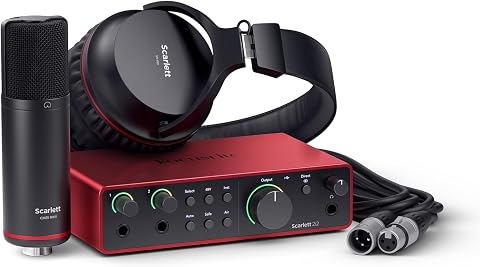
A two-channel USB-C audio interface bundle for recording, mixing, and mastering, with two low-noise mic preamps and studio-grade converters. It includes a CM25 MkIII condenser microphone, SH-450 headphones, recording software, and features such as Auto Gain, Clip Safe, and Air mode.
Pros:
- Includes microphone, headphones, and recording software
- Auto Gain and Clip Safe help simplify recording levels
- 120 dB dynamic range and up to 192 kHz sample rate
- Air mode adds presence to vocals and guitars
Cons:
- Requires compatible recording software and a computer or mobile device
- Two-channel input may limit larger recording setups
Best for: Mobile producers seeking an interface bundle for compatible recording gear
Not ideal for: Anyone whose source count or connections exceed the verified specifications
Bottom line: Check the bundle contents and connection requirements against every source and device in your recording setup.
Closed-Back Studio Headphones
Headphones let you monitor a session without depending on a room’s speakers, and a closed-back design may suit situations where you want the earcups enclosed around your listening. The named pick is the Focal Lensys Professional Closed-Back Headphones. Confirm the product’s current specifications and intended connection details, then consider whether its form and fit work for the length and setting of your sessions.
A common mistake is treating “studio” in a product name as proof that the headphones will translate perfectly for every listener or task. Fit is personal: check the headband adjustment, earcup dimensions, and comfort expectations, and look for information about replacement or detachable parts if those matter to you. Confirm the cable connection and length suit your interface or computer, and check whether an adapter is required. If possible, listen to familiar material before relying on headphones for decisions about balance or detail. For a mobile monitoring setup, also consider how the headphones pack and whether their accessories fit your carry case. Verify all compatibility and included-item details from the manufacturer or retailer listing.
What to look for:
- Closed-back design confirmed in the product specifications
- Fit and earcup dimensions comfortable for your use
- Connection type and cable length suited to your devices
- Any required adapter or included accessories
- Portability and storage needs for travel
Focal Lensys Professional Closed-Back Headphones

Focal’s Lensys Professional headphones feature dual aluminum/magnesium drivers and sound isolation design, providing detailed monitoring and authentic playback. They are designed for studio use, monitoring, and casual listening, with soft memory foam earpads and a sturdy headband for comfort.
Pros:
- High-quality aluminum/magnesium drivers deliver detailed sound
- Effective sound isolation for studio and casual use
- Comfortable soft memory foam earpads and sturdy headband
- Suitable for monitoring, recording, and playback
Cons:
- Wired connection may limit mobility
- Lack of foldable design for portability
- No water resistance for outdoor use
Best for: Producers who want closed-back headphones for mobile monitoring
Not ideal for: Anyone who needs a different headphone design or an unverified connection
Bottom line: Confirm fit, connection, and included accessories before making these headphones your primary mobile monitor.
Portable SSD
A portable SSD can serve as a place to keep project files and other working material close at hand. The supplied pick is the SanDisk 8TB Extreme Portable SSD. Its name gives a capacity and product line, but does not by itself confirm the specific transfer rates, connection, durability details, or compatibility you will receive; check the current listing for those particulars before purchase.
A common mistake is choosing storage by capacity alone. Estimate how much space your sessions and related files need, decide whether you want one drive or a separate backup, and check the drive’s connector against the ports on every computer you expect to use. Confirm operating-system compatibility and any formatting requirements, especially if you move between devices. For mobile work, look at the drive’s physical dimensions and what protection or cable storage your travel setup needs. If you rely on large sessions, verify published performance against your workflow rather than inferring speed from the product family. A portable storage choice is most useful when it fits both your file routine and your devices.
What to look for:
- Capacity that suits your project library and session sizes
- Connector compatible with the computers you use
- Operating-system support and formatting requirements
- Published transfer performance for your workflow
- Dimensions and included accessories suited to carrying
SanDisk 8TB Extreme Portable SSD

The SanDisk 8TB Extreme Portable SSD offers high-speed NVMe performance with up to 1050MB/s read and 1000MB/s write speeds. It features rugged durability with drop, water, and dust resistance, along with password protection and a 5-year warranty, making it ideal for active lifestyles and professional use.
Pros:
- High-speed data transfer with up to 1050MB/s read and 1000MB/s write speeds
- Rugged design with drop, water, and dust resistance for durability
- Includes password protection with 256-bit AES encryption for security
- Compact and portable, ideal for travel and on-the-go use
Cons:
- Performance may vary depending on host device and conditions
- Limited to USB 3.0 and USB 3.2 Gen 2 connectivity, may require compatible ports
- Price not specified, which could be a consideration for budget-conscious buyers
Best for: Producers who want portable storage for music projects
Not ideal for: Anyone who needs a confirmed connector or performance detail not listed
Bottom line: Check the drive’s current specifications and plan a separate backup for files you cannot afford to lose.
Laptop Stand
A stand can help position a laptop for a more workable mobile production space. The listed pick is the STXND Model-X 2.0 Adjustable 360° Rotating Laptop Stand. The product name signals adjustability and rotation, but check the manufacturer’s current information for supported laptop dimensions, weight limits, materials, and how the rotating mechanism is secured.
A common mistake is focusing on movement features without checking the actual computer and desk. Measure your laptop, consider its thickness and weight, and compare those figures with the stand’s stated compatibility. Check the base dimensions against the surfaces where you plan to work, including smaller tables, and ensure the screen can reach a comfortable viewing position. If you connect a keyboard, interface, or hub, leave room for cables and confirm the stand’s configuration will not block ports or vents. For travel, review how the stand folds or packs and whether its dimensions suit your bag. Stability and fit matter more than the feature list when you need a dependable work surface.
What to look for:
- Supported laptop size, thickness, and weight
- Base dimensions compatible with your work surfaces
- Adjustment range that suits your seated or standing position
- Port and ventilation access in your intended setup
- Folded dimensions and carrying needs for travel
STXND Model-X 2.0 Adjustable 360° Rotating Laptop Stand

This foldable aluminum laptop stand adjusts from 1.8 to 10.4 inches and rotates 360° to support ergonomic positioning and screen sharing. It weighs about 1.6 pounds, folds compactly for travel, and includes a velvet pouch and pressure adjuster.
Pros:
- Adjustable height supports ergonomic screen positioning
- 360-degree swivel enables screen sharing
- Foldable and portable with an included travel pouch
- Silicone padding helps prevent scratches
Cons:
- Compatibility is specified for devices from 13 to 17 inches
- Tension may need retuning over time
Best for: Mobile producers who want an adjustable laptop position
Not ideal for: Anyone whose laptop or desk falls outside verified compatibility
Bottom line: Match the stand’s documented capacity and dimensions to your laptop and the spaces where you work.
Compact USB Hub
The supplied pick for this slot is named Compact Vehicle Tracker with Apple Find My and Google Find Hub. That name describes a vehicle tracker and finding-network features; it does not identify a USB hub. Because this checklist slot calls for a compact USB hub, verify the product category and its actual specifications before treating this item as a fit for a music-production setup.
For a hub, first count the devices you need to connect at the same time, such as an interface, storage drive, or other peripherals. Check the laptop’s available port, the hub’s host connector, the number and type of downstream ports, and whether any connected device needs separate power. Confirm data capability for the ports you plan to use; a port’s shape alone does not establish its function. For mobile use, compare the hub’s dimensions, cable arrangement, and power needs with your bag and workspace. Category and port compatibility are the first checks here: do not buy a tracker for a hub role based on a compact product name.
What to look for:
- Confirm the listing is for a USB hub rather than a tracker
- Host connector compatible with your laptop
- Port types and count for your simultaneous devices
- Data and power capabilities for the devices you connect
- Size, cable arrangement, and power needs suited to travel
Compact Vehicle Tracker with Apple Find My and Google Find Hub

A compact tracker for vehicles and valuables that works with Apple Find My on iPhone and Google Find Hub on Android, with no subscription or SIM card required. It has an IP68 waterproof rating and a replaceable CR2032 battery rated for up to 12 months.
Pros:
- Works with Apple Find My and Google Find Hub
- No subscription or SIM card required
- IP68 waterproof rating
- Battery rated for up to 12 months
Cons:
- Location updates depend on the supported Find My networks
- Requires a CR2032 battery
Best for: Shoppers who verify a hub listing matches their actual connection needs
Not ideal for: Anyone expecting a USB hub from a vehicle-tracker product name
Bottom line: The supplied name identifies a tracker, so confirm the product category before using it to fill the USB hub slot.
Build the setup in a budget-first order based on what currently blocks your work: prioritize the recording or input connection you need, then monitoring and storage, followed by workspace accessories. Check the supplied product specifications before committing, and allocate room for compatible cables or adapters where required.
Keep the checklist beside your equipment list and confirm each connection, dimension, and workflow need one at a time. A well-matched mobile setup can grow gradually; start with the pieces that support your next session and add the rest as your routine becomes clear.