


When I evaluated devices for remote travel, the Garmin inReach Messenger emerged as the best overall choice because it balances a larger screen, long battery life, and robust two-way messaging without requiring a smartphone for every interaction. For those prioritizing portability, the Garmin inReach Mini 2 offers nearly identical satellite performance in a much smaller package, though it relies more heavily on a phone interface. The Motorola Defy Satellite Link stands out as a strong contender for smartphone-first users who want a familiar messaging app integration, but it lacks the standalone GPS tracking depth of Garmin’s ecosystem. Choosing between these options depends largely on whether you prefer a standalone device or a phone-paired accessory, as well as how critical immediate SOS connectivity is to your safety plan. Continue reading to see how these seven devices compare in build quality, subscription flexibility, and ease of use for road trips.

Get audio and creator gear delivered free with Prime
- Fast, free delivery on millions of items
- Prime Video, Amazon Music and more included
- Member-only deals all year
Complete the kit


Key Takeaways
- Standalone devices like the Garmin inReach Messenger allow for message composition without a smartphone, a feature increasingly rare in compact models.
- Battery life varies dramatically based on screen size and GPS frequency; larger screens consume power faster, requiring more frequent charging on long trips.
- Smartphone integration quality differs significantly, with some devices offering seamless app pairing while others require cumbersome Bluetooth reconnections.
- Subscription plans are not interchangeable between brands, meaning switching hardware often requires canceling and starting new service commitments.
- Physical button layouts matter more than touchscreens when using gloves or dealing with bright sunlight, a common issue for road trippers.
| Garmin inReach® Messenger Satellite Communicator, Global Two-Way Messaging |  | Best Overall for Shared Road Trips | Battery life: Up to 28 days in 10-minute tracking mode | Display: 2.74 cm sunlight-readable monochrome transflective | Resolution: 160 × 68 | VIEW ON AMAZON | See Our Full Breakdown |
| Garmin inReach® Mini 2 Satellite Communicator, Orange |  | Best Compact Road-Trip Backup | Battery life: Up to 14 days in 10-minute tracking mode | Display: 1.27-inch sunlight-readable monochrome transflective MIP | Resolution: 176 × 176 | VIEW ON AMAZON | See Our Full Breakdown |
| Motorola Defy Satellite Link – Rugged Handheld GPS Communicator, Two-Way Global SMS Text Messenger, Emergency SOS Alerting – Android iOS Compatible, Black |  | Best Rugged Smartphone Companion | Weight: 2.5 ounces | Dimensions: 3.4 × 2.5 × 0.5 inches | Battery: 600 mAh Li-Po; up to 4 days standby | VIEW ON AMAZON | See Our Full Breakdown |
| Garmin inReach Mini 2 Satellite Communicator, Two-Way Messaging, SOS, GPS, Flame Red |  | Best Protected Mini 2 Bundle | Battery life: 336 hours | Resolution: 176 × 176 pixels | Display type: LCD | VIEW ON AMAZON | See Our Full Breakdown |
| Spot X with Bluetooth 2-Way Satellite Messenger | 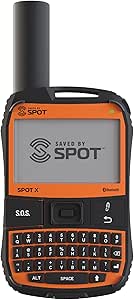 | Best for Standalone Messaging | Dimensions: 2.9 × 0.94 × 6.54 inches | Weight: 7.04 ounces | Battery life: 240 hours | VIEW ON AMAZON | See Our Full Breakdown |
| Garmin inReach Mini 2 SOS Satellite Communicator, Flame Red |  | Best Compact Garmin for Roadside Detours | Weight: 100 g | Dimensions: 1.03 x 2.04 x 3.9 inches | Display: 0.9-inch LCD | VIEW ON AMAZON | See Our Full Breakdown |
| ZOLEO Satellite Communicator (Limestone) |  | Best for Flexible Connectivity | Connectivity: Bluetooth, satellite, and Wi-Fi | Compatible operating systems: Android and iOS | Battery life: 200 hours in tracking mode | VIEW ON AMAZON | See Our Full Breakdown |
| two way satellite communicator for road trip | Connectivity | Battery life |
|---|---|---|
| Garmin inReach® Messenger Sate | Wi-Fi, Bluetooth, ANT+ | Up to 28 days in 10-minute tracking mode |
| Garmin inReach® Mini 2 Satelli | Bluetooth, USB | Up to 14 days in 10-minute tracking mode |
| Motorola Defy Satellite Link | Bluetooth | — |
| Garmin inReach Mini 2 Satellit | USB | 336 hours |
| Spot X with Bluetooth 2-Way Sa | Bluetooth, USB | 240 hours |
| Garmin inReach Mini 2 SOS Sate | USB | Up to 14 days |
| ZOLEO Satellite Communicator | Bluetooth, satellite, and Wi-Fi | 200 hours in tracking mode |
More Details on Our Top Picks
Garmin inReach® Messenger Satellite Communicator, Global Two-Way Messaging
For road trips where one person may leave the vehicle while others keep moving, the inReach Messenger makes group messaging and location sharing its strongest advantages. It supports two-way messaging and interactive SOS, with cellular-to-satellite network switching that can help keep communication available as coverage changes. Its stated 28-day battery life in 10-minute tracking mode is longer than the Mini 2’s listed 14 days, making it a better fit for extended trips between charging stops.
The tradeoff is its small monochrome display: it is built for communication, not detailed maps or comfortable long-form typing, so pairing it with a smartphone is useful. Like the Motorola Defy Satellite Link, it requires a service plan for satellite functions, but Garmin lists broader device compatibility. I’d choose it for a group that values dependable check-ins over standalone navigation.
Pros:- Group messaging and location sharing suit trips with multiple travelers
- Interactive SOS adds an emergency contact option outside cellular coverage
- Up to 28 days of battery life in 10-minute tracking mode
- Can work with smartphones and compatible Garmin devices
Cons:- Full satellite messaging and SOS functionality requires an active subscription
- Small monochrome screen is not suited to detailed map viewing
- Satellite device use may be restricted in some jurisdictions
Best for: Road-trip groups who want shared location updates, group messages, and long battery life when traveling beyond cellular coverage
Not ideal for: Drivers who want detailed on-device maps or do not want to maintain an active satellite subscription
- Battery life:Up to 28 days in 10-minute tracking mode
- Display:2.74 cm sunlight-readable monochrome transflective
- Resolution:160 × 68
- Navigation systems:BeiDou, GPS, Galileo, QZSS
- Connectivity:Wi-Fi, Bluetooth, ANT+
- Compatible devices:Smartphones, Garmin handhelds, wearables, and marine equipment
- Additional features:Group messaging, interactive SOS alerts, location sharing, and network switching
Our verdict“Choose the inReach Messenger if your road-trip priority is long-lasting group communication and location sharing rather than detailed standalone navigation.”
Garmin inReach® Mini 2 Satellite Communicator, Orange
The inReach Mini 2 is the compact pick for drivers who want satellite messaging and SOS without carrying a larger handheld unit. Its TracBack routing and digital compass add practical orientation tools when a roadside stop turns into a walk away from the car. Compared with the inReach Messenger, it has a shorter listed battery life—up to 14 days rather than 28—but its navigation features give it a more trail-oriented role.
The small monochrome display keeps the device light and simple, not suited to studying maps or composing lots of messages without a paired phone. Bluetooth links it to a smartphone and Garmin devices, while its stated water resistance helps with outdoor stops in poor weather. I’d pick this over the Motorola Defy Satellite Link for travelers who want Garmin navigation tools; skip it if group messaging and longer battery endurance matter more.
Pros:- Compact handheld form is easy to keep in a glove box or daypack
- Two-way satellite messaging and interactive SOS support off-grid check-ins
- TracBack routing and a digital compass add basic navigation utility
- Up to 14 days of battery life in 10-minute tracking mode
Cons:- Active satellite subscription is required for full messaging and SOS features
- Small display has limited usefulness for detailed maps
- Listed battery life is shorter than the inReach Messenger’s
Best for: Solo drivers and couples who want a small emergency communicator with basic navigation for hikes or roadside detours
Not ideal for: Travelers who prioritize extended battery life, a large display, or detailed on-device mapping
- Battery life:Up to 14 days in 10-minute tracking mode
- Display:1.27-inch sunlight-readable monochrome transflective MIP
- Resolution:176 × 176
- Connectivity:Bluetooth, USB
- Navigation:GPS, TracBack routing, and digital compass
- Water resistance:Yes
- Compatible devices:Smartphones, Garmin wearables, and handhelds
Our verdict“Pick the Mini 2 if you want a compact satellite backup with basic route-finding tools for walks away from the car.”
Motorola Defy Satellite Link – Rugged Handheld GPS Communicator, Two-Way Global SMS Text Messenger, Emergency SOS Alerting – Android iOS Compatible, Black
The Motorola Defy Satellite Link suits road trippers who want satellite texting through a familiar Android or iOS phone, with a rugged, waterproof communicator as the link. At 2.5 ounces, it is light enough to carry when leaving the vehicle, and its SOS function provides an emergency option beyond cellular coverage. Compared with the Garmin inReach Mini 2, the Defy is more focused on phone-connected messaging than standalone navigation: the supplied details do not list tools such as TracBack or a digital compass.
Its stated four-day standby battery life is also shorter than the Garmin devices’ tracking-mode figures, so it calls for more careful charging on a long itinerary. Bluetooth pairing and phone compatibility make it a sensible choice for people who prefer their phone interface, but service plans and possible accessory needs add ongoing setup. I’d choose it over the SPOT X for a lighter phone-linked option, not for long battery endurance.
Pros:- Compatible with phones running iOS 14 or Android 10 and later
- Rugged, waterproof design is suited to outdoor stops and rough conditions
- Two-way satellite messaging and SOS provide off-grid communication
- Lightweight at 2.5 ounces
Cons:- Listed battery life is up to four days on standby, shorter than the Garmin options’ figures
- Requires a service plan for satellite use
- Some functionality may require additional accessories
Best for: Android and iPhone users who want a rugged satellite messaging companion for occasional off-grid stretches and emergencies
Not ideal for: Long-haul travelers seeking multiweek battery life, standalone navigation features, or a communicator that works without a compatible phone
- Weight:2.5 ounces
- Dimensions:3.4 × 2.5 × 0.5 inches
- Battery:600 mAh Li-Po; up to 4 days standby
- Connectivity:Bluetooth
- Phone compatibility:iOS 14 and Android 10 or later
- Screen size:1.92 inches
- Listed range:Up to 75 miles offshore
Our verdict“Choose the Defy Satellite Link if you want a light, rugged satellite companion controlled through a compatible smartphone.”
Garmin inReach Mini 2 Satellite Communicator, Two-Way Messaging, SOS, GPS, Flame Red
This Flame Red inReach Mini 2 bundle is aimed at road trippers who want the compact Garmin communicator plus a stated two-year extended protection plan. Its core appeal is the same practical mix found in the orange Mini 2: two-way messaging, interactive SOS, and GPS in a small handheld format. Compared with the inReach Messenger, it offers a more navigation-focused Mini 2 setup, while the Messenger has the stronger listed battery life and group-messaging emphasis.
The listing gives battery life as 336 hours, but its specs also name North America map coverage and require a compatible smartphone for full functionality. That makes it less suited to drivers seeking a self-contained mapping device or broad map coverage. Compared with the other Mini 2 listing, the extra protection plan is the distinguishing factor; buyers should weigh that against the simpler, more clearly specified standard model. I’d consider this bundle when device protection matters more than extra features.
Pros:- Compact handheld form is easy to carry on stops away from the vehicle
- Interactive SOS alerts and two-way messaging support off-grid communication
- Includes a two-year extended protection plan
- Listed battery life is 336 hours
Cons:- Map coverage is listed as North America, satellite, and topographical rather than worldwide
- A compatible smartphone is listed as necessary for full functionality
- Display resolution is basic for detailed map use
Best for: Road trippers who want a compact Garmin communicator and value the included two-year extended protection plan
Not ideal for: Drivers who need broad map coverage, detailed standalone maps, or clearly documented full functionality without a smartphone
- Battery life:336 hours
- Resolution:176 × 176 pixels
- Display type:LCD
- Connectivity:USB
- Map types:North America, satellite, topographical
- Compatible devices:Smartphone
- Additional feature:Interactive SOS alerts
- Protection:Two-year extended protection plan included
Our verdict“Choose this Mini 2 bundle if the extended protection plan is a priority and its stated map coverage fits your routes.”
Spot X with Bluetooth 2-Way Satellite Messenger
The SPOT X stands apart from the phone-dependent Motorola Defy Satellite Link by offering a handheld messaging device with its own physical form for sending two-way satellite messages, SOS alerts, and GPS coordinates. Bluetooth can connect it to an Android phone or iPhone, giving road trippers a pairing option without making the phone the only listed interface. Its stated 240-hour battery life may appeal to travelers who want a dedicated communicator for a stretch of remote driving.
That endurance figure is not directly comparable to the Garmin models’ tracking-mode claims, and the listing provides fewer navigation details than the inReach Mini 2, which specifies TracBack and a digital compass. At 7.04 ounces, the SPOT X is also heavier than the Motorola unit. Satellite service requires a subscription, and warranty details are unclear in the supplied data. I’d choose it for standalone messaging needs, not as a map-focused navigation tool.
Pros:- Supports two-way satellite messaging, SOS, and GPS location sharing
- Bluetooth pairing supports use with Android phones and iPhones
- Listed battery life is 240 hours
- Includes a strap, carabiner, and quick start guide
Cons:- Requires a subscription for satellite service
- At 7.04 ounces, it is heavier than the Motorola Defy Satellite Link
- Supplied product data does not specify warranty details or navigation tools such as TracBack
Best for: Drivers who want a dedicated handheld satellite messenger with SOS and location sharing, plus optional phone pairing
Not ideal for: Travelers who need detailed navigation features, a lightweight device, or clear warranty information before buying
- Dimensions:2.9 × 0.94 × 6.54 inches
- Weight:7.04 ounces
- Battery life:240 hours
- Connectivity:Bluetooth, USB
- Supported devices:Android, iPhone
- Enclosure material:Plastic
- Additional features:GPS, SOS protection, handheld two-way messaging
- Included accessories:Strap, carabiner, quick start guide
Our verdict“Choose the SPOT X if you want a dedicated handheld for satellite messages and SOS, and can accept its extra weight and limited navigation details.”
Garmin inReach Mini 2 SOS Satellite Communicator, Flame Red
For road trips that may lead beyond cellular coverage, the inReach Mini 2 combines two-way satellite messaging, interactive SOS, and location sharing in a 100 g device. Its compact size makes it easier to keep in a glove box or day pack than a bulkier communicator, while the stated 14-day battery life suits trips where charging opportunities are limited. Compared with the ZOLEO Satellite Communicator, this Garmin puts more emphasis on a standalone compact unit and navigation aids such as TracBack and a digital compass; ZOLEO offers satellite, cellular, and Wi-Fi connectivity through its phone-based setup. The Mini 2’s 0.9-inch display is a real limitation for viewing routes, so it is better for check-ins and emergency communication than map work. Messaging and SOS also require an active satellite plan.
Pros:- Compact 100 g design is easy to pack for day trips and roadside emergencies.
- Two-way messaging and interactive SOS support communication beyond cellular coverage.
- Up to 14 days of stated battery life can reduce charging demands on longer trips.
- TracBack routing and a digital compass add basic navigation support.
Cons:- The 0.9-inch display limits detailed route viewing.
- Messaging and SOS require an active satellite subscription.
- Satellite messaging, location sharing, and navigation features are not a substitute for a full-sized road GPS.
Best for: Road-trippers who want a lightweight satellite messenger for remote stretches, with basic navigation tools and long intervals between charges.
Not ideal for: Drivers who want a large on-device screen for route details or do not want to maintain an active satellite subscription.
- Weight:100 g
- Dimensions:1.03 x 2.04 x 3.9 inches
- Display:0.9-inch LCD
- Battery life:Up to 14 days
- Connectivity:USB
- Satellite navigation system:Galileo
- Communication features:Two-way messaging, interactive SOS, and location sharing
- Additional features:TracBack routing, digital compass, and weather forecasts
Our verdict“Choose the inReach Mini 2 if compact size and Garmin navigation aids matter more than a readable on-device map.”
ZOLEO Satellite Communicator (Limestone)
The ZOLEO Satellite Communicator suits road-trippers who want messaging to use satellite, cellular, or Wi-Fi connections as available. That flexibility can be useful when a route moves between towns and remote areas, while IP68 water resistance adds protection against wet-weather mishaps. Its phone compatibility with Android and iOS makes the companion app central to the experience, including location sharing, check-ins, and weather forecasts. Compared with the Garmin inReach Mini 2, ZOLEO lists more connection types and medical assistance with 24/7 monitoring, but the Garmin provides stated weight, dimensions, and a display; ZOLEO’s product data omits weight and size. Its 200-hour battery figure is specified for tracking mode, not as a general runtime guarantee, and service requires a plan. Buyers should be comfortable relying on a compatible phone for app-based features.
Pros:- Satellite, cellular, and Wi-Fi connectivity offers options as coverage changes along a route.
- IP68-rated water resistance is suited to exposed outdoor use.
- SOS, medical assistance, and 24/7 monitoring provide emergency support features.
- Location sharing, check-ins, and weather forecasts support trip coordination.
Cons:- Some functions require a compatible Android or iOS phone and app.
- Service plans carry an additional ongoing cost.
- Weight and dimensions are not specified, making packability harder to judge.
Best for: Road-trippers with an Android or iOS phone who want one communicator to use satellite service in remote areas and cellular or Wi-Fi when available.
Not ideal for: Buyers who want a self-contained device with published dimensions and weight, or who prefer not to depend on a smartphone app and ongoing service plan.
- Connectivity:Bluetooth, satellite, and Wi-Fi
- Compatible operating systems:Android and iOS
- Battery life:200 hours in tracking mode
- Water resistance:IP68
- Charging port:USB-C
- Emergency features:SOS alert, medical assistance, and 24/7 monitoring
- Trip features:GPS, location sharing, check-ins, and weather forecasts
Our verdict“Pick ZOLEO if connection flexibility and phone-based trip coordination matter more than a standalone screen or fully specified size.”

How We Picked
I evaluated these communicators based on four core criteria relevant to road trip safety: connectivity reliability, battery endurance, usability in harsh conditions, and subscription flexibility. Connectivity reliability was judged by the speed of SOS alert transmission and the consistency of two-way text delivery in remote areas. Battery endurance was measured not just by advertised hours, but by how the device performs during extended GPS tracking, which is common during active travel days. Usability focused on physical design elements like button size, screen readability in direct sunlight, and durability against dust and impact.
I also weighed the ecosystem integration, specifically how well each device pairs with smartphones for map viewing and message drafting. Devices that require a smartphone for basic functions were ranked lower than standalone units for their versatility in emergency scenarios where a phone might be dead or lost. Finally, I considered the total cost of ownership, looking beyond the hardware price to the monthly subscription requirements and any potential overage fees for high-volume messaging.
| two way satellite communicator for road trip | Connectivity |
|---|---|
| Garmin inReach® Messenger Sate | Wi-Fi, Bluetooth, ANT+ |
| Garmin inReach® Mini 2 Satelli | Bluetooth, USB |
| Motorola Defy Satellite Link | Bluetooth |
| Garmin inReach Mini 2 Satellit | USB |
| Spot X with Bluetooth 2-Way Sa | Bluetooth, USB |
| Garmin inReach Mini 2 SOS Sate | USB |
| ZOLEO Satellite Communicator | Bluetooth, satellite, and Wi-Fi |
Factors to Consider When Choosing Two Way Satellite Communicator For Road Trips
Selecting the right satellite communicator involves balancing hardware capabilities with ongoing service costs. Here are the key factors I considered when ranking these devices for road trip use.Standalone Functionality vs. Smartphone Dependency
One of the most significant differences among these devices is whether they can function independently of a smartphone. Standalone units like the Garmin inReach Messenger allow you to view maps, compose messages, and trigger SOS alerts directly on the device. This independence is valuable if your phone runs out of battery or if you prefer not to carry two devices into a backcountry restroom or a remote trailhead. In contrast, devices like the Motorola Defy Satellite Link and the Spot X are designed primarily as accessories to your phone. They rely on the phone’s larger screen and keyboard for drafting messages, which is more convenient for typing but creates a single point of failure. If your phone dies, you may lose the ability to communicate effectively, even if the satellite device itself is charged. I recommend standalone devices for those who prioritize redundancy and simplicity in emergency situations.
Battery Life and Charging Infrastructure
Battery life is not a static number; it fluctuates based on how often you use GPS tracking and how frequently you send messages. During road trips, you might leave a device in a car or pack it in a bag for days without active use. Devices with larger batteries, such as the Garmin inReach Messenger, can last weeks in standby mode, reducing the anxiety of finding a power source. Smaller devices like the Garmin inReach Mini 2 offer lighter weight but require more frequent charging, which can be a hassle if you are camping in areas without solar access. I looked at whether these devices support standard USB-C charging, a feature that allows you to use the same cables you carry for your phone. Proprietary charging cables are a minor annoyance that can become a major inconvenience if lost or left behind.
Subscription Models and Cost Predictability
Satellite communication is not free; every device requires a monthly subscription to access the satellite network. I analyzed the flexibility of these plans, specifically looking for options that do not require annual commitments. Some providers, like Garmin, offer plans that can be paused during months when you are not traveling, which is ideal for occasional road trippers. Others may require a fixed annual contract, locking you into costs even when you are not using the service. I also considered the limits on message volume. For users who send frequent updates to family or friends, hitting a message cap can be frustrating and expensive. I prioritized devices that offer transparent pricing and scalable plans, allowing you to adjust your service level based on your actual usage patterns rather than guessing your needs a year in advance.
Ease of SOS Activation and Reliability
The primary purpose of a satellite communicator is emergency assistance, so the SOS function must be intuitive and reliable. I evaluated how easy it is to trigger an SOS alert, particularly in high-stress situations. Devices with a dedicated physical SOS button, like most Garmin models, are faster and less prone to accidental activation than those requiring multiple screen taps. I also looked at the confirmation process; some devices require a long press to confirm, which prevents accidental alerts but might slow down a user who is injured or panicked. The speed of the response center acknowledgment is another factor. While you cannot control the response center’s speed, devices with faster satellite acquisition times can send the initial alert quicker. I favored devices that provide clear visual or haptic feedback when an SOS is successfully transmitted, giving the user peace of mind that help is on the way.
Durability and Environmental Resistance
Road trips expose devices to dust, moisture, temperature extremes, and accidental drops. I assessed the build quality of each unit, looking for ruggedized casings and high IP ratings for water and dust resistance. Touchscreens, while convenient, can fail in wet conditions or when used with gloves, a common scenario in mountainous regions. Physical buttons with tactile feedback are generally more reliable in these conditions. I also considered the screen visibility under direct sunlight, as many road trips involve outdoor stops in bright environments. Devices with transflective displays or high-brightness modes offer better readability without draining the battery excessively. A device that is difficult to read in the sun is a liability, regardless of its technical specifications.
Frequently Asked Questions
Do I need a smartphone to use a two-way satellite communicator on a road trip?
It depends on the specific model you choose. Devices like the Garmin inReach Messenger can function entirely on their own, allowing you to send and receive texts, view maps, and trigger SOS alerts without a phone. However, most other models, including the Spot X and Motorola Defy Satellite Link, are designed to pair with a smartphone app for easier message composition and map viewing. While they can still send SOS alerts independently, relying on a phone for daily messaging means you must keep your phone charged and paired. For a road trip, having a standalone option adds a layer of redundancy if your phone battery fails or if you leave it in the vehicle.
How does the Garmin inReach Mini 2 compare to the larger inReach Messenger for long drives?
The Garmin inReach Mini 2 is significantly smaller and lighter, making it easier to carry in a pocket or small bag, which is ideal for hiking segments of a road trip. However, the larger Garmin inReach Messenger offers a bigger screen and physical buttons, which make typing and navigating menus much easier when you are stationary. The Messenger also typically has better battery life due to its larger size. If your road trip involves frequent stops where you need to type detailed messages, the Messenger is more comfortable to use. If you prioritize minimal weight and only send short, pre-set messages, the Mini 2 is sufficient.
Can I use these satellite communicators internationally on a road trip abroad?
Yes, most of the devices in this roundup, particularly those using the Iridium satellite network like Garmin and ZOLEO, offer global coverage. This means you can send and receive messages from almost anywhere on the planet, including oceans and polar regions. However, you must verify that your subscription plan covers international usage, as some basic plans may only include domestic coverage. Additionally, some countries have restrictions on satellite phone usage, so it is wise to check local regulations before traveling to regions like parts of the Middle East or Asia. Always ensure your device is registered with the appropriate service provider for international tracking.
Is it better to buy a satellite communicator or rent one for a single road trip?
Renting is a cost-effective option if you only need satellite communication for a short, one-time trip, such as a two-week vacation. It avoids the upfront hardware cost and the commitment to a monthly subscription. However, buying is better if you plan to go on multiple road trips or if you enjoy backcountry activities regularly. The hardware itself is durable and will last for years, spreading the cost over time. Furthermore, owning the device allows you to keep it in your car as an emergency safety tool for any unexpected detour, rather than having to arrange rental logistics before every journey.
How accurate is the GPS tracking on these devices compared to my smartphone?
Satellite communicators generally have less sensitive GPS receivers than modern smartphones, which use a combination of GPS, GLONASS, Galileo, and Wi-Fi positioning. While a smartphone might show your location within a few meters instantly, a satellite communicator might take longer to acquire a lock and could show a wider accuracy circle. However, for the purpose of emergency location and sharing your general route, this level of accuracy is sufficient. The key advantage of the communicator is that it continues to work when there is no cellular signal to assist the smartphone’s positioning. Do not expect turn-by-turn navigation precision from these devices; they are meant for tracking and emergency location.
Conclusion
Choosing the right two-way satellite communicator depends on your balance between portability, usability, and budget. For most road trippers, the Garmin inReach Messenger is the best overall pick due to its standalone capabilities, large screen, and robust battery life, making it reliable even if your phone fails. If you prioritize a compact, lightweight device and don’t mind relying on your smartphone for message composition, the Garmin inReach Mini 2 is the best value and best for beginners. For those who want a familiar smartphone integration experience, the Motorola Defy Satellite Link is a strong contender, though it lacks the standalone depth of Garmin. Ultimately, the best device is the one you will actually carry and charge; consistency in usage is the most critical safety feature.
Halloween Picks
halloween
As an affiliate, we earn on qualifying purchases.