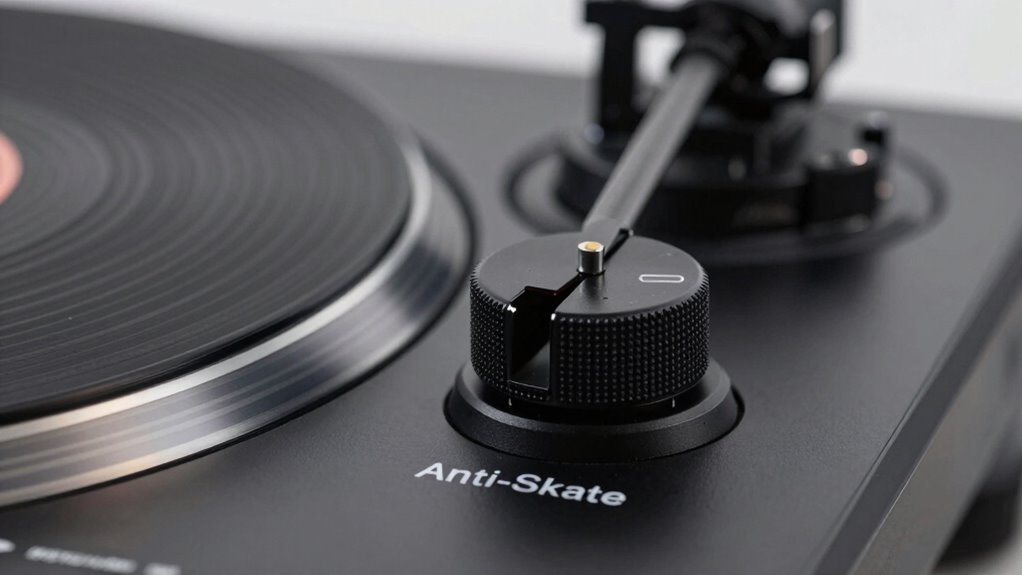

The tiny anti-skate dial on your turntable plays a crucial role in balancing your stylus, preventing it from drifting inward or outward during playback. Proper adjustment helps guarantee the stylus tracks straight and maintains even contact with the record grooves, which reduces wear and distortion. If it’s set incorrectly, you’ll likely notice skipping, uneven sound, or record damage. Understanding how this small control impacts your setup means better sound quality and record longevity—if you keep exploring, you’ll learn more about fine-tuning your deck.
Key Takeaways
- The tiny anti-skate dial adjusts the force preventing the tonearm from drifting inward or outward during playback.
- Proper setting ensures even stylus tracking, reducing record groove wear and distortion.
- Correct anti-skate calibration maintains stylus alignment with the record groove, improving sound quality.
- An improperly set dial can cause tracking issues, stylus skipping, or damage to records and stylus.
- Despite its small size, the anti-skate dial plays a crucial role in overall turntable performance and record longevity.
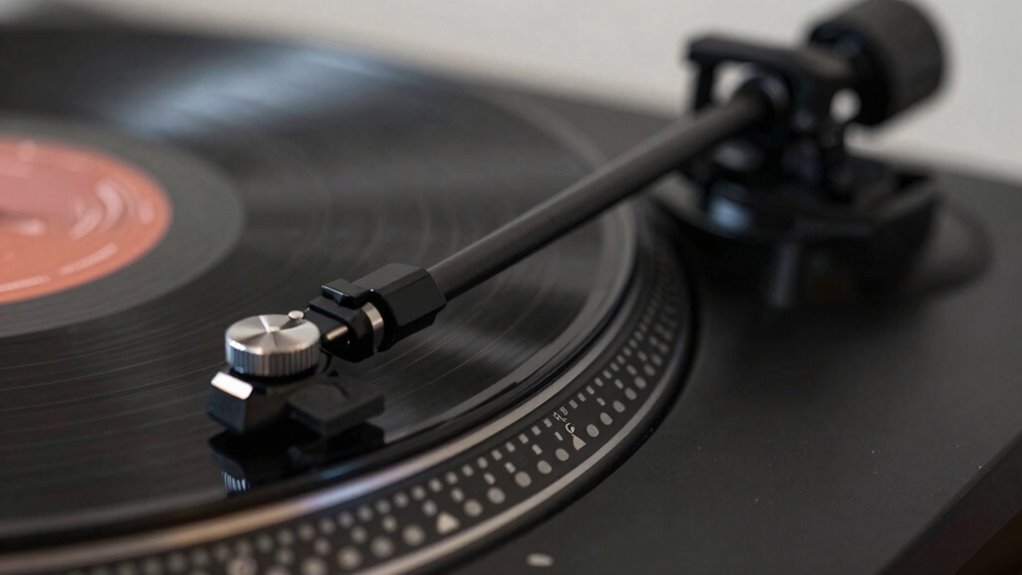
Have you ever wondered why your turntable’s stylus stays centered in the groove? It’s not just luck; it’s a balance maintained by carefully adjusted settings, especially the anti-skate control. This tiny dial might seem insignificant, but it plays a vital role in guaranteeing your records sound their best. When you set up your turntable, you’re fundamentally balancing a few key elements: stylus pressure and tonearm alignment. These factors work together to keep the stylus tracking properly, and the anti-skate dial helps fine-tune this balance.
Stylus pressure, or tracking force, is how much weight the stylus applies to the record’s groove. Too much pressure can cause excessive wear, distortion, or even damage your records, while too little can lead to skipping or poor sound quality. Proper stylus pressure guarantees the stylus stays securely in the groove without pushing too hard. But even with the correct pressure, if the tonearm isn’t aligned properly, the stylus can drift to one side of the groove, causing uneven wear and compromised sound. That’s where tonearm alignment comes into play—making sure the arm’s geometry matches the cartridge’s specifications so the stylus tracks straight and true.
Now, here’s where anti-skate comes into focus. Think of anti-skate as a counterbalance that prevents the tonearm from being pulled toward the center of the record or pushed outward. If it’s set too low, the stylus will tend to drift inward, causing uneven wear on one side of the groove. If it’s too high, the stylus might be pushed outward, leading to distortion and tracking issues. Adjusting the anti-skate dial correctly is essential for maintaining proper stylus pressure distribution across the entire record. It’s a tiny adjustment, but it has a significant impact on the longevity of your stylus and the fidelity of your sound.
Getting the anti-skate setting right involves a bit of trial and error, often starting with the same number as your tracking force. When you fine-tune this dial, you’re helping your tonearm glide smoothly and evenly across the record. This ensures the stylus stays centered, reducing wear and distortion. Remember, a well-aligned tonearm combined with correctly set stylus pressure and anti-skate gives you the best possible sound quality and record preservation. That tiny dial might seem minor, but it’s an indispensable part of the setup that keeps your vinyl listening experience perfect. Proper tonearm adjustment is essential for preserving your records and enjoying high-fidelity sound.

Donner Circle Looper Pedal Drum Machine, 2 in 1 Drum Looper Stereo Guitar Loop Pedals, 40 Slots 160 mins Loop with 110 Drum Grooves, Tap Tempo, Fade Out
🔁[2 in 1 Looper Drum Machine]: 44.1 kHz, 24 bit high-quality stereo looper with 110 different drum grooves...
As an affiliate, we earn on qualifying purchases.
Frequently Asked Questions
How Does Anti-Skate Affect Turntable Performance?
Anti-skate affects your turntable performance by ensuring proper stylus tracking and record groove preservation. When you adjust the anti-skate dial correctly, it balances the force on both sides of the stylus, preventing uneven wear and distortion. This helps your stylus stay centered in the groove, reduces skipping, and maintains sound quality. Proper anti-skate adjustment is essential for best playback and protecting your records from unnecessary damage.
Can Improper Anti-Skate Damage My Records?
Think of improper anti-skate as throwing a wrench in your records’ harmony. If it’s off, your stylus pressure and cartridge alignment suffer, leading to uneven wear and potential record damage. You might notice skipping, but over time, the misadjusted anti-skate can cause grooves to wear unevenly, damaging your records. Always fine-tune the anti-skate to match your stylus pressure, protecting your vinyl collection from unnecessary harm.
Is Anti-Skate Necessary for All Turntables?
Anti-skate isn’t necessary for all turntables, but it considerably improves your listening experience. It helps balance stylus pressure and keeps your cartridge aligned properly, preventing uneven wear on records and stylus damage. If your turntable has an anti-skate control, use it to match the tracking force, ensuring smooth operation. Without it, you might experience skipping or record damage, especially with sensitive cartridges or when playing complex or highly dynamic recordings.
How Often Should I Adjust the Anti-Skate Dial?
You should adjust the anti-skate dial whenever you notice uneven record wear or if the stylus pressure feels off. Typically, check it whenever you change records or if your sound quality decreases. Regular adjustments help maintain proper tracking and prevent unnecessary stylus or record damage. Keep an eye on how your records look and how your stylus tracks, and tweak the anti-skate dial accordingly to keep everything running smoothly.
What’s the Difference Between Anti-Skate and Tonearm Balance?
Imagine balancing a seesaw—your tonearm is that seesaw, and anti-skate is the pressure that keeps it level. Anti-skate controls the lateral force, preventing the stylus from drifting, while tonearm balance adjusts the cartridge alignment and stylus pressure for peak sound. You set the balance first, then fine-tune anti-skate to guarantee even tracking across the record, protecting your stylus and preserving sound quality.

Donner Triple Looper Guitar Pedal, 90 mins Looping Time Loop Pedal with Screen, 3 Loops Looper Pedal with Unlimited Overdubs Undo/Redo
[Looper with Screen]: The bright screen shows the current loop mode, time progress and accurate timing, so just...
As an affiliate, we earn on qualifying purchases.
Conclusion
Think of the anti-skate dial as the rudder steering your ship through musical waters. Even a tiny turn can keep your tonearm balanced, guiding your records smoothly without drift or tug. Ignoring it’s like sailing without a rudder—chaotic and uncontrollable. When you understand and adjust this small dial, you’re setting your turntable’s course with confidence, ensuring your music flows seamlessly. Master this simple tweak, and your vinyl voyage becomes a harmonious journey.

LEKATO Looper Guitar Pedal Guitar Loop Pedal Tuner Pedal 9 Loops 40 Minutes Record Time Unlimited Overdubs for Electric Guitar Bass (Black)
💞 LONG MEMORY : LEKATO looper with 9 loops, with a single loop recording as long as 10...
As an affiliate, we earn on qualifying purchases.

STRICH Stereo Looper Pedal Guitar Pedal with Built-in Drum Machine, 100 Diverse Drum Patterns, 160 Minutes Recording Time, USB for Audio Upload or Download, Support Footswitch Control
No Power Supply Included: Ensure to use a 9V DC, minimum 300mA, and center-negative adapter. Remember, the correct...
As an affiliate, we earn on qualifying purchases.