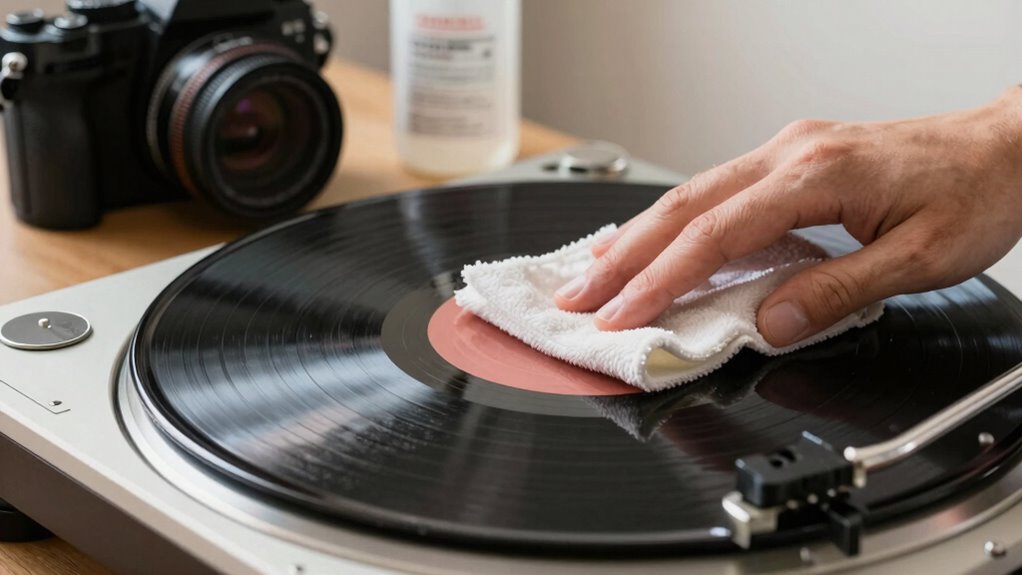
To clean used records without scratching, handle them by the edges to avoid dirt transfer and inspect for dust beforehand. Use a soft, anti-static brush or microfiber cloth to gently remove loose debris, following the grooves in a circular motion. Dampen your cloth lightly with a gentle cleaning solution made of distilled water and isopropyl alcohol, then move carefully across the surface. Continuing through proper techniques and tools will help you maintain your records’ clarity and longevity.

Get audio and creator gear delivered free with Prime
- Fast, free delivery on millions of items
- Prime Video, Amazon Music and more included
- Member-only deals all year
Key Takeaways
- Handle records by edges and avoid touching the surface to prevent dirt transfer and scratches.
- Use a soft, anti-static brush or microfiber cloth to gently remove dust before deep cleaning.
- Lightly dampen cleaning cloths with a mixture of distilled water and isopropyl alcohol for safe cleaning.
- Follow groove contours with gentle, circular motions during cleaning to lift dirt without scratching.
- Allow records to air dry or pat gently with a clean microfiber cloth to prevent surface damage.
Cleaning used records is an essential step to guarantee your vinyl sounds its best and lasts a long time. When it comes to maintaining your collection, knowing effective record cleaning techniques is vital. Proper cleaning not only improves sound quality but also preserves your records, preventing damage that can be costly and frustrating. Vinyl preservation tips are especially important if you want to enjoy your music for years to come without sacrificing sound clarity or risking scratches.
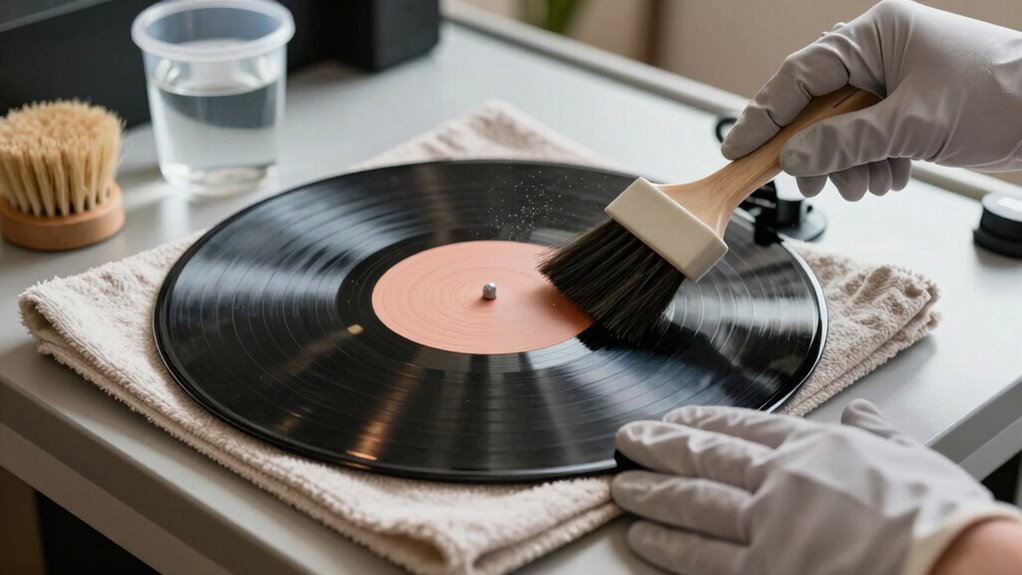
Start by handling your records carefully. Always hold them by the edges to avoid transferring oils and dirt from your fingers onto the surface. Before cleaning, inspect the record for visible dust or debris. Use a soft, anti-static brush or a microfiber cloth to gently remove loose particles. This initial step reduces the risk of scratching the vinyl during the more thorough cleaning process.
Handle records carefully by the edges to prevent dirt transfer and scratches.
When it’s time for a more in-depth cleaning, use a dedicated record cleaning solution or a mixture of distilled water and a small amount of isopropyl alcohol. Avoid harsh chemicals that can damage the vinyl. Lightly dampen a microfiber cloth or a record cleaning brush with the solution, and gently wipe the surface following the grooves. Never apply excessive pressure—letting the cleaning solution do the work minimizes the chance of scratching. Always clean in a circular motion that follows the grooves, which helps lift dirt without disrupting the delicate surface.
Another effective technique involves using a record cleaning machine, which offers a thorough clean and reduces the risk of scratches caused by manual cleaning. If you prefer manual methods, consider using a microfiber cloth or a specialized record cleaning brush designed for vinyl. When cleaning, keep your movements gentle and avoid scrubbing back and forth aggressively, as this can create scratches or embed dirt deeper into the grooves. Additionally, proper record storage is crucial to prevent dust accumulation and damage over time.
After cleaning, make sure to dry your records properly. Use a clean, dry microfiber cloth to gently pat the surface dry, or let them air dry on a clean, lint-free cloth. Store your records vertically in a cool, dry place, away from direct sunlight and extreme temperatures, to further protect them. Regularly cleaning your records with proper record cleaning techniques and following vinyl preservation tips will extend their lifespan and keep your sound clear and vibrant. Taking these simple steps ensures your vinyl collection remains in top condition, providing you with the best listening experience every time.
anti-static record cleaning brush
As an affiliate, we earn on qualifying purchases.
As an affiliate, we earn on qualifying purchases.
Frequently Asked Questions
Can I Use Household Cleaning Products on My Records?
You shouldn’t use household cleaning products or chemicals on your records. These cleaning solutions often contain harsh ingredients that can damage the vinyl surface, causing scratches or warping. Instead, opt for a gentle, record-specific cleaning solution or a mixture of distilled water and a few drops of isopropyl alcohol. This way, you protect your records from potential harm and keep them sounding great for years to come.
How Often Should I Clean My Vinyl Records?
Ever wonder how often you should clean your vinyl records? Generally, you should clean them after every few listens or when you notice dust or static. This record cleaning frequency helps maintain sound quality and prolongs your records’ lifespan. Follow vinyl maintenance tips like using proper cleaning solutions and soft brushes, and avoid over-cleaning, which can cause unnecessary wear. Keeping your records spotless ensures ideal listening pleasure every time.
Is It Safe to Wash Records in a Dishwasher?
Washing records in a dishwasher isn’t safe because dishwasher safety isn’t designed for delicate vinyl. Using record cleaning methods like gentle hand washing with record-specific solutions is much safer, preventing scratches. Dishwashers can damage the label and warp the vinyl. Stick to proven cleaning techniques, and avoid washing your records in a dishwasher to keep them in top condition and preserve their sound quality.
What Are the Signs of a Scratched Record?
When you’re trying to spot a scratched record, you’re looking for more than just surface damage. Visual scratches on the record surface are clear signs, but you’ll also notice skipping, popping, or distortion during playback. These issues indicate damage that can’t be seen with the naked eye. If your records show these signs, it’s time to handle them gently and consider professional cleaning or replacement to keep your music sounding its best.
Can I Use a Microfiber Cloth to Clean Both Sides?
Yes, you can use a microfiber cloth to clean both sides of your record. Microfiber effectiveness makes it ideal for removing dust and dirt without scratching, as it’s gentle yet effective. When cleaning, use high-quality cleaning cloths and apply light pressure. Always wipe in a straight line, avoiding circular motions, to prevent scratches. This method keeps your records clean and preserves their sound quality over time.
microfiber record cleaning cloth
As an affiliate, we earn on qualifying purchases.
As an affiliate, we earn on qualifying purchases.
Conclusion
Now that you know how to clean your used records without scratching, you can enjoy your collection without worry. Just remember, gentle handling and proper cleaning tools make all the difference. Some might think cleaning ruins the vinyl’s sound, but in reality, a well-maintained record sounds better and lasts longer. With these simple steps, you’ll preserve your records’ quality and keep your listening experience crystal clear for years to come.
As an affiliate, we earn on qualifying purchases.
As an affiliate, we earn on qualifying purchases.
Fall Picks
fall essentials
As an affiliate, we earn on qualifying purchases.




![Iron Maiden Legend Nicko McBrain Turned Down Trump Golf Invite: “[He] Should Be Put In Jail”](https://deadsetlive.com/wp-content/uploads/2026/10/iron-maiden-legend-nicko-mcbrain-turned-down-trump-golf-invite-he-should-be-put-featured-260x140.jpg)